
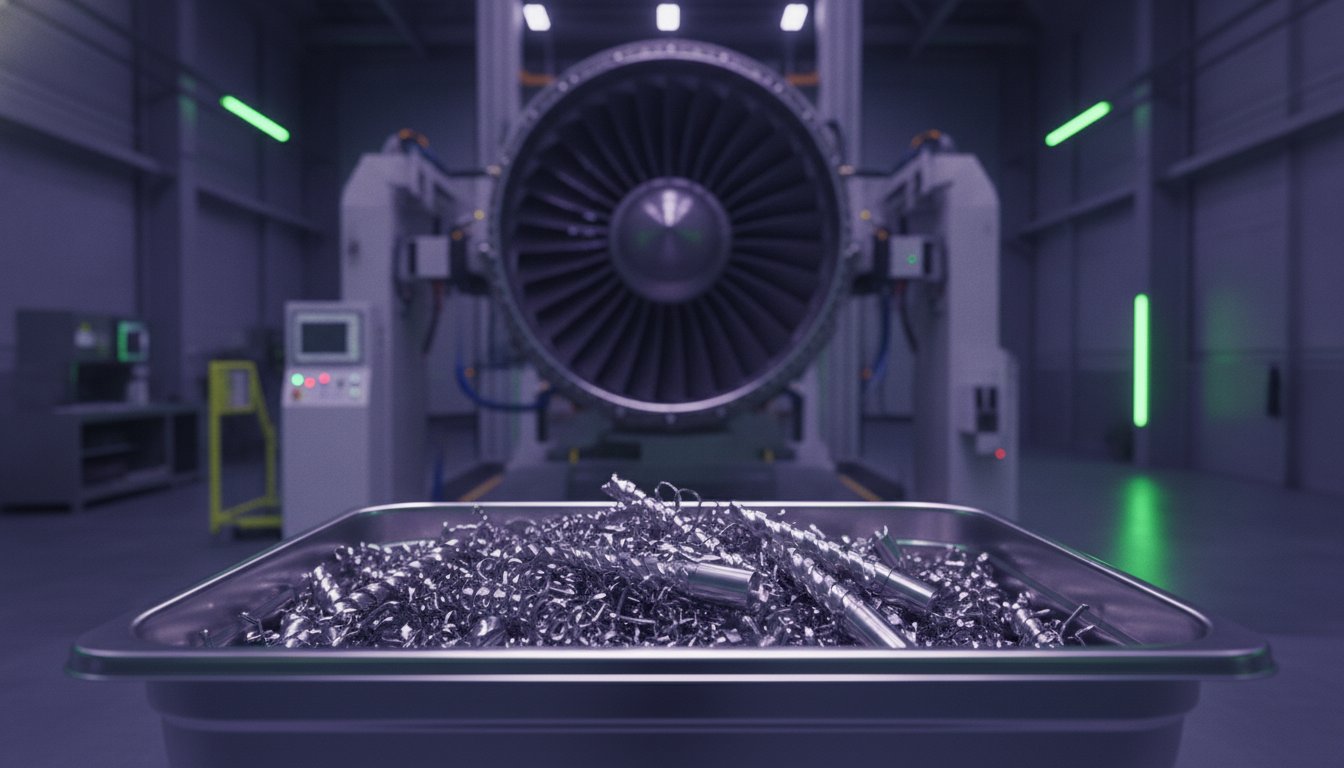
Did you know that recycling tungsten requires up to 80% less energy than primary production, yet many aerospace manufacturers still treat their high-performance waste as an afterthought? In 2026, tungsten is no longer just a byproduct; it's a strategic asset. You likely feel the weight of complex logistics for bulk scrap and the administrative burden of managing specialty metal programs. It's frustrating to watch market prices fluctuate while new DOD regulations on specialty metals tighten the domestic supply chain and limit your sourcing options.
You deserve a partner that handles the heavy lifting so you can stay focused on your core operations. We're here to show you how tungsten recycling for aerospace manufacturing can be transformed from a logistical headache into a streamlined, high-yield revenue stream. By treating your scrap as a strategic procurement advantage, you can secure fast payments to offset new tooling costs and verify your environmental responsibility with zero friction. This article previews the structural repricing of tungsten in 2026, the impact of the latest federal critical minerals strategy, and how to build a frictionless recycling process that supports a sustainable supply chain.
Key Takeaways
- Understand why 2026 regulations and supply chain shifts have transformed tungsten from industrial waste into a high-value strategic asset.
- Learn how to distinguish between Tungsten Hard Scrap and Soft Scrap to ensure every tool and machining byproduct is valued correctly.
- Discover how tungsten recycling for aerospace manufacturing provides a direct revenue stream to offset the rising costs of new tooling procurement.
- Implement professional sorting and collection protocols that prevent cross-contamination and maximize the purity of your aerospace alloys.
- Access streamlined logistics and nationwide shipping solutions designed to move your scrap from the shop floor to final payment without administrative delays.
The Strategic Importance of Tungsten in Aerospace Manufacturing
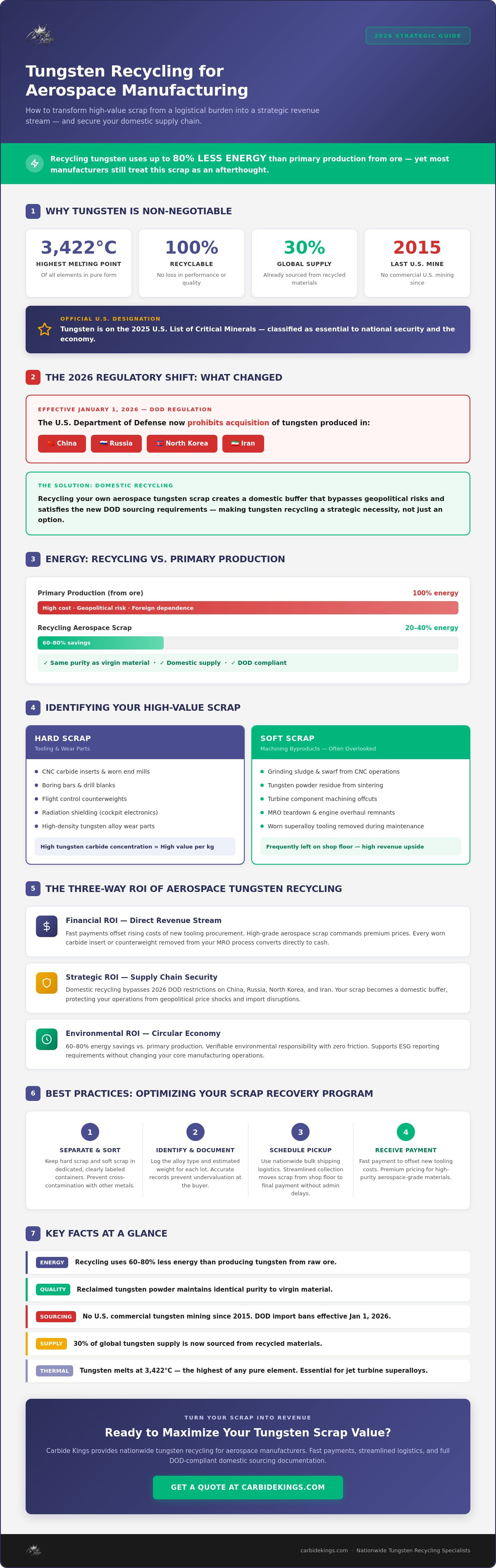
Tungsten isn't just another industrial metal. It's the backbone of modern aviation. As of the 2025 U.S. List of Critical Minerals, tungsten is officially designated as essential to national security and the economy. Its physical properties are extreme. It possesses the highest melting point of all elements in pure form, reaching a staggering 3,422°C. This thermal resistance is why The Strategic Importance of Tungsten cannot be overstated in the aerospace sector. Your turbine components and engine housings depend on this material to survive environments that would liquefy standard steel. Because aerospace manufacturers generate high-grade scrap, this waste is 100% recyclable without any loss in performance or quality.
Why Tungsten is Non-Negotiable for High-Performance Alloys
Jet engines operate at the edge of physical possibility. To maintain thrust and efficiency, turbine blades must withstand immense centrifugal force at white-hot temperatures. Tungsten is the key ingredient in the superalloys that make this possible. It provides unmatched resistance to thermal expansion, ensuring that tight tolerances in jet engines remain consistent during high-altitude maneuvers. Beyond the aircraft itself, your shop floor relies on tungsten carbide. It's the only material tough enough to machine the titanium and Inconel parts that define modern airframes. If your supply of carbide tooling fluctuates, your entire production schedule is at risk.
The Scarcity Factor: Securing the Domestic Supply Chain
Recycling is the most efficient way to achieve manufacturing independence. Consider these facts:
- Energy Efficiency: Recycling tungsten uses 60-80% less energy than primary production from ore.
- Quality Retention: Reclaimed tungsten powder maintains the exact same purity as virgin material.
- Strategic Advantage: Domestic recycling bypasses the geopolitical risks of 2026 trade restrictions.
Shifting toward a circular economy doesn't just protect the environment. It secures your access to the materials you need to keep flying. When you prioritize tungsten recycling for aerospace manufacturing, you transform your waste stream into a reliable, high-purity source of raw material that stays right here in the domestic supply chain.
Identifying High-Value Tungsten Scrap in Aerospace MRO and Production
Identifying the right materials is the first step to maximizing your returns. In an aerospace environment, tungsten appears in two primary forms: hard scrap and soft scrap. Distinguishing between these is vital for accurate valuation. While solid tools are easy to spot, many shops overlook the high-value potential in machining byproducts. Approximately 30% of the global tungsten supply is now sourced from recycled materials, making your shop's waste a vital strategic asset. When you master the art of tungsten recycling for aerospace manufacturing, you stop leaving money on the shop floor. According to data on Aerospace Tungsten Recycling provided by the USGS, the flow of these materials through the manufacturing cycle is a significant component of the global supply chain.
Hard Scrap: Tooling and Wear Parts
CNC machining centers generate a constant stream of worn carbide inserts, end mills, and boring bars. These are classic examples of Tungsten Hard Scrap. Because these tools are designed to cut through hardened aerospace alloys like titanium and Inconel, they contain high concentrations of tungsten carbide. You'll also find high-density tungsten alloys in flight control counterweights and radiation shielding for cockpit electronics. These components are often overlooked during engine tear-downs or airframe maintenance, but they represent some of the purest sources of tungsten available. If you're looking for more detail on sorting these items to ensure a fast transaction, check our guide on identifying high-value tungsten hard scrap.
Soft Scrap: Sludge, Swarf, and Powders
Don't let your machining byproducts go to waste. Soft scrap includes carbide grinding sludge, swarf, and powders. In precision aerospace manufacturing, turbine blade finishing often produces a fine sludge that's rich in tungsten. This material is often discarded as industrial waste, but it holds substantial value when processed correctly. Managing this tungsten-bearing swarf from high-speed milling operations is a key part of tungsten recycling for aerospace manufacturing. It's a proactive way to reduce your environmental footprint while recovering capital. You can learn more about maximizing the value of these byproducts in our post on recycling tungsten soft scrap and sludge. We make the transition from waste to revenue as smooth as possible. If you're ready to clear your floor, request a quote for your tungsten alloys and see how simple the process can be.
The Financial and Environmental ROI of Aerospace Tungsten Recycling
Recycling isn't just a green initiative. It's a sophisticated financial strategy. When you implement tungsten recycling for aerospace manufacturing, you create a direct cost offset for your procurement budget. High-performance tungsten alloys and carbide tools are expensive assets. Letting them sit in a bin or selling them to a general scrap yard is essentially throwing away workable capital. General scrap dealers often lack the specialized knowledge to value tungsten correctly, leading to lower payouts. By working with a specialist, you ensure that the revenue from your scrap directly lowers the cost of your next tooling order.
Turning Waste into Workable Capital
A consistent recycling program protects your facility from the volatility of the global market. In 2026, we've seen a structural repricing of tungsten, where scrap is treated as a strategic asset rather than a byproduct. Selling your Tungsten Hard Scrap and Soft Scrap provides immediate liquidity. This cash flow is vital for offsetting the rising costs of new carbide inserts and end mills. To understand what drives your return, you can review our analysis of current tungsten carbide scrap price factors. This transparency helps you time your shipments to maximize your facility's bottom line.
Meeting ESG and Sustainability Mandates
Environmental responsibility is no longer optional in aerospace. It's a competitive requirement for securing government contracts and meeting corporate ESG (Environmental, Social, and Governance) mandates. The environmental impact of recovery is undeniable. Primary production from ore is a massive energy drain. In contrast, recycling tungsten uses 60-80% less energy than mining and refining virgin material. By diverting these heavy metals from industrial waste streams, you eliminate the administrative burden and liability of managing hazardous waste disposal.
The USGS tracks these trends, providing the data that supports the growth of National Recycling Solutions and highlighting tungsten's status as a critical mineral. Currently, about 30% of the global tungsten supply comes from recycled sources. Increasing your participation in this circular economy does more than save energy; it reduces your carbon footprint and strengthens your brand's reputation as a responsible manufacturer. When you partner with a proactive recycler, you get the documentation needed for sustainability reporting without any extra paperwork. It's a frictionless way to turn your shop floor waste into a verifiable environmental win.
How to Optimize Your Aerospace Scrap Recovery Program
Optimization starts with a clear workflow. Don't let your scrap pile up in random bins across the shop floor. Centralize your collection points near CNC machining centers and MRO stations. This simple move reduces the time employees spend moving material. It also ensures nothing is accidentally tossed in the general waste stream. Establish a regular shipping cadence. This maintains a steady cash flow and prevents your facility from becoming a storage locker for heavy metals. When you treat tungsten recycling for aerospace manufacturing as a scheduled part of your production cycle, the administrative burden disappears.
Sorting and Contamination Control
Sorting is the most critical step for maximizing your payout. Mixing tungsten with high-speed steel (HSS) is a common mistake that significantly lowers the value of your shipment. General scrap yards might treat it all as mixed steel, but a specialist knows the difference. Use simple density tests. Tungsten carbide is nearly twice as heavy as steel. It also produces a short, orange spark when touched to a grinder, unlike the long, white sparks of HSS. Keep your grinding sludge and soft scrap in dry, covered storage. Moisture increases total weight but decreases the actual percentage of recoverable metal. This complicates the valuation and can delay your payment. By keeping your Tungsten Soft Scrap pure and dry, you ensure a faster, more accurate transaction.
Logistics and Secure Shipping
Preparing bulk shipments for national transport requires secure, heavy-duty containers. We recommend reinforced steel drums or heavy-duty pallets with sidewalls to prevent material loss during transit. Every pound counts. For larger aerospace operations, documentation is non-negotiable. You need clear records of industrial metal procurement to comply with the 2026 DOD regulations. This documentation verifies that your materials are sourced and recycled within the approved domestic supply chain. Partnering with a specialist who understands aerospace-grade carbide is vital. General dealers often lack the testing equipment needed to differentiate between various tungsten alloys, which leads to "worst-case" pricing that hurts your bottom line.
A dedicated partner uses precision analysis to give you the highest market value for every pound of material. To see exactly how we handle these materials from pickup to final payment, read about the professional carbide recycling process. We've refined our logistics to be frictionless, moving you from initial contact to final resolution without the typical industry delays. If you're tired of the logistical headache, let us handle the heavy lifting. Get a professional quote for your tungsten scrap today and see how fast we can turn your shop floor waste into capital.
National Recycling Solutions for Aerospace Partners
Efficiency is the standard in aerospace, and your scrap recovery program should be no different. Many facilities struggle with the friction of traditional scrap yards that don't understand the technical requirements of high-performance metals. We've eliminated those barriers. Our process is built for speed. You can get a quote and have your shipment ready for transport within 24 hours. We serve every major aerospace manufacturing hub across the United States, providing a consistent outlet for your materials regardless of your location. By choosing a partner with a national reach, you ensure that tungsten recycling for aerospace manufacturing remains a reliable, repeatable part of your facility's workflow.
The Carbide Kings Advantage
We are specialists, not generalists. While local scrap dealers might treat your aerospace alloys as generic mixed metal, we focus exclusively on Tungsten Hard Scrap, Tungsten Soft Scrap, and various Tungsten Alloys. This specialization allows us to provide more accurate valuations and higher returns. We understand the specific grading requirements for aerospace-grade carbide inserts and the complexities of reclaiming grinding sludge. Our team handles the heavy lifting of logistics, from providing secure containers to arranging freight. We've refined our administrative process to remove the typical hurdles of industrial procurement. You won't deal with endless paperwork or delayed responses. We prioritize professional transparency, ensuring every shipment is weighed and graded with precision so you receive the full market value for your assets.
Start Your Recovery Program Today
Maximizing your scrap value shouldn't be a full-time job for your procurement team. We make the transition from shop floor waste to liquidity as smooth as possible. Once your material is verified at our facility, we process payments immediately via wire transfer or check. This rapid turnaround provides the capital you need to offset new tooling costs or reinvest in production. If you're managing an aerospace MRO or a high-volume production floor, it's time to stop letting your tungsten waste lose value in a corner.
The process is simple. Reach out with your material type and estimated volume. We'll provide a direct, no-nonsense quote based on current market drivers. Whether you're clearing out a single pallet of worn end mills or managing a continuous stream of carbide sludge, we have the infrastructure to support your goals. Don't let logistical friction slow down your facility's financial performance. Secure your revenue stream and support a domestic, sustainable supply chain with one simple transaction. Get a high-value quote for your aerospace tungsten scrap today and experience the relief of a streamlined, professional recycling partnership.
Secure Your Supply Chain and Capital Today
Transforming your high-performance waste into a streamlined revenue stream is simpler than you think. You've seen how identifying high-value alloys and implementing strict sorting protocols can directly offset new tooling costs. By reclaiming these strategic assets, you aren't just cleaning your shop floor; you're securing a domestic buffer against volatile global markets. Tungsten recycling for aerospace manufacturing is a proven way to meet ESG mandates while boosting your facility's bottom line without the administrative headache.
Our team brings specialized tungsten carbide expertise to every transaction, ensuring you receive the full market value for your material. We offer a 24-hour processing guarantee and competitive national pricing to keep your capital moving as fast as your production line. Don't let your scrap sit idle when it could be working for you. Get an instant quote for your aerospace tungsten scrap today and experience a frictionless partnership. We're ready to help you turn your industrial waste into your next strategic advantage.
Frequently Asked Questions
What is the current tungsten carbide scrap price per pound?
Prices for tungsten carbide scrap fluctuate daily based on global market demand and the purity of the material. Because tungsten is a critical mineral with high industrial value, rates are tied to the structural repricing occurring in 2026. We provide direct quotes based on real-time market data to ensure you receive a fair, competitive price for your specific material type. Contact our team to get a current valuation for your inventory.
Does Carbide Kings buy aerospace grinding sludge and soft scrap?
Yes, we specialize in the procurement of Tungsten Soft Scrap, including grinding sludge, swarf, and powders generated during aerospace component finishing. These byproducts often contain significant amounts of recoverable tungsten that general scrap dealers overlook. We use specialized analysis to determine the metal content and provide you with a high-value return on materials that might otherwise be discarded as waste.
How do I distinguish between tungsten carbide and high-speed steel?
Tungsten carbide is significantly heavier than high-speed steel (HSS), possessing nearly double the density. You can perform a simple spark test; carbide produces a short, orange spark, while HSS creates long, white sparks. Identifying these materials correctly is a vital step in tungsten recycling for aerospace manufacturing to prevent cross-contamination and ensure you receive the highest possible payout for your scrap.
Is there a minimum weight requirement for national shipping?
We typically coordinate logistics for bulk industrial volumes to maximize the financial return for our partners. While we handle various shipment sizes, larger volumes often provide a better ROI by offsetting freight costs. Contact us directly to discuss your specific material volume, and we'll help you determine the most efficient shipping method for your facility's needs.
How quickly does Carbide Kings process payments for aerospace scrap?
We process payments immediately upon the verification and grading of your material at our facility. Our goal is to provide rapid liquidity to help you offset new tooling costs. Most payments are issued via wire transfer or check the same day the verification process is complete, ensuring a fast and transparent transaction for our industrial partners.
Can you provide documentation for our corporate sustainability reports?
Yes, we provide comprehensive documentation that verifies your material has been recycled within a domestic, sustainable supply chain. This reporting is essential for meeting ESG mandates and complying with the 2026 DOD regulations on specialty metals. Our records help you demonstrate environmental responsibility and maintain transparency for government contracts and internal audits.
Do you buy worn carbide inserts and end mills?
Yes, worn carbide inserts, end mills, and boring bars are primary examples of Tungsten Hard Scrap that we purchase daily. These tools are rich in tungsten and retain their value even after they're no longer fit for machining. By recycling these tools through a specialist, you maximize the recovery of capital that general scrap yards often undervalue.
How should we package heavy tungsten alloys for safe transport?
Heavy tungsten alloys should be secured in reinforced steel drums or heavy-duty pallets with sidewalls to prevent material loss during transport. Because tungsten is exceptionally dense, standard cardboard or light plastic containers often fail under the weight. Proper packaging ensures your shipment arrives intact, allowing for accurate weighing and a faster payment process for your tungsten recycling for aerospace manufacturing program.


