
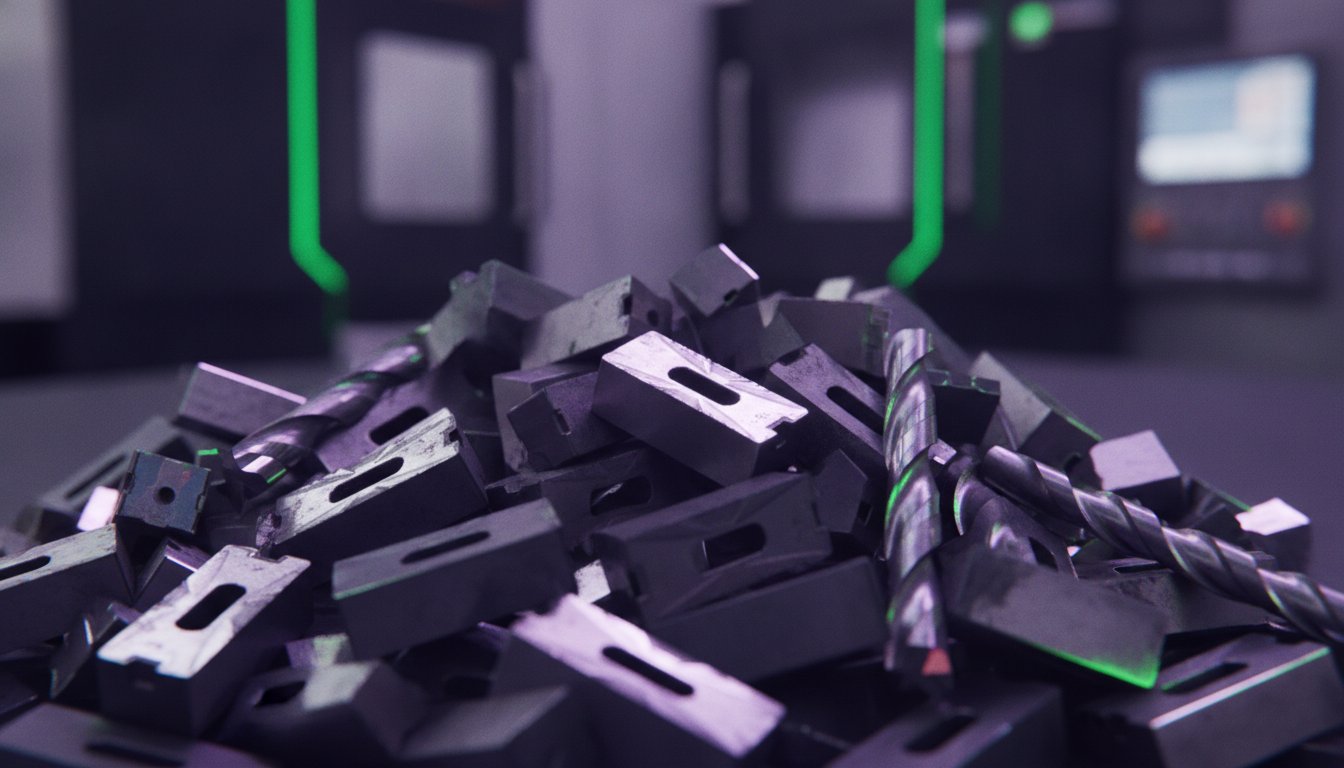
With clean carbide inserts fetching up to $16.00 per pound as of June 2026, your machine shop's floor sweepings are no longer just industrial waste. They're a significant, untapped revenue stream. Selling tungsten scrap from CNC machining has become a strategic necessity for facilities looking to offset rising material costs and maximize their bottom line. If you're tired of seeing high-value carbide mixed with low-grade steel or struggling with the logistics of shipping heavy materials, you aren't alone.
You already know that your scrap is valuable, but the traditional recycling process is often slow, opaque, and physically demanding. We promise to change that by providing a clear, professional framework for identifying, sorting, and selling your materials for their true worth. This guide walks you through the 2026 market landscape, from identifying premium hard scrap to securing fast payments via wire or check. You'll learn how to partner with experts who handle the heavy lifting, allowing you to focus on production while your scrap pays the bills.
Key Takeaways
- Identify high-value sources like worn carbide inserts and grinding sludge to stop leaving money on the shop floor.
- Implement a simple collection process using dedicated, labeled bins to eliminate logistical friction and sorting errors.
- Learn why selling tungsten scrap from CNC machining offers significantly higher returns than mixing it with standard steel or aluminum.
- Secure better rates and faster payments by partnering with specialized industrial buyers instead of general, all-in-one scrap yards.
- Discover how to leverage a national procurement partner that handles the heavy lifting, from logistics to final wire payment.
The Value of Tungsten Recovery in Modern Machine Shops
Tungsten recovery is the essential process of reclaiming high-density carbide from worn industrial tools. For modern machine shops, this isn't just about cleaning up the shop floor. It's about capturing high-yield value that often gets tossed in the bin by mistake. Machine shops generate the highest quality tungsten scrap through daily wear and tool replacement. Every worn insert and broken end mill represents a significant financial investment that can be recovered. Unlike general metals like aluminum or steel, which lose value through oxidation or alloying, tungsten carbide retains nearly 100% of its value through the recycling loop. Professional recovery turns what used to be an environmental liability into a predictable, lucrative revenue stream for your facility.
Why Tungsten Carbide is a 'Critical Mineral'
Industries like aerospace, medical, and defense manufacturing rely heavily on tungsten for their most demanding applications. Because global supply chains are increasingly volatile, domestic carbide prices remain at historic highs. Tungsten carbide is a high-density alloy of tungsten and carbon. It's currently on the U.S. List of Critical Minerals because of its strategic importance and lack of domestic mining. Securing a domestic supply through recycling is a matter of national economic security. When you prioritize recovery, you help stabilize the supply chain for the entire manufacturing sector while padding your own bottom line.
The Shift from Waste to Asset Management
Stop looking at worn tool disposal as a waste problem. It's an asset management opportunity. Moving away from the "dumpster" mentality for your scrap pile improves shop floor organization immediately. Dedicated recovery programs ensure your team knows exactly where valuable material goes. This reduces cross-contamination and ensures you get the highest possible return. The role of specialized buyers is crucial here. They allow you to bypass local scrap yard middle-men who often lack the equipment to test for true tungsten content. These general yards might offer you steel prices for carbide, costing you thousands in lost revenue. Selling tungsten scrap from CNC machining through a dedicated partner ensures you get paid for the actual tungsten content. We provide the heavy-duty containers and handle the logistics, turning a complex chore into a simple, automated process. You focus on production; we handle the heavy lifting of asset recovery.
This streamlined approach is ideal for precision-driven businesses like Fat Boy Design USA, which utilizes CNC machining to produce custom Harley Davidson components, vintage chopper parts, and racing gear.
Identifying High-Value Tungsten Sources in Your Shop
Maximizing your return starts with accurate identification. Most shops lose money because they treat all "heavy metal" the same. Selling tungsten scrap from CNC machining requires a sharp eye for material density and composition. If you mix high-value carbide with standard tool steel, you're essentially throwing money away. Scrap yards often pay for the lowest common denominator in the bin. To avoid this, you must categorize your materials into hard scrap, soft scrap, and alloys. Accurate sorting ensures you capture every dollar of value from your tool room.
Common Hard Scrap Tooling
Hard scrap is the most recognizable revenue source in any machine shop. It's easy to handle and commands the highest market rates. Look for these specific items:
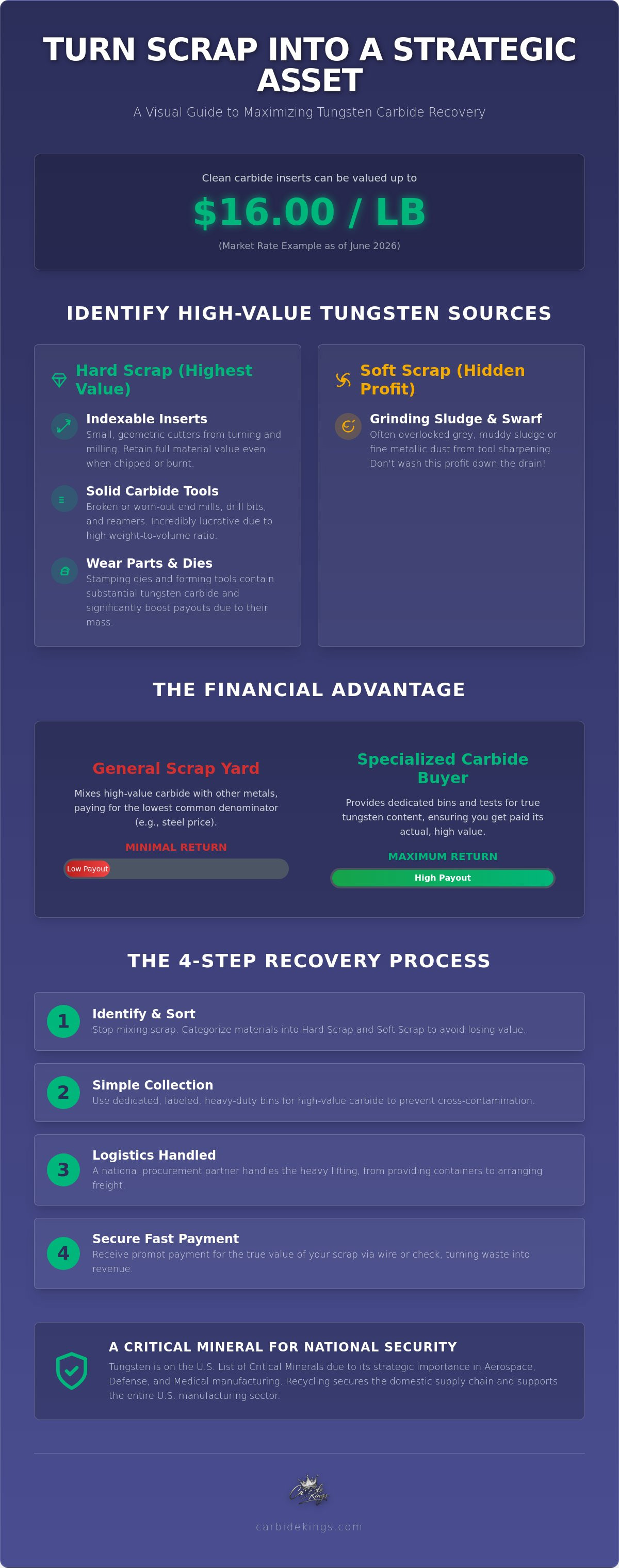
- Indexable Inserts: These small, geometric cutters from turning and milling operations are pure profit. Even chipped or burnt inserts retain their full material value.
- Solid Carbide Tools: Broken or worn-out end mills, drill bits, and reamers are prime candidates for recovery. Their high weight-to-volume ratio makes them incredibly lucrative.
- Wear Parts and Dies: Stamping dies and forming tools often contain substantial amounts of tungsten carbide. Because of their mass, these parts can significantly boost your quarterly payout.
The Hidden Profit in Tungsten Soft Scrap
Soft scrap is often overlooked because it doesn't look like valuable metal. It usually appears as a grey, muddy sludge or fine metallic dust known as swarf. This material is generated during precision tool sharpening and grinding operations. Don't wash this profit down the drain. While it requires specialized handling, the tungsten content remains high. You can learn more from tungsten soft scrap buyers on how to properly dry and store this material for maximum value.
Identifying tungsten alloys is another way to increase your shop's efficiency. These materials are often used for high-density weights, vibration dampening, or specialized radiation shielding. They feel significantly heavier than lead or steel of the same size. If you're unsure about a specific material, it's best to set it aside. Keeping your carbide separate from HSS is the single most important step in the process. When you're ready to start selling tungsten scrap from CNC machining, you can request a quote from our team to see the difference professional procurement makes. We specialize in identifying these nuances so you don't have to.
The Financial Advantage of Dedicated Carbide Recovery
Bulk dumping your tool room waste is a budget killer. Tungsten carbide prices significantly outperform standard steel and aluminum scrap, often by a factor of ten or more. While steel is typically priced by the ton, carbide is valued by the pound. This massive price gap means that even a small bucket of worn inserts can be worth more than a full hopper of steel turnings. Selling tungsten scrap from CNC machining to a specialized buyer ensures your payout reflects the actual market value of the tungsten content, rather than a generic "mixed metal" rate. Professional procurement partners offer transparency and rates that general scrap yards simply cannot match.
Carbide vs. Steel: The Price Gap
General scrap yards often underpay for tungsten by grading it as tool steel. They lack the specialized X-ray fluorescence (XRF) technology needed to verify alloy composition on the spot. If you aren't sure if a tool is carbide or high-speed steel, use the density test. Carbide is roughly twice as heavy as steel. A small container of carbide will feel surprisingly heavy for its size. To see how these physical properties translate into revenue, check the latest tungsten carbide scrap price guide for current market trends. Knowing the numbers helps you hold your buyers accountable.
Calculate the ROI of a 5-minute sorting process versus bulk dumping. It's the highest-paying labor your team will perform all day. Setting up a dedicated workflow for your most valuable materials prevents high-grade carbide from being "downgraded" by the presence of cheaper alloys. When you separate your materials at the source, you protect your facility’s bottom line from unnecessary losses.
Maximizing Payout Through Purity
Material purity is the primary driver of your final payout quote. Removing steel shanks from carbide tools, such as brazed reamers or large boring bars, increases the price per pound significantly. Buyers pay a "clean carbide" premium because it eliminates the labor-intensive process of mechanical separation at the recycling facility. You can achieve this premium with minimal effort by using a torch or a press to pop the carbide tips off their steel carriers.
Our 24-hour processing ensures you get paid based on current market peaks, not a delayed average from last month. Speed is a financial advantage in a volatile market. By refining your collection process and focusing on purity, you turn selling tungsten scrap from CNC machining into a high-margin operation. We provide the logistics and the expertise to ensure every pound of material you ship returns the maximum possible value to your shop.
Streamlining the Recovery Process: Collection and Logistics
Converting your shop's waste into a liquid asset shouldn't be a logistical nightmare. The key to maximizing your return is a standardized, repeatable process that requires minimal oversight. Selling tungsten scrap from CNC machining is most profitable when it's integrated into your daily workflow. By following a structured five-step path, you can eliminate the friction of traditional recycling and ensure your facility gets paid quickly and accurately.
- Step 1: Set up dedicated, labeled bins at every CNC station for worn inserts. Capturing material at the source prevents contamination.
- Step 2: Consolidate materials into heavy-duty containers capable of handling high density. Small buckets are often better than large, unmanageable drums.
- Step 3: Request a professional quote to lock in current market rates. This protects you from price volatility while your shipment is in transit.
- Step 4: Leverage buyer-provided shipping labels and logistics support. We take care of the paperwork so you don't have to.
- Step 5: Receive payment within 24 hours of material verification. Fast settlement keeps your cash flow healthy.
Effective Shop-Floor Sorting Systems
Create a "no-sort" environment by capturing scrap at the point of use. When a machinist replaces an insert, the worn tool should go directly into a carbide-only bin. This simple habit eliminates the need for expensive, labor-intensive sorting later. Train your staff to distinguish between carbide and high-speed steel (HSS) by focusing on weight and tool markings. Beyond the financial gain, a clean, organized scrap recovery area has a psychological benefit. It reinforces a culture of precision and efficiency across the entire shop floor. It shows your team that every gram of material has value.
Maintaining this standard of excellence throughout your facility is key; for instance, you can explore Quartz Countertops to upgrade your administrative spaces with materials that reflect the same durability and precision found on your production floor.
Shipping Heavy Metals Safely
Tungsten is incredibly dense, which poses unique challenges for standard packaging. A small box can easily exceed 50 pounds, leading to box failure if not properly reinforced. Use double-walled boxes and heavy-duty tape to secure your shipment. For larger volumes, national buyers handle freight logistics for bulk industrial shipments, including palletizing and LTL (Less Than Truckload) coordination. Professional buyers provide all necessary shipping documentation to simplify the process. This ensures your material arrives safely and is processed without delay. Ready to clear out your bins? You can request a shipping kit to get started today. We've refined our logistics to be as fast and transparent as the machining work you do every day.
Partnering with Carbide Kings for National Recovery
Choosing the right partner determines whether your recovery program is a successful revenue stream or a logistical chore. Traditional scrap dealers often lack the specialized equipment to value high-density alloys properly. This leads to generalized pricing that hurts your bottom line. At Carbide Kings, our streamlined procurement process is built specifically for the industrial sector. We understand the nuances of the 2026 market and the physical demands of handling heavy materials. When selling tungsten scrap from CNC machining, the speed of your return matters as much as the price per pound. We've eliminated the bureaucratic hurdles found at corporate recyclers to keep your shop moving at full speed.
Our national reach means we buy from machine shops across the entire United States. Whether you're a small job shop or a high-volume production facility, we handle the logistics from your dock to our processing center. We back our service with a 24-hour promise. Once your material arrives at our facility, we perform weighing, grading, and verification immediately. You won't wait weeks for a settlement report. To ensure the process fits your accounting workflow, we offer flexible payment options. You can choose between secure wire transfers for immediate liquidity or traditional checks for your records. We make the financial side of recycling as precise as your machining tolerances.
Our Professional Carbide Recycling Process
Transparency is the foundation of our operation. We use industrial-grade precision weighing to ensure every ounce of your material is accounted for. Many shops lose value because general scrap yards use rounded estimates or outdated scales. Our grading system for hard scrap and alloys is rigorous and documented. We provide a clear breakdown of your shipment's composition so you know exactly what you're being paid for. For a deeper look at how we transform your worn tools into raw materials, read our guide on the carbide scrap recycling process. It covers everything from initial intake to final smelting.
Get Your Quote and Ship Today
We've built an online system that provides a rapid material quote based on current market peaks. This no-nonsense approach to industrial metal procurement is why shop managers trust us year after year. You don't have to haggle or guess if you're getting a fair rate. We provide the data and the logistics support to make your job easier. Stop letting valuable carbide take up space on your shop floor. Ready to turn your shop scrap into revenue? Get a fast carbide quote from Carbide Kings today and experience a procurement partnership that values your time and your material.
Maximize Your Shop’s Revenue Potential Today
Reclaiming value from your tool room is no longer a luxury; it's a competitive advantage. By identifying high-value hard scrap and capturing often-overlooked soft scrap like grinding sludge, you turn a waste stream into a robust profit center. The current market rewards shops that prioritize material purity and professional sorting. Selling tungsten scrap from CNC machining doesn't have to be a logistical burden. Partnering with an expert ensures you bypass the low rates of general scrap yards and tap into specialized industrial procurement.
With our 24-hour processing and payment guarantee, your capital stays in your business where it belongs. We handle the national shipping logistics and provide competitive rates for both hard and soft scrap, ensuring every ounce of material is accounted for. The process is fast, transparent, and designed to support your core operations without interruption. It’s time to clear your bins and boost your bottom line with a partner you can trust.
Turn your machine shop scrap into cash with Carbide Kings and start maximizing your facility's secondary revenue stream today.
Frequently Asked Questions
How can I tell if my machine shop scrap is tungsten carbide or tool steel?
Carbide is roughly twice as dense as tool steel. If a small tool feels surprisingly heavy for its size, it is likely tungsten. You can also use a spark test. Carbide produces short, orange sparks, while steel produces long, white, or yellow sparks with "bursts." Using a magnet is another quick check. Most carbide is weakly magnetic, whereas tool steel is strongly magnetic.
Is there a minimum weight requirement for selling carbide scrap?
We typically look for shipments of at least 50 pounds to make the shipping logistics cost-effective for your shop. Smaller amounts can be consolidated in your facility until you reach this threshold. This ensures the payout justifies the transit process and maximizes your final return. Consolidation is the smartest way to manage low-volume scrap while still capturing top-dollar rates.
How do you calculate the price per pound for tungsten carbide?
Prices are determined by current global market peaks for tungsten and the specific purity of your material. We grade your shipment based on whether it is clean hard scrap, brazed tools, or soft sludge. Selling tungsten scrap from CNC machining at premium rates depends on these factors being verified through precision weighing. We use transparent market data to ensure your quote is accurate and fair.
Can I sell grinding sludge or is it considered hazardous waste?
You can absolutely sell grinding sludge as Tungsten Soft Scrap. While it requires specialized containment to prevent leaks during transport, it remains a high-value material. We provide guidance on how to dry and package this "hidden profit" so it meets shipping standards. Proper handling turns a messy byproduct into a clean revenue stream for your tool room instead of a waste liability.
What is the fastest way to get paid for my tungsten scrap?
The fastest method is using our 24-hour verification process combined with a wire transfer. Once your material arrives and is graded, we initiate payment immediately. This avoids the delays of traditional scrap yard processing. It puts cash back into your shop's operating budget within one business day of verification. We prioritize speed so your capital isn't tied up in logistics or administrative hurdles.
Do I need to remove the steel holders from my carbide inserts?
You don't have to remove steel shanks, but doing so increases your price per pound. "Clean carbide" fetches a premium because it eliminates the need for mechanical separation at the recycling plant. If the steel is easily removed, it is the highest-paying labor your team can perform. We buy both types, but sorting at the source is the key to maximizing your total payout.
How should I package heavy carbide scrap for national shipping?
Use small, double-walled boxes and heavy-duty reinforced tape to prevent box failure. Because carbide is so dense, a small volume can quickly exceed 50 pounds. For larger quantities, we coordinate LTL freight and provide the necessary documentation. This ensures your shipment is secured and tracked across the country. Selling tungsten scrap from CNC machining is simpler when you use our professional logistics support.
What happens to the tungsten after it is recovered from my shop?
Recovered tungsten is chemically or mechanically processed to create new tungsten powder. This powder is then used to manufacture a new generation of high-performance CNC tools, aerospace components, and defense equipment. Your shop's scrap becomes a critical part of the domestic manufacturing supply chain. Recycling helps secure the domestic supply of this critical mineral while reducing reliance on volatile global imports.


