

The cleaner pile isn’t automatically the more valuable one. When purchasing cleaned carbide solids versus unwashed industrial wear-parts scrap, compare tungsten content, contamination, material sorting, and part size: cleaner material can require less processing, but its composition and form also affect how it is evaluated.
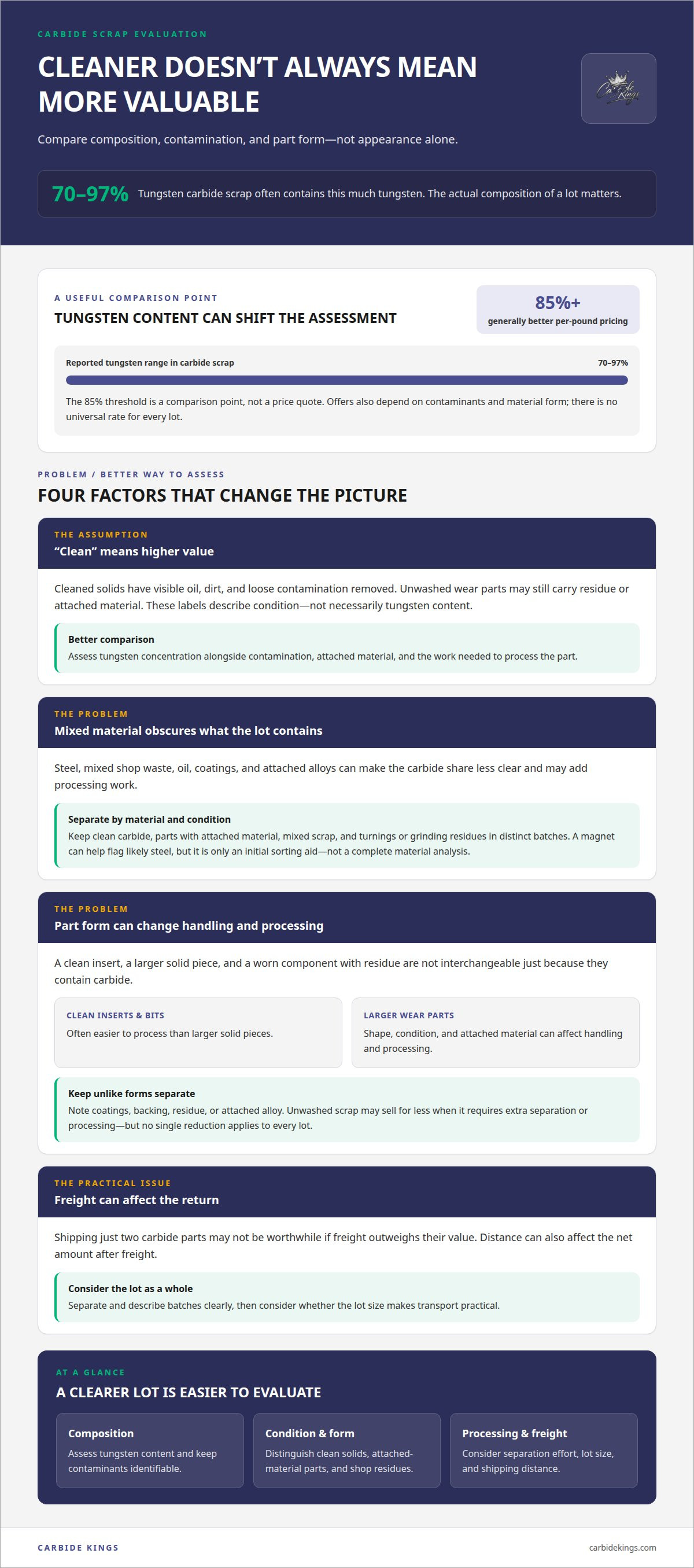
It’s reasonable to expect cleaned carbide to have an advantage. Unwashed parts may include oil, steel, or other material that needs to be separated, while clean inserts and bits are often easier to process than larger solid pieces. Tungsten carbide scrap often contains 70-97% tungsten, so the amount of recoverable tungsten matters too.
This guide explains how tungsten content influences value, what sorting can reveal, and how cleaned inserts, larger solids, and shop scrap differ. You’ll get practical guidance for separating material and describing a carbide lot for evaluation.
Key Takeaways
- Compare tungsten content and contamination when assessing cleaned carbide and unwashed wear parts; cleanliness is only one factor in material value.
- Sort carbide separately from steel and other materials to make the composition of a scrap lot clearer.
- Consider part size and form: clean inserts and bits can be easier to process than larger solid pieces.
- Track carbide generated by machining, tool replacement, and equipment maintenance so reusable scrap doesn’t get lost in mixed shop waste.
How tungsten content affects carbide scrap pricing
Tungsten carbide combines tungsten and carbon, creating a hard material that resists heat and wear. Industrial users rely on it for cutting and drilling tools, including end mills, drills, and saw blades. Scrap composition varies: tungsten carbide scrap often contains 70-97% tungsten. That range makes tungsten content a key factor in evaluating a lot, alongside cleanliness and material form.
For grading, separate identifiable carbide from mixed or contaminated material, then assess its composition. Carbide scrap with tungsten concentrations generally at or above 85% typically commands better per-pound pricing. That threshold is a useful comparison point, not a price quote. In the United States, grades and offers depend on the material’s tungsten concentration, contaminants, and form; no single grade label or universal rate describes every lot.
Keep turnings and grinding materials separate from solid pieces so their form and any mixed material are clear during evaluation. Cleaning may require labor and equipment to remove contamination or separate attached material. The effort depends on what is mixed in, how firmly it adheres, and how much material needs processing. These factors affect the work involved, but do not establish a fixed cleaning cost.
For safe handling, identify the carbide, oils, and attached material before following the applicable workplace and transport procedures for the specific lot. Recycling tungsten carbide also helps conserve resources: recovering it requires less energy than mining and refining new tungsten. Recovered material can support industrial demand for hard-wearing cutting, drilling, and forming tools.
Lot size and freight affect the practical return. Shipping just two carbide parts may not be worthwhile if freight outweighs their value. Shipping distance can also affect the net amount after freight, while separate, well-described lots are easier to evaluate. Before shipping, sort material by form and contamination, then consider whether the lot size makes transport practical.
Material identification and sorting
Start by separating carbide parts from steel and mixed shop waste. A clear sort shows what each batch contains before evaluation.
Identifying and Sorting Carbide Materials
Use a part’s shape, wear pattern, and source as practical clues. Cutting inserts, drill bits, and wear-resistant components may contain tungsten carbide, but similar-looking pieces can be steel or other materials. Carbide is only weakly attracted to a magnet, unlike steel, so a magnet can help identify likely steel pieces. Treat this as an initial sorting aid, not a complete material analysis.
Keep identifiable carbide in a separate batch, and split unlike forms when their composition or condition differs. For example, don’t combine recognizable carbide inserts with mixed machine-shop sweepings. Recyclers typically sort and grade carbide, remove contaminants, process it, and recover tungsten powder for reuse. A well-separated lot is easier to assess and keeps unrelated material from obscuring the carbide.
Contamination and Attached Materials
Oil, dirt, and loose debris add unwanted material that must be addressed during processing. Steel backing, brazing alloy, and coatings can also affect handling because they are attached materials, not carbide. Their presence can change the assessed carbide content and the work required to separate or process a part. Keep these pieces distinct from clean, unbacked carbide.
For example, sort a carbide tip with a steel shank separately from a solid carbide insert. Note whether each batch has visible oil, coatings, or attached alloy rather than labeling every part clean carbide. Contamination and attachments can reduce the usable carbide share or require extra processing. Their impact depends on the material and how readily it can be separated.
Sorting works best as a repeatable shop-floor process. Use separate, clearly marked containers for clean carbide, parts with attached material, and mixed scrap. Keep turnings and grinding residues apart from solid wear parts, since their form and possible mixture with other shop material make them a distinct batch to evaluate. Don’t blend unidentified pieces into a known lot.
Once sorted, keep the categories separate during storage and shipment. A clean batch should stay apart from oily or mixed material, and parts with steel backing should remain identifiable. This simple process makes each lot easier to describe and helps avoid confusion during recycling evaluation.
Clean inserts and bits versus larger solid pieces
Part size and condition affect handling, processing, and how a carbide lot is assessed. Clean inserts and bits are often easier to process than larger solid pieces.
Cleaned Solids and Unwashed Wear Parts
Cleaned carbide solids are pieces with visible oil, dirt, and loose contamination removed. Unwashed industrial wear parts are used components that may still carry residue or attached material. A clean carbide insert is one example; a worn drilling component with oil or attached steel is another. The distinction describes condition, not necessarily tungsten content.
When purchasing cleaned carbide solids vs unwashed industrial wear parts scrap, compare condition as well as part form. Group clean inserts separately from larger wear parts, and note any coatings, backing, or residue. Clean inserts and bits are often easier to process, while a large part’s shape and condition can affect handling. Neither label alone establishes a lot’s value.
Buyer Options and Unwashed Scrap Discounts
Carbide recyclers in the U.S. can assess both clean solids and unwashed wear parts. Evaluation depends on composition, contamination, part form, and processing requirements. Keep material categories distinct so an unwashed component does not affect how clean inserts in the same batch are assessed.
Unwashed scrap may sell for less because residue or attached material can add separation and processing work. No single reduction applies to every lot. The difference depends on the type and amount of contamination, carbide content, and preparation required. Cleaning can make a batch easier to process, but the effort involved matters too.
Compare the full lot, not just its appearance. A container of clean inserts has a different handling profile from large, unwashed wear parts. Keep each group separate and describe its condition consistently. For example, identify clean bits, oily parts, and pieces with attached backing as distinct categories. This makes the comparison more useful and helps prevent unlike materials from being treated as one uniform lot.
The decision about purchasing cleaned carbide solids vs unwashed industrial wear parts scrap also depends on the work each form requires. Numerous small inserts can be handled as a batch, while larger solids may need different handling. Consider how cleanliness, part shape, and attached materials affect preparation. The useful comparison is not simply small versus large, but the processing each category requires.
Manufacturing and machining scrap
Industrial scrap accumulates as carbide tools and wear components reach the end of their working life. The source and use of each part help describe the lot.
In machine shops, tungsten carbide cutting tools wear down through repeated use and eventually become scrap. End mills and drills are common examples. Tool and die manufacturers may also set aside broken or outdated tools, while construction companies and tool rental businesses can accumulate worn carbide tools. Since these materials come from different operations, source details help distinguish production scrap from replaced equipment parts.
Drilling and mining operations generate another stream of scrap. Drill bits, cutting tools, and wear-resistant parts are used in this equipment, and replaced components can enter the scrap flow. Oil, gas, and service companies also retire worn carbide components from drilling and mining equipment. Keep these parts identifiable by use, especially when a batch includes tools from several applications.
Maintenance work adds further examples. Aerospace companies and defense contractors may generate carbide scrap when old or worn parts are replaced. Tool and die shops may have broken tooling, while machine shops may collect worn cutters. Recording the source and general part type gives a buyer useful context for evaluating a lot without treating every item as identical.
A practical shop process starts at the point of removal:
- Place retired carbide tools in a designated scrap container, separate from reusable tooling.
- Keep identifiable categories, such as worn drills and broken forming tools, distinct.
- Note whether material came from machining, tool replacement, drilling, or maintenance.
- Keep mixed or uncertain shop material apart from identifiable carbide parts.
This routine makes recurring scrap streams easier to track. For example, a machining business can collect worn cutters during tool changes, while a maintenance team can set aside replaced wear parts. Review the categories as scrap accumulates, then describe each lot by source and condition. To move a shop’s carbide material toward recycling, explore carbide scrap options.
Carbide Kings
Carbide Kings supplies industrial tungsten and carbide materials, including carbide scrap, Tungsten Hard Scrap, Tungsten Soft Scrap, and Tungsten Alloys. Manufacturers and metallurgical businesses can use these categories as a starting point for matching their material needs with the relevant scrap types.
Use the distinctions in this guide to describe your material and intended use clearly. Separate carbide from other materials, note whether it is clean or has attached components, and identify the type of material you need. That context helps keep a sourcing conversation focused on the right category.
For industrial tungsten and carbide materials, contact Carbide Kings to discuss your needs.
Make your next carbide-scrap decision with confidence
A sound approach to purchasing cleaned carbide solids versus unwashed industrial wear-parts scrap starts before a lot leaves your facility. Set a consistent process for separating material, describing its condition, and keeping scrap categories distinct. This gives your team a clearer basis for deciding what to retain, prepare, or send for evaluation.
Carbide Kings supplies Tungsten Hard Scrap, Tungsten Soft Scrap, and carbide scrap for industrial use. These offerings serve businesses handling different tungsten and carbide streams. Identify the material category and describe its condition so the conversation can focus on the scrap you have.
Contact Carbide Kings about carbide scrap to discuss your material. A clear starting point can make the next decision easier.
Frequently Asked Questions
What cleaning and sorting steps are required before selling carbide wear parts scrap?
Prepare the lot by removing loose debris where practical and separating parts by condition and type. For example, keep clean inserts apart from oily wear parts and pieces with attached steel or coatings. Label containers with the material source and a brief description of its condition. Don’t mix uncertain pieces into a clearly identified batch; this makes the material easier to describe accurately for evaluation.
What minimum quantities, lot requirements, and shipping terms do carbide scrap buyers require?
No minimum quantity or standard shipping terms are given. Separate material by form and contamination, and consider whether the lot size makes shipping worthwhile; shipping only two parts may not be worthwhile if freight outweighs their value.


