Is your mining operation unknowingly burying a fortune in the scrap bin every month? While you focus on extracting ore, your spent drill bits and cutters are building a high-purity "mine" of their own. If you're currently selling tungsten carbide from mining operations as basic steel scrap, you're leaving significant revenue on the table. You've likely dealt with the logistical headaches of moving bulk scrap only to face slow payment cycles from local dealers who don't recognize the true market value. You deserve a better return on the materials that keep your site running.
This guide provides a clear roadmap to maximize your 2026 revenue. With China's 2026 export controls tightening the global supply, the demand for high-quality recycled carbide has reached a critical peak. We'll show you how to identify, sort, and move your hard scrap efficiently. You'll learn how to bypass local middlemen and secure competitive national pricing with fast, reliable payments. Let's turn your spent industrial tools into immediate cash to offset your daily operating costs and streamline your secondary revenue streams.
Key Takeaways
- Identify high-value components like drill bit buttons and road header teeth to ensure you aren't tossing profit into the steel bin.
- Maximize your returns by selling tungsten carbide from mining operations directly to specialist buyers who offer national rates rather than local scrap yard prices.
- Streamline your workflow with professional sorting and packaging techniques that make moving heavy industrial scrap fast and efficient.
- Leverage current 2026 market trends and export shifts to turn spent wear parts into a reliable, high-density revenue stream.
- Eliminate the "middleman tax" and slow payment cycles by partnering with experts who prioritize transparency and immediate liquidity.
Mining for Profit: Why Spent Carbide is a Hidden Asset
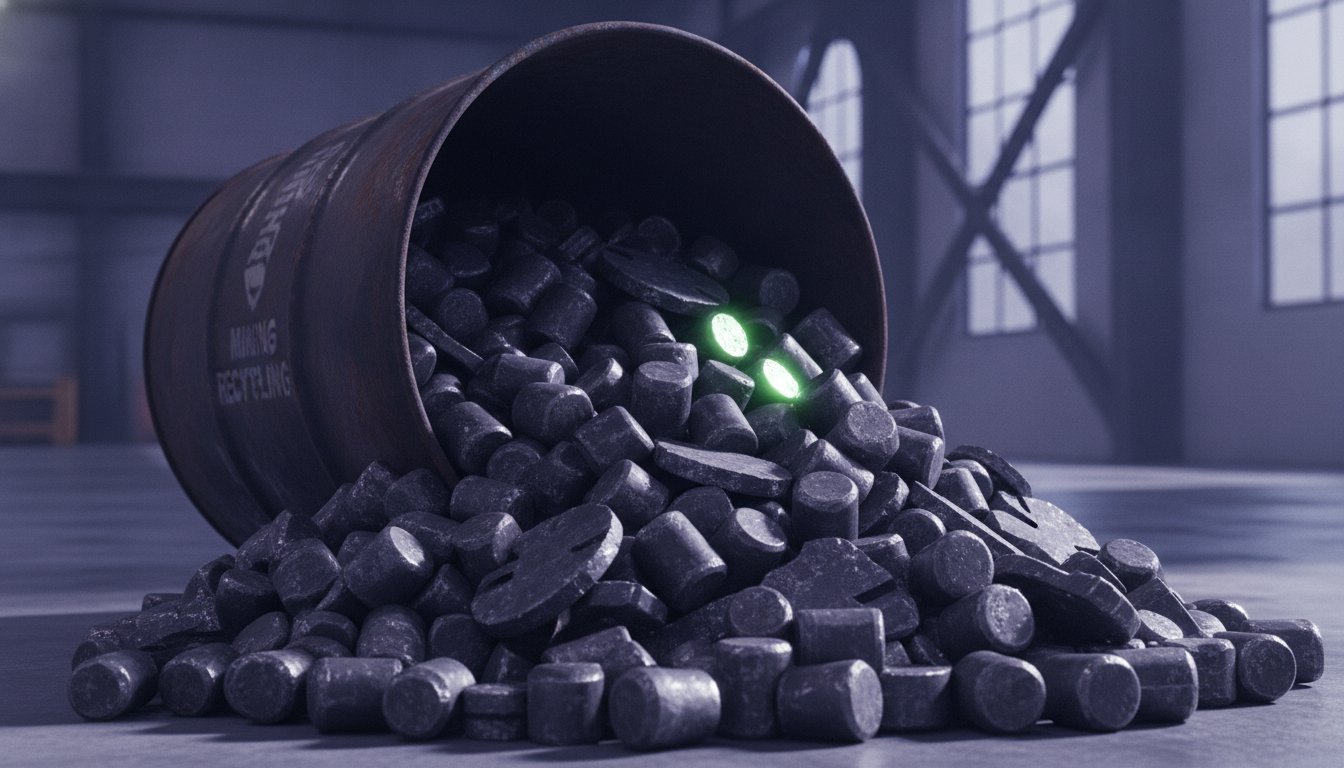
Mining operations are brutal on equipment. Rock penetration requires materials that don't just survive; they dominate. That's where Tungsten carbide comes in. This compound is nearly as hard as diamond, making it the industry standard for drill bits, buttons, and cutters. However, when these parts reach the end of their service life, they are often treated as common industrial waste. This is a costly oversight. Spent carbide isn't trash; it's a high-density revenue stream that remains valuable even after the tool's geometry is gone. Every spent bit sitting in your yard represents a concentrated form of one of the world's most sought-after metals.
The global supply chain has shifted dramatically in 2026. China currently controls over 80% of global production. Their implementation of the 2026 Catalogue of Dual-Use Items on January 6 has placed strict export controls on tungsten, limiting supply to state-approved companies. Coupled with 50% US tariffs on Chinese tungsten products, the domestic demand for recycled material has surged. Selling tungsten carbide from mining operations is no longer just a recycling initiative. It's a critical component of a modern, profitable mining strategy that turns equipment lifecycle costs into capital.
The Economics of Carbide Recovery in 2026
Recovering wear parts directly offsets the rising costs of new tooling. In a market projected to reach USD 7.6 billion this year, every pound of reclaimed metal counts toward your operational efficiency. High-purity tungsten recovery significantly impacts your operation's bottom line by providing immediate liquidity. Because the United States hasn't commercially mined tungsten since 2015, your scrap bin is essentially a secondary mine. The 2026 market drivers, including inventory constraints and increased reliance on recycling, make this the ideal time to liquidate your spent inventory for maximum return.
Tungsten Carbide vs. Steel: The Price Gap
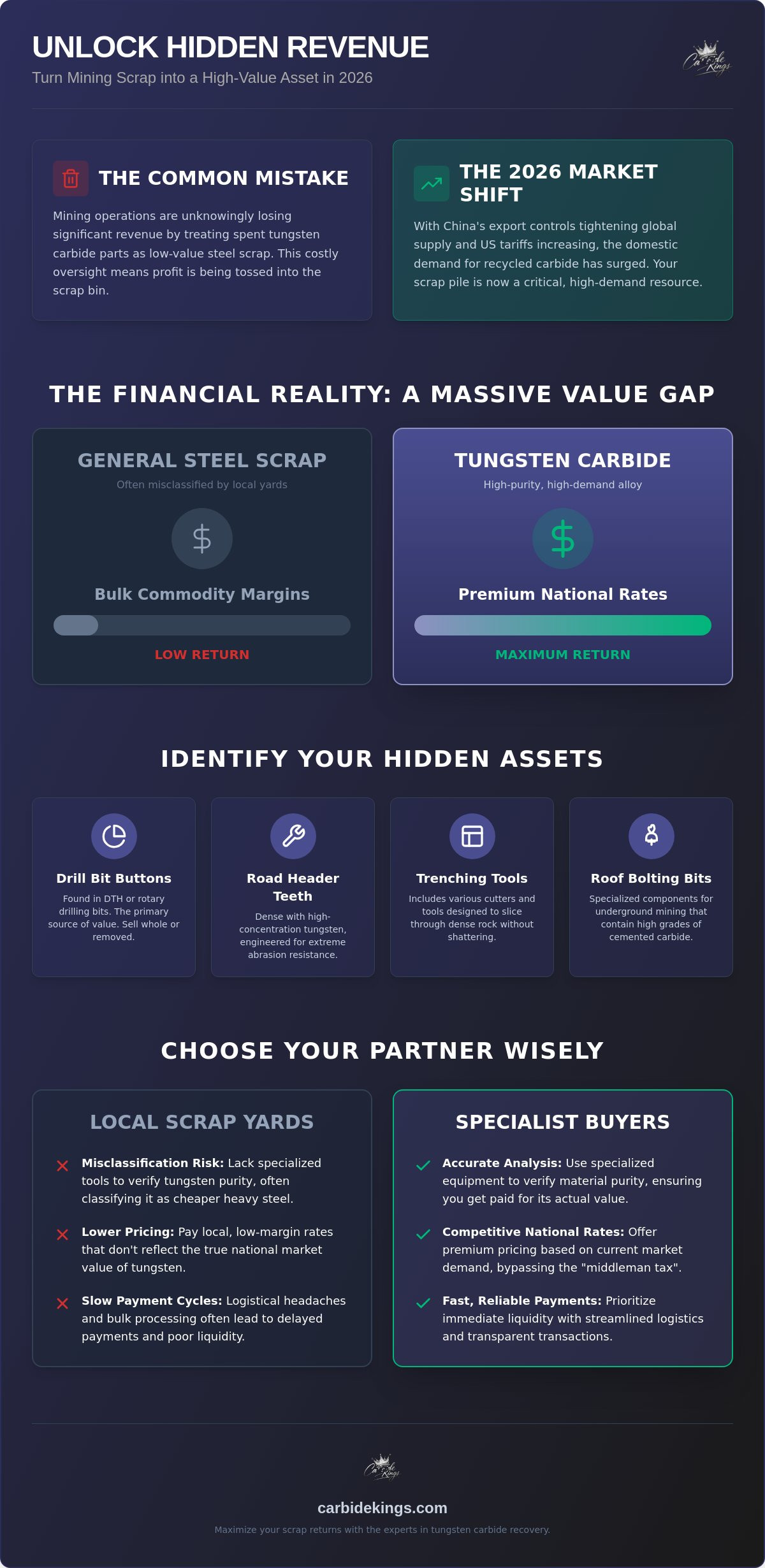
The difference between carbide and steel isn't just chemical; it's financial. Common iron and steel scrap are bulk commodities with low margins. In contrast, mining-grade cemented carbide is a precision alloy. General scrap yards often lack the specialized analysis tools to verify tungsten purity. They frequently misclassify mining bits as heavy melting steel. This results in a massive loss for the seller. Understanding the purity factor is key. High-value mining bits contain a high concentration of tungsten that commands a price far exceeding traditional scrap metal. Don't settle for local middleman rates when your material is worth a premium on the national market.
Identifying High-Value Tungsten Carbide in Mining Equipment
Mining teams often overlook the scrap in the corner of the maintenance shop. This is a missed opportunity. Road header teeth, trenching tools, and roof bolting bits are dense with profit. These components are engineered for extreme abrasion resistance, meaning they contain a high concentration of tungsten. Specialized underground mining cutters also fall into this category. They must slice through dense rock without shattering, requiring the highest grades of cemented carbide. If you're tossing these into a general steel bin, you're losing money on every load.
To maintain high productivity across your entire site, it is important to invest in durable processing components; for high-quality aggregate screening options, you can learn more about Compass Wire Cloth Corporation.
Selling tungsten carbide from mining operations starts with a thorough audit of your scrap piles. You need to distinguish between common steel and high-value alloys. According to the Tungsten statistics and information provided by the USGS, US industrial consumption relies heavily on cemented carbide for mining and construction applications. This dependence makes your spent parts a vital domestic resource. Identifying these parts correctly ensures you get paid for the actual material value rather than a flat steel rate.
The 'Button Bit' Goldmine
Drill bits used in DTH or rotary drilling feature carbide "buttons" pressed into a steel body. These buttons are the primary source of value. You have two choices: sell the bit whole or remove the buttons. Selling whole is faster and eliminates labor costs. Clean, removed carbide often fetches a higher price per pound, but the time spent extracting them can eat into your margins. Most large-scale operations find that selling the entire bit is the most efficient way to maintain momentum. We accept both forms, allowing you to choose the method that fits your site's labor availability.
Wear Parts and Protective Liners
Conveyor liners and chute plates often feature tungsten carbide protection to handle abrasive ore. These wear plates are frequently ignored during site cleanups because they look like standard scrap plate. Similarly, hard-faced scrap has a layer of carbide welded onto a steel base. It has significant recycling potential that local yards usually miss. Sorting these different grades of carbide before shipping ensures you receive an accurate quote. If you're unsure if a specific part contains high-value alloy, the team at Carbide Kings can help you classify your inventory and maximize your return.
Specialist Buyers vs. Local Scrap Yards: Maximizing Your Return
Local scrap yards are convenient for aluminum cans and copper pipe. However, they are often the worst choice for selling tungsten carbide from mining operations. These generalist facilities typically lack the specialized equipment needed to identify high-purity alloys. Without X-ray fluorescence (XRF) technology, a local yard cannot distinguish between different grades of cemented carbide. Instead of offering a precise value, they often quote a "flat rate" for heavy melting steel or mixed tool scrap. This misclassification is essentially a "Middleman Tax." Local dealers frequently buy your high-value bits at steel prices and immediately flip them to specialist buyers like us for a significant profit.
Accessing the true market value requires working with a direct procurement partner. According to U.S. Geological Survey data on tungsten, nearly 60% of tungsten consumed in the United States is used for cemented carbide parts. This high demand means specialized buyers are willing to pay national rates that reflect global market conditions, not just local regional fluctuations. You shouldn't be penalized because your mine is in a remote location. Direct buyers provide the logistics to move bulk loads across the country, ensuring you receive the same competitive pricing as a site located next to a major industrial hub.
- Precise XRF analysis identifies the exact alloy grade and purity.
- National market pricing bypasses regional low-ball offers.
- Direct logistics handle heavy bulk loads without hidden middleman fees.
- Faster payment cycles improve your site's immediate cash flow.
Why Purity Testing Matters for Mining Scrap
Accuracy is the foundation of a fair transaction. XRF analysis allows us to determine the exact tungsten content of your load in seconds. This precision prevents the underpayment common at general yards. When you're moving heavy bulk loads of drill bits or road header teeth, even a small percentage difference in purity can translate to thousands of dollars in revenue. We use certified, high-capacity scales to ensure every pound is accounted for. This transparency eliminates the guesswork and ensures your payment reflects the actual metallurgical value of your material.
The Advantage of National Procurement
Choosing a national buyer removes the traditional barriers to entry for remote mining sites. We handle the heavy lifting of logistics, allowing you to focus on your core operations. By cutting out local middlemen, you keep more of the profit for your business. For a deeper look at the technical aspects of the process, see The Complete Guide to Tungsten Hard Scrap Recycling in 2026. This direct-to-buyer model ensures faster transaction cycles and immediate liquidity. You don't have to wait for a local dealer to find a secondary buyer; we process the material and issue payment directly, helping you offset operating costs without the administrative friction.
Streamlined Logistics: Shipping Bulk Carbide Scrap Nationwide
Moving two tons of spent drill bits shouldn't feel like a second job. Most mining managers hesitate to liquidate their scrap because they dread the logistics. We've fixed that. The process for selling tungsten carbide from mining operations is now a standardized workflow designed for speed and safety. You focus on the mine; we handle the movement. Our system removes the friction that typically stalls industrial recycling efforts.
Start by sorting and cleaning your material. You don't need a deep scrub, but removing heavy mud and excessive grease is vital. This ensures our XRF analysis is accurate and that your shipping weight reflects the actual value of the metal. Once cleaned, secure your scrap in steel drums. These are the only reliable way to move high-density carbide without container failure. After your material is packed, request a quote by providing weight estimates and clear photos. This allows us to prepare the necessary LTL (Less Than Truckload) freight documentation immediately.
We schedule the pickup directly from your site. We utilize a network of industrial carriers experienced in heavy freight. Once the material arrives at our facility, we move into rapid verification. Final payment is issued via wire or check as soon as the load is confirmed. It's a closed-loop system that turns your waste into working capital in days, not months. This efficiency allows you to maintain a clean site and a healthy balance sheet simultaneously.
Packaging Heavy Mining Bits for Freight
Standard cardboard boxes or plastic bins will fail under the extreme density of tungsten carbide. For safe national transit, palletized steel drums are mandatory. Ensure each drum is securely banded to a heavy-duty pallet to prevent shifting during transport. Most LTL carriers prefer pallets under 4,000 lbs to ensure their liftgates can handle the load safely. Proper bracing and labeling are the final steps to ensure your shipment arrives intact and ready for immediate processing.
The 24-Hour Processing Promise
We value your time as much as your material. Once your mining scrap reaches our facility, it enters our priority processing lane. We verify weight and purity immediately using industrial-grade scales and XRF technology. To understand the granular details of how we handle your material, read The Industrial Carbide Scrap Recycling Process. Our goal is to finalize verification within 24 hours of receipt, triggering your payment. If you're ready to clear your yard and boost your revenue, contact us for a freight quote today.
Turning Waste into Capital: The Carbide Kings Advantage
Stop letting valuable alloys rust in your scrap yard. You've seen the data and you know the market is tight. Now it's time to act. Carbide Kings provides the direct link between your spent equipment and the national market. We specialize in the high-density materials other dealers struggle to price. By selling tungsten carbide from mining operations directly to us, you secure the highest possible return without the typical logistical headaches. We've refined our process to match the pace of a modern mining site. With China's export controls and the 50% US tariffs currently in place, the domestic value of your scrap has never been more significant. We ensure you capture that value fully.
We understand the specific challenges of the mining sector. You aren't dealing with small machine shop inserts; you're moving heavy DTH bits, massive road header teeth, and reinforced wear plates. These items require specialized handling and precise metallurgical analysis. Our procurement team manages the entire shipping process, from scheduling the carrier to verifying the load. We provide a transparent bridge to competitive national rates, ensuring your operation remains profitable even as global supply chains shift. You don't have to worry about local middleman fees or regional price drops. We bring the national market directly to your gate.
Your Partner in Industrial Resource Recovery
We're more than just a buyer; we're a proactive partner in your resource recovery. Most national mining operations choose us because we eliminate the administrative hurdles that slow down traditional scrap sales. You won't find complex paperwork or hidden fees here. We handle the heavy lifting of logistics and XRF analysis so your team can stay focused on production. Our commitment is simple: high-impact transactions that provide immediate value. We've built our reputation on reliability and transparency. When we receive your material, we verify it quickly and pay you exactly what it's worth. It's a straightforward process designed for industrial professionals who value time and clarity.
Ready to Liquidate Your Scrap Pile?
The tungsten market is currently experiencing a period of volatility with a bearish bias in the short term. Inventory and liquidity factors change daily. This means waiting to liquidate your scrap pile could cost you money. The process to get started is straightforward. Provide us with your weight estimates and photos, and we'll handle the rest. We offer fast, reliable payment options like wire transfers or checks to keep your cash flowing. Don't let your revenue sit idle in a bin. Take the final step toward a more efficient, profitable operation today. Contact Carbide Kings for a professional quote on your mining scrap today.
Secure Your Mining Operation's Secondary Revenue
Mining for profit extends beyond the ore you extract. By correctly identifying your spent wear parts and bypassing local scrap yards, you transform a logistical burden into a high-density revenue stream. Selling tungsten carbide from mining operations is a strategic move to offset your tooling costs while maintaining a clean, productive site. You now have the roadmap to avoid the middleman tax and secure the actual metallurgical value of your hard scrap.
Our team handles the heavy lifting to ensure your transition from waste to capital is seamless. We provide full nationwide shipping and logistics support to move bulk loads from any remote facility. Once your material reaches us, we maintain a 24-hour processing time for rapid verification. You'll receive fast, transparent liquidity through direct wire transfer or check payments. It's a straightforward process designed to keep your cash flowing and your yard clear.
Don't let your spent assets sit idle in a scrap bin. Take control of your site's secondary revenue and start seeing the returns your operation deserves today. Get a Fast Quote on Your Mining Carbide Scrap
Frequently Asked Questions
Do I need to remove the carbide buttons from the steel drill bits before selling?
No, you don't need to extract the buttons. We accept whole drill bits, though you should realize that clean carbide buttons usually command a higher price per pound. Removing them requires significant labor and specialized equipment. Most large-scale operations find that selling the entire bit is the most efficient way to maintain workflow while still capturing the value of the tungsten.
What is the minimum weight required for a national carbide scrap pickup?
We typically recommend a minimum of 500 pounds to maximize freight efficiency for LTL shipping. Smaller quantities can be shipped, but the logistics costs may eat into your overall profit. For massive bulk loads, our procurement team handles all the coordination. If you're unsure if your current pile meets the threshold, send us a photo for a quick evaluation.
How do I know if my mining bits are tungsten carbide or just hardened steel?
The most immediate indicator is weight; tungsten carbide is nearly twice as dense as standard steel. You can also perform a simple scratch test or check for magnetism. While the steel body of a bit is magnetic, the carbide buttons themselves are typically non-magnetic or only slightly magnetic. Our XRF analysis provides the final, definitive verification of your material's metallurgical makeup.
How long does it take to receive payment after shipping my mining scrap?
We issue payment within 24 hours of material verification at our facility. Once your shipment arrives, it enters our priority processing lane for weighing and analysis. After we confirm the weight and purity, we trigger a direct wire transfer or mail a check immediately. This rapid cycle ensures you have the capital you need to offset your daily operating costs without delay.
Can I sell carbide sludge or grinding swarf from my maintenance shop?
Yes, we buy tungsten soft scrap, including sludge and grinding swarf. These materials are common byproducts of tool sharpening and maintenance in mining operations. Ensure these materials are stored in leak-proof containers to prevent contamination or loss during transport. Selling tungsten carbide from mining operations includes both these "soft" scraps and the "hard" scrap from spent bits and cutters.
Beyond tool maintenance, keeping your heavy industrial rotating equipment refurbished and in peak condition is vital for long-term site efficiency; you can learn more about specialized repair and maintenance services available to support your operation.
Does Carbide Kings provide the shipping containers or drums for bulk mining scrap?
We provide comprehensive logistics support and can guide you on the best containers for your specific load. While many mines already have steel drums on-site, we can assist in sourcing them for large-scale recovery contracts. The key is using palletized steel drums to ensure the high-density material doesn't rupture the container during national transit. We make the shipping process as simple as possible.
Are there specific mining brands of carbide that are worth more?
The value of your scrap is determined by the tungsten content and purity, not the brand name on the tool. Whether you use bits from major global manufacturers or specialized regional suppliers, the metallurgical value remains the focus. Our XRF technology measures the exact chemical composition of the alloy. This ensures you receive a fair price based on the actual metal recovered rather than a brand premium.
What happens if my shipment contains a mix of carbide and other metals?
We sort and process mixed loads upon arrival at our facility. However, high levels of contamination from steel or dirt can impact your final quote. For the best return when selling tungsten carbide from mining operations, we recommend a basic sorting of your material before packaging. Separating your high-value carbide from common steel scrap ensures our analysis is faster and your payment is more accurate.


