
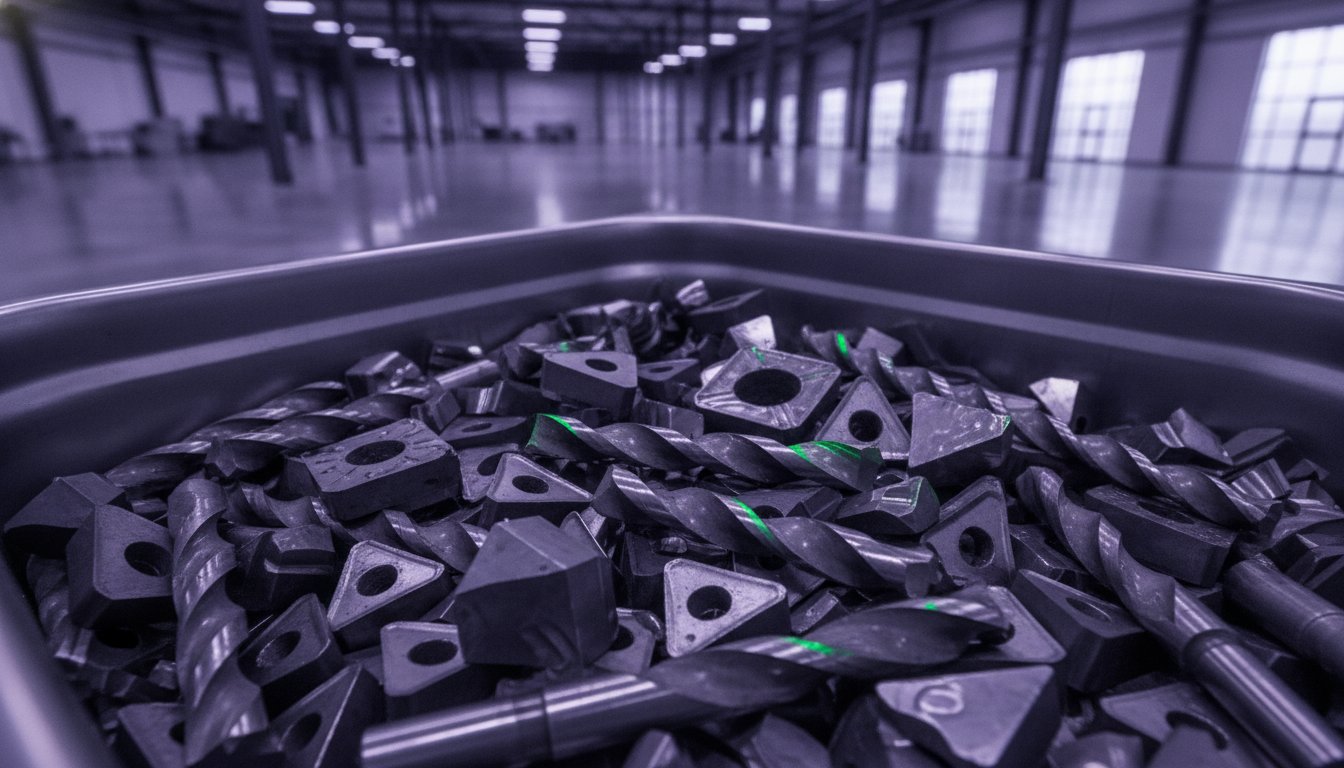
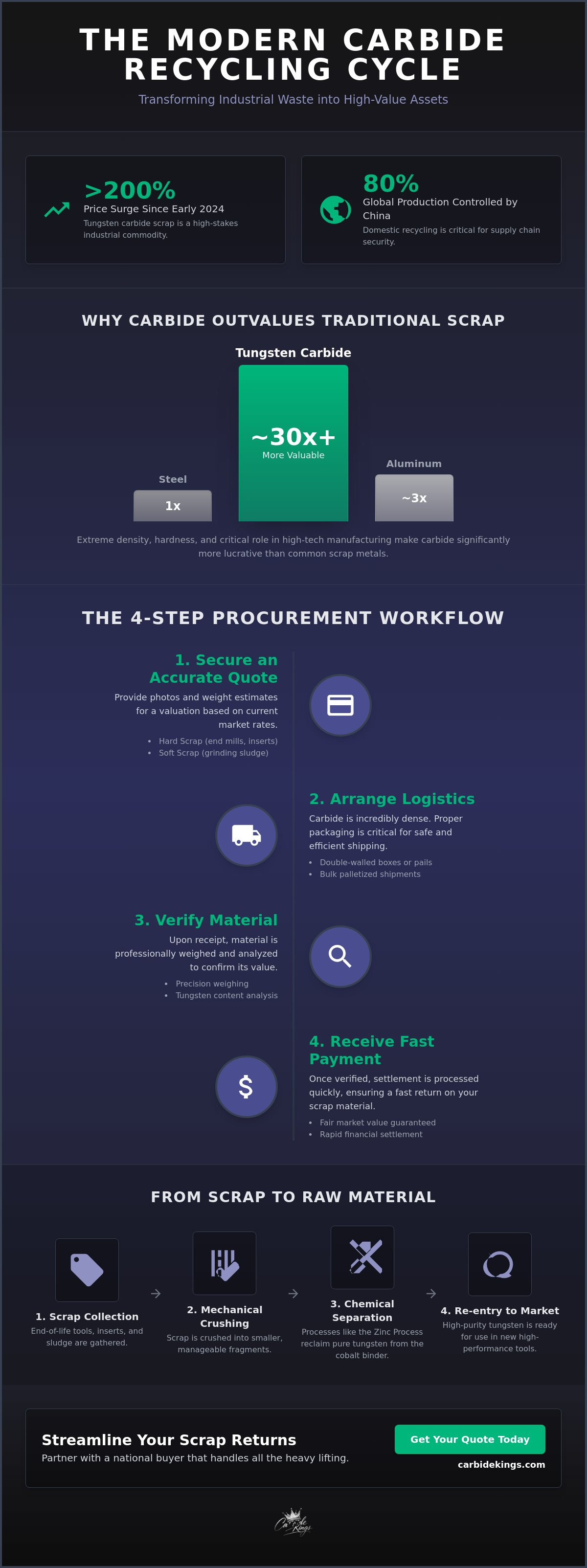
Tungsten carbide scrap prices have surged over 200% since early 2024, turning your shop floor waste into a high-stakes industrial asset. With China now controlling 80% of global production and enforcing strict export controls through the 2026 Catalogue of Dual-Use Items, mastering the carbide scrap recycling process is no longer optional for industrial professionals. It's a critical component of your operational efficiency and your bottom line.
You probably agree that the scrap industry is often a black box of opaque pricing and logistical hurdles. Moving heavy metal shipments is a chore, and the fear of being underpaid for high-value alloys like tungsten hard scrap or turnings is a constant concern. This guide promises to pull back the curtain. You'll discover exactly how industrial carbide is reclaimed, processed, and valued in this comprehensive breakdown of the modern recycling cycle.
We'll walk you through the mechanical and chemical stages of recovery, giving you the confidence to choose a reputable national buyer. By the end of this article, you'll have a clear understanding of the workflow and the knowledge required to maximize the value of every pound of scrap your facility generates.
Key Takeaways
- Understand how the carbide scrap recycling process turns end-of-life industrial tools into critical raw materials through advanced mechanical and chemical stages.
- Learn how to secure rapid valuations based on current 2026 market rates and navigate the logistics of shipping heavy, high-density tungsten alloys.
- Discover the specific transformation methods, including the Zinc Process, used to reclaim pure tungsten from both hard and soft scrap.
- Identify why carbide’s extreme density and current global supply constraints make it significantly more lucrative than traditional scrap metals like steel.
- Simplify your shop floor operations by partnering with a national buyer that removes administrative hurdles and handles all the logistical heavy lifting.
What is the Carbide Scrap Recycling Process?
The carbide scrap recycling process is the systematic recovery of tungsten carbide and cobalt from end-of-life industrial tools. In the 2026 global economy, tungsten is a critical refractory metal. It's essential for aerospace, defense, and high-tech manufacturing. Because China now enforces strict export controls under the 2026 Catalogue of Dual-Use Items, domestic recycling has become a matter of national security and economic survival. This isn't traditional scrap sorting. You aren't just separating copper from aluminum. You're engaging in a precision refining cycle that returns high-purity materials back into the production line. Keeping these durable alloys out of landfills is an environmental necessity. It prevents heavy metal leaching and ensures that valuable resources remain in use rather than being buried as waste.
The Critical Components: Tungsten and Cobalt
To understand the value, you have to understand the matrix. Tungsten carbide isn't a single metal; it's a composite. Cobalt acts as the metallic binder, holding the hard tungsten carbide grains together in a tough, wear-resistant structure. You can learn more about tungsten and its properties to see why it's so prized for its extreme melting point and hardness. Both elements are often classified as conflict minerals due to their complex global supply chains. This makes domestic recycling vital for supply chain resilience. The physical properties that make carbide nearly indestructible also make it difficult to process. It requires specialized crushing and chemical baths to separate the cobalt from the carbide, but the high market value of these reclaimed materials makes the effort lucrative for your shop.
The Circular Economy in Metalworking
Every pound of carbide you recycle reduces the demand for destructive primary mining. Extracting tungsten ore is energy-intensive and environmentally taxing. Reclaiming it from scrap uses significantly less energy and produces a much lower carbon footprint. This creates a sustainable loop that protects your facility from international price volatility and supply shortages. In 2026, the carbide scrap recycling process represents a true closed-loop system where industrial waste is directly transformed back into the high-performance cutting tools and wear parts that drive modern manufacturing.
The 4-Step Procurement Workflow: From Shop Floor to Buyer
The modern carbide scrap recycling process is designed for speed. Industrial professionals don't have time for back-and-forth negotiations or delayed pickups. You need a system that moves as fast as your production line. This streamlined carbide scrap recycling process eliminates administrative friction and ensures you receive fair market value without the typical industry headaches. We handle the heavy lifting so you can stay focused on your core manufacturing operations.
Securing an Accurate Carbide Quote
Step one is all about the data. Generating a quote based on current 2026 market rates requires clear information. You should provide high-resolution photos and weight estimates to ensure a fair price. There's a significant difference between quoting tungsten hard scrap, such as end mills and inserts, and tungsten soft scrap like grinding sludge or powders. Tungsten alloys also vary in value based on their specific metallic makeup. For a deep dive into how these factors impact your bottom line, read our article on Carbide Scrap Payment Processing: Your 2026 Guide to Fast Returns.
Logistics for Heavy Industrial Shipments
Step two focuses on movement. Tungsten is incredibly dense. A small volume of material can easily exceed standard shipping weight limits. You must use double-walled boxes or reinforced plastic pails for smaller loads. For larger quantities, bulk palletized scrap is the industry standard. We provide national shipping support to handle these logistical hurdles. Whether you're shipping a single bucket or several pallets, the goal is a smooth transition from your dock to our facility. We minimize the paperwork so your team doesn't get bogged down in shipping logistics.
Material Analysis and Fast Settlement
Step three is verification. Upon receipt, your material undergoes professional weighing and analysis. We verify the tungsten content to ensure the quote matches the physical reality of the shipment. This level of precision is supported by data found in the U.S. tungsten recycling report, which outlines the rigorous standards required for industrial metal reclamation.
Step four is the final resolution. Once verified, we process your payment via wire transfer or check within 24 hours. Maintaining your shop's cash flow is our priority. You shouldn't have to wait weeks for a settlement on high-value materials. If you're ready to clear out your bins and get paid, you can start your valuation today and see how simple the process can be. The work is effectively as good as done once the material leaves your floor.
Industrial Extraction: How Scrap is Transformed into Raw Tungsten
The transition from a bucket of broken inserts to a high-purity raw material is a feat of industrial engineering. This stage of the carbide scrap recycling process is where the heavy lifting happens. It's a precision-driven workflow that extracts every ounce of value from your waste. According to the U.S. Geological Survey report on tungsten recycling, these methods are vital for maintaining a steady supply of refractory metals in the domestic market. This isn't just about melting metal; it's about molecular separation and purification. We take the "junk" from your shop floor and turn it back into a strategic asset.
Before the chemical magic starts, we have to handle the bulk. The mechanical stage involves crushing and pulverizing hard scrap into manageable sizes. We take large, solid chunks and break them down into smaller fragments. This increases the surface area for the next steps, ensuring the recovery agents can work efficiently. It's a straightforward, loud, and necessary part of the cycle that prepares the material for the more sophisticated refining stages.
The Zinc Process Explained
The zinc process is the gold standard for reclaiming clean carbide scrap. We submerge the material in molten zinc, which reacts with the cobalt binder. As the zinc alloys with the cobalt, it expands, causing the rigid carbide structure to fracture and disintegrate from within. Once the reaction is complete, a vacuum distillation process recovers the zinc for reuse in the next batch. This method is highly efficient because it's a physical separation rather than a chemical transformation. It preserves the original grain size of the carbide, allowing it to be used in high-quality new tools without losing its structural integrity. It's fast, effective, and environmentally responsible.
Chemical and Electrolytic Refining
Not all scrap is clean. Chemical leaching handles the "dirty" material, including complex alloys and contaminated scrap that the zinc process can't touch. We use chemical baths to separate the tungsten from unwanted impurities like steel or coolants. Through a series of oxidation and reduction reactions, the material is transformed into Ammonium Paratungstate (APT). This chemical precursor is the essential building block for producing the final tungsten powder. For a deeper look at how these methods fit into the broader market, check out our Tungsten Carbide End-of-Life Recycling: 2026 Industrial Trend Analysis.
The final output is a high-purity tungsten powder. It's a fine, gray substance that's ready to be pressed and sintered into brand-new industrial tools. This closed-loop approach ensures that the tungsten leaving your facility today will eventually return to the market as a high-performance end mill or drill bit. The work is done, the material is reclaimed, and the cycle begins again.
Why Carbide Recycling Outperforms Traditional Scrap Metal
Carbide isn't your average scrap metal. In most machine shops, steel represents the bulk, but carbide represents the bank. The physical density of tungsten carbide is roughly double that of steel. This means a small bucket of end mills often outweighs a massive pile of steel skeletons. Because of the 2026 global supply crunch, the per-pound rates for tungsten remain at historic highs. You're dealing with a refractory metal that resists heat like almost nothing else on earth. While iron or aluminum melt with relative ease, tungsten requires the specialized carbide scrap recycling process to be reclaimed. This complexity, combined with its scarcity, is why your carbide bins are the most valuable real estate in your facility.
Purity is the primary driver of value. In the world of traditional scrap, a little contamination might just lower your grade. In carbide recycling, it can ruin a batch. Clean sorting leads to significantly higher payouts because it reduces the energy and time required for refining. When you separate your materials effectively, you're not just being organized; you're directly increasing your shop's revenue. We value transparency, and that starts with helping you understand why these materials command such a high premium compared to common industrial waste.
Carbide vs. High-Speed Steel (HSS)
Don't let HSS contaminate your high-value bins. High-speed steel is a useful alloy, but it's worth a fraction of what you'll get for tungsten hard scrap. Mixing the two is one of the 7 Common Mistakes When Selling Carbide Scrap (and How to Avoid Them in 2026). Use a simple spark test or check the weight. If it feels unusually heavy for its size, it's likely carbide. Sorting these materials correctly ensures you don't leave money on the table when it's time to sell. Accurate identification is the first step toward a lucrative and professional transaction.
Valuing Hard Scrap vs. Soft Scrap
The form of your scrap matters. Tungsten soft scrap, like grinding sludge or swarf, requires more intensive chemical processing to remove coolants and impurities. This additional labor impacts the final valuation. We also look at cobalt percentages, as the binder metal has its own market value. Hard scrap typically commands the highest premium because its high purity and solid form allow for the most efficient recovery through the zinc process. Keep your solid inserts and end mills separated from your grinding waste to ensure the best possible return. Request a quote for your carbide scrap today and see the price difference for yourself. The process is straightforward, and the results are immediate.
Streamlining Your Returns with Carbide Kings
At Carbide Kings, we've stripped away the traditional barriers that make the carbide scrap recycling process a chore for industrial shops. We don't believe in endless paperwork or vague waiting periods. Our philosophy is simple. We remove the administrative hurdles that slow you down, providing a direct and lucrative path for your shop's waste. By refining every step of the workflow, we ensure that your high-value alloys are processed with professional efficiency and total transparency.
Our national reach ensures that no matter where your facility is located in the United States, you have access to seamless logistics. We handle the coordination and the heavy lifting, turning a complex freight challenge into a routine pickup. Transparency is non-negotiable. Every shipment undergoes rigorous weighing and analysis using calibrated industrial equipment. This ensures you receive the maximum fair-market value for your tungsten hard scrap and alloys based on verified 2026 data.
A Partner for Industrial Professionals
We position ourselves as a proactive partner rather than a distant service provider. Our team understands the daily pressures of machine shops and bulk manufacturers. We handle the logistical heavy lifting so your staff can remain focused on production and core operations. Whether you need customized logistics for a one-time cleanout or a recurring schedule for high-volume scrap, we adapt to your specific needs. The reliability of a no-nonsense, results-oriented partner means you never have to worry about the status of your shipment or the accuracy of your payout. We've refined our process to perfection, giving you the peace of mind that comes with working with a seasoned industry veteran.
Get Your 2026 Carbide Scrap Quote Today
Starting the carbide scrap recycling process is as easy as sending a photo. You don't need a degree in metallurgy to get a fair price. Provide us with a simple weight estimate or a clear image of your bins, and we'll generate a competitive quote based on current market rates. Speed is our signature. We offer a 24-hour guarantee that covers the window from material receipt to payment processing. Once your material is verified, we initiate wire transfers immediately to bolster your shop's cash flow. There are no hidden fees or administrative delays. Ready to sell? Get your competitive carbide scrap quote from Carbide Kings now. Once you ship your material, the work is effectively as good as done.
Maximize Your Shop’s Revenue with Professional Carbide Recovery
Mastering the carbide scrap recycling process is the key to turning your industrial waste into immediate capital. You've seen how precision extraction methods like the zinc process preserve the value of your tungsten, and why keeping your bins sorted from high-speed steel is vital for a top-tier payout. In a global market defined by 2026 supply constraints, your scrap is a strategic asset that deserves professional handling and transparent valuation.
Stop letting high-value alloys gather dust on your shop floor. We've refined our workflow to remove every administrative hurdle, offering national logistics support for all US customers. With our 24-hour processing guarantee and fast payments via wire transfer or check, your settlement arrives when you need it most. We handle the heavy lifting so you can stay focused on your next production run. Get a fast, competitive quote for your carbide scrap today and experience a partnership built on transparency and speed. Your facility is one step away from a cleaner floor and a stronger bottom line.
Frequently Asked Questions
How long does the carbide recycling process take from start to finish?
The entire process typically takes less than 48 hours once the material reaches our facility. We guarantee a 24-hour window for weighing, analysis, and payment processing. Shipping times vary depending on your location, but we provide national logistics support to keep the transit phase as short as possible. You'll have your funds via wire transfer or check almost immediately after verification.
Can I recycle carbide grinding sludge and swarf along with hard scrap?
Yes, you can recycle both, but you should keep them separated. Hard scrap like end mills and inserts is processed differently than soft scrap like grinding sludge. Sludge contains coolants and oils that require intensive cleaning and chemical leaching. Mixing them can lower the overall grade of your shipment and complicate the carbide scrap recycling process, so use distinct containers for each material type.
What is the difference between the Zinc Process and chemical leaching?
The Zinc Process is a physical separation method used for clean hard scrap, while chemical leaching is a refining process for contaminated or complex alloys. Molten zinc breaks down the cobalt binder without changing the carbide grains. Chemical leaching uses acids to dissolve impurities and extract tungsten as a chemical precursor. We choose the method that maximizes recovery based on the specific material you send us.
Do I need to sort my carbide inserts from my end mills before shipping?
You don't need to separate different types of solid carbide tools like inserts and end mills from each other. As long as the material is all tungsten carbide hard scrap, it can be processed together. However, you must ensure no high-speed steel or other alloys are mixed in. Keeping your solid carbide together in one bin is perfectly acceptable for our rapid valuation and analysis.
Is there a minimum weight requirement for national carbide recycling?
We handle shipments of all sizes, though larger bulk quantities often provide the best return on shipping costs. Whether you have a single five-gallon bucket or multiple pallets of material, we offer logistics solutions to get it to our facility. Small machine shops and large manufacturers alike benefit from our national reach. Contact us with your estimated weight, and we'll arrange the most efficient transport method.
How are tungsten carbide scrap prices determined in 2026?
Prices are dictated by the global spot market for tungsten and cobalt, which has seen significant volatility due to 2026 export controls. We use real-time market data to provide competitive quotes that reflect the current scarcity of refractory metals. Your payout is based on the verified weight and the percentage of tungsten content found during our analysis. This ensures you receive the maximum fair-market value every time.
What documents do I need to provide for industrial metal procurement?
We keep the paperwork to a minimum to ensure a fast transaction. You'll typically need to provide a basic packing list and your business's payment information for the wire transfer or check. For certain industrial procurement standards, we may require a signed material declaration. Our goal is to eliminate administrative hurdles, so we guide you through the necessary steps quickly and clearly.
Why can’t I just throw carbide scrap in with my regular steel recycling?
Carbide is a high-value refractory material that regular steel recyclers aren't equipped to process. If you throw it in with steel, it's often lost in the melt or treated as a contaminant, which wastes its significant value. The specialized carbide scrap recycling process is the only way to recover the tungsten and cobalt. Separating it ensures you get paid for the premium material rather than receiving low steel-grade rates.


