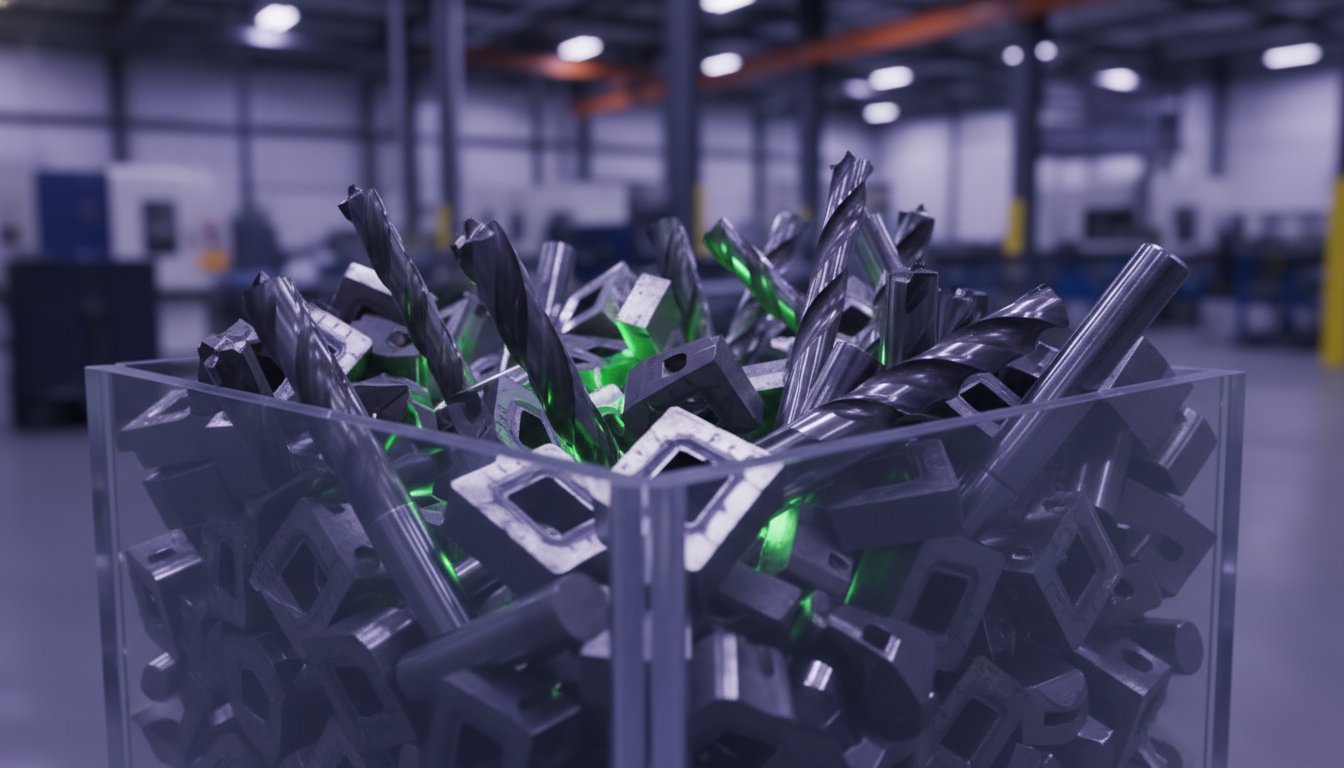
The price of tungsten carbide powder in China surged by over 200% between early 2024 and January 2026. If you're managing a machine shop or a manufacturing floor, you've felt the direct impact on your procurement costs. New tooling is more expensive than ever. Supply chain volatility isn't a distant threat; it's a daily reality. You know your worn-out tools hold immense value, but separating high-value carbide from standard steel remains a logistical burden. Implementing a robust strategy for tungsten carbide end of life recycling is no longer just a "green" goal. It's a strategic survival tactic for your business.
We're here to help you turn that waste stream into a predictable revenue source while protecting your operations from global market swings. You'll learn how to maximize tool ROI and meet 2026 circular economy standards without the administrative friction. This analysis breaks down the current market trends, the move toward domestic supply chains, and the exact steps to move your scrap quickly and profitably. We'll handle the heavy lifting so you can stay focused on your core operations.
Key Takeaways
- Understand why recovering wolfram and cobalt is critical for supply chain stability as tungsten's strategic value reaches new heights in 2026.
- Learn to distinguish between hard scrap and soft sludge to optimize your tungsten carbide end of life recycling program and capture the highest market value.
- Compare advanced recovery methods like the Zinc Process to see how your materials are processed and returned to the industrial lifecycle.
- Implement a streamlined collection system to prevent steel contamination and ensure your high-value carbide remains a predictable revenue source.
- Discover how an all-brand recycling policy and 24-hour payment turnaround can eliminate logistical friction and boost your bottom line.
The Strategic Importance of Tungsten Carbide Recycling in 2026
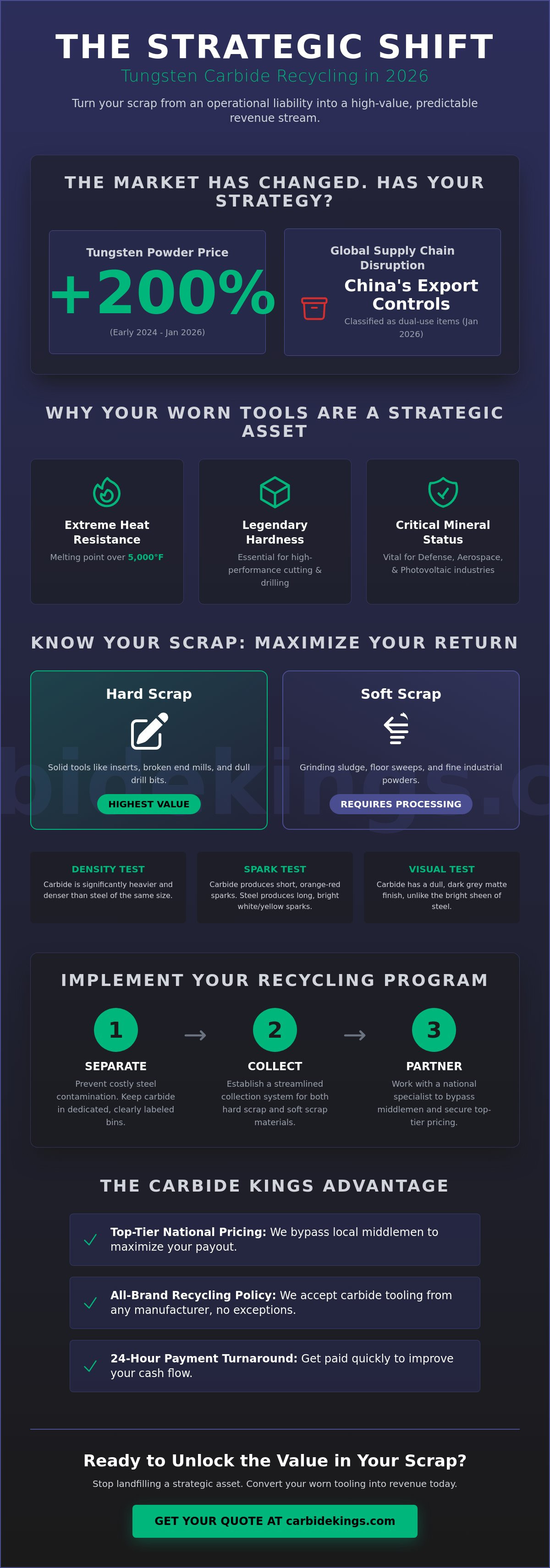
Tungsten carbide end of life recycling is the systematic recovery of wolfram and cobalt from worn-out industrial components. In 2026, this process has shifted from a secondary environmental goal to a primary procurement strategy. China implemented strict export controls on tungsten oxides and carbides on January 6, 2026, by classifying them as dual-use items. This regulatory shift, combined with a 200% price surge in tungsten powder since early 2024, has fundamentally changed how American manufacturers view their scrap. You can't rely on the steady flow of virgin ore from overseas anymore. Your spent inserts and end mills are now your most reliable source of raw material.
The material's legendary industrial utility comes from specific Tungsten Carbide Properties, including a melting point exceeding 5,000 degrees Fahrenheit and extreme hardness. These characteristics make it irreplaceable in defense, aerospace, and the booming photovoltaic industry. Because tungsten is so difficult to mine and refine, recycling it preserves the massive energy investment already embedded in the finished tool. Transitioning to a recycled feedstock isn't just about sustainability. It's about securing your production schedule against a volatile global landscape.
Tungsten as a Critical Mineral: The 2026 Outlook
Virgin tungsten mining is expensive and environmentally damaging. Domestic reserves in the United States remain limited, which makes every pound of recovered scrap vital for national resilience. The U.S. Department of Energy recently awarded an $11.5 million grant to expand domestic recovery capacity to combat this scarcity. By adopting a circular economy model, your facility keeps these heavy metal alloys in a closed loop, reducing the need for new mining operations. In 2026, a critical mineral is defined as a non-fuel material essential to the economic and national security of the United States that has a supply chain vulnerable to disruption.
Economic Drivers: Why Scrap Value is Rising
Global energy costs and logistics hurdles are driving tungsten carbide scrap prices to record levels. This isn't a temporary spike; it's a structural repricing of a strategic asset. When you work with national buyers who specialize in tungsten, you bypass the local middle-men who often lack the volume to offer top-tier pricing. Landfilling specialized industrial waste is a financial failure in this market. Every pound of tungsten carbide end of life recycling you complete turns a disposal cost into a revenue stream. It's the fastest way to lower your total cost of tooling while contributing to corporate sustainability goals.
The Lifecycle of Carbide: Identifying End-of-Life Materials
Identifying carbide starts with understanding its composition. It's a composite material. Tungsten carbide particles are suspended in a metallic cobalt binder. This "cemented" structure gives it properties far beyond standard tool steel. Because it's so specialized, mixing it with general steel scrap is a costly mistake. You lose the premium value of the tungsten and contaminate the steel stream. Recognition is the first step in a successful tungsten carbide end of life recycling program.
Visual and physical cues make identification straightforward. Carbide is significantly heavier than steel. If a small tool feels surprisingly dense in your hand, it's likely carbide. A spark test reveals short, orange sparks compared to the long, white sparks of steel. Visually, carbide has a duller, greyish hue and lacks the bright sheen of high-speed steel. These simple checks ensure you're capturing every bit of value from your waste stream.
Tungsten Hard Scrap vs. Soft Scrap
Industrial waste falls into two distinct categories. Hard scrap carbide consists of solid tools that maintain their structural integrity. These include worn-out inserts, broken end mills, and dull drill bits. They're easy to identify and command the highest market value because they're clean and easy to process. Most shops already have a bin for these, but they often forget the secondary materials.
Soft scrap includes grinding sludge, floor sweeps, and fine powders. This material is a byproduct of tool manufacturing or sharpening. While valuable, soft scrap requires more intensive processing to remove coolants and contaminants. According to the USGS Tungsten Recycling Report, the recovery of these secondary materials is vital for maintaining a stable domestic supply. Clean solid scrap is always the preferred feedstock for recyclers, but ignoring your sludge means leaving money on the shop floor.
Common Industrial Sources of Recyclable Tungsten
High-volume manufacturing sectors are the primary engines for recycling. Aerospace and automotive plants generate massive amounts of spent inserts and specialized wear parts. Medical manufacturing also contributes through high-precision micro-tools. In the energy sector, worn-out mining bits and oil-drilling compacts are significant sources of heavy scrap. These parts are designed for extreme durability, but once they reach their wear limit, they become prime candidates for recovery.
Don't overlook your "dead" tooling inventory. Many shops have drawers full of obsolete or chipped tools that are no longer fit for production. This stagnant capital is essentially a hidden bank account. Clearing out these inventories provides an immediate cash injection and frees up valuable storage space. If you're unsure about the value of your current stockpile, you can easily get a quote for your scrap to see the current market return. Turning that old inventory into liquid capital is a smart move for your 2026 budget.
Modern Recycling Methods: How Your Scrap is Reborn
How do we turn a dull drill bit back into a high-performance tool? The answer lies in two distinct industrial paths. While the identification steps we covered ensure your bins are sorted, the actual tungsten carbide end of life recycling happens in specialized facilities using either physical or chemical transformation. These processes are highly refined. They aren't just about melting down metal. They're about reclaiming molecular value. Choosing the right method depends on the quality and type of scrap you provide.
Recycling isn't just a logistical win; it's an environmental necessity. Processing recycled tungsten uses approximately 70% less energy than extracting and refining virgin ore. This massive energy saving is a key reason why recycled materials are priced so competitively. By feeding your scrap back into these systems, you're supporting a cycle that is both economically viable and environmentally responsible. Your waste becomes the primary feedstock for the next generation of industrial tools.
The Zinc Process: Preserving Material Integrity
The industry standard for high-quality hard scrap is the Zinc Process. It's a form of direct recycling. Technicians place clean carbide scrap into a furnace with molten zinc. The zinc reacts with the cobalt binder, causing it to expand and break the bond between the tungsten carbide grains. Once the zinc is evaporated and recovered for reuse, the remaining carbide is easily milled back into powder. This method is exceptionally efficient. It maintains the original grain size and chemical integrity of the material. It's the preferred choice for high-grade tooling because it bypasses the need for complex chemical reconstruction. This direct approach also carries a significantly lower carbon footprint than other methods.
Chemical Recycling: Achieving 99.9% Purity
Not all scrap is clean. When we deal with contaminated sludge or mixed alloys, chemical recycling is the necessary solution. This indirect method involves dissolving the scrap in a series of chemical baths. The goal is to strip away every impurity until only the base elements remain. The result is high-purity Ammonium Paratungstate (APT). This substance is the gold standard for manufacturing new tungsten products. Research into Sustainable Tungsten Recycling shows that these chemical paths are becoming increasingly sophisticated. Modern plants use advanced filtration and closed-loop systems to protect the environment while achieving 99.9% purity. Whether your scrap is solid or sludge, these modern methods ensure nothing of value is lost.
How to Implement an End-of-Life Tooling Program
Building a successful tungsten carbide end of life recycling program requires more than just a stray bin on the shop floor. It demands a structured approach to capture maximum value from every tool used in your facility. We've refined this process into five actionable steps that integrate seamlessly into your existing workflow. By following this framework, you move from reactive scrap disposal to proactive revenue generation.
- Step 1: Audit your waste streams. Walk your production floor. Identify every CNC station, grinding bay, and maintenance area where carbide is used or sharpened.
- Step 2: Establish dedicated collection points. Use clearly labeled, color-coded bins at each station. This prevents high-value carbide from being tossed into the general steel scrap.
- Step 3: Train your staff. Knowledge is your best asset. Ensure your team can distinguish between carbide and high-speed steel. Review these 7 common mistakes when selling carbide scrap to avoid costly sorting errors.
- Step 4: Partner with a national buyer. Look for a partner that offers transparent weighing and rapid processing. You want a specialist who understands the 2026 market value of tungsten.
- Step 5: Review quarterly reports. Track your recovery volume and ROI. Use these metrics to demonstrate your contribution to corporate sustainability goals.
Sorting and Contamination Control
Purity is the primary driver of your payout. Keeping steel shanks separate from solid carbide heads significantly increases your return. If you're handling brazed tools, consider removing the carbide tips if your volume justifies the labor. For those using grinding processes, keep your soft scrap in sealed, leak-proof containers. Contaminated sludge is harder to process and often results in lower valuations. Clean, sorted material moves through the system faster and puts more money back into your tooling budget.
Logistics and Shipping for Bulk Carbide
Tungsten is incredibly dense. A standard five-gallon bucket can easily exceed 200 pounds. To prevent bin breakage during transit, use reinforced boxes or double-walled containers. We simplify this logistical hurdle by providing shipping labels and freight assistance for heavy loads. Once your material reaches our facility, we prioritize 24-hour processing. You'll receive a detailed weight report and final payment without the typical administrative delays. Ready to turn your scrap into capital? Get an instant quote for your tungsten carbide and start your recovery program today.
Carbide Kings: Streamlined National Recycling Solutions
Managing a high-volume manufacturing facility is demanding enough without the added stress of complex scrap logistics. You need a partner who simplifies your tungsten carbide end of life recycling rather than adding to your paperwork. At Carbide Kings, we've built our reputation on a straightforward premise: we buy tungsten carbide regardless of the original manufacturer. While some recycling programs only accept their own brand of tools, our all-brand policy ensures that every piece of hard scrap, soft scrap, and alloy in your bin has a clear path to recovery. We serve machine shops and industrial plants across the entire United States, providing a national solution with a professional, local feel.
Our process is designed for maximum speed and efficiency. Once your material arrives at our facility, we complete the weighing and valuation within a 24-hour window. There are no hidden administrative fees or surprise deductions to worry about. You receive a transparent quote based on current 2026 market rates, allowing you to turn stagnant inventory into liquid capital almost immediately. This level of efficiency is why we're a trusted partner for shops that value their time as much as their metal. We've refined our system to eliminate the traditional barriers found in the scrap industry.
Fast Payments and Transparent Pricing
Liquidity is king in the industrial sector. We provide multiple payment options, including wire transfers and checks, to ensure you get your funds exactly when you need them. Our team monitors global tungsten valuations in real-time to guarantee our rates remain competitive and fair. We offer a no-nonsense approach to industrial metal procurement that prioritizes your bottom line and eliminates unnecessary administrative hurdles. You can count on a transaction that's as solid as the carbide you're selling. We believe in transparency from the first quote to the final payment.
The Partnership Advantage
We view ourselves as a proactive extension of your production team. We handle the heavy lifting of logistics, from providing freight assistance to managing the documentation required for industrial scrap movement. This allows your team to remain focused on core operations and hitting your production targets without distraction. Requesting a quote is the first step toward a more profitable waste management strategy for your facility. See the difference that a specialized, results-oriented buyer makes for your business. Get a competitive quote for your carbide scrap now.
Secure Your Supply Chain for 2026 and Beyond
The 2026 market landscape has permanently shifted. Your spent tools are no longer just waste; they're a strategic asset that protects your bottom line from global supply chain volatility. By implementing a robust program for tungsten carbide end of life recycling, you turn a disposal headache into a predictable revenue stream. You've seen how modern recovery methods and proper sorting maximize your tool ROI while supporting a sustainable circular economy. It's the smartest way to manage your heavy metal assets in a high-demand environment.
Carbide Kings is ready to be your proactive partner in this transition. We handle the heavy lifting of logistics with national shipping assistance and provide the highest market rates for all carbide brands. Our streamlined process ensures 24-hour turnaround for both material processing and final payment. Don't let your valuable scrap sit in a drawer when it could be working for your business. It's time to simplify your logistics, boost your liquidity, and focus on what you do best.
Turn your end-of-life carbide into revenue today with Carbide Kings
Let's build a more resilient and profitable manufacturing future together.
Frequently Asked Questions
What is the difference between hard and soft tungsten carbide scrap?
Hard scrap includes solid components like worn inserts, end mills, and drill bits that have reached the end of their service life. Soft scrap refers to the secondary byproducts of manufacturing, such as grinding sludge, floor sweeps, and fine powders. While both are valuable for tungsten carbide end of life recycling, hard scrap is generally easier to handle and commands a higher market price due to its metallurgical purity and ease of processing.
How do I know if my scrap is tungsten carbide or just heavy steel?
You can distinguish carbide from steel using three physical tests. First, check the weight; carbide is significantly denser and heavier than high-speed steel. Second, perform a spark test; carbide produces short, orange sparks, while steel creates long, white ones. Finally, look at the color; carbide has a dull, grayish appearance compared to the brighter sheen of tool steel. These quick checks ensure your bins remain free of low-value contaminants.
Why is tungsten recycling considered critical for US manufacturing in 2026?
Tungsten is a critical mineral because domestic reserves are limited and global supply chains are increasingly volatile. In early 2026, China implemented strict export controls on tungsten oxides, driving prices to record highs. Recycling reduces our dependence on foreign ore and secures the raw materials needed for American defense and aerospace sectors. It's a strategic necessity for maintaining production stability in a shifting geopolitical landscape where resource independence is a top priority.
Can I recycle carbide tools that are broken or severely damaged?
Yes, we accept tungsten carbide tools regardless of their physical condition. The value in tungsten carbide end of life recycling is found in the raw wolfram and cobalt content, not the tool's ability to cut. Whether your tools are chipped, snapped in half, or severely worn, they retain their full metallurgical value. Simply collect them in a dedicated bin and prepare them for shipment to recover their full market worth without hesitation.
How does the 'Zinc Process' of recycling actually work?
The Zinc Process is a direct recycling method that uses molten zinc to break the cobalt binder holding the tungsten grains together. As the zinc expands, it creates a brittle material that is easily crushed back into powder without changing the original grain chemistry. This method is highly efficient and maintains the material's integrity, making it the preferred choice for high-grade tooling scrap. It also requires significantly less energy than chemical alternatives, lowering the overall cost.
What are the environmental benefits of recycling tungsten vs. mining new ore?
Recycling tungsten is far more sustainable than extracting virgin ore from the earth. Processing recycled scrap consumes approximately 70% less energy than the traditional mining and refining process. Additionally, it prevents the environmental degradation associated with open-pit mining and reduces the volume of industrial waste sent to landfills. By choosing recycling, you contribute to a circular economy that preserves natural resources while lowering your facility's total carbon footprint and meeting corporate sustainability goals.
How fast can I expect payment after shipping my carbide scrap?
You can expect a rapid turnaround once your material reaches our facility. We prioritize 24-hour processing for weighing and valuation, followed by immediate payment via check or wire transfer. We understand that industrial professionals value liquidity and transparency. Our streamlined system is designed to eliminate the administrative delays and long waiting periods typically associated with traditional scrap dealers, ensuring you get your funds without unnecessary friction or complex paperwork hurdles.
Do I need to sort my carbide by brand before selling it to Carbide Kings?
No, you don't need to sort your scrap by brand. We buy tungsten carbide from any manufacturer, whether it's a major name brand or a specialized custom tool. Our all-brand policy is designed to make your collection process as simple as possible. Just focus on keeping your carbide separate from steel and other alloys to ensure you receive the highest possible payout for your shipment. We handle the heavy lifting so you can stay focused on production.


