
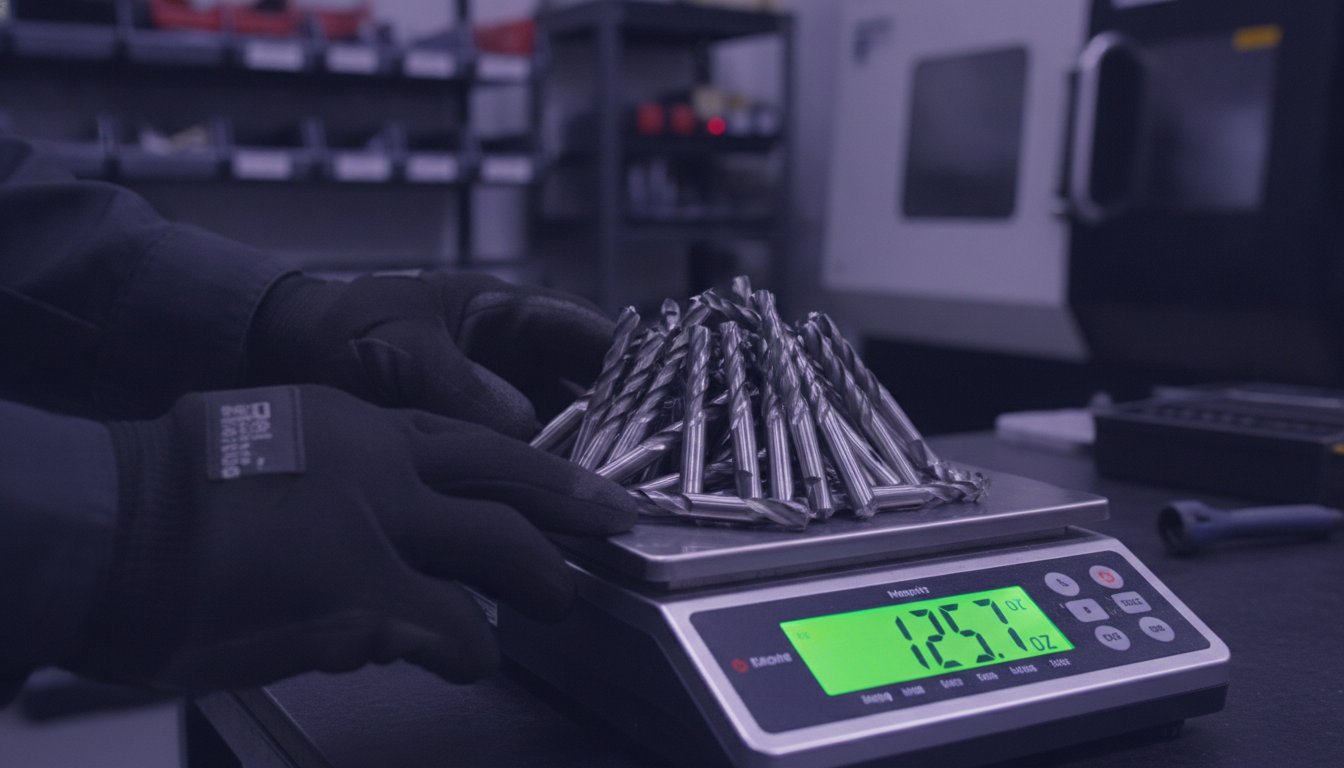
Your shop's bin of worn-out tooling is a high-purity asset, yet many facilities miss the opportunity to sell carbide end mills scrap for its true worth. You've likely dealt with the frustration of opaque pricing from local yards or watched your profits disappear into high shipping costs. It's exhausting to manage the administrative friction of delayed payments and weight discrepancies that never seem to lean in your favor. We understand that your time is better spent on production than on chasing down a fair deal for your materials.
This professional guide teaches you how to maximize your returns using a streamlined national procurement process. You'll learn how to identify and sort your tungsten hard scrap to meet industry standards and protect your margins. We'll walk through professional weight verification and shipping strategies that keep your costs low and your payments fast. By the end of this article, you'll have a clear, step-by-step roadmap to turn your tool graveyard into a transparent revenue stream with minimal effort.
Key Takeaways
- Understand why tungsten carbide is classified as premium hard scrap and why it commands significantly higher market prices than standard steel tooling.
- Learn the professional sorting techniques required to sell carbide end mills scrap for maximum value by removing steel contaminants and separating inserts.
- Discover how global market drivers like the London Metal Exchange and cobalt price fluctuations directly impact your total scrap valuation.
- Master industrial shipping standards using reinforced containers and internal padding to ensure your heavy materials arrive safely for verification.
- Streamline your cash flow with a procurement process that offers immediate logistics support and 24-hour payment processing after verification.
Why Carbide End Mills are High-Value Industrial Scrap
Tungsten carbide is a dense, high-performance compound that forms the backbone of modern precision machining. In the industrial recycling market, it's classified as a premium hard scrap material because of its rare earth components. Tungsten and cobalt are critical minerals with finite global supplies. When you choose to sell carbide end mills scrap, you're participating in a vital circular economy that keeps these materials out of landfills and reduces the environmental strain of primary mining.
End mills are particularly valuable because they contain a high concentration of tungsten. Unlike standard carbon steel tools, which are mostly iron, carbide tooling maintains its metallurgical integrity throughout its service life. This purity makes it an ideal candidate for chemical reclamation, where the material is broken down and reconstituted into fresh tool-grade powder. It's a clean process that turns industrial waste back into high-value manufacturing input.
Tungsten Carbide vs. High-Speed Steel (HSS)
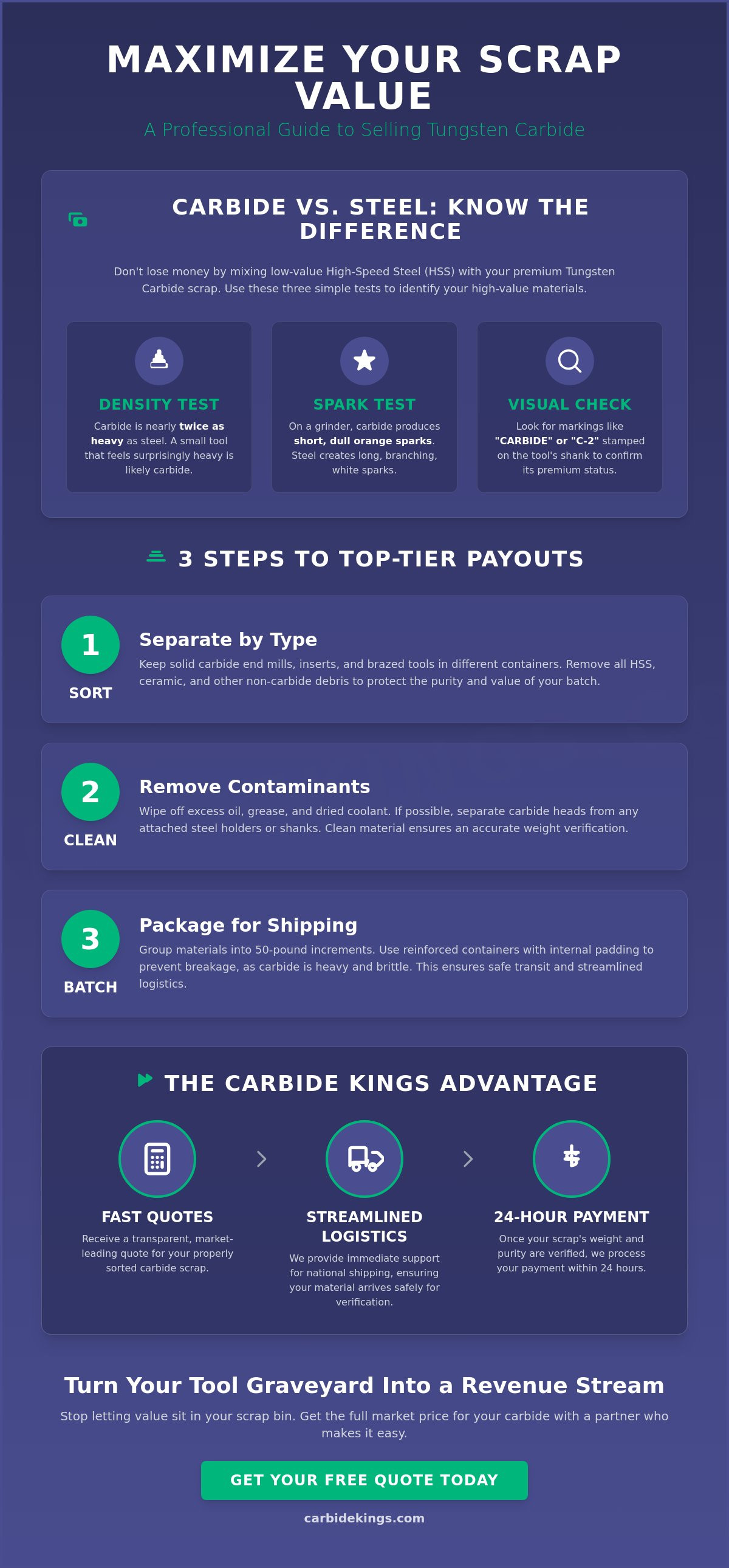
Stop treating your tool bin like a catch-all. High-Speed Steel (HSS) looks similar to carbide but carries only a fraction of its market value. You can verify your inventory with three simple tests. First, check the density. Carbide is nearly twice as heavy as steel; if a small tool feels surprisingly heavy for its size, it's likely carbide. Second, perform a spark test. Touch the tool to a grinder. Steel creates long, white, branching sparks. Carbide produces short, dull orange sparks that die out quickly. Finally, look for "CARBIDE" or "C-2" stamps on the shank. These markings confirm the material's premium status.
The Economic Advantage of Tooling Recycling
Turning your scrap into liquid capital is a smart business move. The price per pound for carbide scrap typically commands a significant premium over mixed iron or steel. For high-volume shops, this revenue stream can offset a substantial portion of your annual tool procurement budget. By bypassing local generalist yards and moving toward a direct-to-refinery model, you eliminate the middleman. This ensures you capture the full market value when you sell carbide end mills scrap through a specialized partner. It's a straightforward way to improve your bottom line while maintaining a lean, efficient operation.
Step-by-Step Preparation for Maximum Scrap Value
Proper preparation transforms a pile of industrial waste into a high-yield asset. You shouldn't just dump your worn tools into a bucket and hope for the best. To sell carbide end mills scrap at the top of the market, you need a systematic approach to sorting and cleaning. Start by auditing your collection for non-carbide contaminants. This includes removing any stray high-speed steel (HSS) tools, ceramic inserts, or general shop debris that can dilute the purity of your batch.
Separation is the most critical factor in your payout. Keep your solid end mills separate from carbide inserts and grinding sludge. Refineries process these materials differently, and mixing them often results in your entire load being graded at the lowest common denominator. If you have brazed tools, where a carbide tip is joined to a steel shank, these must be kept in a separate "mixed" category. For the highest returns, focus on accumulating "clean solids" that are free from attached steel components.
- Clean your material: Wipe off heavy oils, grease, and thick layers of dried coolant. These fluids add deceptive weight that will be deducted during the refinery's verification process.
- Remove shanks: If your shop uses modular tooling, ensure the carbide heads are separated from any steel extensions or holders.
- Batch by weight: Group your materials into 50-pound increments. This is the optimal weight for standard industrial shipping containers and makes logistics much smoother.
Sorting by Grade and Coating
Many machinists worry that high-performance coatings like TiN (Titanium Nitride) or AlTiN (Aluminum Titanium Nitride) will lower the scrap value. They don't. Modern refineries are equipped to handle these thin layers without issue. Your primary focus should remain on the substrate. By maintaining high-purity batches, you contribute to the stability of the U.S. tungsten supply and ensure your material is ready for immediate reclamation. If you aren't sure about a specific grade, you can always request a material review to confirm your sorting strategy is correct.
The "Magnet Test" for Quality Control
A simple magnet is your best defense against batch contamination. Steel tools will react with a strong, immediate snap to the magnet. In contrast, solid tungsten carbide will typically show a very weak attraction or no attraction at all, depending on the cobalt binder content. The magnet test is a primary diagnostic tool used to identify steel contamination in carbide batches by measuring the intensity of magnetic attraction. Using this tool regularly ensures that when you sell carbide end mills scrap, your shipment arrives clean and ready for a top-tier valuation. Once your material is sorted and tested, you've already done the hard work of securing your profit.
Understanding Tungsten Carbide Scrap Market Pricing
Scrap pricing for tungsten carbide is a dynamic calculation driven by global commodity markets. When you decide to sell carbide end mills scrap, your valuation is primarily influenced by the London Metal Exchange (LME) and the current market rate for tungsten and cobalt. These two elements act as the primary price drivers. Since tungsten is a critical mineral used heavily in defense and industrial sectors, its availability fluctuates based on international trade policies and mining output.
According to USGS tungsten statistics, a significant portion of the global tungsten supply is consumed by the cemented carbide industry. This high demand creates a robust floor for scrap value, but you must also account for the cobalt binder. Cobalt prices are notoriously volatile due to their role in EV battery production. A rise in cobalt prices can provide a welcome boost to your total scrap valuation, even if tungsten prices remain stable. Higher volume also increases your leverage. Larger shipments reduce the per-pound cost of logistics, allowing procurement partners to pass those savings directly back to you.
Factors That Drive the Price Per Pound
Batch purity is the most significant internal factor determining your payout. If your shipment consists of 100% solid carbide end mills, you'll receive a premium rate compared to a load contaminated with steel shanks or brazed components. To stay informed on current market movements, you should monitor the latest tungsten carbide scrap price trends. This ensures you're selling during a peak rather than a trough. Market demand from the aerospace and automotive sectors also creates seasonal shifts in pricing as these industries ramp up production and require more recycled material for new tooling.
Why Local Scrap Yards Pay Less
Local generalist yards are rarely the best place to sell carbide end mills scrap. These facilities operate with high overhead and lack the specialized equipment needed to analyze and process refractory metals. Because they don't have direct paths to refineries, they act as middlemen. They buy your carbide at a discount, pool it with other materials, and sell it to specialized buyers. By cutting out this middleman, you capture the margin they would otherwise keep. A national procurement partner understands the specific metallurgical value of your tooling and offers transparent pricing based on real-time market data. This direct relationship is the only way to ensure you're getting the full market value for your shop's waste.
National Logistics: Shipping Your Carbide Scrap Safely
Shipping tungsten carbide requires a specialized approach to logistics. Because of its extreme density, a small volume of end mills can easily exceed the weight capacity of standard corrugated boxes. When you prepare to sell carbide end mills scrap, your primary goal is to ensure the material remains contained throughout the entire transit process. Industrial-grade 5-gallon buckets or double-walled, reinforced shipping boxes are the only acceptable containers for this material. Standard parcel boxes will likely fail under the concentrated weight of solid carbide.
Internal movement is the most common cause of packaging failure. Even if the box is strong, loose tools will shift during handling, acting as a blunt force that can punch through the sides of the container. Fill all voids with dense padding, such as heavy-duty cardboard inserts or industrial foam, to lock the material in place. Once the container is packed, secure every seam with fiberglass-reinforced tape. For bucket shipments, use heavy-duty zip-ties or metal strapping to lock the lid. This prevents the top from popping off if the bucket is dropped or tipped during sorting.
Packaging Standards for Heavy Tooling
Double-boxing is a non-negotiable requirement for any shipment exceeding 40 pounds. Place your primary container inside a second, larger box with at least two inches of cushioning on all sides. This creates a redundant layer of protection that guards against punctures and moisture. Adhering to a maximum weight limit of 50 pounds per individual container prevents structural failure during transit and ensures the safety of logistics personnel handling your shipment. If you have a high-volume collection, it's better to ship multiple manageable boxes than one over-stressed crate that is prone to bursting.
National Procurement and Freight Support
Managing logistics for bulk industrial loads doesn't have to be a headache. We provide comprehensive support to simplify the national shipping process, especially for shops moving hundreds of pounds of material at once. For larger volumes, we coordinate freight pickups and provide specific labeling instructions that ensure your shipment is tracked from your dock to our verification center. Working with experienced hard scrap carbide buyers eliminates the guesswork and protects your investment from the risks of improper transit. If you're ready to clear out your inventory, get your shipping instructions now to ensure a smooth, professional transaction.
The Carbide Kings Process: Fast Quotes and 24-Hour Payment
Waiting weeks for a scrap payout is a liability your operation doesn't need. When you choose to sell carbide end mills scrap through our streamlined procurement system, you're opting for a process designed for industrial speed. It starts with a simple online quote request. Just provide the basic details of your material volume and type. We don't believe in administrative hurdles. Once you submit your information, you receive shipping instructions and logistics support immediately. This rapid response ensures your inventory moves off your floor and into the payment cycle without delay.
Efficiency continues once your shipment reaches our facility. We've eliminated the long wait times common with generalist scrap dealers. We perform material verification and weighing within 24 hours of receipt. You won't be left wondering about the status of your load or the final valuation. After verification is complete, we issue payment promptly. You can choose the method that best fits your accounting workflow, whether it's a wire transfer, a physical check, or a direct ACH deposit. Our goal is to make the financial side of recycling as precise as your machining operations.
Transparency in Weighing and Grading
Trust is built on verifiable data. We use high-precision, certified scales to ensure every ounce of your tungsten hard scrap is accounted for. Our grading process is equally rigorous. We use advanced analysis tools to confirm material purity, ensuring you're paid based on the actual metallurgical content of your tools. This commitment to transparency is why industrial professionals trust us over local yards. There are no hidden fees or guestimated weights. You get a no-nonsense, honest transaction every time you sell carbide end mills scrap with us. We handle the heavy lifting so you can stay focused on your core production.
Ready to Liquidate Your Worn End Mills?
The Carbide Kings workflow is built to remove the logistical and administrative friction from your recycling program. You've already done the hard work of sorting and preparing your material. Now, it's time to capture the current market rates before they shift. Liquidating your worn tooling shouldn't be a secondary project that sits on the back burner. It's a straightforward financial recovery that improves your shop's bottom line today. Take the final step in our professional process. Visit our quote form now to receive your custom valuation and start your 24-hour payment clock. Success is only a few clicks away.
Turn Your Tool Graveyard into Immediate Capital
Professional scrap management is a hallmark of a lean, profitable machine shop. By understanding the metallurgical value of tungsten and cobalt, you've already moved ahead of shops that treat their worn tooling as simple iron waste. Proper sorting and industrial-grade packaging ensure that your material arrives at the refinery ready for immediate valuation. Choosing to sell carbide end mills scrap through a specialized procurement partner eliminates the opaque pricing and logistical hurdles of local yards. It's the most direct path to recovering your tooling investment and maintaining a clear, organized facility.
We've refined our process to match the speed of your production schedule. With our direct-to-refinery pricing and comprehensive national shipping logistics support, the heavy lifting is already done. Once your shipment arrives, we guarantee 24-hour processing to get your funds into your account without delay. Don't let your assets sit in a bin when they could be fueling your next project. Get a fast, competitive quote for your carbide end mills today and experience a transaction built on transparency and professional efficiency. Your shop's waste is a valuable resource; it's time you were paid accordingly.
Frequently Asked Questions
How do I know if my end mills are tungsten carbide or steel?
Perform a quick density check and spark test to verify the material. Tungsten carbide is nearly double the density of high-speed steel, so it'll feel much heavier in your hand than a steel tool of the same size. If you touch the tool to a grinder, carbide produces short, dull orange sparks, while steel creates long, white, branching sparks.
What is the minimum weight required to sell carbide scrap?
You can sell any amount, but we recommend a minimum of 5 to 10 pounds to ensure shipping costs don't eat into your profits. For the best economic return, aim for 50-pound batches. This weight fits perfectly into reinforced industrial boxes and maximizes the efficiency of the national shipping process.
Do I need to remove the coatings from my end mills before selling?
No, you don't need to strip TiN, AlTiN, or any other high-performance coatings. These layers are extremely thin and don't interfere with the chemical reclamation process. Focus your preparation on removing steel shanks and cleaning off heavy coolant or oil rather than worrying about tool coatings.
How long does it take to get paid after I ship my carbide?
You'll typically see payment within 24 hours of material verification at our facility. Once your shipment is received, it's immediately weighed on certified scales and graded for purity. This streamlined workflow allows you to sell carbide end mills scrap and receive funds via wire, ACH, or check faster than traditional scrap yards.
Can I sell broken or chipped end mills as scrap?
Yes, the physical condition of the tool doesn't change its metallurgical value. We buy broken, snapped, and heavily chipped end mills because they're processed into raw powder regardless of their original shape. The payout is determined strictly by the weight and purity of the tungsten carbide material.
What happens to the carbide scrap after you buy it?
The material undergoes a specialized reclamation process, such as the zinc process or chemical leaching, to separate the tungsten from the cobalt binder. This turns the scrap back into high-grade powder. This powder is then used to manufacture new precision tools, creating a sustainable loop that reduces the need for primary mining.
Why are tungsten prices higher than other scrap metals?
Tungsten is a critical mineral with extreme hardness and heat resistance, making it essential for aerospace, defense, and automotive manufacturing. Its scarcity and the high cost of primary mining drive its market value up. Because it's a refractory metal, it commands a much higher price per pound than common materials like aluminum or iron.
Do you provide shipping labels for carbide scrap?
We provide comprehensive logistics support and can assist with shipping labels and freight coordination for bulk industrial loads. Our system is designed to remove the administrative burden from your shop. When you're ready to sell carbide end mills scrap, we'll ensure you have the correct documentation and instructions for a secure, tracked shipment.


