
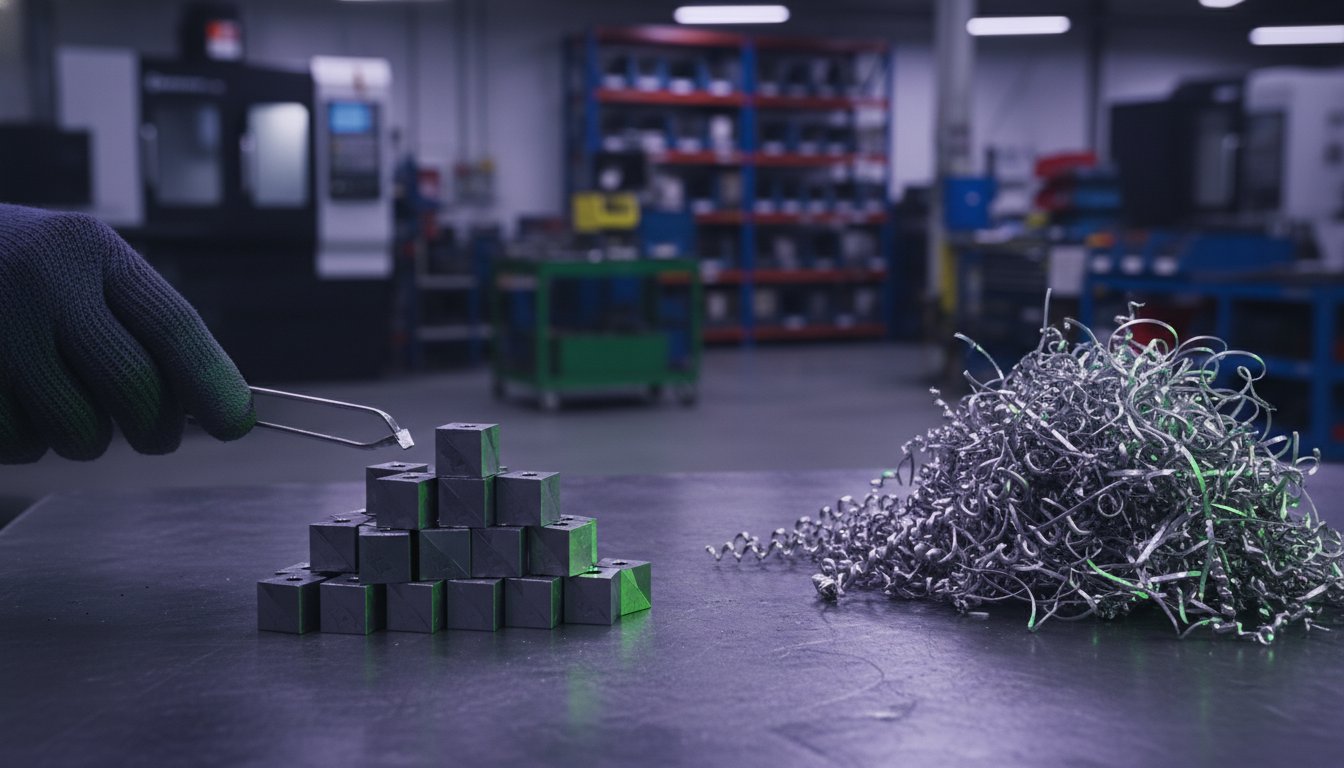
A five-gallon bucket of carbide inserts can weigh 100 pounds and hold a value of up to $1,100. In contrast, that same bucket filled with standard steel scrap is worth about $20. You've likely felt the frustration of watching high-value materials get tossed into the wrong bin because they look almost identical to common steel. Sorting through technical metal grades feels slow and confusing, but mixing them means losing thousands in potential revenue every year. You deserve a clear, fast process to identify your assets without the guesswork.
This article shows you exactly how to tell tungsten carbide from steel scrap using simple shop floor tests. You'll learn to leverage density and spark patterns to distinguish high-value tungsten hard scrap from low-value high-speed steel. We'll also break down how the June 2026 market shifts and China's recent export restrictions have sent carbide prices to record highs. By the end of this guide, you'll have a reliable sorting workflow that turns industrial waste into a streamlined revenue stream for your machine shop.
Key Takeaways
- Stop losing thousands by mixing high-value materials. Learn why tungsten carbide is worth significantly more than standard steel scrap in today's industrial market.
- Master the essential shop floor tests, including density and spark patterns, to understand how to tell tungsten carbide from steel scrap in seconds.
- Maximize your recycling payouts by properly separating carbide inserts from steel tool holders and grouping materials by grade before shipping.
- Understand how 2026 global supply chain shifts and export restrictions have created a prime opportunity for "urban mining" in your facility.
- Discover a streamlined path to liquidating your industrial waste with professional processing that turns scrap into revenue quickly.
The Economic Reality: Tungsten Carbide vs. Steel Scrap Value
Understanding the financial spread between industrial metals is the first step toward reclaiming lost profit. In most machine shops, the difference between a high-yield month and a mediocre one comes down to what ends up in the steel bin. Tungsten carbide is a dense refractory material composed of tungsten and carbon atoms. It is fundamentally different from steel, which is an iron-based alloy. While steel is abundant and easy to process, tungsten is a critical global commodity. This scarcity translates directly to your bottom line. Carbide often fetches 10x to 20x the price of steel per pound. If you don't know how to tell tungsten carbide from steel scrap, you are essentially throwing currency into a dumpster.
Traditional scrap yards often take advantage of mixed loads. If they see steel tool holders mixed with carbide inserts, they will likely grade the entire container as prepared steel. This single mistake can cost you thousands of dollars in a single shipment. To protect your revenue, you must view your scrap as a structured asset rather than a waste product. Sorting your materials at the source is the only way to ensure you aren't leaving money on the shop floor.
Why Carbide Commands a Premium Price
The high value of tungsten carbide isn't accidental. Tungsten is rare, and mining it is a complex, global operation. Beyond its rarity, the Tungsten Carbide Properties require an energy-intensive manufacturing process. This results in a material that is nearly diamond-hard and incredibly heat-resistant. As of June 2026, demand from the aerospace and defense sectors has surged, making recycled tungsten more valuable than ever. Recovering these materials through urban mining in your own shop is the most efficient way to capitalize on these market conditions.
High-Speed Steel (HSS) vs. Tungsten Carbide
One of the most common points of confusion on the shop floor involves High-Speed Steel (HSS). Because both HSS and carbide are used for drill bits and end mills, they often end up in the same bin. This is a massive missed opportunity. HSS is a tough, reliable steel, but it loses its hardness at high temperatures. Carbide remains sharp and structurally sound even under extreme heat. Knowing how to tell tungsten carbide from steel scrap, specifically HSS, allows you to capture the profit gap. HSS scrap prices are a fraction of carbide rates. Separating these two materials ensures you receive the maximum possible payout for your high-performance tooling.
Physical Characteristics: How to Tell the Difference
Identifying high-value scrap doesn't require a laboratory. It requires an eye for detail and a basic understanding of material science. While steel and carbide might look similar under shop lights, their physical properties are worlds apart. Knowing how to tell tungsten carbide from steel scrap by sight and touch can save you hours of sorting time and prevent costly mistakes at the scale.
The Density Factor: 15g/cm3 vs. 8g/cm3
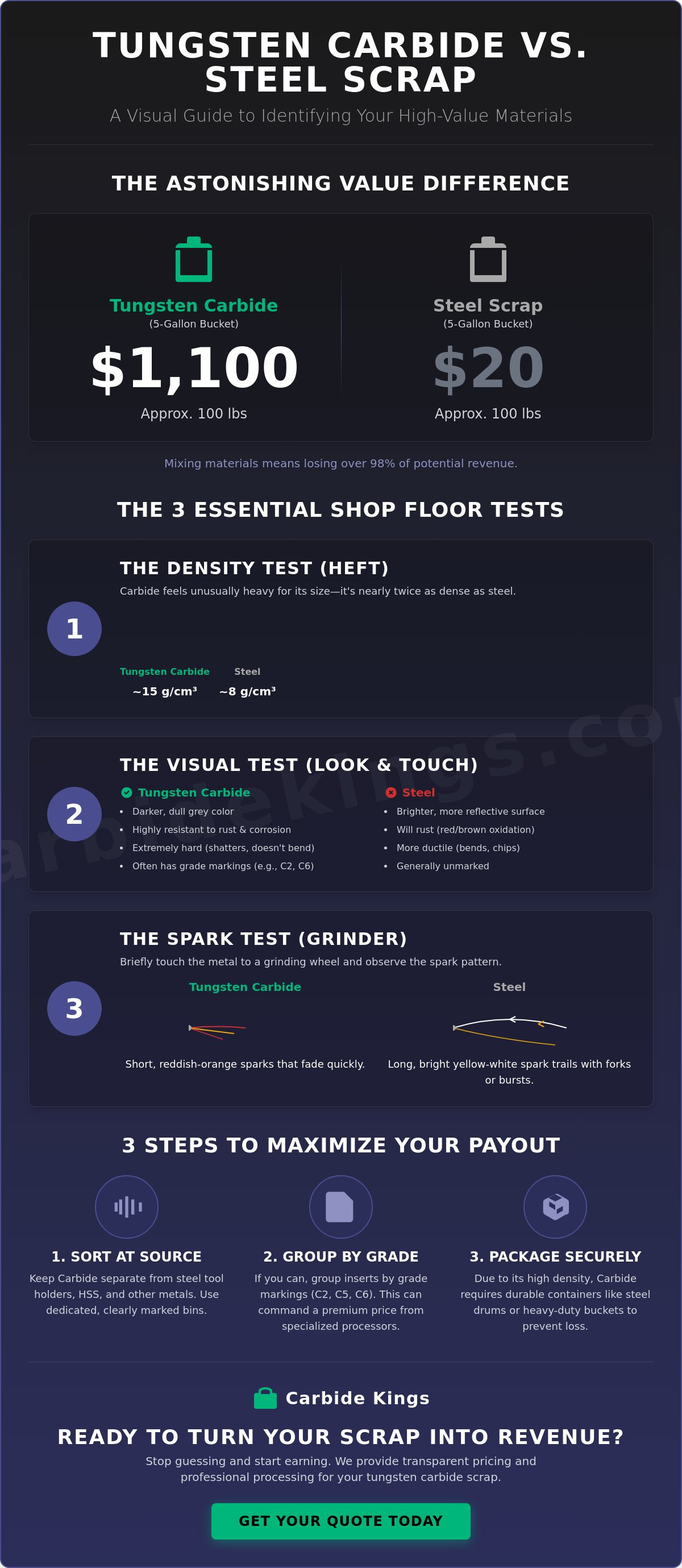
Weight is your most reliable tool on the shop floor. Tungsten carbide is nearly twice as dense as standard carbon steel. Specifically, steel has a density of roughly 7.8 g/cm3; carbide ranges from 14.5 to 15.5 g/cm3. If you pick up a small carbide insert, it will feel "unusually heavy" for its physical size. This heft is a direct result of the Tungsten Economic Value and its dense atomic structure. Density is the primary differentiator for scrap valuation because it remains the most difficult physical characteristic for cheaper alloys to replicate.
Visual Cues and Surface Oxidation
Look closely at the surface finish and color. Steel often has a brighter, more reflective appearance, especially when freshly machined. Tungsten carbide typically displays a duller, darker grey color that absorbs more light. Oxidation is another clear giveaway. Steel will rust, showing red or brown oxidation over time if exposed to moisture. Tungsten carbide is highly resistant to corrosion and almost never shows rust. If you find a bin of old tooling that looks pristine despite years of storage, it's likely high-value carbide. You should also look for laser-etched markings like "C2" or "C6," which manufacturers use to identify specific carbide grades.
These materials also react differently to physical stress. Carbide ranks 9 on the Mohs scale, making it second only to diamond. This extreme hardness means it won't bend. Under extreme pressure, carbide is likely to shatter into sharp, clean fragments. In contrast, steel is much more ductile. Steel tools will chip, deform, or roll their edges under stress. If you see a tool bit that has mushroomed or bent at the tip, it's definitely steel. If it has snapped cleanly like glass, you're looking at carbide. Mastering these visual cues is the fastest way to learn how to tell tungsten carbide from steel scrap without using expensive testing equipment.
Once you've separated your heavy, rust-free pieces from the common steel, you're ready to get paid. For those managing bulk industrial waste, working with Carbide Kings ensures your sorting efforts translate into maximum revenue.
The Big Three Shop Floor Identification Tests
Visual checks are a great starting point, but active testing is where you confirm your profit. To be certain of your materials, you need repeatable methods that provide instant clarity. These tests allow you to know how to tell tungsten carbide from steel scrap without needing expensive laboratory equipment or specialized metallurgical training. By following a systematic approach, you can sort a large bin of mixed tooling in minutes rather than hours.
The weight test remains your most reliable frontline defense. When you have two end mills of the same diameter, the difference is undeniable. The carbide version will feel nearly twice as heavy as the steel one. If the weight doesn't give it away, move to the scratch test. Tungsten is prized for its extreme hardness, which is why it's used in the most demanding industrial applications. You can find more Facts About Tungsten that explain why it maintains its edge while other metals fail. A genuine carbide tool will easily scratch a glass bottle or a piece of carbon steel. If your unknown tool is the one getting scratched, it's definitely steel.
Performing a Proper Spark Test
A bench grinder is your most effective diagnostic tool for identifying metal alloys. Touch the unknown tool lightly to the grinding wheel and watch the spark stream carefully. Carbon steel and high-speed steel produce long, bright white or yellow sparks that "explode" into several branches at the end of their flight. Tungsten carbide reacts very differently. It produces a very short, thin stream of reddish-orange sparks that stay in straight lines without branching. Safety is a priority during this test. Always wear impact-resistant eye protection. Carbide is brittle, and the grinding process can throw off microscopic, sharp shards that are hazardous to unprotected eyes.
The Magnet Myth: Understanding Cobalt Binder
A common mistake in scrap yards is assuming that all carbide is non-magnetic. This misconception often leads to high-value scrap being tossed into the low-value steel bin. Most industrial tungsten carbide uses cobalt as a binder to hold the tungsten particles together. Because cobalt is magnetic, high-quality carbide will often show a weak, sluggish pull when you apply a magnet. This is distinct from the aggressive, instant "snap" you feel when a magnet hits standard carbon steel. If you feel a light resistance or a "lazy" magnetic pull, you've likely identified carbide. Mastering this subtle difference is key when learning how to tell tungsten carbide from steel scrap effectively.
Sorting and Packaging for Maximum Payouts
Successful recycling is a matter of discipline. Once you've mastered how to tell tungsten carbide from steel scrap, your goal is to protect that material's integrity. Mixing grades is the fastest way to lose money. If a buyer sees steel tool holders mixed with carbide inserts, they will likely downgrade the entire lot to a contaminated price point. You must physically separate these components. Remove every screw and detach every brazed tip before the material hits the bin. This ensures that when your shipment arrives at the scale, it is graded as high-value tungsten hard scrap rather than mixed steel.
Cleanliness also impacts your final quote. Industrial waste is often covered in grinding sludge, coolant, or heavy oils. While a light coating is expected, excessive debris adds weight that isn't metal. Professional buyers will deduct for this tare weight to account for the cleaning process. Wipe down your larger pieces and allow sludge to drain before packaging. This transparency builds trust with your buyer and ensures your weight measurements match the final scale receipt. Having an accurate weight on your end before shipping eliminates friction and speeds up your payout.
Identifying High-Value Carbide Inserts
Focus your efforts on worn carbide inserts as your primary revenue source. These small, dense pieces are often the most valuable items in a machine shop's waste stream. You should distinguish between clean solids and brazed tooling. Clean solids are pure carbide throughout and command the highest market rates. Brazed tooling features a carbide tip bonded to a steel shank. Keep these in separate containers. Mixing them complicates the recycling process and can lead to lower average payouts for your entire load.
National Shipping Logistics for Bulk Carbide
Carbide's extreme weight demands specialized packaging. Since you've learned how to tell tungsten carbide from steel scrap, you know that carbide is nearly twice as heavy as steel. Never use standard cardboard boxes; they will fail under the pressure during transit. Use 5-gallon plastic buckets or reinforced wooden crates for your shipments. For bulk loads, palletize your containers and use multiple layers of heavy-duty shrink wrap. Secure the load with steel or poly strapping to prevent shifting during national transit.
Carbide Kings offers full logistics support for larger industrial shipments across the USA. We simplify the process by handling the coordination details and providing the necessary documentation for bulk transport. This removes the administrative burden from your team. If you have a bulk load ready for pickup, reach out to Carbide Kings to streamline your logistics and maximize your return.
Turn Your Carbide Scrap into Revenue with Carbide Kings
Mastering material identification is only half the battle. Once you've learned how to tell tungsten carbide from steel scrap, you need a partner who values your expertise and your time. Carbide Kings specializes in high-value tungsten scrap procurement across the USA. We understand that in a high-volume machine shop, industrial waste shouldn't be a logistical burden. It should be a streamlined revenue stream. We've refined our procurement process to eliminate traditional scrap yard delays and provide the professional service your business deserves.
Our 24-hour processing guarantee sets the industry standard. Stop waiting weeks for a scale ticket or a check to arrive. We weigh and quote your material within one business day of receipt at our facility. Choose from fast, secure payment options, including immediate wire transfers or overnight checks. This speed allows you to reinvest your capital back into your shop operations without missing a beat. We handle the heavy lifting of logistics so you can stay focused on production and precision.
The Carbide Kings 3-Step Process
- Step 1: Request a quote online for your tungsten hard scrap. Tell us what you have and we'll provide a prompt preliminary valuation based on current market data.
- Step 2: Use our shipping assistance to get your material to our facility. We provide the necessary documentation and support needed for secure national transit.
- Step 3: Get paid fast via your preferred secure payment method. Once we verify the weight and grade, your funds are released immediately.
Why Industrial Professionals Choose Us
Transparency is the foundation of our partnership. We provide detailed material analysis and weight verification for every shipment we receive. You'll always know exactly what you're being paid for and why. Our competitive pricing is based on current tungsten carbide scrap prices, ensuring you capture the full value of the 2026 market peak. We don't just buy scrap; we provide a professional partnership that respects your bottom line.
Don't let your high-value assets sit in a bin or get sold for pennies as prepared steel. Now that you've mastered how to tell tungsten carbide from steel scrap, it's time to turn that knowledge into profit. Contact Carbide Kings today to start your first shipment and experience the difference of a streamlined, professional recycling partner.
Maximize Your Shop Floor Revenue Today
Identifying your industrial waste is the first step to securing a better bottom line. You now have a reliable, repeatable workflow for how to tell tungsten carbide from steel scrap using density, spark, and magnet tests. By separating your inserts from steel holders and packaging them in heavy-duty buckets, you protect the value of your materials. Don't let your high-value scrap sit idle or get graded as cheap steel by traditional yards. It is time to turn that knowledge into a consistent revenue stream for your facility.
Carbide Kings handles the heavy lifting so you can stay focused on production. We provide full national shipping logistics support to move your material quickly and safely. Our 24-hour processing guarantee means you receive a professional quote within one business day of receipt. Once confirmed, we offer secure wire transfer payments to get your capital back into your hands immediately. It's a straightforward process designed for industrial professionals who value speed and transparency.
Get a Fast Quote for Your Carbide Scrap Today
Take control of your machine shop's waste and start reclaiming the profits you've already earned. We're ready to help you streamline your recycling process and maximize your returns.
Frequently Asked Questions
Is tungsten carbide more valuable than steel?
Yes, tungsten carbide is significantly more valuable than standard steel. While steel is an abundant iron-based alloy, tungsten is a rare global commodity with intense manufacturing requirements. This scarcity means carbide scrap often fetches 10 to 20 times the price of steel per pound. Understanding how to tell tungsten carbide from steel scrap is the most effective way to prevent high-value assets from being sold at base steel rates.
How can I tell if a drill bit is carbide or high-speed steel (HSS)?
Weight and hardness are your best indicators. A carbide drill bit will feel nearly twice as heavy as an HSS bit of the same size due to its superior density. You can also perform a scratch test; carbide will easily leave a mark on glass or steel, while HSS will not. If the bit has snapped cleanly rather than bending or chipping, it's likely carbide.
Will a magnet stick to tungsten carbide scrap?
A magnet will often show a weak, sluggish pull toward tungsten carbide because of the cobalt binder used in the manufacturing process. This is very different from the aggressive, instant snap you feel when a magnet touches carbon steel. If you feel only a slight resistance, you're likely holding high-value carbide. This subtle magnetic reaction is a key part of how to tell tungsten carbide from steel scrap on the shop floor.
What does the spark test look like for carbide vs. steel?
The spark patterns are distinct and easy to identify with a bench grinder. Steel produces a long, bright stream of white or yellow sparks that explode into branches at the end. Tungsten carbide produces a very short, thin stream of reddish-orange sparks that stay in straight lines. Always wear eye protection when performing this test to protect against brittle carbide shards.
Can I sell carbide inserts that are still attached to steel tool holders?
You can sell them, but you'll receive a much lower payout. Most buyers will grade the entire load as contaminated steel if the carbide isn't separated. To maximize your revenue, remove all steel screws and detach brazed tips before shipping. This ensures your material is graded as clean tungsten hard scrap rather than mixed industrial waste.
What is the current price per pound for tungsten carbide scrap in 2026?
Market prices are currently at historic highs due to new export restrictions and increased demand in the aerospace sector. Because the market fluctuates daily, it's best to request a professional quote for the most accurate valuation. Sorting your material properly ensures you capture the full peak value of the current market cycle.
How should I package my carbide scrap for national shipping?
Use 5-gallon plastic buckets or reinforced wooden crates to handle the extreme weight. Never use cardboard boxes, as they'll likely fail during transit and result in lost material. Secure your containers on a pallet with multiple layers of shrink wrap and steel strapping. This keeps your load stable and secure during national transit to our processing facility.
How quickly does Carbide Kings pay for scrap shipments?
We provide a 24-hour processing guarantee for all received shipments. Your material is weighed and quoted within one business day of arrival at our facility. Once you approve the quote, we issue payment immediately via secure wire transfer or overnight check. This fast turnaround keeps your shop's cash flow moving without unnecessary administrative delays.


