
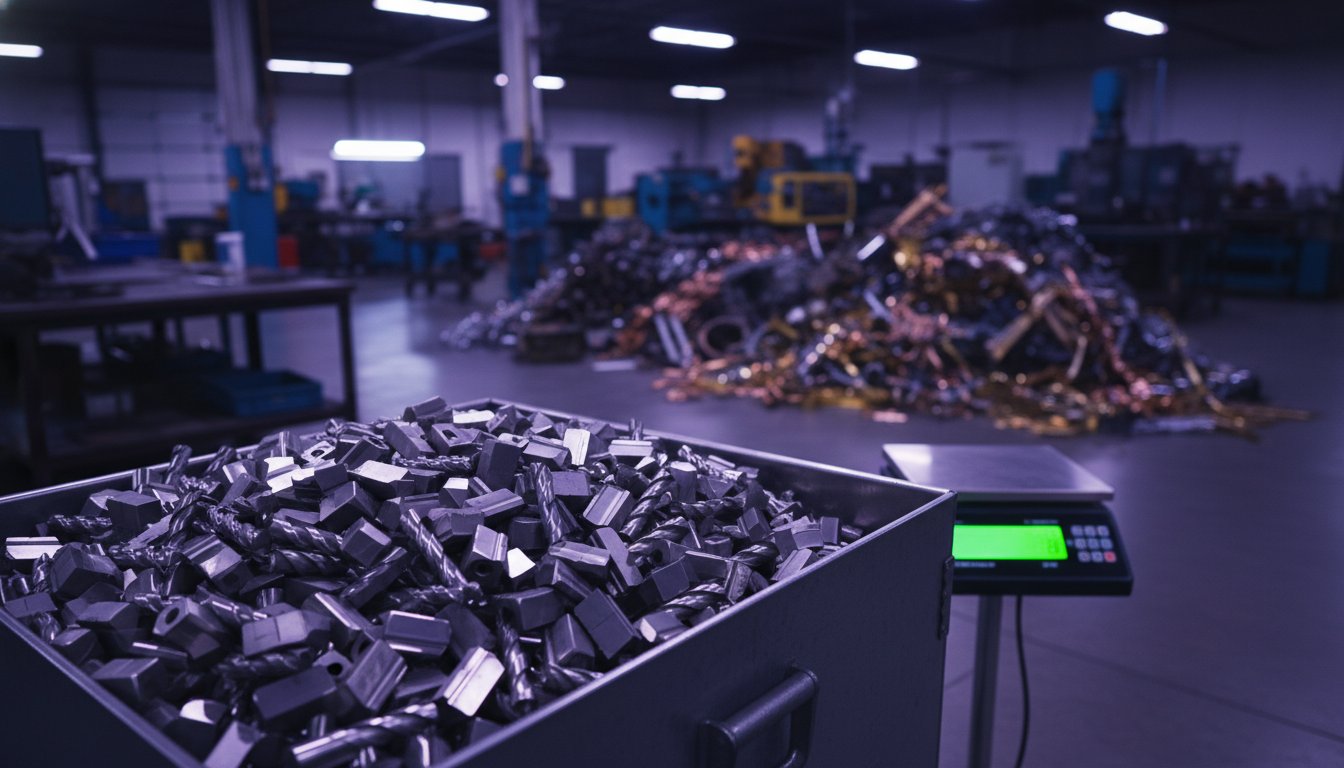
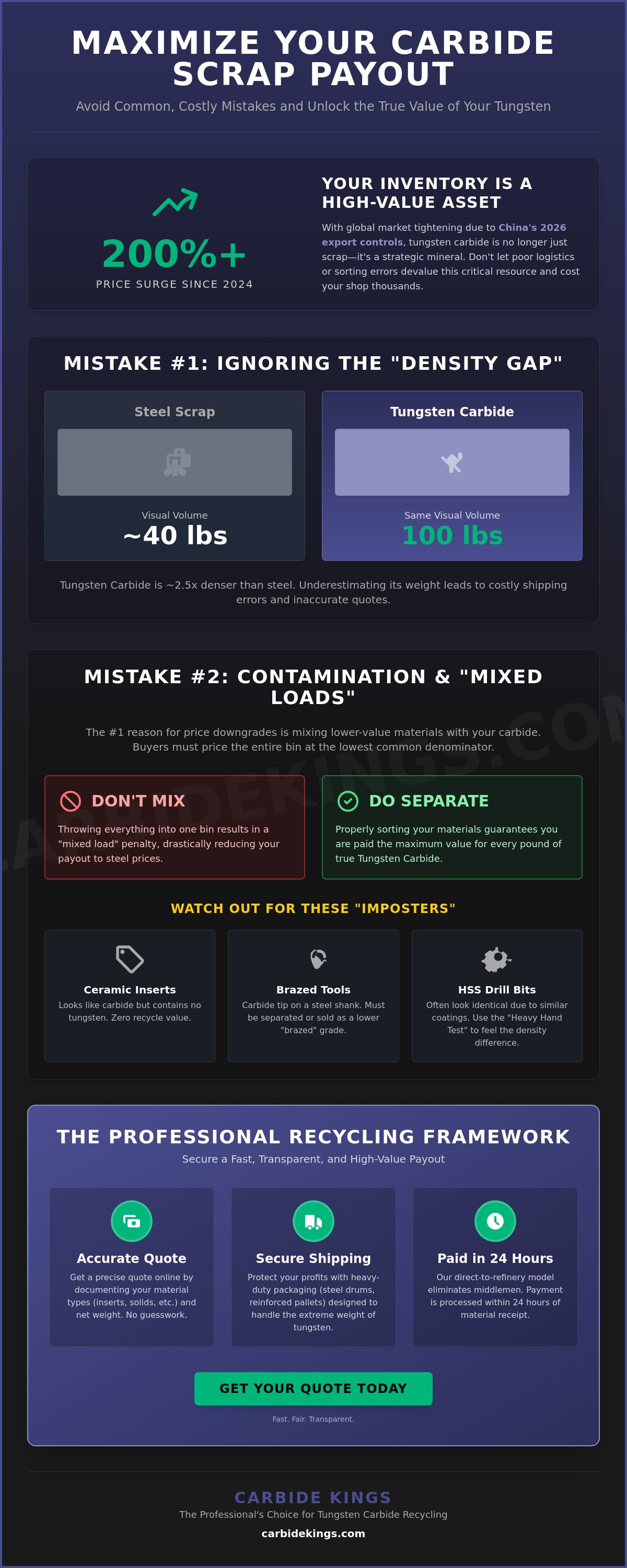
Tungsten carbide powder prices have surged over 200% since early 2024, yet many shops are still losing thousands of dollars because of poor logistical planning. With China's 2026 export controls tightening the global market, your inventory is now a high-value strategic asset. Most sellers fail to capture this full value because of common mistakes when selling carbide scrap, such as mixing material grades or overlooking hidden shipping costs that eat into the final check.
It's frustrating to see a solid estimate dwindle because of price downgrades at the scale. You deserve a process that's as efficient as your shop floor. This guide will teach you how to avoid costly errors and secure a high-value carbide scrap quote online with total confidence. We'll provide a clear framework for sorting your tungsten hard scrap, soft scrap, and alloys, ensuring you receive a fast, transparent payment without the usual administrative hurdles or paperwork delays.
Key Takeaways
- Stop treating tungsten like common steel; learn why the "Density Gap" makes carbide a high-value alloy requiring specific handling.
- Avoid the most common mistakes when selling carbide scrap by properly separating High-Speed Steel (HSS) to prevent costly "mixed load" penalties.
- Secure a precise carbide scrap quote online by mastering the professional way to document your net weight and material types like inserts and solids.
- Protect your profits with heavy-duty packaging strategies designed to withstand the extreme weight of dense tungsten alloys during transport.
- Get paid faster by using a direct-to-refinery framework that eliminates middlemen and processes your payout within 24 hours of material receipt.
Why Selling Carbide Scrap Isn’t Like Selling Common Steel
Treating your tungsten carbide inventory like basic scrap iron is a fast way to lose money. While steel is a commodity found in every dumpster, tungsten carbide is a high-value industrial alloy essential to defense, aerospace, and energy sectors. It doesn't follow the same pricing logic as base metals. One of the most common mistakes when selling carbide scrap is walking into a local yard expecting them to understand the current global market value of your material. These general recyclers are built for volume, not for the precise chemistry of strategic minerals.
You must understand the "Density Gap" to value your material correctly. Tungsten is incredibly heavy. A pile of carbide that looks like 50 lbs of steel often weighs closer to 100 lbs. Because of this extreme mass, shipping and handling require a different approach. If you underestimate the weight based on visual volume, you'll likely face logistical failures or under-quoted estimates. In 2026, the global tungsten market is tighter than ever. China's strict export controls and the 200% surge in powder prices since 2024 have turned every pound of your scrap into a high-stakes asset that fluctuates far more aggressively than aluminum or iron.
The Metallurgy of Value: Tungsten vs. Carbon
At its core, Tungsten carbide is a dense metallurgical compound used in high-stress industrial applications. It isn't just a single metal; it's a composite of tungsten and carbon, often held together by a cobalt binder. This binder is critical to your payout. Higher cobalt content or the presence of other alloys can change the scrap grade instantly. Since tungsten is currently listed as a critical mineral with a primary supply chain that takes 15 to 20 years to expand, your recycled material is now a vital resource for domestic manufacturing. Professional buyers look at the specific chemical makeup of your tungsten hard scrap and soft scrap to determine a fair price, whereas general yards often ignore these metallurgical nuances.
The High-Stakes Nature of Specialized Recycling
General scrap yards often under-quote carbide to hedge their own risk. They don't have the specialized outlets to refine tungsten, so they offer a lower "safety price" to ensure they don't lose money on the flip. This is why working with a specialized buyer is non-negotiable. Professionals use X-ray fluorescence (XRF) technology to analyze your material on the spot. This ensures you get paid for the actual tungsten content rather than a guessed average. You should always focus on the price-per-pound of the specific alloy rather than a generic "tool steel" rate. Avoiding common mistakes when selling carbide scrap starts with choosing a partner who has the technology to prove what your material is actually worth.
The Sorting Error: Mixing Tungsten Carbide with High-Speed Steel (HSS)
Contamination is the fastest way to kill your profit margin. The single most significant issue leading to price downgrades is mixing High-Speed Steel (HSS) or tool steel with your tungsten. Buyers categorize this as a "mixed load." When you present a contaminated bin, the buyer must assume the lowest common denominator for the entire batch to protect their margins. This often results in a payout that reflects the price of steel rather than the premium value of a critical mineral like tungsten.
One of the most common mistakes when selling carbide scrap is assuming that all "hard metal" is the same. It isn't. To maximize your return, you must remove "imposter" materials before they hit the scale. Watch out for these three culprits:
- Ceramic Inserts: These look like carbide but contain no tungsten. They are effectively worthless in a carbide recycle stream.
- Brazed Tools: A carbide tip on a steel shank is a mixed material. You'll get a better rate if you separate the tips or sell them as a specific "brazed" category.
- HSS Drill Bits: These are often finished with similar coatings (like TiN) as carbide, making them look identical to the untrained eye.
If you aren't sure about a specific batch, it's better to set it aside. You can always get a professional assessment to clarify your material grades before shipping.
Telling the Difference: The "Heavy Hand" Test
Weight is your most reliable field test. Tungsten carbide is roughly 2.5 times denser than steel. Pick up a known steel drill bit in one hand and a suspected carbide bit of the same size in the other. The carbide tool should feel significantly heavier, almost like lead. Next, use a magnet. While some carbide grades are slightly magnetic due to the cobalt binder, HSS will usually have a much stronger pull. Finally, look for laser-etched "HSS" or "Carbide" stamps on the tool shanks. Many manufacturers label their tools specifically to help with end-of-life sorting.
The Spark Test: A Visual Confirmation
When physical weight and magnets don't provide a clear answer, use a bench grinder for a spark test. This is a standard practice in machine shops to identify common mistakes when selling carbide scrap. Steel produces long, white or bright yellow sparks that "burst" at the ends. In contrast, tungsten carbide produces very short, dull orange sparks that look bushy and don't travel far from the wheel. Always wear proper eye protection and a mask when performing this test. If the sparks are long and white, keep that tool out of your carbide bin. Visual confirmation ensures your tungsten hard scrap stays pure and your payout stays high.
Quote and Valuation Blunders: How to Get an Accurate Carbide Scrap Quote Online
Guessing your scrap's value is a gamble you don't need to take. Many sellers reach out for pricing without a firm understanding of their inventory, which often leads to disappointment when the final check arrives. One of the most common mistakes when selling carbide scrap is requesting a quote based on "eyeballed" weight or vague descriptions. Professional buyers need precision to offer refinery-level rates. If you can't provide a net weight, you're essentially asking for a guess, not a guarantee.
Accounting for "tare weight" is equally vital. This is the weight of your empty buckets, bins, or pallets. If you tell a buyer you have 500 lbs of material but forget that the steel drum weighs 50 lbs, your expected payout will be off by 10% before the truck even leaves your dock. Clear photos are your best defense against valuation drops. A buyer needs to see if you're shipping solid end mills, indexable inserts, or brazed tools. High-resolution images allow for a visual assay that protects both parties and ensures the material type is categorized correctly from the start.
The RFQ Template for Carbide Sellers
To get a firm, honored price, use a standardized Request for Quote (RFQ) approach. This professional method aligns with the recycling infrastructure detailed in the U.S. Geological Survey report on tungsten recycling. Your request should always include these four pillars:
- Material Type: Specify if it's tungsten hard scrap (solids), soft scrap (sludge/powder), or tungsten alloys.
- Net Weight: Use a digital scale to provide an exact poundage, minus the container weight.
- Purity: Note if the material is "clean" or contains brazed steel or ceramic contaminants.
- Packaging Format: State if the material is in 5-gallon pails, on a shrink-wrapped pallet, or in a custom crate.
Using digital scales to provide a certified weight estimate removes the friction of "re-weighing" disputes. When your data is accurate, the transaction moves faster.
Evaluating the Fine Print: Payment and Terms
Don't let a high "sticker price" distract you from the actual terms of the deal. It's essential to understand tungsten scrap payment terms before you commit to a shipment. Some dealers use "bait and switch" tactics, quoting a high market rate but then burying you in administrative fees or extended payment windows that can last weeks. A reliable partner offers transparency and speed. Look for buyers who provide 24-hour processing from the moment your material is verified at the facility. Avoiding common mistakes when selling carbide scrap means vetting the buyer's reputation for immediate wire transfers and honest weights as thoroughly as you vet your own sorting process.
Logistical Pitfalls: Shipping and Packaging Your Tungsten Materials
Shipping tungsten carbide is a unique challenge because of its extreme weight-to-volume ratio. A small container of inserts can easily exceed 70 pounds, which is the standard limit for many parcel carriers. One of the most common mistakes when selling carbide scrap is using standard, single-wall cardboard boxes. These boxes are designed for consumer goods, not industrial alloys. Under the stress of transit, the dense metal will punch through the bottom of a weak box, leading to lost material and insurance claims that carriers will likely deny due to "insufficient packaging."
Secure packaging is the only way to protect your payout. If you're shipping larger quantities, neglecting to secure the pallet is a major blunder. A shifting load of heavy metal can cause a freight truck to become unstable, leading to carrier rejection at the terminal or expensive "re-stacking" fees. You should always use reinforced plastic pails or double-wall corrugated boxes rated for heavy-duty industrial use. If you have questions about how to prep your specific load, you can contact our logistics team for direct guidance on secure transport.
Securing Your Shipment: The "Double-Bucket" Method
For heavy carbide inserts and small solids, the "Double-Bucket" method is the industry standard. Place your material into a 5-gallon plastic pail, then nest that pail inside a second one. This creates a reinforced sidewall that prevents punctures. Don't waste money on packing peanuts or bubble wrap. These "void fills" collapse instantly under the weight of tungsten. Instead, use heavy-duty duct tape to secure the lid and wrap the entire pail in multiple layers of industrial stretch film. This keeps the contents stationary and ensures the lid doesn't pop off during rough handling at a sorting facility.
Insurance and Tracking: Protecting Your Asset
Your scrap is a financial asset, and you should treat it as such. Always ship with tracking and full insurance. To calculate the "replacement value" for insurance purposes, use the current market rate for your specific material type. If you're using national freight, the Bill of Lading (BOL) is your most critical document. It serves as your receipt and contract with the carrier. We take an active role in assisting our clients with carbide scrap shipping logistics to ensure every shipment is documented correctly. This level of oversight eliminates another of the common mistakes when selling carbide scrap: losing visibility on your shipment before it reaches the refinery. High-value loads of tungsten alloys require professional logistics to ensure they arrive safely and pay out quickly.
Streamlining Your Sale: The Carbide Kings Professional Recycling Framework
The final hurdle in maximizing your return is choosing a partner that respects the value of your material. Many shops fall victim to common mistakes when selling carbide scrap by settling for local generalists who lack the specialized equipment to value tungsten accurately. These traditional scrap yards act as middlemen; they buy low and sell high to refineries, pocketing the margin that belongs to you. Carbide Kings operates differently. We eliminate the middleman by providing a direct pipeline to the refinery. This ensures you receive direct refinery-level pricing without the markdowns found at local yards.
Our process is built for industrial speed and total transparency. We offer a 24-hour guarantee: once your material is received at our facility, processed, and verified, your payment is issued to your account within one business day. This level of efficiency is why manufacturers across the country trust us. We buy from every state, offering the same transparent weighing and analysis process regardless of your location. We handle the heavy lifting. You focus on your shop's core operations while we turn your industrial waste into liquid capital. Our "No-Hassle" promise means we remove the administrative hurdles that typically slow down high-value metal transactions.
Why National Industrial Leaders Choose Us
Our expertise is focused specifically on Tungsten Hard Scrap and Tungsten Alloys. We don't dilute our focus with residential recycling. This specialization allows us to maintain a transparent weighing and analysis process that generalists can't match. We use professional-grade assays to ensure every pound of your shipment is accounted for. Our streamlined process is designed to convert industrial waste into liquid capital within one business day. By avoiding the common mistakes when selling carbide scrap, you ensure your business captures the full strategic value of its tungsten inventory.
Get Started Today: Your No-Obligation Quote
Securing a high-value return shouldn't be a complicated process. We've simplified the onboarding for new industrial clients to ensure you can move from a quote to a payout with minimal friction. Start by using our carbide scrap quote online tool to provide your material details. Once you submit your information, our team will review the data and provide a firm, competitive estimate based on current market values. We provide clear instructions for shipping and documentation, ensuring your first transaction is as smooth as your hundredth. Don't let your scrap sit on the floor and lose value. Sell your tungsten carbide scrap to Carbide Kings today.
Maximize Your Industrial Asset Today
Your shop's floor is likely covered in high-value strategic minerals. Turning that inventory into liquid capital requires more than just a trip to a local yard. By implementing a strict sorting protocol and using reinforced packaging, you protect your profits from the scale to the refinery. Avoiding common mistakes when selling carbide scrap ensures you aren't penalized for contamination or logistical errors that are easily preventable. You've worked hard to generate this material; don't leave its final value to chance.
Partnering with a specialist gives you access to professional tools like Specialized XRF Material Analysis and National Shipping Support. This level of oversight removes the guesswork from the transaction. We handle the heavy lifting so your team stays focused on production. Experience the relief of a transparent process backed by our 24-Hour Processing Guarantee.
Get Your Guaranteed Carbide Scrap Quote Online Now and secure the payout your inventory deserves. We're ready to turn your tungsten hard scrap, soft scrap, and alloys into immediate capital.
Frequently Asked Questions
Can I sell carbide scrap if it is still attached to steel shanks?
Yes, you can sell these as brazed tools, but they are valued differently than solid pieces. These items are considered mixed material because the steel shank adds weight without adding tungsten value. To maximize your return, many shops choose to remove the carbide tips, though specialized buyers accept them as-is to save you the labor time. Just ensure you categorize them correctly when requesting your quote.
What is the minimum weight required to get a carbide scrap quote online?
Most professional buyers require a minimum of 50 pounds to provide a competitive quote and manage shipping logistics efficiently. While smaller amounts are technically recyclable, the cost of transport often outweighs the value of the material for lower weights. Consolidating your tungsten hard scrap into larger batches ensures you secure the best possible freight rates and a higher overall valuation for your inventory.
How long does it take to receive payment after I ship my carbide?
Payment is typically issued within 24 hours of your material being verified at the processing facility. Once the shipment arrives, it undergoes a professional weighing and XRF analysis to confirm the tungsten content. After this verification is complete, funds are immediately released via wire transfer or check. This streamlined workflow is designed to provide industrial shops with liquid capital as quickly as possible.
Is there a difference in price between carbide inserts and carbide end mills?
Yes, there is often a price variance based on the specific metallurgical grade and cobalt content of the tools. Solid carbide end mills and drills generally have a different chemical profile than indexable inserts. Because these materials are processed differently at the refinery, a specialized buyer will use X-ray analysis to provide a precise price for each category rather than a single flat rate.
Why is my local scrap yard offering significantly less than online buyers?
Local yards usually lack the specialized equipment and direct refinery relationships needed to pay full market value. They act as middlemen, purchasing your material at a discount and reselling it to larger processors. They also offer lower prices to hedge against the risk of contamination. Specialized buyers use XRF technology to prove the material's purity, allowing them to offer direct, refinery-level pricing.
What happens if my shipment contains non-carbide materials by mistake?
Contamination typically results in a price adjustment or a downgrade of the affected batch. This is one of the most common mistakes when selling carbide scrap, as even a few pounds of steel can trigger a "mixed load" rate. If impurities are found during the assay, the non-carbide weight is subtracted from the total, and the payout is recalculated based on the actual tungsten content verified.
Do you provide shipping labels or do I have to arrange my own freight?
Professional recycling partners provide comprehensive national shipping support, including prepaid labels for small parcels and Bill of Lading (BOL) documentation for freight. This ensures your high-value tungsten alloys are tracked and insured from the moment they leave your dock. Handling the logistics for you removes the administrative burden and ensures that the shipping costs are factored transparently into your final transaction.
How do I know if my material is actually tungsten carbide or just heavy steel?
Density and spark patterns are your most reliable indicators. Tungsten carbide is approximately 2.5 times heavier than steel of the same size. If you touch the material to a grinder, carbide will produce very short, dull orange sparks, while steel creates long, bright white sparks that burst at the ends. Using these simple shop tests prevents you from accidentally shipping low-value steel in your carbide bins.


