
Did you know the price of ammonium paratungstate surged by 557% compared to early 2025 levels? This massive market shift means your stockpile of tungsten alloy scrap is a strategic financial asset rather than just heavy shop waste. Most industrial professionals recognize that tungsten is now a critical mineral, yet many still settle for opaque pricing and logistical nightmares at local yards.
You shouldn't have to struggle with high shipping costs or the difficulty of distinguishing between different tungsten grades. We understand that your time is better spent on core operations than on complex metal sorting. This guide will show you how to identify, sort, and sell your tungsten alloy scrap at peak market rates through a streamlined national process that prioritizes speed and transparency.
We'll walk you through the essential steps to maximize your material's value and secure a fast, reliable payment process. You will gain a clear understanding of current alloy market drivers and learn how to move your inventory with minimal administrative friction. It's time to turn your industrial scrap into a straightforward revenue stream.
Key Takeaways
- Distinguish between tungsten alloy scrap and carbide by focusing on density-driven value rather than just physical hardness.
- Locate high-value materials in your inventory by targeting specific components like aerospace balance weights and medical radiation shielding.
- Prepare your shipment for peak market rates by performing a simple magnet test and removing excessive grease or steel attachments.
- Streamline your selling process with a national partner that provides a 24-hour grading guarantee and flexible payment options.
What is Tungsten Alloy Scrap and Why is it Valuable?
Tungsten alloy scrap consists of high-density materials where tungsten is combined with metal binders like nickel, iron, or copper. Unlike standard tungsten carbide, which is engineered for cutting and drilling, these alloys are designed for mass, protection, and thermal stability. They capitalize on tungsten's unique properties, specifically its extreme density and melting point. This makes the material indispensable for aerospace counterweights, vibration dampeners, and medical radiation shielding. When you sell this scrap, you aren't just clearing floor space; you're supplying a critical resource to high-stakes industries.
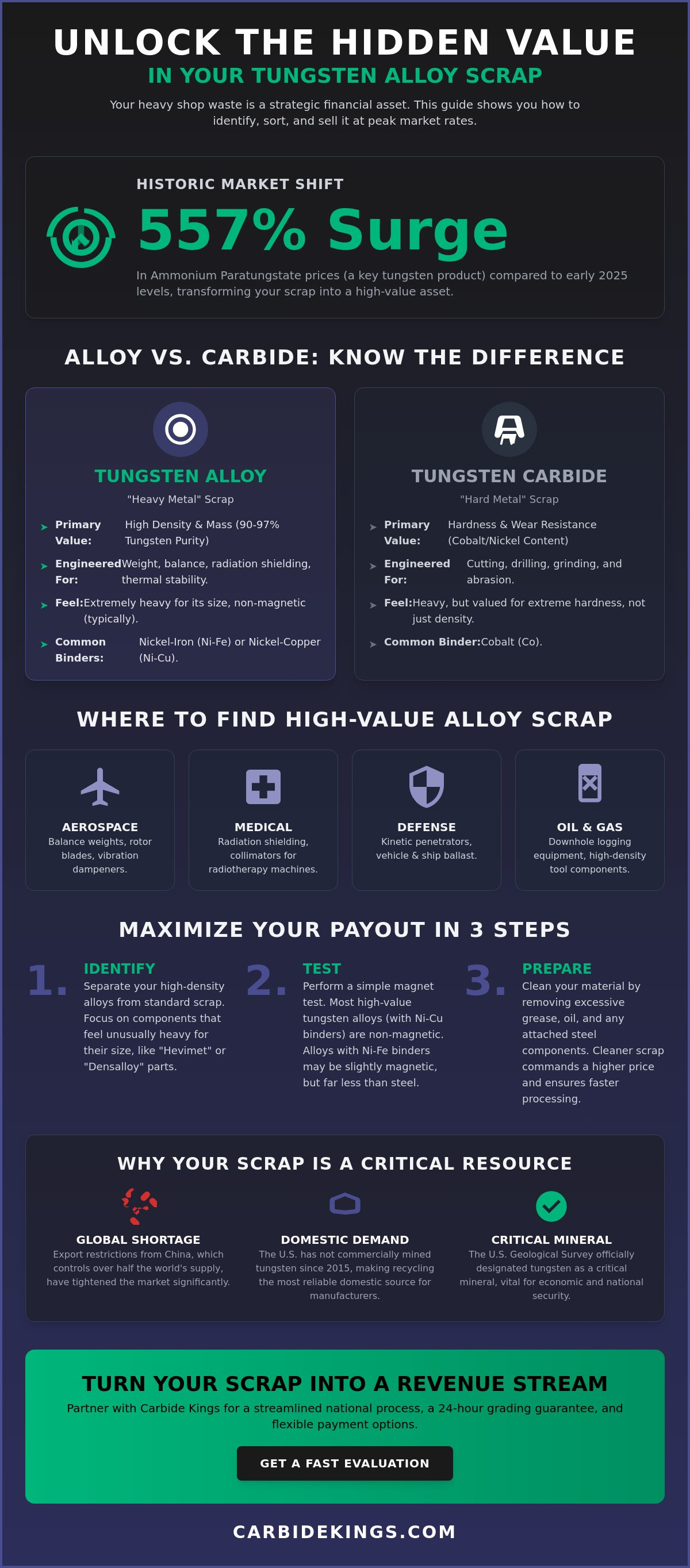
The market value of these alloys has reached historic levels in 2026. Data from March 2026 shows that the price of ammonium paratungstate, a key tungsten product, surged by 557% compared to early 2025 levels. This volatility has transformed tungsten alloy scrap into a strategic financial asset. Aerospace and defense sectors are currently driving a massive spike in demand. Because tungsten is nearly as dense as gold but significantly more durable, it's the primary choice for kinetic penetrators and balance weights. While carbide scrap is often valued for its cobalt content, tungsten alloy scrap is prized for its sheer tungsten purity.
Understanding the difference between these materials is essential for maximizing your return. Standard shop waste often gets mixed together, but separating your heavy alloys can lead to a much higher payout. These materials are often referred to as "Hevimet" or "Densalloy" in industrial settings. They offer a specific gravity far higher than lead without the associated toxicity, making them easier to handle and more valuable to modern recyclers who prioritize environmental responsibility.
The Chemistry of High-Density Tungsten Alloys
Most industrial tungsten alloys contain between 90% and 97% pure tungsten. Manufacturers add binders like Nickel-Iron (Ni-Fe) or Nickel-Copper (Ni-Cu) to make the metal machinable. Without these binders, pure tungsten would be too brittle to shape into functional parts. These components are created through a sintering process. During this process, powdered metals are pressed and heated until they bond into a solid, high-density mass. This high concentration of tungsten ensures that your alloy scrap remains a premium commodity that is relatively easy to reprocess for new manufacturing runs.
Economic Drivers for Tungsten Recycling in 2026
The global supply chain for tungsten is currently under significant pressure. China accounts for more than half of the global mined supply, and their 2025 export restrictions have created a global shortage. Since the United States has not commercially mined tungsten since 2015, recycling is now the most reliable source for domestic manufacturers. High-purity alloys command premium prices because they require less energy to refine than raw ore. By selling your scrap, you help secure a domestic supply of a mineral that the U.S. Geological Survey officially designated as critical in 2025.
Common Industrial Sources of Tungsten Alloy Scrap
Identifying where your high-density materials come from is the first step toward a successful sale. These alloys aren't found in standard consumer goods. They're embedded in specialized machinery that demands extreme weight in confined spaces. The defense sector is a massive consumer, using these materials for kinetic energy penetrators and heavy ballast to stabilize armored vehicles. Since the United States hasn't commercially mined tungsten since 2015, these industrial sources of tungsten alloy scrap represent a vital domestic resource for manufacturers across the country.
Oil and gas exploration tools also contribute significantly to the scrap stream. Downhole logging equipment uses high-density alloy components to ensure tools sink through thick drilling mud during deep-well inspections. In the defense sector, ballast for ships and aircraft often consists of these same alloys to maintain center-of-gravity precision. If you manage a facility that services these sectors, you're likely sitting on a significant volume of tungsten alloy scrap. Converting this material into cash is a fast way to improve your bottom line. You can request a fast evaluation of your scrap to see exactly what your current inventory is worth.
Aerospace and Aviation Components
Aerospace and aviation sectors provide some of the cleanest scrap available. Engineers utilize tungsten's mass to balance rotor blades and stabilize flight control surfaces. You'll find these alloys as trim weights or vibration dampeners in both commercial jets and military helicopters. Maintenance protocols are rigorous. These parts are replaced on fixed schedules, often while they're still in excellent physical condition. This results in "clean" aerospace-grade scrap that commands top dollar. Look for heavy, non-magnetic metallic blocks bolted to airframes or integrated into tail assemblies.
Medical and Industrial Shielding
The medical industry has shifted significantly toward tungsten for radiation shielding. It offers superior protection compared to lead without the toxic environmental drawbacks. Look for X-ray housings, collimators, and radioactive isotope containers. These components are designed to narrow and direct radiation beams with extreme precision. Identifying these shields is straightforward. They are remarkably heavy for their size and have a dull grey, metallic finish. If a component feels like it's made of solid lead but resists scratching and denting, it's probably a high-density tungsten alloy. These shields are valuable because they typically feature very high tungsten purity with minimal industrial contamination.
Tungsten Alloys vs. Carbide Hard Scrap: Value and Performance
Don't fall into the trap of thinking all "heavy metal" scrap is the same. While both materials contain high concentrations of tungsten, their industrial purpose and market value differ significantly. Tungsten carbide is engineered for extreme hardness to cut through steel, whereas tungsten alloys are designed for density and mass. Understanding this distinction is the key to getting the best price for your tungsten alloy scrap. You can find more details on general shop waste value in our guide on carbide scrap vs steel scrap price.
The pricing logic for these materials follows different paths. Carbide value often fluctuates based on its cobalt binder content, which usually ranges from 6% to 15%. In contrast, alloys are valued almost entirely for their tungsten purity, which often exceeds 90%. Because the recycling methods for these two materials are distinct, mixing them in the same bin will likely lower your total payout. Keep them separate to ensure you receive a quote that reflects the true market value of each specific grade.
It's a common misconception that any heavy, grey metal can be tossed into the same bucket. If you mix high-value alloys with lower-grade carbide, you're essentially leaving money on the shop floor. Professional recyclers look for consistency. A clean, sorted load of alloy solids allows for a much faster grading process and a higher overall return. By taking a few minutes to categorize your waste, you move from being a casual seller to a strategic industrial partner.
Identifying Tungsten Carbide Tooling
Machine shops generate the most carbide scrap through worn-out tooling. Look for discarded end mills, indexable inserts, and drill bits. These tools feel much heavier than high-speed steel and usually have a darker, matte grey appearance. You can perform a simple "ring test" to confirm. When dropped on a hard surface, carbide produces a high-pitched, metallic ring, whereas steel sounds duller. Carbide Kings is a leading national buyer of tungsten hard scrap, providing a straightforward way to turn these worn tools into immediate capital.
Valuing Tungsten Alloy Solids
Alloy solids are priced based on their specific tungsten percentage. Most aerospace and medical components are 90% to 97% tungsten, making them highly desirable for recyclers. Clean, non-contaminated alloy solids pay more because they don't require extensive pre-processing to remove grease or attached steel hardware. To estimate your load value, weigh your material and check if it's non-magnetic or weakly magnetic. This simple step helps you provide accurate information when requesting a quote. By organizing your tungsten alloy scrap by its source or application, you enable a faster, more transparent grading process.
How to Identify and Prepare Your Alloy Scrap for Shipment
Proper preparation is the difference between a top-tier payout and an unexpected weight deduction. You've already identified your tungsten alloy scrap as a valuable asset. Now, you must ensure it arrives at the refinery in a condition that allows for immediate grading. Start with a simple magnet. High-quality alloys are typically non-magnetic or only weakly magnetic due to their nickel or copper binders. If a magnet sticks firmly, you're likely looking at a steel-heavy component that will require more processing and lower your return.
Cleaning your materials is a critical step that many shops overlook. Remove excessive grease, coolant, or heavy oils before packing. If your alloy weights are still bolted to steel brackets or encased in aluminum housings, take the time to strip them. Recyclers pay for the weight of the tungsten, not the attachments. By delivering clean material, you eliminate the need for deductions and speed up your payment timeline. Keep your sorting organized. Never mix your carbide inserts with your heavy metal alloys. These materials require different processing streams, and mixing them complicates the valuation of your tungsten alloy scrap.
Packaging is your final hurdle. Tungsten's extreme density makes it a logistical outlier. A small container can quickly exceed the weight limits of standard shipping boxes. Use reinforced steel drums or heavy-duty plastic pails for smaller loads. For bulk shipments, ensure your containers are securely palletized and strapped. This prevents breaches during transit and ensures your material arrives exactly as you sent it. If you need help with the heavy lifting, get a shipping quote and start your payout process today.
Simple Identification Tests for Shop Floors
Visual cues are your first line of defense. Tungsten has a distinct, dull gray finish that lacks the bright, reflective shine of stainless steel. If you're still unsure, try the spark test. Touch the material to a bench grinder for a split second. Tungsten produces very few, short, orange sparks that don't branch out. In contrast, steel produces long, white, branching sparks. You can also perform a basic density check. Tungsten is nearly twice as dense as lead. If a component feels impossibly heavy for its size, it's almost certainly a high-value tungsten alloy.
National Shipping and Logistics Support
Logistics shouldn't be a headache for industrial professionals. Carbide Kings provides comprehensive support for shipping bulk alloy loads across the country. When preparing a pallet, always center the weight to prevent tipping. Use high-tensile strapping and multiple layers of shrink wrap to stabilize the load. It is vital to weigh your shipment on a calibrated scale before it leaves your dock. Accurate documentation protects your interests and ensures the final grading matches your expectations. We handle the administrative friction so you can focus on your core shop operations.
Carbide Kings: Your National Partner for Tungsten Alloy Recycling
Selling your tungsten alloy scrap shouldn't feel like a side project that drags on for weeks. Many local yards lack the specialized equipment to grade high-density alloys accurately, leading to "safe" low-ball offers and long wait times. Carbide Kings operates differently. We've built a national infrastructure designed specifically for the industrial sector. Our process prioritizes your time and cash flow, ensuring that geography never stands in the way of a fair, transparent transaction. Whether you're managing a shop in a major hub or a remote facility, we provide the same high level of professional service.
Transparency is the foundation of our business. We provide a 24-hour processing and grading guarantee once your material arrives at our facility. You won't have to wonder about the status of your shipment or wait through weeks of administrative delays. Our team uses precision analysis to determine the exact tungsten content of your load, ensuring you receive a quote based on current market rates. Once the grading is verified, we offer flexible payment options to suit your business needs, including immediate wire transfers and overnight checks. We handle the heavy lifting of logistics and valuation so you can stay focused on your production schedule.
Our Streamlined Procurement Process
We've removed the traditional barriers to scrap metal recycling with a simple, three-step workflow. This methodical approach ensures that every transaction is handled with professional efficiency:
- Step 1: Request a quote through our online portal. Include clear photos of your material and an estimated weight. This allows our experts to provide a preliminary valuation quickly.
- Step 2: Receive comprehensive shipping assistance. Our team provides the necessary documentation and logistical guidance to move your heavy alloy loads safely and cost-effectively.
- Step 3: Get paid within 24 hours of material verification. Once our team confirms the grade and weight of your tungsten alloy scrap, we initiate your payment immediately.
Why Industrial Professionals Choose Carbide Kings
Industry leaders trust us because we understand the nuances of the market. We stay ahead of the curve by monitoring tungsten carbide scrap price trends and global supply chain shifts. This expertise allows us to offer competitive, market-based pricing that reflects the true value of your industrial assets. We don't just act as a buyer; we serve as a proactive partner in your facility's waste management strategy.
Our no-nonsense approach is built for professionals who value clarity and speed. We've eliminated the unnecessary paperwork and administrative hurdles that often plague the recycling industry. By choosing Carbide Kings, you're choosing a partner that respects your time and your bottom line. It's time to stop letting your machine shop waste collect dust and start turning it into immediate working capital. We're ready to help you unlock the value in your inventory today.
Maximize Your Industrial Scrap Value Today
Your machine shop waste is a liquid asset waiting to be claimed. By mastering the magnet test and keeping your materials sorted, you ensure that every pound of tungsten alloy scrap yields its maximum market value. You've learned how to distinguish high-density alloys from standard carbide and how to prepare your load for a frictionless transaction. It's time to stop letting these valuable materials take up floor space and start putting that capital back into your business.
Carbide Kings is ready to handle the logistics for you. We provide national shipping support across all 50 states and back every transaction with a 24-hour processing guarantee. You don't have to wait for your capital; we initiate fast wire transfer payments as soon as your material is verified. Our streamlined process removes the administrative burden, allowing you to focus on your core operations while we turn your scrap into revenue.
Take the final step toward a cleaner shop and a stronger bottom line. Get a Fast Quote for Your Tungsten Alloy Scrap Now and experience the efficiency of a professional industrial partnership. We're ready to help you secure the best possible return on your strategic metal assets.
Frequently Asked Questions
How much is tungsten alloy scrap worth per pound in 2026?
Market rates for tungsten are currently at historic highs due to global supply chain shifts and export restrictions. While we don't list fixed prices because the market fluctuates daily, the price of ammonium paratungstate reached $2,250 per metric ton by March 2026. This represents a 557% increase from pre-February 2025 levels. We provide custom, market-based quotes to ensure your tungsten alloy scrap is valued accurately against these real-time economic drivers.
What is the difference between tungsten carbide and tungsten alloy?
The distinction lies in the binder material and the mechanical properties. Tungsten carbide is a ceramic-metal composite using cobalt as a binder, engineered specifically for hardness in cutting tools. Tungsten alloys use binders like nickel, iron, or copper to create a machinable, high-density metal. These alloys are prized for their mass and radiation shielding capabilities rather than their ability to hold a cutting edge.
Do you buy tungsten alloy sludge or just hard scrap?
We purchase both hard scrap and soft scrap, which includes tungsten-bearing sludge, powders, and turnings. While solid pieces are common in aerospace and medical sectors, sludge from grinding operations remains a valuable source of recyclable material. We process these materials with the same professional efficiency and 24-hour grading guarantee we apply to our hard scrap procurement.
Is there a minimum weight requirement for shipping tungsten scrap?
We suggest shipping a minimum of 50 pounds to ensure the freight costs don't disproportionately impact your total return. Because of the metal's extreme density, 50 pounds of material can often fit into a single small flat-rate box or a reinforced pail. For larger industrial loads, we provide full logistical support to manage the movement of multiple pallets or heavy drums across the country.
How do I know if my scrap is tungsten or just heavy steel?
Perform a spark test and a magnet test for immediate identification. Tungsten produces very short, orange sparks that don't branch when touched to a grinder, while steel produces long, white, branching sparks. Most high-density alloys are non-magnetic or only weakly magnetic. Additionally, tungsten is nearly twice as dense as lead, so a small part that feels unexpectedly heavy is likely tungsten.
How quickly will I receive payment after shipping my carbide?
You'll receive payment within 24 hours of our team verifying your material. We've refined our procurement process to eliminate the typical wait times associated with traditional scrap yards. Once the grading is complete and the weight is confirmed, we initiate your payment via wire transfer or overnight check. This speed ensures your shop waste is converted back into working capital without delay.
Can I sell mixed loads of carbide and tungsten alloys?
You can sell mixed loads, but we strongly advise sorting the materials into separate containers before shipment. Mixing carbide inserts with tungsten alloy scrap can slow down the grading process and may result in a lower average payout for the entire load. Keeping your materials separated by grade allows us to provide a more precise valuation and ensures you receive the maximum rate for each specific alloy.
Do you provide shipping containers for bulk tungsten scrap?
We provide comprehensive national shipping support and guidance on the best containers for high-density materials. For bulk loads, we recommend using reinforced steel drums or heavy-duty plastic pails that are securely strapped to a pallet. Our team assists with all necessary documentation and logistics to ensure your shipment moves safely from your facility to our dock with minimal administrative friction.


