
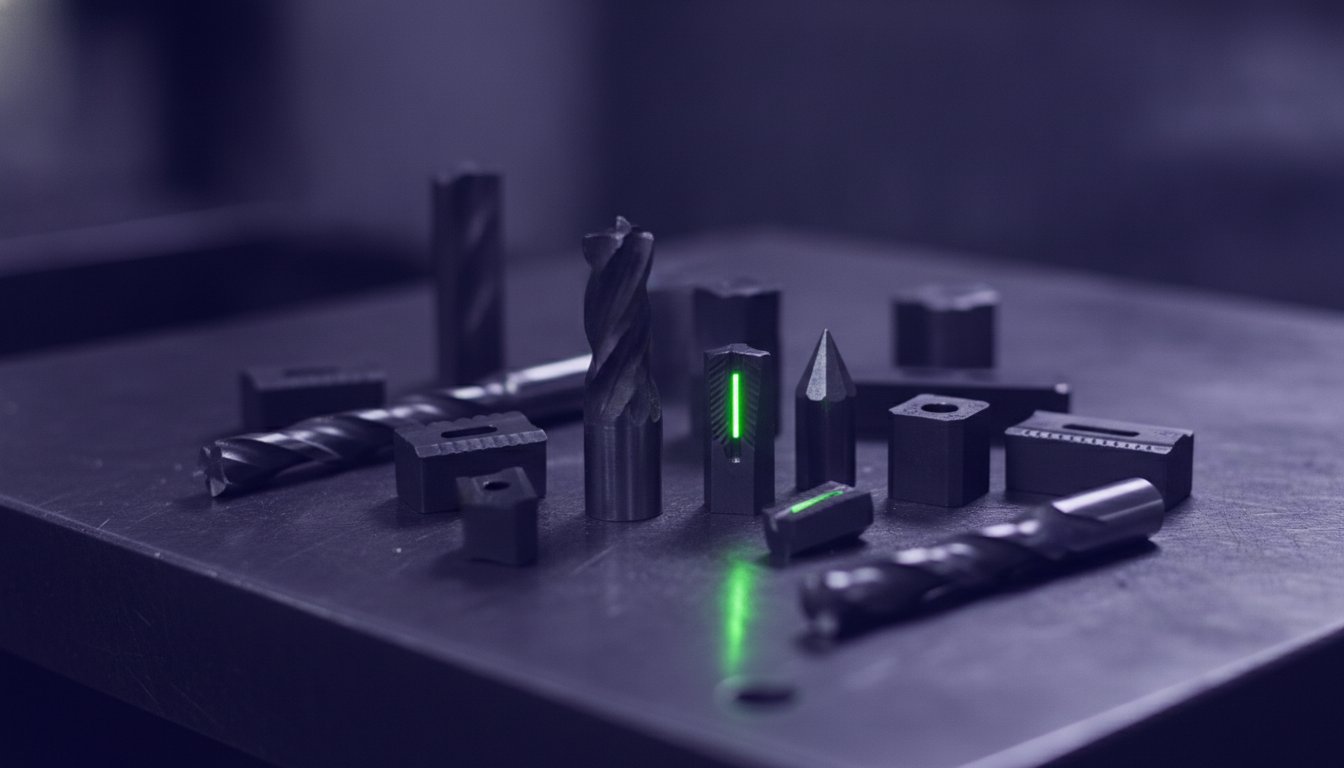
Tungsten carbide scrap prices surged by over 200% between early 2024 and mid-2026, transforming what used to be industrial waste into a high-yield financial asset. If you're still tossing worn inserts and broken drills into a mixed metal bin, you're essentially throwing away cash. Identifying the common sources of tungsten carbide scrap within your facility is the first step toward reclaiming that lost value. It's a simple shift that pays off immediately, especially as global supply chains tighten and demand for this critical mineral continues to climb.
We understand that managing heavy materials and navigating volatile market pricing can feel like a logistical headache. You want a process that's transparent, fast, and worth your time. This guide outlines exactly where to find high-value carbide in your shop and how to turn those wear parts into a steady stream of revenue. We'll show you how to identify your materials, simplify your shipping, and secure the competitive rates your business deserves. Stop letting your high-value scrap sit idle and start maximizing your facility's industrial value today.
Key Takeaways
- Understand why tungsten carbide's extreme heat resistance and hardness make it a high-value critical mineral in the current global market.
- Identify the most common sources of tungsten carbide scrap in your facility, from CNC inserts to specialized mining and drilling components.
- Discover hidden revenue streams in heavy industry applications, including road milling teeth and oil field wear valves.
- Learn two simple, non-technical field tests to quickly distinguish high-value carbide from cheaper steel alloys.
- Streamline your recycling process to eliminate logistical hurdles and secure fast, competitive payments for your industrial wear parts.
What is Tungsten Used For? The Industrial Role of Carbide
Tungsten carbide is a dense, metallic compound that serves as the backbone of modern heavy industry. It's prized for an extreme level of hardness that ranks just below diamond on the Mohs scale. This material doesn't just resist scratches; it maintains its structural integrity at temperatures where standard steels would simply melt or deform. Because of these unique properties, identifying common sources of tungsten carbide scrap has become a priority for facilities looking to recover capital from their worn components. In 2026, with domestic tungsten reserves under pressure and global demand rising, recycling every pound of this material is a strategic necessity for maintaining a stable supply chain.
The Difference Between Tungsten and Steel
While they might look similar to the untrained eye, tungsten carbide and industrial steel are fundamentally different materials. The most immediate difference is density. Carbide is roughly twice as heavy as steel, giving it a distinct heft that's easy to recognize once you know what to look for. Beyond weight, carbide offers superior chemical stability and a high resistance to corrosion. These physical advantages ensure that tools last longer in harsh environments, but they also mean the tungsten carbide scrap price remains significantly higher than that of iron or basic alloys. Steel is a commodity; carbide is a high-value industrial asset that requires its own dedicated recovery stream.
Why Industry Relies on Cemented Carbide
Most industrial carbide is actually "cemented carbide." This is a specialized material where hard tungsten particles are bonded together using a metallic binder like cobalt or nickel. Think of it as the spine of heavy-duty industrial machinery. It's the primary choice for high-precision CNC machining and high-speed manufacturing because it stays sharp under extreme friction. Without it, modern production lines would grind to a halt. Recognizing the common sources of tungsten carbide scrap in your shop ensures that these vital materials aren't wasted in a general scrap bin. Industrial professionals rely on this material for several critical applications:
- High-velocity metal cutting, milling, and shaping.
- Deep-hole drilling in aerospace and energy sectors.
- Wear-resistant surfaces in high-impact mining environments.
Recovering these parts isn't just about cleaning up the shop floor. It's about recognizing the inherent value in the tools that drive your production. When you separate your carbide from your steel, you're protecting your facility's bottom line and ensuring that your worn wear parts are converted into immediate working capital.
Machine Shop Essentials: Primary Sources of Carbide Tooling
CNC machining centers are the most prolific environments for generating high-value waste. In these facilities, carbide is ubiquitous. It's the primary material for tools that must withstand high-speed friction and intense heat without losing their edge. According to U.S. Geological Survey Tungsten Data, metalworking and machining represent one of the largest industrial consumptions of tungsten globally. This makes machine shops the most common sources of tungsten carbide scrap for recycling programs. If you manage a shop floor, you're likely standing on a significant amount of potential revenue every day.
- Carbide Inserts: These small, indexable tips are the most abundant scrap type in any modern facility. Even when a single edge is chipped or worn, the remaining material retains its full metallurgical value.
- End Mills and Drill Bits: Solid carbide tools are used for high-precision cutting. Unlike tipped tools, these are often solid carbide throughout, providing a high weight-to-value ratio.
- Taps and Reamers: These specialized threading and finishing tools are high-density carbide assets that should never be mixed with general steel.
- Boring Bars and Shanks: These larger components often feature heavy tungsten content to dampen vibration during deep-hole operations, making them heavy hitters in the scrap bin.
Identifying High-Value Tooling Scrap
Don't let value slip through the cracks by mixing your materials. Many shops lose money by tossing high-value carbide into bins filled with High-Speed Steel (HSS). HSS is significantly less valuable and will contaminate your carbide load. Always perform a quick weight check; carbide is noticeably heavier and has a distinct grey luster. When you're ready to clear out your tooling drawer, you can sell scrap carbide drill bits and inserts to recover a significant portion of your initial tooling investment. Most modern inserts also feature PVD or CVD coatings. While these coatings look like gold or ceramic, the core is still the high-value carbide you need to recycle.
Soft Scrap: Grinding Sludge and Swarf
Recycling isn't limited to solid tools. Soft scrap, often called grinding sludge or "mud," is a valuable byproduct of the tool-sharpening process. This material consists of fine carbide particles suspended in coolant or oil. While it looks like worthless waste, it's actually a concentrated source of tungsten. Collecting this swarf in dedicated, leak-proof containers prevents environmental contamination and creates a new revenue stream for your business. If your facility performs significant in-house grinding, this sludge is a hidden goldmine. If you aren't sure how to handle these materials, consult with the experts at Carbide Kings to streamline your collection process. We handle the logistical heavy lifting so you can stay focused on production.
Heavy Industry and Energy: Beyond the Machine Shop
Machine shops aren't the only places where high-value tungsten resides. While CNC facilities generate a steady stream of small inserts, heavy industries like mining, energy, and construction produce massive volumes of carbide waste through sheer scale and impact. In these sectors, carbide is the primary defense against extreme abrasion and high-pressure environments. Understanding these common sources of tungsten carbide scrap allows project managers to recover significant costs from their heavy equipment maintenance cycles. If your operation involves breaking rock, milling roads, or drilling deep into the earth, you're sitting on a stockpile of industrial value.
The variety of industrial applications of tungsten extends into specialized sectors that many traditional scrap dealers overlook. For instance, the woodworking and forestry industries rely heavily on carbide-tipped saw blades and router bits to maintain production speeds. Similarly, modern agriculture uses carbide-reinforced wear parts for plows and harvesting equipment to extend tool life in abrasive soils. These components are often larger and heavier than standard machining tools, making them lucrative targets for a dedicated recycling program.
Mining and Excavation Sources
Mining operations are among the most consistent producers of heavy carbide scrap. Hard rock drilling relies on "button bits," which are steel drill bodies embedded with high-density carbide studs. When the steel body fails, those carbide buttons remain virtually intact. Demolition teams also generate scrap through the tips of hydraulic hammers and masonry drills. On a larger scale, tunnel boring machines (TBMs) utilize massive cutters that contain significant tungsten weight. Because these parts are designed for high-impact environments, they represent some of the cleanest and most concentrated forms of hard scrap available for recovery.
Energy and Manufacturing Wear Parts
The energy sector, particularly oil and gas, utilizes carbide in high-pressure nozzles, specialized wear valves, and drill bit inserts designed for extreme depths. These parts must survive conditions that would destroy standard alloys, ensuring they retain their metallurgical value even after they're retired from service. In the aerospace sector, tungsten is found in jet engine components and various wear-resistant surfaces that require high-temperature stability. Manufacturing facilities also contribute through the disposal of industrial dies and punches used in high-volume metal stamping. Working with professional carbide insert scrap buyers ensures that these specialized components are correctly identified and valued. Don't let these high-density assets get lost in a mixed steel bin; they are essential revenue streams for your facility.
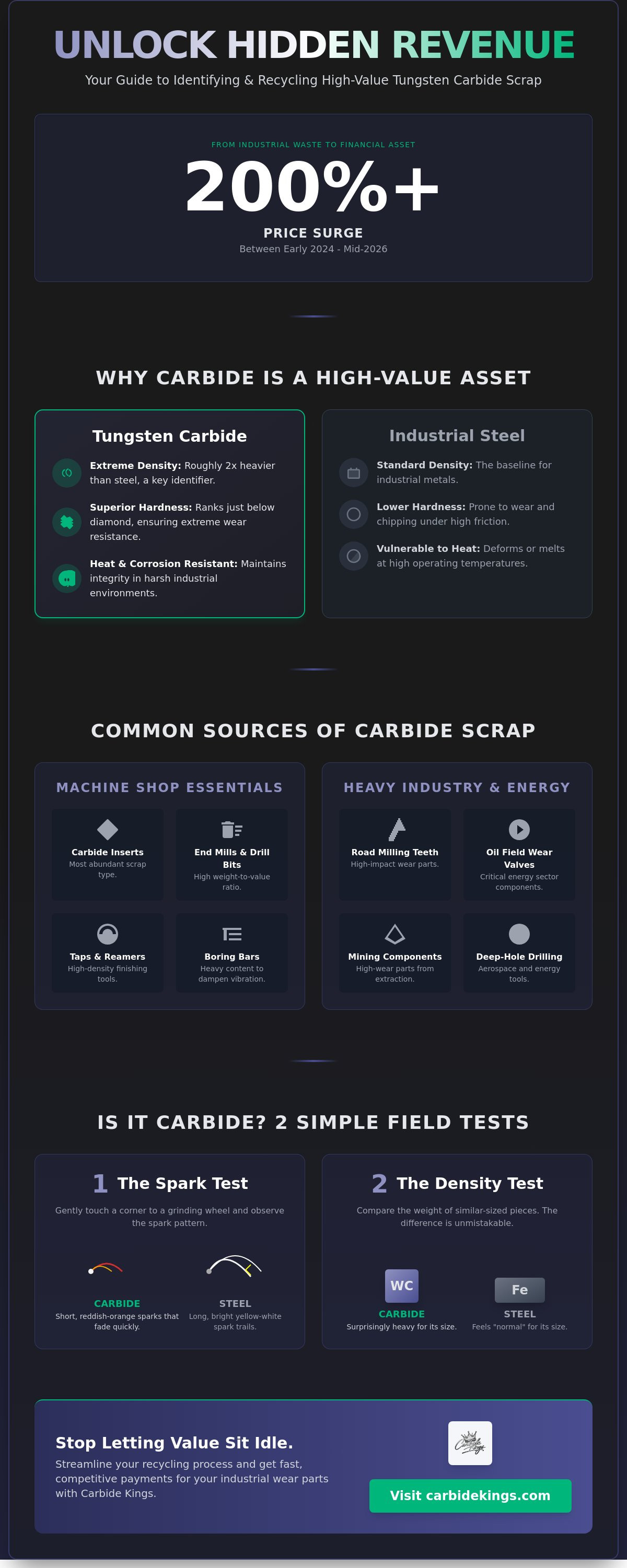
Quick Identification: How to Spot Tungsten Carbide Scrap
Identifying high-value material on a busy shop floor requires speed and accuracy. You don't need a laboratory to distinguish your assets from standard waste. By applying a few field-tested methods, you can quickly categorize the common sources of tungsten carbide scrap found in your facility. These tests help ensure you aren't leaving money on the table by misidentifying carbide as cheap tool steel.
- The Weight Test: Carbide is nearly twice as dense as steel. If a small tool feels unexpectedly heavy or "bottom-heavy" in your hand, it's likely carbide.
- The Magnet Test: Use a strong magnet. Most tungsten carbide is non-magnetic or only slightly magnetic due to its cobalt binder. If the part snaps to the magnet with force, it's probably steel.
- The Spark Test: Touch the material to a grinder. Steel throws long, white, branching sparks. Carbide produces short, thin, orange sparks that are sparse and die out almost immediately.
- The Scratch Test: Carbide is harder than tool steel. A genuine piece of carbide will easily scratch glass or a high-quality steel file without dulling its own edge.
Tungsten Carbide vs. Steel Comparison
Developing a reliable system to tell tungsten carbide from steel scrap saves time during the sorting process. Look for the "dull gray" color characteristic of unpolished carbide; it lacks the shiny, reflective surface of most steel alloys. You can also listen to the material. When you drop a piece of carbide on a hard surface, it emits a high-pitched "tink" sound. Steel produces a lower, hollower "clunk." These sensory cues allow you to sort through mixed bins with confidence and speed.
Sorting for Maximum Profit
Organization is the key to a lucrative recycling program. Mixing metals lowers your overall price per pound because processors must account for the labor of sorting a contaminated load. Label your bins clearly in every workstation where carbide tools are used. This simple step prevents high-value inserts from ending up in the general iron bin. Pure carbide lots fetch the highest market rates because they eliminate the need for costly chemical separation or manual sorting at the processing facility. If you're ready to clear out your sorted bins, contact Carbide Kings for a direct quote on your industrial scrap today.
Turn Your Industrial Waste into Capital with Carbide Kings
Identifying the common sources of tungsten carbide scrap in your facility is only the first step toward reclaiming lost revenue. Once you've sorted your inserts, drills, and grinding sludge, you need a partner who can move that material quickly and pay you what it's worth. We specialize in transforming your industrial waste into immediate capital. We don't believe in long wait times or complex paperwork. Our process is designed for professionals who value their time and want a straightforward, lucrative transaction for their hard and soft tungsten scrap.
Logistics shouldn't be a barrier to profit. Whether you're dealing with a few buckets of inserts or bulk industrial loads from a mining site, we provide nationwide shipping logistics support. We handle the heavy lifting so you can stay focused on your core operations. Once your material arrives at our facility, our team gets to work immediately. Material processing is completed within 24 hours of receipt, ensuring you aren't left wondering about the status of your shipment. We offer fast payment options, including wire transfers and checks, to put your money back into your business where it belongs.
The Streamlined Recycling Process
We've stripped away the traditional hurdles of scrap metal recycling. Our workflow is logical, chronological, and built for speed. You can move from initial contact to final payment in just three simple steps:
- Step 1: Request a quote online or via phone. We provide transparent, competitive pricing based on current market drivers.
- Step 2: Use our shipping assistance to move your material. We help coordinate the transport for bulk loads across the country.
- Step 3: Receive payment immediately after material verification. There's no waiting around for weeks; we pay as soon as the weights and grades are confirmed.
Why Partner with Carbide Kings?
We aren't just another middleman in the scrap industry. Our direct-to-refinery relationships allow us to cut out unnecessary layers, ensuring we act as the premier hard scrap carbide buyers for your facility. This direct connection means we can offer better pricing than local general recyclers who don't understand the specific value of tungsten alloys. We take a no-nonsense approach to industrial procurement, focusing on clarity and professional integrity in every deal.
Choosing to recycle your tungsten also supports domestic supply chain security. By recovering these critical minerals from common sources of tungsten carbide scrap, you're helping reduce the industry's reliance on volatile foreign imports. It's a choice that makes sense for your bottom line and for the environment. We're proud to be a proactive partner for the industrial community, providing the reliability you need to turn your wear parts into a steady stream of revenue. Your work is as good as done the moment you partner with us.
Maximize Your Facility's Industrial Value Today
Turning your worn tooling and industrial waste into working capital is a matter of simple identification and efficient logistics. You now have the tools to distinguish high-value carbide from common steel alloys using weight, magnet, and spark tests. By organizing your common sources of tungsten carbide scrap, you protect your facility from the price dilution found in mixed metal bins. Every pound of inserts, button bits, or grinding sludge represents a significant recovery of your initial investment.
Our team of specialized tungsten experts is ready to streamline your recycling process. We offer competitive national pricing and a 24-hour processing turnaround once your material is received. Don't let valuable assets sit idle or get lost in the general waste stream. Take the final step toward a more profitable and sustainable operation by partnering with a leader that values transparency and speed. We handle the heavy lifting so you can stay focused on production.
Get an Instant Quote on Your Carbide Scrap and see how easy it is to secure fast payment. Your facility's hidden revenue is ready to be reclaimed.
Frequently Asked Questions
Where can I find the most tungsten carbide in a standard machine shop?
The highest concentrations of carbide are found at CNC workstations, specifically in the form of indexable inserts and solid end mills. These are the most common sources of tungsten carbide scrap because they are replaced frequently during high-speed production cycles. You should also check your tool drawers for broken drill bits, taps, and specialized boring bars that have reached the end of their service life.
Is tungsten carbide scrap worth more than regular steel?
Yes, tungsten carbide is significantly more valuable than standard tool steel or iron scrap. It is classified as a critical mineral due to its scarcity and extreme density, which keeps its market value high even when global supply chains are tight. Mixing it with cheaper steel alloys is a common mistake that costs facilities thousands of dollars in potential revenue every year.
Can I sell carbide grinding sludge or only solid pieces?
We buy both hard scrap and soft scrap, which includes grinding sludge and swarf. While solid pieces like inserts are easier to identify, the "mud" generated during tool sharpening is a concentrated source of tungsten that retains high industrial value. Collecting this byproduct in dedicated, leak-proof containers allows you to monetize every part of your tooling lifecycle.
How do I identify tungsten carbide if the tool is coated?
You can identify the material by its weight and magnetic properties, regardless of whether it has a gold or black PVD or CVD coating. These coatings are only a few microns thick and don't change the base material's density. If the tool feels twice as heavy as a steel equivalent and doesn't snap to a magnet, the core is almost certainly high-value carbide.
What industries generate the largest amounts of tungsten scrap?
The aerospace, mining, and oil and gas sectors are the primary generators of bulk tungsten waste. These industries are common sources of tungsten carbide scrap because their operations involve high-impact drilling and extreme heat. Components like rock button bits, jet engine wear parts, and specialized valves are designed for durability but eventually provide massive recovery value when retired.
Are carbide-tipped saw blades considered high-value scrap?
Carbide-tipped saw blades are valuable, but the scrap value is concentrated in the small teeth rather than the steel body of the blade. To maximize your return, you can either remove the tips or sell them as "tipped scrap" to a specialized buyer. We handle these materials regularly and can help you determine the most efficient way to process your woodworking or forestry scrap.
Do you provide shipping containers for large amounts of carbide scrap?
We provide comprehensive nationwide shipping logistics support for bulk industrial loads to ensure your material moves safely and efficiently. While you should check with us regarding specific bin availability for your location, we specialize in removing the logistical burdens of heavy material transport. Our goal is to make the shipping process as straightforward as a basic retail transaction.
How quickly does Carbide Kings pay for scrap shipments?
We issue payment immediately after your material has been verified at our facility. Our team completes material processing within 24 hours of receipt, so you don't have to wait weeks for a check or wire transfer. This fast turnaround is a core part of our commitment to professional efficiency and transparent customer service.


