

Is your machine shop sitting on a hidden revenue stream that you're currently treating like trash? Many operators view worn-out inserts and broken end mills as a logistical burden rather than a high-yield asset. Recycling carbide tools from machine shops often feels like more trouble than it's worth when you're faced with heavy shipping costs and slow payment cycles from local scrap yards. You know that tungsten is valuable, but the time spent sorting it from high-speed steel can feel like a waste of your team's talent. It's frustrating to let cash sit in a bucket just to avoid the headache of shipping heavy metal.
We understand that your priority is keeping the spindles turning, not managing complex waste streams. This guide will show you how to transform your scrap pile into a predictable profit center through efficient identification and national logistics. You'll learn the exact steps to maximize your return, from separating materials to securing fast wire transfers within 24 hours of receipt. We're going to streamline your workflow so you can capture fair market value and get paid without the traditional administrative headaches. Let's turn your tooling waste into a high-margin procurement strategy that works for your business.
Key Takeaways
- Understand why tungsten carbide recovery offers significantly higher profit margins compared to traditional steel or aluminum scrap.
- Master the "Weight Test" to quickly and accurately identify high-value materials when recycling carbide tools from machine shops.
- Implement a "Point of Generation" collection system to prevent material cross-contamination and preserve the purity of your scrap.
- Learn the critical packaging standards, such as using double-walled boxes, to safely ship dense, heavy materials nationally.
- Streamline your cash flow with a professional 24-hour processing cycle and fast payment options like direct wire transfers.
Beyond the Bin: Why Recycling Carbide Tools is a Machine Shop’s Hidden Profit Center
Stop looking at your tool bins as waste containers. They're actually small-scale vaults. Recycling carbide tools from machine shops is the process of recovering tungsten and cobalt from worn-out inserts, end mills, and drills. While standard steel scrap is a volume game with low margins, carbide is a high-value commodity. Many shop owners don't realize that the dull tools gathering dust on their shelves represent thousands of dollars in reclaimed capital. Instead of making a generic trip to a local scrap yard that treats every metal the same, you need a specialized strategy to capture this value.
The Economic Advantage of Tungsten Carbide
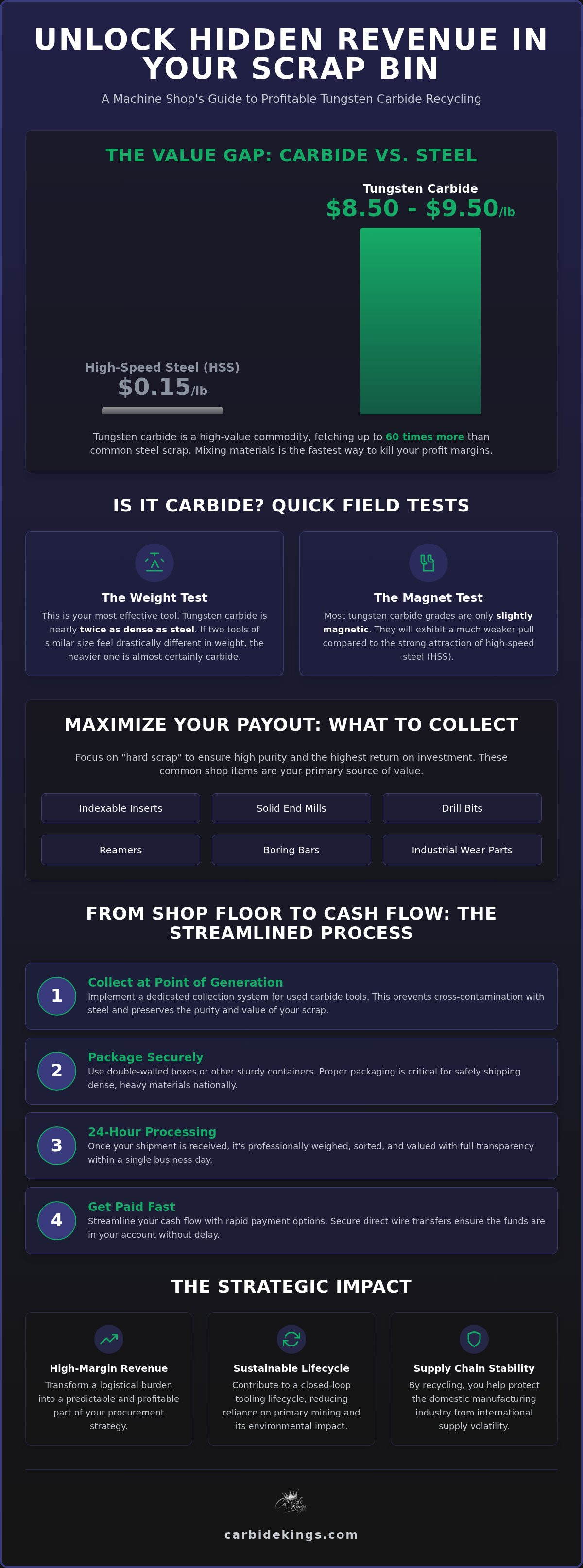
The value of Tungsten carbide stems from its extreme hardness and the rarity of its primary component, tungsten. Global market demand remains high because tungsten is difficult to mine and process. Tungsten carbide is a high-density alloy essential for industrial precision. The price gap between this material and common shop scrap is staggering. While high-speed steel (HSS) typically fetches around $0.15 per pound, solid tungsten carbide can command between $8.50 and $9.50 per pound. If you're mixing these materials, you're essentially throwing money away. High-purity carbide is a critical asset that demands professional valuation.
Environmental and Strategic Impact for Manufacturers
Moving toward a closed-loop tooling lifecycle isn't just about the money; it's a strategic move for your supply chain. Recycling reduces our industry's heavy reliance on primary mining and protects against international supply volatility. By reclaiming these materials, you're contributing to a more sustainable manufacturing ecosystem that preserves resources for future production. For a deeper look at the technical properties and market forces at play, check out our Tungsten Carbide: The Ultimate Industrial Reference and Recycling Guide. This approach ensures your shop remains competitive while meeting modern environmental standards.
A professional recycling partnership replaces the friction of traditional scrap disposal. You don't have time to haggle with local yards that don't understand the nuances of industrial tooling. You need a streamlined process that handles the heavy lifting, provides transparent weights, and issues payment fast. Transitioning your shop's mindset from "disposal" to "procurement" turns recycling carbide tools from machine shops into a predictable, high-margin revenue stream. It's a no-nonsense way to clean up your floor while padding your bottom line with capital you've already spent.
Identifying High-Value Tungsten Carbide Tools vs. Low-Grade Steel
Mixing metals is the fastest way to kill your profit margins. When recycling carbide tools from machine shops, material purity determines your final payout. A single high-speed steel (HSS) drill bit tossed into a bucket of carbide inserts can trigger a "mixed" valuation, potentially costing you hundreds of dollars on a large shipment. You need a reliable system to ensure every ounce of scrap you send is high-grade tungsten.
Common Sources of Hard Scrap Carbide
Most of your shop's value is found in "hard scrap." This category includes indexable inserts, solid end mills, and drill bits. Don't overlook specialized tooling like reamers, boring bars, and industrial wear parts such as nozzles or dies. These items are often 100% tungsten carbide and represent your highest return on investment. Training your team on how to identify tungsten carbide scrap at the point of generation keeps your bins clean and your revenue high.
Differentiating Carbide from High-Speed Steel (HSS)
High-speed steel is often used for larger tools or those requiring more toughness than brittle carbide, but its scrap value is a fraction of tungsten's price. Use these three field tests to separate them quickly:
- The Weight Test: This is your most effective diagnostic tool. Tungsten carbide is nearly twice as dense as steel. If two tools of similar size feel drastically different in weight, the heavier one is almost certainly carbide.
- The Magnet Test: Most tungsten carbide grades are only slightly magnetic or completely non-magnetic. In contrast, HSS is strongly attracted to magnets. If a tool snaps firmly to a magnet, set it aside for further inspection.
- The Spark Test: Touch the material to a grinder. HSS throws long, bright yellow or orange sparks that "explode" at the ends. Carbide produces short, thin, deep-red or orange sparks that die out almost immediately.
Be careful with brazed tools. Many large boring bars or specialty cutters feature a steel shank with only a small carbide tip brazed onto the end. For the best rates, these materials must be separated. While solid tools are preferred, don't ignore "soft scrap" like grinding sludge and swarf. Tungsten recycling in the United States relies heavily on reclaiming these secondary materials to stabilize the domestic supply chain. If you are unsure if your current collection contains high-value alloys, you can request a professional material assessment to verify your scrap's worth before shipping.
Every pound of correctly identified material adds to your bottom line. By implementing these simple tests, you turn a messy scrap pile into a documented asset. This level of organization simplifies the shipping process and ensures you receive a fair, market-based valuation for every shipment you send.
Organizing Your Shop Floor for Maximum Carbide Scrap Value
Efficiency in recycling carbide tools from machine shops starts at the spindle. If you wait until the end of the week to sort through a mountain of mixed metal, you've already lost money. Implement a "Point of Generation" collection system by placing a small, dedicated bin at every CNC station. When an operator swaps a worn insert, it must go directly into that bin. This simple habit eliminates the risk of high-value carbide getting lost in the general chip conveyor or mixed with low-grade steel. It keeps your floor clean and your assets organized from the moment a tool reaches its end of life.
Be strict about the "Carbide Only" rule. One common profit-killer is the presence of steel tool holders in your carbide bins. Steel holders are heavy and significantly lower the purity of your batch. Require operators to remove the insert before disposal. It takes seconds but protects your high-yield revenue stream. A dedicated central bin should be the final destination for all station-specific collections, serving as a secondary checkpoint to ensure no general scrap has slipped through the cracks.
Workflow Integration for Tooling Disposal
Successful recycling requires a repeatable process. Train your team to follow a simple checklist every time a tool is retired. First, verify the tool material. Second, separate inserts from holders or shanks. Third, deposit the material into the station-specific bin. Finally, transfer these smaller loads to a central, locked "Carbide Only" container at the end of every shift. Use color-coded bins, such as bright yellow for carbide and blue for tungsten alloys, to make the distinction clear for everyone on the floor. Cross-contamination is a significant financial risk. A single bucket of high-speed steel mixed into a pallet of carbide can force a buyer to downgrade the entire load's valuation.
Managing Soft Scrap and Grinding Sludge
Soft scrap, which includes grinding sludge, swarf, and dust, requires unique handling. These materials are residue from grinding operations and often contain high concentrations of tungsten. However, they are also prone to contamination from coolants and moisture. Cleaning and drying your sludge can significantly improve your valuation. Excess liquid doesn't just increase your shipping costs; it can lead to oxidation, which reduces the material's purity. For detailed advice on identifying a partner for these materials, consult our guide on tungsten soft scrap buyers. Store all soft scrap in sealed, leak-proof containers. This prevents environmental hazards on your shop floor and ensures the material stays in peak condition for processing.
Consistency is the key to maximizing your return. By treating your scrap like a product rather than waste, you ensure that every pound of tungsten leaving your facility is accounted for and valued correctly. This level of organization simplifies your logistics and turns a messy cleanup task into a professional procurement strategy.
Logistics and Shipping: Moving Heavy Carbide Scrap Nationally
The biggest challenge in recycling carbide tools from machine shops isn't the sorting; it's the shipping. Tungsten carbide is incredibly dense. A small container can easily weigh hundreds of pounds, making standard parcel shipping risky and expensive. You need a logistical strategy that moves your material safely without eating into your profits. By following a structured five-step preparation process, you can ensure your shipment arrives intact and ready for valuation.
- Final Verification: Perform a final sweep for steel contamination and record your shop's weight for your records.
- Secure Packaging: Use heavy-duty containers that can withstand the extreme weight of industrial alloys.
- Documentation: Complete all necessary packing slips or bill of lading (BOL) forms to track the chain of custody.
- Carrier Coordination: Schedule a pickup through a partner's logistics network to access volume-based shipping rates.
- Tracking: Monitor the shipment until it arrives at the processing facility for intake.
Packaging Standards for Industrial Metal
Standard shipping boxes aren't designed for the concentrated weight of carbide. For bulk hard scrap, use 5-gallon plastic buckets or reinforced wooden crates. If you must use boxes, they must be double-walled and rated for heavy loads. Internal padding is essential. Even though the material is "scrap," it shouldn't shift during transit. Shifting metal acts like a hammer, blowing out the sides of boxes or cracking plastic buckets. Secure your buckets with heavy-duty tape or zip ties. For a complete breakdown of how material moves from your floor to the refinery, see our carbide scrap recycling process guide. Proper packaging protects your investment and prevents costly carrier damage claims.
National Logistics Support
You shouldn't have to handle complex freight logistics alone. A professional buyer provides national support to simplify the transition. This includes pre-paid shipping labels for smaller parcels or full freight coordination for larger loads. Shipments under 150 pounds can typically move via standard parcel services. Once you exceed that threshold, LTL (Less Than Truckload) shipping becomes the more cost-effective choice. We handle the heavy lifting by coordinating the carriers and providing the necessary documentation. This streamlined approach removes the administrative burden from your team. If you're ready to move your current inventory, you can get a shipping quote and logistics plan today to start the process.
Accurate weighing before the material leaves your shop is critical for transparency. Use a calibrated industrial scale and photograph the weight for your records. This ensures that the weight recorded at your shop matches the intake report at the processing facility. When your logistics are handled by experts, the distance between your shop and the refinery disappears. You get the benefits of a national market with the convenience of a local pickup. It's a no-nonsense way to turn heavy metal into fast capital.
The Carbide Kings Advantage: 24-Hour Processing and Fast Payments
Traditional scrap yards often treat industrial professionals like casual hobbyists. They subject you to long wait times, vague weighing processes, and even slower payment cycles. We've eliminated these barriers to create a streamlined experience tailored for the manufacturing sector. Recycling carbide tools from machine shops should be as efficient as the production lines that created the scrap in the first place. Our proprietary intake system is built for speed and professional accountability, ensuring you aren't left wondering about the status of your capital.
The process starts the moment your shipment arrives at our facility. Your material enters a 24-hour processing window where it is weighed, verified, and valued. We don't believe in "sitting" on your inventory. Our team moves quickly to provide a resolution, respecting the fast-paced nature of your operations. This no-nonsense communication style ensures you stay focused on your core business while we handle the technical details of the transaction. You get results, not excuses.
Transparency in Valuation
Trust is built on data, not promises. We use certified industrial scales to ensure every ounce of your tungsten hard scrap, soft scrap, or alloys is accounted for accurately. Once the intake is complete, you receive a detailed report that breaks down the material weights and current market valuation. This transparency ensures you receive a fair deal based on the specific purity and grade of your shipment. We utilize market-based pricing to capture the most accurate value on the day of receipt. To understand the factors that influence these daily shifts, consult our tungsten carbide scrap price guide. We want you to feel confident that your shop is receiving the highest possible return for its worn tooling.
Speed doesn't stop at the scale. Once you approve the valuation, we initiate payment immediately. You can choose from several fast payment options to suit your shop's accounting needs, including:
- Wire Transfer: The fastest way to get funds directly into your business account.
- ACH Transfer: A secure, electronic alternative for seamless cash flow.
- Overnight Check: For shops that prefer a physical paper trail delivered at high speed.
Getting Started: Your First Quote
Ready to clear your floor and pad your bottom line? Requesting a quote is a straightforward process that takes less than five minutes. We only need basic information to get started: your estimated material weight and the type of scrap you're looking to move. Whether you have a single bucket of inserts or a pallet of grinding sludge, we provide a clear, professional path to liquidation. Don't let valuable tungsten sit idle when it could be working for your business. Request your carbide scrap quote from Carbide Kings today.
By choosing a specialized partner, you turn recycling carbide tools from machine shops into a competitive advantage. You eliminate the logistical friction of local yards and secure a reliable revenue stream for your facility. It's time to treat your scrap with the professional respect it deserves. We're ready to show you how simple and lucrative this process can be when it's handled by industry experts.
Turn Your Tooling Waste into a High-Yield Revenue Stream
You've learned how to identify high-value tungsten and organize your shop floor for maximum returns. By separating your carbide from steel and following professional packaging standards, you remove the barriers that usually make scrap management a headache. Recycling carbide tools from machine shops shouldn't be a chore; it's a strategic procurement move that recovers lost capital you've already spent. Every bucket of worn inserts or pile of grinding sludge represents a tangible asset that belongs back in your operating budget.
We handle the heavy lifting with our national logistics support and a 24-hour processing guarantee upon receipt. You get the transparency your business deserves and the speed it requires through secure wire transfer payments. There's no reason to let valuable material gather dust when a streamlined, professional solution is just a click away. Stop settling for the slow cycles of local scrap yards and start working with a partner that respects your time and your bottom line. Let's turn your tooling waste into your next profit center today.
Get a Fast Quote for Your Carbide Scrap
Frequently Asked Questions
How much is tungsten carbide scrap worth per pound in 2026?
Market prices fluctuate based on global demand, but as of July 2026, solid carbide scrap typically ranges from $8.50 to $9.50 per pound. High-purity inserts and specialized shapes can sometimes command even higher rates. We provide a fair valuation based on the current daily market index to ensure your shop receives the most accurate return for its assets.
Do you buy carbide tools that are still attached to steel shanks?
Yes, we buy brazed tools and assemblies, though they are valued differently than solid carbide. These items require additional processing to separate the carbide tip from the steel shank, which impacts the final price per pound. For the highest possible return when recycling carbide tools from machine shops, we recommend removing the carbide from the steel holders before shipping them to our facility.
What is the minimum weight requirement for a national carbide shipment?
We recommend a minimum of 50 pounds to ensure the shipping logistics are cost-effective for your business. While we can process smaller quantities, reaching this threshold allows you to better leverage our national freight support. For very large volumes, we coordinate Less-Than-Truckload (LTL) shipping to move your heavy scrap without letting freight costs eat into your profit margins.
Can I recycle carbide grinding sludge and swarf along with hard tools?
Absolutely. We buy both hard scrap and soft scrap, including grinding sludge, swarf, and floor dust. These materials must be stored in sealed, leak-proof containers to prevent contamination and environmental hazards. Keep your soft scrap separate from your solid tools so our intake team can provide a specific, high-accuracy valuation for each material grade in your shipment.
How quickly will I receive payment after my scrap is received?
You'll receive payment within 24 hours of your material arriving at our facility. We prioritize fast liquidity and professional efficiency. Once our team verifies the weights and material grades, we send a detailed report for your approval. Following your confirmation, we issue funds immediately via wire transfer, ACH, or an overnight check depending on your preference.
Is there a difference in price between carbide inserts and end mills?
Solid carbide inserts and end mills are generally valued in the same high-grade hard scrap category. The primary factor is the purity of the tungsten carbide rather than the specific tool shape. However, inserts are often easier to sort and verify, which can lead to a faster intake process. Ensure all tools are free from steel contamination to maintain the highest batch value.
How do I tell the difference between tungsten carbide and high-speed steel?
Tungsten carbide is nearly twice as dense as high-speed steel, so the weight test is your fastest diagnostic tool. You can also perform a spark test; carbide produces short, dull red sparks, while HSS throws long, bright yellow sparks. Accurate sorting is the most effective way to protect your revenue when recycling carbide tools from machine shops, as it prevents batch downgrades.
Do you provide shipping labels or do I have to pay for freight?
We provide full national logistics support, including pre-paid shipping labels for parcel-sized loads and coordinated freight pickup for larger shipments. Our goal is to remove the logistical burden from your shop floor. We handle the carrier scheduling and the administrative paperwork, ensuring a smooth, no-nonsense transition from your facility to our processing center at no additional headache to your team.


