
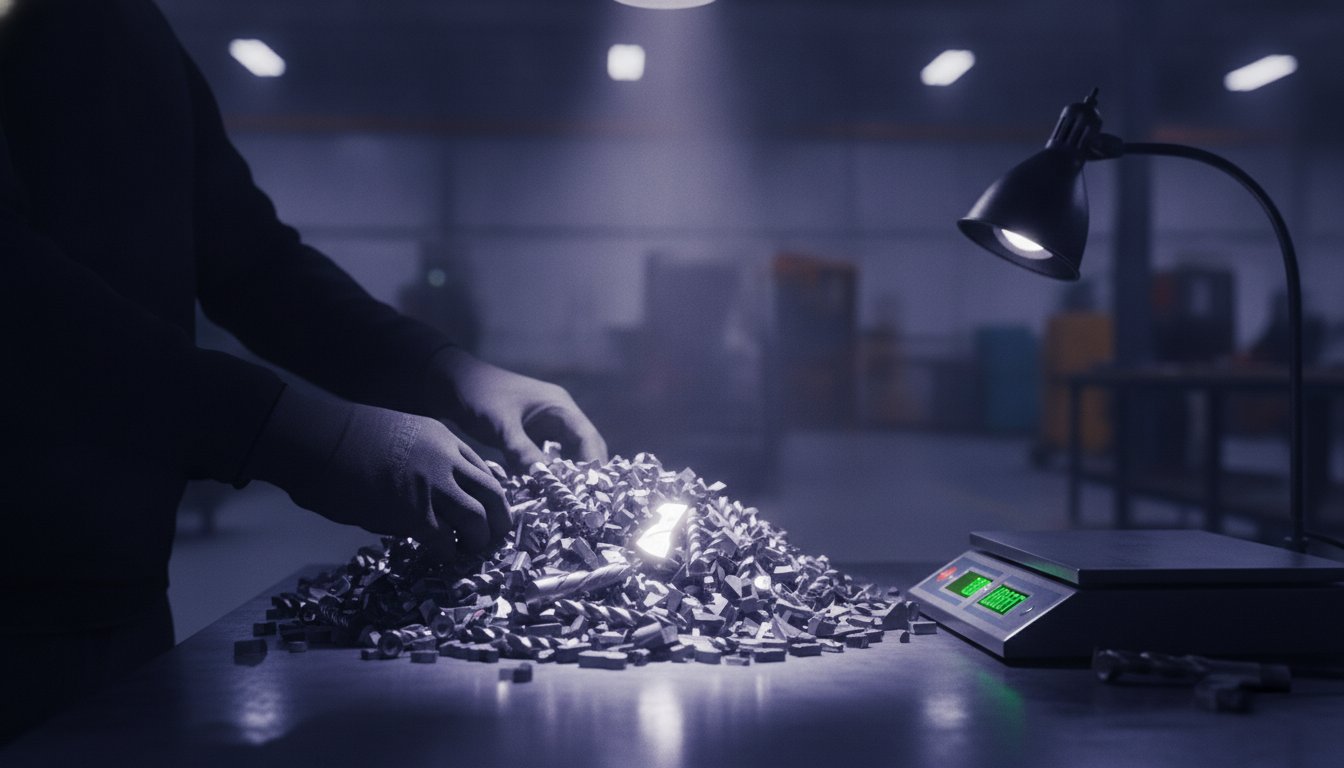
Your scrap bin isn't just a collection of industrial waste; it's a high-density financial asset that's more valuable now than ever before. With the 2026 Chinese export controls tightening the global supply of critical minerals, the decision to sell tungsten carbide wear parts has become a strategic move for your bottom line. You've likely felt the frustration of accidentally mixing valuable carbide with cheaper steel scrap or waiting weeks for a traditional dealer to process a payment. It's a common headache that costs industrial professionals thousands of dollars in lost revenue every year.
We're here to change that. This guide provides a masterclass in the science, identification, and market value of tungsten carbide. You'll learn a clear system for distinguishing your high-value alloys from high-speed steel to ensure you capture the maximum price per pound. We'll also explore how to navigate the logistical hurdles of shipping heavy scrap and introduce you to a national partner that prioritizes speed and transparency. By the end of this article, you'll have a streamlined process to turn your industrial waste into a reliable, consistent revenue stream.
Key Takeaways
- Understand the metallurgical composition of tungsten carbide to distinguish high-value "cemented" alloys from standard steel scrap.
- Identify hidden revenue by categorizing common industrial wear parts across mining, machining, and aerospace applications.
- Learn the professional sorting techniques that prevent material contamination and ensure you receive the maximum price per pound.
- Master the logistics of heavy metal scrap to sell tungsten carbide wear parts through a streamlined, national procurement system.
- Discover how to accelerate your cash flow by partnering with a provider that offers 24-hour processing upon material receipt.
What is Tungsten Carbide? The Science of Industrial Durability
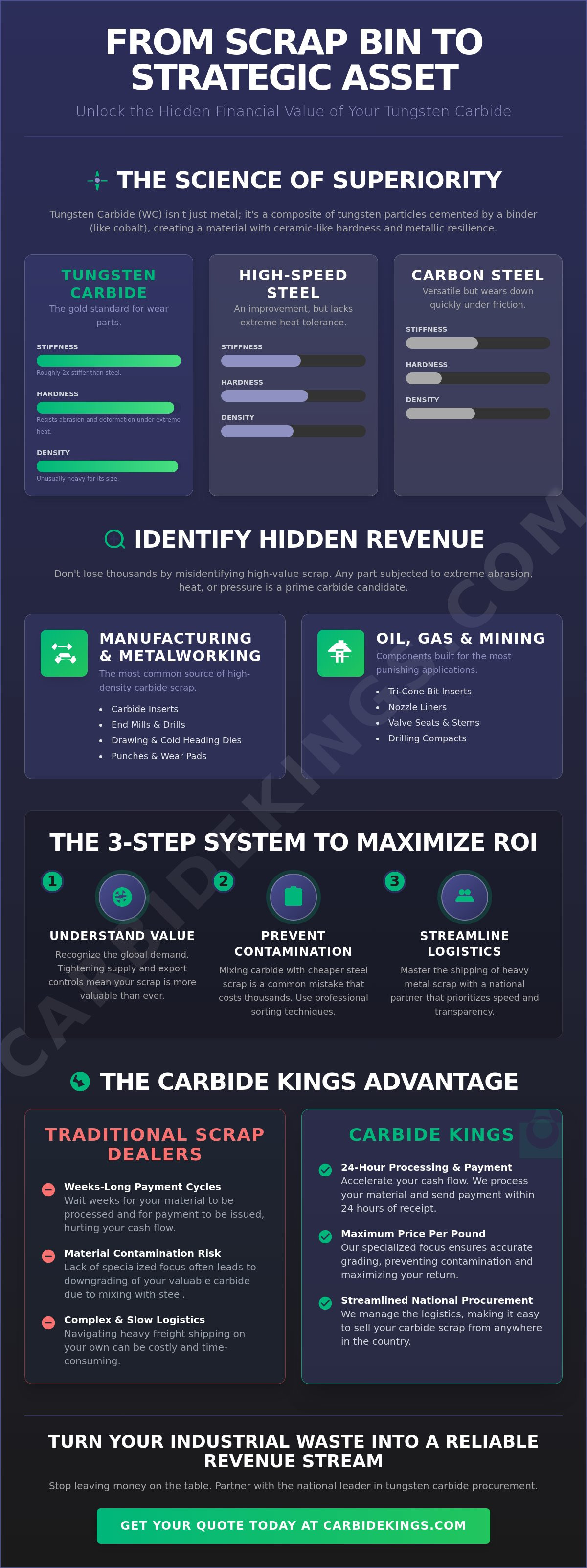
Tungsten carbide (WC) is an inorganic chemical compound that defines the peak of industrial durability. It's a dense, heavy material that's roughly twice as stiff as steel. Unlike simple alloys, WC is a composite where individual tungsten particles are "cemented" together by a metallic binder. This unique structure allows it to withstand environments that would shatter or melt standard carbon steel. Its physical properties are legendary; it boasts extreme hardness, high density, and incredible thermal resistance.
When you compare carbide to standard industrial steels, the difference is night and day. Carbon steel is versatile but wears down quickly under friction. High-speed steel (HSS) is an improvement, yet it still lacks the extreme density and heat-tolerance of WC. Because tungsten is a critical raw material with a tightening global supply, these parts retain significant value even after they're worn out. If you've been treating your spent inserts or nozzles like common scrap, you're leaving money on the table. Choosing to sell tungsten carbide wear parts allows you to recoup a premium based on the high concentration of tungsten within the matrix.
The Role of Cobalt in Carbide Performance
The binder, typically cobalt, acts as the "glue" that holds the hard tungsten grains in place. Adjusting the cobalt percentage is a balancing act. More cobalt increases toughness and impact resistance, while less cobalt maximizes pure hardness. For professionals looking to sell tungsten carbide wear parts, understanding this binder content is crucial. Refineries evaluate the specific grade and binder ratio because it dictates the complexity of the chemical recovery process. Cemented carbide is fundamentally a metal matrix composite that offers the best of both worlds: ceramic-like hardness and metallic resilience.
Why Industry Depends on Tungsten Carbide
Modern industrial operations would grind to a halt without this material. In high-friction environments like mining, oil and gas, or heavy manufacturing, heat is the enemy. Standard tools lose their temper and soften at high temperatures. Tungsten carbide remains rigid and maintains its cutting edge even under extreme thermal stress. This resistance to deformation under pressure makes it the gold standard for "wear parts" that must survive thousands of hours of abrasion. These parts are engineered to last, but when they finally reach the end of their service life, their value as a recyclable asset remains high. Proper identification and collection of these spent components are the first steps in turning your industrial waste into a streamlined revenue stream.
Common Types of Tungsten Carbide Wear Parts in Industry
Identifying carbide shouldn't be a guessing game. Many facilities lose thousands of dollars every year because they don't recognize the specific components that qualify as high-value scrap. Any part in your shop subjected to extreme abrasion, high heat, or intense pressure is a likely carbide candidate. Because of the unique Properties of Tungsten Carbide, these parts are engineered for maximum rigidity and resistance to deformation. When these parts wear down, they lose the precise geometry required for industrial operations. They're typically replaced rather than repaired because the material's hardness makes traditional resurfacing nearly impossible. This creates a massive opportunity to sell tungsten carbide wear parts and recoup a significant portion of your initial tooling investment.
Manufacturing and Metalworking Components
Metalworking shops are the most common source of carbide scrap. Standard items include carbide inserts, end mills, and PCB drills. However, you should also look for specialized parts like drawing dies, cold heading dies, and punches. These items are dense and hold their value exceptionally well. Partnering with professional carbide insert scrap buyers is the most efficient way to track your tooling ROI and ensure no material goes to waste. If a component is unusually heavy for its size and resists a standard file test, it belongs in your carbide bin.
Oil, Gas, and Mining Wear Parts
In the energy and extraction sectors, carbide is used for the most punishing applications. High-value items include tri-cone bit inserts, nozzle liners, and valve seats. You'll also find carbide in stabilizers and wear pads used during horizontal drilling operations. In masonry and mining, the "compacts" or buttons pressed into large steel bits are pure carbide. Even if the steel body is damaged beyond repair, those carbide buttons remain valuable assets. When you're ready to sell tungsten carbide wear parts, separating these compacts from the steel can significantly increase your payout.
Agricultural and Construction Wear Parts
Construction and farming equipment rely on carbide to survive constant soil abrasion. Tillage tools, grader blades, and snow plow inserts often feature carbide edges or inserts. Wood-chipper knives and stump grinder teeth are also frequent sources of hard scrap. It's important to note that even if the carbide is just a small "tip" brazed onto a larger steel body, it's still worth harvesting. A quick "carbide audit" of your maintenance shed or tool room often reveals forgotten piles of these spent components. If you find a stash of mixed wear parts, Carbide Kings can help you evaluate the material and provide a clear path to liquidation.
The Economics of Carbide: Why Wear Parts Outperform Steel
Industrial efficiency is measured by more than just tool life; it's also measured by the residual value of your assets. This is where the concept of "Value Density" becomes your biggest competitive advantage. While a pound of standard carbon steel scrap might only be worth a few cents, a single pound of tungsten carbide can be worth significantly more. This price gap exists because tungsten is a finite, high-demand resource. According to USGS Tungsten Industry Statistics, cemented carbide remains the primary end-use for tungsten, making your spent wear parts a vital source of secondary production. You aren't just getting rid of trash; you're providing the raw materials for next-generation manufacturing.
Recycling these alloys is also a smart hedge against rising raw material costs. Mining new tungsten is expensive, energy-intensive, and subject to volatile geopolitical shifts. In contrast, processing scrap requires less energy and bypasses many supply chain bottlenecks. When you sell tungsten carbide wear parts, you help stabilize the domestic market and reduce the industry's reliance on foreign primary production. This closed-loop system ensures that the value stays within the manufacturing community rather than being lost in a landfill.
Tungsten vs. Steel: Identifying the Difference
Don't let your profits get buried in a bin of cheap steel. You need a reliable way to distinguish these materials on the shop floor. A quick guide on how to tell tungsten carbide from steel scrap can save you from costly sorting errors. Start with the "Magnet Test." Most carbide grades have a low cobalt binder, making them only weakly magnetic or non-magnetic, unlike the strong pull of carbon steel. You can also use the "Spark Test" with a grinder. Carbide produces short, orange, and very straight sparks. Steel produces long, branching, white or yellow sparks. The most obvious indicator is weight. Carbide is nearly twice as heavy as steel by volume. If a small part feels unexpectedly heavy, it's likely a carbide candidate.
Market Drivers for Tungsten Carbide Prices
The value of your scrap is tied to global supply and demand. The U.S. government officially designated tungsten as a critical mineral in 2025, highlighting its importance to national security. Recent shifts, such as the activation of the "2026 Catalogue of Dual-Use Items" in China, have tightened the global supply of carbides significantly. This scarcity, combined with robust demand from the aerospace and defense sectors, keeps carbide scrap values high. To ensure you're getting a fair deal, check the latest tungsten carbide scrap price trends. Staying informed about these market drivers helps you time your sales for maximum ROI. When you're ready to sell tungsten carbide wear parts, you'll be negotiating from a position of knowledge and strength.
Managing Your Carbide Scrap: Sorting and Logistics for ROI
Maximizing your industrial return starts at the workstation, not at the loading dock. A disorganized scrap pile is a liability that hides your true profit margins. You need a methodical system that captures every ounce of material before it's lost in a general waste stream. Proper sorting ensures that when you decide to sell tungsten carbide wear parts, you receive a payout based on pure material rather than a "mixed metal" discount. Efficiency in the bin leads to speed in the bank. Clean material moves through the refining process faster, which means you get paid sooner.
Step 1: Source-Separation Strategy
Implement a source-separation strategy by placing dedicated "Carbide Only" bins at every CNC station and tool room. Train your staff to identify scrap carbide drill bits and worn inserts as they're swapped out. This immediate separation prevents the "dilution" of your scrap value. Mixing even a few pounds of steel into a carbide bin complicates the refinery process and lowers your price per pound. Labeling these bins clearly with "High-Value Carbide" reminds operators that this isn't just scrap; it's a financial asset. It's much easier to keep metals separate at the machine than it is to sort through a 55-gallon drum of mixed waste later.
Step 2: Weighing and Documentation
Accurate weighing and documentation are vital for your shop's inventory control. Use calibrated scales to track your internal accumulation. Categorize your material into hard scrap (solid tools) and soft scrap (powders or sludge). This allows you to set realistic price expectations based on current market trends. When you work with a professional partner, they should provide a final weight verification within 24 hours of receiving your material. This level of transparency eliminates the slow payment headaches common with traditional scrap yards. Knowing your weights before the material leaves your facility protects your bottom line and ensures a fair transaction.
Step 3: Professional Logistics and Shipping
Professional logistics are the final hurdle in the recycling chain. Because tungsten is nearly twice as heavy as steel, standard cardboard boxes won't hold up. Use heavy-duty 5-gallon buckets or reinforced crates for high-density metal. Secure these items to pallets for safer transit. Our national procurement network operates across the entire US, allowing us to handle the heavy lifting for you. For large-scale industrial shipments, we often use a "Freight Collect" model. This means we manage the shipping costs and logistics, so you don't have to navigate complex carrier contracts. When you're ready to sell tungsten carbide wear parts, we make the transport as simple as a basic retail transaction.
If you're ready to clear out your inventory and maximize your shop's revenue, contact Carbide Kings to schedule your bulk procurement today.
Partnering with Carbide Kings: The National Procurement Leader
Traditional scrap dealers often treat carbide as an afterthought. They lack the specialized knowledge to value it correctly and the infrastructure to process it quickly. Carbide Kings operates differently. We've built a streamlined procurement system designed specifically for the industrial sector. Our process removes the administrative hurdles that typically slow down transactions. When you choose to sell tungsten carbide wear parts through our network, you're partnering with a leader that values your time as much as your material. We offer a 24-hour processing promise from the moment your material reaches our facility. This commitment to speed ensures that your shop stays focused on production while we handle the heavy lifting of reclamation.
Our reach is truly national. We buy from machine shops, mining sites, and agricultural facilities across all fifty states. You don't need to be near a major industrial hub to access competitive rates. We've refined our logistics to ensure that shipping from a remote site is just as easy as shipping from a metropolitan center. This transparency and ease of use are why we've become the preferred partner for professionals who want to sell tungsten carbide wear parts without the traditional headaches of the scrap industry. We prioritize direct communication and professional integrity in every transaction.
Fast Payouts and Flexible Terms
Liquidity is the lifeblood of any industrial operation. Waiting weeks for a corporate refinery to verify a shipment and issue a check is unacceptable in a fast-paced market. We offer immediate payment options including wire transfers, ACH, and traditional checks. These fast payment cycles provide an immediate boost to your operational cash flow. You can reinvest that revenue back into new tooling or facility upgrades almost immediately. We've eliminated the red tape and long wait times, turning your spent assets into usable capital with unmatched efficiency. Our terms are designed to be as flexible as your business requires.
A Supportive Partner for Industrial Growth
We do more than just buy scrap. We act as a consultant for your facility's long-term recycling strategy. Our team understands the nuances of tungsten hard scrap, tungsten soft scrap, and various tungsten alloys. We help you identify new revenue streams within your existing workflows that you might have overlooked. Our goal is to build a lasting partnership that supports your growth and sustainability targets. We've mastered the science of carbide recycling so you don't have to. You can rely on our expertise to ensure you are always capturing the maximum value from your industrial waste.
Ready to turn your wear parts into revenue? Get a quote from Carbide Kings today.
Transform Your Industrial Waste into Immediate Capital
You've seen the science and the market drivers that make tungsten carbide a premium asset. It's time to stop letting your spent tools sit in a corner collecting dust. By implementing a simple source-separation strategy and recognizing the unique density of your wear parts, you've already done the hard work. Now, you just need a partner that moves at the speed of your business.
Whether you're in mining, aerospace, or manufacturing, the decision to sell tungsten carbide wear parts is the final step in a smart procurement cycle. Carbide Kings takes the logistical weight off your shoulders with national US shipping support and a 24-hour processing guarantee. We prioritize your cash flow with direct wire transfer payments so you can reinvest in your operations without the wait. Your shop is more profitable than you think. Start your streamlined recycling journey today and watch your industrial waste become a consistent revenue stream.
Get a 24-Hour Quote for Your Carbide Scrap
Frequently Asked Questions
How can I tell if my wear parts are tungsten carbide or just steel?
Identify carbide by its extreme weight and unique spark pattern. Tungsten carbide is nearly twice as heavy as steel by volume. When you touch it to a grinder, it produces short, straight, orange sparks. Steel produces long, branching, white or yellow sparks. This simple field test ensures you don't accidentally mix low-value steel into your high-value carbide bins.
What is the minimum amount of carbide scrap I can sell?
We specialize in bulk industrial procurement to maximize your return on investment. While we prefer larger volumes to offset logistics costs, we evaluate every request individually. Contact us to discuss your current inventory. We'll help you determine the most efficient way to move your material and ensure the shipping process remains cost-effective for your facility.
Do you buy carbide wear parts that are still attached to steel bodies?
We accept carbide components that are brazed or fastened to steel bodies. Items like grader blades or mining bits often come this way. While we can process these mixed materials, you'll receive a higher payout if you separate the carbide at your source. We calculate the value based on the total recoverable tungsten content within the assembly.
How much is tungsten carbide worth per pound in 2026?
Prices for industrial scrap are highly volatile in 2026 due to global supply chain shifts and export restrictions. The value depends on the purity, binder content, and total weight of your material. If you want to sell tungsten carbide wear parts, request a 24-hour quote for the most accurate valuation. This ensures you receive a price that reflects current market demand.
What is the difference between hard scrap and soft scrap carbide?
Hard scrap consists of solid pieces like worn inserts, end mills, and drill bits. Soft scrap refers to secondary materials like grinding sludge, powders, and floor dust. Both categories contain valuable tungsten, but they are processed differently at the refinery. We buy both types to help you capture every dollar of value from your tool room and manufacturing floor.
How long does it take to receive payment after I ship my scrap?
You'll receive payment quickly through our streamlined verification process. We provide a 24-hour weight and grade verification once your shipment arrives at our facility. After you approve the final settlement, we issue funds immediately via wire transfer, ACH, or check. This speed helps you maintain a healthy cash flow for your core operations without administrative delays.
Can I sell carbide grinding sludge or dust?
Yes, you can sell carbide grinding sludge or dust as part of your recycling program. This material is classified as soft scrap and holds significant value if kept free from trash and other metal contaminants. Ensure these materials are sealed in leak-proof, heavy-duty containers to meet shipping regulations and prevent loss during transit to our processing center.
Do you provide shipping containers for industrial carbide scrap?
We offer comprehensive logistical support for our industrial partners across the United States. While most shops use their own heavy-duty buckets or crates, we provide guidance on the best packaging for high-density metal. Our goal is to make it easy to sell tungsten carbide wear parts by handling the complex freight and documentation requirements for you.


