
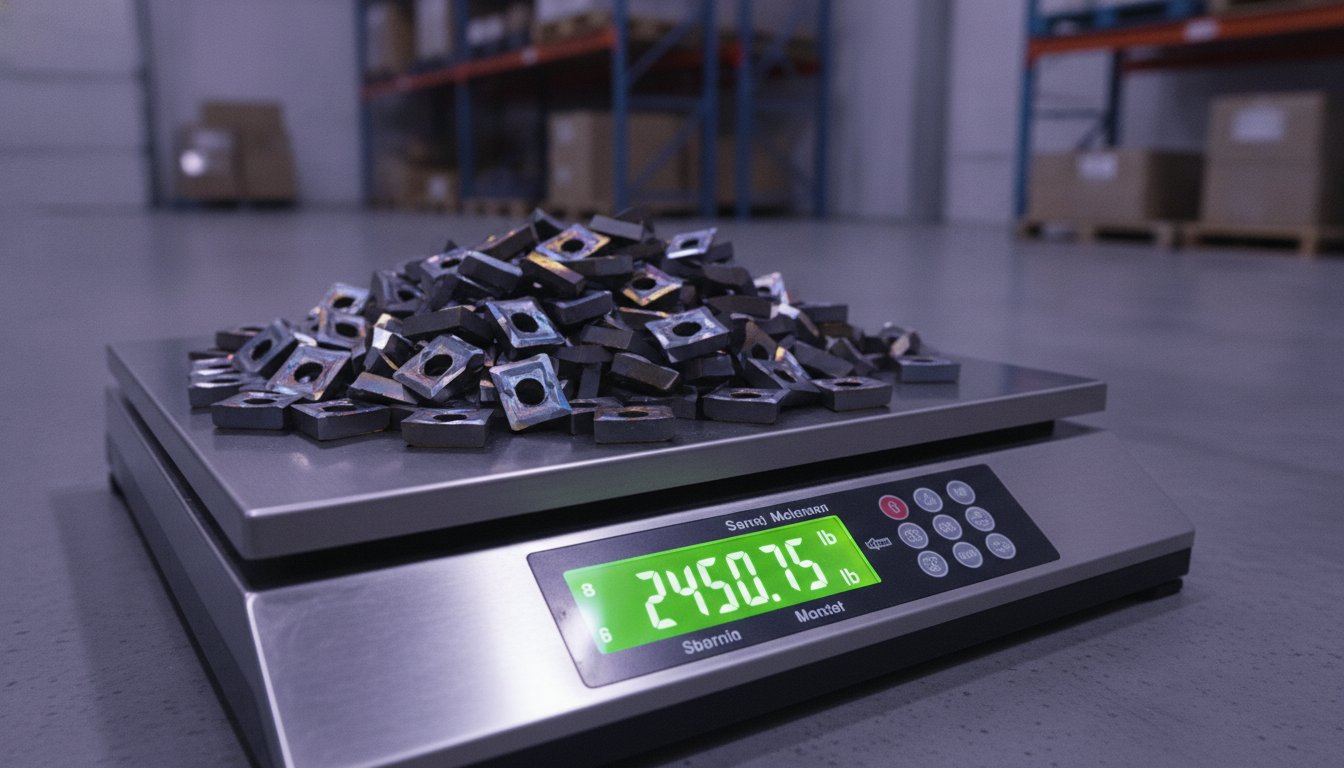
Your worn-out tooling isn't just shop waste; it's high-density capital waiting to be liquidated. You've likely felt the frustration of watching tungsten market rates fluctuate or the headache of hauling heavy metal to a local recycler only to be low-balled. Partnering with professional carbide insert scrap buyers allows you to reclaim that lost value without the administrative burden. We understand that your time is better spent on production, not haggling over scrap values at a general yard.
This guide ensures you maximize your tooling ROI by identifying, valuing, and selling your inserts for the highest market rates in 2026. You will learn how to streamline your shipping logistics and secure fast payments via wire or check. We are breaking down a repeatable process for shop waste management that eliminates the middleman and puts more money back into your operation. Stop settling for mixed-metal prices and start treating your carbide like the premium asset it is.
Key Takeaways
- Understand why indexable inserts command premium rates due to their high tungsten carbide content compared to standard shop scrap.
- Learn simple on-site methods like the weight and spark tests to accurately distinguish high-value carbide from coated steel.
- Discover how to vet carbide insert scrap buyers based on their transparency, scale certification, and speed of processing.
- Master the sorting and cleaning steps required to prevent price deductions and maximize your total payout.
- Implement a streamlined waste management process that converts tooling scrap into liquid capital with 24-hour quote turnarounds.
The Value of Precision: Why Carbide Insert Scrap Commands Premium Prices
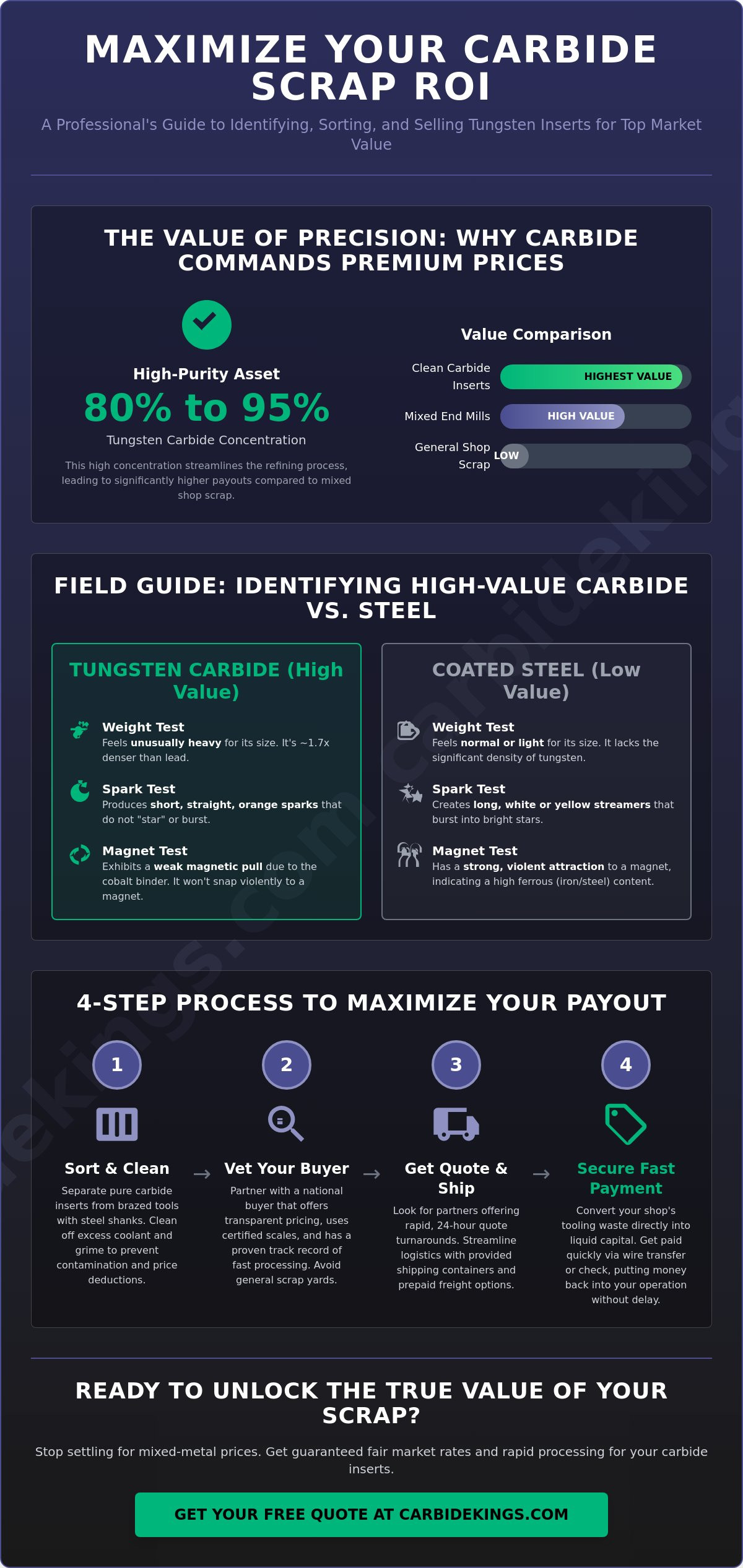
Indexable inserts are the gold standard for carbide insert scrap buyers. These tools aren't just discarded shop waste; they are sophisticated composites containing a concentrated blend of 80% to 95% tungsten carbide. Unlike general machine shop scrap, inserts offer a density and purity that refineries crave. This high concentration makes them significantly more valuable than "soft scrap" like sludge or grindings. Soft scrap often contains heavy concentrations of coolant, moisture, and steel particulates that complicate the smelting process. By focusing on inserts, you are dealing in a high-purity asset that streamlines the recycling chain.
Refineries prioritize inserts because they arrive with lower contamination levels than mixed hard scrap or loose turnings. This efficiency is passed directly to the seller in the form of higher payouts. Beyond the immediate financial return, selling your inserts supports a critical circular economy. Returning these materials to the supply chain reduces the need for invasive mining and keeps strategic minerals like tungsten (wolfram) available for domestic production. It's a professional approach to waste management that turns an environmental responsibility into a high-yield revenue stream.
Tungsten Density and Market Demand in 2026
Industrial demand for recycled tungsten is stabilizing at elevated levels in 2026. The unique properties of tungsten carbide, such as its extreme hardness and resistance to thermal deformation, make it indispensable for modern manufacturing. Most high-performance inserts use cobalt as a binder to hold the tungsten grains in a rigid matrix. The specific ratio of tungsten to cobalt determines the tool's grade and its ultimate scrap value. Recyclers pay for the metallic weight, not the volume of the bin. In the current market, the high density of these inserts ensures they remain one of the most profitable items in your scrap inventory.
Inserts vs. End Mills: A Purity Comparison
Not all carbide is equal. Indexable inserts often fetch more stable prices than mixed tooling like end mills or drills. While solid carbide drills are valuable, they're frequently mixed with high-speed steel (HSS) in shop bins, which leads to lower average quotes. Inserts are easier to verify and sort. Modern coatings like Titanium Nitride (TiN) or Titanium Aluminum Nitride (TiAlN) are common on these tools. These coatings are microscopically thin and don't significantly degrade the material's value during the recycling process. To secure the highest valuation, keep your "clean" inserts separate from brazed tooling. Brazed tools have steel shanks that contaminate the melt and will always lower your total return. Pure inserts are the simplest path to a maximum payout.
Identifying High-Value Carbide Inserts vs. Coated Steel
Tungsten is a heavy-hitter in the industrial world. According to U.S. Geological Survey data on tungsten, cemented carbides are vital for metalworking and construction due to their extreme density. This density is your first clue when sorting shop scrap. Pick up a suspected carbide insert. It should feel "unusually heavy" for its size. Tungsten is roughly 1.7 times denser than lead and nearly twice as heavy as steel. This mass is a direct indicator of material value. If a piece feels light or hollow, it's likely a coated tool steel that belongs in a different bin.
The spark test provides immediate clarity for shop floors. Touch the metal to a grinding wheel. Tungsten produces short, straight, orange sparks. These don't explode or "star" at the end of the stream. Steel creates long, white or yellow streamers that burst into bright stars. This visual distinction is a foolproof way to separate low-value steel from your premium scrap. For a complete breakdown of these field tests, read our detailed article on how to tell tungsten carbide from steel scrap. Professional carbide insert scrap buyers prioritize these high-density pieces for their material purity.
The Magnet Test Protocol
Don't let a magnet fool you into throwing away profit. Many shop owners assume that if a part sticks to a magnet, it's cheap steel. That's a mistake that carbide insert scrap buyers see all the time. Genuine carbide contains cobalt as a binder. This metallic binder creates a weak magnetic pull. If your part has a violent, strong attraction to a magnet, it's likely high-speed steel or tool steel. Use a rare earth magnet for better sensitivity. A slight "drag" is often the hallmark of a high-value insert. Don't discard these pieces without a second look.
Visual Identification of Worn Inserts
Standard ISO and ANSI shapes are your best indicators of carbide content. Squares, triangles, and diamonds with specific center-hole patterns almost always signal carbide material. Be careful with carbide-tipped tooling. These are steel bodies with small carbide bits brazed onto the ends. You must separate these from solid inserts to get the best price. Also, keep an eye out for ceramic inserts. They look like carbide but are much lighter and non-conductive. Most buyers require these to be binned separately. Reach out to Carbide Kings for a fast, transparent valuation of your sorted material.
Evaluating Carbide Insert Scrap Buyers: What to Look for in a National Partner
Choosing the right partner for your tooling disposal is a financial decision, not just a housekeeping task. Many general scrap yards treat carbide like common steel, leading to significant revenue loss for your shop. Professional carbide insert scrap buyers operate with a higher level of precision. Transparency begins at the scale. Certified, calibrated scales are non-negotiable in this industry. You should expect a buyer who provides documented weights and clear, itemized reporting. If a recycler can't verify their weighing process, they're likely cutting into your ROI.
Speed of processing is the next critical benchmark. In a fast-paced manufacturing environment, you can't afford to have capital tied up in a shipping container for weeks. The industry standard for top-tier buyers is a 24-hour turnaround from receipt to quote. Once you approve the valuation, payment should be just as efficient. Look for partners offering flexible options like wire transfers, overnight checks, or ACH deposits. A reliable buyer also removes the logistical friction of heavy metal transport by providing pre-paid shipping labels or assisting with freight arrangements for larger bulk loads.
Brokers vs. Direct Industrial Buyers
Middlemen are common in the recycling world, but they often dilute your profits. General scrap brokers typically buy your material only to flip it to a specialist. By selling directly to specialized carbide insert scrap buyers, you eliminate the middleman's margin. Direct buyers often have established relationships with refineries, allowing them to pass higher rates back to the machine shop. Evaluate your partner's longevity and reputation within the industrial sector. A seasoned veteran of the tungsten market offers a level of reliability and price stability that a local "all-metal" yard simply cannot match.
Verifying Market-Linked Pricing
Tungsten is a global commodity with prices that shift daily based on supply and demand. According to the 2024 Mineral Commodity Summary for Tungsten, approximately 60% of tungsten consumption is dedicated to cemented carbide parts. This high demand makes it essential for buyers to peg their quotes to a current market index. Avoid "flat-rate" buyers who offer the same price regardless of market fluctuations. These buyers often set their rates low to protect their own margins against volatility. A transparent partner will explain how they've calculated your quote based on the current tungsten market, ensuring you receive a fair, competitive rate for every pound of material you ship.
Maximizing Your Payout: Sorting and Shipping Logistics for Machine Shops
Efficiency in the shop shouldn't end at the spindle. High-value carbide insert scrap buyers base their quotes on material purity and weight accuracy. If your scrap bin is a mixture of steel shanks, brazed tools, and loose inserts, you're leaving money on the table. Sorting is the most effective way to protect your ROI. Follow these four critical steps to ensure you receive the highest possible valuation for your industrial waste.
- Step 1: Separate your material. Remove all inserts from steel shanks and brazed tooling. Steel is a contaminant in the carbide recycling process. Keeping your inserts pure ensures you get the premium rate rather than a "mixed load" deduction.
- Step 2: Clean the scrap. You don't need a laboratory-grade finish, but you should remove excessive coolant, heavy grease, or sludge. Buyers pay for the weight of the metal. If 5% of your bucket is old coolant, you'll see a discrepancy between your shop weight and the buyer's certified scale.
- Step 3: Choose the right container. Standard cardboard boxes are not designed for the extreme density of tungsten. Use double-walled boxes or, better yet, heavy-duty plastic buckets. This prevents the bottom from dropping out during transit.
- Step 4: Secure the load. Fill any empty space in your container with packing material. Dense metal shifts violently during shipping. If the load moves, it can burst through the side of the packaging, leading to lost material and insurance headaches.
Proper preparation makes you a preferred partner for national recyclers. If you are also looking to sell scrap carbide drill bits, the same sorting rules apply. Keep your solid carbide separate from HSS to maximize every pound.
Packaging Heavy Metal for National Transit
Standard cardboard often fails when loaded with 50 or more pounds of carbide. The "bucket-in-a-box" method is the industry's best practice. Place your material in a five-gallon plastic bucket, seal the lid, and then place that bucket inside a snug-fitting cardboard box. This double-layer protection ensures your high-value cargo arrives intact. Always label your shipments clearly with industrial scrap identifiers and include your quote number inside the package. This simple step accelerates the processing time once it hits the buyer's floor.
Optimizing Shipping Costs
Shipping costs can eat into your profits if you don't have a strategy. For loads under 70 pounds, USPS Flat Rate boxes are often the most cost-effective choice because they ignore the extreme weight of the carbide. However, once you cross the 200-pound threshold, Less Than Truckload (LTL) freight becomes the better option. We handle the heavy lifting for our partners by providing professional logistics support. We can arrange freight pickups and provide the necessary documentation to move your material across the country without the typical administrative hurdles. To start your shipment today, get a quote from Carbide Kings and see how easy national logistics can be.
The Carbide Kings Advantage: Rapid Processing and Guaranteed Fair Market Rates
Efficiency defines your shop's production, and it should define your scrap management too. We aren't just another recycler. As specialized carbide insert scrap buyers, we recognize the technical value of your worn tooling and pay accordingly. By shipping directly to us, you bypass the local scrap yards that often lack the specialized knowledge to value tungsten correctly. We cut out the middleman, ensuring that the high-purity material you've carefully sorted goes straight toward refinery-level pricing. This direct connection translates to a higher return on every pound you ship.
Our operation is built for speed. We maintain a strict commitment to 24-hour material processing upon receipt. You won't wait weeks for a payout or spend days chasing a representative for an update. We serve machine shops across the entire United States, providing a national reach that smaller, local recyclers can't match. Whether you're shipping a single Flat Rate box or a full pallet of industrial waste, our team provides the same level of professional efficiency. We offer seamless payment options, including immediate wire transfers for bulk loads, to ensure your capital is back in your hands as quickly as possible.
A Streamlined Process for Industrial Professionals
Time is your most valuable asset. You can request your quote online in under 60 seconds through our streamlined portal. We've removed the traditional administrative hurdles that make scrap disposal a chore. Once you have your quote, we provide full logistics assistance. This includes providing pre-paid shipping labels or coordinating freight pickups for heavy loads, effectively removing the logistical burden from your team. Our weighing and analysis process is fully transparent. You'll receive a clear breakdown of your shipment's value based on certified weights and current market indices.
Turn Your Tooling Waste into Working Capital
Regular carbide recycling is more than an environmental choice; it's a strategy for long-term industrial sustainability. By converting your spent inserts into liquid capital, you improve your shop's bottom line and keep your floor clear of clutter. Partnering with Carbide Kings allows you to establish a repeatable waste management workflow that runs in the background of your core operations. Don't let your high-value tungsten sit in a bin and collect dust. Get your instant carbide scrap quote from Carbide Kings today and start maximizing your tooling ROI with the industry's most reliable carbide insert scrap buyers.
Streamline Your Tooling ROI and Secure Your Shop’s Payout
Managing your industrial waste doesn't have to be a logistical headache or a gamble on market rates. You've learned how to identify high-purity tungsten and why sorting your material is the fastest way to increase your total return. By choosing specialized carbide insert scrap buyers, you ensure that every pound of tooling is valued against current market indices rather than general scrap prices. This transition from shop waste to a strategic asset is essential for maintaining a lean, profitable operation in 2026.
Carbide Kings is ready to handle the heavy lifting for your operation. We provide comprehensive national shipping logistics support and a 24-hour processing guarantee upon receipt of your material. This means your shop stays focused on production while we turn your worn inserts into working capital. Experience the transparency of competitive, market-linked pricing and a payment process designed for industrial speed. Don't let your valuable tungsten sit in a bin when it could be funding your next project.
Get a Fast Quote on Your Carbide Insert Scrap today and put your tooling waste to work. Your next payout is just a few clicks away.
Frequently Asked Questions
How much is carbide insert scrap worth per pound in 2026?
Current market rates for carbide inserts are approximately $24.00 per pound as of June 2026. Prices saw a correction from higher surges earlier in the year and now range between $24.00 and $29.00 per pound depending on the specific grade and volume. Always verify the daily rate before shipping because tungsten is a volatile global commodity.
Do I need to remove the screws from my carbide inserts before selling?
You don't need to remove small mounting screws from individual inserts. However, you must separate the inserts from large steel shanks, tool holders, or heavy brazed assemblies. Keeping your high-value material free from bulky steel contaminants ensures you receive the premium rate from carbide insert scrap buyers without unnecessary deductions.
Can I sell ceramic inserts along with my tungsten carbide inserts?
You can't mix ceramic inserts into your tungsten carbide bins. Ceramics have no tungsten value and act as a contaminant in the recycling melt. Most professional recyclers require you to sort these separately. Mixing them into a carbide load will lower your total valuation and complicate the refining process.
Is there a minimum weight requirement to sell carbide scrap nationally?
Most national buyers accept shipments as small as a single USPS Flat Rate box, which can hold up to 70 pounds of dense metal. While there's often no strict minimum, shipping larger quantities optimizes your ROI by spreading logistics costs over more weight. For bulk loads exceeding 200 pounds, we recommend using LTL freight services for better efficiency.
How do I know if my inserts are carbide or high-speed steel?
Use the weight and spark tests for immediate identification. Carbide is nearly twice as heavy as steel and produces short, orange sparks on a grinding wheel. High-speed steel is much lighter and creates long, white streamers that burst into bright stars. If you're still unsure, a rare earth magnet will show a weak pull on genuine carbide due to its cobalt content.
What is the fastest way to get paid for my carbide scrap shipment?
Requesting a wire transfer or ACH deposit is the quickest way to secure your funds. Professional carbide insert scrap buyers typically provide a quote within 24 hours of receiving your material. Once you approve the valuation, an electronic transfer can put the capital in your account much faster than a traditional mailed check.
Does the coating on the insert (like Gold TiN) affect the scrap price?
External coatings like Gold Titanium Nitride (TiN) or black TiAlN don't change the scrap value. These coatings are microscopically thin and don't significantly alter the tungsten concentration of the tool. Recyclers base their quotes on the weight of the underlying tungsten carbide and cobalt matrix, regardless of the surface finish.
Why shouldn't I just take my carbide to a local scrap metal yard?
Local scrap yards often lack the specialized knowledge to value tungsten correctly. They frequently categorize carbide as "mixed hard scrap," which pays a fraction of its true worth. Selling to a national specialist ensures your material is pegged to the actual tungsten market index. You'll avoid the low-ball offers common at general recycling centers.


