
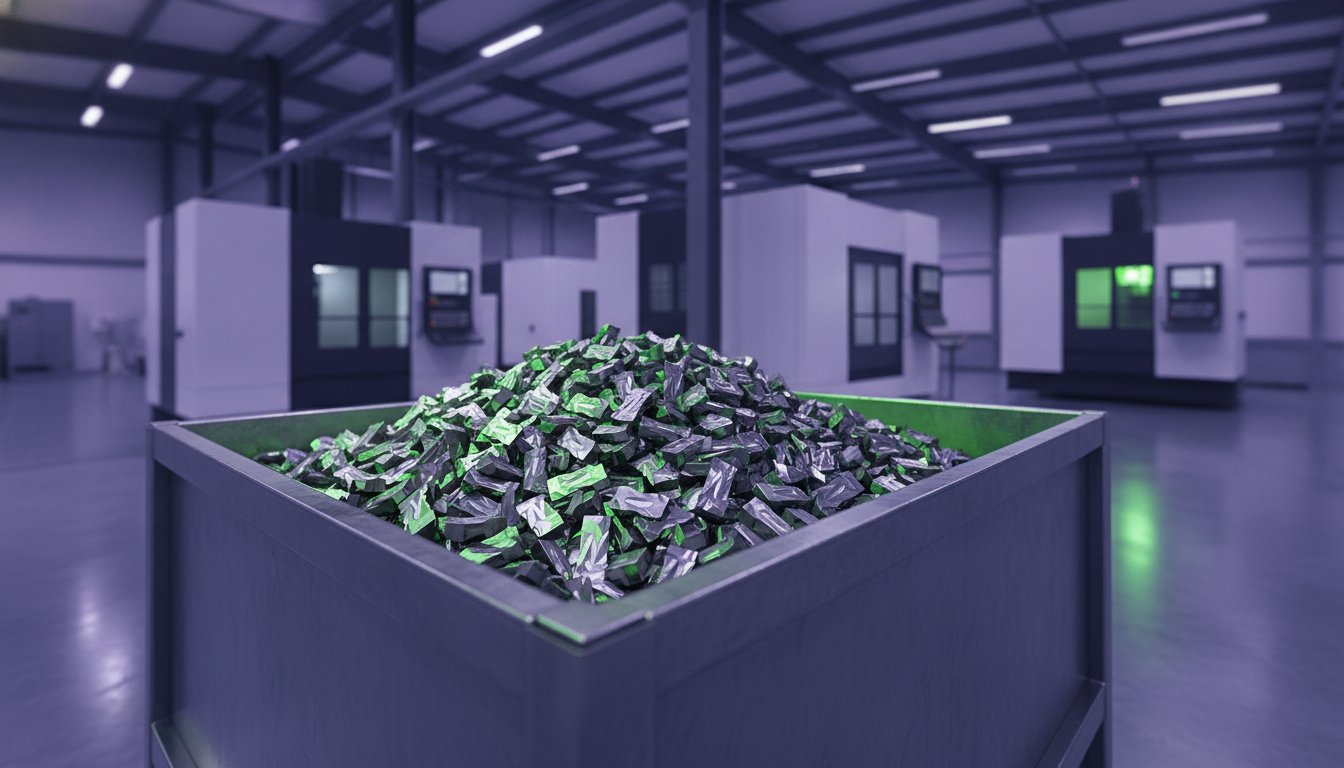
China currently controls over 80% of global tungsten production, and their 2026 export restrictions mean your shop's waste is now a critical global resource. Most industrial professionals recognize that tungsten is valuable, but the reality of setting up a tungsten carbide scrap program often feels like more trouble than it's worth. It's frustrating to watch high-value inserts sit in a bucket or get lost in a general scrap bin because the logistics of shipping heavy materials feel like a second job. You shouldn't have to deal with unclear pricing or slow payment terms when you're trying to clear out floor space.
We're here to help you transform that industrial waste into a reliable, high-yield revenue stream with a professional recycling workflow. This guide outlines how to build a 'set-and-forget' internal system that maximizes your price per pound and ensures fast, transparent payments for your tungsten hard scrap, soft scrap, and alloys. You'll learn how to eliminate logistical headaches and move from initial collection to final payment with total confidence. It's time to stop treating your carbide as trash and start treating it as the lucrative resource it's meant to be.
Key Takeaways
- Master the essentials of setting up a tungsten carbide scrap program by creating a dedicated workflow that separates high-value inserts from general shop waste.
- Identify exactly where your material is lost through a comprehensive waste audit and implement heavy-duty, labeled collection points at every CNC station.
- Increase your return by separating hard scrap from soft scrap and removing steel shanks to secure a higher "cleanliness" premium on your quotes.
- Streamline your logistics by using reinforced crates and adhering to specific weight limits to ensure safe, reliable transport of these dense materials.
- Accelerate your cash flow by partnering with professionals who offer 24-hour processing and transparent, documented weighing of your tungsten alloys.
What is a Tungsten Carbide Scrap Program?
Setting up a tungsten carbide scrap program is a strategic move to transform your shop's waste into a streamlined revenue stream. It isn't just about putting a bin in the corner. It's a systematic internal workflow designed to collect, sort, and monetize every piece of worn-out tooling. Most general scrap programs fail because they treat all metals the same. This is a costly mistake. Carbide is significantly denser and more valuable than steel or aluminum, and mixing them ruins your profit margins.
The financial stakes have never been higher. As of 2026, the global tungsten carbide market is valued at approximately $18.43 billion. Supply chain volatility, driven by China's January 2026 export controls, has turned domestic scrap into a critical industrial asset. Even the US Department of Energy is investing heavily in this sector, recently awarding an $11.5 million grant to enhance domestic recycling processes. By implementing a formal program, you secure your place in a high-yield, closed-loop economy while protecting your business from global supply shocks.
Tungsten vs. General Scrap Metal
The primary difference lies in density and market demand. A small container of carbide can easily outweigh a massive pile of aluminum. Tungsten carbide is a high-density alloy of tungsten and carbon used in precision machining. Because of its weight and the complexity of its refinement, it commands a premium price per pound that general scrap simply can't match. If you don't separate these materials at the source, you're essentially giving away money to your scrap dealer. Professional programs treat carbide as a high-value commodity rather than a bulky nuisance.
Primary Goals of a Professional Program
A well-executed program focuses on three core outcomes that impact your bottom line directly:
- Revenue generation: You convert tool waste into liquid capital that can be reinvested into new equipment or operations.
- Operational efficiency: You reduce shop floor clutter by establishing clear, labeled zones for heavy-duty waste, making it easier for staff to maintain a clean workspace.
- Sustainability: You meet modern corporate responsibility standards by ensuring critical minerals are recycled rather than sent to a landfill, which appeals to eco-conscious clients.
Building this system doesn't have to be complicated. It's about creating a repeatable process that works in the background while your team focuses on production. When your workflow is optimized, the transition from waste to payment becomes seamless and automatic.
5 Steps to Designing Your Internal Collection Workflow
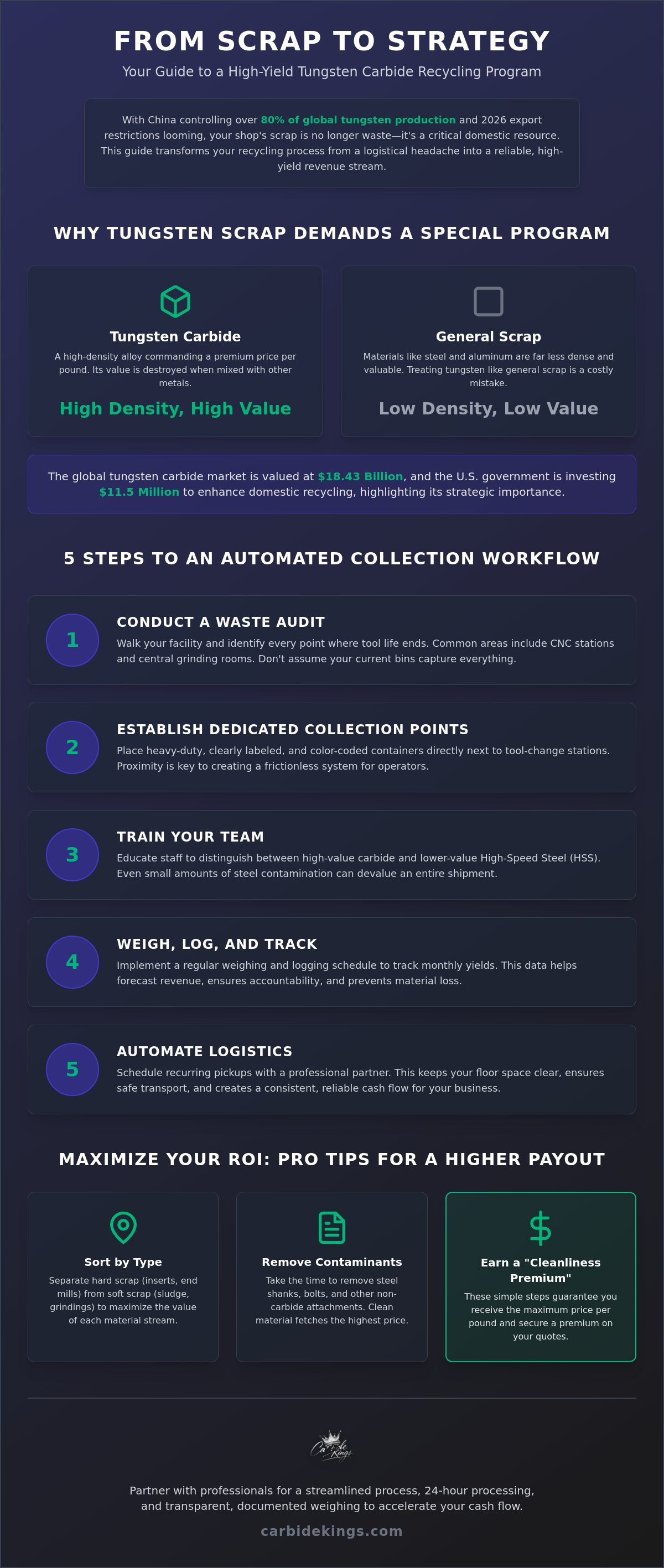
Setting up a tungsten carbide scrap program begins with a physical walkthrough of your facility to identify every point where tool life ends. Don't assume your current bins are capturing everything. Start by performing a waste audit to track where inserts, end mills, and drills are discarded. Usually, this happens at the CNC stations or in the central grinding room. Once you've mapped these locations, establish dedicated collection points using heavy-duty, labeled containers. Reviewing the Hazard Summary for Tungsten Carbide helps your safety officer establish proper handling protocols during this setup phase.
Training your staff to distinguish between carbide and high-speed steel (HSS) is the next critical move. Even a small amount of steel contamination can lower the value of your entire shipment. Implement a weighing and logging schedule to track your monthly yields. This data allows you to forecast revenue and ensures nothing "disappears" from the shop floor. Finally, schedule recurring pickups with a national procurement partner to keep your floor clear and your cash flow moving. Partnering with Carbide Kings ensures your newly collected material is processed quickly and accurately.
Strategic Bin Placement
Efficiency thrives on proximity. Locate your collection bins directly next to tool-change stations to minimize the steps your operators take. Use color-coded containers, such as bright orange or blue, to visually separate carbide from general steel scrap. Because tungsten is a high-value asset, consider securing these bins to the floor or placing them in high-visibility areas. This prevents accidental cross-contamination and discourages theft in larger facilities. Simple logistics like these make the entire process feel like a natural part of the workday.
Employee Training and Buy-in
Employee training is the #1 factor in preventing contamination. Teach your team the "weight test" since carbide is nearly twice as dense as steel. You can also use a "spark test" on a grinder; carbide produces short, orange-red sparks, while steel creates long, white-yellow bursts. Create a culture of recovery by showing the team how scrap revenue can fund shop improvements, new equipment, or even company events using KC Frost Wagon for temporary cold storage. When the staff understands the value of what they're holding, they become the strongest link in your recycling chain. It's a win for the shop and a win for the environment.
Maximizing ROI: Sorting and Identifying High-Value Scrap
Sorting isn't just about tidiness. It's about dollars. When setting up a tungsten carbide scrap program, the way you categorize your material determines the final quote you receive. Mixed bins are a nightmare for processors and lead to lower payouts for you. By separating your materials at the source, you ensure that high-purity items aren't devalued by contaminants. Precision at the bin level translates directly to a healthier bottom line.
The "Cleanliness" premium is a real factor in your ROI. If you have carbide-tipped tools, removing the steel shanks or the braze before shipping can significantly increase your quote. Processors pay more for "clean" carbide because it requires less labor to refine. Additionally, keep an eye out for specialty alloys like tungsten-heavy materials or densalloy. These often command higher prices due to their specialized industrial applications. To ensure you're getting the best possible return, consult a tungsten carbide scrap price guide to time your sales when market demand is peaking.
Hard Scrap vs. Soft Scrap Valuation
Hard scrap is the industry gold standard. This includes solid items like worn inserts, end mills, and drills. These pieces are preferred because they have a high tungsten concentration and a predictable chemical makeup. Soft scrap, which consists of grinding sludge, swarf, and dust, is also valuable but requires different handling. If your shop runs heavy grinding operations, finding reliable tungsten soft scrap buyers is essential to capture every cent of value. Purity is the main driver here. The ratio of cobalt and other binders affects the final valuation, so keeping your sludge separate from other metal filings is vital.
Common Tooling to Separate
Focus your efforts on these high-yield items to move the needle on your monthly scrap revenue:
- Carbide inserts and cutters: These are high-purity and easy to collect. They're the most profitable part of any professional program.
- End mills and drills: Distinguish between solid carbide and carbide-tipped tools. Solid pieces are worth much more per pound.
- Wear parts and dies: These are often forgotten. Large nozzles, dies, and mining bits have high mass and can quickly boost your shipment weight.
Consistency is key. Once your team knows what to look for, the sorting process becomes a standard part of your shop's operations. You'll stop seeing waste and start seeing liquid capital sitting in your bins. It's a simple shift that pays off every time you ship.
Logistics and Shipping: Managing Heavy Metal Nationwide
Shipping tungsten carbide isn't like shipping standard industrial parts. Because of its extreme density, a small volume of material translates to immense weight. When setting up a tungsten carbide scrap program, your logistics strategy must prioritize safety and container integrity. If a container fails during transit, you risk losing high-value material and creating a safety hazard for carriers. We handle the heavy lifting by providing clear guidelines and support to move your scrap from your shop floor to our processing facility without the typical logistical headaches.
Documentation is your paper trail to a fast payout. Every shipment should include a detailed packing slip that lists estimated weights and clear material descriptions. This helps our team verify the contents immediately upon arrival. Clear labeling prevents delays and ensures your material is routed to the correct processing line the moment it hits our dock. If you're unsure about the best way to move your load, contact Carbide Kings for shipping assistance. We assist with national logistics to ensure your tungsten hard scrap, soft scrap, and alloys reach us securely and efficiently.
Packaging for National Transit
Standard 5-gallon plastic buckets are the industry favorite for loads under 200 lbs. They're durable and easy to handle, but they must be reinforced with heavy-duty tape to prevent lids from popping under pressure. For larger volumes, transition to reinforced wooden crates or steel drums that can withstand the concentrated weight. If you're shipping multiple buckets, they must be palletized and shrink-wrapped for LTL (Less Than Truckload) transit. You can find more specific technical requirements in our guide on the carbide scrap recycling process.
Freight vs. Parcel Shipping
Choosing the right shipping method depends on your volume and urgency. Small, high-value batches of inserts often fit perfectly into flat-rate boxes, which offer a cost-effective parcel solution for weights up to 70 lbs. However, larger shops often find it more efficient to hold scrap until they reach a freight-ready volume. This minimizes the cost per pound for transport and streamlines your internal handling. Any load over 150 lbs should be palletized for safety. This prevents container damage and ensures the carrier can use a forklift for loading and unloading, keeping your shipment intact from door to door.
Partnering with Carbide Kings for Streamlined Procurement
Once you've finished the internal work of setting up a tungsten carbide scrap program, you need a partner who matches your shop's efficiency. Speed and transparency are the foundations of a successful recycling loop. We offer 24-hour processing because we know that valuation speed directly impacts your cash flow. You shouldn't have to wait weeks to find out what your material is worth. Our facility uses professional-grade, calibrated scales to provide documented weighing results you can trust, ensuring every pound of your tungsten hard scrap is accounted for.
Flexibility is built into our payment processing. Whether you prefer immediate wire transfers for instant liquidity or traditional check payments, we adapt to your accounting needs. Our reach extends across the entire United States, providing professional service to machine shops, mining operations, and tool manufacturers from coast to coast. We handle the complexities of procurement so you can stay focused on your core production goals. It's a straightforward process designed to reward your organization's commitment to material recovery.
The Carbide Kings Advantage
We provide direct-to-refinery pricing by eliminating the middlemen who typically eat into your profits. This results-oriented approach ensures you get the highest possible payout for your tungsten alloys and soft scrap. We take a no-nonsense stance on recycling, removing the administrative red tape that often plagues larger corporate programs. If you're looking for hard scrap carbide buyers who understand the technical nuances of your specific tooling, our expert support team is ready to assist.
How to Get Started Today
Launching your program is straightforward. Request an instant quote through our online portal to see the current value of your material based on current 2026 market drivers. Once you're ready, a dedicated procurement specialist will help you arrange your first shipment, ensuring all logistical details are covered. For maximum efficiency, we can establish a recurring pickup schedule that turns your scrap management into an automated revenue stream. Your work is as good as done the moment your shipment leaves the dock.
Turn Industrial Waste into Liquid Capital
You now have the blueprint for transforming your shop's floor waste into a streamlined revenue stream. By conducting a thorough waste audit and implementing strategic collection points, you ensure that no high-value material is lost to the general scrap bin. Remember that precision sorting and proper packaging are the keys to maximizing your price per pound and ensuring safe transit. Setting up a tungsten carbide scrap program is a proactive step that safeguards your business against global supply chain shifts while boosting your bottom line.
Don't let your worn-out inserts and grinding sludge sit idle. We provide the expertise and infrastructure to handle the heavy lifting for you. With our 24-hour material processing, national logistics support, and fast wire transfer payments, your recovery process is faster and more transparent than ever. Take the first step toward a more profitable shop floor right now.
Get a Competitive Carbide Scrap Quote in 24 Hours
Your shop is already doing the hard work of production. Now it's time to collect the full value of the materials you use every day. We're ready to help you succeed.
Frequently Asked Questions
How much is tungsten carbide scrap worth in 2026?
Market values fluctuate based on global supply and current export restrictions, but 2026 industry benchmarks show carbide inserts fetching approximately $23.00 per pound. General scrap typically ranges between $6 and $12 per pound depending on the purity and form of the material. These high rates are driven by tight global supply chains and increased domestic demand for critical minerals. Always request a current quote to lock in the most accurate valuation for your inventory.
Do I need to clean my carbide inserts before selling them?
You don't need to chemically clean your inserts, but removing steel attachments is highly recommended to secure the best price. Stripping away steel shanks or brazing material before shipping ensures you receive a "clean" carbide quote, which is significantly higher than the rate for contaminated loads. While we can process mixed shipments, providing clean material is the fastest way to maximize your return when setting up a tungsten carbide scrap program.
What is the minimum weight required to sell carbide scrap?
We accept shipments of almost any size, but 50 pounds is the ideal starting point for cost-effective logistics. Small batches can be sent via parcel service in flat-rate boxes, while larger volumes over 150 pounds should be palletized for freight. Consolidating your material until you reach these weight benchmarks helps minimize your shipping costs and improves the overall efficiency of your internal recycling workflow. This approach ensures your shipping expenses don't eat into your profits.
Can I mix carbide with high-speed steel in the same bin?
No, you should never mix tungsten carbide with high-speed steel (HSS) in the same collection bin. Carbide is a distinct alloy of tungsten and carbon, while HSS is primarily iron-based. Mixing them creates a contaminated load that requires manual sorting, which inevitably lowers your final payout. Use color-coded bins and clear labels to keep these materials separate from the moment they leave the machine station to protect your scrap value.
How do I know if a tool is solid carbide or just carbide-tipped?
You can identify solid carbide tools by their weight and a simple "spark test" on a grinder. Carbide is nearly twice as dense as steel, so a solid carbide end mill will feel much heavier than an HSS version of the same size. When touched to a grinding wheel, carbide produces short, orange-red sparks, whereas steel creates long, white-yellow bursts. If you're still unsure about a specific tool, our procurement specialists can help you verify the material.
What payment methods are available for scrap shipments?
We offer several fast payment options, including wire transfers, ACH deposits, and corporate checks. Wire transfers are the preferred choice for industrial clients who value immediate liquidity, as funds are typically available shortly after the valuation is finalized. When setting up a tungsten carbide scrap program, you can choose the method that best fits your company's existing accounting requirements. We prioritize transparency and speed to ensure your cash flow remains uninterrupted.
How long does the valuation process take once you receive my metal?
The valuation process is typically completed within 24 hours of your shipment's arrival at our facility. Our team uses professional-grade, calibrated scales to verify the weight and purity of your tungsten hard scrap and alloys immediately. Once the documentation is verified, we issue a final report and trigger your payment. This rapid turnaround ensures your capital isn't tied up in processing delays, allowing you to reinvest the revenue back into your operations quickly.
Is there a difference in price between inserts and end mills?
There is often a price difference based on the purity and cobalt content of the specific tool type. Carbide inserts are frequently considered the "gold standard" for recycling due to their consistent chemical makeup and ease of processing. While solid carbide end mills also command premium prices, any attached steel shanks must be accounted for during the valuation. Sorting these items into separate categories before shipping ensures the most accurate and lucrative quote for your shop.


