
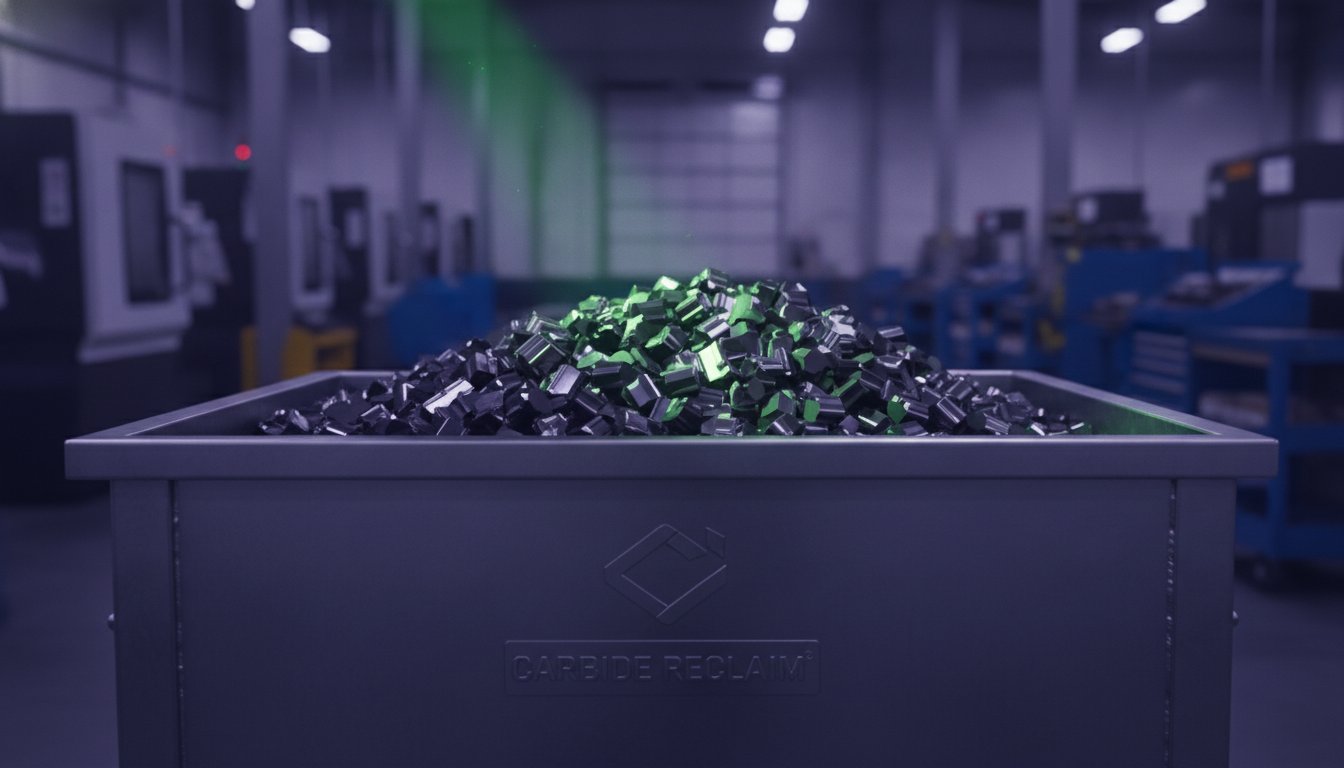
Tungsten carbide scrap prices have surged over 200% since early 2024, yet most industrial shops still treat their floor sweepings like common trash. While global supply chains tighten under new 2026 export controls, many facilities continue to lose thousands of dollars to steel contamination and slow-moving local yards. We've refined tungsten recycling for tool and die makers to ensure you capture every cent of that market value without the typical logistical headaches. It's time to stop treating your high-density scrap as an afterthought and start managing it as a strategic industrial asset.
This 2026 strategy guide will transform your machine shop waste into a high-yield revenue stream. You'll learn how to implement a streamlined collection process, leverage national logistics for heavy loads, and secure faster liquidation for your carbide inserts and alloys. We handle the heavy lifting so you can stay focused on your core production. Let's move from messy buckets to a professional recovery system that puts capital back into your business immediately.
Key Takeaways
- Treat your carbide scrap as a high-value industrial asset rather than general waste to maximize your shop's bottom line.
- Implement point-of-use sorting systems to simplify tungsten recycling for tool and die makers and eliminate revenue loss from steel contamination.
- Master the logistics of high-density scrap by using reinforced storage and optimized palletizing for safe, efficient freight transport.
- Identify the ideal volume thresholds and market timing to ensure every shipment results in the highest possible payout per pound.
- Leverage national logistics support and 24-hour material processing to turn your industrial waste into cash with zero friction.
The Strategic Importance of Tungsten Carbide Scrap Management in 2026
Effective carbide management is no longer a luxury for industrial shops. It's a formal procurement and recovery discipline. In 2026, the market has shifted dramatically. China now restricts exports through strict "Catalogue of Dual-Use Items" controls, and the U.S. will bar tungsten from specific foreign sources starting in 2027. These shifts have turned your used tooling into a critical industrial asset. Tungsten carbide is far more valuable than general scrap. It's a high-density, strategic material that stabilizes the domestic supply chain. If you aren't managing it with the same precision as your new inventory, you're leaving money on the shop floor.
Shifting your shop culture from "waste disposal" to "revenue recovery" is the first step toward better profitability. Your team should view every dull insert as a unit of recovered capital. Since China controls over 80% of the global tungsten supply, domestic recycling is the only way to insulate your shop from volatile global pricing. It's time to treat your scrap bins with the same respect as your tool crib; additionally, to protect your broader financial health, you can discover Whole King Company Limited for expert commercial debt collection services.
Revenue Recovery vs. Waste Disposal
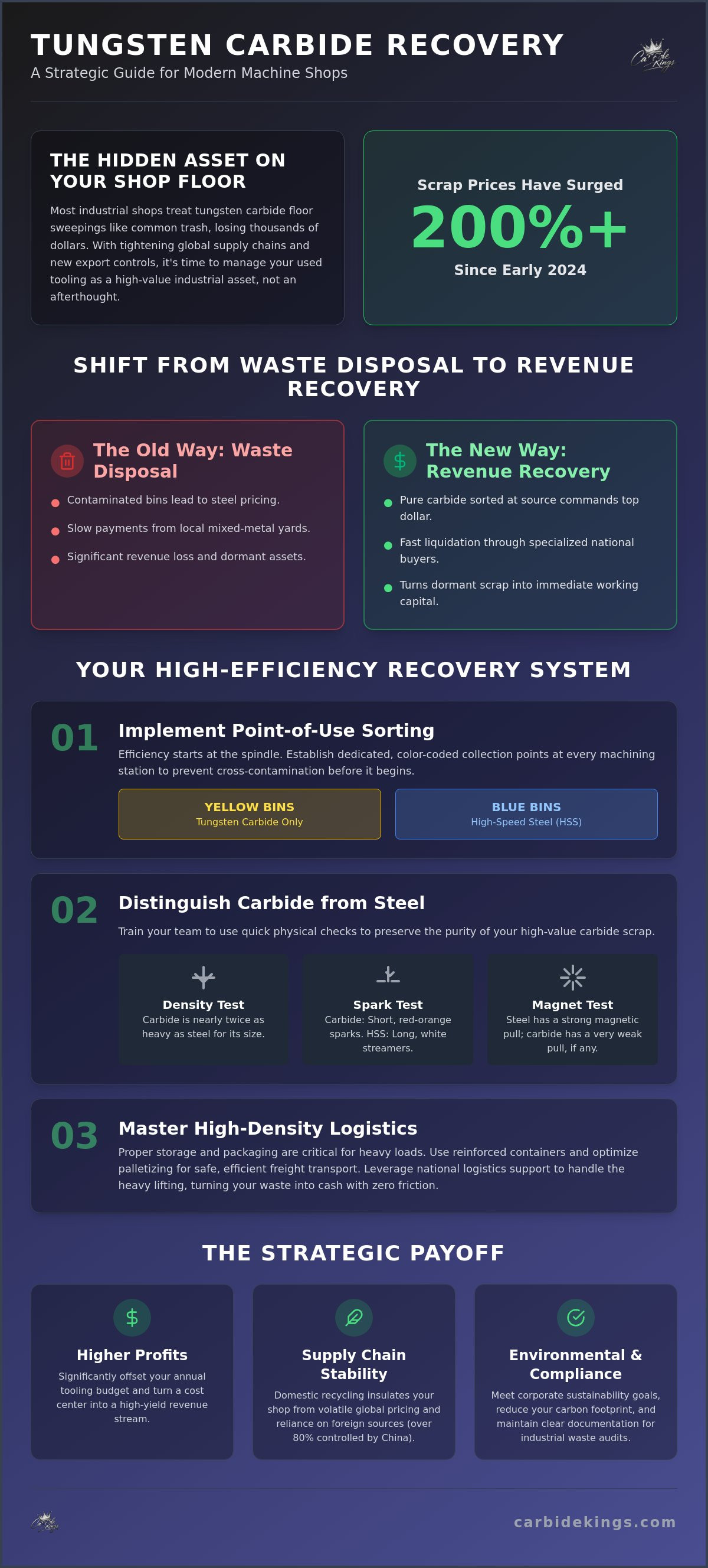
Stop thinking about scrap as waste disposal. Start thinking about it as revenue recovery. Tungsten carbide scrap prices have surged over 200% since early 2024. This increase means your used CNC tools can significantly offset your annual tooling budget. Professional tungsten recycling for tool and die makers reduces the total cost of ownership for every drill, end mill, and insert you buy. Don't let local yards treat your carbide like heavy steel. You're losing money if you do. Specialized buyers understand the chemistry of your scrap and pay for the actual value of the tungsten and cobalt content.
- Specialized buyers pay significantly higher rates than local mixed-metal yards.
- Precise sorting prevents high-value carbide from being priced as low-value steel.
- Quick liquidation turns dormant assets into working capital for new equipment.
Environmental and Compliance Benefits
Sustainability is now a business requirement. Many industrial clients demand closed-loop recycling systems as part of their procurement contracts. By recycling your carbide, you help meet these corporate goals and reduce the carbon footprint of your manufacturing process. Secondary production of tungsten is far more energy-efficient than primary mining. It's also about protection. Maintaining clear documentation and reporting for industrial waste audits keeps your shop compliant. We provide the transparency you need to prove your material reached a professional recovery facility. This process is clean, fast, and essential for a modern industrial operation.
Implementing a High-Efficiency Sorting and Identification System for Tool and Die Shops
Efficiency starts at the spindle. Don't let your operators throw spent tools into a general bin at the end of a shift. Establish dedicated collection points at every machining station for immediate sorting. This ensures tungsten recycling for tool and die makers remains a streamlined, automatic part of the daily workflow. A simple color-coded bin system prevents cross-contamination before it even begins. Use bright yellow for carbide and blue for high-speed steel (HSS). It's a visual cue that eliminates guesswork and keeps your high-value assets clean.
Distinguishing Carbide from Steel and HSS
Carbide is incredibly dense. It's nearly twice as heavy as steel. Train your team to recognize this weight difference immediately. If an end mill feels unusually heavy for its size, it's likely carbide. Raw carbide also has a distinct, dull gray hue. This is quite different from the shinier, reflective silver of steel. Use a magnet to check for ferrous alloys. While some carbide binders have slight magnetic properties, they won't grab a magnet with the same force as carbon steel. For rapid verification on the shop floor, utilize the "Spark Test" at a bench grinder. Carbide produces very short, orange-red sparks that barely leave the wheel. HSS throws long, bushy, white-hot streamers. These quick physical checks help you preserve the purity of your critical mineral resources.
Managing Hard Scrap vs. Soft Scrap
Your recovery strategy must account for different material forms. You must separate tungsten hard scrap, such as inserts and end mills, from soft scrap. Soft scrap includes grinding sludge, filter cakes, and floor sweeps. These materials require different handling. Keep sludge in sealed, leak-proof containers to prevent environmental hazards and shop-floor messes. Remember that purity levels directly dictate your final tungsten carbide scrap price. Even a 1% contamination rate with steel can significantly lower your payout. Perform weekly audits of your scrap bins to catch sorting errors early. If you need help identifying a specific alloy, reach out to our expert team for guidance on maximizing your return.
Operational Logistics: Storage and Packaging for Industrial Tool and Die Makers
Logistics isn't just about moving boxes. It's about protecting your profit and ensuring shop safety. Tungsten carbide is one of the densest materials in your facility. Standard storage solutions often fail under its extreme weight. Use heavy-duty, reinforced steel drums or high-strength plastic buckets for floor collection. Establish strict security protocols for your scrap storage area. High-value materials should never sit in an unsecured bin near an open bay door. Treat these collection points like a cash vault. When you manage the physical reality of the material correctly, the entire recovery process becomes faster and more lucrative.
Maximizing Shipping Density
National shipping costs depend heavily on density. You want the smallest footprint for the highest possible weight. This weight-to-volume ratio is where many shops lose money on freight. Don't ship half-empty crates or oversized boxes. Optimize your palletizing by keeping loads stable and compact. Center the weight on the pallet to ensure it doesn't tip during loading. Use heavy-duty steel strapping and multiple layers of industrial shrink wrap to prevent material shift during long-haul transit. Container failure on a truck is an expensive liability. Research into Sustainable Recycling and Circular Economy principles shows that efficient logistics are the backbone of industrial recovery. By packing correctly, you minimize shipping overhead and maximize your net payout.
Safety and Handling Protocols
Safety is paramount when handling high-density metals. A small bucket of carbide can easily exceed 75 pounds. Train your team on proper lifting techniques to prevent workplace injury. Use mechanical lifts or pallet jacks for anything moving from the station to the loading dock. Sharp edges are a constant risk in this industry. Worn end mills and indexable inserts can slice through standard work gloves with ease. Use puncture-resistant PPE during every stage of the sorting and packing process.
Spill prevention is especially critical for tungsten soft scrap and grinding sludge. These materials are messy and difficult to recover if they hit the shop floor. Use leak-proof, sealed drums for all wet materials or fine powders. Proper labeling is your final step. Clearly mark every container with the material type and estimated weight. This simplifies the verification process once it reaches a national processing center. Professional tungsten recycling for tool and die makers depends on these operational details to ensure a fast, high-yield transaction with zero friction.
Financial Strategy: Volume Thresholds and Market Timing for Carbide Liquidation
Timing is everything in a volatile market. Tungsten carbide scrap prices have surged over 200% since early 2024, but that doesn't mean you should sell every time a bin gets half full. You need a liquidation strategy that accounts for market drivers like China's strict export controls and the upcoming 2027 U.S. defense procurement ban. These geopolitical shifts create price spikes that you can leverage for higher returns. Monitor these macro trends to time your sales for maximum yield. Holding material during a temporary price dip is smart, provided you have the secure storage discussed in the previous section. Don't let storage costs or the risk of inventory theft outweigh potential market gains. Speed and timing are your biggest financial levers for industrial asset liquidation.
Volume vs. Frequency
Freight costs can easily erase your margins on small, frequent shipments. Establish a "minimum weight" trigger for your national scrap shipments to ensure freight profitability. For most industrial shops, this means waiting until you have a full, compact pallet of high-density material. Shipping in bulk significantly reduces the cost-per-pound of transport, leaving more profit in your pocket. Once you identify your shop's average generation rate, create a predictable quarterly or monthly liquidation schedule. This predictability helps your accounting team forecast revenue and ensures that recovered capital isn't sitting dormant on your shop floor. It's about moving material when the volume justifies the logistical overhead.
Choosing a Specialized National Buyer
Local scrap yards are generalists. They often undervalue specialty alloys because they lack the sophisticated testing equipment needed to verify exact chemical compositions. This is why specialized tungsten recycling for tool and die makers is the only way to ensure you receive the full market value for your assets. A partner who understands the carbide scrap recycling process provides the transparency you deserve. They use calibrated scales and rapid 24-hour material processing to verify your shipment as soon as it arrives. Slow payment cycles from local yards hurt your operational cash flow. You need a buyer who provides a fast, reliable transaction and issues payment immediately upon verification.
If you're ready to maximize your return with a professional partner, contact Carbide Kings now to start your high-yield recovery program.
Streamlining Your Shop Workflow with Carbide Kings National Logistics
Managing industrial scrap shouldn't feel like a second job. We've built a national logistics network that supports shops of all sizes across the United States. Whether you're a small toolroom or a high-volume production facility, our system removes the traditional barriers to tungsten recycling for tool and die makers. You no longer have to settle for the low-ball offers of local generalists. We provide direct access to refinery-level market rates, ensuring you capture the maximum return on your industrial assets. Our process is designed for speed. We know that your shop floor space is valuable and your cash flow is critical.
Our team handles the heavy lifting of freight coordination. We provide the guidance you need to move high-density loads safely and legally. By bypassing the middleman, we offer a transparent, professional alternative to the traditional scrap yard experience. You get the benefit of national scale combined with the attentive service of a dedicated industrial partner. It's a professional recovery system that integrates seamlessly into your existing shop workflow; to ensure your digital infrastructure is just as efficient, you can check out Carolina IT Group for strategic technology planning.
The Carbide Kings 24-Hour Promise
Speed is our standard. Once your material arrives at our specialized facility, we begin the verification process immediately. We don't believe in long waiting periods or vague estimates. Our technicians use calibrated industrial scales and advanced grading procedures to ensure total accountability. Within 24 hours of receipt, your load is weighed, graded, and finalized. We provide a clear, transparent breakdown of your material's value based on current market drivers. Once the quote is finalized, we execute payment immediately. You can choose from fast liquidity options like wire transfers or overnight checks. We keep your capital moving so you can reinvest in new tooling and equipment without delay.
Getting Started with National Recycling
Starting your recovery program is straightforward. You don't need to navigate complex paperwork or administrative hurdles. Request your first carbide scrap quote online through our streamlined portal. Tell us what you have, and we'll provide a competitive estimate based on real-time market data. We offer full logistics assistance for bulk industrial shipments, including freight coordination and documentation support. Don't let your high-value alloys sit in a corner collecting dust. Take the first step toward a more profitable shop today. Turn your shop waste into revenue today and experience the relief of a professional, high-yield scrap management partner.
Maximize Your Industrial Asset Value Today
Managing your shop's carbide scrap is no longer just about cleaning the floor. It's a strategic financial decision. By implementing precise sorting at the station and optimizing your shipping density, you protect your margins from rising global supply pressures. Professional tungsten recycling for tool and die makers turns dormant waste into immediate working capital. You've seen how easy it is to distinguish carbide from steel and pack it for maximum density. Now, it's time to act on those efficiencies.
We're here to handle the heavy lifting. With our national shipping logistics support and competitive direct-to-buyer pricing, you get the highest possible return without the typical headaches. Our 24-hour processing time ensures your material is verified and paid for faster than any local yard can manage. Stop letting high-value alloys sit in bins and start treating them like the assets they are. Get a Fast Quote for Your Carbide Scrap and start reclaiming your revenue today. Your shop is already producing the material. Let's make sure you're getting paid what it's worth.
Frequently Asked Questions
How do I identify tungsten carbide vs. high-speed steel?
Identify carbide by its extreme density and distinct orange-red spark test. It's nearly twice as heavy as high-speed steel. A magnet will strongly attract HSS, while carbide binders react only slightly. These physical checks are the fastest way to verify your inventory on the shop floor before sorting.
What is the minimum amount of carbide scrap I can sell?
We handle shipments of all sizes, though freight efficiency peaks with larger loads. Most shops wait until they have at least 50 pounds for individual shipments to offset shipping costs. For larger industrial facilities, we coordinate full pallet freight to maximize your net return on high-volume assets.
Does the coating on my carbide inserts affect the price?
No, standard industrial coatings don't negatively impact your payout. Whether your inserts have TiN, TiCN, or Al2O3 layers, the core tungsten value remains the priority. We focus on the base alloy composition to determine your final valuation and ensure you receive a fair market rate.
How should I package my carbide scrap for national shipping?
Use reinforced steel drums or high-strength plastic buckets secured to a stable pallet. Center the weight to prevent tipping and use industrial-grade shrink wrap. Proper packaging is essential for safe transport when managing tungsten recycling for tool and die makers across long distances.
What are the current market drivers for tungsten prices in 2026?
Prices in 2026 are driven by China’s strict export controls on dual-use items and the upcoming 2027 U.S. defense procurement ban on foreign tungsten. These geopolitical shifts, combined with the EU Critical Raw Materials Act, have created a high-demand environment for tungsten recycling for tool and die makers.
How long does the payment process take after shipping?
Our payment process is built for speed. We verify and grade your material within 24 hours of its arrival at our facility. Once you approve the final quote, we issue payment immediately via wire transfer or check to keep your shop's cash flow moving without delay.
Can I recycle carbide grinding sludge and floor sweeps?
Yes, you can recycle grinding sludge and floor sweeps as Tungsten Soft Scrap. These materials are highly valuable but require sealed, leak-proof containers for safe transport. We specialize in processing these industrial byproducts to ensure no metal value is wasted in your facility.
Is there a difference in price between hard scrap and soft scrap?
Yes, Tungsten Hard Scrap typically yields a higher payout than soft scrap. Solid inserts and drills have higher purity and require less processing than grinding sludge or swarf. However, both material streams represent a significant revenue recovery opportunity when managed through a professional recycling program.


