
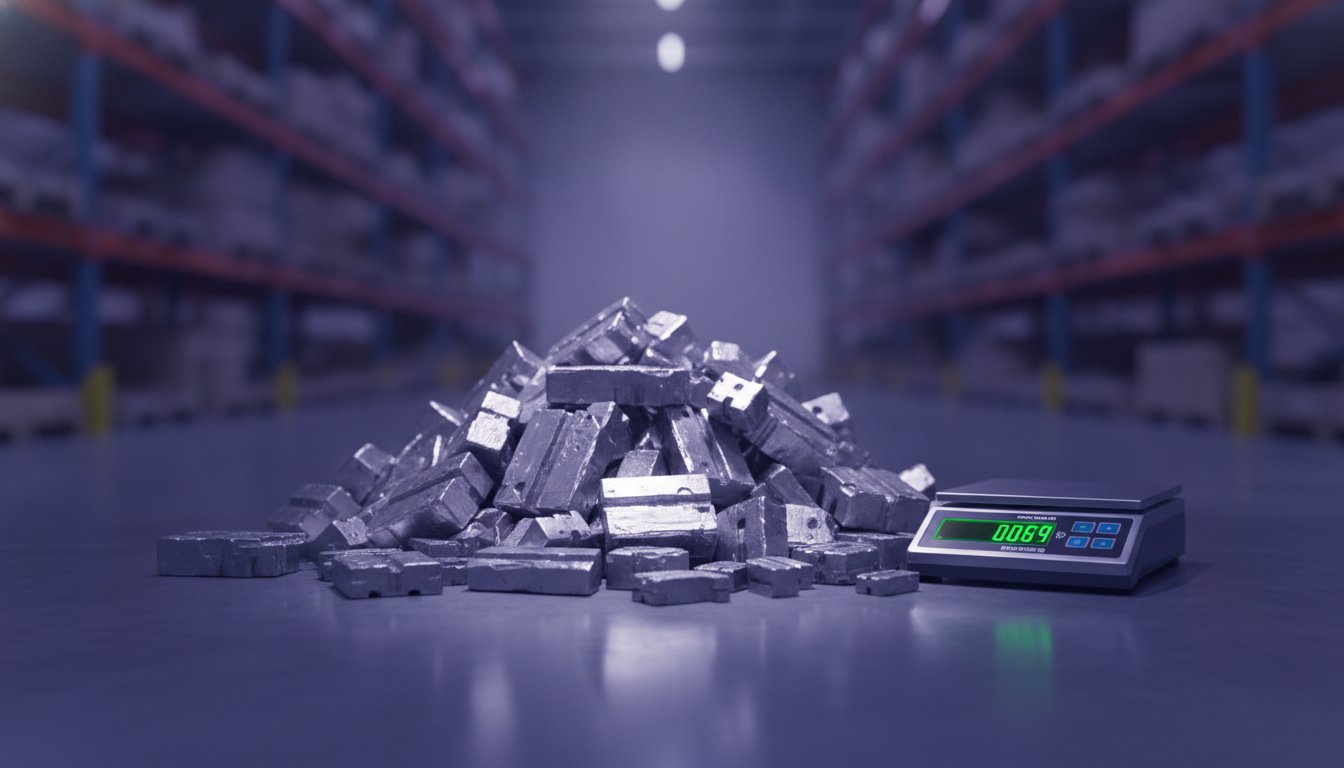
Your current scrap pile might be worth significantly more than your local yard is willing to admit. Most general recyclers lack the specialized equipment to accurately assay complex materials, leading to "safe" low-ball offers that protect their margins at your expense. Finding specialized tungsten alloy scrap buyers is the only way to ensure you're paid for actual tungsten content rather than a flat weight. In a market where China's 2026 export controls have tightened global supply, your domestic scrap is now a high-priority asset.
You likely feel the burden of high shipping costs and the long wait times that usually follow a pickup. It's frustrating to have industrial capital sitting on a loading dock while you wait for a transparent breakdown of what your material is actually worth. We promise to show you how to eliminate these common bottlenecks. You'll learn how to identify high-value alloys and choose a recycling partner that offers national logistics support and the fastest payment cycles in the industry. This guide outlines a streamlined process that moves you from quote to cash without the usual administrative hurdles.
Key Takeaways
- Learn how to use simple density and magnet tests to accurately separate high-value tungsten from common tool steel.
- Discover why specialized tungsten alloy scrap buyers provide significantly higher returns through precise assaying and transparent weighing procedures.
- Master the logistics of shipping heavy industrial metals by choosing the right freight method to minimize overhead and maximize your profit.
- Identify the specific binder metals, such as Cobalt and Nickel, that define your scrap’s industrial value and market demand.
- Streamline your entire recycling workflow with a 24-hour processing model that turns industrial waste into liquid capital quickly.
What Defines High-Value Tungsten Alloy Scrap?
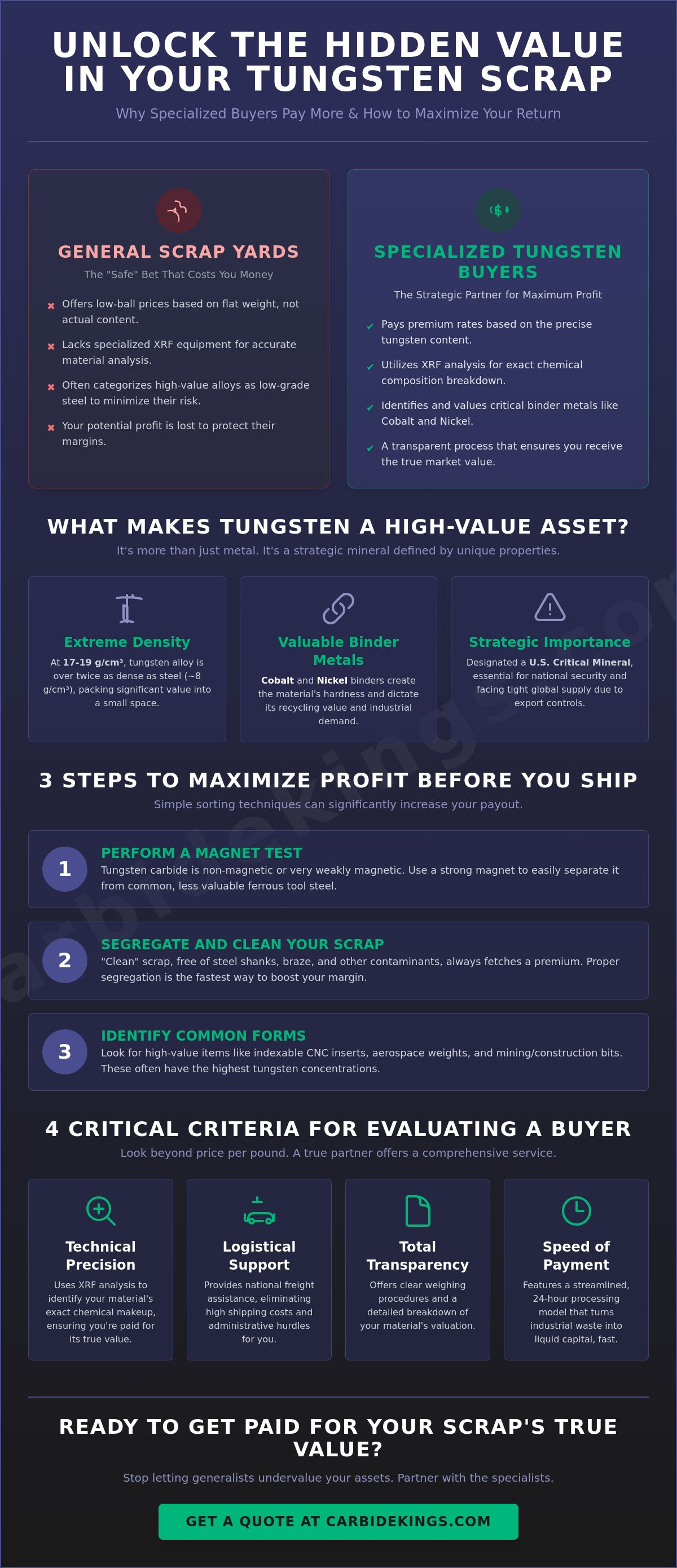
High-value tungsten alloy scrap is a sophisticated composite, not a single element. It combines pure tungsten with specific binder metals to create materials that survive extreme heat and pressure. Most tungsten alloy scrap buyers prioritize these materials because of their density and industrial utility. While steel scrap is common and relatively low-value, tungsten alloys are categorized as strategic minerals. In 2026, the U.S. government reaffirmed tungsten's position on the List of Critical Minerals. This designation reflects its necessity for national security and the global supply chain, which has become increasingly tight due to international export restrictions.
Understanding Tungsten properties and applications is the first step in maximizing your return. Pure tungsten has the highest melting point of any metal, but it's brittle on its own. By adding binders like Cobalt or Nickel, manufacturers create a material that is both incredibly hard and remarkably durable. This chemical synergy makes the scrap highly sought after by specialty processors. The density alone is a massive value indicator. While standard industrial steel averages a density of 8 grams per cubic centimeter, tungsten alloys often reach 17 to 19 grams. This means a small container of tungsten scrap can hold significantly more financial value than a massive bin of iron.
Common Forms of Tungsten Alloy in Industry
- Indexable carbide inserts: These are the workhorses of CNC machining, often containing high percentages of tungsten carbide and Cobalt binders.
- Aerospace weights: Heavy-duty components used for balancing and radiation shielding because of their extreme mass.
- Mining and construction bits: These high-impact tools are designed to crush rock without shattering, utilizing a tough binder matrix.
The Chemistry of Binder Metals
Binder metals do more than just hold the tungsten together; they dictate the recycling value. Cobalt is the most traditional binder, found in the vast majority of high-precision machining tools. It creates a robust matrix that tungsten alloy scrap buyers can easily process back into usable powders. However, Nickel-binder alloys are becoming more prevalent in corrosive environments, such as oil and gas drilling, because they resist chemical degradation better than Cobalt. This distinction matters because the chemical separation process varies for each binder type.
To get the highest market rates, you must focus on material purity. Scrap that is "clean," meaning it's free from steel shanks, braze material, or heavy contaminants, always fetches a premium. When you remove these attachments before shipping, you reduce the processing labor for the buyer. This efficiency translates directly into a higher payout for your business. Don't let your value get diluted by mixing high-grade alloys with common shop floor waste. Proper segregation is the fastest way to increase your profit margin.
Evaluating Tungsten Alloy Scrap Buyers: 4 Critical Criteria
Choosing the right partner for your industrial recycling is a business decision that impacts your bottom line. Most tungsten alloy scrap buyers operate on a local level, but those who specialize in high-value alloys offer a level of precision that general recyclers simply can't match. You need a partner who views your scrap as a strategic asset, not just another pile of heavy metal. Selecting a buyer requires looking beyond the initial price per pound and evaluating their entire operational infrastructure.
Specialized processors distinguish themselves through four main pillars: technical precision, logistical support, transparency, and speed. Top-tier tungsten alloy scrap buyers use these pillars to build trust and long-term partnerships with machine shops and industrial manufacturers. If a buyer can't explain their assaying process or doesn't provide freight assistance, they aren't equipped to handle industrial-grade volumes efficiently.
Specialty Buyers vs. General Scrap Yards
General scrap yards often underpay for carbide and tungsten alloys because they lack specialized sorting tools. They might categorize your high-value inserts as low-grade steel to minimize their own risk. Specialty processors use XRF (X-ray fluorescence) analysis to identify the exact chemical makeup of your material. This technology ensures you're paid for the actual tungsten content, not a guessed average. Understanding the difference is vital for any shop owner; you can read more about Carbide Scrap vs. Steel Scrap Price to see why your waste is actually a goldmine.
The broader industry is shifting toward these specialized models. As the United States Energy Association notes, recovering critical materials from e-waste and industrial tooling is essential for maintaining domestic manufacturing stability. A buyer who understands this global context will always offer more competitive rates than a generalist who only focuses on local resale value.
Verification of Payment and Credibility
Reliability is proven through action, not just words. A credible buyer offers a transparent workflow that keeps you informed at every stage of the transaction. This includes:
- 24-Hour Processing: Your material should be verified and processed within one business day of arrival at the facility.
- Diverse Payment Options: Look for buyers who offer wire transfers, ACH, or immediate checks to maintain your company's cash flow.
- Freight Management: Shipping heavy alloys is expensive. A top-tier buyer handles the logistics or provides deep shipping discounts for bulk loads.
- Reputation: Review their standing within the national machining and tooling community to ensure they have a history of fair dealings.
Don't let your high-value scrap sit in a bucket gathering dust while you wait for a local yard to figure out what it is. When you work with a partner who understands the nuances of tungsten alloys, you turn waste into working capital faster. If you want a partner who handles the heavy lifting, view our procurement process to see how we maximize your industrial metal value.
How to Identify and Sort Your Alloys for Maximum Profit
Maximum profit starts at the sorting bench. If you send a mixed barrel to tungsten alloy scrap buyers, you're likely leaving money on the table. Buyers offer the best rates for clean, segregated lots because it reduces their processing time and ensures assay accuracy. You don't need a laboratory to get started. Use these four simple field tests to verify your material before it leaves your shop.
The Density Test is your most reliable tool. Tungsten has a specific gravity of approximately 19.3, making it nearly as heavy as gold and double the weight of common steel. If a small tool feels unexpectedly heavy in your palm, it’s likely a high-value alloy. Combine this with the Magnet Test. While tool steel is strongly magnetic, most tungsten carbide tools are only slightly magnetic due to their cobalt binder. If a piece sticks aggressively to a magnet, it’s probably high-speed steel (HSS), which has a much lower market value than tungsten.
Visual cues and the Spark Test provide final confirmation. High-value inserts often display a dull grey or matte finish once the industrial coating wears off. If you're still unsure, touch the material to a grinding wheel. Steel produces long, yellow streamers. Tungsten carbide produces very short, reddish-orange sparks that die out almost immediately. These quick checks prevent you from accidentally throwing high-value alloys into the low-value steel bin.
Step-by-Step Sorting for Machine Shops
Begin by separating your "hard" scrap from your "soft" scrap. Hard scrap includes solid carbide inserts, end mills, and drill bits. Soft scrap refers to the sludge and swarf collected from grinding operations. Next, remove any steel shanks or braze material from your carbide heads. This step is critical. Clean scrap fetches the highest purity ratings and prevents price deductions. Finally, use dedicated, labeled containers for each material type to prevent cross-contamination. A few minutes of prep work ensures your shipment is ready for immediate processing when it reaches tungsten alloy scrap buyers.
Understanding Hard vs. Soft Scrap Value
Solid carbide tools generally command the highest prices because they require less chemical processing to recycle. However, don't discard your grinding waste. While it's worth less per pound than solid tools, it still holds significant value. For a deeper look at managing these materials, check out our guide on Tungsten Soft Scrap Buyers. If you have mixed lots that are too small to sort manually, keep them separate from your clean carbide to protect the integrity and value of your primary shipment.
The Logistics of National Tungsten Recycling
Shipping industrial metals poses a unique challenge known as the "Weight Problem." Because tungsten is twice as dense as steel, a small package can quickly exceed carrier weight limits. Most tungsten alloy scrap buyers recognize this and offer national logistics support to bridge the gap between your shop and the processing facility. You have two primary choices for transport: small-parcel carriers or Less Than Truckload (LTL) freight. Small-parcel works for shipments under 150 lbs, while LTL is necessary for bulk loads that require palletizing and professional handling.
Don't risk a container failure on the loading dock. Standard cardboard boxes often tear under the pressure of sharp carbide inserts or heavy alloy weights. Use reinforced plastic buckets or double-walled boxes rated for heavy industrial use. For bulk loads exceeding 500 lbs, crating is the only safe option. You can find a detailed breakdown of these strategies in our guide on How to Properly Package and Ship Tungsten Scrap. Securing the material with industrial-grade tape and internal padding prevents shifting, which is the leading cause of lost material during national transport.
Packaging Heavy Metal for Safe Transit
The key to successful transport is density management. A five-gallon bucket filled with tungsten scrap can weigh over 200 pounds, making it nearly impossible for a single person to move safely. Distribute the weight across multiple smaller containers if you aren't using a pallet. Always include a packing slip inside the container and a clearly visible label on the exterior. This documentation ensures your lot is identified immediately upon arrival at the facility, triggering the 24-hour assay process discussed earlier.
Managing Shipping Costs
Shipping costs shouldn't eat your entire profit margin. Professional tungsten alloy scrap buyers often provide prepaid shipping labels or arrange freight pickups on your behalf. This removes the administrative burden of calculating rates and scheduling couriers. Always calculate your net value after shipping to understand your true return. If a buyer doesn't offer logistical assistance, you're paying a premium in both time and hidden fees. We streamline the entire transport process so you can stay focused on your core operations. Get a prepaid shipping label for your tungsten scrap and start the recovery process today.
Carbide Kings: Streamlined National Alloy Procurement
Most tungsten alloy scrap buyers operate with opaque pricing models and sluggish timelines. We built Carbide Kings to be the antidote to that inefficiency. Our process is designed for industrial professionals who value their time as much as their material. We offer direct, no-nonsense communication and a commitment to professional integrity. You won't find administrative hurdles here. Instead, you'll find a partner focused on moving your inventory and padding your bottom line with competitive national pricing for all forms of tungsten alloy and hard scrap.
Speed is our primary metric for success. We know that capital tied up in a scrap bin is capital not working for your business. That's why we've refined our procurement pipeline to be the fastest in the country. From the moment your shipment arrives, it moves through a high-speed assay and weighing sequence. We offer flexible payment options like wire transfers and checks to ensure your funds are available exactly when you need them. We handle the technical heavy lifting so you can stay focused on production.
A Partner for Industrial Scale Recycling
We provide comprehensive support for machine shops and manufacturers across the United States. Whether you're clearing out a decade's worth of heavy weights or rotating weekly carbide inserts, our infrastructure scales to meet your volume. Our transparent weighing and valuation process ensures you see exactly what we see. This clarity builds the long-term trust required for high-volume industrial partnerships. For a deeper look at our specific procurement categories, explore our guide on Selling Tungsten Alloys and Hard Scrap. We don't just buy scrap; we manage your metal assets with professional precision.
Get Your Quote Today
Turning your industrial waste into revenue is a simple 3-step process. First, request a quote through our streamlined online portal. Second, use our national logistics support to ship your material safely. Third, receive your payment. For 2026, Carbide Kings maintains a strict 24-hour turnaround policy for processing and valuation once your material reaches our facility. We remove the guesswork and the wait times from the recycling cycle. Get a fast quote for your tungsten alloy scrap from Carbide Kings and experience a more efficient way to recover your metal value.
Secure Your Industrial Metal Value
Maximizing the return on your industrial waste isn't just about finding the highest quote. It's about partnering with tungsten alloy scrap buyers who understand the technical nuances of your materials. By implementing simple sorting techniques like density and magnet tests, you protect your inventory from being undervalued as common steel. Proper packaging and strategic logistics ensure your heavy alloys reach the facility safely and without excessive freight costs eating into your profits. You've worked hard to maintain your tooling; don't let its end-of-life value disappear through inefficient recycling processes.
We've streamlined every step to move you from a cluttered shop floor to a cleared balance sheet. Carbide Kings offers a 24-hour processing guarantee and full national logistics support to handle the heavy lifting for you. Once your material is verified, we provide immediate wire transfer payments to keep your cash flow moving. Our process removes the traditional barriers of paperwork and long wait times. Turn your tungsten alloy scrap into cash with Carbide Kings. Your industrial scrap is a strategic asset. It's time you were paid its full market value with the speed and transparency your business deserves.
Frequently Asked Questions
Who are the best tungsten alloy scrap buyers for industrial shops?
Specialized alloy processors are the best choice for industrial shops because they use advanced assaying technology to provide accurate valuations. Unlike general scrap yards, these dedicated tungsten alloy scrap buyers understand the chemistry of binder metals like Cobalt and Nickel. This expertise ensures you're paid for actual tungsten content rather than a flat, low-grade weight estimate. Choosing a specialist prevents the common problem of high-value tools being mislabeled as basic steel.
How much is tungsten alloy scrap worth per pound in 2026?
Market value is determined by the specific form of the scrap and its current tungsten purity levels. While we don't quote fixed prices due to market volatility, solid carbide inserts typically command higher rates than grinding sludge or swarf. Prices are currently influenced by tight global supply chains and international export controls implemented in early 2026. Contact us for a real-time quote based on your specific material lot and current market conditions.
Can I sell tungsten carbide scrap if it is brazed to steel?
You can sell brazed scrap, but it's more lucrative to remove the steel shanks before shipping. Brazed material requires additional processing to separate the alloy from the steel, which often results in a lower price per pound. If you have the shop capacity, cleaning your carbide lot before it reaches the buyer is the fastest way to maximize your financial return. We accept both clean and brazed material to accommodate your shop's workflow.
What is the minimum weight required for national shipping of tungsten scrap?
We accept shipments of all sizes, though national logistics efficiency usually improves with loads of 50 pounds or more. Smaller quantities are easily handled via small-parcel carriers using reinforced packaging. For bulk industrial loads, we provide LTL freight support to manage the weight safely and minimize your overhead. Every pound of tungsten has significant value, so don't hesitate to ship even modest amounts from your tool room.
How long does it take to get paid for a tungsten scrap shipment?
Payment is typically issued within 24 hours of your material arriving at our facility. Our streamlined workflow includes immediate weighing and assaying once the shipment is received. We offer several fast payment methods, including wire transfers and checks, to ensure your industrial capital is back in your accounts as quickly as possible. This 24-hour turnaround policy is designed to support your shop's cash flow and minimize administrative wait times.
What is the difference between hard scrap and soft tungsten scrap?
Hard scrap consists of solid items like indexable inserts, end mills, and drill bits. Soft scrap refers to the byproduct of grinding or machining, such as sludge, swarf, and dust. Hard scrap is generally easier to recycle and fetches a higher market price due to its high purity. Both categories are valuable and should be collected in separate containers to prevent cross-contamination and preserve the integrity of your shipment.
Is tungsten alloy scrap hazardous to ship or handle?
Tungsten alloy scrap is not considered a hazardous material for standard shipping or handling. However, you should use heavy-duty, puncture-resistant containers to prevent sharp tools from piercing the packaging during transit. For soft scrap like sludge, ensure the containers are leak-proof to prevent spills. Following these practical safety steps ensures a smooth transit process with any tungsten alloy scrap buyers and prevents delays at the shipping terminal.
How do buyers verify the tungsten content of my alloy scrap?
Professional buyers use X-ray fluorescence (XRF) analysis to determine the exact chemical composition of your scrap. This non-destructive test identifies the percentage of tungsten and binder metals like Cobalt or Nickel in seconds. This technology replaces guesswork with scientific data, providing the transparency needed to ensure your final payment reflects the true industrial value. It's the most reliable method for verifying complex alloys that look identical to the naked eye.


