
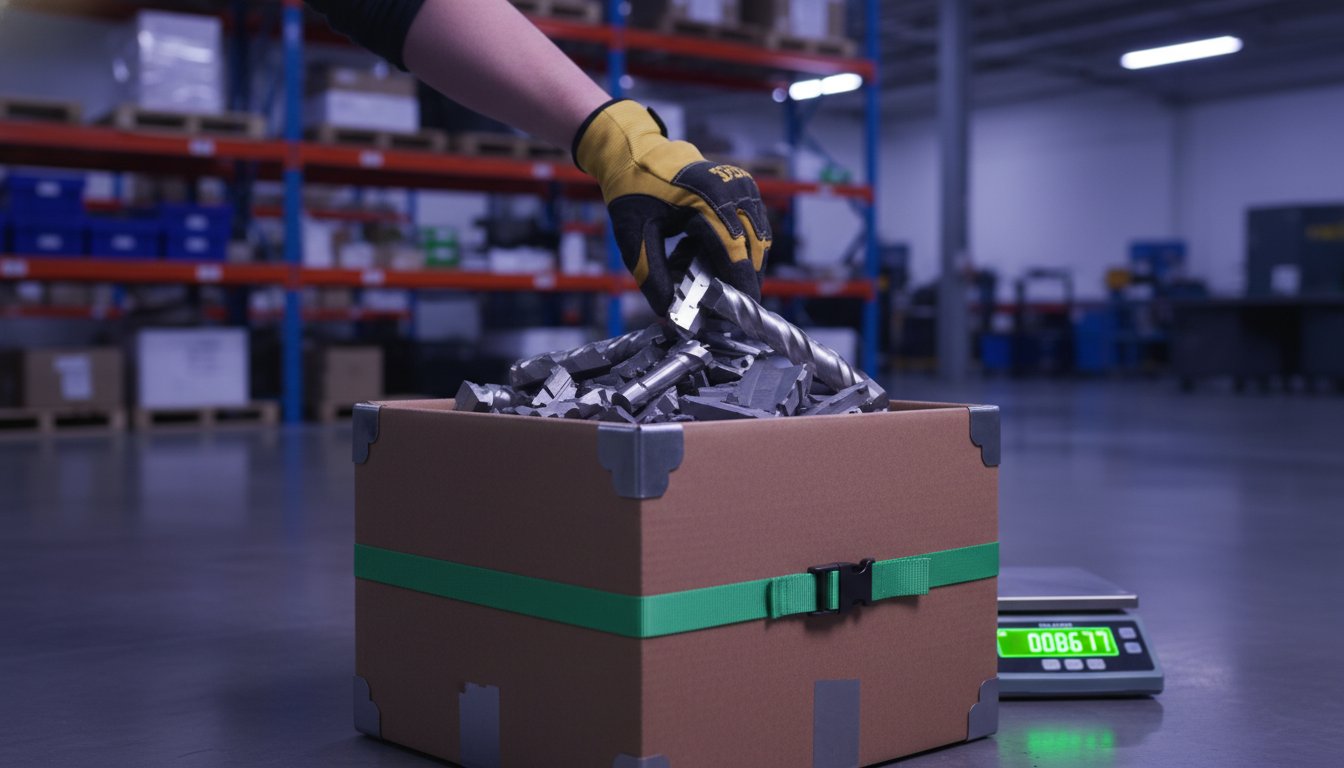
Since May 2025, scrap tungsten prices have surged by 350%, turning industrial waste into a high-stakes asset. You've likely realized that standard shipping methods don't work for a metal that is 2.5 times denser than steel. Cardboard boxes fail, shipping costs eat your margins, and the fear of transit theft is a constant concern. Learning how to ship tungsten scrap correctly is the difference between a successful payout and a total loss on the loading dock.
We're here to streamline the process. You'll master the logistics of packaging high-value tungsten carbide to ensure maximum safety and efficiency. We will walk you through choosing cost-effective shipping options, navigating soft scrap sludge regulations, and securing your shipment for a damage-free delivery. This guide provides a clear, step-by-step workflow that gets your materials to the buyer and puts money in your account without the usual administrative hurdles. Let's get your shipment ready for a fast, secure transaction.
Key Takeaways
- Identify the specific weight thresholds that determine whether you should use standard parcel services or LTL freight for your materials.
- Secure heavy carbide tooling using double-walled corrugated boxes with a 275 lb. burst test to prevent transit damage.
- Master how to ship tungsten scrap by consolidating smaller batches into larger loads to significantly reduce your cost-per-pound overhead.
- Manage moisture levels in tungsten sludge and grinding swarf to avoid paying for excess coolant weight and maximize your final payout.
- Leverage a streamlined logistics workflow to move from your initial quote to final payment within just 24 hours of receipt.
The Fundamentals of Shipping High-Value Tungsten Scrap
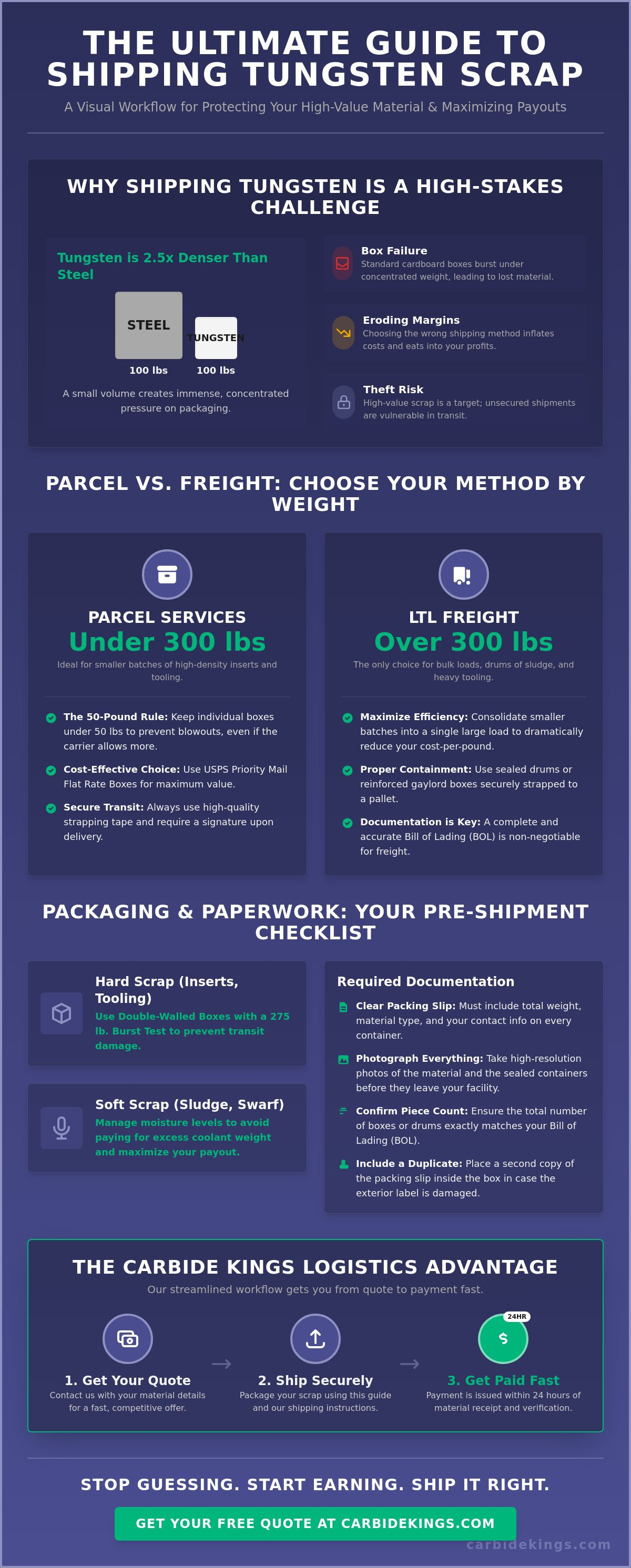
Shipping tungsten scrap isn't like moving aluminum or copper. The physical reality of this metal dictates every choice you make during the packaging process. Because tungsten is roughly 2.5 times denser than steel, a small volume of material creates immense pressure on traditional shipping containers. If you don't respect this density, your shipment will fail before it leaves the loading dock. Learning how to ship tungsten scrap correctly starts with understanding that you are moving a concentrated load, not a standard parcel.
Understanding Tungsten Density vs. Standard Scrap
The weight-to-volume ratio of tungsten carbide is its most defining characteristic. While a five-gallon bucket of steel scrap might be heavy, the same bucket filled with tungsten carbide inserts can weigh several hundred pounds. These Tungsten properties make it an industrial powerhouse but a logistical challenge. Standard cardboard boxes are designed for distributed weight. Tungsten creates a "concentrated load," where all the force is focused on a tiny surface area. This pressure quickly exceeds the burst strength of single-wall corrugated boxes, leading to blowouts and lost material. When you consider the carbide scrap vs steel scrap price gap, even a small box failure represents a significant financial hit.
To prevent these failures, we enforce the "50-pound rule" for all parcel shipments. Even if a carrier allows for 70 or 100 pounds, tungsten density makes those weights dangerous. Keeping boxes under 50 pounds protects the integrity of the packaging and prevents handling injuries for logistics staff. It's a simple baseline that ensures your high-value material actually reaches its destination. If you have more than 50 pounds, split the load into multiple reinforced boxes rather than risking one heavy package.
Why Proper Documentation is Non-Negotiable
Efficiency in payment depends on the clarity of your paperwork. Your shipment must be easy to identify and process the moment it hits our facility. Every box needs a clear packing slip that includes the total weight, the specific material type, and your direct contact information. This isn't just about organization; it's about speed. Clear labels mean faster weighing and faster payouts.
For larger national freight shipments, the Bill of Lading (BOL) is your most important document. It acts as a contract between the shipper and the carrier, documenting exactly what is being moved. Before you seal the container, follow this pre-shipment checklist:
- Take high-resolution photos of the material inside the box or drum.
- Photograph the sealed container to prove it was intact when it left your facility.
- Include a duplicate packing slip inside the box in case the exterior label is damaged.
- Confirm the total piece count matches the BOL exactly.
Documenting the condition of your material provides a safety net. It ensures that if a carrier mishandles the load, you have the evidence needed to protect your investment. Once the paperwork is set, you're ready to move into the actual packing phase.
Parcel vs. Freight: Choosing the Right Method for Your Weight
Choosing the wrong shipping method is the fastest way to erode your profit margins. When you're deciding how to ship tungsten scrap, the choice between parcel and freight depends entirely on your total weight and material type. Small batches of high-density inserts are perfect for parcel services, while bulk loads of heavy tooling or sludge require the infrastructure of LTL (Less Than Truckload) freight. Scaling your shipping strategy to match your volume ensures you aren't overpaying for "dead air" in a truck or risking box failures in a mail sorting facility.
When to Use Parcel Services (Under 300 lbs)
For shipments totaling less than 300 pounds, USPS Priority Mail Flat Rate boxes are often the most cost-effective choice. Commercial rates for a Large Flat Rate Box sit at $28.70 as of June 2026, regardless of the weight inside. This is a massive advantage for tungsten sellers. However, you must distribute the weight. Even though these boxes have a high weight limit, we recommend keeping individual packages under 50 pounds to maintain box integrity. Always use high-quality strapping tape and require a signature upon delivery. High-value metals are a target for theft; a signature requirement provides the transparency you need for a secure transaction. If you're unsure which box fits your needs, Carbide Kings can guide you through the selection process.
When to Transition to Freight (Over 500 lbs)
Once your inventory crosses the 500-pound mark, the economics shift in favor of LTL freight. Consolidating your scrap into a single palletized load reduces the cost-per-pound and simplifies the logistics. Freight is particularly necessary for "soft scrap" like sludge or grinding swarf, which is typically moved in secured drums. When shipping these materials, you must stay compliant with federal hazardous waste transportation regulations if your material meets specific EPA characteristics.
Scheduling a freight pickup is straightforward, even for shops without a loading dock. You simply need to request a "liftgate service" when booking. This allows the driver to lower the pallet from the truck bed to the ground using a hydraulic platform. To maximize efficiency, follow these steps:
- Secure your drums or boxes to a sturdy, heat-treated pallet using heavy-duty shrink wrap and steel banding.
- Ensure the load is centered on the pallet to prevent tipping during transit.
- Label all four sides of the pallet with the destination address and your contact info.
Whether you ship via parcel or freight, our national logistics network is designed for speed. Once your shipment arrives at our facility, we stand by our 24-hour processing promise. We weigh, verify, and issue your payment within one business day. This methodical approach removes the traditional wait times associated with scrap metal recycling.
Securing Hard Carbide Scrap: Inserts, End Mills, and Tooling
Hard scrap like inserts and end mills requires a specific strategy to survive the shipping cycle. When you're planning how to ship tungsten scrap, you must account for the sharp edges and extreme density of the material. A standard box will shred from the inside out if the contents shift. We recommend using double-wall corrugated boxes with a minimum 275 lb. burst test. These containers are engineered to withstand the internal pressure of heavy metal loads. They provide the structural rigidity necessary to keep your high-value tooling contained during rough transit.
The "No-Rattle" rule is your best defense against damage. Any movement inside the box acts like a hammer against the cardboard walls. Use dense void-fill like crumpled heavy-duty kraft paper or solid foam blocks to immobilize the scrap. Once the box is packed, seal it using the H-tape method. Apply tape across all seams and edges to form an "H" shape on both the top and bottom. This reinforces the structural integrity of the box and prevents the flaps from popping under weight. This simple step eliminates the most common cause of parcel failure.
Reinforcing the Container
For exceptionally heavy loads of tungsten alloy scrap, standard walls aren't enough. Line the bottom and sides of your box with thin plywood or heavy plastic sheeting. This creates a puncture-resistant barrier that protects against sharp end mills. Never use padded mailers. Sharp tooling will slice through a mailer in seconds, leading to lost material and potential safety hazards for handlers. If you have small, loose items, place them in a heavy-duty plastic bucket before putting the bucket inside a reinforced box. Following OSHA safety guidelines for tungsten carbide ensures your team stays safe while handling these heavy, often sharp industrial materials.
Palletizing for National Transit
When moving bulk quantities, your pallet is the foundation of the shipment. Select a Grade A heat-treated pallet rated for 2,000 lbs or more. Avoid pallets with cracked stringers or missing boards. Use a center-loading technique by stacking the heaviest boxes in the middle of the pallet. This prevents the load from tipping during forklift maneuvers. Secure the entire unit with at least five layers of high-gauge shrink wrap. For maximum security on long-distance hauls, add steel or heavy-duty poly strapping in both directions. This double-down approach ensures your high-value cargo arrives exactly as it left, ready for rapid processing.
Handling Soft Scrap: Shipping Tungsten Sludge and Grinding Swarf
Soft tungsten scrap, such as powders, sludge, and grinding swarf, requires a more technical approach than solid inserts. Because these materials often contain residual coolants or oils, they are prone to leaking during transit. This isn't just a mess; it's a liability. If a drum leaks onto a carrier's truck bed, you could face hefty cleanup fees and shipping delays. Understanding how to ship tungsten scrap in its "soft" form means prioritizing containment and moisture management from the moment the material leaves your machines.
Containment starts with the right vessel. We recommend using UN-rated poly drums for all soft scrap shipments. These drums are engineered for industrial byproducts and provide a leak-proof seal that standard metal barrels often lack. Poly drums are also resistant to the corrosive elements found in some industrial coolants, ensuring the container remains intact throughout the national logistics chain. It's a professional standard that protects both your material and the carrier's equipment.
Dewatering and Preparation
Moisture is the enemy of a high payout. When we weigh your material, we aren't paying for the coolant trapped in the sludge. Draining as much fluid as possible before sealing the drum ensures your quote reflects the actual metal value. Sludge dewatering is the process of removing residual coolants to isolate metal value. Let your sludge sit in a perforated container or a dedicated settling tank before packing. Reducing the liquid content lowers your shipping weight and significantly increases your price-per-pound efficiency. Ready to turn your grinding waste into capital? Get a quote for your tungsten soft scrap from Carbide Kings today.
Sealing and Labeling Soft Scrap
Fine powders present a unique loss risk. We suggest a double-bagging protocol using heavy-duty, 6-mil plastic liners. Place the powder in the first bag, seal it tightly, and then place that bag inside a second liner before it goes into the drum. For wet swarf, this secondary containment is equally critical to prevent seepage through the drum's lid during the vibrations of transit.
Labeling is your final step in regulatory compliance. While solid tungsten is typically non-hazardous, industrial sludge can fall under different categories depending on the chemicals in your coolant. Always check your local industrial waste guidelines. Label your containers as "Recyclable Metal Scrap" to distinguish them from general waste. This helps carriers prioritize the load and ensures the material is routed correctly for rapid processing. Proper labeling removes administrative friction and moves you closer to a fast transaction.
The Carbide Kings Logistics Advantage: Quote to Payment in 24 Hours
Mastering the technical side of how to ship tungsten scrap is only half the battle. The final step is partnering with a buyer who respects your time and your bottom line. We've built our logistics framework to eliminate the delays and administrative hurdles that plague traditional scrap yards. By treating every industrial partner as a priority, we ensure that your high-value materials are converted into liquid capital with zero friction.
Our 24-hour turnaround isn't just a goal; it's our standard operating procedure. Within one business day of your shipment arriving at our facility, our team will have it processed, weighed, and verified. You won't wait weeks for a settlement report or a check in the mail. We provide immediate clarity so you can maintain your operation's momentum. To keep your cash flow moving, we offer flexible payment options tailored to your business needs, including wire transfers, ACH, or traditional checks. Transparency is the foundation of our process, and we provide detailed weight tickets for every shipment we receive.
Getting Your Instant Quote
Speed starts with an accurate quote. To get a guaranteed price, provide our team with the total weight of your material and clear, high-resolution photos of the scrap. Whether you're selling tungsten hard scrap or soft sludge, these details allow us to lock in a price before you even pack the first box. Once you're ready to move, our logistics team steps in to handle the heavy lifting. We assist with generating Bills of Lading (BOLs) and scheduling freight pickups, ensuring that your only responsibility is securing the load. Get your fast carbide scrap quote today and see how simple industrial recycling can be.
National Reach, Local Service
We serve machine shops and industrial facilities from coast to coast with a streamlined intake process that feels local. Whether you're shipping a single 50-pound box or a 20,000-pound LTL load, our national logistics network is designed for efficiency. Selling to a specialized tungsten buyer provides a level of security you won't find with general metal recyclers. We understand the specific chemistry of tungsten alloys and the market fluctuations that impact your payout. Before you send your next load, run through this final checklist for a successful shipment:
- Verify your material type and final weight.
- Confirm your boxes are double-walled and under the 50-pound threshold.
- Ensure all drums are UN-rated and leak-proof.
- Place a duplicate packing slip inside the container.
- Secure your tracking number or BOL for real-time monitoring.
By following these steps and leveraging our logistics expertise, you turn a complex shipping task into a routine business transaction. We handle the technicalities so you can stay focused on your core operations. Your material is valuable, and our process ensures you capture that value quickly and securely.
Streamline Your Scrap Workflow for Maximum Profit
You now have the technical blueprint for managing extreme metal density and ensuring your high-value materials arrive intact. By mastering how to ship tungsten scrap through reinforced packaging, H-tape sealing, and moisture-controlled containment, you protect your profit margins from common transit failures. Proper preparation is the bridge between a box of industrial waste and a successful financial transaction. Whether you are moving 50 pounds of inserts or 5,000 pounds of sludge, these steps ensure a seamless workflow from your shop floor to our facility.
We take the logistical burden off your shoulders with specialized tungsten carbide expertise and a comprehensive national support network. Our streamlined intake process is designed for speed, offering 24-hour processing and payment once your shipment arrives. We provide the transparency and reliability you need to focus on your core operations while we handle the heavy lifting. Don't let valuable metal sit on your floor collecting dust when it could be boosting your cash flow.
Turn your tungsten scrap into cash—Get a quote now
It's time to turn your loading dock into a consistent revenue center. We are ready to process your load and get you paid today.
Frequently Asked Questions
How much tungsten carbide can I put in a single box for shipping?
Limit each individual box to 50 pounds or less. While some parcel carriers allow up to 70 pounds, the extreme density of tungsten carbide creates concentrated pressure that standard cardboard cannot handle. Keeping weights manageable prevents box blowouts and protects logistics personnel from injury. If you have a larger volume, distribute the weight across multiple reinforced boxes to ensure safe transit.
Do I need to clean the coolant off my carbide sludge before shipping?
You don't need to chemically clean the sludge, but you should drain as much liquid coolant as possible. Excess moisture increases your shipping costs and doesn't add to your final payout, as we only pay for the dry metal weight. Use a perforated container or a settling tank to isolate the tungsten before packing it into UN-rated poly drums for transport.
What is the best way to ship heavy carbide inserts to avoid box breakage?
The most effective method is using double-walled corrugated boxes with a 275 lb. burst test rating. Line the bottom with a puncture-resistant material and use dense void-fill to stop the metal from rattling. Seal every seam using the H-tape method to reinforce the structure. This is a critical part of how to ship tungsten scrap without losing material to damaged packaging.
Is shipping tungsten scrap expensive compared to its value?
Shipping costs are minimal compared to the high market value of tungsten carbide. Because the metal is so dense, you can fit high-value loads into small, cost-effective parcel boxes or pallets. Using USPS Flat Rate options for smaller batches or LTL freight for bulk loads keeps your overhead low. This ensures that the vast majority of the transaction stays in your pocket as profit.
How do I know if my scrap is tungsten carbide or just high-speed steel?
You can distinguish the two by checking their weight and performing a spark test. Tungsten carbide is nearly twice as heavy as high-speed steel (HSS) for the same volume. When held to a grinder, HSS produces long, bushy yellow sparks, while carbide produces very short, dull orange sparks. If you're still uncertain, our team can help you verify the material once it arrives.
Can I ship tungsten scrap through the regular mail (USPS)?
Yes, USPS Priority Mail is one of the most efficient ways to move smaller quantities of carbide. Flat Rate boxes are particularly useful because they have a fixed price regardless of the weight, provided you stay within the carrier's weight limit. However, we still recommend keeping these boxes at 50 pounds to maintain structural integrity during the sorting and handling process.
What happens if my shipment is lost or damaged during transit?
Your pre-shipment documentation becomes your primary protection if a shipment is lost or damaged. This is why we emphasize taking photos of the material and the sealed box before it leaves your shop. We recommend using carriers that offer robust tracking and signature requirements. These records allow you to file a claim with the carrier to recover the value of the assets.
How fast will I get paid once Carbide Kings receives my shipment?
We process and issue payments within 24 hours of receiving your shipment at our facility. Once our team verifies the weight and material type, we trigger the payment through your preferred method, such as wire transfer or ACH. This rapid turnaround is a core part of how to ship tungsten scrap with us, ensuring your shop's cash flow remains steady and predictable.


