
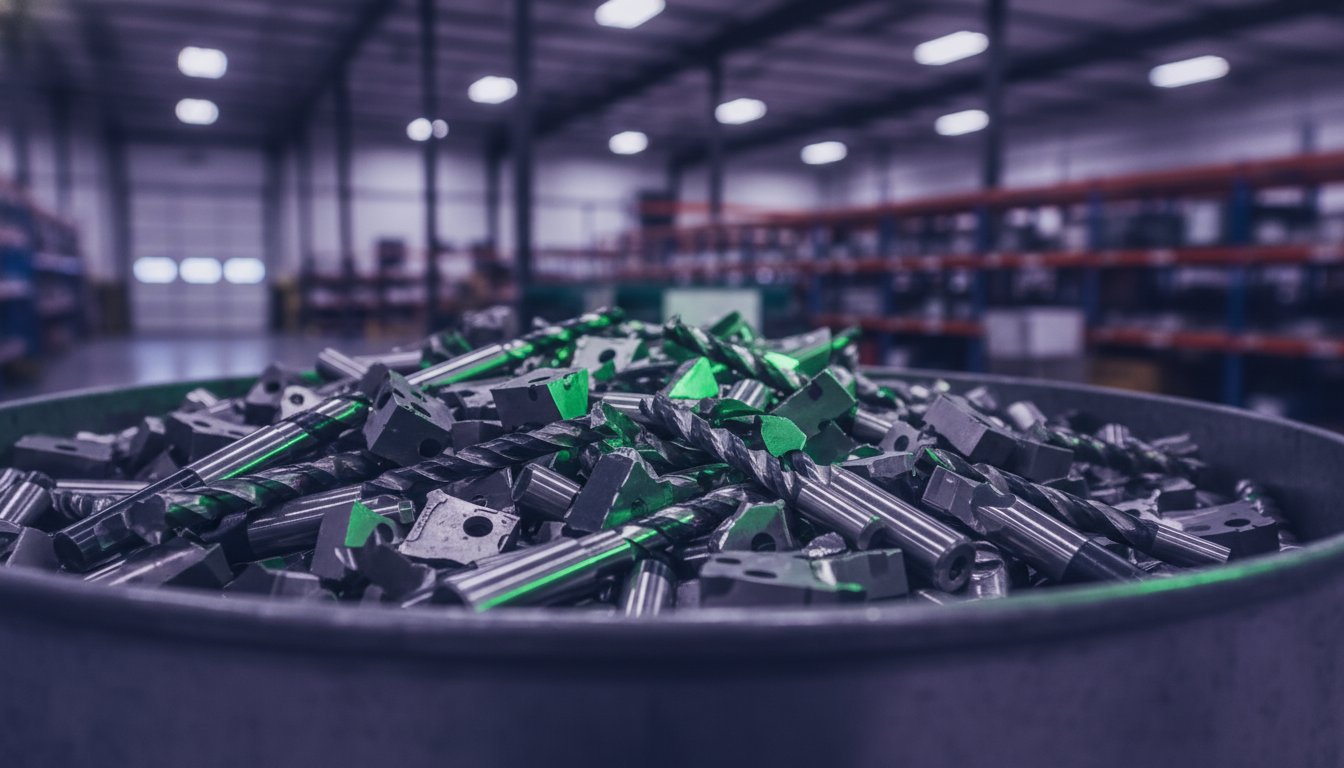
Did you know that tungsten carbide scrap prices have surged over 200% since early 2024, yet many facilities still treat their worn inserts as a secondary waste stream? With China's 2026 export controls now in full effect, your shop floor is likely sitting on a strategic asset that's more valuable than it's ever been. We know the drill. You're likely tired of the logistical headaches that come with heavy metal shipments and the slow, opaque payment cycles common at traditional scrap yards. It's frustrating to deal with a lack of transparency when it comes to material weighing and grading.
It's time for a more professional approach to industrial carbide recycling. You need a partner that values clarity and efficiency as much as you value your time. This guide will show you how to transform your industrial tungsten waste into a high-yield revenue stream using our streamlined national recycling framework. We'll walk through the current market shift, the best practices for material prep, and the exact steps to ensure you're capturing the full value of your hard scrap and alloys in today's volatile market. It's time to stop managing waste and start managing a lucrative asset.
Key Takeaways
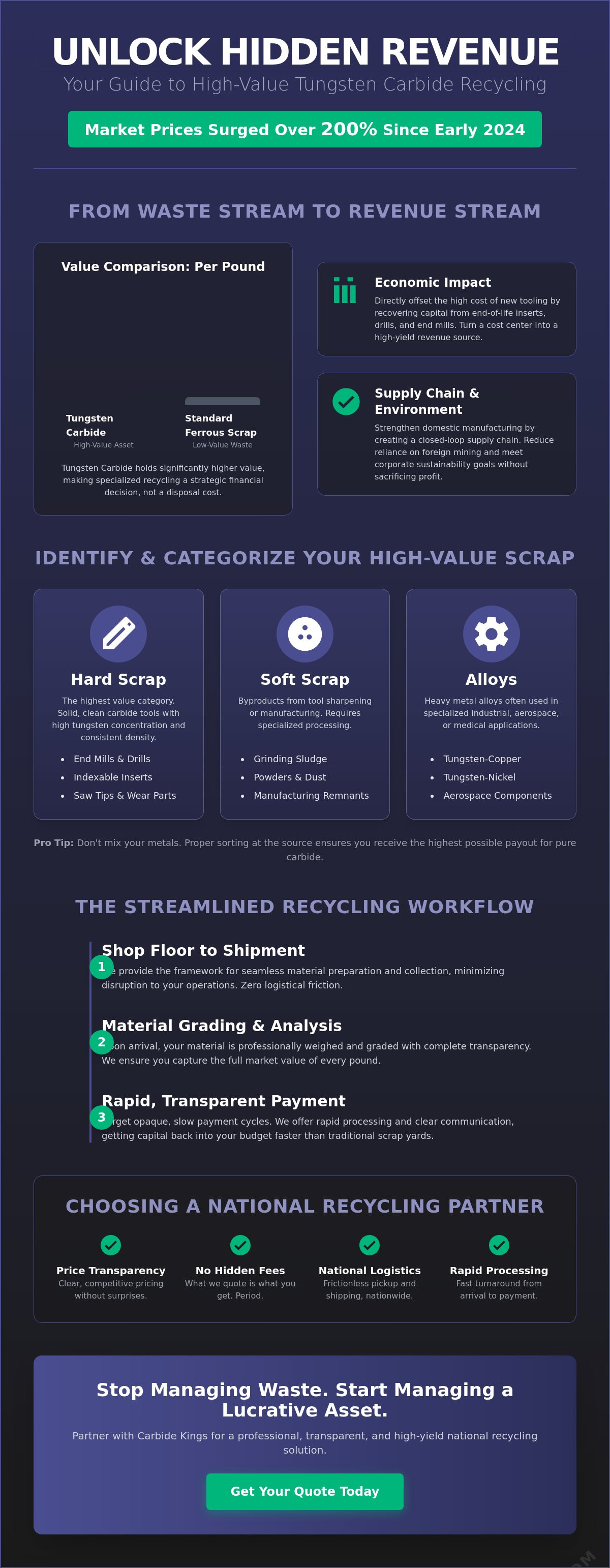
- Learn why tungsten scrap holds significantly higher value than standard ferrous metals and how to capitalize on the 2026 market surge.
- Discover how to identify and categorize high-value materials like end mills, drills, and wear parts into Hard, Soft, and Alloy streams.
- Understand the critical criteria for selecting a national partner, including the importance of price transparency and the elimination of hidden fees.
- Master a streamlined industrial carbide recycling workflow that moves your material from the shop floor to final payment with zero logistical friction.
- Find out how partnering with a specialized national buyer like Carbide Kings ensures competitive pricing and rapid processing for all your tungsten waste.
Maximizing ROI Through Industrial Carbide Recycling
Industrial carbide recycling isn't just about clearing out a bin in the back of your shop. It's the specialized recovery of tungsten-based materials from your manufacturing processes. While standard ferrous scrap metal often sells for pennies on the pound, carbide is a different beast entirely. It's dense, rare, and essential for high-performance machining. Understanding what is tungsten carbide helps explain its market dominance. It's a compound of tungsten and carbon that offers incredible hardness and heat resistance. Because of these unique properties, industrial carbide recycling is a strategic procurement process for modern machine shops. Recovering capital from end-of-life tooling allows you to reinvest in your operations rather than letting profit gather dust on a shelf.
The Economic Impact of Tungsten Recovery
Recycling your used inserts and end mills does more than tidy the floor. It directly offsets the high cost of new cutting tools. With tungsten carbide powder prices increasing over 200% since early 2024, the value of your scrap has reached historic highs in 2026. This market volatility makes liquidation an attractive option right now. You've already paid for the material once; it's time to get that capital back into your budget. Unlike general industrial waste, which is often a cost center for disposal, carbide scrap is a high-yield revenue stream. Don't let a traditional scrap yard treat your precision tools like common iron. Specialized industrial carbide recycling ensures you capture the full market value of every pound you generate.
Environmental and Supply Chain Benefits
The global supply chain is changing rapidly. China currently controls over 80% of global tungsten production and processing. By engaging in domestic recycling, you help reduce the industry's reliance on foreign tungsten ore. This creates a more secure, "closed-loop" manufacturing environment here at home. It's a rare opportunity to meet corporate sustainability goals without sacrificing your profitability. Reclaiming these materials keeps strategic metals in the local value chain and reduces the environmental footprint associated with mining new ore. It's smart business that happens to be good for the planet. Every pound of tungsten you recycle is a pound that doesn't need to be imported or mined from scratch. This proactive approach turns your scrap management into a pillar of your company's environmental and strategic responsibility.
Identifying High-Value Tungsten Scrap in Your Facility
Maximizing your return on industrial carbide recycling starts with one simple rule: don't mix your metals. While it's tempting to toss every worn tool into a single bin, effective categorization is what separates a standard scrap check from a high-yield revenue event. Most machine shops lose significant margin because they fail to distinguish between different grades of tungsten. Refiners pay a premium for purity. If your carbide is contaminated with steel shanks or brazing, you'll see a lower price per pound. It's a professional necessity to separate these materials at the source. It's dense. It's valuable. It's often overlooked. According to tungsten recycling statistics, a substantial portion of the domestic supply chain relies on these secondary streams, making your sorted scrap a critical industrial asset.
To get the best results, categorize your materials into these three primary streams:
- Hard Scrap: Solid tools like end mills, drills, and indexable inserts.
- Soft Scrap: Grinding sludge, powders, and dust generated during tool sharpening or manufacturing.
- Alloys: Heavy metal alloys, including tungsten-copper and tungsten-nickel, often found in aerospace components or radiation shielding.
Tungsten Hard Scrap: Tools and Inserts
Hard scrap is the gold standard of the industry. This category includes your solid carbide end mills, indexable inserts, and saw tips. Because these items have a high tungsten concentration and consistent density, they're the easiest to grade and pay out the fastest. Look for the heavy weight. If a small tool feels surprisingly heavy for its size, it's likely carbide. For a deeper dive into sorting these items, check out the guide on identifying tungsten hard scrap. If you're currently sitting on a collection of worn inserts, you can request a valuation today to see how much capital you can recover.
Soft Scrap and Industrial Alloys
Don't ignore the "messy" stuff. Soft scrap, such as grinding sludge and fine powders, often contains high percentages of tungsten that shops literally wash away. Collect this material in sealed drums to prevent contamination and ensure safe transport. Similarly, industrial alloys used in specialized sectors like aerospace offer unique value. Tungsten-copper and tungsten-nickel alloys are prized for their thermal and shielding properties. While these require more sophisticated analysis than a standard insert, they remain a lucrative part of a professional recycling program. Treat your sludge and alloys with the same respect as your solid tools; they're essentially liquid capital waiting to be reclaimed.
Critical Criteria for Selecting a National Carbide Buyer
Don't settle for a local scrap yard. Most general recyclers lack the specialized equipment to grade tungsten accurately. This often leads to "mixed metal" pricing that robs you of significant profit. Given the strategic importance of tungsten for national defense and high-tech manufacturing, you need a partner that understands the material's specific value. A professional industrial carbide recycling partner offers transparency that generalists simply can't match. They handle the logistical complexity so you can stay focused on your core production goals.
Transparency in Weighing and Grading
Hidden "processing fees" are a major red flag in this industry. Professional buyers provide a clear, flat rate based on the actual weight and grade of your material. You shouldn't have to guess what your final payout will be. Look for a partner that offers 24-hour verification. This is the industry benchmark for professional dealers. Your material should be weighed and graded the moment it arrives at the facility. To ensure you're getting a fair shake, always consult a tungsten carbide scrap price guide before you ship. It helps you vet quotes against current market drivers and prevents you from leaving money on the table. If a buyer can't explain their grading process or hides costs behind administrative jargon, find a new one.
Logistics and Shipping Support
Shipping heavy metal is a logistical nightmare if you're doing it alone. Local yards might require you to drop off the material yourself, which is a waste of your time and labor. A national industrial specialist handles the heavy lifting for you. They should provide comprehensive shipping support regardless of which state your facility is in. For bulk carbide loads, free or assisted shipping isn't just a perk; it's a requirement for any professional industrial carbide recycling program. The initial quote process should be fast and simple. You shouldn't have to jump through hoops or fill out endless paperwork just to get a price. Speed and simplicity are the hallmarks of a modern, efficient recycling framework.
Once the grade is verified, you need your funds immediately. Industrial-scale transactions require the security and speed of wire transfers. Don't wait weeks for a paper check to clear through the mail. A reliable buyer pays as soon as the material is processed and the weight is confirmed. This keeps your cash flow healthy and your shop floor clear of clutter. Choose a partner that treats your scrap like the high-value asset it is. When the process is handled correctly, your waste stream becomes a predictable source of capital.
The Streamlined Industrial Recycling Workflow
Efficiency is the hallmark of a professional operation. Your shop runs on a tight schedule, and your industrial carbide recycling program should do the same. We've eliminated the friction of traditional scrap yard visits by creating a national framework that moves as fast as you do. This isn't about waiting for a local truck to show up in a few weeks. It's a methodical process designed to turn your heavy metal waste into liquid capital with zero downtime. By following a standardized workflow, you ensure that every pound of material is accounted for and paid out at peak 2026 market rates.
Our professional recycling sequence follows five clear stages:
- Step 1: Request a quote based on live market data.
- Step 2: Prepare and package your material for secure transit.
- Step 3: Coordinate national logistics with a specialized buyer.
- Step 4: Material verification and 24-hour final processing.
- Step 5: Receive immediate payment via wire transfer or check.
Packaging for Maximum Security
Don't let poor packaging eat into your profits. Carbide is incredibly dense; a standard 5-gallon bucket can easily weigh over 200 pounds. Use heavy-duty plastic buckets or reinforced wooden crates for larger loads. Ensure the lids are bolted or strapped down to prevent spills during transit. Label every container clearly with your facility name and the estimated weight. To lower your shipping overhead, focus on maximizing weight density. Filling containers to their safe capacity reduces the number of pallets needed and streamlines the logistics process. If you're ready to move your material, get your national shipping quote today and let us handle the heavy lifting.
The 24-Hour Guarantee
Once your shipment hits the dock, we guarantee a finalized weight and grade within 24 hours. This speed is what separates a professional industrial partner from a general scrap dealer. During the verification phase, your material is sorted and analyzed to confirm the tungsten concentration. We don't use guesswork. We use precision scales and industry-standard grading to ensure you get paid for every ounce. If you're curious about how we handle the financial side of the transaction, you can review our payment terms for tungsten scrap for detailed expectations. Once verification is complete, we initiate a wire transfer immediately. The work is as good as done.
Partnering with Carbide Kings for National Solutions
Efficiency in industrial carbide recycling is the difference between a shop that thrives and one that merely survives. You've seen the market data and you understand the value sitting in your scrap bins. Now, you need a partner that acts with the same precision as your CNC machines. Carbide Kings operates as a specialized national buyer dedicated exclusively to tungsten-based materials. We don't get distracted by residential copper or aluminum recycling. This singular focus allows us to provide higher accuracy in grading and more competitive pricing than general scrap dealers. We've refined our process to remove every logistical barrier, ensuring your facility remains focused on production while we handle the reclamation.
Why Industry Leaders Choose Carbide Kings
Top-tier manufacturing facilities choose us because we speak their language. We understand that your accounting cycles require speed and predictability. While traditional yards might take weeks to process a check, our fast-track payment system is designed for the modern industrial sector. We initiate payments via wire transfer immediately following our 24-hour verification window. You don't have to worry about where your material is or when you'll see the return. Our national logistics framework services every state in the US, providing the scale and reliability you need for multi-site operations. It's a clean, professional transaction every single time. There's no guesswork and there are no hidden fees.
Get Your Competitive Carbide Quote Today
Starting your recovery process shouldn't feel like a second job. We've simplified the initial quote phase to save you time. To get a rapid estimate, our procurement team just needs a few basic details about your material type and estimated weight. Whether you're clearing out a small collection of indexable inserts or coordinating a bulk shipment of grinding sludge and alloys, we have the infrastructure to handle it. For high-volume industrial inquiries, our team provides direct support to ensure your shipping containers and logistics are optimized for maximum ROI. Stop letting your high-value tungsten sit idle on the shop floor. Sell your carbide scrap to Carbide Kings today and turn your waste stream into a predictable revenue engine. The process is fast. The pricing is transparent. The results are immediate.
Take Command of Your Tungsten Assets
Managing a high-volume machine shop requires precision at every stage, including the back end of your tool life cycle. You now have the framework to identify high-value materials and vet national buyers with confidence. By treating your worn inserts and grinding sludge as strategic assets rather than shop waste, you secure a significant advantage in the 2026 market. Professional industrial carbide recycling is about more than just a clean floor; it's about maintaining a lean, profitable operation.
It's time to stop letting capital sit idle. We've refined the process to ensure your transition from scrap to cash is as smooth as possible. With 24-hour processing on all received shipments and competitive national pricing for all tungsten grades, we handle the heavy lifting so you don't have to. You can expect transparency through direct wire transfer or check payments immediately following verification. Request a Fast Quote for Your Industrial Carbide Scrap today. Your facility is ready for a more professional approach to material recovery. Let's get to work.
Frequently Asked Questions
How much is industrial carbide scrap worth per pound in 2026?
Current 2026 market rates for scrap carbide inserts and shapes are verified at $24.00 per pound. Prices for end mills, drills, and wear parts range between $24.00 and $29.00 per pound depending on the purity of the material. These values are at historic highs due to China's 2026 export restrictions on tungsten. Industrial carbide recycling has never been more profitable for shops looking to reclaim capital from their waste streams.
What is the minimum weight required for national carbide recycling?
We typically accept shipments starting at 50 pounds to ensure the logistics remain cost-effective for your facility. While we can process smaller amounts, bulk shipments provide the best return on your shipping overhead. Contact our procurement team to discuss your specific volume and current inventory levels. We'll help you determine the most efficient way to move your material while maximizing your final payout and reducing administrative hurdles.
Can I recycle carbide grinding sludge and dust?
Yes, we specialize in the recovery of tungsten from soft scrap sources like grinding sludge, powders, and dust. This material often contains high concentrations of tungsten that shops accidentally wash away or discard. You must collect these materials in sealed, leak-proof containers to maintain purity and ensure safety during transport. Reclaiming your soft scrap is a vital part of a complete facility efficiency plan that turns every byproduct into revenue.
How long does it take to get paid for a tungsten scrap shipment?
You'll receive payment immediately following our 24-hour verification process once the shipment arrives at our facility. We prioritize speed to support your shop's cash flow and internal accounting cycles. Once our team confirms the weight and grade of your tungsten, we release the funds via your chosen method. This rapid turnaround is a standard part of our professional service commitment to industrial partners across the country.
Do I need to separate carbide inserts from steel holders?
You should separate carbide inserts from steel holders to receive the maximum price per pound. Industrial carbide recycling rates depend on the purity of the tungsten material. Mixed loads containing steel shanks or holders are graded lower because the steel requires additional labor to remove. Sorting your tools at the source is the easiest way to ensure you capture the full market value and avoid unnecessary processing fees.
How do I ship heavy carbide scrap across the country?
Use heavy-duty 5-gallon buckets or reinforced wooden crates to secure your load for national transport. Since carbide is extremely dense, it's essential to bolt lids down and palletize the containers for maximum stability. We provide comprehensive logistics support and can coordinate freight pickups directly from your facility. This removes the burden of shipping from your team and ensures your material reaches our processing center safely and efficiently.
What payment methods does Carbide Kings offer for industrial sellers?
We offer direct wire transfers and business checks for all industrial-scale transactions. Wire transfers are the most popular choice for machine shops that value immediate liquidity and fast accounting. We'll confirm your preferred payment method during the initial quote process to ensure a seamless transaction. Our goal is to make the financial side of the exchange as smooth and transparent as the physical recycling process itself.
Is there a difference in price between hard scrap and soft scrap?
Hard scrap tools like solid end mills and inserts generally command a higher price per pound than soft scrap sludge or powders. This price gap exists because hard scrap is easier to verify and refine into new products. However, both streams have seen prices surge over 200% since early 2024. Every form of tungsten is currently a high-value asset that should be reclaimed rather than discarded in a general waste bin.


