
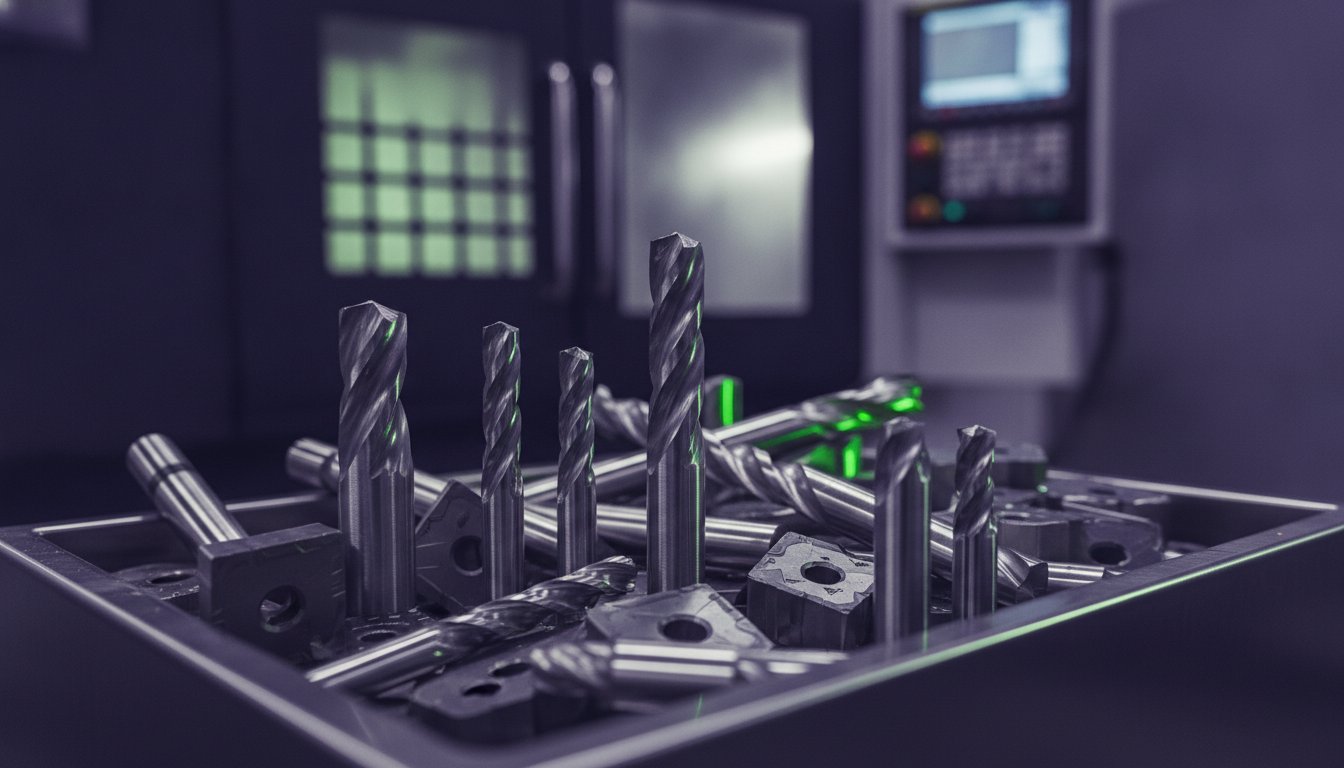
Your local scrap yard is likely costing you thousands of dollars in lost revenue every single year. While general recyclers are great for common metals, they often lack the specialized expertise to distinguish high-value tungsten from basic tool steel. This oversight leads to low-ball offers that fail to reflect the current 2026 market reality. If you want to sell carbide tooling scrap for its true worth, you need a partner who understands that tungsten is a critical mineral with a tightening global supply chain.
We understand the frustration of navigating logistical hurdles and confusing grading systems. You deserve a streamlined process that turns industrial waste into a predictable revenue stream without the administrative headache. This guide reveals the top five industrial sources to find high-value scrap and shows you how to secure the best national prices for your materials. We'll provide expert guidance on identifying your most profitable alloys and connecting with reliable buyers who prioritize fast, transparent payments.
Key Takeaways
- Identify the high-volume industrial sources, like CNC centers and fabrication shops, where valuable tungsten carbide accumulates.
- Learn how to sell carbide tooling scrap for its full market value by using density tests to distinguish it from cheaper steel.
- Understand the impact of cobalt binders on your scrap's worth and why tungsten remains a high-demand commodity in 2026.
- Follow a professional sorting and cleaning protocol to eliminate contamination and secure the best national prices for your tooling.
- Discover a simplified logistics model that moves your material from the shop floor to final payment with maximum efficiency.
What is Carbide Tooling Scrap and Why is it High-Value?
Industrial professionals know that not all metal waste is created equal. Tungsten carbide is a dense, sintered material engineered specifically for high-precision machining and extreme durability. It isn't a simple alloy; it's a chemical compound that combines tungsten and carbon atoms to create a substance capable of withstanding massive heat and pressure. While common metals like iron or aluminum are often treated as bulk waste, carbide is a premium commodity that demands a specialized recycling approach.
In 2026, the shift toward sustainable manufacturing has made recycling rare refractory metals an environmental necessity. Tungsten is finite and difficult to extract. By choosing to sell carbide tooling scrap, you aren't just cleaning out your shop; you're feeding a critical supply chain that supports domestic aerospace, automotive, and medical manufacturing. The market value reflects this importance, consistently outpacing standard industrial metals by a significant margin.
The Chemistry of Value: Tungsten and Cobalt
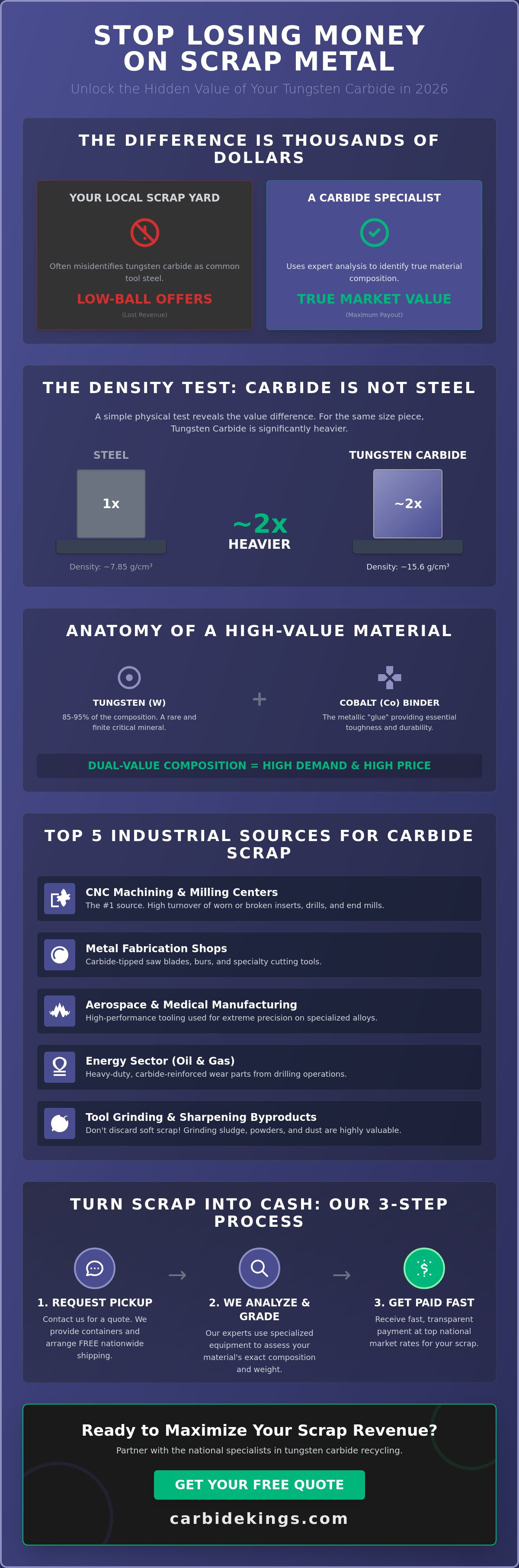
The value of your scrap is rooted in its chemical composition. Most industrial tooling consists of 85% to 95% tungsten, with the remainder being a cobalt binder. Cobalt acts as the metallic "glue" that holds the hard tungsten particles in place, providing the toughness needed for heavy-duty cutting. Tungsten carbide is a compound that is nearly as hard as diamond. Because both tungsten and cobalt are classified as critical minerals, your scrap quote will fluctuate based on global market shifts for both elements. This dual-value structure is why professional grading is essential to ensure you receive a fair price.
Hard Scrap vs. Soft Scrap: A Quick Distinction
To maximize your returns, it's vital to understand the two primary categories of material we handle. Distinguishing between them helps streamline the shipping and valuation process.
- Tungsten Hard Scrap: This category includes solid, physical tools that have reached the end of their lifecycle. Common examples are worn-out inserts, end mills, drills, and specialized wear parts.
- Tungsten Soft Scrap: This refers to the fine byproducts created during tool sharpening or manufacturing. It includes grinding sludge, dust, powders, and floor sweeps that still contain high concentrations of tungsten.
Carbide Kings specializes in both hard and soft formats to maximize seller revenue. Whether you have a bin of broken inserts or drums of grinding sludge, we provide a reliable path to turn that inventory into liquid capital. When you sell carbide tooling scrap through a national specialist, you ensure that every gram of material is valued accurately according to current 2026 market standards. Our process removes the guesswork, allowing you to focus on your core production while we handle the logistics of your metal recovery.
Top 5 Industrial Sources for Tungsten Carbide Tooling Scrap
Most shop managers walk past hidden revenue every day. Identifying the right material is the first step to sell carbide tooling scrap for its maximum potential. While many facilities focus solely on their primary production, a quick audit of your waste streams often reveals high-value tungsten deposits in unexpected places. According to U.S. Geological Survey data, industrial tooling remains the dominant sector for tungsten consumption. This makes your machine shop or fabrication floor a literal gold mine for refractory metals.
Beyond the obvious milling tools, metal fabrication shops frequently accumulate carbide-tipped saw blades and burs. These items are often tossed into mixed steel bins, which is a costly mistake. Similarly, the aerospace and medical manufacturing sectors utilize specialized alloys that require high-performance carbide tooling for extreme precision. In the energy sector, oil and gas drilling operations rely on carbide-reinforced wear parts to survive high-friction environments. These heavy components represent some of the most lucrative scrap opportunities available in 2026.
CNC Machining and Milling Centers
CNC centers are the primary engine of the scrap market due to the high turnover of indexable inserts and solid carbide end mills. In a high-production environment, tools wear down or chip constantly. It's a common misconception that a broken tool is worth less; in reality, a snapped end mill retains 100% of its material value. To keep your workflow efficient, place dedicated "Carbide Only" bins at every workstation. This simple organizational change prevents high-value scrap from being buried under worthless steel chips, ensuring you get paid for every ounce you produce.
Specialized Industrial Applications
Metal stamping and forming operations are another major source, often producing heavy carbide punches and dies. In the field, road construction and mining teams generate significant volume from worn milling bits and masonry drills. Road milling bits are particularly valuable because they're replaced frequently during large-scale infrastructure projects. Before you ship your next load, make sure you identify high-value tungsten carbide vs. low-grade steel. Mixing these materials can drastically lower your payout, so precision in sorting is key. If you're unsure about a specific part, reaching out to the experts at Carbide Kings can help clarify your material's value immediately.
Carbide vs. Steel: Identifying High-Value Tungsten Scrap
The most common concern for shop managers looking to sell carbide tooling scrap is the fear of leaving money on the table. You don't want to sell high-value tungsten at common steel prices, and you certainly don't want a shipment rejected because it's contaminated with iron. Distinguishing between the two requires more than a casual glance. While they may look similar under shop lights, their physical properties are worlds apart. Relying on U.S. Tungsten Statistics highlights how critical this material is to the economy, which explains why the price gap between carbide and steel is so vast.
The most reliable field test is simple density. Tungsten carbide is nearly twice as heavy as tool steel. If you have two end mills of identical size, the carbide version will feel significantly denser in your hand. This "heft" is unmistakable once you've handled both materials. Additionally, check for magnetism. While many believe carbide is non-magnetic, that's a misconception. Because cobalt is used as a binder, some carbide grades will have a slight magnetic pull. However, it's rarely as strong as the "snap" you'll feel with carbon steel. If it barely sticks to a magnet but feels like a lead weight, you're holding high-value scrap.
Physical Characteristics of Tungsten Hard Scrap
Genuine tungsten carbide has a distinct, dull gray appearance when unpolished. Unlike steel, it doesn't rust or corrode over time. If you find a bin of old tools that are covered in orange oxidation, you're looking at steel. Carbide maintains its dark, matte finish even after years of exposure to shop moisture. To verify a piece, pick it up and compare it to a steel tool of the same dimensions. The carbide tool will have a surprising amount of weight for its size, almost like it's made of solid lead. This density is your best indicator of material purity.
The Spark Test: A Shop Floor Essential
When visual and weight tests aren't enough, the spark test provides a definitive answer. To perform this safely, lightly touch the material to a bench grinder. The visual cues are immediate and distinct:
- Carbon Steel: Produces long, bright white or yellow sparks that "explode" or branch out at the ends.
- Tungsten Carbide: Produces very short, straight, orange sparks that do not branch. The sparks will barely leave the surface of the grinding wheel.
Correct identification is the first step in understanding tungsten carbide scrap prices. By separating your materials accurately at the source, you ensure your quote reflects the true value of your inventory. Taking these few seconds to verify your material before you sell carbide tooling scrap protects your margins and streamlines the entire recycling process.
Maximizing Your Payout: Sorting and Prepping Carbide for Sale
Efficiency in the shop doesn't end when the tool stops cutting. To truly maximize your return when you sell carbide tooling scrap, you must treat your waste with the same precision as your production parts. A disorganized bin of mixed metals is a liability; a clean, sorted collection is a high-value asset. Preparation is the bridge between a generic scrap price and a premium industrial payout. By following a few simple steps, you ensure that your materials are graded at their highest potential value the moment they reach the scale.
Start by cleaning your material. Excessive oil, coolant, or plastic packaging adds weight that isn't tungsten, which can lead to deductions during the grading process. A quick rinse or wipe-down ensures the weight on your scale matches the value of the metal. Next, categorize your inventory. Grouping inserts, end mills, and drills separately allows for faster processing and more accurate valuation. Finally, secure your load. Tungsten is incredibly dense. A small bucket can easily weigh 50 pounds or more. Use heavy-duty pails or reinforced boxes to prevent transit damage. Always include a packing slip with your estimated weights to maintain transparency throughout the transaction.
The Importance of Material Purity
Contamination is the primary reason for lower quotes. When steel shanks, trash, or non-carbide metals mix into your shipment, it lowers the overall price per pound. Whenever possible, remove steel shanks from carbide-tipped tools. This small step ensures your shipment is graded as high-purity material rather than a lower-value mix. We understand that time is money in a busy shop. That's why Carbide Kings offers 24-hour processing once your material arrives at our facility. You get an accurate grade and a fast payout without the typical industry delays.
National Shipping Logistics for Heavy Metals
Shipping heavy metal across the country sounds like a logistical nightmare, but it's simpler than you think. For smaller quantities of dense scrap, flat-rate shipping boxes are your best friend. They allow you to ship up to 70 pounds for a fixed price regardless of the distance. For bulk loads, palletizing is the standard. Ensure your pails are strapped securely to a sturdy pallet to facilitate a national freight pickup. We don't just buy your metal; Carbide Kings assists with logistics support for national sellers to make the process effortless. If you're ready to clear out your inventory, get a quote for your carbide scrap today.
Partnering with Carbide Kings for Professional National Recycling
Local scrap yards are often generalists. They don't have the specialized equipment or market connections to offer full value for tungsten. When you choose to sell carbide tooling scrap through Carbide Kings, you're bypassing the middleman and working with a dedicated national recycler. Our process is designed for industrial professionals who value speed and clarity. We've eliminated the traditional administrative hurdles that slow down your cash flow. Once your material arrives at our facility, we guarantee a 24-hour turnaround from receipt to payment.
Flexible payment options ensure that your revenue is available exactly when you need it. Whether you prefer secure wire transfers, traditional checks, or rapid electronic payments, we accommodate your shop's financial workflow. Our no-nonsense approach means less paperwork and more progress. We handle the heavy lifting of logistics and grading so you can stay focused on your core operations. It's a professional partnership that prioritizes your time and your bottom line.
Why National Sellers Choose Carbide Kings
National pricing offers a significant advantage over fluctuating local rates. By partnering with us, you gain access to competitive quotes that reflect the true 2026 value of your alloys. We operate as a proactive partner rather than a distant service provider. Transparency is the foundation of our business. Every load is weighed and graded with precision, and we provide detailed documentation to confirm your payout. This commitment to professional integrity has made us the trusted choice for shops across the country.
How to Get Your Carbide Scrap Quote Today
Starting the process is straightforward. You can call our team directly or use our online form to initiate a request. To ensure the most accurate estimate, please provide clear photos of your material and a brief description of the tool types included. Once we review your information, we'll guide you through the next steps of the logistics process. Sell your carbide tooling scrap to Carbide Kings for top dollar today and experience a more efficient way to manage your industrial waste.
Turn Your Shop Waste Into Liquid Capital Today
Identifying the right industrial sources and properly sorting your material are the most effective ways to increase your facility's revenue. By distinguishing high-value tungsten from common steel and preparing your shipment for professional transport, you secure the best possible margins for your business. It's time to stop letting valuable assets gather dust in your scrap bins and start choosing a more efficient way to sell carbide tooling scrap.
Carbide Kings provides the national shipping and logistics support required to move heavy loads without the typical administrative headache. We offer competitive pricing for both hard and soft tungsten scrap, all backed by our signature 24-hour processing guarantee. Our team handles the heavy lifting so you can stay focused on production. Get a fast quote for your carbide scrap from Carbide Kings and clear your inventory with a partner you can trust. Your shop is more productive when your workspace is clean and your cash flow is strong.
Frequently Asked Questions
What is the current price per pound for carbide scrap?
Market prices for tungsten carbide fluctuate daily based on global demand and critical mineral supply chains. Factors like the percentage of tungsten and the current cost of cobalt binders also influence the final value. Contact us directly for a real-time quote that reflects the most accurate 2026 market conditions for your specific material.
Does Carbide Kings buy carbide grinding sludge or just hard scrap?
We buy both hard and soft formats to provide a complete recycling solution for your facility. Our team specializes in Tungsten Hard Scrap, such as worn inserts and end mills, as well as Tungsten Soft Scrap, including grinding sludge, powders, and dust. This ensures you can clear out all tungsten-bearing waste in a single transaction.
How much carbide scrap do I need to have before I can sell it?
We handle shipments of all sizes, from small shop collections to large-scale industrial loads. Many smaller operations find it efficient to use flat-rate shipping boxes for quantities between 50 and 70 pounds. Larger facilities typically palletize bulk loads for national freight pickup once they've accumulated a significant volume of material.
Is there a difference in price between different brands of carbide tools?
Value is determined by the chemical composition of the tool rather than the brand name on the packaging. We grade material based on its tungsten content and the quality of the metallic binder used in the manufacturing process. Whether your tools are name-brand or generic, our focus remains on the purity and weight of the refractory metal.
How long does it take to receive payment after shipping my scrap?
You'll receive payment within 24 hours of your material arriving at our facility and passing inspection. We prioritize a fast, transparent process to ensure your capital isn't tied up in logistics. You can choose from several flexible payment methods, including wire transfers, checks, or rapid electronic payments to suit your shop's needs.
Can I sell carbide-tipped tools, or do they have to be solid carbide?
You can certainly sell carbide tooling scrap that is tipped, though solid carbide tools generally command a higher price per pound. We recommend separating solid carbide pieces from steel-shanked tools before shipping. This simple sorting step ensures your high-purity material is graded correctly and doesn't get averaged down by the weight of the steel.
Do you provide shipping labels or containers for the scrap?
We provide comprehensive national shipping and logistics support to make the process as simple as a basic retail transaction. Our team assists you in determining the most cost-effective way to move your material, whether that involves individual boxes or full pallets. We handle the logistical heavy lifting so you can stay focused on your core machining operations.
Is tungsten carbide considered a hazardous material for shipping?
Solid tungsten carbide is not classified as a hazardous material and can be shipped through standard carriers without special permits. However, soft scrap like grinding sludge requires proper containment in leak-proof pails or drums to ensure safe transport. We provide guidance on secure packaging to ensure your shipment complies with all standard transit regulations.


