
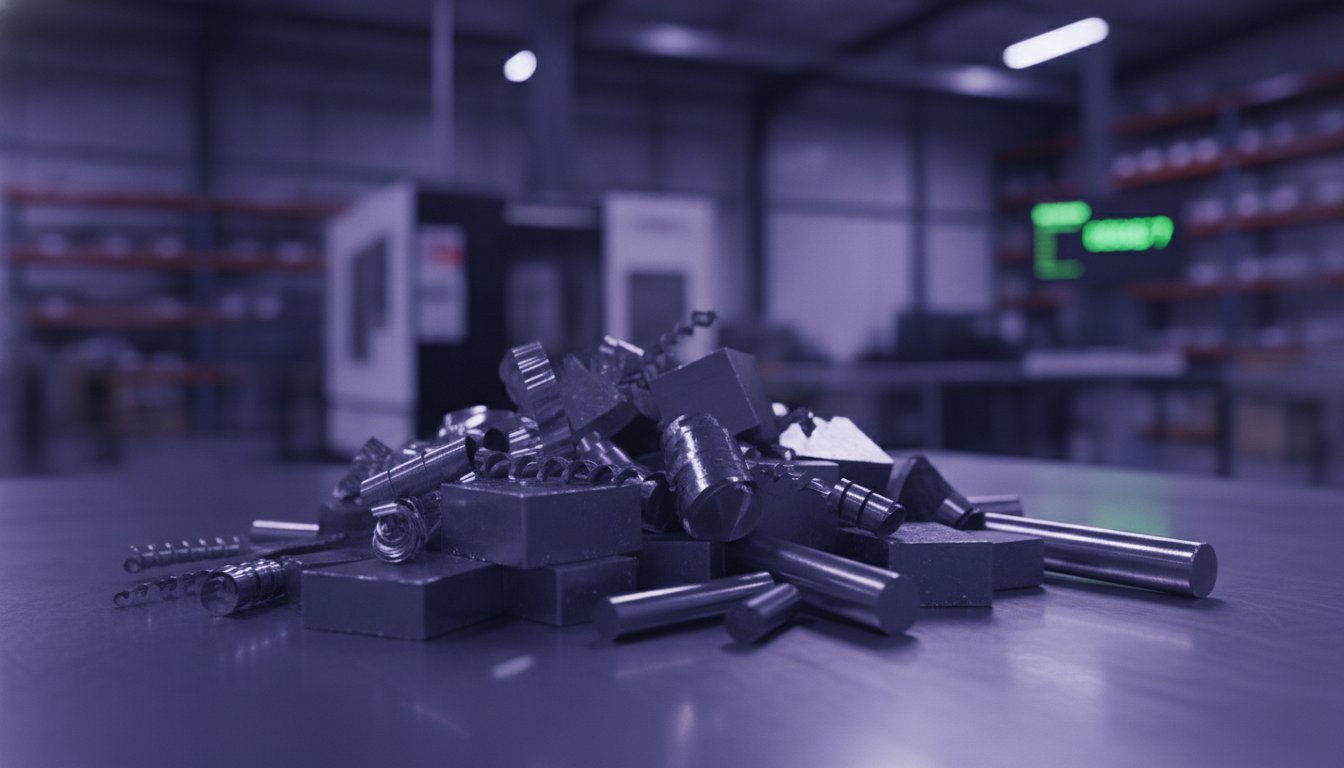
Your stockpile of mixed tungsten isn't just industrial waste. It's a high-value asset that most local scrap yards simply aren't equipped to value accurately. If you've been hesitant about selling mixed tungsten alloy scrap because you're unsure of the exact tungsten percentage or worried about astronomical shipping costs, you're not alone. The extreme density of these alloys makes logistics a challenge for the uninitiated, while traditional buyers often leave you waiting weeks for a payout that doesn't reflect true market value.
We understand that in the volatile 2026 market, speed and transparency are your top priorities. You need a professional partner who recognizes the impact of China's recent export controls and the upcoming 2027 U.S. import bans on your bottom line. This guide promises to simplify the entire valuation process, teaching you how to sort your materials for maximum profit and leverage the highest national rates. We'll walk you through a streamlined workflow that moves from initial quote to payment in your account within 24 to 48 hours. From precise grading techniques to specialized heavy-load shipping logistics, you're about to learn the most efficient way to turn your heavy metal into liquid capital.
Key Takeaways
- Recognize that mixed tungsten alloys contain 70% to 97% tungsten, making them high-value industrial assets in the current 2026 market.
- Use the weight-to-volume test to accurately identify heavy metal alloys and distinguish them from standard tungsten carbide.
- Maximize your revenue by understanding how binders like nickel, copper, and iron influence the final price per pound when selling mixed tungsten alloy scrap.
- Secure your shipment using double-walled boxes or reinforced buckets to handle extreme material density and reduce transit risks.
- Accelerate your cash flow by partnering with a specialized buyer that offers 24-hour material processing and immediate payment via wire transfer.
What is Mixed Tungsten Alloy Scrap and Why is it Valuable?
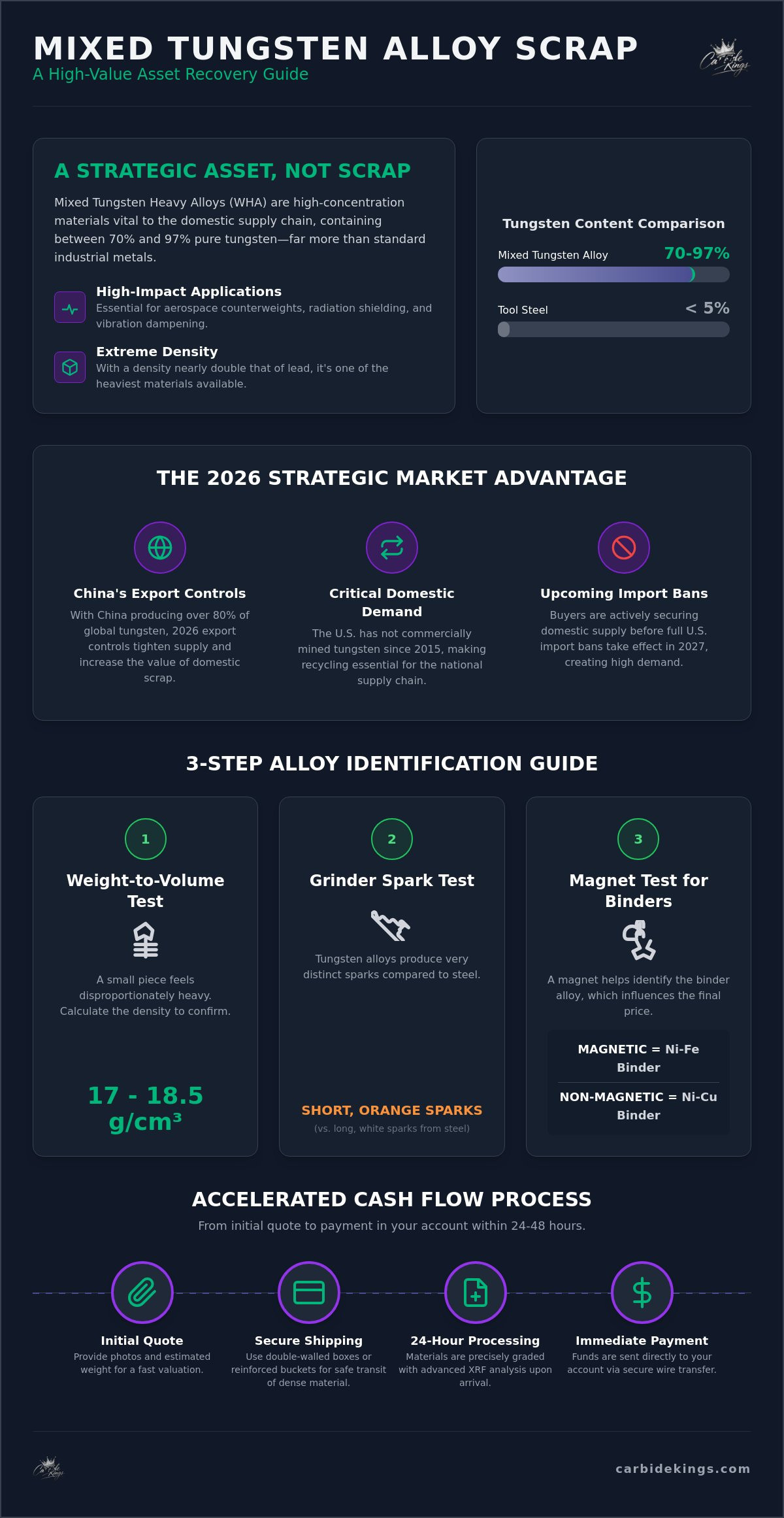
Mixed tungsten alloy scrap isn't generic industrial waste. It's a high-concentration material containing between 70% and 97% pure tungsten. These materials, often called Tungsten Heavy Alloys (WHA), are combined with binders like nickel, iron, or copper to achieve extreme density and strength. While standard tool steel contains only a small fraction of tungsten, these alloys are nearly pure. This composition is exactly why selling mixed tungsten alloy scrap is significantly more lucrative than offloading standard ferrous metals. If you're holding heavy metal alloys, you're holding a strategic asset that high-precision refineries are desperate to acquire in 2026.
Stop comparing your alloy scrap to tool steel or common carbide. The revenue potential for WHAs is driven by their density, which is nearly double that of lead. In 2026 manufacturing, these "Heavy Metal" alloys are essential for balancing, vibration dampening, and radiation protection. Because the U.S. has not commercially mined tungsten since 2015, the industry relies heavily on recycling. Your shop's waste is a vital link in the domestic supply chain.
Common Forms of Mixed Tungsten Waste
You'll find high-value tungsten alloys in several specific industrial applications. Aerospace counterweights used in aircraft wings and rotors are prime sources of clean, high-density scrap. Medical facilities also generate significant waste through radiation shielding and collimators. These materials typically appear as silver-grey solids or heavy turnings. While Copper-tungsten alloys are common in electrical discharge machining (EDM) and heat sinks, other loads may be mixed with steel or plastic. Clean alloy scrap commands the highest rates, but professional buyers can accurately value mixed loads using advanced XRF analysis. Don't let a "contaminated" label discourage you; the tungsten content still carries a premium.
The 2026 Strategic Metal Market
The global landscape for "Element 74" has shifted dramatically this year. China currently produces over 80% of the world's tungsten, and their 2026 export controls have tightened the global supply. These "Dual-Use" regulations mean that domestic recycling is no longer just an environmental choice; it's a national security priority. Refineries now prefer recycled alloys over virgin ore because the processing is more energy-efficient and faster. With a 2.8% ad valorem tariff on waste and scrap currently in place, the demand for domestic material has never been higher. When selling mixed tungsten alloy scrap today, you're entering a market where buyers are eager to secure supply before the 2027 import bans take full effect. This geopolitical pressure ensures that your scrap maintains a high floor value throughout the year.
Identifying Common Tungsten Alloys in Your Shop
Identifying high-value metal on your shop floor doesn't require a full laboratory setup. Most professionals rely on a simple weight-to-volume test to confirm high tungsten content. Because tungsten is roughly 70% denser than lead, a small piece of alloy should feel disproportionately heavy. If you measure the displacement of water in a graduated cylinder and divide the weight by that volume, you're looking for a density between 17 and 18.5 g/cm³. This simple calculation is the first step toward selling mixed tungsten alloy scrap for its true worth.
You must distinguish between tungsten carbide and tungsten alloys. Carbide is often called "hard scrap" because of its extreme hardness and brittleness; it's what you'll find in cutting inserts and end mills. In contrast, tungsten alloys are "tough scrap" used for ballast, weights, and shielding. For a deeper dive into the hard scrap side of the business, see our Tungsten Carbide: The Ultimate Industrial Reference and Recycling Guide.
Look for brand names like Hevimet, Densalloy, or Mallory stamped on counterweights or boring bars. These are hallmarks of high-quality WHA. Use a magnet to check for binders. If the material is slightly magnetic, it likely contains a Nickel-Iron (NiFe) binder. If it's non-magnetic, it might use a Nickel-Copper (NiCu) binder. A quick spark test on a grinder will also reveal the truth. Tungsten produces very short, orange sparks that die out quickly, unlike the long, white showers of sparks produced by steel. As noted in the USGS Tungsten Recycling Report, accurate identification is critical for maintaining the purity of the recycling stream.
Tungsten Heavy Alloys (WHA) vs. Pure Tungsten
Tungsten Heavy Alloy (WHA) is a sintered composite of tungsten powder held together by a metallic binder. These binders, typically NiFe or NiCu, make the material machinable and less brittle than pure tungsten. Pure tungsten scrap is rarer and much harder to work with; it's usually reserved for specialized vacuum furnace parts or filaments. Because pure tungsten has a higher melting point and different processing requirements, it often commands a different price tier. If you aren't sure which you have, get a professional valuation to ensure you aren't leaving money on the table.
Spotting Tungsten Copper and Silver Alloys
Not all tungsten alloys look silver-grey. Resistance welding electrodes and electrical contacts often consist of tungsten-copper or tungsten-silver composites. These materials have a distinct copper or yellowish hue but retain the incredible weight of tungsten. They are highly valued for their thermal and electrical conductivity. Identifying these composites is essential when selling mixed tungsten alloy scrap to ensure you receive the appropriate premium for the precious or semi-precious metal content. If you see heavy, copper-colored components in your scrap bin, treat them as high-value assets rather than common copper waste.
How Mixed Tungsten Alloy Pricing is Calculated
Professional buyers don't use guesswork when valuing your inventory. Instead, they rely on a "percentage of contained tungsten" model. This means your payout is directly tied to the actual amount of tungsten present in your alloy after the weight of binders is removed. If you're selling mixed tungsten alloy scrap, you need to know that your load's value is more than just a number on a scale. It's a calculation of pure metal content minus the costs of refining and processing.
Binders like nickel, copper, and iron aren't just fillers; they influence the final price per pound. Nickel and copper are valuable commodities themselves, which can slightly bolster the value of certain alloys. However, iron binders are more common and don't offer the same secondary market premium. The key to maximizing your return is understanding that the higher the tungsten percentage, the lower the processing cost per pound for the refinery. This efficiency is passed back to you in the form of a higher quote.
Volume is another critical factor in your final payout. Large, bulk loads are significantly more efficient to process than small batches. When you ship in bulk, the fixed costs of laboratory assaying and national logistics are spread across a larger weight. This results in a higher net price for the seller. If you have a steady stream of scrap, it's often more lucrative to consolidate your loads before requesting a quote.
The Role of Purity and Contamination
Clean scrap is defined as material free from oil, plastic, or non-tungsten attachments like steel bolts or aluminum housings. Clean loads move through the valuation process faster and command the highest rates. Mixed loads, which may contain a variety of different alloys or contaminants, require a professional assay to determine a fair market value. We use advanced X-ray fluorescence (XRF) technology to provide a transparent breakdown of your material. To see how these variables compare to other tungsten products, read our Tungsten Carbide Scrap Price Guide: Market Drivers and Valuation in 2026.
Market Drivers in 2026
The 2026 market is defined by high aerospace production rates, which have spiked the demand for high-density counterweights. This demand keeps the "Wolfram" market index in a sensitive adjustment cycle, with prices remaining strong despite global volatility. You can track these trends through the U.S. Geological Survey tungsten data. While demand is high, you must also account for 2026 fuel surcharges. These shipping costs impact your "net" price, making it essential to work with a buyer who offers streamlined national logistics to keep your overhead low. When selling mixed tungsten alloy scrap, the goal is always to minimize the gap between the spot price and the cash in your hand.
Logistics: Shipping Heavy Alloys Nationwide
Shipping high-density alloys requires a methodical approach to ensure your assets arrive safely and your payout remains intact. Because tungsten is significantly heavier than standard industrial metals, generic shipping methods often lead to damaged containers and lost material. Our national logistics framework is designed to eliminate these risks while maintaining the speed your operation demands. When you are selling mixed tungsten alloy scrap, the physical transition from your shop floor to our facility should be the easiest part of the transaction.
Follow this five-step workflow to move your material efficiently:
- Step 1: Get a quote based on your estimated weight and specific alloy type to lock in your rate.
- Step 2: Use double-walled boxes or reinforced plastic pails for high-density metal.
- Step 3: Secure the load with internal packing material to prevent shifting during national transit.
- Step 4: Utilize our provided shipping labels and logistics support to bypass administrative hurdles.
- Step 5: Track the shipment directly to our processing facility for 24-hour grading upon receipt.
If you're ready to clear out your inventory, you can request a shipping label today and let our team handle the heavy lifting.
Packaging for Density
Standard cardboard boxes are not built for the "heavy stone" reality of tungsten. A small volume of alloy scrap can easily exceed the burst strength of a typical shipping container, leading to box failure and lost inventory. To prevent this, use reinforced plastic buckets or double-walled corrugated boxes rated for heavy industrial use. For larger loads, palletizing your scrap for freight transport is the safest option. Sealing your pails with heavy-duty tape or security seals ensures that every pound you ship is every pound we grade. For more details on how these materials move through the supply chain, consult The Industrial Carbide Scrap Recycling Process: A 2026 Complete Guide.
Maximizing ROI Through Volume
Consolidating your mixed loads is the fastest way to reach more profitable shipping tiers. Small, frequent shipments often incur higher per-pound shipping costs that eat into your net profit. By establishing a regular "clean-out" schedule for your machine shop, you can wait until you've reached a weight threshold that qualifies for better logistics rates. This strategy is particularly effective when selling mixed tungsten alloy scrap because it distributes the fixed costs of assaying and transport across a larger volume. To find the best local consolidation points or national drop-offs, refer to our guide on Where to Recycle Tungsten Carbide: A Strategic Guide for Industrial Professionals.
Sell Mixed Tungsten Alloys to Carbide Kings Today
Industrial scrap management shouldn't be a secondary job for your shop floor team. You need a professional partner who values your time as much as the strategic metal you've collected. Carbide Kings provides a streamlined, high-speed alternative to the slow payment cycles of traditional scrap yards. When you're selling mixed tungsten alloy scrap, you deserve a transaction that reflects the true industrial value of the material. We've refined our operations to ensure that every shipment is graded, verified, and settled with professional urgency.
Our facility operates on a strict 24-hour processing promise. Once your material arrives at our dock, the verification process begins immediately. We don't believe in leaving your capital tied up in a grading queue for weeks. Our team uses advanced XRF technology to provide a transparent breakdown of your mixed alloys, ensuring you're paid for the exact tungsten content present. Whether you're moving aerospace counterweights or heavy metal turnings, you'll receive a valuation based on real-time 2026 market data.
Liquidity is a priority for every industrial operation. That's why we offer flexible, rapid payment options. You can choose between a fast wire transfer for immediate cash flow or a business check for your accounting records. It's a no-nonsense approach to metal procurement that removes the typical administrative hurdles found elsewhere in the industry.
Our Professional 3-Step Process
We've simplified the path from your scrap bin to your bank account into three logical steps. This workflow is designed to minimize friction and maximize your return:
- Quote: Connect directly with one of our alloy specialists to receive a market-ready estimate based on your material type and weight.
- Ship: Benefit from our simplified national logistics support. We provide the labels and guidance you need to move high-density metal safely.
- Paid: Receive rapid settlement via wire or check within 24 to 48 hours of material verification.
Why Industrial Professionals Choose Carbide Kings
Reliability is the cornerstone of our business. Industrial professionals choose us because we handle the heavy lifting of logistics and grading so they can stay focused on their core manufacturing operations. While general scrap dealers often struggle with the complexities of "Heavy Metal" alloys, we specialize in them. We have the expertise to accurately value both tungsten hard scrap and complex mixed alloys in a single transaction. This versatility makes us the proactive partner you need in the volatile 2026 strategic metal market. Get your mixed tungsten alloy quote today from Carbide Kings and experience a faster way to recycle.
Turn Your Industrial Scrap Into Immediate Capital
The 2026 market for high-density alloys moves fast. You've learned how to identify your materials with simple shop-floor tests. You also understand why global supply shifts make your waste more valuable than ever. Selling mixed tungsten alloy scrap doesn't have to be a logistical burden. Follow a methodical approach to sorting and packaging. This ensures every pound of inventory translates into maximum revenue for your operation.
Carbide Kings handles the heavy lifting. We provide comprehensive national shipping logistics support to get your materials to our facility safely. Once received, our 24-hour processing of materials ensures you don't wait for answers. We finalize every transaction with fast payment via wire transfer. Put your capital back to work in your business where it belongs. Our process is designed for industrial professionals who value time and professional integrity.
Stop letting valuable assets collect dust in your shop. Get a Fast Quote for Your Mixed Tungsten Alloy Scrap now. Experience a partnership built on transparency and speed. We're ready to help you clear your floor and bolster your bottom line with professional precision. Your next payout is just a few steps away.
Frequently Asked Questions
What qualifies as 'mixed' tungsten alloy scrap?
Mixed tungsten alloy scrap consists of sintered composites containing 70% to 97% tungsten, typically balanced with binders like nickel, iron, or copper. These materials are often referred to as Tungsten Heavy Alloys (WHA) and are found in aerospace counterweights, radiation shielding, and high-density ballast. A mixed designation simply means the load contains a variety of these different alloy grades rather than a single, uniform specification.
How do I know if my scrap is tungsten alloy or just steel?
The most reliable indicator is density. Tungsten alloys are nearly twice as heavy as steel of the same volume. If you perform a spark test on a grinder, steel produces long, white showers of sparks, whereas tungsten produces short, orange sparks that extinguish almost instantly. Additionally, most tungsten alloys are only slightly magnetic or completely non-magnetic, unlike the strong pull of standard carbon steel.
Is there a minimum weight requirement for selling mixed alloys?
We typically look for loads of at least 50 pounds to ensure the shipping logistics are cost-effective for your business. While we can process smaller amounts, consolidating your materials into larger bulk loads significantly increases your net payout by spreading fixed processing fees across more weight. If you're unsure if your current stockpile is ready for transit, contact our specialists for a quick assessment.
How long does it take to get paid for my tungsten scrap?
You'll receive payment within 24 to 48 hours of your material being verified at our facility. We prioritize a fast settlement cycle to keep your industrial capital moving. Once our lab completes the 24-hour grading process, we issue payments immediately via wire transfer or business check. This speed is a core reason why professionals choose us for selling mixed tungsten alloy scrap over traditional dealers.
Do I need to separate my carbide from my mixed alloys?
Yes, you should separate your tungsten carbide (hard scrap) from your tungsten alloys (tough scrap). These materials go through different refining processes and occupy different price tiers in the 2026 market. Keeping your cutting tools and wear parts separate from your heavy alloy weights and shielding ensures you receive the most accurate valuation for each specific material grade without the need for manual sorting fees.
How does Carbide Kings handle shipping for heavy industrial loads?
We provide comprehensive national shipping logistics support to remove the burden from your team. For smaller loads, we provide pre-paid shipping labels and specific packaging instructions for high-density metal. For large, industrial-scale quantities, we coordinate freight pick-ups and provide the necessary documentation to ensure a smooth transition from your dock to our processing center. We handle the heavy lifting so you don't have to.
What is the price difference between tungsten hard scrap and alloys in 2026?
Tungsten carbide generally commands a higher price per pound than mixed alloys because it typically contains a higher and more consistent percentage of tungsten. Mixed alloys are valued based on their specific contained tungsten percentage, which can range from 70% to 97%. While the 2026 market remains strong for both, the final payout for alloys depends heavily on the specific binders used and the overall purity of the load.
Can you process tungsten sludge or soft scrap along with alloys?
We are fully equipped to process tungsten soft scrap, including sludge, grindings, and powders, alongside your mixed alloys. These materials require specialized handling due to their physical form, but they still hold significant value in the 2026 strategic metal market. When selling mixed tungsten alloy scrap, you can include your soft scrap in the same shipment to maximize your volume and streamline your shop's recycling workflow.


