
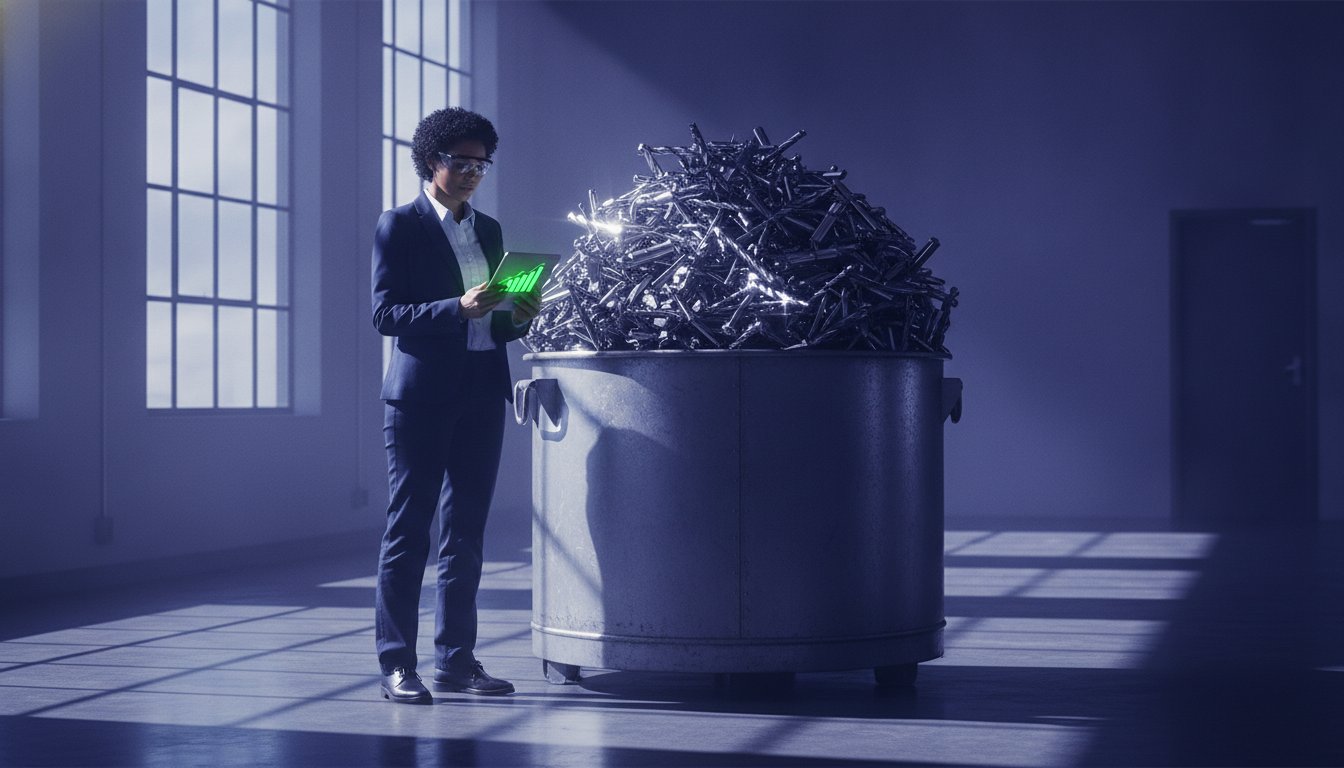
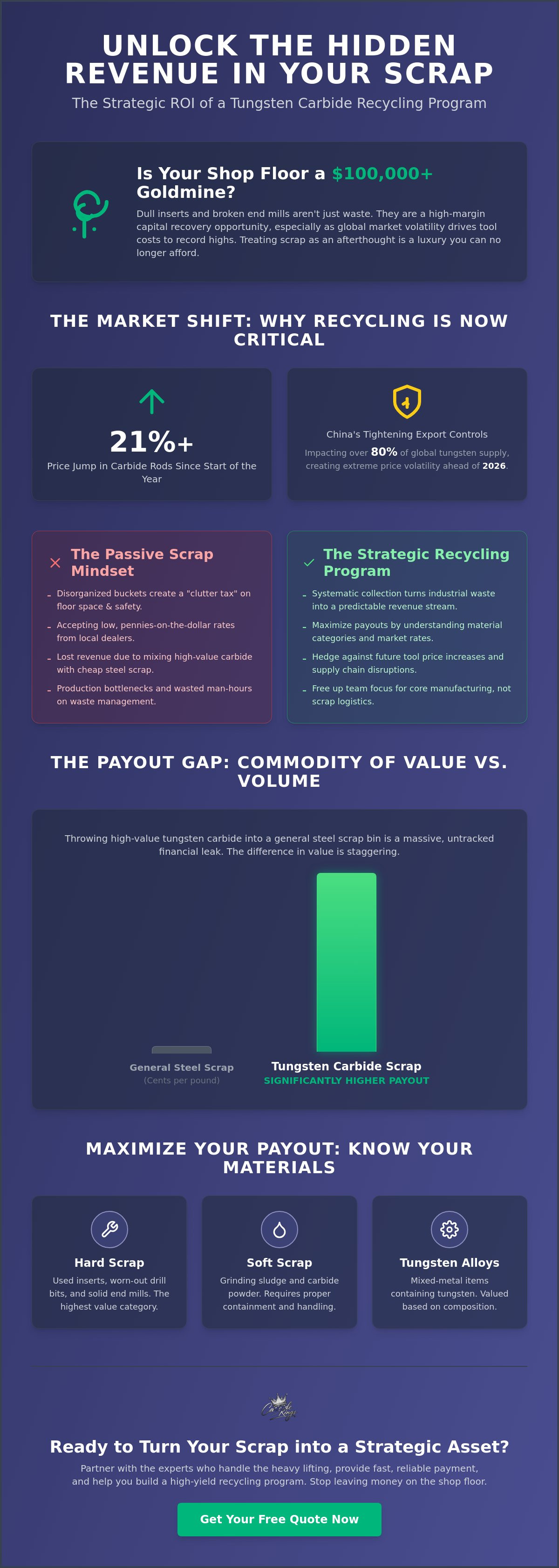
What if the dull inserts and broken end mills cluttering your shop floor were actually a $100,000 revenue stream waiting to be unlocked? With China's January 2026 export controls tightening global supply and driving tool costs to record highs, treating scrap as an afterthought is a luxury your bottom line can't afford. Calculating the ROI of tungsten carbide recycling program is no longer just a sustainability goal; it's a high-margin capital recovery strategy that hedges against this year's extreme market volatility.
You've likely felt the sting of rising procurement costs, especially with carbide rod prices jumping over 21% since the start of the year. It's frustrating to manage a cluttered workspace while wondering if you're getting a fair shake on your scrap value. This guide will show you how to transform industrial waste into a predictable revenue stream using a structured recycling strategy. We'll provide the clear financial justification you need to formalize your process, demonstrate how to eliminate sorting bottlenecks, and ensure you receive fast, reliable payment for your tungsten hard and soft scrap.
Key Takeaways
- Move beyond simple scrap sales by understanding the full ROI of tungsten carbide recycling program, including capital recovery and operational savings.
- Eliminate "clutter tax" and production bottlenecks by replacing disorganized piles with a systematic collection process for hard and soft scrap.
- Hedge against 2026 tool price volatility and supply chain disruptions by turning your waste stream into a reliable internal source of capital.
- Learn how to categorize your materials, including hard scrap, soft scrap, and alloys, to maximize payout rates and ensure high-yield returns.
- Streamline your logistics with a professional partner who handles the heavy lifting, allowing your team to stay focused on core manufacturing operations.
Defining the ROI of Tungsten Carbide Recycling
Stop viewing your spent tools as industrial waste. In the context of industrial metal recycling, ROI is the measurable net gain derived from converting used materials into liquid capital while simultaneously reducing the overhead of waste management. Most machine shops operate with a passive scrap mindset. They toss used inserts into a bucket and wait for a local dealer to offer a pennies on the dollar rate. This approach ignores the massive ROI of tungsten carbide recycling program implementation, which treats your scrap as a strategic financial asset rather than trash.
A structured program transforms this disorganized habit into a predictable revenue stream. It's the difference between a cluttered floor and a streamlined procurement cycle. In 2026, successful industrial metal procurement requires setting new benchmarks for recovery. You aren't just selling scrap; you're reclaiming high value cemented tungsten carbide that contains rare materials like cobalt and tungsten. These aren't common metals like steel or aluminum. They are strategic materials with a market valuation that has surged due to global supply constraints. You'll see the difference on your balance sheet the moment you stop letting these profits walk out the door for a fraction of their worth.
Direct vs. Indirect ROI
Your direct ROI is the immediate cash flow generated from selling Tungsten Hard Scrap and Tungsten Soft Scrap. Because tungsten carbide is heavy and contains expensive alloys, the payout is significantly higher than other industrial recyclables. However, the indirect gains are often where the real profit lies. A structured program reduces the "clutter tax" on your shop floor. It cuts down on inventory management time and eliminates the administrative burden of handling hazardous waste disposal fees. When you streamline collection, you free up floor space and man-hours that can be redirected toward production. It's a cleaner shop and a healthier bottom line.
Tungsten as a Strategic Asset
The 2026 market has changed the math for every machine shop. China now controls over 80% of global tungsten production. With the 2026 Catalogue of Dual-Use Items implementing strict export controls, primary ore markets have become incredibly volatile. Recycling allows you to reduce your reliance on these unstable global markets. By capturing every scrap of Tungsten Alloys, you transition your waste from a liability into a liquid asset on the balance sheet. This isn't just about a one time check. It's about building supply chain resilience. You're effectively hedging against future tool price increases by maximizing the value of the material you already own. It's a bold, efficient way to protect your margins in a tightening market.
Direct Financial Gains: Calculating the Cash Recovery
Your shop is likely sitting on a goldmine disguised as scrap. While common industrial steel might fetch a few cents per pound, the 2026 market for tungsten carbide is in a completely different league. Market data from early 2026 shows that tungsten carbide powder and rod prices have surged by nearly 20% year-to-date, driven by tightening global supplies. To maximize the ROI of tungsten carbide recycling program efforts, you must recognize that every pound of carbide lost to a general scrap bin is a direct hit to your profit margins. This isn't just waste management; it's high-stakes capital recovery.
Volume plays a critical role in your net profitability. Shipping a single bucket of scrap is rarely cost-effective, but coordinating larger pickups transforms your logistics from an expense into a streamlined asset. By accumulating a critical mass of Tungsten Hard Scrap, such as worn-out drill bits and inserts, you reduce the per-pound cost of transport. This efficiency ensures that the majority of the material value stays in your pocket rather than being consumed by freight fees. If you're looking to turn these materials into immediate cash, it's time to work with a dedicated procurement partner who understands these market dynamics.
Carbide vs. Steel: The Payout Gap
Industrial steel is a commodity of volume, but tungsten carbide is a commodity of value. The payout gap between these two materials is staggering. Throwing high-value inserts into a general bin creates a massive financial leak that most shops never track. This "opportunity cost" is invisible until you see the difference in a dedicated carbide payout. Understanding the technical difference between tungsten carbide vs steel scrap is the first step in plugging these leaks. By separating these streams, you instantly boost your recovery rates across the entire facility.
Maximizing Value Through Sorting
Purity is profit. Refineries often apply penalties for contaminated loads, so keeping your material clean is vital for your bottom line. The U.S. Geological Survey highlights that a robust tungsten recycling infrastructure depends on high-quality scrap inputs. Differentiating between Tungsten Hard Scrap, like solid end mills, and Tungsten Soft Scrap, like grinding sludge or swarf, ensures you receive the highest possible valuation. Tungsten Alloys also require their own stream to protect their specific market value. Follow these steps to keep your material pure:
- Use magnets to quickly identify and remove steel shanks from carbide tools.
- Store grinding sludge in sealed containers to prevent moisture gain and contamination.
- Label bins clearly for inserts, solid rounds, and alloys to minimize sorting time.
- Inspect wear parts for brazed steel attachments that could lower the overall purity grade.
A few minutes of sorting at the machine level can result in a significantly higher payout when it's time to sell. It's a simple, action-oriented way to ensure your program delivers the maximum possible return without disrupting your existing production workflow.
Operational Efficiency and Cost Avoidance
Efficiency in a modern machine shop isn't limited to cycle times. It extends to how you manage the footprint of your facility. Disorganized scrap piles create a "clutter tax" that drains productivity through lost floor space and safety hazards. By implementing a systematic collection process, you eliminate the mental and physical friction of dealing with waste. The real ROI of tungsten carbide recycling program implementation often shows up first in these operational gains. You're not just selling metal; you're optimizing your workspace for better flow.
Many managers hesitate to start a formal program because they fear the labor costs of sorting. This is a myth. Sorting happens at the point of tool change, taking only seconds to drop an insert into a dedicated bin rather than a general trash can. When this habit becomes part of your standard operating procedure, the labor cost is effectively zero. You're simply replacing a bad habit with a profitable one. This transition is a core component of sustainable tungsten carbide recycling, where efficiency and environmental responsibility overlap to create a leaner, more resilient business model.
Reducing Waste Disposal Overhead
Traditional industrial waste hauling is an expense. You pay for the bin, the pickup, and the disposal fees. A structured recycling program flips this script. By diverting high-value materials like Tungsten Hard Scrap and Tungsten Soft Scrap, you reduce the volume of your general waste stream. This directly lowers your hauling overhead. Integrating the carbide scrap recycling process into your lean manufacturing strategy ensures that every material has a designated path. Some industrial stakeholders also report tax benefits or write-offs for documented recycling efforts, though you should verify specific state-level incentives with your financial advisor. It's a double win: you stop paying to throw money away.
Streamlined Logistics with Carbide Kings
We handle the logistical heavy lifting so you don't have to. Traditional scrap dealers are often slow, bogged down by paperwork and local geographic limits. We've removed those barriers. Our simplified online quoting system provides clarity in minutes, not days. Once your material is ready, our national shipping support ensures that distance never stands in the way of a high payout. We follow a strict "24-hour rule" for rapid processing. The moment your shipment is verified, we move toward final resolution. This speed turns your scrap into liquid capital faster than any traditional dealer could dream of. It’s a professional, straightforward process designed for industrial experts who value their time as much as their materials.
Strategic ROI: Supply Chain Resilience and Sustainability
Strategic ROI is the long-term protection of your profit margins. In 2026, the industrial sector faces a "perfect storm" of rising demand and restricted supply. China’s January 2026 export controls have made primary tungsten a strategic bottleneck, forcing manufacturers to look elsewhere for stability. By implementing a formal program, you aren't just cleaning your shop; you're building a buffer against global instability. The strategic ROI of tungsten carbide recycling program adoption lies in its ability to turn a volatile expense into a controlled, internal resource.
Establishing these programs also strengthens your standing with tool manufacturers and high-tier B2B clients. When you demonstrate a commitment to material recovery, you become a more attractive partner in the broader supply chain. It’s about more than just ethics; it’s about being a reliable link in a tightening market. You're effectively creating a closed-loop system that keeps valuable materials within your operational reach. This proactive stance ensures that your production lines stay moving even when primary markets falter.
Hedging Against Market Volatility
Tooling budgets are notoriously difficult to predict when raw material costs fluctuate. Understanding the current tungsten carbide scrap price trends allows you to time your sales for maximum impact. Instead of letting scrap sit, use it to create a dedicated "recycling fund." This fund acts as a direct offset for your next procurement order of Tungsten Alloys or hard tools. Industry data suggests that mid-sized machine shops can recover up to 15% of their annual tooling budget simply by formalizing their collection of Tungsten Hard Scrap. This capital recovery provides the liquidity needed to absorb price spikes without cutting into your operational margins.
The ESG Advantage
The 2026 industrial landscape demands more than just financial performance. Stakeholders now require clear documentation of Environmental, Social, and Governance (ESG) targets. Recycling tungsten carbide is significantly less carbon-intensive than virgin ore mining, which often involves invasive processes and high energy consumption. By participating in a verified recycling stream, you can provide B2B clients with the sustainability data they need to meet their own corporate mandates. This narrative is a powerful marketing tool. It positions your shop as a modern, responsible partner rather than a traditional, waste-heavy manufacturer. If you’re ready to secure your supply chain and boost your strategic standing, request a professional scrap valuation today.
Implementing a High-Yield Program with Carbide Kings
Transitioning to a structured program is easier than most managers think. You don't need a complex overhaul of your shop floor or expensive new equipment. To maximize the ROI of tungsten carbide recycling program efforts, start with a simple four-step audit. Look at your current disposal habits to identify where high-value carbide is being mixed with cheaper tool steels. Are your used inserts ending up in a mixed bin? Is your grinding sludge being hauled away as hazardous waste? Once you've identified these leaks, set up dedicated collection bins for Tungsten Hard Scrap, Tungsten Soft Scrap, and Tungsten Alloys. Clear labeling at the source is the key to maintaining material purity and ensuring the highest possible payout for your facility.
After your bins are full, the rest of the process is entirely hands-off. Request an online quote through our streamlined portal to get an immediate sense of your material's value. We handle the logistical heavy lifting, providing the shipping support you need to move material from your floor to our facility without the typical administrative hurdles. Our process is designed for speed. Once your shipment is processed, you'll receive payment via wire transfer or check within 24 hours. It's a fast, transparent cycle that turns a storage problem into liquid capital.
The Carbide Kings Advantage
We specialize where general scrap yards fail. Most local dealers don't have the expertise or the equipment to value complex alloys or grinding swarf. As specialized tungsten soft scrap buyers, we provide comprehensive recovery for materials that others might reject as waste. Our national rates are consistently more competitive than local alternatives because we understand the true 2026 market value of these strategic materials. You get direct, no-nonsense communication with industry experts who value your time and your bottom line.
Getting Started Today
Packaging your first shipment is the final hurdle. For maximum safety and minimum cost, use heavy-duty, double-walled boxes or reinforced buckets for hard scrap. Ensure soft scrap is sealed in leak-proof containers to prevent contamination or weight loss during transport. Our weighing and analysis process is fully transparent, providing you with a clear, honest breakdown of your material's value. Don't let another day's worth of profit end up in the trash. Request a Carbide Scrap Quote from Carbide Kings today and turn your industrial waste into a high-yield revenue stream.
Secure Your 2026 Profit Margins Today
Transforming industrial waste into a high-yield revenue stream is a straightforward path to business resilience. You've seen how a structured approach does more than just clear floor space; it hedges your operation against the supply chain disruptions of 2026. By capturing the full value of every insert and grinding bit, you reclaim capital that would otherwise be lost to disorganized scrap bins. Maximizing the ROI of tungsten carbide recycling program implementation is a decisive step toward a leaner, more profitable shop floor.
We provide the professional infrastructure to make this transition effortless. Our team offers national logistics support and competitive pricing for all forms of tungsten, including hard scrap and soft scrap. You can rely on our 24-hour processing and payment system to turn your material into liquid capital without the typical administrative delays. It's time to stop treating your carbide as trash and start treating it as the strategic asset it truly is.
Turn your scrap into revenue—Get a quote from Carbide Kings now
Take the first step toward a more efficient procurement cycle today. We're ready to partner with you to ensure your shop remains competitive and well-funded in a tightening market.
Frequently Asked Questions
How do I calculate the ROI of a recycling program for my specific shop?
Calculate your ROI by subtracting the costs of collection and shipping from your total scrap payout, then adding the savings from avoided waste disposal fees. To get an accurate figure, track your spent tool volume over a ninety day period. Compare the recovery check against your previous waste hauling bills and the labor hours saved by removing disorganized scrap piles from your floor.
Is it worth recycling small quantities of carbide inserts?
Yes, the high per-pound value of tungsten carbide makes even small batches profitable for your business. However, you'll maximize the ROI of tungsten carbide recycling program efforts by consolidating these small amounts into a single, larger shipment. This approach reduces your per-pound freight costs and ensures that a larger percentage of the material value stays in your pocket.
What is the difference in ROI between hard scrap and soft scrap?
Hard scrap generally offers a higher immediate payout because it has higher purity levels and requires less refining than soft scrap. Tungsten Hard Scrap, such as solid end mills or drills, is highly valued for its density. Tungsten Soft Scrap, like grinding sludge or swarf, requires more intensive processing but still provides a vital revenue stream by turning a former disposal cost into cash.
How does carbide recycling impact my company's ESG score in 2026?
Recycling directly boosts your Environmental score by reducing the energy consumption and carbon emissions associated with virgin ore mining. In 2026, industrial stakeholders are under increased pressure to demonstrate circular economy participation. Documenting your recycling volume provides the verifiable data needed for corporate sustainability reports and helps you secure contracts with ESG-conscious B2B partners.
Will Carbide Kings help with the shipping logistics for heavy scrap?
Yes, we provide full national logistics support to move your heavy scrap from your shop floor to our facility. We handle the coordination and paperwork required for transport, removing the logistical burden from your team. Our process is designed to be as hands-off as possible, allowing you to focus on your core manufacturing operations while we manage the heavy lifting.
How quickly can I expect payment after shipping my carbide scrap?
You can expect payment via wire transfer or check within 24 hours of your shipment being processed at our facility. We understand that cash flow is critical for machine shop operations, so we've refined our workflow to be as fast as possible. This rapid turnaround ensures that your industrial waste is converted into liquid capital with minimal delay.
Are there tax incentives for industrial metal recycling programs?
Many state governments offer tax credits or deductions for businesses that implement documented waste reduction and recycling initiatives. These incentives are designed to encourage industrial sustainability and can significantly lower your overall tax liability. It's best to consult with a tax professional to identify the specific 2026 environmental incentives available in your region.
How do I know if my scrap is tungsten carbide or just high-speed steel?
Use a magnet and a weight test to quickly differentiate between tungsten carbide and high-speed steel. Tungsten carbide is nearly twice as heavy as steel and is generally non-magnetic or only weakly magnetic. If a tool feels exceptionally dense for its size and doesn't stick firmly to a magnet, it's likely high-value carbide rather than standard tool steel.


