
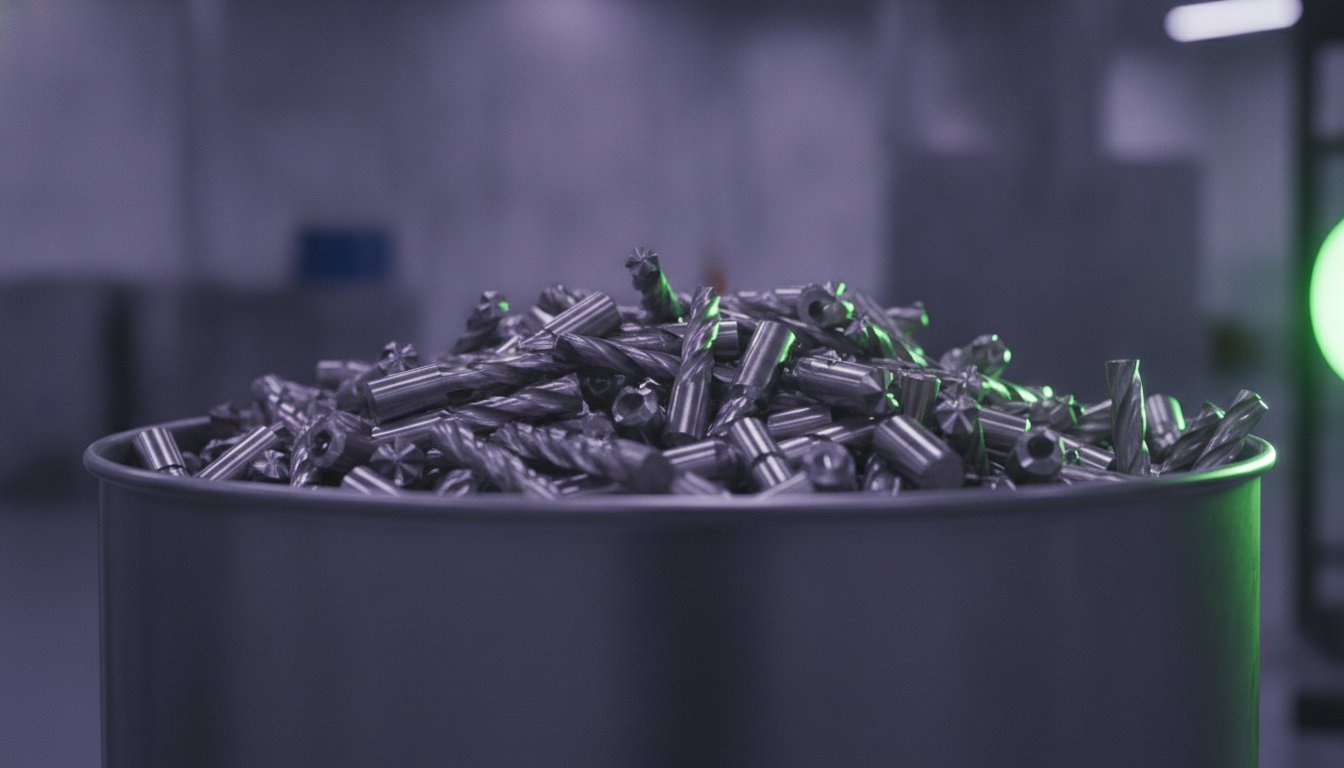
Your bin of dull tooling isn't a pile of industrial waste. It is a high-density financial asset waiting to be liquidated. We know it's frustrating to watch value sit on a shelf because you aren't sure how to sell carbide end mills scrap without losing your profit to shipping costs or low-ball local offers. You deserve a return that reflects the true value of your tungsten.
We agree that the recycling process should be as efficient as your shop's production line. This guide shows you how to turn your worn-out carbide into immediate cash using a streamlined national process that removes traditional barriers. We've refined the recycling workflow to ensure you get paid fast via wire or check while we handle the heavy lifting of the logistical details.
We will break down the 2026 market standards, explain how to simplify bulk logistics for heavy shipments, and preview our 24-hour material processing system. It is time to clear out your floor space and boost your cash flow with the confidence of a seasoned industrial partner. The work is almost as good as done.
Key Takeaways
- Understand why 2026 market demand makes your scrap inventory a high-value industrial asset rather than waste.
- Master the simple weight and spark tests to accurately distinguish high-value tungsten from common steel.
- Learn how to sell carbide end mills scrap through a streamlined national process that maximizes your price per pound.
- Secure your profits by using double-walled containers and following specific weight limits for safe transit.
- Experience a 24-hour material processing cycle that ensures fast payment through wire transfers or checks.
Why Selling Carbide End Mills for Scrap is a 2026 Strategic Priority
Your used end mills aren't trash. They're a revenue stream. Many shops treat worn tooling as a nuisance, but in 2026, tungsten is a critical global commodity. When you choose to sell carbide end mills scrap, you're converting physical clutter into liquid capital. This isn't just about cleaning the shop; it's about offsetting the rising costs of new inventory. High demand from the aerospace and medical sectors has solidified tungsten's position as a strategic asset that belongs on your balance sheet, not in a landfill.
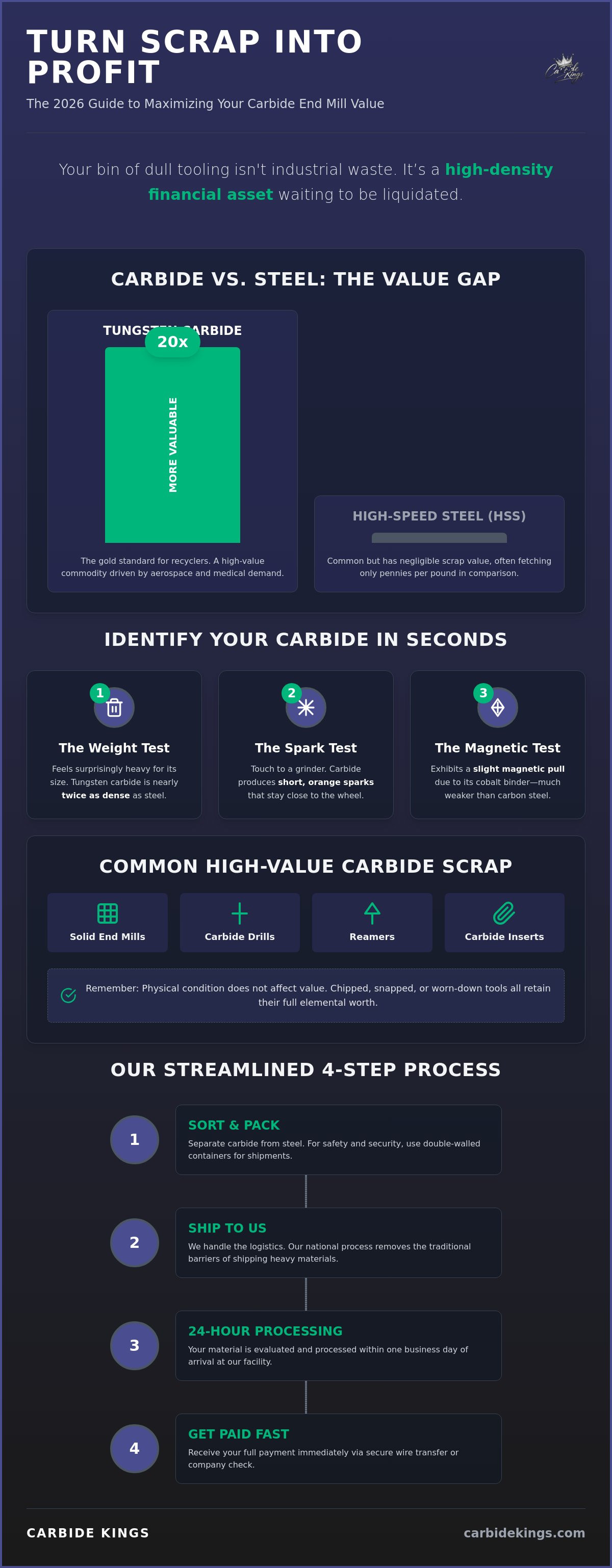
High-speed steel (HSS) is common, but its scrap value is negligible compared to carbide. While HSS might fetch pennies, tungsten carbide remains one of the most valuable industrial materials per pound. In fact, clean carbide scrap can often be worth twenty times more than mixed steel scrap. Treating these two materials the same is a costly mistake for your bottom line. Professional shops now track their carbide weights with the same precision they use for their high-end tool orders. It's found money that rewards your organization for its material discipline.
The Economic Value of Tungsten Carbide
Tungsten is a finite resource with a supply chain that often faces volatility. This scarcity keeps prices high and stable. To understand what tungsten carbide is, you must view it as a high-performance material designed for extreme durability. Specifically, tungsten carbide is a sintered metal composite of tungsten and cobalt. In the recycling world, we distinguish between "hard scrap," which includes solid tools like end mills and inserts, and "soft scrap," such as grinding sludge or powders. Hard scrap is the gold standard for recyclers because it requires less intensive processing to return to the manufacturing loop. It yields a higher recovery rate, which translates directly into a higher payout for your shop.
Industrial Sustainability in Tooling
Modern manufacturing demands a circular approach. Every time you recycle an end mill, you reduce the global reliance on primary mining operations. This tool circularity is a key metric for shops aiming to improve their environmental footprint. Industrial refineries actively seek out recycled hard scrap because it is a clean, reliable source for producing new, high-grade tooling. By participating in this cycle, your shop becomes a proactive partner in a more sustainable industrial ecosystem. This isn't just a green initiative; it's a practical business strategy that ensures a steady supply of raw materials for the tools you use every day. The process is fast, the payment is immediate, and the impact is long-term.
Identifying High-Value Carbide vs. Low-Value Steel
Sorting your bin is the fastest way to increase your payout. When you prepare to sell carbide end mills scrap, the first step is accurate identification. High-speed steel (HSS) often looks identical to tungsten carbide at a glance, but the two materials have vastly different market values. You don't want to leave money on the table by mislabeling your inventory. The process is simple and relies on three physical tests that any shop professional can perform in seconds.
The weight test is your most reliable tool. Tungsten carbide is nearly twice as dense as steel. If a tool feels surprisingly heavy for its size, it's likely carbide. Next, use the spark test. Touch the tool to a grinder for a split second. Carbide produces very short, distinct orange sparks that stay close to the wheel. In contrast, steel creates long, white or yellow sparks that fan out. Finally, check the magnetic pull. While tungsten carbide isn't naturally magnetic, the cobalt binder used in the manufacturing process often creates a slight magnetic attraction. It won't be as strong as the pull on a piece of carbon steel, but it's a helpful secondary indicator.
Don't be fooled by tool coatings. Many modern end mills feature TiAlN (dark grey/purple) or TiN (gold) coatings to improve performance. These coatings do not change the base material. A coated carbide tool is still processed as high-value carbide. We treat these tools with the same professional integrity as uncoated ones, ensuring you receive the full value of the tungsten content regardless of the surface finish.
Common Tooling to Sort and Sell
Focus your sorting efforts on solid carbide end mills, including square, ball nose, and corner radius styles. These are the "hard scrap" staples of any machine shop. You should also set aside carbide drills, reamers, and specialized boring bars. Physical condition doesn't matter here. Chipped flutes, snapped shanks, or tools ground down to nothing all retain their elemental value. If you have a question about a specific grade, you can get a quick valuation from our team before you pack your box.
Avoiding the 'Steel Contamination' Trap
Steel is the enemy of a high-value shipment. Even a small amount of HSS can downgrade the price of an entire lot because it requires additional labor to sort at the refinery. Pay close attention to "brazed" tools or steel-shanked tools with carbide heads. These must be separated from your solid carbide flutes. Following EPA guidelines for scrap metal recycling ensures your shop stays compliant while you prepare your shipment for transit. This level of detail is vital for maximizing tungsten carbide scrap price. A clean sort proves you're a professional partner and guarantees the fastest possible processing time once your material hits our floor.
How to Maximize Your Payout When Selling End Mills
Efficiency is the key to profit. When you sell carbide end mills scrap, your goal is to minimize overhead while maximizing the return on your material. Consolidating your weight is the most effective way to achieve this. Larger shipments often secure better industrial rates because they reduce the per-pound cost of logistics and processing. Instead of shipping small boxes every week, wait until you have a substantial load that justifies the transit. This volume leverage allows specialized buyers to offer more aggressive pricing that a local yard simply can't match. It also simplifies your internal tracking, as you're managing fewer transactions and more significant payouts.
Clean scrap is valuable scrap. Excess oil, heavy coolant, or bulky plastic packaging adds weight that isn't tungsten. We recommend a quick wipe-down or air-dry before packing to ensure you aren't paying to ship waste. Also, stop using local general scrap yards. These "middlemen" often lack the specialized equipment to test tungsten purity and will pay you a generic "mixed metal" rate. By dealing directly with a specialized national buyer, you cut out the intermediary. This direct-to-buyer advantage ensures you keep the full market value for your shop's hard work. It's a faster, more transparent process that treats your scrap as a professional asset.
Sorting for Grade Purity
Purity equals profit. Keep your solid carbide end mills separate from carbide-tipped tools. Professional tungsten hard scrap buyers pay a premium for material that doesn't require secondary sorting at the refinery. A few minutes of organization prevents your entire lot from being downgraded. Focus on high-density solid tools first to ensure your shipment is top-grade and ready for immediate processing.
Understanding Weight and Valuation
Accuracy builds trust. Use a calibrated industrial scale to get a pre-shipment weight. Bathroom scales are often inaccurate, which leads to confusion once the shipment is officially weighed. The price per pound is calculated based on current 2026 market indices for tungsten. We provide a detailed breakdown of the weight and grade of every shipment. When you know what you're sending, the final payment is a simple, satisfying transaction.
The National Logistics Process: Shipping Heavy Scrap Safely
Shipping tungsten isn't like shipping standard parcels. Heavy scrap requires heavy-duty thinking. Because tungsten carbide is exceptionally dense, a standard single-walled box will likely fail under the pressure of your shipment. We recommend using double-walled corrugated boxes or reinforced plastic buckets to ensure your material arrives intact. This isn't just about convenience. It's about protecting the value of your shipment and ensuring carrier safety. When you are ready to sell carbide end mills scrap, your logistical preparation is the final step before you see a return on your investment.
Carrier safety standards in 2026 are strict. Keep individual boxes between 50 and 70 pounds. Overloading a container increases the risk of a rupture during transit, which can lead to lost material and insurance headaches. Secure the load by using heavy-duty reinforced tape on all seams. Use internal padding like cardboard inserts or scrap rags to prevent the tools from shifting. Movement inside the box acts like a hammer against the walls. If you have questions about your specific volume, you can initiate the carbide scrap recycling process by requesting a professional logistics review.
Step-by-Step Packing Guide
- Step 1: Line your box or bucket with a heavy-duty plastic bag. This catches small chips or broken flutes that might otherwise slip through box corners.
- Step 2: Distribute weight evenly. If you are shipping multiple containers, balance the load so no single box exceeds the 70-pound threshold.
- Step 3: Include a packing slip inside the container. Clearly list your contact information and preferred payment method to ensure our team can process your arrival within 24 hours.
National Pickup and Freight Options
Parcel shipping is ideal for smaller lots, but high-volume shops require a different approach. If your shipment exceeds 500 pounds, it is time to transition to Less-Than-Truckload (LTL) freight. We assist our industrial partners by providing shipping labels and coordinating freight pickups directly from your loading dock. This "Freight Collect" advantage removes the upfront cost burden from your shop. We handle the complex logistics so you can remain focused on your production schedule. Our national reach means we can move your material efficiently, regardless of your shop's location. You can start your shipment today and let our team manage the heavy lifting.
Why Carbide Kings is the Preferred National Buyer
Choosing a partner to sell carbide end mills scrap shouldn't be a gamble. General scrap yards lack the specialized equipment to value tungsten accurately. Manufacturer programs often trap you in administrative red tape and slow processing cycles. We've eliminated these barriers to provide a direct, professional alternative. Our team understands that your time is as valuable as your material. We operate with the same precision and speed you expect from your own production line. It's a no-nonsense approach designed for the modern machine shop.
We offer direct industrial rates without hidden fees or middleman markups. Our pricing is transparent and tied to current 2026 market indices. You won't find generic "mixed metal" quotes here. Our expert support team understands the machine shop workflow. We know the difference between a high-grade solid end mill and a lower-value brazed tool. This expertise ensures you're never underpaid for your high-density assets. We handle the heavy lifting of logistics so you can stay focused on your core operations. It's a professional partnership built on reliability.
The 24-Hour Guarantee
Most industrial professionals can't afford to have capital tied up in scrap bins for weeks. Our streamlined receipt-to-payment workflow is designed for maximum liquidity. Once your shipment arrives at our facility, our team verifies the weight and grade immediately. We offer flexible payment options, including immediate wire transfers or checks, for your convenience. We don't believe in long waiting periods or complex approval chains. Most sellers see funds within one business day of material verification. This rapid turnaround keeps your cash flow moving and your shop floor clear of clutter.
Building a Long-Term Recycling Partnership
For high-volume manufacturers, recycling should be a seamless part of the production cycle. We provide customized pickup schedules and freight coordination to match your specific output. Every transaction includes a detailed report on material grade and verified weight. This transparency builds the trust necessary for a lasting professional relationship. We're not just a buyer; we're a supportive partner in your shop's profitability. You can rely on our consistent pricing and national reach to manage your scrap inventory efficiently. Get your custom carbide scrap quote today and experience the efficiency of a specialized national leader. The work is as good as done.
Maximize Your Shop's Revenue with Professional Recycling
Your worn-out tooling is a high-density asset that belongs back in your budget. By mastering simple identification tests and consolidating your shipments, you've already done the hard work to protect your profit margins. The final step is choosing a partner that respects your time and your bottom line. When you decide to sell carbide end mills scrap through a specialized national buyer, you eliminate the middleman and the unnecessary wait times associated with traditional scrap yards.
We provide comprehensive national shipping support to handle the logistical heavy lifting for you. Once your material arrives at our facility, our 24-hour material processing ensures you don't have to wait for your funds. We offer flexible payments via wire transfer or check to suit your shop's specific accounting needs. It's a straightforward, professional process designed to get you back to what you do best: running your business with maximum efficiency.
Get a Fast Quote for Your Carbide End Mills and start your first shipment today. We're ready to show you how lucrative industrial recycling can be when you work with the right experts. Your floor space is about to get a lot cleaner, and your balance sheet is about to get a lot stronger.
Frequently Asked Questions
How much is scrap carbide end mill worth per pound in 2026?
Market rates for carbide end mills currently range between $21.00 and $27.00 per pound as of July 2026. These values are determined by global tungsten demand and the purity of your material. Clean, solid tooling consistently commands the highest industrial rates compared to mixed loads or contaminated scrap.
Do you buy coated carbide end mills or just uncoated ones?
We process both coated and uncoated carbide end mills at their full material value. High-performance coatings like TiAlN, TiN, or AlTiN don't negatively impact the tungsten recovery process. You'll receive the same competitive rate regardless of the tool's surface finish or color.
What is the minimum weight required to sell my scrap carbide?
We accept shipments of any size, though consolidating your material into larger loads improves your total return. While we don't enforce a strict minimum, shipping at least 20 to 50 pounds is the most efficient way to handle logistics. Bulk loads exceeding 500 pounds qualify for our specialized national freight assistance.
How do I tell the difference between carbide and high-speed steel?
Use the density and spark tests to distinguish between these materials in seconds. Carbide is nearly twice as heavy as steel, so a tool that feels surprisingly dense for its size is likely tungsten. On a grinder, carbide produces short, orange sparks that stay close to the wheel, while high-speed steel creates long, fanning yellow sparks.
How long does it take to get paid once you receive my tools?
Our facility operates on a 24-hour material processing cycle to ensure you get paid fast. Once we verify the weight and grade of your shipment, we typically issue funds within one business day. You can choose between immediate wire transfers or checks to keep your shop's cash flow moving.
Can I sell broken carbide drills and inserts along with end mills?
Yes, we buy all forms of tungsten hard scrap, including broken drills, reamers, boring bars, and used inserts. Physical condition or breakage doesn't reduce the elemental value of the metal. If you want to sell carbide end mills scrap, you can include any solid tungsten carbide tooling in the same shipment.
Do you provide shipping labels or do I have to pay for shipping?
We provide national shipping assistance and labels to remove the logistical burden from your shop. For our high-volume industrial partners, we offer freight collect options that eliminate upfront transit costs. We've refined this process to make national recycling as simple as a local transaction.
What happens if my shipment contains non-carbide metals?
Contamination with steel or other low-value metals will likely result in a lower price per pound for the entire lot. It's vital to perform a clean sort before packing to protect your payout. If our team identifies non-carbide tools during verification, we'll adjust your valuation based on the actual tungsten content found in the shipment.


