
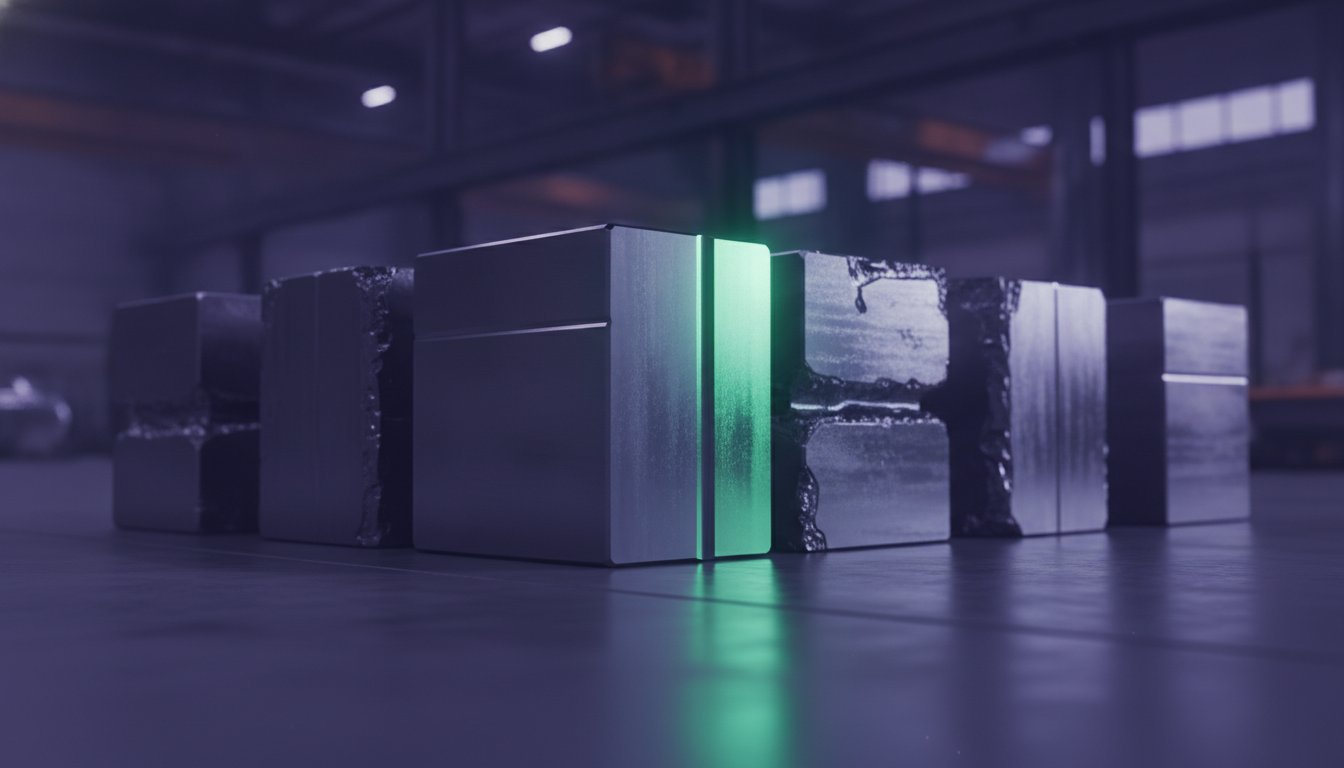
If you're treating your heavy ballast or radiation shielding like common steel, you're leaving thousands of dollars on the table. With the global tungsten market facing a 17% annual supply-demand gap through 2026, the value of your high-density alloys has never been higher. Most local scrap yards don't have the expertise to grade tungsten-nickel-iron alloys correctly. They often misidentify it as heavy melt steel to protect their margins. It's frustrating to know you have a premium material but lack a clear path to get a fair price for it.
We understand that shipping extremely dense materials is a logistical burden that often eats into your profits. This guide shows you how to identify your materials, value them based on actual tungsten content, and connect with specialized densalloy scrap buyers who offer the highest national market rates. You'll discover a streamlined process for securing rapid payments via wire transfer within 24 to 48 hours. We'll also cover the specific shipping strategies you need to handle heavy loads without the typical surcharges. It's time to stop settling for local rates and start maximizing the ROI on your tungsten scrap.
Key Takeaways
- Learn to use density and magnetism tests to accurately distinguish high-value Densalloy from standard steel and stainless alloys.
- Understand how current Wolfram market prices dictate the valuation of your scrap based on its specific tungsten-nickel-iron content.
- Partner with specialized densalloy scrap buyers to avoid the common industry practice of misgrading heavy alloys as low-value melt steel.
- Discover how to optimize shipping logistics by using reinforced packaging and choosing the most cost-effective freight methods for extremely dense materials.
- Leverage 24-hour material processing to convert your heavy ballast and shielding scrap into liquid capital with rapid wire transfer payments.
What is Densalloy and Why is it High-Value Scrap?
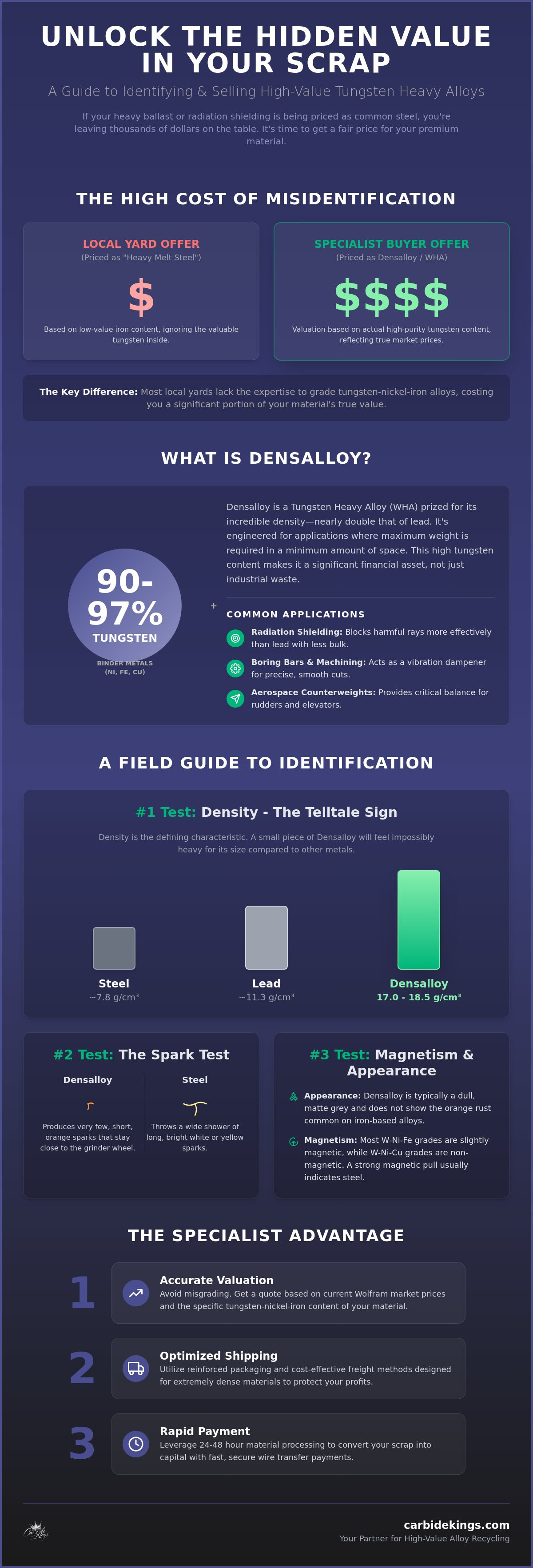
Densalloy is a specialized tungsten alloy engineered for extreme performance in demanding environments. It belongs to a class of materials known as Tungsten Heavy Alloys (WHA). These materials are prized for their incredible density, which is nearly double that of lead. Densalloy is a tungsten alloy used where maximum weight is needed in minimum space. Because it typically contains between 90% and 97% pure tungsten, it represents a significant financial asset rather than just another piece of industrial waste.
Many local yards see heavy metal and offer steel prices. That's a mistake that costs you money. Standard tool steel is mostly iron, while Densalloy is almost entirely tungsten. This difference in the properties of tungsten makes it far more valuable to specialized densalloy scrap buyers. The binders used to hold the tungsten together, usually nickel, iron, or copper, allow the metal to be machined into complex shapes while maintaining its mass. This combination creates a "heavy metal" that is both durable and incredibly heavy for its size.
Common Industrial Applications for Densalloy
You'll find Densalloy in sectors where precision and weight are non-negotiable. Its unique physical profile makes it the industry standard for specific high-stakes uses:
- Radiation shielding: Medical facilities and nuclear plants use Densalloy to block harmful rays. It provides better protection than lead with much less bulk.
- Boring bars: In high-precision machining, these alloys act as vibration dampeners. They allow for deeper cuts and smoother finishes in tough materials.
- Aerospace counterweights: Flight control surfaces require perfect balance. Densalloy provides the necessary ballast for rudders and elevators without taking up valuable cargo space.
Chemical Composition and Material Grades
The specific mix of binder metals determines both the physical properties and the scrap value of your material. Most Densalloy falls into two categories: Tungsten-Nickel-Iron (W-Ni-Fe) and Tungsten-Nickel-Copper (W-Ni-Cu). W-Ni-Fe is the most common grade. It's strong and often slightly magnetic, which makes it easier to handle in many shops. W-Ni-Cu is the non-magnetic alternative. These non-magnetic grades often occupy a different market position because they're essential for sensitive electronic or medical environments.
Professional densalloy scrap buyers look at these binder materials closely. Copper binders offer different recyclability paths than iron binders, which can influence your final quote price. Understanding exactly what you have is the first step toward a successful transaction. When you know the grade, you can better predict the return on your heavy ballast or shielding scrap.
How to Identify Densalloy Scrap vs. Standard Alloys
Identifying Densalloy correctly is the difference between a premium payout and a low-ball "steel" price at a local yard. You can't rely on looks alone because many industrial metals share a similar grey hue. Instead, focus on the physical properties that set tungsten alloys apart. Professional densalloy scrap buyers prioritize material that has been accurately sorted, as it streamlines the valuation process. If you're holding a piece of metal that feels impossibly heavy for its size, you've likely found a high-value asset.
The most reliable field test is the spark test. Touch the material to a grinder and watch the reaction. Tungsten alloys produce very few, short, orange sparks that stay close to the wheel. Standard tool steel, by contrast, throws a wide shower of long, white sparks. Visual cues also help. Densalloy usually appears as a dull, matte grey and doesn't show the orange rust typical of high-iron alloys. Magnetism is another indicator. Most Densalloy grades are non-magnetic or only slightly magnetic, depending on the nickel-iron binder ratio. If a magnet sticks firmly, you're likely looking at a lower-value steel or a different alloy altogether.
The Weight-to-Volume Ratio
Density is the defining characteristic of this material. Densalloy has a specific gravity of 17.0 to 18.5 g/cm³. To put that in perspective, steel sits at roughly 7.8 g/cm³, and even lead is only 11.3 g/cm³. This means a small block of Densalloy weighs more than double a steel block of the same size. Machine shops can verify this through a simple displacement test. If the weight-to-volume ratio hits that 18g/cc mark, you've confirmed a high-tungsten content. This extreme mass is why the latest tungsten market and recycling data shows such a high demand for domestic alloy recovery.
Densalloy vs. Tungsten Carbide
You must distinguish between "hard scrap" and "alloy scrap" to maximize your ROI. Tungsten carbide is the hard, brittle material used in cutting inserts and wear parts. Densalloy is a "tough" alloy, meaning it's machinable and used for structural weights, boring bars, or shielding. While both materials belong in your tungsten hard scrap recycling bin, they require different refining processes. Keep your structural weights separate from your broken drills and inserts. If you're unsure about a specific batch, request a material review from our procurement team to ensure you get the correct alloy grade pricing.
The Market for Densalloy: How Buyers Calculate Value
The value of your Densalloy isn't a guess. It's a calculation based on the global market price of Wolfram. Specialized densalloy scrap buyers track these fluctuations daily to ensure quotes reflect the current industrial demand. While the tungsten carbide scrap price often sets the baseline for the industry, alloy scrap follows its own specific valuation curve based on density and purity.
Local scrap yards often fail here. They lack the precision equipment needed to verify high-density alloys. It's common for them to misclassify Densalloy as low-value stainless steel or heavy melt steel. This mistake can cost you thousands of dollars on a single shipment. We look past the surface. We value the material for the rare tungsten it contains, not just its bulk weight. Whether you're clearing out aerospace counterweights or medical shielding, you deserve a quote that reflects the actual chemistry of the metal.
Volume also plays a critical role in your final payout. Large industrial shipments from aerospace or medical decommissioning projects often secure higher per-pound rates due to lower logistical overhead. However, even small shop quantities carry significant value when handled by experts who understand the material's worth. We focus on transparency, ensuring you understand exactly how your material was graded and weighed.
Purity and Binder Factors
The exact percentage of tungsten in your alloy directly dictates the offer. A grade containing 97% tungsten will naturally command a higher price than a 90% grade. Contaminants are another factor. Oil, grease, or brazing material can complicate the recycling process and may impact your quote. You'll see the best results by keeping your solids clean. It's also vital to keep your alloys separate from your tungsten soft scrap. Mixing sludge or swarf with solid counterweights dilutes the purity and lowers your total revenue.
Global Supply Chain Impacts
Geopolitical shifts in 2026 have made domestic recycling a priority for American industry. In January 2026, China implemented strict export controls on tungsten oxides and carbides through a new dual-use items catalogue. This move tightened the global supply of a metal where China controls over 80% of production. Additionally, new U.S. Department of Defense restrictions prohibit the acquisition of tungsten heavy alloys from "covered countries" like China and Russia.
These regulations create a massive opportunity for domestic sellers. With a projected 17% annual supply-demand gap through 2026, the need for "conflict-free" secondary materials is surging. Domestic densalloy scrap buyers are aggressively seeking material to fill the void left by restricted imports. This market volatility means your stockpiled shielding and ballast are more valuable today than they were even six months ago.
Shipping and Logistics for Heavy Tungsten Alloys
Shipping Densalloy is a unique challenge because of its extreme density. A small volume of material can easily exceed the weight limits of standard cardboard boxes. Many local scrap yards rely on you to drop off materials, but professional densalloy scrap buyers provide a national logistics network to simplify the process. We help you move heavy ballast and radiation shields from your facility to our processing center without the typical headaches of industrial shipping. Our national reach means you don't have to settle for local prices just because your scrap is heavy.
Efficiency starts with choosing the right method. Small parcel services are often ideal for shipments under 50 pounds. For these smaller loads, it's best to use reinforced packaging to bypass density-based surcharges and maintain container integrity. For larger industrial quantities, Less Than Truckload (LTL) freight is the most cost-effective solution. We provide national shipping assistance to ensure your material is picked up and transported securely. Including a clear packing slip and material description inside the container prevents delays during receipt and ensures faster processing.
Packing Heavy Metal for Transit
Your packaging must be as tough as the metal inside. For small, dense parts like boring bars or counterweights, use double-walled boxes or heavy-duty plastic buckets. If you use boxes, tape every seam multiple times and avoid leaving empty space. Dense metal that shifts during transit can act like a wrecking ball, bursting through the sides of the container. For large radiation shields or aerospace ballast, crating and palletizing is mandatory. Secure the load with steel banding or high-tension shrink wrap to ensure it stays centered on the pallet throughout the journey. This prevents damage to the carrier's equipment and keeps your shipment on schedule.
The Quoting and Payment Workflow
We've refined our procurement process to be as fast as possible. Start by requesting a carbide scrap quote online to establish a baseline value for your material. Once the shipment arrives at our dock, we perform a material analysis and verified weighing within 24 hours. This transparency ensures you're paid for the exact tungsten content of your alloy. You can choose between traditional checks or rapid wire transfers. Most of our clients receive their funds via wire transfer within 24 to 48 hours of material verification. If you're ready to clear out your inventory, you can start your shipment today with our logistics team.
Partner with Carbide Kings for Densalloy Recycling
You've identified your material and understood the market. Now you need a partner who can execute the transaction with speed and precision. Carbide Kings provides direct access to the largest network of tungsten buyers in the United States. We eliminate the middleman and the administrative hurdles that typically slow down industrial recycling. Our goal is simple: we handle the heavy lifting so you can focus on your core operations. We've built our reputation on being the most reliable densalloy scrap buyers in the industry, offering a process that is as lucrative as it is easy.
Our 24-hour processing guarantee is the backbone of our service. From the moment your material hits our dock, we move quickly to verify the weight and confirm the specific alloy grade. You don't have to wait weeks for a settlement. We provide a transparent breakdown of your shipment and issue payments via wire transfer or check immediately after verification. This streamlined industrial procurement is designed specifically for machine shops and manufacturers who value their time and cash flow.
Why We Outperform Local Scrap Yards
Local yards are generalists. They don't have the specialized equipment needed for precise tungsten alloy analysis. This lack of technology leads to conservative estimates and lower payouts for you. Carbide Kings offers higher payout ceilings because of our direct refinery relationships. We know exactly how to process tungsten-nickel-iron alloys to extract maximum value. Plus, our dedicated logistics support means we can manage bulk industrial pickups that would overwhelm a standard yard. We focus on the chemistry of the metal, ensuring your payout reflects the high-density reality of your scrap.
Get Started Today
Turning your scrap into capital is a straightforward process. Take clear photos of your material and provide estimated weights to receive an immediate estimate. Our specialists are also available to build custom alloy recycling programs for high-volume manufacturers. Whether you're clearing out shielding or looking to sell tungsten carbide wear parts, we provide the most efficient path to payment. Join the nationwide network of professionals who trust the leading densalloy scrap buyers for their high-density alloy recovery. Contact our procurement team today to lock in your rate and schedule your shipment. The work is as good as done.
Secure the Full Market Value for Your Tungsten Alloys
Stop treating your high-density alloys like common industrial waste. You now have the technical tools to identify Densalloy and understand its true market worth based on its specific tungsten content. By moving away from generalist local yards and partnering with specialized densalloy scrap buyers, you ensure that your shielding or ballast is accurately valued and paid for. You've seen how simple the logistics can be when you have the right industrial partner supporting your shipment. It's a straightforward process that rewards your expertise and attention to detail.
Carbide Kings removes the traditional barriers to scrap recycling. We provide national logistics support to handle your heaviest loads and a 24-hour processing guarantee to give you immediate results. Once we verify your weights, you can count on fast wire transfer payments that keep your business moving forward. It's time to turn that heavy inventory into a liquid asset without the administrative headaches. Let us handle the heavy lifting while you focus on your core operations. We're ready to help you maximize your return today.
Get a Professional Densalloy Quote from Carbide Kings
Frequently Asked Questions
What is the difference between Densalloy and tungsten carbide?
Densalloy is a machinable tungsten heavy alloy (WHA), while tungsten carbide is a brittle ceramic-metal composite used primarily for cutting tools. You'll find Densalloy in counterweights and radiation shields because it handles impact better than carbide. It's often referred to as "tough scrap" rather than "hard scrap." Both contain high percentages of tungsten but require different industrial recycling streams to recover the raw material efficiently.
Do densalloy scrap buyers accept small quantities from individuals?
Yes, specialized densalloy scrap buyers often work with smaller quantities from machine shops and individual contractors. While we specialize in large industrial loads, we accept smaller shipments provided they meet minimum weight requirements for cost-effective shipping. It's best to consolidate your materials to maximize your return. Contact our procurement team to discuss your specific volume and receive a custom shipping label for your material.
How is Densalloy scrap priced compared to lead or steel?
Densalloy is priced significantly higher than lead or steel because it contains 90% to 97% pure tungsten. While steel is a common commodity, tungsten is a critical industrial metal with a much tighter global supply. You're selling the rare element content, not just the bulk weight. This value gap is why you should never sell high-density alloys to a standard scrap yard that grades by bulk iron prices.
Can I sell Densalloy radiation shielding that has been used in medical settings?
You can sell medical radiation shielding as long as it's free from radioactive contamination. Most medical shielding is made of high-purity Densalloy or similar tungsten alloys to block X-rays and gamma radiation. These parts are excellent candidates for recycling because they're often large, solid pieces with high tungsten concentration. We verify the material purity upon receipt to ensure you get the top market rate for your shielding scrap.
How do I ship extremely heavy Densalloy parts without them breaking the box?
Use double-walled corrugated boxes or heavy-duty plastic buckets to prevent packaging failure during transit. Because tungsten alloys are nearly twice as dense as lead, they can easily burst through standard cardboard. Tape all seams multiple times and use high-density foam or wood blocking to stop the metal from shifting. For shipments over 50 pounds, crating the material on a pallet is the safest way to ensure it reaches us intact.
What binders are typically found in Densalloy scrap?
Nickel, iron, and copper are the primary binders used to create the Densalloy matrix. These metals are added to the tungsten powder before sintering to provide ductility and machinability. The specific ratio of these binders determines the alloy grade. For example, a tungsten-nickel-iron mix is common for structural weights, while tungsten-nickel-copper is used for non-magnetic applications like MRI shielding or sensitive electronics.
How long does the payment process take after Carbide Kings receives my material?
Carbide Kings issues payments within 24 to 48 hours after your material has been verified and weighed. We prioritize speed to ensure your cash flow remains uninterrupted. Once we receive your shipment at our dock, our team performs a material analysis to confirm the tungsten content. You can choose to receive your funds via rapid wire transfer or a traditional business check, depending on your company's preference.
Is Densalloy magnetic?
Magnetism in Densalloy depends entirely on the binder material used in the alloy. Grades using an iron binder (W-Ni-Fe) are typically magnetic or slightly magnetic. If the alloy uses a copper binder (W-Ni-Cu) for non-magnetic applications, it won't react to a magnet at all. Professional densalloy scrap buyers use this property as a quick field test to help sort and grade your material before final chemical analysis.


