

Accepting a generic "mixed scrap" rate is the fastest way to drain your industrial tool budget. You already know your spent carbide inserts and end mills are worth a premium. Yet, if you aren't preparing carbide scrap for sale with a systematic approach, you're likely leaving significant revenue on the table. It's frustrating to watch high-purity material get downgraded simply because of a few stray steel shanks or excess grinding sludge. You deserve a payout that reflects the true value of your tungsten waste.
We're here to help you reclaim that lost profit. This guide details the exact industrial sorting and cleaning methods used to turn bulk carbide into a high-value revenue stream. You'll learn how to distinguish tungsten alloys from tool steel using simple magnetic tests and how to streamline your workflow for maximum efficiency. We'll also break down how to optimize your packaging to slash shipping costs for these incredibly dense materials. With new 2026 regulations mandating domestic sales, establishing a clean, professional scrap process is more critical than ever. By the end of this article, you'll have a clear path to faster, more transparent payments and the highest possible price per pound for your scrap.
Key Takeaways
- Understand how refineries value your material through chemical analysis and why pure lots command significantly higher prices than mixed waste.
- Master the industrial methods for preparing carbide scrap for sale by effectively separating hard scrap inserts from soft scrap powders and sludge.
- Eliminate profit-draining deductions by removing steel shanks, casings, and other non-carbide contaminants before your shipment arrives for evaluation.
- Streamline your logistics with high-strength packing strategies designed to handle the extreme density of tungsten while meeting LTL shipping requirements.
- Secure fast, transparent payment terms and refinery-direct pricing by working with a national partner that simplifies the entire procurement process.
Why Proper Preparation Dictates Your Final Carbide Payout
Proper preparation isn't just about cleanliness; it's about financial transparency. When you send a lot to a refinery, they perform a chemical analysis to determine the exact tungsten content. If your lot is "dirty"-filled with steel shanks, brazing material, or coolant-the refinery must account for the extra processing time and lower yield. This results in a smaller payout for you. By contrast, clean lots move through the system faster and command premium rates. You control the purity, so you control the profit.
Local scrap yards often lack the specialized equipment to verify high-purity tungsten. To protect their own margins, they typically offer a flat "mixed scrap" rate that treats your valuable carbide like common tool steel. Taking the time for preparing carbide scrap for sale ensures you bypass these middlemen and access refinery-direct pricing. Additionally, removing non-carbide attachments reduces the total weight of your shipment. Since Tungsten carbide is exceptionally dense, every pound of useless steel you ship eats into your profit through inflated freight costs. Stop paying to ship trash.
The "Mixed Scrap" Trap
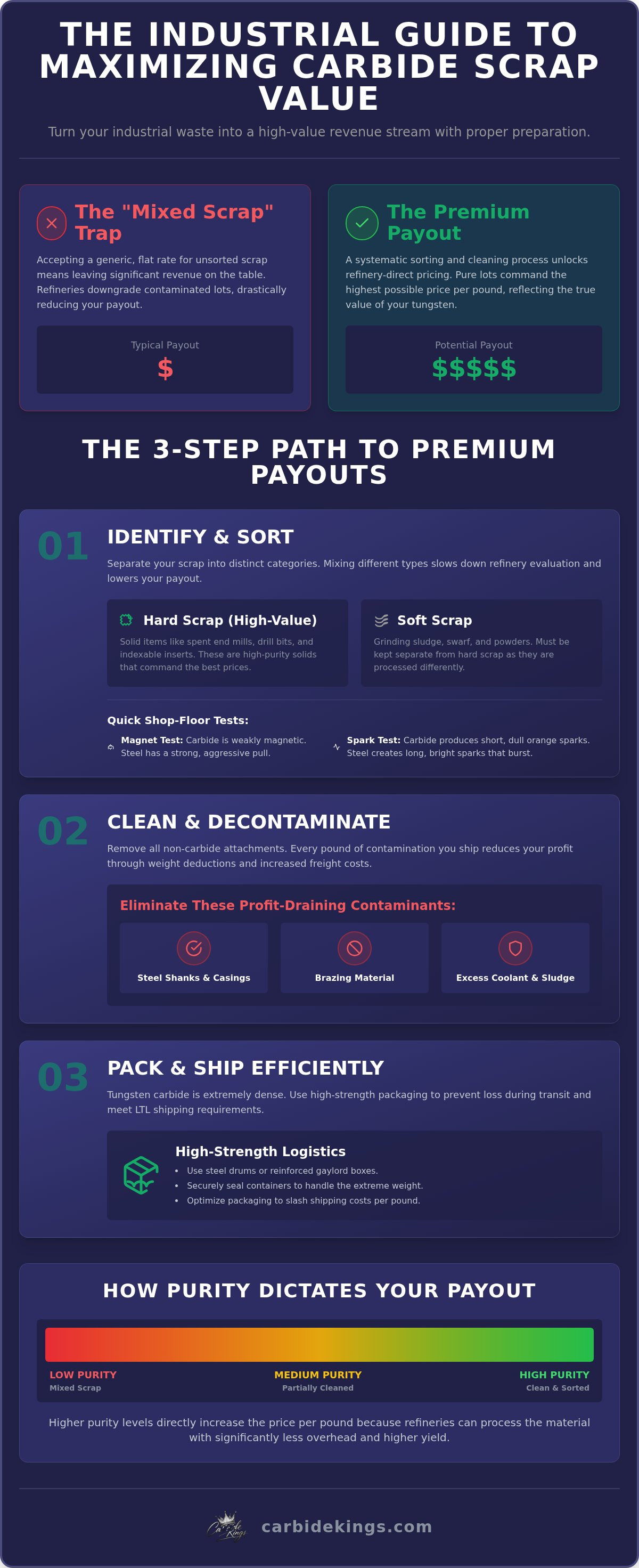
Mixing tool steel or high-speed steel (HSS) with your carbide is a costly mistake. Refineries view contamination as a liability because it complicates the recycling process. Even a small percentage of steel in a carbide bin can trigger a "mixed lot" classification, which carries a much lower valuation. Higher purity levels directly increase the tungsten carbide scrap price you receive because refineries can process the material with significantly less overhead.
Setting Up an Internal Scrap Workflow
Efficiency begins on the shop floor. Don't wait until the end of the month to sort your waste. Implement a dedicated bin system at each workstation where tool failures occur. This prevents cross-contamination before it starts. Use these steps to standardize your collection:
- Label bins clearly: "Carbide Only," "Tool Steel," and "Tungsten Alloys."
- Train your staff to use a simple magnet test; carbide is only weakly magnetic, while steel has a strong pull.
- Separate hard scrap like end mills and inserts from soft scrap like grinding sludge or fines.
Standardizing this process turns scrap management into a routine part of your operation rather than a logistical burden. It ensures that every pound you ship is ready for immediate evaluation and top-tier payment.
Identification and Sorting: Hard Scrap vs. Soft Scrap
Distinguishing between different forms of tungsten is the foundation of preparing carbide scrap for sale. Hard scrap includes solid items like spent end mills, drill bits, and indexable inserts. These are high-purity solids that command the best prices. On the other hand, soft scrap consists of grinding sludge, swarf, and powders. Refineries process these materials using different chemical methods, so keeping them separate is mandatory for a fast payout. Mixing the two only slows down the evaluation process and complicates your logistics.
Use two simple shop-floor tests for quick identification. First, perform a magnet test. Due to the cobalt binder used in manufacturing, tungsten carbide is weakly magnetic. It won't have the aggressive, high-strength "snap" associated with tool steel. Second, use the spark test. When held to a grinder, carbide produces short, dull orange sparks that don't travel far. In contrast, steel produces long, bright white or yellow sparks that "burst" at the ends. Understanding these properties of tungsten carbide prevents you from accidentally shipping lower-value alloys in your premium carbide bins.
Sorting Solid Carbide Tools
Not all tools are 100% carbide. You must differentiate between solid carbide end mills and carbide-tipped tools. Tipped tools often have a steel shank, which must be removed to avoid weight deductions at the refinery. Indexable inserts are particularly valuable because they're typically high-purity cobalt-bonded carbide. Sort your solids by weight and size; larger, uniform lots are easier for buyers to evaluate quickly. If you aren't sure about a specific alloy in your bin, requesting a professional material evaluation can clarify your lot's value before you arrange transport.
Handling Grinding Sludge and Swarf
Managing soft scrap requires more care than solids. Grinding sludge is often wet, but tungsten soft scrap buyers typically require specific moisture content levels to provide an accurate quote. Excess coolant adds weight without adding value, which means you're essentially paying to ship water. Store wet sludge in leak-proof, reinforced drums to prevent environmental hazards. Avoid mixing grinding wheel grit or floor sweepings into your swarf. High silica content from grinding wheels can lead to refinery rejection or significant price downgrades. Keeping your soft scrap free from non-metallic debris is the only way to ensure a high-yield payout.
Removing Contaminants and Non-Carbide Attachments
Refineries buy tungsten, not the steel holders it's attached to. When you skip the extraction process, you're essentially handing over a portion of your profit as a processing fee. Refineries deduct value for steel shanks and casings because these materials interfere with the chemical recovery process. Properly preparing carbide scrap for sale means presenting a lot that is as close to 100% tungsten carbide as possible. This transparency builds trust with your buyer and ensures your payout is based on high-purity weight rather than a penalized estimate. Even modern coatings like Titanium Nitride (TiN) or Aluminum Titanium Nitride (AlTiN) are typically accepted without issue, so focus your labor on removing bulk physical attachments rather than surface finishes.
Safety is paramount during the extraction process. Fractured carbide is razor-sharp. Use heavy-duty, cut-resistant gloves and full eye protection when pressing or cutting tools. Brittle carbide can shatter under pressure, sending fragments across the shop floor. Establish a clear safety perimeter and use shielded equipment to manage these risks effectively. Never attempt to manually pry carbide from a steel holder with standard hand tools; the sudden release of tension can cause serious injury.
Mechanical Removal of Steel
Use a hydraulic press to pop carbide inserts out of their seats or a high-speed saw to remove steel shanks from end mills. If the carbide is brazed, you may need a torch to melt the silver solder. However, this requires high-quality ventilation to manage hazardous fumes. When the labor cost per hour for extraction exceeds the projected price increase for the clean material, it is more profitable to sell the tools in their current state. Focus your efforts on large-batch extractions where the weight of the steel represents a significant percentage of the total lot weight. Efficiency in this step directly impacts your final ROI.
Cleaning and Degreasing
Cutting fluids and heavy oils are common contaminants in machine shop waste. While a light film is acceptable, pooling oil adds significant weight that provides zero financial return. Dry, oil-free scrap is the gold standard for shipping and accurate weighing. Following standards recognized by the Recycled Materials Association (ReMA) ensures your material meets professional trade requirements. Excess oil also creates safety hazards during transport and can cause excessive smoke during the refinery's melting process. Dispose of removed oils and steel shanks through appropriate local channels to maintain an environmentally responsible workflow. Clean scrap is a signature of a professional, streamlined operation that values precision.
Logistics: Storing and Packing Bulk Carbide for National Shipping
Density is the primary challenge when preparing carbide scrap for sale. Tungsten is roughly 2.5 times denser than steel, meaning traditional shipping containers often fail under the weight. You must use reinforced, industrial-grade containers to prevent ruptures during transit. A standard 5-gallon bucket filled with carbide can easily exceed 300 pounds. This extreme weight-to-volume ratio means your packing strategy must prioritize structural integrity over total volume. If a container fails during LTL transport, the resulting delays and cleanup fees will quickly erase your profit margins.
Load security is the next priority. Shifting metal can compromise the balance of a pallet, creating a safety hazard for freight handlers. Use heavy-duty steel or polyester strapping to secure containers to a sturdy, heat-treated pallet. Avoid using old or damaged pallets that may crack under high-density loads. Once strapped, apply multiple layers of industrial shrink-wrap to the entire pallet. This adds a final layer of containment and protects your material from moisture during the shipping process.
Maximizing Container Efficiency
Steel drums are the industry gold standard for bulk carbide lots. They offer the necessary rigidity to withstand the pressure of shifting solids. If you choose heavy-duty plastic bins, ensure they are double-walled and rated for industrial weights. Pack your containers as tightly as possible to eliminate "dead space." Loose items move during transport, which increases the risk of container wall failure. Clearly label every drum with the material type, such as "Tungsten Hard Scrap" or "Soft Scrap Sludge." This labeling ensures your lot is directed to the correct intake line immediately upon arrival at the refinery.
Working with National Buyers
National buyers offer superior rates compared to local scrap yards because they move material directly into the refinery system. However, this requires a methodical approach to freight and documentation. For lots exceeding 500 lbs, Less Than Truckload (LTL) shipping is the most efficient choice. Understanding the industrial carbide scrap recycling process helps you prepare the necessary paperwork, including an accurate Bill of Lading (BOL). Your documentation should clearly state the total pallet weight and the specific metal class to avoid delays at weigh stations.
Always secure insurance for high-value metal shipments. Tracking is equally essential for transparency throughout the transit period. Professional buyers often assist with freight logistics, but you remain responsible for the initial load security. A well-palletized shipment is the final step in guaranteeing a successful transaction. If you have a bulk lot ready for transport, contact Carbide Kings for a freight evaluation and see how we handle the logistical heavy lifting for you.
Partnering with Carbide Kings for Professional Procurement
Selecting the right procurement partner is the final step in your scrap management strategy. While local scrap yards offer convenience, they rarely have the specialized equipment or refinery connections to pay full market value for tungsten. Carbide Kings operates as a direct buyer, offering refinery-grade pricing to machine shops and manufacturers across the United States. We eliminate the middleman, ensuring that the effort you put into preparing carbide scrap for sale results in the highest possible ROI. Our process is built on transparency, providing detailed purity analysis and certified weighing for every lot we receive.
We understand that industrial professionals value time as much as revenue. That's why we've stripped away the corporate bureaucracy that often plagues larger tool manufacturers' recycling programs. You won't wait weeks for a quote or months for a check. We provide an evaluation within 24 hours and offer fast, reliable payment terms that keep your cash flow moving. By handling the logistical heavy lifting, we allow your team to stay focused on production while we manage the complexities of metal transport and recovery.
The Carbide Kings Advantage
Our specialization in tungsten hard scrap, soft scrap, and alloys gives us a competitive edge that general recyclers can't match. We don't just buy your waste; we provide a professional outlet for high-volume industrial material. For large manufacturing plants, knowing where to recycle tungsten carbide is a matter of both financial and environmental responsibility. We support these facilities with streamlined pickup services and consistent pricing models that reflect the current Ammonium Paratungstate (APT) benchmarks. Our commitment to reliability has made us a trusted partner for shops that require a no-nonsense approach to scrap procurement.
Get a Quote for Your Prepared Scrap
Getting paid for your carbide waste is a straightforward, three-step process. First, take clear photos of your sorted material and provide a rough weight estimate. You can submit this information through our digital portal for an immediate evaluation. Once you approve the quote, we assist with the freight logistics for bulk lots, ensuring your shipment is palletized and insured according to the standards we've discussed. After the material arrives at our facility and passes purity verification, we issue payment immediately. It's a transparent workflow designed to turn your tool waste into a predictable revenue stream. Ready to sell? Contact Carbide Kings for a quote today.
Maximize Your Scrap Revenue Today
Turning your industrial waste into a high-value revenue stream requires a commitment to process. By implementing a dedicated sorting workflow and removing steel contaminants, you eliminate the risk of costly price downgrades. Remember that preparing carbide scrap for sale is about more than just cleanliness; it's about providing a high-purity lot that refineries can process efficiently. Secure your load in reinforced containers and choose a procurement partner that understands the extreme density of tungsten. This methodical approach ensures you receive a payout that reflects the true market value of your material.
Carbide Kings provides the national logistics support and expert metal analysis you need to bypass local scrap yards. We offer refinery-direct pricing that reflects the professional standards of your hard and soft scrap lots. Stop settling for mixed-metal rates and start working with a partner that handles the heavy lifting for you. Get an Instant Quote on Your Carbide Scrap and experience a streamlined path from contact to cash. Your shop floor is sitting on untapped capital; it's time to reclaim it with confidence.
Frequently Asked Questions
Do I need to remove the steel shanks from my carbide end mills before selling?
You should remove steel shanks to secure the highest possible payout. Refineries calculate your return based on the purity of the tungsten; therefore, any attached steel results in a weight deduction or a processing penalty. While we accept carbide-tipped tools, the labor you spend on extraction directly increases your profit per pound. This is a critical step in preparing carbide scrap for sale if you want to avoid generic mixed-metal rates and access refinery-direct pricing.
Is there a minimum weight requirement for selling carbide scrap to Carbide Kings?
We prioritize industrial-grade lots to maintain a streamlined procurement process. While we don't have a strict minimum for all materials, shipping smaller amounts often becomes cost-prohibitive due to the high density of the metal. For the best financial results, we recommend consolidating your scrap into lots of at least 50 pounds. This volume allows you to take full advantage of our national logistics support and expert metal analysis while maximizing your shipping efficiency.
How can I tell the difference between carbide and high-speed steel (HSS)?
Use a magnet and a bench grinder for quick identification. Tungsten carbide is only weakly magnetic due to its cobalt binder, while high-speed steel (HSS) has a very strong magnetic pull. If you perform a spark test, carbide produces short, dull orange sparks that stay close to the wheel. HSS produces long, bright yellow or white sparks that burst at the ends. These physical tests ensure you don't accidentally contaminate your high-value carbide bins.
What happens if my carbide scrap lot is contaminated with other metals?
Contaminated lots are typically downgraded to a "mixed scrap" classification. Refineries use chemical analysis to determine the value of your material, and stray metals like tool steel or copper complicate the recovery process. This leads to lower price offers and longer evaluation times. Keeping your bins free of non-carbide debris is essential for maintaining high purity levels. Clean lots move through our system faster, ensuring you receive a transparent, top-tier payment without unnecessary deductions.
Can I sell grinding sludge or "soft scrap" if it is still wet?
You can sell wet grinding sludge, but the moisture content will impact your final quote. Excess coolant or water adds weight that doesn't contain tungsten, which means you're essentially paying to ship material with no scrap value. Most tungsten soft scrap buyers require specific moisture levels for an accurate evaluation. We recommend allowing sludge to settle or using a centrifuge to remove as much liquid as possible before packing it into leak-proof, reinforced drums for transport.
How long does the payment process take once my scrap is received?
Our payment process is designed for speed and professional efficiency. Once your material arrives at our facility, we perform a purity analysis and weight verification immediately. We typically provide a final evaluation within 24 hours of receipt. After you approve the results, we issue payment according to our agreed-upon terms. This fast turnaround minimizes the time your capital is tied up in scrap and reflects our commitment to being a reliable partner for your business.
Does Carbide Kings provide shipping containers or freight services?
We provide comprehensive freight support for bulk lots exceeding 500 pounds. While you are responsible for the initial packing and load security, we handle the logistical heavy lifting of arranging national transport. We work with trusted LTL carriers to ensure your high-density tungsten shipments are handled safely and professionally. If you are preparing carbide scrap for sale in smaller quantities, we can guide you on the best shipping methods to keep your costs low and your return high.
Is it worth sorting different grades of carbide (e.g., C2 vs. C6)?
Sorting by specific industrial grades like C2 or C6 is usually unnecessary for scrap valuation. Refineries focus on the total percentage of tungsten and the type of binder used, such as cobalt. Your time is better spent on higher-impact tasks like removing steel attachments or separating hard scrap from soft scrap sludge. These primary sorting methods have a much larger influence on your final payout than distinguishing between different sub-grades of carbide within the same lot.


