

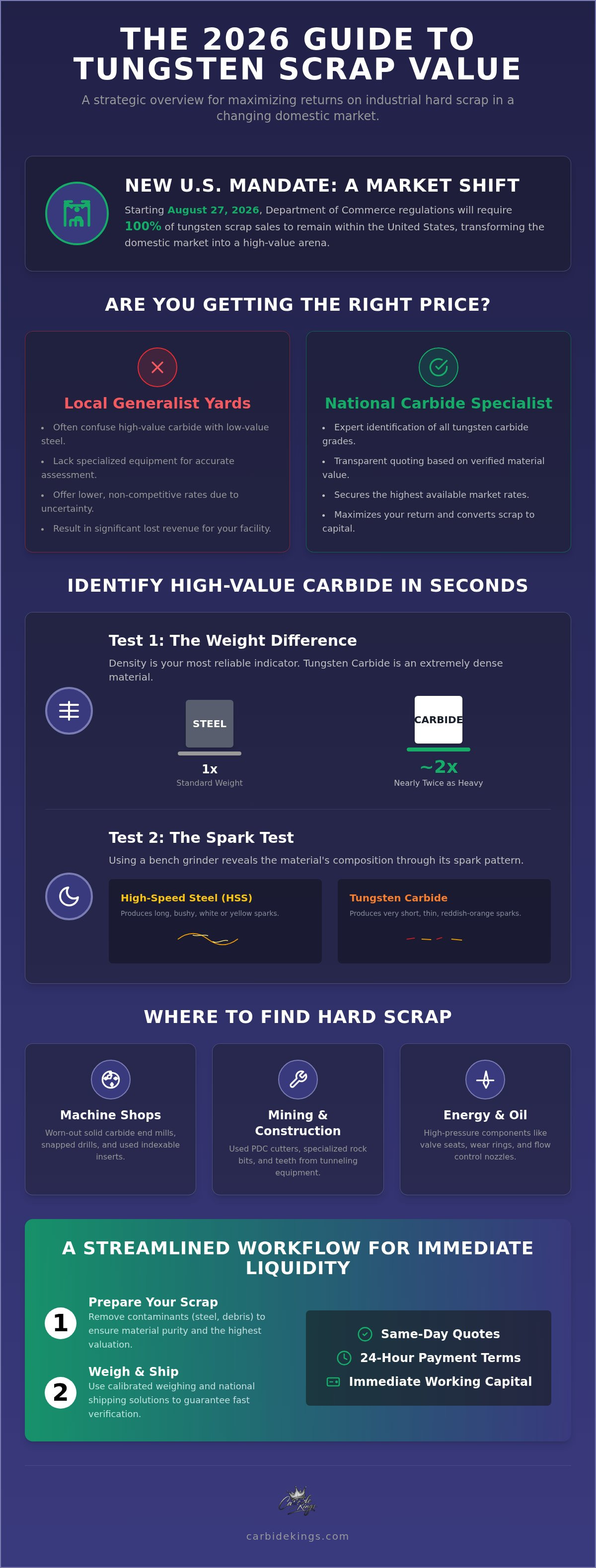
Starting August 27, 2026, new Department of Commerce regulations mandate that 100% of your tungsten scrap sales must remain within the United States. This strategic shift has turned the domestic market into a competitive arena, making it more important than ever to find a reliable partner. You've likely struggled with local yards that can't tell the difference between high-value carbide and basic tool steel. It's frustrating to watch potential profits sit on your shop floor because of confusing price fluctuations or high shipping costs. When you want to sell tungsten hard scrap, you need a process that respects your time and your bottom line.
This 2026 industrial guide simplifies the entire transaction. You'll learn how to accurately identify your materials, prepare them for transport, and secure the highest market rates available today. We'll show you how to bypass traditional administrative hurdles with national shipping solutions and transparent quoting systems. The goal is simple: get your materials verified and your payment sent within 24 hours. Stop letting heavy metal scrap clutter your facility and start converting it into immediate working capital.
Key Takeaways
- Understand how the 2026 U.S. export regulations have shifted market dynamics, making domestic recycling partnerships more valuable than ever.
- Learn to distinguish high-value carbide inserts and rods from low-value steel tools to ensure your inventory is priced accurately.
- Discover the logistical advantages of using a national partner to sell tungsten hard scrap instead of settling for lower rates at local generalist yards.
- Master a simple two-step preparation process that removes contaminants and uses calibrated weighing to guarantee the fastest possible verification.
- Secure immediate liquidity for your industrial facility with a streamlined workflow that offers same-day quotes and 24-hour payment terms.
Understanding the Industrial Value of Tungsten Hard Scrap
Tungsten hard scrap consists of solid carbide tooling and high-performance wear parts that have reached the end of their service life. Don't confuse these materials with standard ferrous scrap like iron or common steel. Tungsten carbide is an elite industrial material. Its market value is driven by extreme density and a melting point that ranks among the highest of all known elements. When you choose to sell tungsten hard scrap, you aren't just offloading shop floor waste. You're liquidating a critical mineral that is indispensable to high-tech manufacturing.
General scrap yards often treat all heavy metals the same. This is a mistake that costs you money. Ferrous metals are abundant and low-value. In contrast, tungsten is a rare material with a price point that reflects its scarcity and the difficulty of its extraction. Professional buyers distinguish hard scrap from common steel by its weight and specific non-magnetic properties. Understanding this distinction ensures you don't leave money on the table when clearing out your tool room.
Why Manufacturers Prioritize Hard Scrap Recovery
The global industrial landscape depends on a consistent flow of tungsten. High-precision sectors like aerospace and automotive manufacturing rely on the specific Tungsten Carbide Properties of incredible hardness and thermal stability. Because a single nation currently controls the vast majority of primary ore production, domestic recovery has become a matter of strategic necessity. Recycling tungsten requires a fraction of the energy used in primary mining and chemical refinement. This efficiency keeps production costs down and protects domestic manufacturers from global supply shocks. Tungsten hard scrap is the gold standard of industrial recycling.
Key Applications: Where Hard Scrap is Generated
Identifying your inventory is the first step toward a successful transaction. Hard scrap is generated in high-stress environments where tools must withstand extreme friction and heat. If your facility operates in these sectors, you likely have a hidden revenue stream in your bins:
- Machine Shops: This is the most common source. Collect worn-out solid carbide end mills, snapped drills, and used indexable inserts. Even small pieces of broken carbide bits add up to significant weight.
- Mining and Construction: These industries use tungsten for its impact resistance. Look for used PDC cutters, specialized rock bits, and teeth from large-scale tunneling equipment.
- Energy and Oil: Components that handle high-pressure flow are often made of tungsten alloys. These include valve seats, wear rings, and flow control nozzles.
These items retain their fundamental chemical value even when they are cracked, chipped, or completely worn down. Fast liquidation of these materials turns dormant inventory into immediate working capital.
Identifying High-Value Hard Carbide Scrap Categories
Don't let your scrap bin become a collection of unidentified metal. Knowing how to categorize your materials is the only way to maximize your return. While most people recognize a worn-out drill bit, many high-value items are overlooked. Common hard scrap items found in industrial tool rooms include indexable inserts, solid carbide end mills, drawing dies, and specialized saw tips. These tools retain their value even after they've lost their edge.
Sorting your materials by grade is a professional move that pays off. The industry often uses the C-grade system to classify carbide. Metal-cutting grades (C1 through C4) and steel-cutting grades (C5 through C8) have different chemical compositions and binder ratios. Specialty alloys like cobalt-tungsten carbide are particularly valuable because the cobalt binder is highly sought after by refiners. The diverse range of Industrial Tungsten Applications in tooling means your scrap bin could contain several different grades. If you're unsure about your lot's composition, you can get a professional evaluation at carbidekings.com.
The "Spark Test" and Weight Identification
Density is your most reliable tool for identification. Tungsten carbide is nearly twice as heavy as standard steel. If a small tool feels unexpectedly heavy for its size, it's likely carbide. You can also use a bench grinder to perform a quick spark test. High-speed steel (HSS) produces long, bushy, white or yellow sparks. In contrast, tungsten carbide produces very short, thin, orange sparks. Look for markings like "CARBIDE" or specific grade stamps on the shanks of larger tools to confirm your findings before you mix them into your bins.
Solid Carbide vs. Tipped Tooling
You'll receive the highest rates when you sell tungsten hard scrap that is "clean." This means the material is free from steel attachments. Solid carbide end mills and drills are high-value because they are 100% carbide throughout the entire tool. Tipped or brazed tooling presents a different challenge. These are tools where a small carbide tip is welded or brazed onto a steel shank.
Refiners must separate these materials before processing. If you have the equipment, removing the steel shanks from your carbide tips will significantly increase the value of your lot. If you can't remove the steel, keep these items separate from your solid carbide. Mixing "dirty" scrap with clean material often results in the entire lot being priced at a lower grade. Sort your bins early to keep your profits high and your transaction moving fast.
Hard vs. Soft Tungsten Scrap: Maximizing Your Return
Industrial facilities generate tungsten waste in two primary forms: hard scrap and soft scrap. Hard scrap consists of the solid carbide items discussed earlier, such as inserts, rods, and end mills. Soft scrap includes grinding sludge, swarf, and fine powders created during tool sharpening or part finishing. While both materials have significant value, their processing paths at the refinery are very different. If you want to sell tungsten hard scrap, you'll generally secure a higher price per pound compared to soft materials. This price gap exists because solid pieces are easier to handle, verify, and recycle. For those specifically managing grindings or wet waste, we provide a specialized guide for Tungsten Soft Scrap Buyers.
Valuation Drivers for Hard Scrap
Refineries prioritize hard scrap because of its high purity levels and ease of processing. Solid carbide pieces are essentially a finished metallurgical product that only needs to be crushed and chemically treated to recover the tungsten. Soft scrap, however, often contains high levels of contamination. Grinding sludge is frequently saturated with water, oil, or synthetic coolants that must be burned off before recovery can begin. This extra step increases processing costs and lowers the net return for the seller. Hard scrap requires less metallurgical refinement than sludge. By focusing your recovery efforts on solid pieces, you eliminate the logistical headaches and environmental fees often associated with hazardous wet waste.
Inventory Management for Maximum ROI
Effective inventory management is the secret to a high-yield transaction. You should establish a strict separation protocol on your shop floor to prevent high-value carbide from being mixed with general waste. A single bin of mixed metals forces the buyer to spend hours sorting, which inevitably reduces your quote. Use these strategies to protect your profits:
- Isolate Carbide from HSS: Never mix carbide inserts with High-Speed Steel (HSS). HSS contains far less tungsten and is valued much lower. A mixed bin is often priced at the lowest common denominator.
- Keep Bins Dry: While hard scrap isn't as sensitive to moisture as sludge, keeping your bins free of trash and floor sweepings makes the verification process faster.
- Optimize Lot Sizes: Tungsten is incredibly dense. Shipping small amounts frequently is expensive due to minimum freight charges. Aggregate your material until you have a significant lot to maximize shipping efficiency.
Streamlining your internal collection process ensures that when you're ready to sell, your material is clean and ready for immediate valuation. This professional approach removes friction and gets your payment processed faster.
How to Prepare Your Tungsten Scrap for National Shipment
Shipping heavy metal requires more than just a box and a label. Tungsten is exceptionally dense. A small container can easily exceed the weight limits of standard shipping materials. To sell tungsten hard scrap successfully on a national level, you must follow a methodical preparation process that ensures your material arrives safely and your quote remains accurate. Following a professional workflow reduces the risk of transit damage and speeds up your payment timeline.
Follow these four steps for a professional shipment:
- Step 1: Conduct a final sort. Open your bins one last time. Remove any stray high-speed steel (HSS), plastic, or steel attachments that might've slipped through. Purity directly impacts your final payout.
- Step 2: Weigh your material. Use a calibrated industrial scale. Record the weight of the material separately from the container (tare weight). Precise measurements prevent discrepancies during the verification phase.
- Step 3: Secure the load. Place your scrap in heavy-duty buckets or reinforced crates. Ensure the lids are sealed tightly so they don't pop open under the stress of transit.
- Step 4: Finalize the pickup. Request your formal quote. Once you've accepted the terms, schedule a national carrier pickup to move your material from your dock to the refinery.
Packaging Standards for Heavy Metals
Standard cardboard boxes are inadequate for tungsten transport. They often burst under the concentrated weight of carbide inserts or rods. Instead, use reinforced 5-gallon buckets for smaller lots. If you're moving high-volume loads, palletize these buckets and secure them with heavy-duty shrink wrap and steel banding. This level of preparation mirrors The Industrial Carbide Scrap Recycling Process used by leading refineries. Proper containment prevents loss during transit and ensures your material is handled with the respect its value deserves.
Logistics and Documentation
Clear documentation is your best defense against logistical errors. When you fill out your Bill of Lading (BOL), classify the shipment as "Scrap Metal, Non-Hazardous." Take clear, dated photographs of the material inside the container and the sealed container on the pallet before it leaves your facility. These photos serve as vital evidence for insurance purposes if the load is damaged. Ensure your carrier provides a tracking number immediately. High-value carbide loads should always include insurance coverage that matches the estimated market value of the material. For a streamlined shipping experience, start your quote with Carbide Kings and let our logistics team handle the heavy lifting.
Partnering with Carbide Kings for Fast, High-Volume Liquidation
Speed is a competitive advantage in industrial operations. When you decide to sell tungsten hard scrap, you shouldn't have to wait weeks for verification or payment. Carbide Kings operates with a 24-hour payment guarantee upon material verification. We've eliminated the administrative lag that plagues traditional scrap dealers. Our process is designed for high-volume industrial accounts that value transparency and professional efficiency. We treat your scrap like the high-value asset it is, ensuring a fast transition from your shop floor to your bank account.
Local generalist scrap yards often lack the specialized equipment needed to accurately value tungsten alloys. They might price your high-grade carbide at a generic "heavy melt" rate, costing you thousands in lost revenue. As a national leader, we maintain direct relationships with refineries. This allows us to offer rates that generalists simply can't match. Choosing to sell tungsten hard scrap to a specialist ensures your material is evaluated using industrial-grade analysis rather than a visual guess. We handle everything from standard C-grade inserts to complex tungsten alloys and soft scrap powders.
The Advantage of Industrial Specialization
Our ability to process diverse grades of hard scrap makes us a proactive partner for complex manufacturing facilities. We don't just buy metal; we provide a liquidation service that integrates with your existing workflow. Manufacturers across the United States have moved away from local yards in favor of our streamlined procurement model. One aerospace contractor consolidated their scrap collection from multiple facilities into our national program. By centralizing their liquidation, they reduced their administrative overhead and significantly increased their net return. We handle the heavy lifting so you can stay focused on your core production goals.
Getting Started: Your First Quote
Our "no-nonsense" approach begins with a simplified quoting process. You don't need to navigate complex spreadsheets or wait days for a callback. We provide same-day quotes based on two simple factors: your material type and the total weight. This clarity removes the guesswork and allows you to make informed decisions about your inventory liquidation immediately. We value your time as much as your material.
We take full responsibility for the logistics. Once a quote is accepted, we provide the necessary shipping labels and coordinate the carrier scheduling. You won't have to spend time negotiating freight rates or hunting down national carriers. The entire workflow mirrors a standard retail transaction, moving from initial contact to final payment with zero friction. Get your same-day tungsten scrap quote here and experience a faster way to liquidate your industrial materials.
Maximize Your Industrial Returns Today
Identifying and sorting your materials is the most effective way to protect your facility's margins. By distinguishing solid carbide from low-value steel and following professional packaging standards, you ensure your lot receives the highest possible market rate. The 2026 regulatory landscape has made domestic recycling a strategic necessity for American manufacturers. When you're ready to sell tungsten hard scrap, you need a partner that moves at the speed of your production line. Don't settle for the slow processing times or vague quotes of a local generalist yard.
Carbide Kings provides specialized industrial procurement designed for professional efficiency. We've eliminated the traditional friction of scrap liquidation by offering nationwide US shipping support and guaranteed 24-hour payment terms upon verification. Our process is transparent, fast, and built to handle high-volume industrial accounts. You've done the hard work of generating the material; let us handle the heavy lifting of the logistics. Request a Same-Day Quote for Your Tungsten Hard Scrap and turn your dormant inventory into immediate working capital today.
Frequently Asked Questions
How can I tell the difference between tungsten carbide and high-speed steel (HSS)?
Density is the most reliable indicator for identification. Tungsten carbide is nearly twice as heavy as high-speed steel. If a small tool feels surprisingly heavy for its size, it's likely carbide. You can also use a bench grinder for a spark test to confirm. HSS produces long, bushy white or yellow sparks. Carbide creates very short, thin orange sparks. These physical properties allow for quick identification in a busy shop environment.
What is the current price per pound for tungsten hard scrap in 2026?
Market rates in 2026 are influenced by the Department of Commerce export restrictions that took effect in August. These regulations have tightened the domestic supply, making your scrap more valuable to U.S. buyers. Prices are generally tied to the global Ammonium Paratungstate (APT) index. Because market conditions change daily, we recommend requesting a same-day quote to get the most accurate and transparent valuation for your specific inventory.
Do I need to clean my carbide inserts before selling them?
You don't need to scrub or polish your inserts. We accept material in used, industrial condition. However, you should remove any plastic cases, cardboard, or floor sweepings from your bins. If you want to sell tungsten hard scrap for the highest possible rate, ensure the carbide is free from steel screws or shanks. High purity levels always lead to faster verification and much better payouts for your facility.
Is there a minimum weight requirement for selling tungsten scrap to Carbide Kings?
We focus on high-volume industrial liquidation but handle various lot sizes based on material grade and purity. Shipping efficiency is a major factor in your net return. Because tungsten is so dense, small shipments often incur high freight costs relative to their value. We recommend aggregating your scrap until you have a significant weight to maximize your profit margins and simplify the national shipping logistics.
How long does it take to receive payment after shipping my carbide scrap?
Our 24-hour payment guarantee is a core part of our professional service. Once your shipment arrives at our verification center, our team performs a metallurgical analysis and weight check. We initiate your payment through your preferred method within one business day of that verification. This streamlined process ensures you have immediate access to working capital without the long wait times typically found at local generalist scrap yards.
Can I sell carbide scrap if it has steel attachments or braze?
You can sell carbide scrap with steel attachments, but it's priced as brazed or tipped material. These items require a chemical or mechanical separation process at the refinery. To maximize your return, we suggest separating solid carbide from brazed tools before shipping. Keeping your clean and dirty scrap in different bins prevents the entire lot from being downgraded to a lower price bracket during the verification phase.
Do you provide shipping containers or buckets for bulk scrap?
We provide comprehensive nationwide shipping support for our industrial partners. Depending on the volume of your scrap, we can advise on the best containment methods, including heavy-duty buckets or palletized crates. We handle the carrier scheduling and documentation to make the process as simple as a retail transaction. Our goal is to remove every logistical hurdle between your shop floor and your final payment.
What happens to the tungsten scrap after I sell it?
Your scrap is processed in domestic refineries to support the U.S. supply chain. The tungsten is recovered through chemical or zinc-processing methods, turning old tools back into high-purity powder. This recycled material is then used to create new aerospace components, medical devices, and precision cutting tools. Recycling reduces the environmental impact of mining and secures critical minerals for national manufacturing and defense.


