
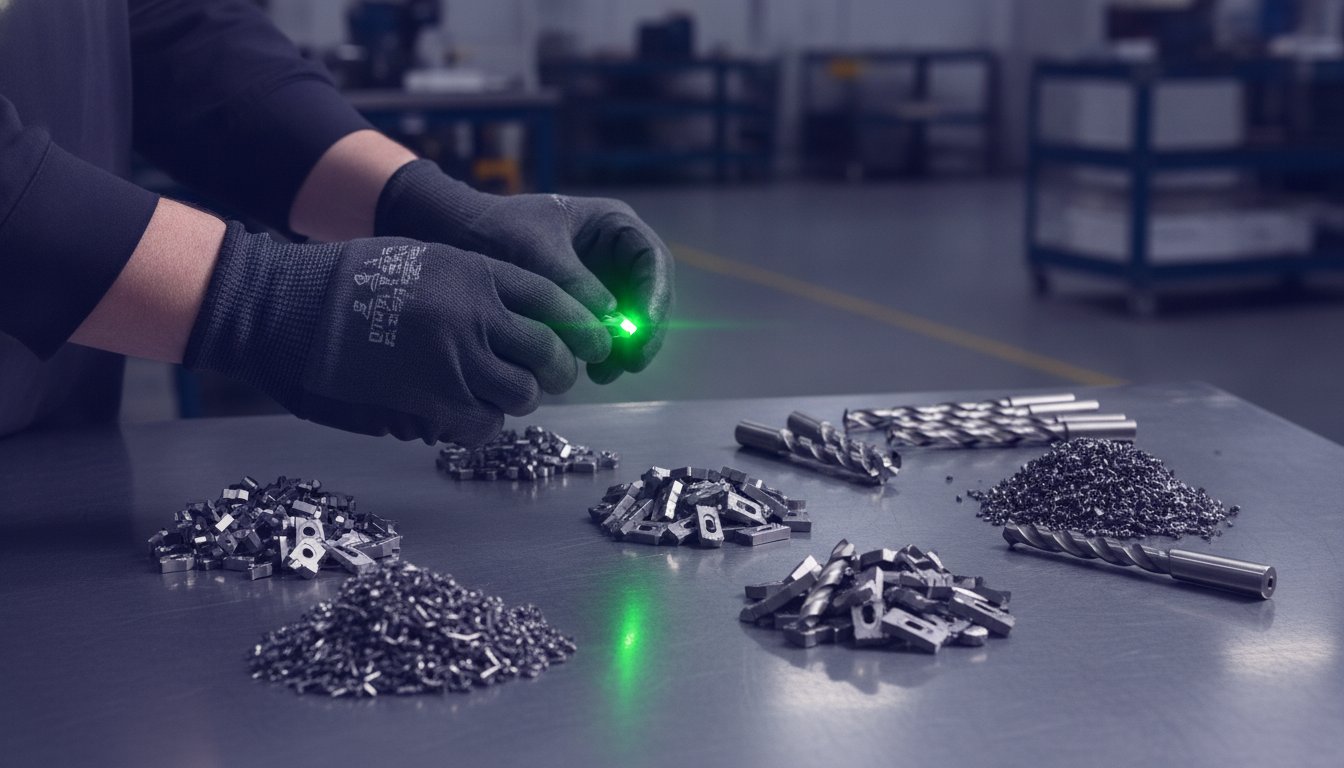
Tungsten prices surged by over 450% between 2025 and 2026, turning your workshop floor into a high-stakes asset. Despite this massive value spike, many industrial professionals lose significant revenue because they struggle with identifying different grades of tungsten carbide. You probably recognize the frustration of sorting through bins where high-value inserts are accidentally mixed with low-grade scrap steel. It's a common logistical burden, but leaving that money on the table is no longer an option in a market defined by China's strict 2026 export controls.
You need a reliable way to ensure you're getting a fair transaction every time you clear out your inventory. This article will help you master the technical and physical methods to identify carbide grades and unlock higher payouts for your industrial scrap. We'll clear up the confusion between ANSI and ISO systems while providing a logical sequence for testing your materials. You're about to learn how to separate your tungsten hard scrap and tungsten alloys with professional precision to ensure no value is wasted.
Key Takeaways
- Learn how the specific ratio of tungsten, carbon, and binder determines a tool's performance and its ultimate scrap value.
- Decode the ANSI and ISO classification systems to categorize your materials accurately for the highest market returns.
- Master simple physical tests, such as density and magnetism, to assist in identifying different grades of tungsten carbide right on your shop floor.
- Differentiate between high-value hard inserts and soft scrap sludge to ensure you're working with the right recycling specialists.
- Streamline your revenue with an efficient procurement process that provides fast weighing and quoting for your industrial scrap.
What is a Tungsten Carbide Grade and Why Does it Matter?
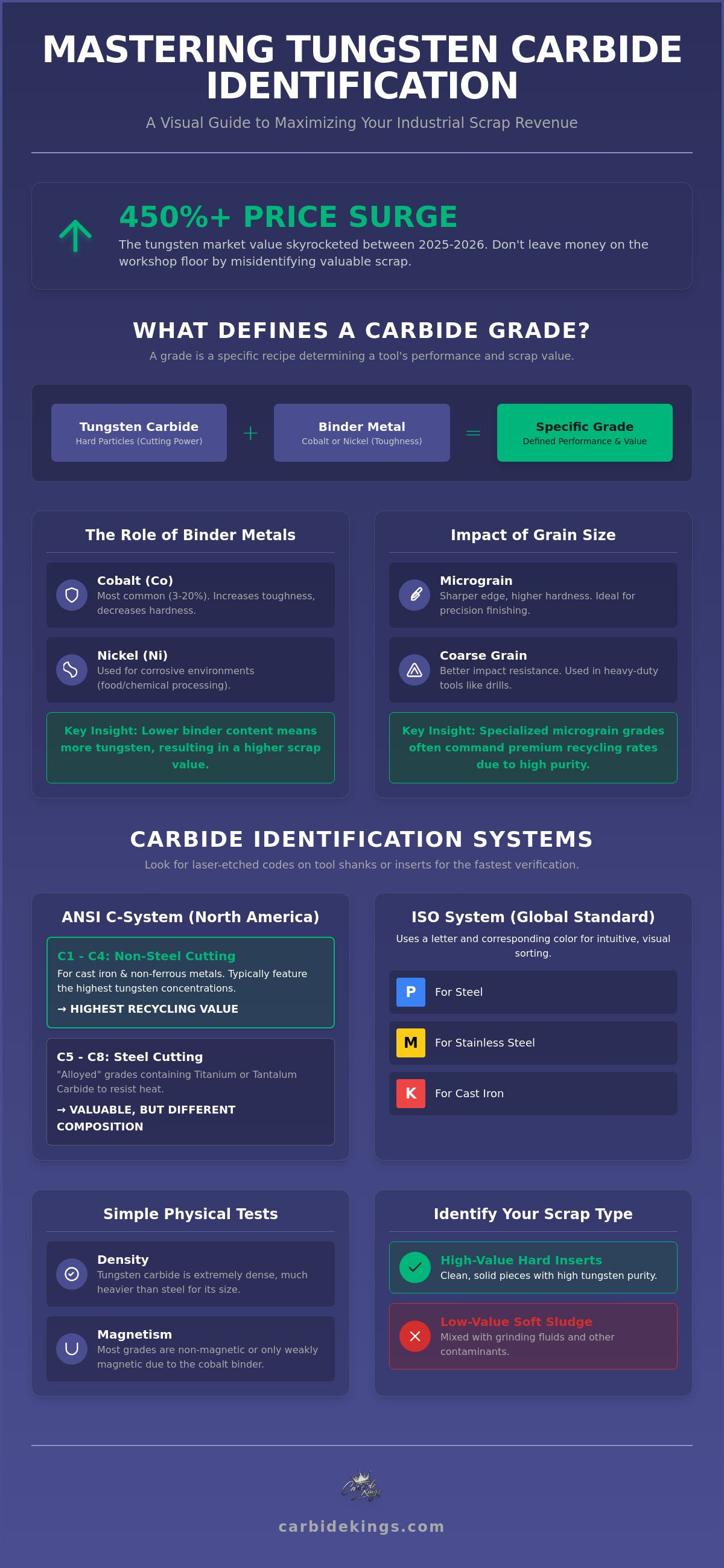
A tungsten carbide "grade" is more than just a part number. It is a specific metallurgical recipe that blends tungsten carbide particles with a metallic binder. This ratio determines how the material behaves under stress. Mastering the art of identifying different grades of tungsten carbide allows you to separate high-value materials from standard shop scrap. You shouldn't treat all grey metal the same; doing so leaves money on the table.
Every tool prioritizes a specific trait. Some recipes focus on extreme hardness to cut through hardened steel. Others prioritize toughness to survive the high-impact environment of a rock drill. These Tungsten carbide properties are defined by the interaction between the hard tungsten phase and the softer binder phase. The hard phase provides the cutting power, while the binder phase acts as the "glue" that prevents the tool from shattering.
Accurate identification is the only way to secure a precise tungsten carbide scrap price. If you mix low-binder inserts with high-binder wear parts, you're diluting your revenue. You need to know exactly what is in your bin to maximize your payout. It is about transparency and getting paid for the quality you've actually collected. Identifying different grades of tungsten carbide is the bridge between industrial waste and high-yield revenue.
The Role of Binder Metals in Grade Classification
Cobalt is the most common binder. It usually makes up 3% to 20% of the total weight. Higher cobalt levels increase toughness but decrease hardness. Nickel binders serve a different purpose. They are used for corrosive environments like food processing or chemical plants. As a rule, grades with lower binder content contain more tungsten. These tungsten-rich grades are almost always more valuable in the recycling market. You should prioritize separating these low-binder materials to ensure you aren't losing money on high-purity scrap.
Grain Size and Its Impact on Grade Performance
Grain size refers to the physical dimensions of the tungsten particles before sintering. Micrograin structures provide a sharper edge and higher hardness. They're ideal for precision machining and finishing. Coarse grain structures are better for heavy-duty impact tools that need to resist chipping. When you look at a milling insert, you're likely seeing a micrograin structure. A large hammer drill bit uses coarse grains to absorb shock. These distinctions aren't just technicalities. They are the foundation of your scrap's market value. Specialized micrograin grades often command premium recycling rates because of their high-purity composition.
The ANSI and ISO Systems for Carbide Identification
Standardization is your best friend when you're identifying different grades of tungsten carbide. Without a clear system, a bin of mixed inserts is just a pile of heavy metal. Two primary frameworks dominate the industry: the ANSI "C" system and the ISO color-coded system. Most reputable manufacturers laser-etch these codes directly onto the tool shanks or the faces of the inserts. Finding these marks is the fastest way to verify exactly what you're holding before you ship it.
Understanding these codes doesn't just help with inventory. It's a critical safety step. Handling various alloys can produce fine dust, so reviewing Tungsten safety information is a smart move for any shop manager. Once you've secured your workspace, you can focus on the technical details that drive up your scrap's value.
Decoding the ANSI C-System for Machinists
The ANSI system uses a simple "C" prefix followed by a number from 1 to 8. It's the standard for North American shops. Mastering this system is the most efficient way of identifying different grades of tungsten carbide at the source. You should look for these two main categories:
- C1-C4 (Non-Steel Cutting): These grades are designed for cast iron and non-ferrous metals. They typically feature the highest concentrations of pure tungsten carbide. Because they lack heavy additives, they often command better recycling rates.
- C5-C8 (Steel Cutting): These are "alloyed" grades. They contain titanium carbide or tantalum carbide to resist the heat of cutting steel. While still valuable, their chemical makeup is different from the C1-C4 series.
The ISO Color-Coded Identification Method
The ISO system is the global standard. It uses a letter and a corresponding color to make sorting intuitive. If you want to sell tungsten carbide wear parts for the best price, you need to recognize these three primary categories:
- Blue (P): Intended for steel and cast steel. These often include additives that can complicate the recycling chemistry.
- Yellow (M): Used for stainless steel. These may contain higher levels of nickel or tantalum.
- Red (K): Designed for cast iron and non-ferrous materials. Like the ANSI C1-C4 grades, these are usually the "cleanest" and most tungsten-rich materials in your bin.
Sorting your scrap by these codes ensures transparency. It removes the guesswork for the buyer and puts more cash in your pocket. If you're ready to move your sorted inventory, you can start your scrap quote with a partner who understands these technical distinctions.
Physical and Visual Methods to Identify Carbide Scrap
You won't always find a clean laser-etched code on your scrap. In many cases, years of industrial use have worn away the original markings. When labels fail, you must rely on physical properties. Mastering these field tests is essential for identifying different grades of tungsten carbide without expensive lab equipment. It's about using the tools you already have on the shop floor to maximize your revenue. You can quickly turn a pile of mystery metal into a sorted, high-value shipment.
Start with a visual inspection. Tungsten carbide has a heavy, matte gray finish. It looks dense and industrial. In contrast, common tool steel or high-speed steel (HSS) usually has a brighter, more reflective surface. If the metal looks "shiny" or "silvery," it's likely not high-purity carbide. If you're still in doubt, perform a spark test on a bench grinder. High-speed steel throws long, white, branching sparks that travel far. Tungsten carbide produces very short, dull orange sparks that stay close to the wheel. This simple visual cue can save you from mixing low-value steel into your high-value tungsten bins.
The Magnet Test: Identifying Binder Content
Grab a strong magnet. While pure tungsten is non-magnetic, the cobalt binder used in most industrial grades is highly magnetic. A strong pull usually suggests a higher cobalt content. As we discussed earlier, more binder means less tungsten, which can result in a lower value grade. You should also watch out for specialty "non-magnetic" grades. These often use nickel binders instead of cobalt to resist corrosion. If a piece feels incredibly heavy but doesn't react to a magnet, you've likely found a high-value nickel-bound alloy. Don't let these outliers confuse your sorting process. Keep them separate to ensure your quote reflects their specific chemistry.
Density and Weight Comparisons in the Shop
Weight is your most reliable metric. Tungsten carbide is incredibly dense. It typically ranges from 14 to 15 g/cm³, while standard tool steel sits around 7.8 g/cm³. This means a carbide insert is nearly twice as heavy as a steel part of the exact same size. Use a "hand-heft" comparison for quick sorting. Pick up a known steel tool in one hand and your mystery scrap in the other. If the scrap feels significantly heavier than it looks, it's almost certainly carbide. Experienced hard scrap carbide buyers prioritize this weight-to-volume ratio when providing quotes. It's the physical proof of the material's purity and value. Once you've felt the difference, you'll never mistake steel for carbide again.
Identifying High-Value Scrap: Inserts vs. Sludge
After you've performed your initial field tests, you must categorize your materials into two distinct streams. This is a vital step in identifying different grades of tungsten carbide because the processing methods vary significantly between solid parts and fine particles. Mixing these categories can complicate the transaction and delay your payout. You should treat your solid inserts as "hard scrap" and your grinding byproducts as "soft scrap."
Hard scrap includes the tools you use every day: milling cutters, solid carbide drills, and turning inserts. These are easy to handle and sort. Soft scrap is different. It consists of grinding sludge and swarf generated during tool manufacturing or sharpening. Many shop managers assume sludge is just industrial waste. In reality, this "waste" often contains high concentrations of pure tungsten. It's a hidden revenue stream that most people overlook. To maximize your returns, you must partner with specialized tungsten soft scrap buyers who have the equipment to process fine particulates.
Recognizing Premium Carbide Inserts
Not all inserts look the same. You'll often see gold-colored tools. These are TiN-coated (Titanium Nitride). This coating is only a few microns thick. It doesn't change the underlying chemistry or reduce the scrap value. You should also look for brazed tools, where a carbide tip is welded to a steel body. These require an extra step. If you want the maximum payout, you should remove the steel shanks. Selling pure carbide tips ensures you aren't paying to ship low-value steel. High-purity, uncoated, or TiN-coated inserts are the most straightforward materials for identifying different grades of tungsten carbide at a glance.
Soft Scrap: The Hidden Value in Grinding Sludge
Tungsten-rich sludge is easy to spot once you know what to look for. It has a dark gray, almost charcoal-like appearance. It's much heavier than it looks. If you pick up a bucket of sludge and it feels like it's filled with lead, you've found the good stuff. It's essential to keep this material separate from other metal contaminants like aluminum or copper. The carbide scrap recycling process for soft scrap uses chemical reclamation to pull the tungsten out of the binder and contaminants. This process is highly efficient and turns your floor sweepings into a lucrative asset. If you're ready to turn your sorted bins into revenue, request a quote for your tungsten scrap and let us handle the logistics.
Turn Your Identified Carbide into Revenue with Carbide Kings
You have finished the hard part of identifying different grades of tungsten carbide. Now you need a partner who values your expertise and your material. Stop viewing your bins as a disposal problem. Start treating your tungsten hard scrap and tungsten soft scrap as the high-value industrial assets they are. Carbide Kings provides a streamlined, national procurement process designed for professionals who don't have time for traditional scrap yard games. We handle the heavy lifting so you can stay focused on your production schedule.
Our workflow is fast and methodical. Once your shipment arrives at our facility, we begin our verification process immediately. We provide a 24-hour turnaround for weighing and quoting your materials. You won't wait weeks for a check or deal with endless paperwork. We prioritize transparency and speed because we know your time is money. Identifying different grades of tungsten carbide was the first step toward reclaiming your lost revenue; choosing the right buyer is the second.
How to Get a Quote and Ship Your Scrap
The process is built for efficiency. Gather your sorted carbide and request a quote online through our portal. It is a straightforward process that takes only a few minutes. We assist with national shipping logistics for bulk loads to ensure your material moves safely and efficiently from your floor to our facility. We buy hard scrap, soft scrap, and tungsten alloys from every industrial sector. Whether you are a small machine shop or a large-scale manufacturing plant, we provide the same high level of professional service.
The Carbide Kings Advantage
We offer a level of professional integrity that is rare in the scrap industry. You can expect direct payment within 24 hours of material receipt and verification. We offer flexible payment options, including wire transfers or checks, to suit your specific business needs. Our pricing remains competitive because it is based on real-time market data for tungsten. We remove the administrative hurdles that usually make recycling a chore. You get a no-nonsense service that turns your identified carbide into immediate working capital. It is a simple, lucrative partnership that rewards your attention to detail and keeps your operations lean. Reach out today and see how easy it is to turn your industrial scrap into a reliable revenue stream.
Maximize Your Industrial Scrap Revenue Today
Mastering the technical and physical methods for identifying different grades of tungsten carbide transforms your industrial waste into a high-yield asset. By decoding the ANSI and ISO systems and utilizing simple shop floor tests like the magnet and weight comparisons, you eliminate the guesswork that leads to diluted payouts. You now have the tools to distinguish between high-value solids and tungsten-rich sludge, ensuring every ounce of material is valued correctly.
You've done the work to sort your inventory; now it's time to secure your return. Carbide Kings offers specialized tungsten expertise and competitive national pricing to ensure you get the best possible value for your hard and soft scrap. We provide a no-nonsense procurement process that removes administrative hurdles and delivers 24-hour payment processing once your materials are verified. It's time to stop treating your carbide as general waste and start treating it as the lucrative resource it is.
Take control of your inventory and turn your sorted scrap into immediate working capital with a partner you can trust. Get an instant quote for your tungsten carbide scrap from Carbide Kings
Frequently Asked Questions
How can I tell the difference between tungsten carbide and high-speed steel (HSS)?
You can distinguish tungsten carbide from high-speed steel by its weight and spark pattern. Carbide is nearly twice as dense as HSS. If you touch the material to a grinder, carbide produces short, dull orange sparks that stay close to the wheel. HSS throws long, branching white sparks that travel much further. This physical distinction is the fastest way to avoid mixing low-value steel into your carbide bins.
Do different colors of carbide inserts mean they are different grades?
Colors on carbide inserts often indicate their ISO classification and intended application. Blue usually signifies steel-cutting grades, yellow is for stainless steel, and red is for cast iron or non-ferrous materials. These colors assist you in identifying different grades of tungsten carbide quickly on the shop floor. Always check for laser-etched codes to confirm the exact chemistry before finalizing your sort.
Is it worth sorting my carbide scrap by ANSI grade before selling?
Sorting by ANSI grade is highly lucrative because C1 through C4 grades often contain higher concentrations of pure tungsten. Steel-cutting grades (C5-C8) contain additives like titanium or tantalum that change the recycling chemistry. Keeping your non-steel cutting inserts separate ensures you get the highest possible payout for your most valuable materials. It turns a mixed pile into a premium, high-yield shipment.
Does the coating on a carbide insert change its scrap value?
The thin chemical coating on an insert does not reduce its scrap value. Coatings like Titanium Nitride (TiN) are only a few microns thick. They don't significantly impact the overall weight or the purity of the tungsten core. You should treat coated and uncoated inserts of the same grade as having equal value during your sorting process. We prioritize the core material's weight and chemistry over surface finishes.
Why is tungsten carbide so much more valuable than regular scrap metal?
Tungsten carbide is more valuable because tungsten is a critical, high-density metal with limited global supply. China controls over 80% of global production, and strict 2026 export controls have driven prices to historic highs. Its unique hardness and heat resistance make it indispensable for industrial tools. This scarcity and extreme industrial demand ensure it commands a much higher price than common steel or aluminum.
Can I sell carbide tools that have been brazed onto steel shanks?
You can sell brazed tools, but the steel shanks will lower the overall price per pound. We recommend removing the steel body whenever possible to isolate the pure carbide tips. If you ship them together, the weight of the low-value steel shanks dilutes the high-value tungsten. Clean, separated carbide always results in a faster and more lucrative transaction for your shop.
What is the most common grade of tungsten carbide found in machine shops?
The most common grade found in general machine shops is usually ANSI C2 or ISO K-series carbide. These are versatile, non-steel cutting grades used for machining aluminum, cast iron, and various non-ferrous alloys. Because they lack the complex additives found in steel-cutting tools, they are often the most straightforward materials for identifying different grades of tungsten carbide during a shop-wide cleanout or inventory audit.
How do I identify tungsten carbide grinding sludge?
You can identify tungsten carbide sludge by its extreme weight and dark gray, charcoal-like appearance. It feels significantly heavier than a similar volume of steel or aluminum grindings. This material is a byproduct of tool sharpening and manufacturing. If you find a bucket of fine, heavy dust that doesn't look like standard steel swarf, it's likely high-value soft scrap that can be chemically reclaimed.


