
That heavy pile of grinding sludge in the corner isn't just a shop floor hazard; it's a dormant revenue stream waiting to be tapped. Most industrial professionals see swarf and powders as a logistical nightmare that eats up floor space and spikes shipping costs. It's frustrating to manage wet, messy waste when you aren't even sure of its actual metal content. You deserve a recovery process that is as efficient as your primary production line.
Finding reliable tungsten soft scrap buyers shouldn't feel like a second job. This article teaches you how to identify, value, and sell your industrial byproducts to maximize your recovery and reclaim your shop floor. With the U.S. government's recent export ban on tungsten scrap effective August 27, 2026, domestic demand is shifting. We'll show you how to navigate these market changes while securing fair, market-based payments for your material. We'll cover everything from logistics simplification to understanding the current $10.00 to $13.00 per pound range for sludge and powders. It's time to turn your industrial waste into a streamlined, hassle-free profit center.
Key Takeaways
- Identify why grinding sludge and swarf are high-value chemical feedstocks rather than simple industrial waste.
- Learn how professional tungsten soft scrap buyers calculate the value of your material based on dry weight and metal concentration.
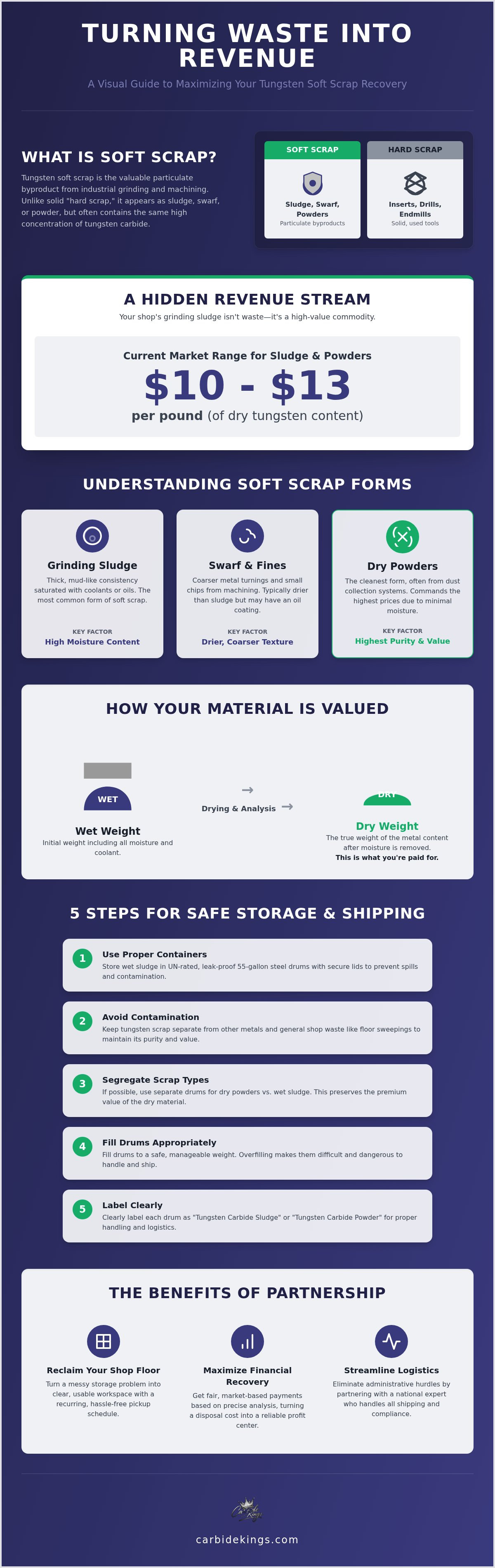
- Implement a 5-step checklist for storing and shipping wet sludge safely using leak-proof industrial drums.
- Discover how to eliminate administrative hurdles and streamline shop logistics by partnering with a national procurement expert.
- Reclaim your shop floor and maximize recovery through a recurring, hassle-free recycling process.
What is Tungsten Soft Scrap and Why is it Valuable?
Tungsten soft scrap is the particulate byproduct generated during industrial grinding, machining, and sharpening processes. It often appears as a dark, wet sludge or a fine metallic dust, causing many shops to mistake it for worthless debris. In reality, this material contains a high concentration of tungsten carbide, often matching the purity of solid tools. While hard scrap consists of solid items like spent drill bits or indexable inserts, soft scrap is the "leftover" material that remains after these tools are shaped or refurbished.
Recycling this material is an economic and environmental necessity. Tungsten is a critical mineral with a tightening global supply chain. By reclaiming it from manufacturing waste, you reduce reliance on primary mining and lower your overall carbon footprint. Professional tungsten soft scrap buyers see past the messy appearance of sludge to the raw chemical value hidden within. It's a direct way to turn a disposal cost into a revenue stream while keeping your facility compliant with modern sustainability standards.
Common Sources of Soft Scrap in Manufacturing
Grinding operations are the primary source of carbide sludge. As grinding wheels sharpen or shape carbide components, the removed material mixes with liquid coolants to create a heavy, viscous byproduct. You'll find these materials in several high-volume environments:
- Tool and Die Shops: Frequent sharpening and fabrication of precision instruments generate significant swarf and fines.
- Aerospace and Automotive: Large-scale machining of heat-resistant alloys produces consistent volumes of tungsten-bearing waste.
- Mining and Construction: Maintenance of heavy-duty wear parts often leaves behind recoverable powders.
The Chemical Advantage of Recycled Soft Scrap
From a metallurgical perspective, soft scrap offers a distinct advantage. Because the material is already in a pulverized state, it often requires less energy to process into new powders compared to solid carbide blocks. The presence of cobalt, which acts as a binder in most carbide tools, adds additional market value to the sludge. Recyclers can extract both elements efficiently, feeding them back into the production loop for new industrial tools. Tungsten soft scrap is a high-value industrial byproduct requiring specialized metallurgical recovery. This unique chemical profile makes it a sought-after commodity for specialized tungsten soft scrap buyers who understand how to handle wet or oily materials.
Understanding the Different Forms of Tungsten Soft Scrap
Maximizing the value of your industrial waste starts with accurate categorization. Not all byproducts are equal. Tungsten is classified as a critical mineral, and its particulate forms require specific handling to maintain their market worth. Most machine shops generate three primary types of soft scrap: grinding sludge, swarf, and dry powders. Professional tungsten soft scrap buyers evaluate these materials based on their physical state and chemical purity. Mixing these categories or allowing them to be contaminated with floor sweepings can significantly degrade your return.
Tungsten Carbide Grinding Sludge
Grinding sludge is the most common form of soft scrap. It has a thick, mud-like consistency because it's saturated with coolants, water, or oils from the grinding process. This moisture content is a major factor in valuation. Since refineries only pay for the actual metal content, the "wet weight" of your drum doesn't reflect the final payout. Buyers use a dry-weight calculation to determine the true volume of tungsten present. Despite the mess, high-quality sludge is a preferred feedstock for refineries. They use chemical leaching or zinc processing to extract the tungsten at a molecular level, making it a highly efficient source for new tool production.
Carbide Swarf, Fines, and Dry Powders
Swarf and fines consist of coarser metal turnings and small chips produced during machining or milling. These are typically drier than sludge but may still have a light coating of oil. Dry powders, often captured by dust collection systems or vacuum units, represent the cleanest form of soft scrap. Because these materials have minimal moisture, they often command higher prices. They require less energy to process and offer a more predictable yield. If you generate these dry materials, keep them strictly isolated from wet waste to preserve their premium value. If you're unsure how to categorize your current inventory, tungsten soft scrap buyers can provide a quick assessment to help you organize your shop for maximum profit.
Proper segregation is the key to a successful recovery program. Never mix your carbide sludge with steel turnings or general shop trash. Contaminants like aluminum, copper, or floor dirt make the chemical recovery process much more difficult and expensive. Maintain dedicated, labeled containers for each scrap type. This simple organizational step reduces administrative hurdles and ensures that every pound of material you ship is valued at the highest possible market rate. When your waste is clean and categorized, the transition from shop floor debris to liquid revenue becomes a fast, predictable process.
How Tungsten Soft Scrap Buyers Value Your Material
Valuation for industrial waste shouldn't be a mystery. Professional tungsten soft scrap buyers rely on two primary chemical markers: the percentage of contained tungsten (W) and cobalt (Co). These elements provide the core value of your material. Because sludge often contains water or oil, buyers use a "dry weight" calculation. This ensures you're paid for the actual metal, not the coolant. If your material is 30% moisture, that weight is deducted from the gross total before the final offer is calculated. This transparency ensures that both parties agree on the physical volume of the commodity being traded.
Market rates are anything but static. Daily fluctuations in the tungsten carbide scrap price dictate what you'll receive for each shipment. These prices are influenced by global supply trends tracked by organizations like the International Tungsten Industry Association. Beyond market prices, the presence of contaminants like steel, aluminum, or general floor trash will lower your offer. Refineries must remove these impurities, which adds labor and chemical costs to the recovery process. Clean material always translates to a faster transaction and a higher payout.
The Evaluation Process: From Sample to Quote
Precision is the standard in industrial procurement. When you ship a lot, tungsten soft scrap buyers take representative samples from multiple points in the container. This ensures the analysis reflects the entire batch, not just the top layer. These samples undergo laboratory analysis to determine the exact chemical composition. Understanding the industrial carbide scrap recycling process helps explain why this precision is necessary. Refiners need to know exactly what elements they're dealing with before they can begin the chemical leaching or zinc processing stages.
Hard Scrap vs. Soft Scrap Valuation
It's a common industry question: why is sludge priced differently than solid carbide? Solid "hard scrap" typically commands a higher price per pound. Solids are easier to sort, weigh, and melt down. In contrast, soft scrap requires more intensive chemical recovery steps to separate the tungsten from oils and binders. While the per-pound rate might be lower for sludge, the high volume generated by grinding operations often makes it a more consistent revenue source for large shops. Professional buyers handle the logistical heavy lifting to make this recovery process as profitable as possible for your operation.
To maximize your soft scrap quote, focus on these three factors:
- Purity: Keep your carbide sludge isolated from steel turnings or other alloys.
- Low Moisture: Allow sludge to settle and decant excess liquids before drum sealing.
- Volume: Shipping in bulk reduces the proportional cost of logistics and testing.
Best Practices for Storing and Shipping Tungsten Carbide Sludge
Shipping wet industrial byproducts requires more than just a standard pallet. Because sludge is heavy, messy, and potentially corrosive, your storage strategy directly impacts your bottom line. Professional tungsten soft scrap buyers prioritize safety and efficiency during transport. If a container leaks during transit, it creates environmental liabilities and logistical delays that eat into your profits. Follow these five steps to prepare your material for national pickup:
- Segregate material: Keep carbide sludge strictly separate from other shop waste to maintain purity.
- Decant standing liquid: Drain excess water or coolant from the top of the drum to lower your freight weight.
- Inspect containers: Use only structurally sound, industrial-grade drums without rust or dents.
- Label clearly: Mark every drum with the material type, estimated weight, and your shop's information.
- Secure for transit: Bolt lids tightly and strap drums to heavy-duty pallets using steel or high-tension poly banding.
Bulk shipping is the most effective way to maximize your return. When you ship larger lots, the proportional cost of freight and laboratory testing drops. This allows tungsten soft scrap buyers to offer a more competitive per-pound rate. Documentation is equally critical. Keep detailed records of your weights and material types to ensure the receiving report matches your shop's inventory. This transparency eliminates administrative hurdles and speeds up your final payment.
Containment and Moisture Control
Wet sludge is deceptively heavy. Standard cardboard or thin plastic containers won't hold up under the weight of saturated carbide fines. Use leak-proof industrial drums, preferably steel or reinforced poly, to prevent ruptures. Decanting excess liquid isn't just about safety; it's a financial move. You don't want to pay freight costs for water that will be deducted from your final valuation anyway. For an extra layer of protection, use heavy-duty drum liners and ensure lids have a rubber gasket seal. This prevents environmental contamination and keeps your shop floor clean while waiting for pickup.
National Logistics and Freight Support
Managing industrial freight shouldn't be your burden. Carbide Kings simplifies the entire process by handling the heavy lifting of national logistics. We provide the necessary documentation and bill of lading templates to ensure your shipment complies with transport regulations. If your shop generates a steady volume of waste, scheduled pickups provide a recurring solution that keeps your floor clear of debris. This proactive approach turns a messy storage problem into a predictable, hands-off recovery cycle. To start your next shipment with a partner who understands industrial logistics, contact us for a freight quote today.
Partnering with Carbide Kings for Efficient Soft Scrap Recovery
Choosing the right partner is the final step in a successful recovery strategy. Carbide Kings is a specialized national buyer of tungsten soft scrap. We've built our reputation on a streamlined procurement process that eliminates the traditional barriers of industrial recycling. We focus on removing the logistical and administrative burdens that often stall shop operations. By handling the complexities of freight and chemical analysis, we allow your team to remain focused on production. Our goal is to make the transition from waste to revenue as smooth as possible for every facility we serve.
We eliminate the need for complex paperwork or endless follow-ups. Our team manages the freight scheduling, the necessary documentation, and the final laboratory verification. This hands-off approach is why we're the preferred choice for industrial professionals who value their time. We treat every lot with the same level of professional integrity, whether it's a few drums or a full truckload. When you work with us, you're choosing a partner that values transparency as much as you do.
A Direct, No-Nonsense Transaction Process
Our workflow is designed for speed and clarity. It starts with a simple contact and ends with a fast payment. Once you provide the details of your lot, we coordinate the national freight from your location. After the material reaches our facility and undergoes laboratory analysis, we issue a final report. We aim for a 24-hour turnaround on payments once the material is verified. This ensures your capital isn't tied up in waste for weeks at a time. If your facility also generates solid tools or inserts, consult our buying guide for hard scrap to consolidate your shipments. This integrated approach simplifies your paperwork and maximizes your total recovery value.
Why National Industrial Facilities Trust Carbide Kings
National machine shops and fabrication plants need a partner they can rely on for more than just a single transaction. As leading tungsten soft scrap buyers, we offer competitive pricing for bulk tungsten alloys and specialty metals. This ensures you receive a fair, market-based return on every shipment regardless of current volatility. Our commitment to professional transparency means you'll always see the data behind your quote. We value long-term relationships over one-off deals. This approach has made us a trusted name in industrial procurement across the United States. We don't just buy your scrap; we help you refine your entire waste management system. Our team understands the specific needs of high-volume machining environments and provides the reliability you require.
Contact Carbide Kings today to get a quote on your tungsten soft scrap.
Maximize Your Industrial Waste Recovery Today
Industrial sludge and swarf shouldn't be a permanent fixture in your facility. By identifying your material, controlling moisture, and implementing dedicated storage, you've already done the hard work of preserving value. Now it's time to realize that profit. Partnering with specialized tungsten soft scrap buyers ensures you navigate the complexities of chemical recovery without the administrative headache. You deserve a process that's as efficient as your manufacturing line.
Carbide Kings provides the national US logistics support and specialized tungsten refinement knowledge needed to handle your heaviest lots. We focus on speed and transparency, offering fast payment terms that keep your cash flow moving. Stop treating your byproducts as a disposal cost. Reclaim your shop floor and maximize your recovery through a streamlined, professional partnership that handles the heavy lifting for you.
Get a Professional Quote on Your Tungsten Soft Scrap and start turning your industrial waste into liquid revenue today. Your facility will be cleaner, and your bottom line will be stronger.
Frequently Asked Questions
What is the difference between tungsten hard scrap and soft scrap?
Hard scrap consists of solid carbide items like spent end mills, indexable inserts, and drill bits. Soft scrap refers to the particulate byproducts of manufacturing, such as grinding sludge, swarf, and fines. While hard scrap is often recycled through melting or zinc processing, soft scrap requires more intensive chemical leaching to extract the tungsten. Understanding this distinction helps you organize your inventory for the specialized tungsten soft scrap buyers who handle these different recovery streams.
How do buyers determine the price of grinding sludge?
Pricing for grinding sludge is determined by the percentage of contained tungsten and cobalt relative to the total dry weight. Buyers take representative samples to analyze the chemical composition in a laboratory. Since sludge often contains water or oil, the weight of these liquids is deducted to find the actual metal volume. Daily market fluctuations and the purity of the material also dictate the final offer you receive for each shipment.
Can I sell wet tungsten carbide sludge?
You can certainly sell wet tungsten carbide sludge, though it's best to decant as much standing liquid as possible before shipping. Buyers are equipped to process material saturated with coolants or oils, but they only pay for the recovered metal content. Reducing the moisture level lowers your freight costs and ensures a more accurate initial valuation. Always use leak-proof industrial drums to prevent spills during the national logistics process.
Is there a minimum weight requirement for selling soft scrap?
Most national buyers require a minimum weight to make freight and laboratory testing economically viable. While requirements vary, shipping at least 500 to 1,000 pounds of material typically secures the best per-pound rate. Smaller quantities often face higher proportional logistics costs, which can reduce your total return. Consolidating your waste into bulk lots is the most efficient way to maximize the revenue generated from your shop's industrial byproducts.
How should I package tungsten swarf for shipping?
Packaging tungsten swarf requires heavy-duty steel or reinforced poly drums that can withstand the significant weight of carbide fines. Ensure each drum has a secure, gasket-sealed lid to prevent leaks or environmental contamination. Once filled, strap the drums to high-quality pallets using steel or high-tension poly banding. Clear labeling with the material type and estimated weight helps tungsten soft scrap buyers process your shipment quickly upon arrival at the refinery.
How long does it take to get paid for a lot of soft scrap?
The payment cycle is designed for speed, typically concluding within 24 hours after the material has been verified and analyzed. Once your shipment arrives at the facility, samples are taken and tested to confirm the metal concentration. As soon as the laboratory report is finalized and the dry weight is calculated, the transaction moves to immediate payment. This streamlined process eliminates the long waiting periods often associated with traditional scrap metal dealers.
Do you buy tungsten powder from dust collectors?
Yes, we actively buy dry tungsten powder collected from industrial dust extraction and vacuum systems. These powders are often highly valuable because they lack the moisture and oil found in grinding sludge. Dry materials require less energy to process, which often translates to a higher price per pound for the seller. Keeping these fines segregated from wet waste is a critical step in maintaining their premium market value and recovery potential.
What contaminants lower the value of my carbide sludge?
Common contaminants that degrade the value of your sludge include steel turnings, aluminum, copper, and general shop floor debris. Excessive oil or non-carbide metals complicate the chemical leaching process used by refineries. When these impurities are present, the buyer must invest additional labor and chemicals to isolate the tungsten, which lowers your final payout. Maintaining clean, dedicated containers for your carbide waste is the best way to protect your revenue.


