

What if the heavy, gray mud clogging your filtration system isn't a hazardous waste liability, but actually a hidden six-figure revenue stream? It sounds counterintuitive, yet many shops treat their industrial runoff as a costly burden rather than the "liquid ore" it truly is.
You likely hate the mess on your shop floor and the skyrocketing costs of EPA-compliant disposal. It's frustrating to see your margins squeezed by waste management fees, especially when you're handling high-value materials every day. This guide will show you how to transform your tungsten carbide grinding sludge from a disposal headache into a high-value revenue line item. You'll learn how to master collection, navigate 2026 RCRA regulations, and find a reliable national buyer who handles the heavy lifting of logistics for you.
We'll break down the specific steps to classify your scrap, maximize its dry weight value, and streamline your workflow for a cleaner, more profitable shop. It's time to stop paying for disposal and start collecting the fast payments your material deserves. We'll simplify the entire process from the grinding wheel to the final payout.
Key Takeaways
- Stop viewing your tungsten carbide grinding sludge as waste and start treating it like the high-grade "liquid ore" that recyclers actually want.
- Use the "Density Test" to quickly evaluate the metal content of your soft scrap and predict your potential payout before you ship.
- Implement professional collection and storage techniques that strip away excess fluid weight to maximize your shipping ROI.
- Stay compliant with 2026 RCRA regulations by following a clear, chronological process for industrial waste classification.
- Partner with a national buyer that handles the heavy lifting of logistics and provides 24-hour payment terms to boost your shop's cash flow.
What is Tungsten Carbide Grinding Sludge?
Think of it as industrial "soft scrap." While many shops treat the gray, mud-like residue in their filtration systems as a waste liability, it's actually a concentrated byproduct of high-value machining. This material, known as tungsten carbide grinding sludge, is the fine particulate matter generated when carbide tools are sharpened, ground, or manufactured. It's a heavy, dense substance that carries significant market value if handled correctly.
The physical composition is a specific blend of Tungsten carbide particles, a cobalt binder, and cooling fluids. These fluids are usually oil-based or water-based synthetics. It's important to distinguish this from "hard scrap," which consists of solid items like broken end mills or spent inserts. While hard scrap is easy to identify and sort, sludge requires more careful management to capture its full value. Swarf is the coarser cousin of fine grinding sludge, typically consisting of larger metal chips rather than the silt-like powder found in filtration tanks.
The Origin of Carbide Waste
Most sludge comes from common machining processes like grinding, sharpening, and reshaping. High-precision industries, including aerospace, automotive, and medical tool manufacturing, are the primary producers. These sectors demand tight tolerances, which means tools are frequently reground to maintain peak performance. High-precision shops generate the most valuable sludge because their processes often involve high-purity carbide with minimal contamination from other metals. Every micron of dust captured in your coolant system represents potential profit for your business.
Tungsten vs. High-Speed Steel (HSS) Sludge
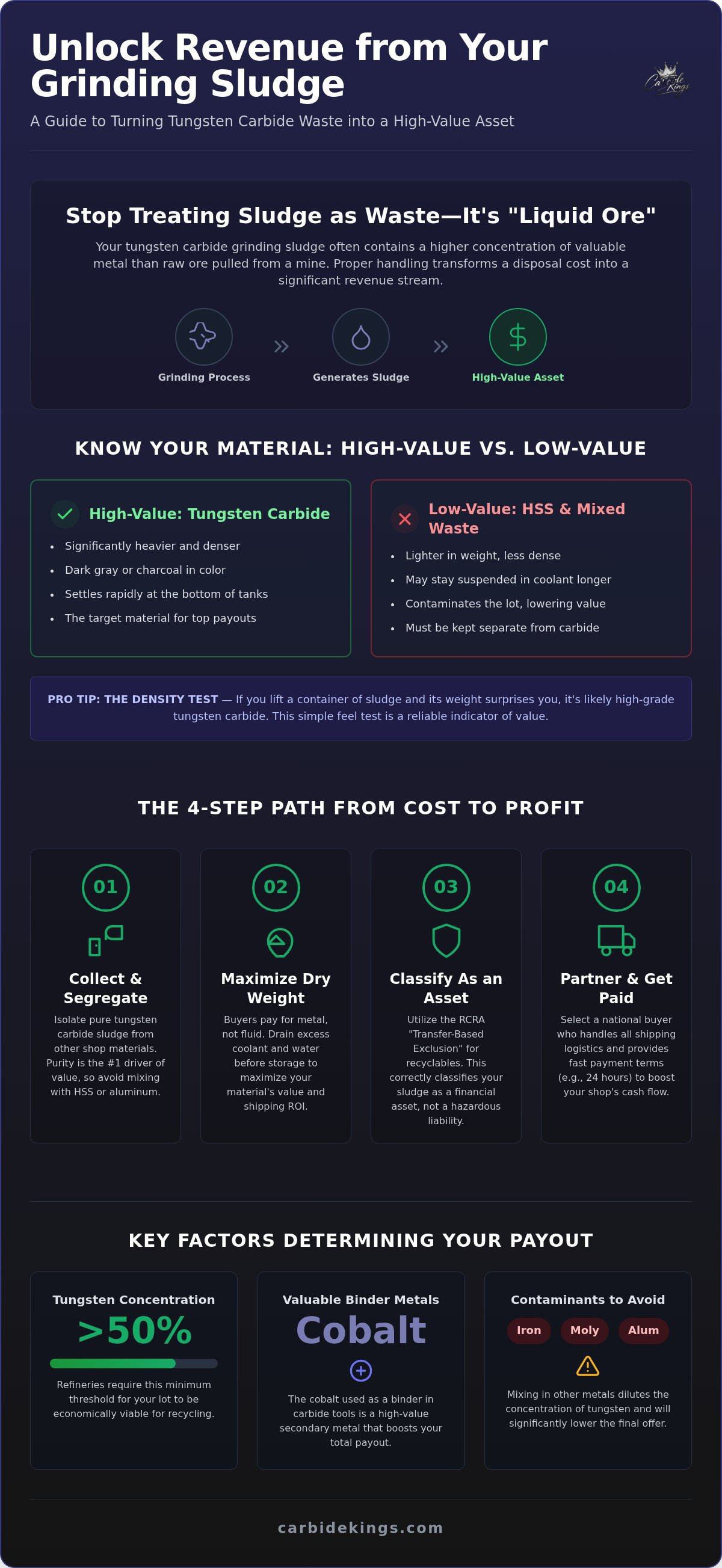
Distinguishing your waste is the first step toward a payout. Tungsten sludge is significantly heavier and denser than High-Speed Steel (HSS) sludge. If you lift a container of carbide sludge, the weight will surprise you. Recyclers prioritize tungsten because it's far more valuable and easier to process back into usable raw material. High-quality carbide waste usually looks dark gray or charcoal. It settles rapidly at the bottom of tanks, whereas HSS or aluminum particles might stay suspended longer. Don't mix these materials; keeping your carbide pure ensures you get the highest possible return from your buyer.
The Industrial Value of Tungsten Soft Scrap
Recyclers don't see your tungsten carbide grinding sludge as waste. They see it as high-grade ore. In many cases, this sludge contains a higher concentration of tungsten than raw material pulled directly from a mine. According to Tungsten Statistics and Information from the USGS, tungsten is a critical mineral with a complex global supply chain. This makes your shop's byproduct a valuable resource. It's not just about the tungsten, either. Cobalt, used as a binder in the tool-making process, is a high-value secondary recovery metal that significantly boosts the total payout of your lot.
Professional tungsten soft scrap buyers evaluate your material based on metal concentration. They look for the density of the particles and the absence of non-carbide debris. By recycling this material, you contribute to a closed-loop system that reduces reliance on foreign mining and lowers the carbon footprint of tool manufacturing. It's a rare scenario where environmental responsibility aligns perfectly with your bottom line.
Tungsten Concentration and Purity
For a refinery to accept your sludge, it typically needs to meet a 50% tungsten threshold. Purity is the primary driver of your ROI. Common contaminants like iron, molybdenum, and aluminum can dilute the lot and lower your offer. Moisture content is also a critical factor. Buyers calculate value based on "dry weight," so excess coolant or water essentially acts as dead weight. The more fluid you can remove before shipping, the more accurate and lucrative your valuation will be. It's a simple equation: higher purity equals a faster, larger transaction.
Regulatory Classification: Waste vs. Asset
Navigating the Resource Conservation and Recovery Act (RCRA) basics can feel overwhelming. However, in 2026, the "Transfer-Based Exclusion" remains a vital tool for machine shops. This rule allows certain hazardous materials to be excluded from strict waste regulations if they are destined for legitimate recycling. By maintaining proper documentation, you stop treating your sludge as a hazardous liability and start treating it as a financial asset. This shift in classification removes administrative hurdles and ensures you remain compliant while getting paid. If you want to see how easy the logistics can be, partner with a guide who understands the 2026 regulatory landscape.
Distinguishing High-Value Sludge from Low-Grade Waste
How do you tell the difference between a high-value asset and a low-grade waste burden? The answer lies in the "Density Test." Because tungsten is exceptionally heavy, its weight relative to its volume is the most reliable field-evaluation tool you have. If your tungsten carbide grinding sludge is pure, it will feel significantly heavier than any steel-based swarf or aluminum byproduct you've handled. This physical density is the first indicator that you're sitting on a lucrative revenue stream rather than a disposal problem.
The type of fluid used in your grinding process also shifts the weight-to-value ratio. Oil-based fluids are denser and can be harder to separate, whereas water-based synthetics might evaporate faster but can lead to oxidation if stored poorly. You should also identify your binders. Cobalt is the preferred binder for most recyclers, providing a higher secondary recovery value than nickel. Always avoid molybdenum contamination. Even small amounts of molybdenum can complicate the refining process and lead to lower offers for your material.
The 1,000-Pound Drum Rule
Weight is the most honest metric in the scrap world. A standard 55-gallon drum of high-quality tungsten carbide grinding sludge can weigh as much as 2,000 lbs. This high specific gravity confirms a high tungsten content. If your drum weighs closer to 600 lbs, it indicates either a low tungsten concentration or excessive fluid retention. In many cases, lighter drums contain High-Speed Steel (HSS) rather than carbide. Recyclers prioritize the heavy lots because the metal-to-waste ratio is much more favorable for the refinery.
Contamination Control in the Shop
Contamination control is where many shops lose money. Mixing floor sweepings, cigarette butts, or oily rags into your sludge bins is a costly mistake. Clean sludge fetches the highest market premium because it requires less processing at the refinery. If you want to maximize your ROI, you must maintain strict sorting protocols. Use dedicated, clearly labeled collection bins for your carbide. This simple step prevents cross-contamination with steel or trash, ensuring your lot remains a high-purity asset. It's much easier to keep the material clean from the start than to try and fix a contaminated lot later. By isolating your carbide waste, you guarantee a smoother transaction and a faster payout from your buyer.
How to Collect and Store Carbide Sludge for Maximum ROI
Turning your tungsten carbide grinding sludge into cash requires more than just scooping it into a bucket. You need a systematic approach to recovery that prioritizes material purity and weight reduction. Because buyers pay based on the percentage of tungsten in the dry weight, every gallon of excess coolant left in your drum is dead weight that eats into your profit margins. To truly understand how this fits into the bigger picture, you can review the carbide scrap recycling process for a comprehensive look at the industrial workflow.
Step 1: Efficient Collection and Dewatering
The first goal is to separate solids from coolants as effectively as possible. High-volume producers often invest in centrifuges or filter presses to mechanically squeeze out fluids. If you're running a massive operation, thermal de-oiling can further refine the material by burning off residual oils. Smaller shops can still achieve great results using gravity settling tanks. By allowing the heavy carbide particles to sink and decanting the liquid from the top, you significantly improve your material's value. It's a simple step that directly impacts your final payout.
Step 2: Proper Containerization
Safety and logistics are paramount when storing cobalt-bearing materials. Given that a full drum can exceed 1,000 lbs, steel drums are the industry standard for heavy sludge. Poly drums might work for smaller lots, but they often fail under the extreme density of tungsten. You must implement strict sealing protocols to prevent leaks during national transport. Leaking drums aren't just a mess; they're a regulatory nightmare. Ensure every container is labeled clearly for material identification and compliance. If you're ready to move your material now, get a shipping quote from a partner who handles the heavy lifting.
Step 3: Sampling and Analysis
Getting an accurate valuation depends entirely on your sample. You must take a representative core sample of each sludge drum, reaching from the top all the way to the bottom. Top-sampling is a common mistake that leads to inaccurate results because the heaviest, most valuable tungsten particles always settle at the bottom. Once you have a vertical cross-section, the buyer can conduct a precise laboratory analysis. This transparency ensures you receive a fair market price based on the actual metal content of your lot. It's the final step in moving from a messy shop floor to a successful financial transaction.
Streamlining Your Sludge Recovery with Carbide Kings
Managing tungsten carbide grinding sludge shouldn't feel like a second job. At Carbide Kings, we function as your direct national solution for sludge procurement, removing the friction that usually accompanies industrial recycling. We understand that your focus belongs on production, not on the complex logistics of waste management. Our no-nonsense approach is designed to transform your storage area from a cluttered liability into a streamlined revenue stream. We don't just buy your scrap; we partner with you to improve your shop-floor efficiency and cash flow with every shipment.
National Logistics and Shipping Support
Shipping bulk sludge is a significant logistical challenge due to its extreme weight and density. We handle the heavy lifting by arranging heavy-haul freight for your bulk shipments. You won't have to spend hours searching for carriers or navigating complex shipping documentation. Our team eliminates the administrative burden, providing the necessary paperwork to ensure your shipment moves smoothly across the United States. We provide specific guidance on the 2026 Transfer-Based Exclusion documentation to keep your shop fully compliant. Whether you have a single drum or a full truckload, our national coverage ensures that your material reaches our facility without delays or hidden fees. We've refined our logistics network to be as efficient as your own machining processes.
The Carbide Kings Valuation Process
Transparency is the foundation of our business. Once your lot arrives, we perform a precise laboratory assay to determine the exact tungsten and cobalt content. Unlike some scrap dealers who rely on inaccurate handheld Niton gun readings, our lab analysis provides a scientific breakdown of your material's true value. This ensures you receive every cent your material is worth based on its dry weight. Our pricing is calculated using real-time 2026 market drivers, reflecting the current industrial demand for refined tungsten and secondary cobalt recovery.
Finality of sale is our priority. Once the lot is verified, we offer 24-hour payment terms. This speed is unmatched in the industry, allowing you to reinvest in your operations immediately. When the transaction is complete, you'll have a clear floor, a compliant record, and a stronger bottom line. Stop letting valuable metal sit in your filtration tanks and start moving it with a partner who values your time as much as you do. We handle the paperwork, the freight, and the testing so you can stay focused on your core operations.
Unlock the Hidden Value on Your Shop Floor
Managing tungsten carbide grinding sludge doesn't have to be a costly logistical burden. By implementing a systematic collection process and focusing on dewatering, you transform a messy byproduct into a high-value industrial asset. We've explored how density testing and proper containerization ensure you get the maximum ROI for every pound of material you produce. In 2026, staying compliant with RCRA regulations is straightforward when you treat your soft scrap as a recyclable resource rather than hazardous waste.
Working with a direct industrial buyer means you skip the middleman and keep more of your profit. We handle the heavy lifting of national logistics support and provide transparent assaying so you know exactly what your lot is worth. Once your material is verified, our 24-hour payment terms ensure your cash flow remains strong and your shop floor stays clear of unnecessary drums. It's the most efficient way to turn an environmental liability into a financial win.
Ready to see the difference a professional partner makes? Turn your grinding sludge into revenue; contact Carbide Kings for a quote today. You've done the hard work of precision machining; now it's time to let your waste work for you.
Frequently Asked Questions
Is tungsten carbide grinding sludge considered hazardous waste?
Tungsten carbide grinding sludge can be classified as hazardous waste, but the 2026 RCRA Transfer-Based Exclusion allows it to be managed as a recyclable asset. This exclusion applies when the material is destined for legitimate recycling and is properly documented. By following these regulations, your shop avoids the high costs of hazardous waste disposal and turns a liability into a revenue stream. We help you navigate the paperwork to ensure full compliance.
How much tungsten is typically found in grinding sludge?
High-grade sludge typically contains between 50% and 80% tungsten by dry weight. The specific concentration depends on your machining applications and the purity of the carbide tools being ground. Because the value is tied to the metal content, a laboratory assay is necessary to determine the exact percentage of tungsten and cobalt in your lot. This precision ensures you receive a fair, transparent market price for your material.
Can I mix different types of metal sludge in one drum?
You should never mix different metal sludges in the same container. Mixing your tungsten carbide grinding sludge with HSS, aluminum, or floor trash significantly dilutes the value and may even lead to refinery rejection. Refineries require high-purity lots to process the material efficiently. Use dedicated, labeled collection bins to keep your carbide scrap segregated. This simple shop-floor discipline guarantees the highest possible return and a much faster valuation process.
What is the best way to ship heavy drums of carbide sludge?
The most efficient way to ship heavy sludge is through a national logistics provider that specializes in heavy-haul freight. Since a full 55-gallon drum can weigh 2,000 lbs, standard carriers often lack the necessary equipment. Carbide Kings handles the heavy lifting by arranging freight and managing the shipping documentation for you. We coordinate bulk shipments from industrial centers across the country, ensuring your material is transported safely and professionally.
How does the moisture content affect the price of my sludge?
Moisture content directly reduces your final payout because valuation is based strictly on the dry weight of the metal. Excess coolant, oil, or water is considered dead weight that adds to shipping costs without adding value. Shops that use centrifuges or gravity settling tanks to remove fluids before shipping see a much higher ROI. Reducing moisture ensures the laboratory analysis reflects the true metal concentration of your lot.
Do you provide the drums for sludge collection?
We don't typically provide the initial collection drums, but we provide the national logistics support to move them once they're full. Most shops use standard 55-gallon steel drums that integrate with their filtration systems. We ensure your containers meet the necessary safety and sealing protocols for national transport. If you have questions about specific drum requirements for heavy sludge, our team provides the expert guidance needed to prepare your shipment.
How long does it take to get paid for a sludge shipment?
At Carbide Kings, we offer fast 24-hour payment terms once your lot is verified and assayed. We understand that shop cash flow is a priority, so we've eliminated the administrative hurdles common with traditional scrap dealers. After our laboratory completes the analysis of your tungsten carbide grinding sludge, we issue your payment immediately. This direct-to-buyer approach ensures you get paid quickly without waiting for middleman processing or lengthy settlement periods.
What is the difference between swarf and grinding sludge?
Swarf consists of larger chips and turnings produced during milling, while grinding sludge is a fine, mud-like particulate from sharpening and finishing. Both are valuable forms of tungsten soft scrap. Sludge generally holds more moisture and requires more aggressive dewatering to maximize its value. While swarf is easier to handle, the high tungsten concentration in fine sludge often makes it one of the most lucrative byproducts in a high-precision machine shop.


