
Is your grinding sludge a hazardous liability or a hidden revenue stream? Many industrial facilities treat wet, heavy swarf as a logistical headache that costs more to manage than it’s worth. Finding reliable tungsten carbide swarf buyers is often difficult when you’re worried that oil contamination or high moisture levels will tank your return. It’s a common frustration to feel like you’re being underpaid for a byproduct that’s difficult to store and ship compared to solid carbide scrap.
The reality is that your grinding waste contains high concentrations of valuable tungsten and cobalt. You can transform these "dirty" materials into a streamlined profit center for your shop. This 2026 industrial reference guide provides the clarity you need to handle current domestic trade rules and market volatility. We’ll show you how to accurately value your material, simplify your collection process, and secure the maximum ROI for your industrial byproducts. You’ll learn exactly how to move from messy waste to a professional, lucrative recycling workflow without the typical administrative hurdles.
Key Takeaways
- Understand how the specific ratio of tungsten carbide to cobalt binders determines the industrial value of your soft scrap.
- Implement dedicated collection and labeling protocols to prevent cross-contamination and maintain the highest possible material purity.
- Distinguish between hard and soft scrap processing requirements to ensure your grinding waste is routed to the correct industrial refinery.
- Select the right tungsten carbide swarf buyers by evaluating their technical expertise and reliance on transparent, lab-backed material analysis.
- Streamline your internal logistics to remove administrative hurdles and maximize the financial return on your manufacturing byproducts.
What is Tungsten Carbide Swarf and Why is it Valuable?
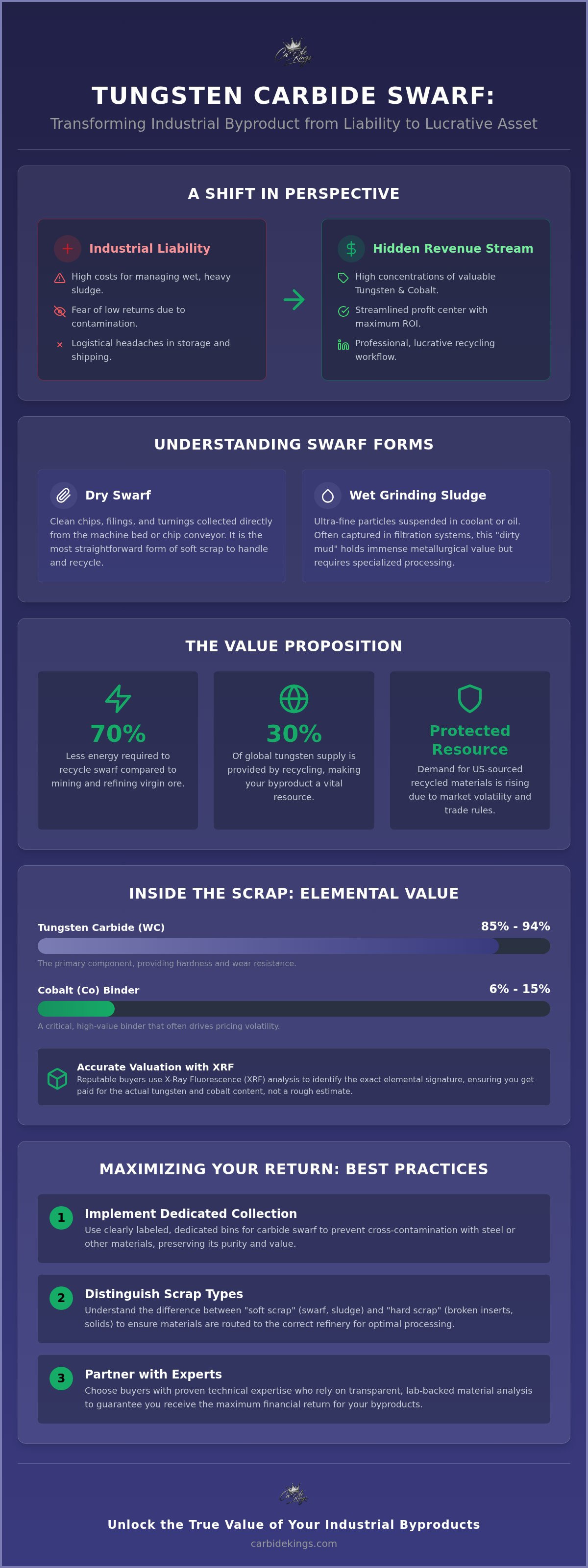
Tungsten carbide swarf consists of the fine chips, filings, and turnings shed during the manufacturing of high-performance tools and parts. In the industrial recycling hierarchy, this material is classified as "soft scrap." While it lacks the solid form of broken inserts, its chemical makeup remains potent. Tungsten carbide swarf often contains high concentrations of both tungsten and cobalt binders. Because these metals are essential to modern industry, professional tungsten carbide swarf buyers treat this waste as a premium commodity. Swarf is a high-value industrial byproduct of precision machining.
Understanding the value of your soft scrap requires looking past its appearance. It isn't just "dirty" waste. It's a concentrated source of refractory metals. When you separate these fines from general steel scrap, you preserve the purity that refineries demand. This distinction is the difference between getting paid for iron and getting paid for carbide. Every pound of swarf you capture is a pound of material that doesn't need to be mined from the earth.
How Swarf is Generated in Modern Manufacturing
Machining processes like milling, turning, and precision grinding create these fine particles as they shape hardened components. In most industrial facilities, this material takes two primary forms:
- Dry Swarf: Clean chips and turnings collected directly from the machine bed or chip conveyor.
- Wet Grinding Sludge: Ultra-fine particles suspended in coolant or oil, typically captured in centrifugal filtration systems or settling tanks.
Many machine shops overlook these particles because they look like dirty mud or gray dust. Don't make that mistake. These fines contain the same metallurgical value as your solid scrap. If your facility produces high volumes of carbide parts, your filtration tanks are likely sitting on thousands of dollars in recoverable metal. Efficient collection starts at the point of generation. By implementing a simple segregation process, you ensure these materials stay clean and ready for analysis.
The Economic Case for Swarf Recovery
As of 2026, tungsten is recognized as a critical raw material with limited global supply. Recycling swarf is no longer just an environmental choice; it's a financial necessity. Recovering these metals requires up to 70% less energy than mining and refining virgin ore. Currently, recycling provides about 30% of the global tungsten supply. This makes your byproduct a vital part of the circular economy and a protected domestic resource.
For your shop, a structured recovery program converts a disposal cost into a secondary revenue stream. Global market volatility and new domestic trade rules have increased the demand for US-sourced recycled materials. Working with specialized tungsten carbide swarf buyers ensures you capture the full market value of these materials. This proactive approach directly improves your facility's bottom line and helps offset the rising costs of raw tooling and procurement.
The Technical Composition of Carbide Swarf and Fines
Professional tungsten carbide swarf buyers don't rely on visual inspection alone. They look at the elemental chemistry beneath the surface. Most industrial carbide is a composite material. It typically consists of 85% to 94% tungsten carbide (WC) particles held together by a metallic binder. While tungsten is the primary component, the binder usually consists of 6% to 15% cobalt (Co). In some specialized alloys designed for corrosion resistance, manufacturers may include small amounts of nickel or iron. These variations significantly impact the material's density and recycling potential.
Particle size plays a critical role in how buyers analyze your waste. Finer particles have a higher surface area. This leads to increased oxidation and moisture retention. To provide an accurate valuation, reputable buyers use X-ray fluorescence (XRF) technology. This non-destructive testing method identifies the exact elemental signature of your lot in seconds. It ensures you get paid for the actual tungsten content rather than a rough estimate. If you're ready to see what your specific byproduct is worth, you can request a professional material analysis to lock in your return.
Understanding the Binder: The Value of Cobalt
Cobalt is often the primary driver of swarf pricing volatility. Because it's a critical component in battery technology and aerospace alloys, its market price can fluctuate. High-cobalt swarf lots, often generated from mining or heavy-impact tools, are particularly desirable for recyclers. A patented recycling method that efficiently separates these binders can maximize the recovery of both metals. Knowing whether your shop produces high-cobalt or low-cobalt waste helps you anticipate price shifts in the recycling market.
Identifying Contaminants That Lower Value
Contamination is the fastest way to lose money on your industrial byproducts. Mixing carbide swarf with standard high-speed steel (HSS) turnings is a common mistake. HSS contains very little tungsten and will drastically lower your lot's average value. Other common contaminants include aluminum chips, ceramic grinding media, and floor sweepings. These materials complicate the refining process and increase labor costs during the chemical separation phase.
Moisture is another factor that impacts your final payment. Grinding sludge often contains 10% to 30% moisture or oil by weight. Buyers will calculate a dry weight factor during the analysis. Keeping your swarf as dry as possible and segregated from other metals ensures you capture the highest ROI. Simple protocols like using dedicated, leak-proof collection bins are the easiest way to protect your material's integrity and ensure a fast, transparent transaction.
Swarf vs. Sludge vs. Solids: A Comparison Guide
Industrial carbide waste falls into two distinct categories: hard scrap and soft scrap. Solids, or hard scrap, consist of worn inserts, broken end mills, and router bits. Swarf and sludge represent the soft scrap category. While these materials share a similar chemical foundation, their physical states dictate how they are handled, analyzed, and priced. Most tungsten carbide swarf buyers prioritize solids because they are easier to identify and yield a higher percentage of finished material with minimal processing. However, soft scrap remains a massive revenue opportunity if you understand the logistical requirements.
Refineries treat these materials differently during the recycling process. Solid carbide can often be processed using the zinc process, which is energy-efficient and fast. Swarf and fines require chemical leaching or high-temperature oxidation to remove contaminants like coolant, oil, and steel binders. This extra labor is why solids typically command a higher per-pound rate than swarf. To protect your ROI, you must match your storage to the material. Use heavy-duty crates or buckets for solid inserts. For swarf and grinding waste, stick to sealed steel drums. This prevents leaks and keeps moisture levels manageable before the material reaches the buyer.
Comparing Soft Scrap Categories
Not all soft scrap is the same. Swarf usually refers to dry or semi-dry turnings and filings that resemble coarse metallic sand. It's relatively easy to handle and analyze. In contrast, tungsten carbide grinding sludge is a wet, paste-like byproduct from precision grinding. This material is heavier and more complex to process due to its high liquid content. Most tungsten carbide swarf buyers prefer turnings over sludge because they require less dehydration before melting. You should also watch for "fines" or "dust," which are ultra-fine particles that can oxidize quickly if left exposed to the air.
Choosing the Right Recycling Stream
Mixing your scrap streams is a costly mistake. If you throw wet swarf into a bin of solid inserts, you contaminate the high-value solids and complicate the weighing process. You must segregate these materials at the source. Implement a tiered recycling system in your facility to keep your Grade A solids separate from your Grade B swarf. When you sell tungsten hard scrap, ensure it hasn't been "salted" with lower-value turnings or steel chips. Purity is the primary driver of your final price. By maintaining clean, segregated lots, you reach the highest price tiers and simplify the pickup process for your industrial partner.
Best Practices for Managing Swarf in the Machine Shop
Managing industrial waste efficiently is a hallmark of a high-performing machine shop. It turns a messy byproduct into a predictable revenue stream. To maximize your return, you must implement a dedicated collection system at the exact point of generation. Don't wait until the end of the shift to consolidate material. By capturing swarf directly from the machine bed, you minimize the risk of floor sweepings or general trash entering your high-value stream. Labeling every bin clearly is the simplest way to prevent cross-contamination that could ruin an entire lot.
Store your material in sealed steel drums. These are robust enough to handle the extreme density of tungsten carbide. They also prevent moisture evaporation from turning grinding sludge into a rock-hard mass that's difficult for tungsten carbide swarf buyers to sample. Always treat fine metallic powders with caution. Use appropriate PPE to avoid inhalation and ensure your storage area is well-ventilated. Proper containment isn't just about value; it's about maintaining a safe, professional workspace for your crew.
Optimizing Machine Shop Metal Recycling
Success depends on your team's ability to follow protocol. Train your staff to distinguish between standard steel turnings and carbide waste immediately. Misidentification is a leading cause of lot devaluation. If your process involves mixed metals, use magnetic separators. These tools quickly pull iron contamination out of your carbide turnings, instantly moving your material into a higher purity bracket. Integrating these checks into your daily maintenance routine ensures your scrap is always "buyer-ready."
Preparing Swarf for National Shipping
Weight is your primary cost driver during transport. Use dewatering techniques like centrifugal spinning or gravity settling to remove excess coolant or oil. This lowers your shipping costs and improves the accuracy of the final lab analysis. When you're ready to move material, secure your drums to pallets according to DOT standards for heavy industrial loads. Ensure all documentation clearly lists the material as an industrial metal byproduct to avoid transit delays. This level of preparation ensures a smooth, fast transaction from your floor to the refinery.
Ready to clear out your inventory? Contact Carbide Kings today to schedule a bulk pickup and get a professional valuation for your soft scrap.
How to Choose the Best Tungsten Carbide Swarf Buyers
Choosing a partner for industrial byproduct recycling is a high-stakes decision for any manufacturing facility. General scrap yards often lack the specialized equipment to analyze tungsten soft scrap accurately. This usually results in a "safe" offer that protects their margins but leaves your money on the table. Dedicated tungsten carbide swarf buyers understand the metallurgical value of your waste. Look for a partner that provides transparent, lab-backed material analysis. This ensures you're paid based on current market rates for tungsten and cobalt rather than a generic guess. Working with specialized tungsten carbide swarf buyers ensures that your shop captures the full ROI of its byproducts.
Efficiency is the second pillar of a successful partnership. You need a buyer that handles the logistical heavy lifting. If a buyer can't manage national shipping or bulk industrial lots, they'll create more administrative work for your team. Fast payment terms are equally critical. Your shop's cash flow shouldn't be tied up in a slow-moving recycling process. A professional buyer offers a clear, methodical timeline from the initial pickup to the final settlement. This transparency builds the trust necessary for a long-term industrial partnership.
The Carbide Kings Advantage
We've refined our process to support the specific needs of American machine shops. As leading tungsten soft scrap buyers, we specialize in converting complex grinding waste into secondary revenue. Our national logistics network covers the entire United States. We remove the traditional barriers of industrial recycling by handling the paperwork and transport logistics ourselves. This direct approach eliminates middleman fees and ensures you work with a partner who values your time as much as your material.
Getting a Quote for Your Swarf Lot
Starting the process is straightforward and requires very little administrative effort from your team. To get an accurate quote, you'll need to provide a representative sample. Because swarf and sludge can vary in moisture and purity, a sample from the middle of the drum often provides the most accurate data for our lab. Be ready to share the following information:
- Lot Weight: The total estimated weight of the material ready for pickup.
- Moisture Estimate: Whether the material is dry turnings or wet grinding sludge.
- Material Origin: The specific manufacturing process that generated the waste.
Once we analyze your sample, we provide a firm quote based on the actual tungsten content. After you approve the offer, we coordinate the pickup and issue payment quickly. It's a professional, step-by-step journey designed to keep your shop focused on production while we handle the heavy lifting.
Maximize Your Industrial Byproduct Revenue
Managing your facility's grinding waste doesn't have to be a logistical burden. By implementing dedicated collection systems and maintaining material purity, you transform messy sludge into a reliable revenue stream. Technical analysis and proper segregation are the keys to unlocking the highest market value for your soft scrap. You've worked hard to produce high-performance parts; don't let the value of your byproducts disappear into a general scrap bin.
Choosing the right tungsten carbide swarf buyers is the final step in optimizing your shop's efficiency. Partnering with an expert ensures you receive specialized industrial tungsten analysis and the support of national US logistics. We handle the heavy lifting so you can stay focused on your core manufacturing operations. With our fast, professional payment terms, your cash flow remains strong as you clear out your inventory. It's time to stop treating your swarf as waste and start treating it as the asset it truly is.
Turn your machining waste into revenue—contact Carbide Kings for a quote today. Your facility is ready for a more profitable, streamlined recycling process.
Frequently Asked Questions
Is tungsten carbide swarf considered hazardous waste?
The classification of swarf depends on its specific composition and your state's environmental regulations. While scrap metal intended for recycling is often exempt from the most stringent RCRA hazardous waste rules, generators must still determine if their grinding waste meets hazardous criteria. You should always check with your local environmental agency for specific compliance requirements. We focus on the logistical side of moving these materials safely for industrial recycling.
How much is tungsten carbide swarf worth per pound in 2026?
The value of swarf fluctuates based on the current market demand for tungsten and cobalt binders. Professional tungsten carbide swarf buyers provide custom quotes because every lot has a unique chemical profile and moisture level. Factors like global supply chain shifts and new domestic trade regulations in 2026 play a significant role in determining daily rates. We analyze your specific material to ensure you get a fair, transparent market price.
Can I mix my swarf with solid carbide inserts for a better price?
You should never mix your soft scrap with solid carbide inserts. Solid scrap is more valuable because it's easier to process and has a higher yield at the refinery. Mixing the two materials actually lowers the total value of your solid lot and makes the chemical analysis more difficult. Keep your solids and turnings in separate, clearly labeled containers to ensure you capture the maximum ROI for each material type.
What is the minimum amount of swarf that a national buyer will accept?
National buyers typically focus on bulk procurement for industrial and manufacturing sectors to keep logistics efficient. While specific minimums vary, shipping small amounts is often not cost-effective due to the high weight and freight expenses involved. We specialize in managing larger industrial lots that allow for streamlined transport across the United States. Contact us with your estimated weight to discuss the most effective pickup schedule for your facility.
How do I remove coolant from my carbide grinding swarf?
You can remove excess coolant through centrifugal spinning or by using gravity settling tanks to separate liquids from solids. Reducing the moisture content is a critical step because it lowers your total shipping weight and leads to a more accurate analysis. Some facilities also use dewatering presses to create dry cakes or biscuits. The drier your material is when it reaches the buyer, the faster and more straightforward the payment process becomes.
Why do buyers need to analyze swarf before providing a final price?
Analysis is the only way to determine the exact concentration of tungsten and cobalt in your waste. Reputable tungsten carbide swarf buyers use X-ray fluorescence technology to identify the elemental signature of your lot. This process also detects contaminants like steel or aluminum that can significantly impact the refining cost. A lab-backed analysis protects both parties by ensuring the final price is based on scientific data rather than a visual estimate.
What is the difference between carbide swarf and grinding sludge?
Swarf typically refers to the dry or semi-dry chips and turnings produced during milling or turning operations. Grinding sludge is a wet, paste-like byproduct generated during precision grinding where coolant is used. Sludge generally has a much higher moisture content and requires more intensive dewatering before it can be processed. Both materials are valuable, but they require different storage and handling protocols to maintain their integrity for recycling.
How should I package swarf for safe industrial shipping?
You should package swarf in heavy-duty, sealed steel drums that can withstand the extreme density of the material. Secure these drums to pallets using industrial-grade strapping to meet DOT standards for heavy loads. Clear labeling on every container is essential for safety, tracking, and efficient processing at the refinery. Using standardized, leak-proof packaging prevents environmental issues during transit and ensures your material arrives in prime condition for final chemical analysis.


