

The highest tungsten scrap price you find may tell you the least about what your lot is worth. Tungsten scrap pricing benchmarks only help when they match your material: a figure for carbide inserts, for example, may not apply to tungsten turnings or another scrap form.
It’s reasonable to look for a clear number before contacting a buyer. The challenge is that headline prices can leave out the grade, condition, lot size, testing basis, and transaction deductions that shape an actual quote. A benchmark is a reference point, not a guaranteed offer for every load.
This guide shows what tungsten scrap pricing benchmarks measure, what they leave out, and how to compare quotes using the same material and transaction details. You’ll also learn what to prepare about your lot, including its form, estimated quantity, and any available composition or condition information. With those details in hand, you can ask more focused questions and assess whether a quote is genuinely comparable, rather than relying on a headline figure that describes a different lot.
Key Takeaways
- Use tungsten scrap pricing benchmarks as dated references, not guaranteed offers. Check the material, market, unit, and methodology behind each figure.
- Match hard scrap, soft scrap, carbide scrap, and tungsten alloys to the right comparison before judging a price.
- Compare buyer quotes on consistent terms, including grade, lot quantity, condition, known contaminants, and logistics.
- Document your lot details before requesting a quote so buyers can assess the material more clearly.
- Separate published references, buyer offers, and completed transaction records when deciding which comparisons are useful.
What Tungsten Scrap Pricing Benchmarks Measure, and What They Do Not
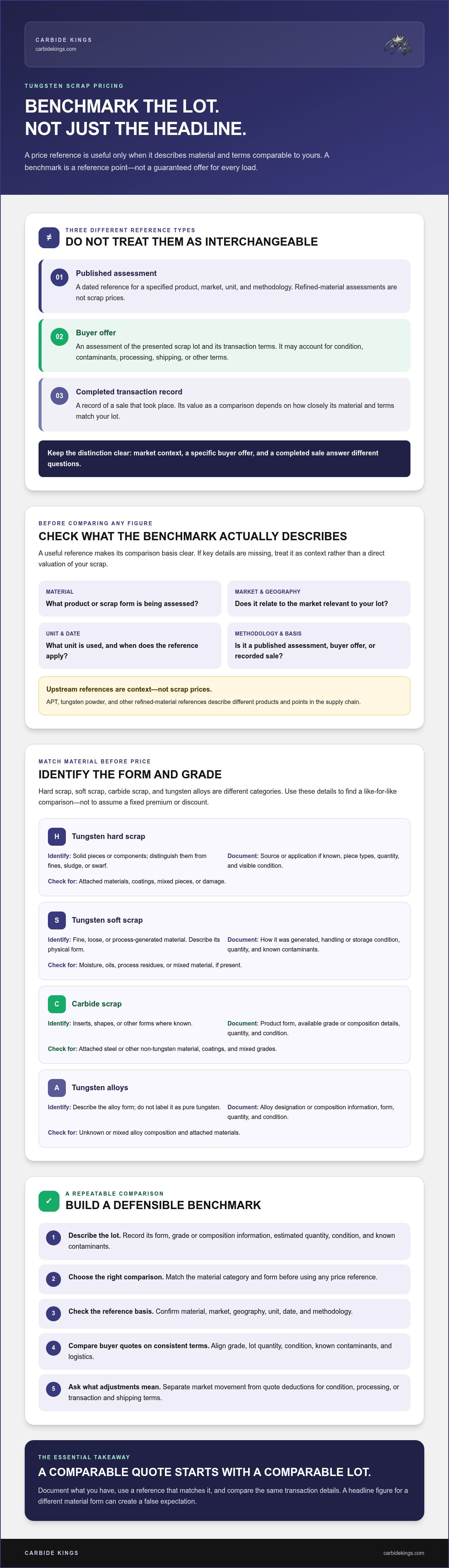
A tungsten price only becomes a useful benchmark when you know exactly what it describes. Treat it as a dated reference tied to a specified material, market, unit, and methodology. A published assessment for refined tungsten, a buyer’s offer for a scrap lot, and a record of a completed sale are different kinds of information. They can each inform a comparison, but they are not interchangeable.
A useful benchmark identifies the material, unit, date, and basis behind the quoted figure. The basis explains how the figure was established, such as a published assessment, a buyer’s offer, or a recorded transaction. Check the geography too: a reference from another market may not reflect the conditions relevant to your lot.
Which tungsten price references can inform scrap comparisons?
Upstream references can help explain broader market direction, but they aren’t scrap prices. Ammonium paratungstate (APT), tungsten powder, and other refined-material references describe different products and points in the supply chain. Before using one, identify the publisher, assessed product, geography, unit, publication date, and methodology. If those details aren’t available, treat the reference as context, not a direct valuation for scrap.
The material itself matters. Tungsten’s properties and applications help explain why it appears in different industrial forms, but a general material overview can’t establish the value of a specific scrap lot. See Tungsten properties and applications for background, then confirm that any price reference matches the material you’re evaluating.
Why one headline number can mislead scrap sellers
A refined-material assessment may reflect a standardized product, while a scrap-lot offer considers the material presented to a buyer and the terms of the transaction. Even within scrap, form, grade, quantity, and condition can affect whether two figures are comparable. A headline number that leaves out these details can create a false expectation.
Separate a market movement from quote adjustments. A benchmark may move with its underlying market; a buyer’s offer may also account for the lot’s condition, known contaminants, processing requirements, and transaction or shipping terms. Ask what each deduction or adjustment represents instead of assuming it reflects a change in the overall tungsten market.
For more on factors that influence carbide references, read the tungsten carbide scrap price guide. Keep the distinction clear: a published benchmark is a comparison point, not a guaranteed price for every lot or a substitute for a buyer’s specific assessment.
How Tungsten Scrap Form and Grade Change the Benchmark
Before comparing prices, identify what the lot actually contains and how it is presented. Solid pieces, fine particles, carbide scrap, and tungsten alloys are not interchangeable categories. Their form and condition affect which published reference, if any, is relevant and what details a buyer needs to assess the material.
Identify the material first; only then compare its price with a like-for-like benchmark. Use the table to organize the first questions, not to assume a fixed premium or discount. A buyer’s assessment depends on the specific lot and the information available.
| Material category | Form to identify | Possible concerns to document | Useful information for comparison |
|---|---|---|---|
| Tungsten hard scrap | Solid pieces or components; distinguish these from fines, sludge, or swarf. | Attached materials, coatings, mixed pieces, or damage. | Source or application if known, piece types, quantity, and visible condition. |
| Tungsten soft scrap | Fine, loose, or process-generated material; describe its physical form rather than labeling it only “tungsten.” | Moisture, oils, other process residues, or mixed material, if present. | How it was generated, handling or storage condition, quantity, and known contaminants. |
| Carbide scrap | Identify inserts, shapes, or other forms where known. | Attached steel or other non-tungsten material, coatings, and mixed grades. | Product form, available grade or composition details, quantity, and condition. |
| Tungsten alloys | Describe the alloy form and identify the material as an alloy rather than pure tungsten. | Unknown or mixed alloy composition and attached materials. | Alloy designation or composition information, form, quantity, and condition. |
Hard scrap, soft scrap, and carbide are not interchangeable categories
Hard scrap generally means solid material. Fines, sludge, and swarf are different physical forms and shouldn’t be grouped with solid pieces just because they contain tungsten. Processing history and condition can also affect how a buyer evaluates a lot. For practical preparation pointers, see the hard scrap recycling guide.
What alloy content and contamination can change
Record cobalt content when known, and describe any attached non-tungsten material. Mixed, coated, or contaminated material may not be comparable to a sorted lot. Don’t assume a particular assay or recovery method; ask the prospective buyer what information and evaluation process they use. The USGS tungsten data can provide broader background on the metal, but it doesn’t replace lot-specific identification.
Clear descriptions make the next conversation more productive. If you’re preparing to discuss a specific lot, you can review Carbide Kings’ tungsten and carbide material categories as a starting point for identifying the right material type.
Why Tungsten Scrap Quotes Differ From Published Benchmarks
A published benchmark isn’t a promise that every buyer will offer the same amount for every lot. It describes a defined product and market under a stated method. A buyer’s quote addresses a particular material lot and proposed transaction. Differences may come from the reference’s scope, or from the lot’s grade, quantity, condition, and logistics.
To compare two offers, first make sure they describe the same material and unit. Then check whether each amount is gross or net, which deductions or services apply, and when the offer expires. Without these details, a higher headline figure may not represent a better transaction.
Which quote terms should be checked side by side?
Use the same checklist for each offer. Don’t assume shipping, inspection, or payment terms are standard. Ask each buyer to clarify them, along with any deductions, so you can compare the full basis of the quote.
| Quote detail | Comparable when… | Not comparable when… |
|---|---|---|
| Material description and grade | Both offers refer to the same form and known grade information. | One offer covers sorted carbide while the other describes mixed or unspecified scrap. |
| Quantity and unit | The lot quantity and unit of measure match, or differences are clearly accounted for. | One price is per pound and the other per kilogram, or the quantities differ without explanation. |
| Quote date and validity | Both offers are current for the same comparison period. | One offer has expired or was issued on a different market date. |
| Gross or net basis | Deductions, included services, and the resulting payment basis are stated. | One figure is before deductions and the other is an estimated net amount. |
| Shipping, payment, and inspection | Responsibilities and conditions are clear for both offers. | Freight, payment terms, or inspection requirements differ or are unstated. |
How source quality affects a benchmark
Give more weight to references that identify the assessed material, geography, unit, publication date, and methodology. An undated forum post, search snippet, or unexplained price table can’t establish whether its figure applies to your lot. The U.S. Geological Survey Tungsten Data provides broader market context, but it shouldn’t be treated as a buyer quote for a specific scrap load.
Apply the same discipline to Fastmarkets and Argus: confirm that the specific publication actually assesses the product, market, and unit you’re comparing. USGS material can inform market background, but it may not support a claim about a current scrap-lot offer. Strong tungsten scrap pricing benchmarks are traceable and relevant; the final check is whether the reference and quote share a comparable basis.
A Repeatable Method for Benchmarking a Tungsten Scrap Lot
Use the same sequence every time you evaluate a lot. It keeps unlike material out of the comparison and makes gaps between published references and buyer offers easier to spot. The goal isn’t to turn a benchmark into a guaranteed price. It’s to build a clear, traceable comparison from the information you have.
- 1. Identify the material. Separate tungsten hard scrap, soft scrap, carbide scrap, and tungsten alloys. Don’t combine categories just to create one larger lot description.
- 2. Document the lot. Record its form, available grade or composition information, estimated quantity, condition, and known contaminants. Note what’s unknown rather than guessing. Add clear photographs, packaging details, or available specifications when useful.
- 3. Source relevant references. Find a published benchmark or buyer offer that matches the material and market as closely as possible. Record the publisher or buyer, assessed material, geography, unit, date, and stated basis. For carbide-specific handling context, see the industrial carbide scrap recycling process.
- 4. Normalize the comparison. Align units only when the original units and conversion method are documented. Record the reference date and quote date, and note any time gap between them. Keep gross and net figures separate until you understand the deductions and included services.
- 5. Compare like with like. Review at least two offers only if they cover comparable material and transaction terms. Check quantity, condition, shipping responsibility, payment terms, inspection conditions, and quote validity. If a key detail differs or is missing, flag it instead of treating the figures as directly comparable.
Prepare a consistent lot description before checking references
A short, consistent description saves time. For example, list the material category, physical form, approximate quantity, known composition, condition, and any visible non-tungsten attachments. Keep hard scrap separate from soft scrap and alloys. If composition is unconfirmed, label it unknown. Don’t estimate alloy content or recoverable tungsten without supporting information.
Normalize references and compare offers fairly
Keep the original source details with every figure. A converted unit without a recorded method, or a quote compared with an older reference without noting the date gap, can make a mismatch look meaningful. Use tungsten scrap pricing benchmarks as a disciplined comparison tool, then ask a buyer to clarify any differing terms before drawing conclusions.
Once your lot details are organized, you can discuss your tungsten or carbide material with Carbide Kings. A clear description helps start a focused conversation without implying that a benchmark determines any buyer’s offer.
Turn a Defensible Benchmark Into a Clear Buyer Conversation
Your benchmark work gives you a reference point, not a guaranteed offer. Use it to explain what you compared and why, then let the buyer assess the actual lot. A specialized buyer can discuss how its form, condition, quantity, and available specifications relate to a lot-specific evaluation.
What to include when requesting a lot-specific quote
Make the first inquiry easy to assess. Identify whether the material is tungsten hard scrap, tungsten soft scrap, carbide scrap, or a tungsten alloy. Share what you know, mark what you don’t, and avoid estimating composition or recoverable tungsten without supporting information.
- Material and form: Describe the scrap clearly, including whether it is solid material, sludge, swarf, or another form.
- Quantity and condition: Give an approximate lot quantity and note visible wear, mixing, coatings, or attached materials.
- Supporting details: Include clear photographs and any available specifications or composition documentation.
- Packaging and shipping: Explain how the lot is packaged and note relevant shipping constraints. Ask who is responsible for transportation rather than assuming the buyer covers it.
- Benchmark context: If you cite a reference, include its source, date, unit, and material basis. Make clear that it’s a comparison point, not a requested guaranteed price.
Choose the right follow-up for your material
For solid tooling or production remnants, use the tungsten hard scrap selling guide to prepare a focused inquiry. If your material is sludge or swarf, the tungsten soft scrap buyer guide is a more relevant next read.
Then share your lot details and ask what additional information the buyer needs to evaluate them. Carbide Kings works with tungsten hard scrap, tungsten soft scrap, carbide scrap, and tungsten alloys. Explore those material categories and start a conversation with Carbide Kings when you’re ready to discuss your identified lot. A clear description supports a more specific discussion, while keeping tungsten scrap pricing benchmarks in their proper role: useful context, not a substitute for a buyer’s assessment.
Put Your Benchmark to Work
A useful comparison starts with the right material category and a clearly documented lot. Check that every reference matches your material, unit, date, and pricing basis, then review buyer offers against consistent quantity, condition, and transaction terms. That’s how tungsten scrap pricing benchmarks become practical decision-making tools instead of misleading headline numbers.
Before reaching out, gather the details you have: material form, approximate quantity, condition, available specifications, and shipping context. Be clear about what’s known and what still needs confirmation. A specialized buyer can use that information to discuss your specific lot, but no published reference guarantees an individual offer.
Carbide Kings supplies tungsten hard scrap, tungsten soft scrap, carbide scrap, and tungsten alloys to industrial and manufacturing customers across the United States. Discuss your tungsten or carbide scrap with Carbide Kings and take the next step with a clear, well-prepared material description. You’re ready to make the conversation more focused.
Frequently Asked Questions
What is a tungsten scrap pricing benchmark?
A tungsten scrap pricing benchmark is a dated reference for a defined material, market, unit, and pricing basis. It helps you assess whether figures are comparable, but it doesn’t guarantee what a buyer will offer for a specific lot. Check whether the reference describes scrap, refined tungsten, or another product, and note its publisher, date, geography, and methodology before using it.
How much is tungsten scrap worth per pound?
There isn’t one reliable per-pound figure for all tungsten scrap. The material type, form, grade, condition, quantity, and transaction terms can all affect a lot-specific assessment. A published rate may describe a different product or use a different basis. To evaluate your material, identify the lot clearly and request a quote with its unit, effective date, deductions, and shipping terms stated.
Why do tungsten scrap prices vary between buyers?
Buyers may assess different material forms, grades, quantities, and conditions, so their offers may not cover equivalent lots. One figure might be gross while another reflects deductions or different shipping responsibilities. Quote timing and inspection conditions can also differ. Compare the written terms side by side, and ask each buyer to explain adjustments rather than assuming that a price difference reflects only market movement.
How do I compare tungsten scrap quotes fairly?
Start by confirming that each quote covers the same material form and available grade information. Align the lot quantity and unit, then record the offer date and validity period. Ask whether each amount is gross or net and clarify deductions, shipping responsibility, payment terms, and inspection conditions. Compare offers only after these details are clear. If a term is missing, request clarification before drawing a conclusion.
Does tungsten carbide scrap use the same benchmark as tungsten metal?
Not automatically. Tungsten carbide scrap and tungsten metal are distinct material categories, and a reference for one may not describe the other. Even within carbide scrap, forms and lot conditions can differ. Check the assessed product, material description, unit, market, and date before applying a published figure. If a source doesn’t clearly identify the material, treat it as general context rather than a direct comparison.
Can contamination or cobalt content affect a tungsten scrap quote?
Yes. Known cobalt content, coatings, attached non-tungsten material, or other contamination can affect how a buyer evaluates a lot. Document what you know, including visible mixing or residue, and provide available composition records. Mark unknown details clearly instead of estimating them. Ask the buyer what information is needed to assess the material, since evaluation requirements can vary by form, condition, and transaction.
How often do tungsten pricing benchmarks change?
It depends on the publisher and the reference. Some sources update on a stated schedule, while others publish less frequently or assess a different part of the tungsten supply chain. Check the publication date and methodology each time you use a figure, and compare it with the date of the buyer’s quote. A benchmark’s update frequency doesn’t mean every scrap quote changes on the same schedule.


