

What if the biggest risk in procuring secondary tungsten units for nickel superalloy production isn’t the quoted price, but whether the lot fits your target alloy and process? A material described simply as “tungsten scrap” can leave critical questions unanswered.
That uncertainty is reasonable. Nickel superalloy production depends on controlled chemistry and repeatable processing, so a lower-cost feedstock may create downstream problems if its composition, form, or documentation doesn’t meet your requirements. The right approach is to evaluate each lot against your specification, not a broad material label.
This guide lays out a practical framework for checking chemistry, material form, lot consistency, supplier records, contamination risks, and process compatibility before you commit. You’ll also see what information to include in a request so suppliers can identify relevant inventory and you can compare offers on the same basis. Carbide Kings supplies tungsten hard scrap, tungsten soft scrap, carbide scrap, and tungsten alloys, and may be a sourcing contact. Confirm available forms, quantities, chemistry records, and documentation directly. The goal is to surface gaps early and make a well-informed procurement decision.
Key Takeaways
- Start with the target alloy and production specification; tungsten-bearing secondary feedstock isn’t automatically suitable for every nickel superalloy.
- Compare hard scrap, soft scrap, and tungsten alloys by form, available chemistry evidence, handling needs, and fit for your production route.
- When procuring secondary tungsten units for nickel superalloy production, separate mandatory qualification criteria from commercial preferences.
- Use a staged approval process, from specification review and supplier inquiry through technical approval and receiving inspection.
- Ask suppliers about the actual lot’s form, quantity, chemistry records, and documentation before considering it for production.
Why nickel superalloy producers consider secondary tungsten units
Secondary tungsten can offer another sourcing option when a nickel superalloy production specification calls for tungsten-bearing input. But “secondary” describes a material’s history, not a single grade or guaranteed fit. Recovered feedstock can vary in composition, condition, and processing history. Evaluate the actual lot against your production requirements before treating it as usable input.
Definition: Secondary tungsten units are recovered or previously used tungsten-bearing materials considered as feedstock; their suitability depends on verified lot properties and the buyer’s production requirements, not the material label alone.
What does secondary tungsten mean in an industrial supply chain?
Newly produced tungsten material and scrap-derived feedstock have different histories, and they may follow different processing routes before reaching a producer. Categories to investigate include tungsten hard scrap, tungsten soft scrap, and tungsten alloys. These terms help describe the material, but they don’t establish its composition or qualify it for a melt.
Check each lot for the chemistry evidence available, possible contamination, physical form, and known processing history. Ask what records accompany the material and whether the information applies to the specific lot under consideration. If key details are unavailable, treat that as an open qualification issue rather than assuming the material is consistent.
When might nickel superalloy production require tungsten-bearing feedstock?
Begin with the specific alloy design and controlled production specification. Tungsten is an alloying element in some nickel-based superalloys, but not all formulations require it. Its role and permitted range depend on the alloy and application. For foundational context on superalloy properties and alloying elements, review Superalloy, then confirm technical requirements with qualified materials or metallurgical sources.
Keep the alloy’s requirements separate from supplier descriptions. A broad category such as “tungsten alloy” or “hard scrap” doesn’t confirm that the material matches your target chemistry, quality system, or process limits. The relevant question is whether the lot can meet the acceptance criteria for your specific production route.
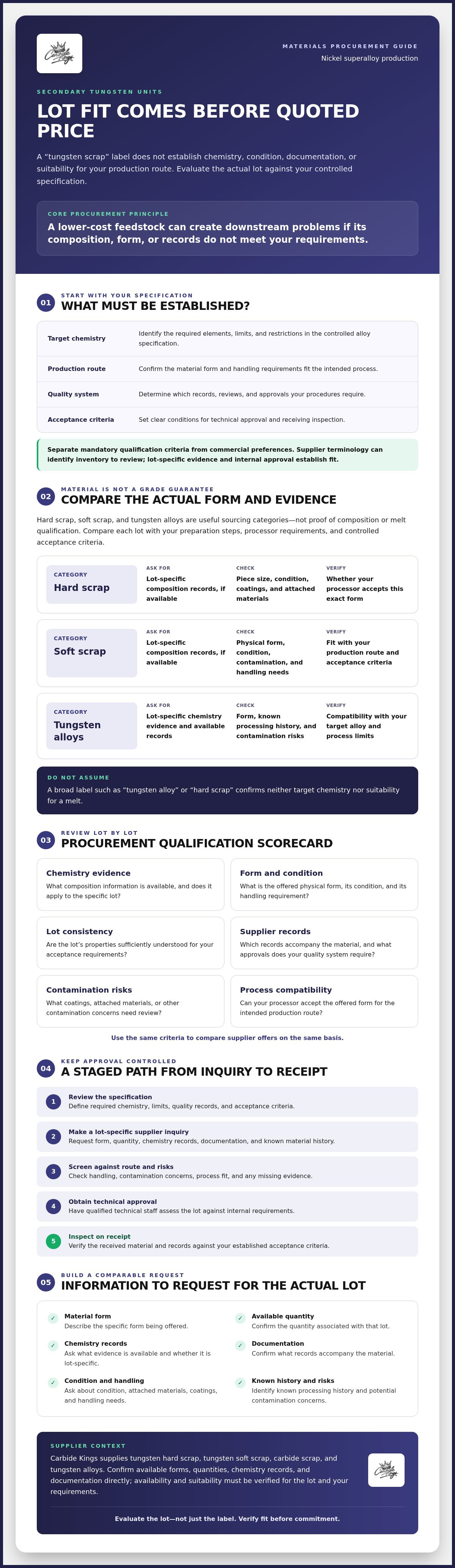
Before procuring secondary tungsten units for nickel superalloy production, align the material review with four buyer-controlled factors:
- Target chemistry: Identify required elements, limits, and any restrictions in the controlled specification.
- Production route: Confirm that the material form and handling requirements fit the intended process.
- Quality system: Determine which records and approvals your procedures require.
- Acceptance criteria: Set clear conditions for technical approval and receiving inspection.
This sequence keeps the decision grounded in your specification. Supplier terminology can help identify inventory to review, but only lot-specific evidence and internal approval can establish whether it’s appropriate for production.
Match secondary tungsten form and chemistry to the production route
A material category is a starting point, not a production approval. Hard scrap, soft scrap, and tungsten alloys can differ in physical form and composition, so compare the actual lot with your melt route, preparation steps, and controlled acceptance criteria. The metallurgy of nickel superalloys helps explain why alloy composition and processing matter. Have qualified technical staff verify any conclusions about suitability, purity, recovery yield, or process performance.
Compare form, evidence, and handling before requesting a quote
Use the table to structure an initial supplier conversation. These are broad sourcing categories, not guaranteed substitutes. Confirm that your processor accepts the offered form before requesting a quote.
| Material category | Chemistry evidence to request | Handling questions | Buyer verification questions |
|---|---|---|---|
| Hard scrap | Lot-specific composition records, if available | What are the piece size, condition, coatings, and attached materials? | Can this exact form enter the intended preparation and melt route? |
| Soft scrap | Available lot-level records and any known material identification | How is it contained, and could residues or mixed material be present? | Does the processor accept its condition and handling requirements? |
| Tungsten alloys | Identified constituents and documentation for the offered lot | Is the material segregated, and are attachments or surface residues present? | Do its verified constituents fit the target specification and process limits? |
Resolve chemistry and contamination questions
Request the composition information available for the specific lot, then compare it with the target alloy specification. Identify known elements, possible contaminants, and mixed-material risks using limits set by your materials and quality teams. If records don’t address a required element or acceptance criterion, document the gap and decide what verification your process requires before approval.
Appearance can help describe condition, but it can’t establish chemistry. A generic label such as “tungsten scrap” also doesn’t prove that a lot meets your requirements. Don’t assume purity, recovery yield, or melt behavior from the form or supplier description. Have a qualified metallurgist or processor assess any technical claim against your route and acceptance procedures.
As you’re procuring secondary tungsten units for nickel superalloy production, make form and chemistry part of the same decision. First confirm the processor can handle the material as offered. Then evaluate the lot-specific evidence and any preparation steps your route requires. This prevents a seemingly relevant category from being mistaken for qualified feedstock.
For an initial sourcing discussion, ask Carbide Kings about tungsten scrap and alloy categories, and specify the form, chemistry records, quantity, and documentation your team needs to review. Confirm actual inventory details and process fit before commitment.
Compare suppliers using a nickel-superalloy procurement scorecard
A supplier comparison only works if every candidate responds to the same written requirements. Use a scorecard to separate qualification gates from commercial preferences. A missing mandatory record is an unresolved issue, not a passing score. The U.S. Geological Survey tungsten statistics offers background on tungsten uses and recycling, but acceptance of a specific lot remains a buyer-controlled decision.
Score each supplier against the same criteria
Mark each mandatory item as Pass, Open, or Fail. Compare commercial preferences only after the lot clears your qualification gates.
| Criterion | Qualification or preference | What to verify |
|---|---|---|
| Specification fit | Mandatory | Does lot-specific evidence address the buyer’s required chemistry and acceptance criteria? |
| Lot consistency | Mandatory if required by your quality system | Can the supplier identify the offered lot and explain what is known about its handling history? What consistency evidence is available? |
| Documentation | Mandatory where specified | Are composition records and supporting documents available, and do they apply to this lot? |
| Available form and quantity | Mandatory process fit; quantity may be a preference | Does the offered form suit your approved route, and can the lot meet your purchasing requirement? |
| Supply communication | Operational preference, unless internally required | Are open questions, proposed terms, and schedule assumptions communicated clearly? |
Supplier selection starts with verified lot fit, then operational and commercial comparison. Don’t let a favorable commercial term compensate for a failed chemistry requirement or missing mandatory documentation.
Request the details needed to qualify the lot
Ask what composition data, lot identification, handling history, and supporting documents are available. Confirm the quantity, packaging, shipping responsibilities, and any inspection or sampling process before comparing proposals. If a supplier can’t provide a required item, record it as open and route it for internal review. Don’t assume the gap is resolved without evidence or an approved alternative.
Then compare equivalent lots and terms, not broad descriptions. A response about a general material category isn’t directly comparable to a documented offer for a particular lot. Give each supplier the same specification and request current, lot-specific commercial terms. This makes differences in material evidence, logistics, and communication visible without relying on assumptions.
For buyers procuring secondary tungsten units for nickel superalloy production, schedule fit matters alongside qualification. Check whether the proposed quantity and expected supply timing align with production needs and the time your technical and quality teams require for review. Keep those considerations separate: a lot that fits the schedule still needs approval, and a qualified lot may not meet your operational preferences.
Qualify and purchase secondary tungsten in controlled steps
Use a defined approval path before a secondary lot enters production. Keep supplier information, technical review, purchasing terms, and receiving checks connected to the same specification. This makes gaps visible before commitment and gives each team a clear decision point.
Build the qualification into the request for quotation
Before contacting suppliers, confirm your internal requirements and identify who must approve deviations. Then make the inquiry specific enough for suppliers to describe an actual lot, not just a broad material category. Include:
- Intended use and required material form
- Target chemistry, acceptance criteria, and requested composition records
- Required quantity and packaging needs
- Documentation, inspection, and sampling requirements
- Shipping responsibilities, acceptance terms, and the process for addressing rejected material
Ask suppliers to distinguish what they can confirm for the offered lot from what remains unverified. If a required record or detail isn’t available, log it as an open qualification item. Don’t treat missing information as a pass or rely on a general description as proof of compliance.
Recovery history can also inform questions about a material’s path through processing and handling. For more background, consult a guide to the carbide scrap recycling process alongside your own requirements. That context can help frame supplier questions, but it doesn’t replace lot-specific evidence or technical review.
Move from inquiry to receiving inspection
Keep each decision in sequence. For buyers procuring secondary tungsten units for nickel superalloy production, a practical workflow is:
- Review the controlled specification. Confirm chemistry limits, material form, documentation, and acceptance requirements with relevant internal teams.
- Request lot details. Send the specification-led inquiry and record supplied information, unknowns, quantity, and proposed terms.
- Complete technical review. Route available records to materials and metallurgical reviewers. Resolve gaps through methods approved by your organization.
- Authorize purchase. Proceed only after required buyer approvals and written purchasing terms are in place.
- Inspect on receipt. Follow your quality system for identification, sampling, testing, acceptance, and recording any deviations.
Testing and sampling methods must follow the buyer’s quality system and be appropriate to the material and intended use. A purchase order isn’t technical approval. Treat a lot as production-ready only after the required buyer and metallurgical approvals are complete and receiving checks meet internal criteria.
For a specification-led inquiry, contact Carbide Kings about tungsten scrap and alloy inventory. Share your required form, quantity, chemistry evidence, and documentation needs, then verify the details of any offered lot before commitment.
Source tungsten materials with Carbide Kings and verify fit before commitment
You’ve established the key checks: match the lot to your specification, review its evidence, and secure technical approval before purchase. The next step is a specification-led inquiry. Ask about a specific lot and identify what your team needs to confirm before it can be considered for production.
Prepare a focused supplier inquiry
Give a potential supplier enough detail to respond usefully. Include your target chemistry, required material form, quantity, intended process, and documentation expectations. Separate firm acceptance requirements from any flexibility your technical approvers have authorized. This prevents a sourcing conversation from treating an optional preference as a substitute for a mandatory criterion.
Ask which material categories may be relevant and what information can be confirmed for the actual lot. For example, request available chemistry records, lot details, quantity, and any handling information relevant to your review. Mark unknowns clearly. Availability, composition evidence, supporting documentation, and production suitability all need confirmation for each lot.
Discuss relevant categories with Carbide Kings
Carbide Kings supplies tungsten hard scrap, tungsten soft scrap, carbide scrap, and tungsten alloys. These are material categories to discuss, not a claim that a particular lot is certified or qualified for nickel superalloy production. Confirm current inventory and lot-specific details directly, then have your materials, quality, and procurement teams assess the information against your own acceptance process.
If you’re procuring secondary tungsten units for nickel superalloy production, keep the inquiry centered on your requirements rather than a broad request for tungsten material. State the intended use and route, then ask which offered forms and records are available for review. Don’t treat a supplier’s category description as proof of chemistry or process fit. Final approval remains with your qualified technical reviewers.
Scrap valuation is a separate consideration from technical qualification. For general background on factors that can affect valuation, consult a tungsten carbide scrap price guide, but keep current commercial terms lot-specific and request them directly. No general guide can determine the value or production suitability of a particular lot.
Ready to start? Contact Carbide Kings with your target chemistry, required form, quantity, process, and documentation needs. Ask about current tungsten material categories and the details available for each relevant lot, then verify fit before commitment.
Make your next tungsten sourcing decision specification-led
The strongest procurement decision starts with your production requirements, not a generic scrap label. Compare the offered lot’s form and available chemistry evidence against your specification, then keep qualification requirements separate from commercial preferences. Complete the required technical and receiving approvals before treating secondary feedstock as production-ready.
That’s the practical framework for procuring secondary tungsten units for nickel superalloy production: define what your process needs, ask suppliers for actual lot details, and resolve documentation gaps before commitment. Carbide Kings supplies tungsten hard scrap, tungsten soft scrap, carbide scrap, and tungsten alloys to industrial buyers nationally across the United States. Availability, chemistry records, documentation, and process suitability must be confirmed for each lot.
Have your requirements ready? Discuss your tungsten sourcing requirements with Carbide Kings and ask about material categories and lot details relevant to your specification. A clear inquiry is a strong first step toward a well-qualified sourcing decision.
Frequently Asked Questions
Can secondary tungsten be used in nickel superalloy production?
Yes, secondary tungsten may be used in nickel superalloy production, but only if the specific lot meets the buyer’s requirements. Compare its verified composition and physical form with the target alloy specification and intended processing route. Then apply your qualification system, including required records and acceptance checks. A material being recovered or tungsten-bearing doesn’t make it suitable automatically. Have materials and metallurgical reviewers assess lot-specific evidence before approving production use.
What information should I request when sourcing secondary tungsten units?
Start by sharing your target specification and required material form. Ask for available lot-specific chemistry information, quantity, lot identification, handling details, supporting documentation, and shipping arrangements. Inquiries for procuring secondary tungsten units for nickel superalloy production should also state intended use and relevant acceptance requirements. Ask the supplier to distinguish confirmed details from information that’s unavailable or unverified. Record any gaps for internal review before comparing or approving an offer.
How do tungsten hard scrap, soft scrap, and tungsten alloys differ?
They’re broad material categories that can differ in physical form and handling needs. The category alone doesn’t establish universal chemistry or quality. A buyer should ask what the specific lot looks like, how it has been handled, and whether coatings, attachments, or residues need consideration. Verify composition, condition, and any preparation requirements with the intended processor and internal technical team before deciding whether the material fits your route.
How can a buyer verify the chemistry of a secondary tungsten lot?
Request available documentation for the identified lot, then follow your organization’s approved sampling, testing, and acceptance procedures. Visual inspection and a generic material description don’t establish chemical composition. Have qualified personnel select any test method and acceptance limits based on the specific material, target specification, and production requirements. If the available records don’t address a required element or criterion, document the gap and resolve it through your approved qualification process before use.
Does every nickel-based superalloy require tungsten?
No. Nickel-based superalloy compositions differ, and tungsten isn’t required in every formulation. Check the applicable alloy specification and design requirements first, then consult your materials engineering team about whether tungsten is required and what limits apply. Don’t infer requirements from a supplier’s material description or from another alloy’s formulation. Avoid applying a general composition figure across alloys; use verified technical documentation relevant to the specific alloy and application.
How do I compare suppliers of secondary tungsten units?
Give each supplier the same written requirements, then compare specification fit, lot-specific information, material form, quantity, documentation, communication, and delivery arrangements. Separate mandatory technical and quality criteria from commercial preferences; an attractive offer can’t replace an unmet acceptance requirement. Don’t rely on a generic scrap label or headline price to judge suitability. Request current terms for the actual lot and record unresolved questions before making a decision.
What should happen before a secondary tungsten lot enters production?
Complete document review, technical approval, any required sampling or testing, receiving inspection, and recorded acceptance under your company’s procedures. The exact checks depend on the target alloy specification and your quality system. Keep the lot identified throughout review, and document decisions or deviations as required internally. Don’t release the material for production until responsible technical and quality personnel have reviewed the evidence and approved the lot for its intended use.


