

What if a bulk tungsten soft scrap lot looks suitable on paper but fails the receiving refinery’s process requirements? Buying bulk tungsten soft scrap feedstock for hydrometallurgical chemical refining takes more than accepting a supplier’s description. Composition, contamination, and material consistency can affect whether a lot fits your process, and each refinery may set different acceptance criteria.
A large shipment raises practical questions: How will the material be sampled? What documentation is available? Do the lot details align with your refinery’s specifications? Getting clear answers before purchase can help reduce avoidable surprises during qualification and handling.
This guide offers a practical framework for assessing soft scrap against your receiving refinery’s requirements. Learn what information to request, how to compare lots using consistent documentation and sampling criteria, and what to confirm before committing to a bulk purchase. Carbide Kings sells tungsten soft scrap to industrial buyers, but suitability depends on your own sampling and acceptance process. Share your receiving specifications when discussing available material, then verify lot details and transaction arrangements directly.
Key Takeaways
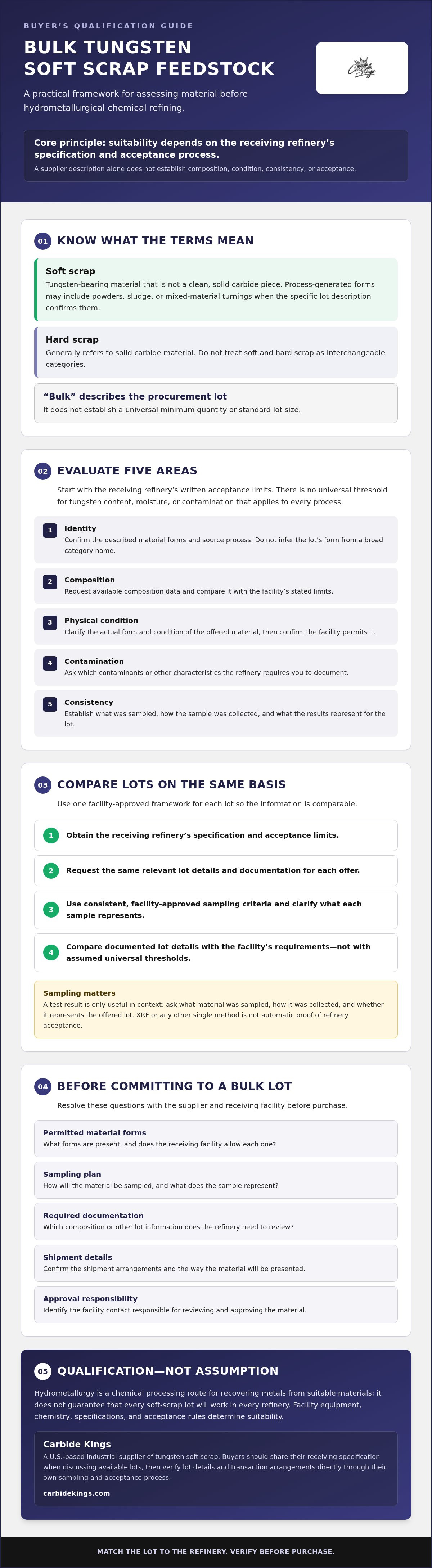
- Distinguish soft scrap, such as powders, sludge, and mixed-material turnings, from clean, solid carbide hard scrap. “Bulk” describes the procurement lot, not a universal minimum quantity.
- Assess material identity, composition, physical condition, contamination, and consistency against the receiving refinery’s limits, not assumed universal thresholds.
- Compare bulk tungsten soft scrap feedstock for hydrometallurgical chemical refining using the same facility-approved specification, documentation, and sampling basis for each lot.
- Before ordering, confirm permitted material forms, the sampling plan, required documentation, shipment details, and the facility contact responsible for approval.
- Carbide Kings is a U.S.-based industrial supplier of tungsten soft scrap. Share your refinery specification when asking about available lots, then assess suitability through your own sampling and acceptance process.
What Counts as Bulk Tungsten Soft Scrap Feedstock for Chemical Refining?
Tungsten soft scrap is tungsten-bearing material that isn’t a clean, solid carbide piece. It differs from hard scrap, which generally refers to solid carbide material. This distinction is a starting point, not proof of what a lot contains. Before deciding whether it fits your process, confirm its form and composition through the supplier’s description and available documentation.
“Bulk” describes the procurement lot being considered. It doesn’t establish a universal minimum quantity or standard lot size. Ask how the material is described and presented, then compare those details with the receiving refinery’s requirements. A broad label such as “tungsten soft scrap” alone doesn’t confirm composition, condition, or acceptance.
How tungsten soft scrap differs from hard scrap
Soft scrap usually refers to process-generated tungsten-bearing material rather than solid carbide pieces. Sludge, swarf, and fines are possible examples only when the specific lot description confirms them. Don’t infer material form from a general category name. For a broader overview of material types and recycling considerations, see the tungsten soft scrap buyer’s guide.
Material forms can have different handling and processing considerations. Get the lot’s actual description and confirm that the receiving facility permits each stated form. If the description is incomplete or unclear, resolve that question before purchase.
What “feedstock for hydrometallurgical refining” means
Hydrometallurgy is a form of chemical processing used to recover metals from suitable materials. In tungsten recycling, the term describes a processing route, not a guarantee that every soft-scrap lot will work in every refinery. The hydrometallurgical chemical refining overview provides general background. Confirm a specific facility’s equipment, chemistry, and acceptance rules with that facility.
Feedstock suitability depends on the facility and its specification. The phrase bulk tungsten soft scrap feedstock for hydrometallurgical chemical refining should prompt a qualification check, not an assumption of compatibility. Request the receiving facility’s specification and compare it with the documented lot details. The facility’s limits determine whether the material suits its process.
Which Feedstock Characteristics Should a Tungsten Refiner Evaluate?
Before comparing lots, get the receiving refinery’s written acceptance limits. There’s no universal threshold for tungsten content, moisture, or contamination that determines suitability for every process. Use the facility’s specification as your checklist, then collect information that lets you compare the offered material against it.
Evaluate five areas: identity, composition, physical condition, contamination, and consistency. Ask what source process and material forms are represented. Request available composition data, and clarify what material was sampled, how the sample was collected, and what the results represent. The Tungsten Mineral Commodity Summaries provides broader context on tungsten supply and recycling. Lot-level qualification still depends on details relevant to your facility.
Composition, contaminants, and material identity
Confirm the lot’s described forms and origin with the seller. Compare available composition information with the receiving facility’s limits. A test result can inform the review, but its value depends on what was sampled and how representative the sample is of the offered material. No single instrument or method, including X-ray fluorescence (XRF), should be treated as automatic proof of refinery acceptance.
A lot description is not a substitute for representative analytical data. Ask which analytes or characteristics the facility needs documented, what data it will accept, and whether it requires additional review before approval.
Moisture, particle form, and lot consistency
Clarify how the material’s physical form and moisture are described or measured, then compare those details with the refinery’s criteria. Oils, binders, and foreign materials may matter, depending on the buyer’s specification and process. Don’t assume that the presence or absence of any one factor makes a lot acceptable.
Check whether the offered lot combines different production runs, material forms, or storage conditions. Such differences may affect how well a sample represents the full lot. Ask the receiving facility how it defines representative sampling for this material and whether its review requires a particular sampling basis. Keep the answers with the lot records so procurement and receiving teams can refer to the same information.
These checks help qualify bulk tungsten soft scrap feedstock for hydrometallurgical chemical refining without relying on a generic grade label. You can also consult industrial tungsten soft scrap information from Carbide Kings, then confirm current lot details directly and compare them with your refinery’s requirements.
How to Compare Bulk Tungsten Soft Scrap Feedstock for Hydrometallurgical Chemical Refining Before Purchase
A tungsten-bearing description doesn’t automatically make a lot acceptable process feedstock. To compare offers fairly, use the same specification approved by your receiving facility for every lot. A generic grade label can’t replace the facility’s requirements or confirm that a particular material will be accepted.
The U.S. Geological Survey describes scrap as a raw material for the U.S. tungsten industry and notes that domestic companies convert scrap into tungsten chemicals. This broader role makes careful lot qualification practical: distinguish what the supplier has documented from what still requires testing or refiner approval.
Build a like-for-like lot comparison
Use the same record for each offer. Keep units, reporting basis, and sampling details aligned wherever possible. If information is missing, mark it as unknown rather than treating its absence as a passing result.
| Comparison item | What to record | Open questions to resolve |
|---|---|---|
| Material description | Supplier-stated material forms and source process, if provided | Does the facility permit each form in this lot? |
| Documentation | Available composition data, units, reporting basis, and test information | Does the refinery accept this data, or require additional testing? |
| Sampling basis | How and where the sample was collected, if documented | Does the sample represent the offered lot under the facility’s sampling plan? |
| Condition | Disclosed moisture, particle form, and visible or reported atypical material | Do wet, oily, mixed, or other conditions meet the buyer’s limits? |
Compare disclosed composition and material forms using the same units and reporting basis. Flag mixed, wet, oily, or otherwise atypical material for review when applicable. These observations are prompts for the buyer and refiner, not automatic reasons to accept or reject a lot.
Resolve acceptance with the receiving facility
Send the facility the supplier’s material description and available documents before approving a purchase. Ask which tests it requires, what sample quantity and sampling method apply, and who makes the acceptance decision. Requirements vary by facility, so don’t infer approval, recoveries, yields, or chemical needs from a category name alone.
For bulk tungsten soft scrap feedstock for hydrometallurgical chemical refining, use three clear labels in your comparison: confirmed information, information needing verification, and facility decision pending. This helps prevent assumptions from being mistaken for specifications and gives procurement and technical teams a shared basis for review.
What Should Buyers Confirm Before Ordering a Bulk Feedstock Lot?
Use a clear sequence before committing to bulk tungsten soft scrap feedstock for hydrometallurgical chemical refining. Start with the receiving facility, then confirm the lot details, records, approval, and shipment plan with the relevant parties. This keeps missing information visible and gives everyone a chance to resolve it before dispatch.
- Collect the facility’s written specification. Request its limits for composition, moisture, contaminants, and acceptable material forms. Don’t substitute a generic grade description for the facility’s requirements.
- Confirm permitted forms and exceptions. Ask whether the facility accepts each material form represented in the lot. Clarify who can approve deviations or incomplete information before treating an exception as acceptable.
- Agree on the sampling plan. Confirm how samples should represent the lot, who will collect or review them, and what sample quantity and testing methods the facility requires. Ask directly whether certificates or other records are needed.
- Identify the approval contact and review steps. Record who is responsible for technical acceptance, which documents they need, and what steps are required before purchase approval. Confirm expected review timing with the facility instead of assuming it.
- Review lot records and segregation. Ask what records are available and whether the lot is kept separate from other material. Confirm how containers or packages will be identified so the material received can be matched to the reviewed lot.
- Plan handling and shipment with both parties. Confirm packaging, labels, load configuration, receiving requirements, and handling needs. Clarify who is responsible for transport arrangements and which documents must be ready before dispatch. Verify handling and shipping requirements for the specific material and route.
Make the specification request actionable
Send the seller the relevant facility limits and ask for the lot description and available records that address them. Keep confirmed details separate from items awaiting sampling, documentation, or refinery review. For broader process context, see the industrial carbide scrap recycling process guide. Confirm soft-scrap acceptance and chemical refining requirements with your receiving facility.
Before arranging a purchase, close each open question with the party responsible for it. To discuss current tungsten soft scrap lots, share your refinery specification with Carbide Kings and confirm lot details, available documentation, and transaction steps directly.
Source Tungsten Soft Scrap from Carbide Kings with Clear Specifications
Carbide Kings is a U.S.-based supplier of industrial tungsten soft scrap. It supplies material to industrial buyers, but it isn’t a hydrometallurgical refiner or testing laboratory. A supplier description alone can’t guarantee that a lot will meet your process requirements. The receiving facility must assess and approve the material against its own specification.
Make your inquiry specific. Sharing your refinery’s requirements helps frame a practical discussion about available material, its documented characteristics, and what still needs confirmation. Verify current inventory, lot details, documentation, and transaction terms directly rather than assuming them.
What to include in a supplier inquiry
Give the supplier enough context to understand what you’re trying to source. Identify the intended refining route, required material form, and acceptance criteria your facility applies. Then ask which current lots may be relevant and what descriptions or supporting records are available for review.
- Refining context: State that the intended use is hydrometallurgical chemical refining, and share any facility-specific restrictions relevant to the material.
- Material requirements: Describe the permitted forms and provide the refinery’s written limits or specification, rather than relying on a generic category label.
- Lot information: Ask for the current lot description and clarify which supporting documentation is available. Confirm the sampling or testing basis for any data provided.
- Procurement needs: Outline the target lot scope, documentation needs, and anticipated decision timeline. Confirm availability and transaction details directly.
This approach helps separate facts about a particular lot from items that still require analysis, sampling, or refiner approval. Don’t treat an inquiry, supplier description, or preliminary document review as proof of acceptance.
Take the next step with a qualified inquiry
Before committing, send the proposed material details to the receiving refinery and obtain its decision through the facility’s own review process. Resolve questions about specifications, required records, and sampling before proceeding with a purchase. That keeps the sourcing discussion focused and gives both sides a clear basis for evaluating fit.
Ready to discuss bulk tungsten soft scrap feedstock for hydrometallurgical chemical refining? Contact Carbide Kings about tungsten soft scrap. Include your refinery specification, required material form, documentation needs, target lot scope, and decision timeline. Carbide Kings can discuss current material details and procurement requirements. Confirm availability and transaction terms directly, and obtain your refiner’s approval before committing to a lot.
Move Forward with a Qualified Feedstock Purchase
A sound bulk purchase starts with the receiving refinery’s requirements, not a supplier label. Confirm the lot’s material form and available documentation, then compare them with the facility’s specification and sampling process. Keep unknowns visible and get the refinery’s approval before committing. This framework helps you assess whether bulk tungsten soft scrap feedstock for hydrometallurgical chemical refining is a practical fit for your operation.
Carbide Kings sells tungsten soft scrap to industrial buyers across the United States. Inventory, lot descriptions, and documentation can vary, so confirm those details directly. When you reach out, share your facility’s acceptance criteria, required material form, and procurement needs to make the conversation specific.
Discuss your tungsten soft scrap requirements with Carbide Kings and take the next step with clear information. With your refinery’s criteria in hand, you can approach the purchase with greater confidence and fewer avoidable surprises.
Frequently Asked Questions
What qualifies as tungsten soft scrap for hydrometallurgical refining?
Tungsten soft scrap describes tungsten-bearing process material, not one universally accepted grade. A lot may include forms such as sludge, swarf, or fines only if its description confirms them. Before purchase, verify the material’s identity, composition, and physical condition using available information. Then compare those details with the receiving refinery’s written criteria, including which material forms it permits. The category name alone doesn’t establish suitability.
How do I know whether tungsten soft scrap is suitable for a refinery?
Start with the refinery’s own acceptance specification. Compare the lot description and available analytical information with its requirements for composition, moisture, contaminants, and physical form. Confirm the facility’s sampling method and approval steps, including who reviews the material. A supplier’s category label alone can’t establish suitability for bulk tungsten soft scrap feedstock for hydrometallurgical chemical refining. Treat missing data as an open question, not evidence that the lot meets requirements.
Can different types of tungsten soft scrap be mixed in one bulk lot?
Don’t assume a mixed lot will be acceptable. Combining material forms or production sources may affect how a refinery samples, evaluates, or handles the feedstock. Ask the receiving facility whether it permits the proposed mixture and what supporting documentation it requires. Confirm that the supplier can accurately describe the lot, including its known components. Get the refinery’s approval for any proposed blend before ordering, rather than relying on a general soft-scrap description.
What information should a bulk tungsten soft scrap supplier provide?
Request a clear material description, known source or process context, available composition data, lot size, physical condition, and relevant handling information. If sampling or testing has been performed, ask how the sample was collected and what the results represent. Documentation varies by supplier and lot. Confirm what is actually available instead of assuming certificates, assay results, or guarantees are included. Then check whether the receiving refinery considers the information sufficient for its review.
How should tungsten soft scrap be sampled before chemical refining?
Follow the receiving refinery’s sampling protocol. Ask who may collect the sample, how it should represent the full lot, what quantity the facility needs, and which analytical methods it accepts. Don’t substitute an informal grab sample or assume one test will satisfy the refinery. Agree on the sampling and review process before committing to a purchase or arranging shipment. If the protocol isn’t clear, ask the facility for instructions before sampling begins.
What contaminants can affect tungsten soft scrap acceptance?
Acceptance concerns depend on the refinery and the specific material, so there’s no universal contaminant list or threshold for every lot. Ask the facility about its limits for moisture, oils, binders, foreign metals, and other process-specific concerns. Compare its requirements with the supplier’s description and available test information. If the documentation doesn’t address a potential concern, identify it as unresolved and get clarification from the refinery before approving the feedstock.
How can I compare bulk tungsten soft scrap offers without relying only on price?
Compare material identity, available composition data, sampling basis, lot consistency, documentation, physical condition, and logistics alongside commercial terms. Apply the same facility-approved criteria to each offer so the comparison is meaningful. A lower quoted price doesn’t confirm process compatibility or resolve gaps in the lot information. Request clarification from the supplier and review the details with the receiving facility before treating two offers as equivalent or making a purchase decision.


