
By August 2026, new federal regulations mandated that 100% of U.S. tungsten scrap sales must stay within domestic borders, making tungsten powder recycling a vital strategic move for your facility. You likely view grinding sludge and fine powders as a messy, expensive headache that clogs up your floor space. It's frustrating to deal with heavy, wet material when you aren't even sure of its actual metal content. We understand that the logistical burden often feels like it outweighs the financial return. You want a process that is simple, transparent, and lucrative.
This guide provides the solution. You'll learn exactly how to identify high-value soft scrap and implement a collection system that slashes shipping costs. We'll walk you through the workflow to ensure you get the fastest payment possible for your materials. From understanding the 2026 market shifts to optimizing your facility's internal logistics, this industrial guide provides the clear roadmap you need to maximize your recycling ROI. We handle the heavy lifting so you can stay focused on your core operations.
Key Takeaways
- Define the scope of soft scrap to include powders, fines, and grinding sludge for more accurate material identification and valuation.
- Leverage the science of recovery to turn industrial waste into a chemically identical raw material through efficient closed-loop processing.
- Maximize your facility's ROI by segregating tungsten powder recycling streams from mixed waste to secure the highest possible quotes.
- Optimize your shop floor operations with dedicated collection bins and high-quality filtration systems designed to capture every ounce of high-value particles.
- Simplify your logistics and speed up payments by working with a specialized national partner who manages the entire procurement and transport workflow.
What is Tungsten Powder Recycling and Soft Scrap?
Tungsten powder recycling is the systematic reclamation of fine metallic particles generated during high-precision industrial processes. While many facilities are familiar with recycling solid carbide inserts, "Soft Scrap" represents a different category of waste entirely. This term covers powders, fines, and grinding sludge. Unlike solid chunks, these materials are often saturated with coolants or mixed with abrasive media. This physical state requires specialized handling and chemical processing to extract the pure tungsten within. Understanding Tungsten properties and uses helps clarify why these tiny particles remain so valuable even when they appear as messy industrial waste.
Distinguishing between material types is the first step toward a higher ROI. While tungsten hard scrap consists of intact tools, drills, or broken parts, soft scrap is the byproduct of the manufacturing process itself. Because powder has a higher surface area and is prone to oxidation or contamination, it can't be tossed into a standard scrap bin. It demands a clean, segregated collection system to maintain its chemical integrity. Treating your powder as a raw material rather than trash is the key to maximizing its recovery value.
Common Sources of Recyclable Tungsten Powder
The most common generators of soft scrap are the aerospace, automotive, and specialized tool manufacturing sectors. In these environments, precision is mandatory, and material loss is inevitable. Identifying where your waste originates allows you to capture it more effectively.
- Grinding sludge: This is a mixture of tungsten carbide fines and liquid coolants produced during tool sharpening and finishing.
- Swarf and fines: These are tiny chips and dust generated during CNC machining operations.
- Additive manufacturing waste: In 2026, 3D printing with tungsten is more common, leading to significant amounts of overflow powder and support-structure waste.
Why Industrial Facilities Prioritize Powder Recovery
Managing tungsten powder recycling isn't just about cleaning up the shop floor. It's a strategic business decision that impacts your bottom line. First, the economic incentive is undeniable. Tungsten is a refractory metal with high market value; leaving it in the trash is essentially throwing away profit. Second, environmental compliance is easier when you have a documented recycling workflow that prevents heavy metals from entering the waste stream.
Finally, domestic recovery supports the national supply chain. With 2026 federal regulations requiring U.S. persons to allocate 100% of tungsten scrap sales to domestic buyers, recycling your soft scrap ensures a steady supply of raw materials for American manufacturing. It reduces reliance on volatile global markets and keeps your facility ahead of regulatory shifts. We make this process seamless so you can focus on production while we handle the logistics of recovery.
The Science of Recovery: How Tungsten Powder is Processed
The "Closed Loop" system is the backbone of modern material sustainability. In this model, industrial waste isn't the end of a product's life but the beginning of its next cycle. Tungsten powder recycling takes fines and sludge and returns them to the supply chain as high-purity raw materials. This process is highly efficient because recycled tungsten is chemically identical to virgin ore extracted from the earth. Manufacturers don't have to sacrifice quality when they choose reclaimed materials. They get the same performance with a much lower environmental footprint.
Mining virgin tungsten is an energy-intensive, costly endeavor that involves massive geological disruption. Recycling, by contrast, uses significantly less energy to produce the same volume of metal. This efficiency is a primary driver for industrial tungsten procurement strategies in 2026. By choosing to recover materials rather than source new ore, facilities contribute to a more stable domestic market. According to U.S. Geological Survey tungsten data, secondary production from scrap is a critical component of the national mineral strategy. It helps insulate local industries from the price volatility often found in global mining sectors.
Chemical Recycling vs. Zinc Reclaim
Processing methods vary based on the physical state of the scrap. For powders and fine sludge, chemical recycling is the gold standard. This method involves dissolving the scrap in chemical baths to create pure tungsten compounds like Ammonium Paratungstate (APT). It's a thorough process that strips away all impurities. Zinc reclaim is another common method, but it's typically reserved for solid tungsten hard scrap. In zinc reclaim, molten zinc expands the carbide structure to break it into a powder. While fast, it doesn't offer the same level of chemical purification as the full chemical route used for complex soft scrap.
The Role of Purity in Soft Scrap Valuation
Your payout depends heavily on the purity and condition of the material you provide. When dealing with grinding sludge, moisture content is the biggest variable. We calculate value based on "dry weight," so excess coolant or water can skew your initial estimates. Oil and coolant contamination also matter; they require extra steps to remove before chemical processing can begin. If your powder contains high-value additives like cobalt, your material's worth increases significantly. Keeping your collection bins free of floor sweepings and non-tungsten waste ensures you receive the maximum possible quote for every pound you ship.
Maximizing ROI: Segregating Powder from Grinding Sludge
Segregation is the fastest way to boost your facility's recycling ROI. When you present a mixed lot of metals, you force the buyer to account for the risk of contamination and the cost of additional sorting. This naturally results in lower quotes. By keeping your streams pure, you ensure that the value of the tungsten is the primary driver of the price. Clean material moves faster through the procurement chain, which means you get paid sooner.
Many high-performance powders contain significant amounts of cobalt tungsten scrap. Cobalt acts as a binder in carbide tools, and its market value is a major factor in your final payout. If your recycling partner knows exactly what's in the mix, they can offer a premium. Don't let valuable cobalt get buried in a generic waste stream where its value is overlooked.
Deciding whether to dry your grinding sludge or ship it wet is a logistical calculation. Wet sludge is heavy, which increases shipping costs. However, if your facility lacks the equipment to safely dry fines without causing oxidation, shipping wet in sealed drums is often the safer choice. We handle the logistics for both formats, but removing excess liquid at the source is the most direct way to lower your freight expenses and increase your net profit.
Steel and aluminum fines are the biggest threats to your profit margins. Even a small percentage of non-refractory metal can disqualify a batch from high-tier chemical processing. Successful tungsten powder recycling depends on keeping these "poison" metals out of your collection bins from the very start.
Hard Scrap vs. Soft Scrap Management
Never toss solid carbide inserts into your grinding sludge bins. These materials follow different processing paths. Solids are often reclaimed via zinc processing, while sludge requires a chemical approach. Mixing them creates an administrative and physical bottleneck. Use color-coded, clearly labeled bins to keep dry powders separate from oily swarf. This simple step eliminates confusion on the shop floor and ensures your material is ready for immediate valuation.
Testing and Analysis of Powder Batches
Buyers determine the value of your lot through a process called an assay. For large powder drums, taking a representative sample is critical. This involves drawing material from multiple depths to ensure the sample reflects the entire batch. In 2026, most specialized buyers use advanced X-ray fluorescence (XRF) or wet chemical analysis to find the exact tungsten percentage. A clear understanding of this assay process gives you confidence that you're receiving a fair, transparent payment based on the actual metal content of your waste.
How to Collect and Prepare Tungsten Powder for Recycling
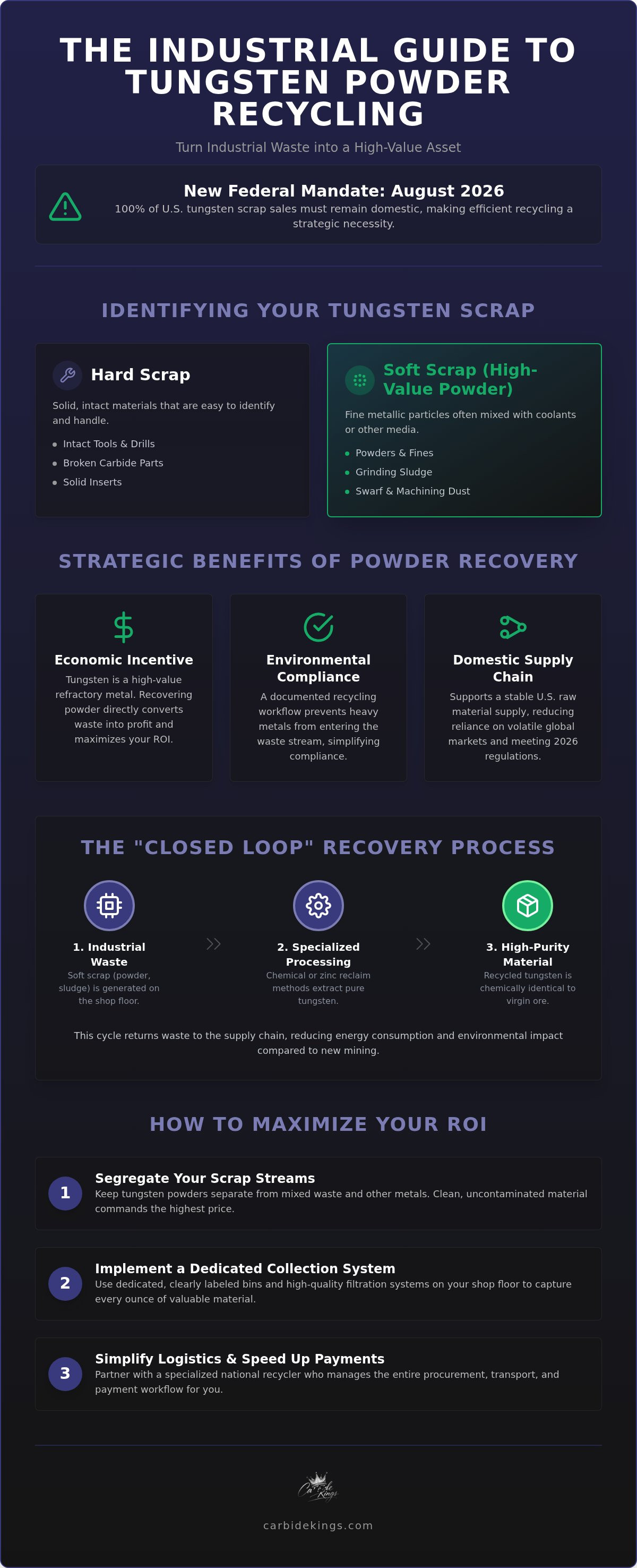
Establishing a clean collection system is the most effective way to turn a messy shop floor into a streamlined revenue stream. Effective tungsten powder recycling starts with the right containers and a disciplined workflow. First, dedicate specific bins for tungsten-only grinding and machining to prevent cross-contamination with steel or aluminum chips. Second, use high-quality filtration systems on your machines to capture even the finest particles that would otherwise be lost. Third, decant excess coolants from your sludge to reduce shipping weight. Fourth, secure all powders in UN-rated steel drums to prevent leaks and contamination during transport. Finally, document the source material, such as "carbide end mill grinding," to help our team verify the content quickly.
Best Practices for On-Site Storage
Fine tungsten powders are sensitive to their environment. Exposure to air and moisture can lead to oxidation, which complicates the chemical recovery process and can lower your payout. Keep your drums tightly sealed at all times. Safety is also a priority; fine metal dusts can be flammable under certain conditions. Store your scrap in a cool, dry area away from sparks or open flames. If you're tight on space, remember that tungsten's density allows you to accumulate significant value in a small footprint. Just ensure your storage area can handle the heavy floor load of multiple drums.
Shipping Logistics for Heavy Powders
Tungsten is exceptionally heavy for its volume. A small container can easily exceed weight limits for standard manual handling. We suggest using 5-gallon or 10-gallon steel drums instead of standard 55-gallon barrels to keep the weight manageable for your team and the freight carrier. Once your drums are full, palletize them and use heavy-duty shrink-wrap and metal banding to secure the load. National freight requires clear documentation, including a bill of lading that accurately describes the industrial metal scrap. We simplify this by handling the heavy lifting of logistics for you. When you're ready to move your material, sell your tungsten soft scrap to a partner that understands the industrial workflow and prioritizes fast, transparent transactions.
Partnering with Carbide Kings for National Tungsten Recovery
Carbide Kings is the direct buyer you need for professional selling tungsten alloys and powders. We don't act as a middleman. We're a specialized dealer with a deep understanding of the refractory metal market. Our team provides a no-nonsense approach to industrial procurement that values your time. You've already done the hard work of manufacturing; we make the recovery process just as efficient. We prioritize clarity and speed in every transaction to keep your facility moving.
Our evaluation process is built on transparency. We use precise analysis to determine the exact metal content in your soft scrap. This ensures you receive a fair, market-reflective price every time. We offer fast payment terms because we know that cash flow is critical for your operations. Whether you have 500 pounds of grinding sludge or a steady stream of dry powder, we handle it with professional integrity. We bridge the gap between messy industrial waste and a streamlined financial asset.
A Supportive Partner for Industrial Logistics
Managing the transport of heavy, dense powders is a logistical challenge. Most general scrap yards aren't equipped to handle the specific requirements of tungsten powder recycling at a national scale. We take the heavy lifting off your plate by coordinating the entire freight process. Our network of carriers is experienced in moving industrial metal scrap safely and efficiently across the country. You won't have to spend hours on the phone with freight brokers.
Working with a specialized dealer means you avoid the administrative hurdles of general recycling. We understand the 2026 regulatory environment and know how to document your shipment to comply with domestic sale requirements. This expertise eliminates the friction often found in traditional scrap transactions. You focus on your core production while we manage the movement of your recovered material from your dock to our facility. It's a partnership designed for maximum efficiency.
Requesting a Quote for Your Tungsten Powder
Getting started is straightforward. To provide an accurate estimate for your soft scrap, we need basic information about the source and condition of the material. Tell us the approximate weight, the type of machining process that generated it, and the estimated moisture content if it's a sludge. Photos of the material and the storage drums also help our team provide a faster, more precise quote. We don't need complex paperwork to give you a preliminary number.
We aim for a 24-hour response time on all industrial inquiries. Our goal is to move your material quickly so it doesn't take up valuable floor space. Transparency is our priority, so we'll walk you through every step of the valuation before a single drum moves. Stop letting your industrial waste sit idle. Contact Carbide Kings to turn your tungsten powder into revenue today.
Secure Your Facility's Recycling ROI for 2026
You've seen how identifying soft scrap and maintaining strict segregation protocols can transform your industrial waste into a significant revenue stream. By using dedicated bins and UN-rated drums, you protect the purity of your material and ensure a higher valuation. Tungsten powder recycling doesn't have to be a logistical burden when you have a streamlined workflow in place.
Our team provides the specialized industrial tungsten expertise and national logistics support needed to handle the heavy lifting for you. We offer fast 24-hour payment terms so you can reinvest in your operations without delay. Don't let valuable refractory metals sit idle on your shop floor. We're here to simplify the procurement process and ensure you get the maximum return for every pound of material you generate.
Start turning your grinding sludge and machining fines into a reliable asset today. Get a Competitive Quote for Your Tungsten Powder and Sludge
Frequently Asked Questions
Is tungsten powder hazardous to recycle?
Tungsten powder isn't inherently toxic, but the fine particles can be a respiratory irritant and potentially flammable in dust form. Proper PPE and sealed containers are required for safe handling. In 2026, safety protocols for tungsten powder recycling focus on dust suppression and avoiding sparks. We provide clear guidance on handling these materials to ensure your facility stays compliant and your team remains safe during the collection process.
What is the difference between tungsten powder and grinding sludge?
Tungsten powder is a dry collection of fine particles, often from additive manufacturing or dry machining. Grinding sludge is a wet byproduct created when coolant or oil mixes with tungsten fines during sharpening or grinding operations. While they look different, both are high-value soft scrap. We buy both materials and use chemical processing to reclaim the pure tungsten regardless of whether it arrives dry or saturated.
How much tungsten is actually in my grinding sludge?
The tungsten content in grinding sludge typically ranges from 30% to 70% depending on the concentration of coolants and the efficiency of your filtration. We use precise assay testing to determine the exact metal percentage in every lot. This analysis accounts for moisture and oil content to find the true dry weight of the tungsten. Knowing this percentage is essential for providing you with a fair and transparent market-based quote.
Can I recycle tungsten powder contaminated with other metals?
Yes, but high levels of steel or aluminum contamination lower the final value of the lot. Specialized chemical recycling can separate tungsten from other elements, but the extra processing time increases costs. We recommend keeping your tungsten-only grinding stations separate from other metalworking areas. This simple segregation step is the most effective way to protect your ROI and ensure your powder meets high-purity standards for faster processing.
What is the minimum amount of powder Carbide Kings will buy?
We focus on industrial-scale procurement and typically look for lots starting at 50 pounds. However, we encourage you to contact us regardless of your current volume to discuss your specific needs. Because tungsten is extremely dense, 50 pounds of powder fits into a very small container. We can help you set up a recurring collection schedule to move your material as soon as you reach our minimum shipping weight.
How do I ship heavy drums of tungsten powder safely?
Use UN-rated steel drums and keep individual weights manageable for freight carriers. We recommend 5-gallon or 10-gallon drums over larger barrels because tungsten's high density makes 55-gallon drums dangerously heavy. Secure your drums to a pallet with heavy-duty shrink-wrap and metal banding. Our team handles the national logistics coordination for you, ensuring that your tungsten powder recycling shipments move from your dock to our facility with zero administrative friction.
Does the price of tungsten powder fluctuate like the metal market?
Yes, the value of soft scrap is directly tied to global tungsten and cobalt market prices. In 2026, these prices are influenced by domestic supply chain regulations and international availability. We track these fluctuations daily to provide you with the most current and competitive quotes. Because we are a direct buyer, we eliminate the middleman fees that often eat into your profits at general scrap yards during market shifts.
What are the payment terms for industrial tungsten powder lots?
We prioritize fast 24-hour payment terms once the material has been received and the assay is complete. Our goal is to provide immediate liquidity for your facility so you can focus on your core production. We use a transparent evaluation process to confirm the tungsten content and then issue payment directly. There are no long waiting periods or hidden fees, making our procurement process as straightforward as a standard business transaction.


