

In 2026, your "heavy" scrap pile isn't just a logistical burden; it's a high-precision financial asset sitting on your shop floor. With global tungsten prices seeing record volatility and new US export regulations tightening the domestic market, you need a smarter way to sell tungsten alloys for their true value. You probably realize that high-density metals are a headache to transport and even harder to value correctly. It's frustrating to watch specialized materials get tossed into a generic bin because a local yard doesn't understand the difference between carbide inserts and heavy tungsten alloys.
You deserve a process that respects your time and your inventory's value. This guide will teach you how to identify, value, and offload your materials to maximize your industrial scrap revenue using streamlined national logistics. We'll walk you through the current 2026 market landscape, the critical differences between hard and soft scrap, and our proven system for securing transparent, 24-hour payments. It's time to turn your heaviest logistical challenges into your fastest source of liquidity.
Key Takeaways
- Identify high-value Tungsten Heavy Alloys (WHA) Class 1 through 4 commonly found in aerospace and radiation shielding applications.
- Understand how the specific ratio of tungsten to balance metals like nickel and iron directly impacts your final scrap valuation.
- Master the logistics of shipping high-density materials by using specialized packaging techniques to manage extreme weight-to-volume ratios.
- Discover a streamlined process to sell tungsten alloys that prioritizes transparent appraisal and fast, 24-hour payment terms.
- Leverage current 2026 industrial demand drivers to turn heavy balance weights and manufacturing scrap into immediate liquidity.
Understanding the Industrial Market for Tungsten Alloys
High-density tungsten alloys are the backbone of modern heavy industry. These materials aren't pure tungsten; they are sophisticated blends of tungsten with nickel, iron, or copper. This specific mixture creates a metal that's nearly as dense as gold but significantly more durable. In 2026, the push to sell tungsten alloys is driven by a surge in aerospace manufacturing and specialized medical shielding. If you're holding balance weights or vibration dampeners, you're sitting on a strategic resource that's in high demand.
Valuation depends heavily on the specific grade of your material. Pure tungsten scrap is rare and valuable, but industrial alloys are far more common in most manufacturing scrap streams. Specialized buyers understand these metallurgical nuances. Local scrap yards often treat all heavy metal as a generic commodity, which leads to lower quotes for the seller. We focus on the exact composition of your lot to ensure you get paid for the actual tungsten content, rather than a broad estimate.
Why Industrial Tungsten Alloys Command Premium Value
Tungsten has the highest melting point of any metal. This property makes it nearly impossible to replace in high-heat environments. Recycling these alloys reduces the immense energy costs required to mine and refine virgin ore. Tungsten alloys are essential strategic materials for 2026 industrial supply chains. Manufacturers rely on recycled streams to maintain production of high-precision components like crankshaft weights and aircraft control surfaces. Because these parts require extreme density in small volumes, the demand for recycled feedstock remains consistently high.
Tungsten Alloys vs. Tungsten Carbide: A Critical Distinction
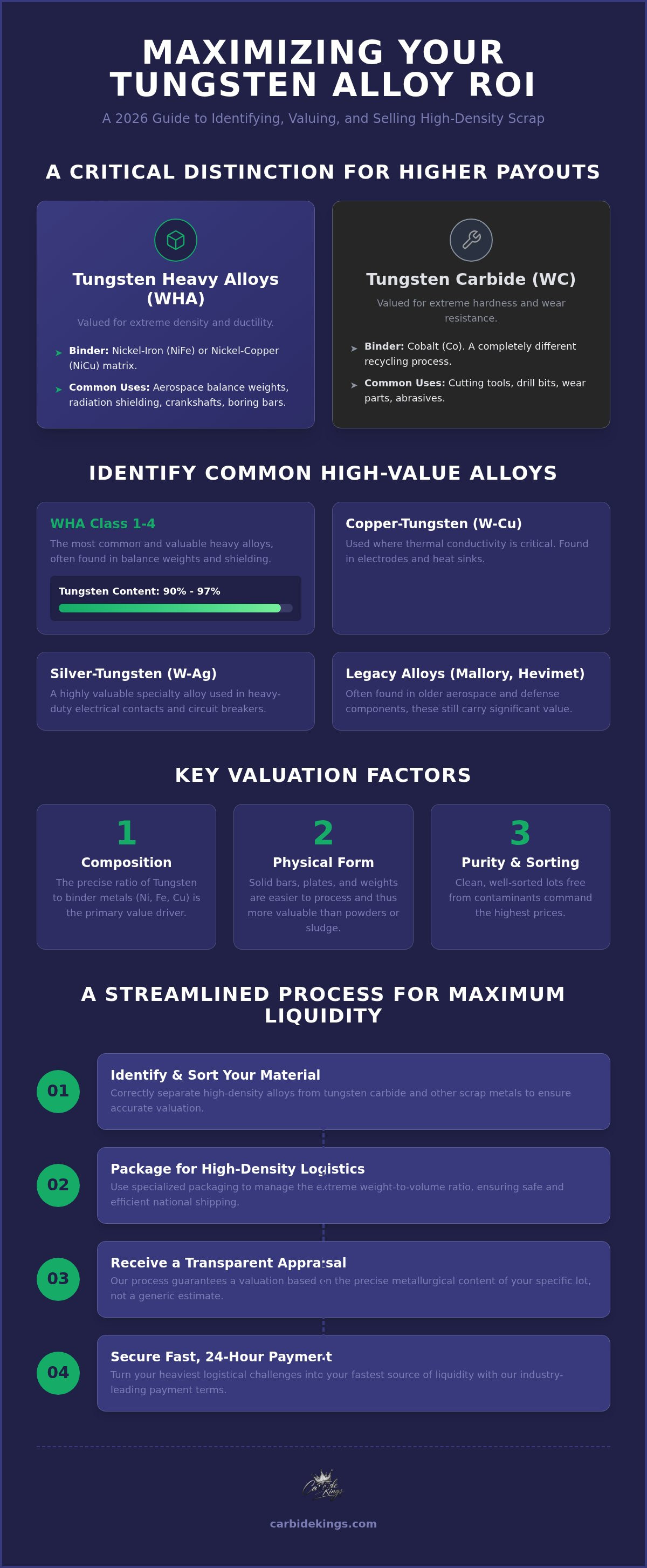
Many professionals confuse heavy alloys with Tungsten Carbide. While both contain tungsten, their binders differ significantly. Carbide uses cobalt as a binder to create extreme hardness for cutting tools and wear parts. In contrast, heavy alloys typically use a nickel-iron or nickel-copper matrix to achieve high density and ductility. This difference in chemistry changes the recycling process and the final valuation of the scrap.
Physical form also dictates your initial quote. Solid bars, weights, or blocks are much easier to verify and process than sludge or fine powders. Understanding these differences helps you categorize your inventory before you decide to sell tungsten alloys. For a deeper dive into tool-grade materials and how they differ from heavy alloys, see The Complete Guide to Tungsten Hard Scrap Recycling in 2026. Sorting your materials correctly before shipping is the fastest way to ensure a transparent appraisal and a quick payout.
Common High-Value Tungsten Alloys in Scrap Streams
Identifying the specific alloy in your inventory is the first step toward a higher payout. Many shops overlook high-density alloys because they don't look like typical manufacturing waste. If you want to sell tungsten alloys effectively, you must recognize the trade names and compositions that drive market demand. These materials are often categorized by their "Class" or specific trade names like Mallory, Denal, and Densalloy. According to USGS Tungsten Data, industrial recycling remains a vital component of the domestic supply chain, making your well-sorted scrap a premium commodity.
- WHA Class 1-4: These are the most common heavy alloys, containing 90% to 97% tungsten.
- Copper-Tungsten (W-Cu): Found in electrodes and heat sinks where thermal conductivity is critical.
- Silver-Tungsten (W-Ag): Highly valuable alloys used in circuit breakers and heavy-duty electrical contacts.
- Legacy Alloys: Brands like Hevimet and Mallory-1000 are still prevalent in older aerospace and defense components.
Tungsten Heavy Alloys (WHA) and Densalloy
Tungsten Heavy Alloys are prized for their extreme density. You'll find these in crankshaft weights, boring bars, and bucking bars used in riveting. Identification is straightforward: WHA is significantly heavier than lead or steel. Most grades are non-magnetic, though some Class 1 and Class 2 alloys may show a slight magnetic pull if they use a nickel-iron binder. Because these materials contain up to 97% tungsten, they represent some of the highest value-per-pound items in any industrial lot. If you have unidentified heavy weights in your shop, you can request a quick valuation to confirm their alloy grade.
Copper-Tungsten and Electrical Contact Alloys
Copper-Tungsten (W-Cu) alloys serve a different purpose. These materials combine the hardness of tungsten with the electrical conductivity of copper. They're common in EDM (Electrical Discharge Machining) electrodes and high-voltage switchgear. In the scrap market, W-Cu is unique because the copper content adds a secondary layer of value to the quote. While the tungsten remains the primary driver, the current price of copper influences the final offer. Silver-Tungsten (W-Ag) is even more lucrative but less common, typically appearing in specialized aerospace relays and high-end industrial breakers. Keeping these electrical contact alloys separate from your standard heavy alloys ensures you capture the full value of the precious or semi-precious binders used in their production.
How to Determine the Value of Your Tungsten Alloy Scrap
Valuing tungsten alloy scrap is a precise science, not a guessing game. While weight is the baseline, the actual percentage of tungsten (W) content dictates the core value of your lot. Most industrial heavy alloys contain between 90% and 97% tungsten; however, the remaining "balance" metals play a critical role in the final quote. Refineries must account for the specific costs of separating nickel, iron, or copper from the tungsten matrix. When you prepare to sell tungsten alloys, understanding this chemical makeup ensures you aren't leaving money on the table.
Contamination is the most common reason for a downgraded quote. Brazing materials, attached steel bolts, and heavy oil coatings increase processing difficulty. If a buyer has to spend labor hours stripping steel from your tungsten weights, that cost comes out of your ROI. Additionally, lot size matters. Shipping in bulk often unlocks better pricing tiers because it streamlines the logistics and testing process for the buyer. Small, mixed lots require more administrative handling, whereas large, uniform shipments allow for a more aggressive valuation.
The Role of Market Trends in 2026 Pricing
The secondary scrap market doesn't exist in a vacuum. It's tied directly to global ore production and geopolitical shifts. Insights from the International Tungsten Industry Association show that as mining costs rise, the value of high-purity recycled alloys increases proportionally. Alloy prices fluctuate based on both tungsten and secondary metal indices. This means a spike in nickel or copper prices can actually provide a slight boost to your total scrap value. For a deeper look at the economic factors currently moving the needle, read our Tungsten Carbide Scrap Price Guide: Market Drivers and Valuation in 2026.
Preparation and Sorting for Maximum ROI
Sorting your materials by class is the fastest way to protect your profit. Mixing a 90% tungsten alloy with a 97% lot often results in the entire shipment being valued at the lower rate. Keep your WHA Class 1 separate from your Class 4. Cleanliness also pays dividends. A quick degreasing and the removal of steel attachments transform a "dirty" lot into premium inventory. Professional buyers use handheld XRF analyzers to confirm chemistry upon arrival. When your lot is clean and sorted, these tests confirm your high-quality inventory immediately, leading to faster approvals and more transparent payments. Don't let simple sorting errors eat into your industrial revenue.
National Logistics: Shipping High-Density Tungsten Alloys
Tungsten's extreme density presents a unique logistical hurdle. A cubic foot of tungsten alloy weighs approximately 1,200 pounds. This weight-to-volume ratio means that traditional shipping methods often fail. If you plan to sell tungsten alloys on a national scale, you must prioritize structural integrity in your packaging. Standard shipping containers often buckle under the concentrated weight of heavy alloys; this leads to lost inventory and safety hazards during transit.
Accurate weight documentation is essential for national freight. Carriers require precise measurements to manage load balancing on their trucks. We simplify this "heavy lifting" by providing comprehensive shipping support. We ensure your materials move safely from your facility to our intake center without the typical administrative friction of industrial logistics.
Packaging Standards for Heavy Metal Scrap
Never use standard cardboard boxes for heavy alloys. Instead, opt for reinforced steel pails or heavy-duty wooden crates. A common mistake is filling a 5-gallon bucket to the brim. This can create a 300-pound load that standard plastic handles cannot support. Always secure your containers to a high-quality pallet using steel banding or heavy-duty shrink wrap. Follow these guidelines to ensure a smooth transit:
- Reinforce the base: Use double-walled containers or steel pails to prevent bottom-outs.
- Respect pallet limits: Never exceed the weight rating of a standard pallet; usually 2,500 to 4,600 pounds depending on the grade.
- Clear Labeling: Mark all shipments as "Industrial Scrap for Recycling" to comply with 2026 interstate transport regulations.
Streamlining the National Sales Process
Our process is built for speed. Start by requesting a quote online. Include clear photos of the material and your best estimate of the total weight. Once the shipment arrives at our facility, it undergoes immediate metallurgical verification. This ensures the payout matches the actual chemistry of your lot. You can learn more about this national process in our guide on How to Sell Tungsten Scrap in the USA: The 2026 Industrial Guide. We handle the logistical headaches so you can stay focused on your production. If you're ready to clear your floor, get a quote for your tungsten alloy scrap today.
Maximize Your ROI with Carbide Kings’ Alloy Procurement
Carbide Kings stands as the premier national buyer for industrial tungsten. When you decide to sell tungsten alloys, you need a partner that understands the metallurgical complexity of your inventory. We don't just offer generic estimates. Our valuation process is built on transparency and precision. We analyze the specific tungsten content and balance metals in your complex industrial lots to ensure your quote reflects the true market value. You get the benefit of an authoritative expert who treats your scrap as a high-precision asset.
Cash flow is the lifeblood of any machine shop or manufacturing facility. That's why we prioritize speed. We offer 24-hour payment terms once your shipment is verified. This eliminates the weeks of waiting often associated with traditional scrap yards. Whether you have solid tungsten hard scrap, soft scrap, or even messy grinding sludge, we handle the entire spectrum. Our goal is to provide a single, reliable outlet for all your tungsten-based materials, removing the logistical burdens from your daily operations.
Direct-to-Buyer Advantages
Working directly with a specialist like Carbide Kings eliminates the middleman. Traditional scrap dealers often act as brokers; they take a cut of your profit before selling the material to a specialized refiner. By selling directly to us, you capture that hidden margin. We maintain consistent demand for high-grade tungsten alloys regardless of 2026 market volatility. Our professional reliability ensures that your logistics and payments are handled with the same precision you apply to your own manufacturing processes. You get the peace of mind that comes with a dedicated partner who values your time as much as your metal.
Getting Started with Your Alloy Quote
The first step toward maximizing your ROI is inventory consolidation. Gather your alloy weights, balance weights, and high-density scrap into a single lot. A consolidated shipment often qualifies for better freight rates and higher bulk-tier pricing. For our repeat industrial partners, we offer a fast-track process that minimizes paperwork and speeds up intake. We've refined our system to make it easy to sell tungsten alloys with minimal administrative friction. Don't let valuable metal sit idle on your floor. Contact Carbide Kings today for a competitive quote on your tungsten alloys. We handle the logistics, the testing, and the heavy lifting so you can stay focused on your core operations.
Secure Your Industrial ROI for 2026
Maximizing the value of your high-density materials requires more than just a general recycler. You now understand how to identify premium WHA classes and the critical role that proper sorting plays in protecting your margins. By focusing on chemical purity and removing steel contaminants, you ensure your shop floor remains a source of consistent revenue rather than a collection of unorganized waste. High-density scrap is a strategic asset that deserves professional handling.
When you are ready to sell tungsten alloys, Carbide Kings handles the heavy lifting of national logistics and expert metallurgical valuation. We prioritize your business's cash flow with 24-hour payment processing; this turns your logistical headaches into immediate capital for your operations. Don't let valuable alloys sit in a bin when they could be fueling your next production cycle or equipment upgrade. Our process is designed to be fast, transparent, and lucrative for industrial professionals.
Get a Fast Quote on Your Tungsten Alloys and experience a streamlined, professional transaction today. Our team is ready to help you clear your floor and maximize your returns with absolute confidence. We look forward to becoming your trusted partner in industrial metal recycling.
Frequently Asked Questions
What is the difference between tungsten alloy and tungsten carbide?
Tungsten carbide is a ceramic-like material that uses cobalt as a binder to achieve extreme hardness for cutting tools. Tungsten alloys, often called heavy alloys, use metallic binders like nickel, iron, or copper to prioritize high density and ductility. While both contain tungsten, they serve different industrial roles. Separating these materials before you sell tungsten alloys ensures an accurate metallurgical valuation and a faster intake process.
Can I sell tungsten alloys that are attached to other metals?
You can sell alloys attached to other materials, but it typically results in a lower quote due to processing costs. Attached steel, braze, or plastic must be stripped before the tungsten can be recycled. To maximize your ROI, we recommend removing as many non-tungsten components as possible before shipping. If the attachments are permanent, our team will account for the extra labor and weight during the appraisal process.
How do you determine the percentage of tungsten in my scrap?
We use advanced X-ray fluorescence (XRF) technology to determine the exact chemical composition of your lot upon arrival. This non-destructive testing identifies the tungsten content and the specific binder metals like nickel or copper. Because we're a specialized buyer, we don't rely on guesswork or generic estimates. This metallurgical verification ensures your final payment reflects the precise industrial grade of the material, maintaining total transparency.
What is the minimum weight required for a national scrap shipment?
There's no strict minimum weight, but shipping larger lots typically improves your return on investment. Because tungsten is extremely dense, even small volumes can reach significant weights. For national freight, we suggest consolidating at least 50 pounds to offset the logistical costs. If you have smaller amounts of high-value alloys, contact us to discuss the most efficient shipping method. Consolidating materials is the best way to leverage our national logistics.
How quickly will I receive payment after my alloys are received?
You'll receive payment within 24 hours of metallurgical verification at our facility. Once your shipment arrives, our team immediately begins the intake and testing process to confirm the weight and chemistry. We understand that cash flow is vital for industrial operations, so we've streamlined our administrative workflow to eliminate traditional delays. After the appraisal is complete and approved, we issue your funds promptly through your preferred payment method.
Do you buy tungsten heavy alloy (WHA) in powder or sludge form?
We buy tungsten heavy alloys in various forms, including powders and grinding sludge. These are categorized as tungsten soft scrap and require specific handling to prevent contamination. While solid weights and bars are easier to process, we have the specialized equipment necessary to value and recycle fine particulates. If you generate sludge from manufacturing processes, keep it in sealed, leak-proof containers to preserve its value and ensure safe national transport.
Is there a difference in price for Mallory vs. other tungsten alloys?
Mallory is a well-known trade name for high-density tungsten alloys, but its value is determined by its specific tungsten percentage. Whether your material is branded as Mallory, Denal, or Hevimet, our valuation focuses on the actual metallurgy rather than the brand name. Class 1 through Class 4 alloys contain different ratios of tungsten and nickel. We use precise testing to identify these grades, ensuring you get paid for the actual metal content.
How should I package my tungsten alloy scrap for safe transport?
Secure your scrap in reinforced containers like steel pails or heavy-duty wooden crates. Because tungsten is so dense, a small container can weigh hundreds of pounds. Always bolt or band these containers to a sturdy pallet and use heavy-duty shrink wrap to prevent shifting. Label every shipment clearly for industrial recycling. Proper packaging prevents container failure during transit and ensures your inventory arrives safely when you sell tungsten alloys to our facility.


