

The shortest path to a refinery might actually be the longest route to a profit. You've likely considered selling carbide to refineries directly to maximize your returns, thinking it's the best way to cut out the middleman. It's a logical assumption in an industry where raw material costs are rising and every cent per pound matters. However, the industrial reality of tungsten scrap is often more complex than a simple direct sale. Most refineries operate as massive industrial consumers rather than customer-facing buyers, which creates significant barriers for the average machine shop.
We understand the frustration of navigating fluctuating market prices and the logistical nightmare of shipping heavy scrap. This article debunks five persistent myths about the refinery-direct path and explains why specialized procurement partners often deliver a higher ROI with much less stress. You'll discover how to bypass strict minimum lot requirements and avoid the administrative hurdles that drain your time. We're providing a clear roadmap to help you establish a reliable recycling partnership that keeps your shop focused on production. Let's look at what's really happening in the 2026 tungsten market and how you can secure the best value for your material.
Key Takeaways
- Learn why selling carbide to refineries often involves hidden costs like treatment charges and penalty fees that can quickly erode your expected profits.
- Understand the massive volume requirements of industrial refineries and why it's often impossible for mid-sized shops to meet their minimums.
- Discover how to avoid shipment rejections by ensuring your tungsten scrap meets strict furnace-ready purity standards.
- Compare the 90-day settlement cycles of global refineries with the streamlined 24-hour payment terms offered by specialized procurement partners.
- Focus on your shop's core operations by letting a national partner handle the logistical red tape and administrative hurdles of tungsten recycling.
Myth #1: Refineries Buy Directly from Small and Mid-Sized Shops
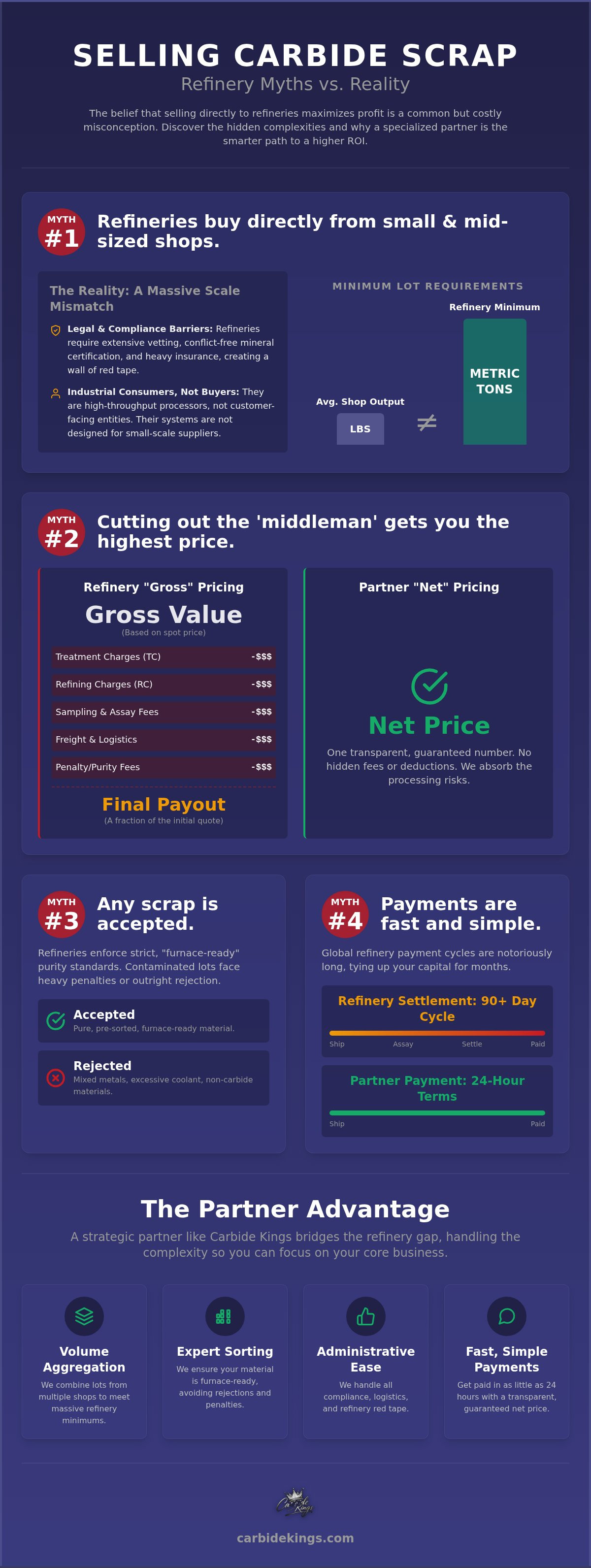
Many shop owners believe that cutting out the middleman by selling carbide to refineries is the ultimate way to boost the bottom line. It sounds efficient on paper. In practice, the gap between a machine shop and a metallurgical refinery is massive. Refineries are industrial processors designed for high-throughput manufacturing. They operate on a scale of metric tons. Most shops measure their scrap in pounds or small pallets. This mismatch in scale is the first and most significant barrier to entry. If your shop produces a few hundred pounds a month, you're essentially invisible to these global entities.
Understanding Minimum Volume Requirements
Furnaces used to process tungsten carbide are built for efficiency at scale. Running a refinery furnace for a few hundred pounds of inserts isn't just impractical; it's a financial liability. Refineries typically set minimum lot sizes that far exceed the annual scrap output of a standard machine shop. If you don't have several thousand pounds ready for a single shipment, most refineries won't even open a file for you. They prioritize consistent, high-volume monthly quotas to keep their operations steady. The administrative cost of processing a small, one-off lot consumes their profit margin. This is why they prefer working with large-scale aggregators who provide pre-sorted, furnace-ready material. We combine lots from multiple shops to meet these massive metallurgical thresholds, ensuring your material actually reaches the melt without the wait.
The Legal Barriers to Direct Entry
The paperwork involved in a direct refinery contract is often a full-time job. Refineries must comply with strict international standards for "conflict-free" minerals and maintain a rigorous chain of custody. They require extensive legal and environmental vetting before they'll accept a single tool. In the 2026 market, domestic supply chain regulations have become even tighter, making compliance more burdensome for individual shops. You'll also face heavy insurance and liability requirements for shipping raw industrial waste directly to a smelting facility. For most shops, the administrative cost of this vetting process far outweighs the potential price gain. Choosing a national carbide recycling company is the safer logistical choice. We handle the compliance and the red tape so you don't have to. Selling carbide to refineries directly might seem like a shortcut, but the regulatory hurdles make it a dead end for most small and mid-sized operations.
Myth #2: You Get the Highest Price by Cutting Out the 'Middleman'
The logic seems sound: sell directly to the source to capture the full value of your material. However, the "spot price" you see on industrial tickers represents refined, high-purity material. It doesn't represent raw, used tooling pulled from a shop floor bin. When selling carbide to refineries, you aren't quoted a simple per-pound rate. Instead, you receive a "gross value" estimate that is immediately reduced by complex industrial fees. For many shops, the final check is a disappointing fraction of the initial quote.
Hidden Costs of Refinery Contracts
Metallurgical contracts are built on Treatment Charges (TC) and Refining Charges (RC). These are the operational costs the refinery incurs to transform your scrap back into a usable state. If your lot is small, these fixed costs represent a massive percentage of your total value. You also have to factor in sampling and assaying fees. A refinery won't take your word for the purity; they'll charge you to test the material themselves. Then there's the logistical burden. Coordinating bulk carbide scrap shipping solutions requires specialized freight handling that individual shops rarely have the volume to discount. Because industrial recycling is highly regulated to assist in preventing metal theft, every shipment requires meticulous documentation and secure transport, adding further to your overhead.
The Value of Net vs. Gross Pricing
A specialized procurement partner offers a net price. This is a transparent figure that tells you exactly what will land in your bank account. We absorb the processing risk, the assay fees, and the refinery's TC/RC deductions. Because we move massive volumes, we leverage our scale to secure lower refinery rates than any individual shop could negotiate. This allows us to offer pricing that often matches or beats the final net return of a direct refinery sale, without the administrative headache. You also avoid the risk of market crashes. A refinery settlement often takes months. If the price of tungsten drops during that window, your final payout drops with it. By securing a guaranteed rate today, you lock in your ROI immediately. If you're looking for a faster, more predictable way to clear your inventory, you can request a transparent quote and see the difference for yourself.
The Necessity of Material Segregation
Industrial separation isn't optional. You must keep tungsten carbide scrap entirely isolated from High-Speed Steel (HSS) and general tool steel. Contaminants like solder, braze, or ceramic coatings can significantly disrupt the chemical refining process. Refineries operate on precise metallurgical formulas that don't allow for "close enough" sorting. Any deviation caused by poor segregation triggers heavy penalty fees or total rejection. We handle this labor-intensive process for you. Our team cleans, sorts, and prepares your tooling to ensure it meets the highest industrial standards before it ever reaches the refinery.
XRF Analysis and Purity Verification
Refineries never rely on a shop's self-assessment. They utilize X-Ray Fluorescence (XRF) analysis to verify exact tungsten and cobalt percentages. Hand-held XRF guns provide instant, non-destructive metallurgical data that confirms the specific grade of your material. If your assessment is off by even a few percentage points, the refinery will adjust your payout downward or charge an assay fee to correct the record. As a specialized partner, we use this technology to certify material purity for the end-user. This verification process bridges the gap between your shop floor and the refinery's technical requirements. We provide the data-backed assurance that refineries demand. This allows you to focus on your core production while we manage the metallurgical testing and certification. Selling carbide to refineries requires this level of technical documentation to secure the best possible returns.
Myth #4: Refinery Payments are Fast and Simple
The idea that selling carbide to refineries results in a quick payday is one of the most persistent misconceptions in the industry. Refineries aren't retail buyers; they're massive industrial processors with bureaucratic payment cycles to match. When you ship material to a refinery, you aren't completing a sale. You're entering a "settlement" process that is often opaque and incredibly slow. For a machine shop that relies on consistent cash flow, these delays can create significant operational friction.
Refineries operate on their own timelines, which typically range from 30 to 90 days after they receive your material. They won't issue a final payment until every ounce of metal has been analyzed and processed. This means your capital is effectively locked in a shipping container or a furnace for months. If you're used to the fast-paced environment of a modern machine shop, this three-month wait for an accounts receivable entry feels like an eternity. It's a logistical bottleneck that many shops don't anticipate until it's too late.
Comparing Payment Timelines
The refinery model is built on a "Wait and See" approach. They take your material, process it, and eventually tell you what it's worth based on their final recovery numbers. This often involves paying in "tranches," where you receive a small initial percentage followed by the remainder months later. This creates an administrative nightmare for your accounting team, who must track multiple partial payments across several months. In contrast, the "Inspect and Pay" dealer model is designed for speed. By implementing fast payment scrap carbide protocols, we verify the lot and settle the balance immediately. You get the full value of your scrap without the multi-month tracking and follow-up emails.
Liquidity and Cash Flow for Machine Shops
Cash is the lifeblood of your shop floor. You need immediate liquidity to purchase new tooling, pay for raw materials, and keep your spindles turning. A 90-day wait for a scrap check isn't just an inconvenience; it's a risk. During that long refining window, the global market for tungsten can fluctuate. If the market price drops before your settlement is finalized, you're the one who takes the hit. Selling carbide to refineries exposes you to this volatility for much longer than necessary.
We eliminate this uncertainty by providing 24-hour settlement for all verified lots. We take on the refinery's long payment cycles and the market risk so you don't have to. This turns your scrap pile into a liquid asset that you can reinvest back into your business the very next day. It's a straightforward, no-nonsense way to manage your scrap value without the corporate red tape. If you're ready to stop waiting on a settlement and start maximizing your cash flow, you can get paid for your carbide today.
The Reality: How Carbide Kings Bridges the Refinery Gap
Selling carbide to refineries is a process built for massive industrial players, not agile machine shops. We bridge this gap by acting as your dedicated procurement and logistics arm. While refineries demand metric tons and complex legal vetting, we provide a streamlined path for shops of all sizes. We handle the red tape, the technical analysis, and the logistical heavy lifting. This allows you to bypass the barriers we've discussed and convert your raw scrap into liquid capital in a fraction of the traditional timeline. We turn a complex industrial hurdle into a simple, profitable transaction.
Our process is designed to meet refinery prerequisites before your material even leaves the pallet. We provide the precise XRF analysis and meticulous sorting that refineries require but refuse to perform themselves. By aggregating volume across our national network, we secure the high-level pricing typically reserved for the largest industrial producers. You get the benefit of global metallurgical markets without the administrative burden of managing a refinery contract. Selling carbide to refineries through a specialized partner ensures your material is furnace-ready and your payout is maximized.
Streamlined National Logistics
We handle the shipping and logistics so your team doesn't have to. Our national reach means we can coordinate pick-ups and freight regardless of your location. We've eliminated the unnecessary paperwork and administrative hurdles that often stall industrial recycling. Every transaction is a no-nonsense, professional exchange focused on speed and transparency. You simply prepare the material, and we manage the rest of the workflow from initial contact to final payment. This proactive approach removes the logistical weight from your operations, letting you stay focused on your core production goals.
Your Partner in Tungsten Recovery
Our expertise isn't spread thin across general metals. We focus exclusively on tungsten hard scrap, soft scrap, and specialty alloys. This specialization ensures that every lot is evaluated with metallurgical precision. Whether you have clean inserts or complex grinding sludge, we understand the chemistry and the current market value. Our team provides the expertise needed to identify and value high-cobalt grades and specialty alloys that generalist yards often overlook. Don't let your scrap sit as a stagnant entry on your balance sheet. Contact Carbide Kings today to get a transparent quote and turn your inventory into immediate revenue.
Maximize Your Scrap Value with a Strategic Partner
Industrial professionals demand efficiency and transparency in every transaction. Selling carbide to refineries directly might seem like a way to capture more value, but the reality often involves hidden fees and months of waiting for a settlement. By understanding the barriers of volume requirements and complex metallurgical vetting, you can avoid the common pitfalls that stall your cash flow. You don't have to navigate the red tape of global refineries alone.
Carbide Kings provides the specialized bridge your shop needs to turn raw scrap into immediate revenue. We handle the professional XRF analysis and national logistics, ensuring your material is processed with precision and speed. Our 24-hour payment terms mean you can reinvest in your operations without delay, eliminating the 90-day wait typical of refinery contracts. It's time to simplify your recycling process and secure the returns your shop deserves. We're ready to help you streamline your workflow today.
Get a fast, competitive quote for your carbide scrap from Carbide Kings today.
Frequently Asked Questions
Can an individual machine shop sell directly to a tungsten refinery?
Individual machine shops rarely sell directly to tungsten refineries because these facilities operate on an industrial scale that excludes small-batch transactions. Refineries prioritize high-volume contracts and require extensive legal vetting and environmental compliance documentation. Most shops find the administrative burden and volume requirements insurmountable. We bridge this gap by aggregating material from shops nationwide, providing the scale refineries demand while offering you a direct, professional path to liquidation.
What is the minimum amount of carbide scrap a refinery will accept?
Minimum lot sizes at industrial refineries often start at several metric tons per shipment. This volume typically exceeds the annual scrap output of a standard machine shop, making direct access nearly impossible. Refineries focus on furnace efficiency, which requires massive, consistent loads to remain profitable. We remove this barrier by accepting smaller pallets and combined lots, allowing your shop to access global market rates without meeting impossible weight thresholds.
Why do refineries charge treatment and refining fees?
Refineries charge treatment and refining charges (TC/RC) to cover the energy and chemical costs of purifying raw scrap into usable tungsten. These deductions are taken from the gross value of your material and can be significantly higher for small or low-purity lots. While a refinery quote might look high initially, these fees often gut the final payout. We offer a transparent net price that absorbs these processing costs for you.
How long does it take to get paid when selling carbide to a refinery?
Direct refinery settlement cycles typically range from 30 to 90 days after the material is received. This delay occurs because refineries must complete a final metallurgical assay and process the metal before issuing funds. This timeline creates a significant cash flow gap for shops that need immediate liquidity. We solve this by offering 24-hour payment terms once your lot is verified, turning your scrap into capital instantly.
What is the difference between selling to a refinery and a specialized buyer like Carbide Kings?
The primary difference lies in speed and simplicity. Selling carbide to refineries requires you to manage freight, insurance, and complex contracts with 90-day payment windows. Specialized buyers like Carbide Kings act as your logistics arm, providing professional XRF analysis and immediate settlement. We handle the refinery red tape so you can focus on your spindles, providing a much faster and more predictable return on your scrap material.
Will a refinery reject my carbide scrap if it is contaminated with steel?
Yes, a refinery will likely reject a shipment or impose heavy penalty fees if the carbide is mixed with steel shanks or other contaminants. Contaminants disrupt the chemical refining process and can damage sensitive industrial equipment. If a refinery accepts a mixed lot, they'll apply massive penalty fees that significantly reduce your profit. We prevent these rejections by providing professional sorting and cleaning services, ensuring your material meets the highest purity standards.
How do I know if my scrap is high-grade enough for industrial recycling?
Almost all tungsten carbide tools are high-grade enough for recycling, but their specific value is determined by the percentage of tungsten and cobalt binders. We use hand-held XRF analysis to provide instant metallurgical data on your scrap. This technology identifies the exact grade of your end mills, inserts, and drill bits. If you're unsure about your material grade, our team can provide a professional assessment to ensure you receive the maximum fair market value.
What are the shipping requirements for sending carbide scrap to a national buyer?
National shipping requires secure, heavy-duty packaging such as reinforced buckets or crates to handle the extreme density of the material. Because carbide is exceptionally heavy, shipments must be properly palletized and strapped to prevent shifting during transport. We provide comprehensive national logistics support to simplify this process for your shop. Our team coordinates the freight and handles the paperwork, making selling carbide to refineries through a specialized partner a seamless, no-nonsense experience.


