

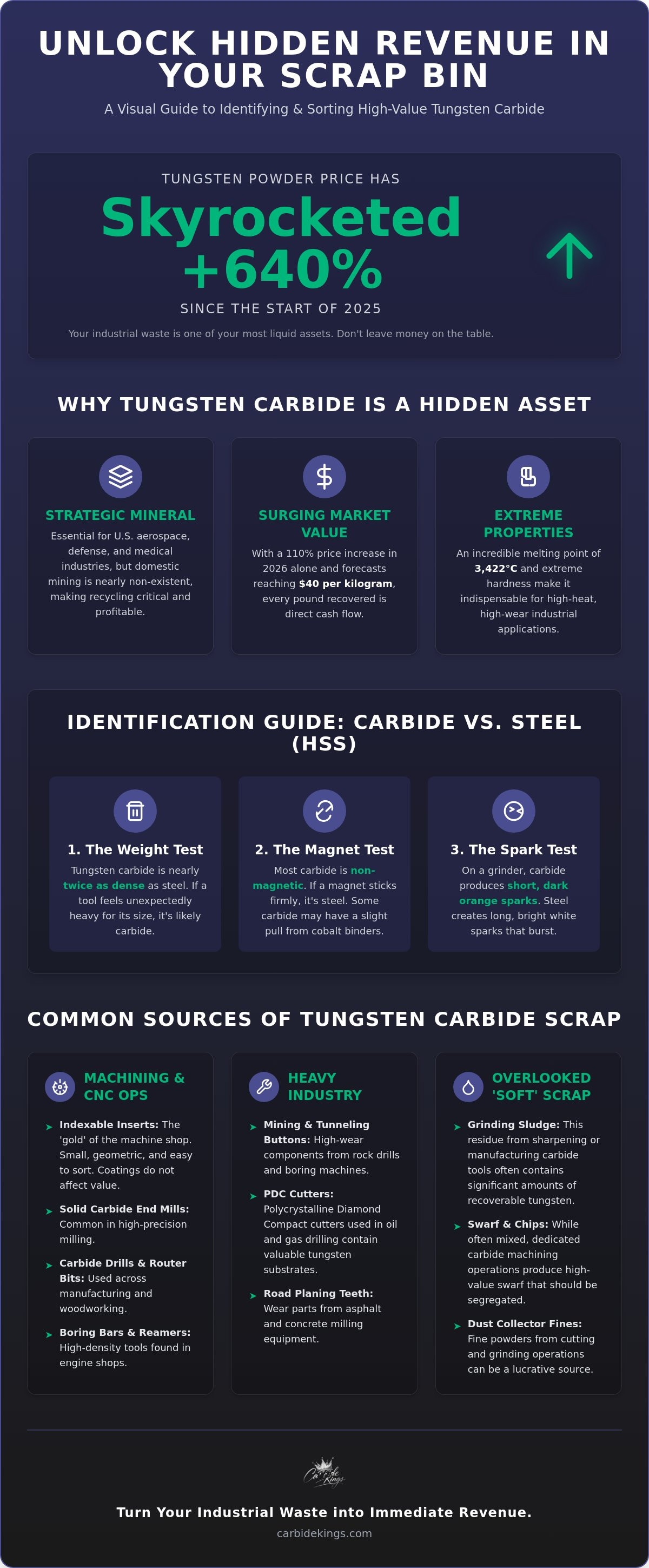
Did you know the price of tungsten powder has skyrocketed by over 640% since the start of 2025? It's a staggering figure that proves your industrial waste is actually one of your most liquid assets. You likely already suspect that mixing high-value components with standard steel scrap is costing you thousands. It's frustrating to watch potential revenue disappear into a low-value bin because your team lacks a clear sorting guide. Identifying the common sources of tungsten carbide scrap shouldn't be a guessing game that slows down your production floor.
We're here to help you stop leaving money on the table. You'll learn exactly where to find lucrative tungsten carbide scrap in your facility and how to turn these worn components into immediate revenue. This guide provides a clear roadmap for your shop floor. We'll cover everything from obvious hard scrap like indexable inserts to often overlooked soft scrap like grinding sludge. By the end, you'll have a streamlined process to maximize your dollar-per-pound return and a reliable partner ready to handle the logistics for you.
Key Takeaways
- Understand why tungsten is classified as a strategic mineral and how its surging 2026 market value directly impacts your bottom line.
- Identify the most common sources of tungsten carbide scrap in your machining operations, ranging from worn indexable inserts to solid carbide end mills.
- Learn to spot high-value components in heavy industries like mining and oil, specifically targeting carbide buttons and PDC cutters.
- Stop discarding "soft scrap" like grinding sludge and swarf, which often contains enough tungsten to generate significant revenue.
- Discover how a streamlined sorting process and 24-hour processing can turn your industrial waste into cash with minimal effort.
Understanding Tungsten Carbide Scrap and Its 2026 Market Value
Tungsten carbide is a dense, high-melting-point compound of tungsten and carbon that serves as the backbone of modern manufacturing. It's famous for its extreme hardness and resistance to wear. In the United States, tungsten is officially classified as a strategic and critical mineral. This designation exists because the material is essential for aerospace, defense, and medical industries, yet domestic mining is virtually non-existent. Relying on global supply chains has become risky. Market volatility and export controls have caused prices to surge, with the price of tungsten powder rising 110% in 2026 alone. This makes identifying common sources of tungsten carbide scrap a top priority for any facility looking to recover lost revenue.
Recycling is now significantly more profitable than sourcing new ore. With North American tungsten prices forecasted to reach as high as $40 per kilogram in 2026, every pound of material you recover adds directly to your shop's cash flow. The physical characteristics of carbide make it easy to separate from less valuable waste. It's incredibly dense, meaning it feels much heavier than it looks. Most industrial carbide is also non-magnetic, allowing for quick sorting on the shop floor. Mastering these identification techniques ensures you don't lose high-value assets to the general steel bin.
Tungsten Carbide vs. High-Speed Steel (HSS)
Distinguishing carbide from high-speed steel is the first step to maximizing your return. Use these three simple tests to sort your bins quickly:
- The Weight Test: Carbide is nearly twice as dense as steel. If a tool feels unexpectedly heavy for its size, it's likely carbide.
- The Magnet Test: Most steel tools are highly magnetic. While some carbide contains enough cobalt binder to have a slight pull, it's generally non-magnetic. If a magnet sticks firmly, it's steel.
- Spark Testing: Touch the tool to a grinder. Carbide produces short, dark orange sparks that don't travel far. Steel creates long, bright white sparks that burst at the ends.
Why Scrap Value Beats General Metal Recycling
Carbide scrap commands a premium price that dwarfs common metals like aluminum or copper. This value is driven by the rarity of tungsten and the presence of cobalt, which acts as a metallic binder. Cobalt prices also fluctuate, but its role in the compound ensures that even worn-out tools remain high-value assets. Tungsten's industrial indispensability is defined by its incredible 3,422°C melting point, making it the only choice for high-heat applications. By learning to spot common sources of tungsten carbide scrap, you ensure these valuable materials aren't sold for pennies as mixed steel. Carbide Kings handles the heavy lifting of logistics, making it easy to turn these dense components into fast payments.
Primary Sources in Machining and CNC Operations
CNC machine shops are the front line for scrap generation. If you run a production facility, you're likely sitting on a significant amount of high-value waste. The most frequent and easily identifiable items are indexable carbide inserts. These small, geometric components are used in turning, milling, and threading operations across every major sector. Because they're small and uniform, they're incredibly easy to sort. Specialized CNC tooling used in aerospace and automotive manufacturing often features intricate designs, but the core material is what drives the price. According to the Tungsten Statistics and Information provided by the USGS, the demand for these materials remains high due to their essential role in global manufacturing. Beyond inserts, your shop likely produces worn end mills and router bits. These tools are common in high-precision milling and woodworking. Boring bars and reamers, often found in engine shops and automotive repair facilities, are also high-density common sources of tungsten carbide scrap that shouldn't be ignored.
Carbide Inserts: The 'Gold' of the Machine Shop
Think of your spent inserts as a liquid asset. Many shops worry that specialized coatings like Titanium Nitride (TiN) or Titanium Carbonitride (TiCN) reduce the material's purity. They don't. These coatings are microns thick and have virtually no impact on the scrap value. You can easily identify high value carbide inserts by their distinct geometric shapes, such as triangles, squares, and rounds. To maximize your return, collect these inserts right at the machine source. Use small dedicated containers rather than letting them fall into the chip conveyor. This simple step prevents steel contamination and keeps your material "clean" for the highest payout. If you're unsure if a specific batch is worth shipping, Carbide Kings can provide a quick valuation to keep your shop moving.
Drills, End Mills, and Solid Carbide Tooling
Solid carbide tooling is where the real weight adds up. Solid carbide end mills and drills are worth significantly more than carbide-tipped tools because the entire tool body is composed of the high-value compound. You'll find these tools in heavy rotation within aerospace, medical device manufacturing, and die-making industries. Don't throw away broken or chipped tools. Even if they can't be reground for further use, their weight remains unchanged. A broken 1-inch end mill has the same scrap value as a brand-new one of the same weight. Keep these items separated from your HSS drills to ensure you're getting the premium industrial rates you deserve. Identifying these common sources of tungsten carbide scrap early in your workflow prevents valuable material from being lost in low-value waste streams.
Heavy Industry Sources: Mining, Oil, and Construction
Heavy industries like mining and energy production generate scrap on a massive scale. These sectors rely on the extreme durability of tungsten carbide to penetrate rock, concrete, and earth. Road milling teeth and pavement grinding bits used in infrastructure projects represent some of the most lucrative common sources of tungsten carbide scrap. You'll also find high-value wear parts in agricultural equipment and industrial mixing blades where abrasive materials are processed daily. According to current USGS tungsten data, industrial applications remain the primary driver of tungsten demand, making these heavy-duty components a critical part of the recycling supply chain. If your facility handles large-scale excavation or infrastructure work, you're likely sitting on tons of potential revenue.
Mining and Excavation Components
In the mining sector, look for carbide in tunneling equipment, rock crushers, and foundation drilling bits. The most valuable parts are the "carbide buttons" pressed into the face of rock drills and excavation teeth. A common challenge in this industry is the "embedded" nature of the carbide. It's often fused into large steel shanks or housings. For the best pricing, it's vital to separate the carbide from the steel shanks before shipping. The payout for these items is determined strictly by the weight of the carbide button rather than the total weight of the steel housing. Taking the time to extract these buttons can significantly increase your dollar-per-pound return.
Energy Sector and Oil Drilling Scrap
The oil patch is a high-wear environment where tools reach their end-of-life quickly. Key items to identify include oil field "tri-cone" bits and PDC (Polycrystalline Diamond Compact) cutters. Directional drilling components and "mud motors" also contain significant amounts of tungsten. Because these tools operate under extreme pressure and heat, they are frequently replaced, creating a steady stream of scrap. Managing these common sources of tungsten carbide scrap can be a logistical hurdle due to the weight and remote locations of many drill sites. Carbide Kings specializes in handling the heavy lifting of logistics, providing streamlined support for bulk shipments from remote industrial sites to ensure your cash flow remains uninterrupted.
Identifying these sources is only half the battle. Success in heavy industry recycling depends on a consistent sorting process. Whether you're dealing with a single rock bit or a container full of road milling teeth, keeping these materials separate from general iron and steel is the fastest way to improve your shop's bottom line. By partnering with a national buyer who understands the complexities of heavy industrial waste, you can turn these worn-out assets into immediate capital with minimal administrative friction.
Identifying Soft Scrap and High-Value Tungsten Alloys
Soft scrap is the unsung hero of industrial recycling. It includes grinding sludge, swarf, and even floor sweepings from tool sharpening areas. Many shops mistakenly throw this "mud" away. They think the oil or coolant content makes it worthless. This is a costly error. In reality, these are common sources of tungsten carbide scrap that can yield thousands in recovered revenue. If your facility sharpens its own tools or performs high-volume grinding, you are generating this material every day. You've already identified the hard inserts and end mills; now it's time to capture the value in your filtration systems.
There's a persistent misconception that "wet" sludge cannot be recycled or sold. This is false. While the liquid content adds weight, the underlying tungsten particles remain a high-value asset. We specialize in processing these difficult materials, ensuring you get a fair return on every gallon. Stop treating your industrial byproducts like a disposal headache. Every drum of swarf is a liquid asset waiting for a streamlined recovery process.
Grinding Sludge and Swarf (The Hidden Asset)
The value of swarf depends on the percentage of tungsten it contains. Testing is required to determine the concentration of the high-value compound. Proper storage is the key to maintaining this value. Use sealed 5-gallon pails or steel drums to prevent leaks and avoid contamination from other metals. Keeping your sludge separate from general grinding waste ensures a higher payout. For a breakdown on how to prepare these materials for shipping, check out our guide on tungsten soft scrap buyers. Don't let the liquid content fool you. Wet sludge is fully recyclable and highly sought after in the current 2026 market.
Tungsten Alloys and Specialized Wear Parts
Beyond cemented carbide, your facility might use high-density tungsten alloys. These materials, often called "Heavy Metal" or Mallory, are used in counterweights, vibration dampeners, and radiation shielding. You'll find them frequently in aerospace applications, such as rotor balance weights and vibration control components. Another high-value source includes tungsten-copper and tungsten-nickel-iron alloys found in heavy-duty electrical contacts. These alloys are distinct from the common sources of tungsten carbide scrap mentioned earlier because they aren't always used for cutting. However, their density and high tungsten content make them incredibly valuable. Whether it's pure tungsten scrap or a complex alloy, these items represent a significant cash opportunity. Ready to turn your "mud" into money? Get a fast quote for your soft scrap and alloys today.
Maximizing Your Payout: Sorting and Selling to Carbide Kings
Turning your industrial waste into cash is a straightforward process when you prioritize material purity. The "Cleanliness Factor" is the single most important variable in determining your final payout. When you remove steel shanks, plastic packaging, and floor trash from your bins, you increase the density and value of the shipment. We pay premium rates because we value high-purity material that is ready for the common sources of tungsten carbide scrap recovery stream. Contamination forces additional labor and processing time, which can lower your net return. By taking a few minutes to clean your scrap, you ensure you're capturing every possible dollar from your worn components.
Requesting a quote takes less than 60 seconds on our website. Once you've identified your materials, we handle the logistical heavy lifting. Whether you have a few small boxes or several tons of material, we provide the support you need to get it to us. We offer shipping labels for smaller parcels and full freight assistance for bulk industrial loads. Our national reach means you aren't limited to a local yard that might not understand the true value of carbide. We serve every state with the same level of professional efficiency and transparency.
The Step-by-Step Sorting Process
Establishing a routine on your shop floor prevents high-value materials from being lost in the wrong bins. Follow these three steps to maximize your return and speed up the grading process:
- Step 1: Separate your hard scrap, such as inserts and end mills, from soft scrap like grinding sludge or swarf.
- Step 2: Use a magnet to identify and remove HSS or carbon steel contamination. If it sticks firmly to the magnet, it doesn't belong in your carbide bin.
- Step 3: Box or drum your material securely. Heavy carbide components can easily break through standard cardboard, so use reinforced packaging or buckets to prevent transit loss.
Why Industrial Professionals Choose Carbide Kings
We aren't just scrap dealers; we're partners in your facility's efficiency. Our team provides direct access to the carbide scrap recycling process, ensuring you work with experts who understand industrial workflows. We know that cash flow is critical for a busy shop. That's why we offer a 24-hour promise: we weigh, grade, and process your payment within one business day of receiving your material. You can choose fast payment options like wire transfers for immediate liquidity or a standard check if you prefer. We've refined our system to eliminate the administrative hurdles and paperwork common with traditional metal buyers. It's time to stop letting your common sources of tungsten carbide scrap sit in a corner collecting dust. Get your fast carbide scrap quote today and see how easy it is to improve your shop's bottom line.
Start Turning Industrial Waste into Immediate Capital
Your shop floor is likely filled with untapped revenue. By identifying the common sources of tungsten carbide scrap, you've already taken the first step toward significant cost recovery. Whether it's the worn inserts from your CNC machines, PDC cutters from the oil field, or the grinding sludge in your filtration pails, these materials are liquid assets. The 2026 market demand for tungsten makes this the perfect time to audit your waste streams and stop mixing high-value carbide with low-value steel. Clean, sorted material always commands the highest dollar-per-pound return.
Carbide Kings is here to handle the heavy lifting. We offer 24-hour material processing and national shipping support to ensure your transaction is fast and professional. You don't have to navigate complex logistics or wait weeks for payment. We provide top-tier pricing for both hard and soft scrap, delivering the transparency your business deserves. Turn your carbide scrap into cash; Get a 24-hour quote from Carbide Kings. It's time to clear out your bins and boost your cash flow today.
Frequently Asked Questions
Where is the most common place to find tungsten carbide scrap in a machine shop?
Indexable inserts are the most frequent scrap items found near CNC stations. These small, replaceable cutting edges are used in high volumes across turning and milling operations. You'll also find solid carbide end mills and drills in tool cribs or near sharpening stations. Collecting these items at the source prevents them from being lost in general waste bins or mixed with low-value steel chips.
What is the difference between tungsten hard scrap and soft scrap?
Hard scrap refers to solid components like spent drill bits, inserts, and wear parts. Soft scrap consists of the particulate byproducts generated during tool manufacturing or sharpening. This includes grinding sludge, swarf, and dust. Both categories are highly valuable, but they require different processing methods once they reach our facility. We buy both types nationally and offer 24-hour processing upon receipt.
How can I tell if a tool is solid carbide or just carbide-tipped?
Check the weight and look for a seam. Solid carbide tools are significantly heavier than steel and maintain a uniform appearance from tip to shank. Carbide-tipped tools feature a small carbide piece brazed onto a steel body. If you see a distinct joint or if a magnet sticks to the shank, it's a tipped tool. Solid tools always command a higher recycling price per pound.
Does the coating on a carbide insert affect its recycling price?
No, standard industrial coatings don't impact the recycling price. Coatings like TiN (gold) or TiCN (dark grey) are extremely thin and don't change the underlying material's purity. We grade your scrap based on the tungsten content of the base material. You don't need to worry about stripping or cleaning these coatings before requesting a quote or shipping your material to our facility.
Is it worth it to recycle grinding sludge or swarf?
It is absolutely worth it. Grinding sludge and swarf are some of the most lucrative common sources of tungsten carbide scrap in a production facility. While it looks like worthless mud, it often contains a high percentage of tungsten. Proper collection in sealed pails or drums can turn this industrial byproduct into a significant revenue stream. We specialize in processing these soft scrap materials for fast payment.
How do I ship heavy carbide scrap to a national buyer?
We handle the heavy lifting for you. For smaller quantities, we provide shipping labels so you can use standard carriers. For bulk loads, we coordinate freight logistics to pick up material directly from your facility. Always secure your scrap in reinforced buckets or steel drums. Heavy carbide components can easily break through standard cardboard boxes, so secure packaging is vital to prevent loss.
Why is tungsten carbide worth more than standard scrap metal?
Tungsten is a strategic mineral with unique physical properties that can't be easily replicated. Its extreme hardness and 3,422°C melting point make it essential for aerospace, defense, and medical industries. Because domestic mining is limited, recycled carbide is a critical supply source. High industrial demand and supply chain tightening in 2026 keep prices significantly higher than common scrap metals like steel or aluminum.
Can I sell tungsten carbide scrap if it's mixed with a small amount of steel?
You can sell it, but the price will reflect the contamination level. Mixed steel lowers the overall tungsten concentration, which reduces the dollar-per-pound value. We recommend using a magnet to pull out HSS and carbon steel before shipping. This simple step ensures you receive the maximum payout for your clean carbide. We provide 24-hour grading upon receipt to ensure you get paid fast.


