
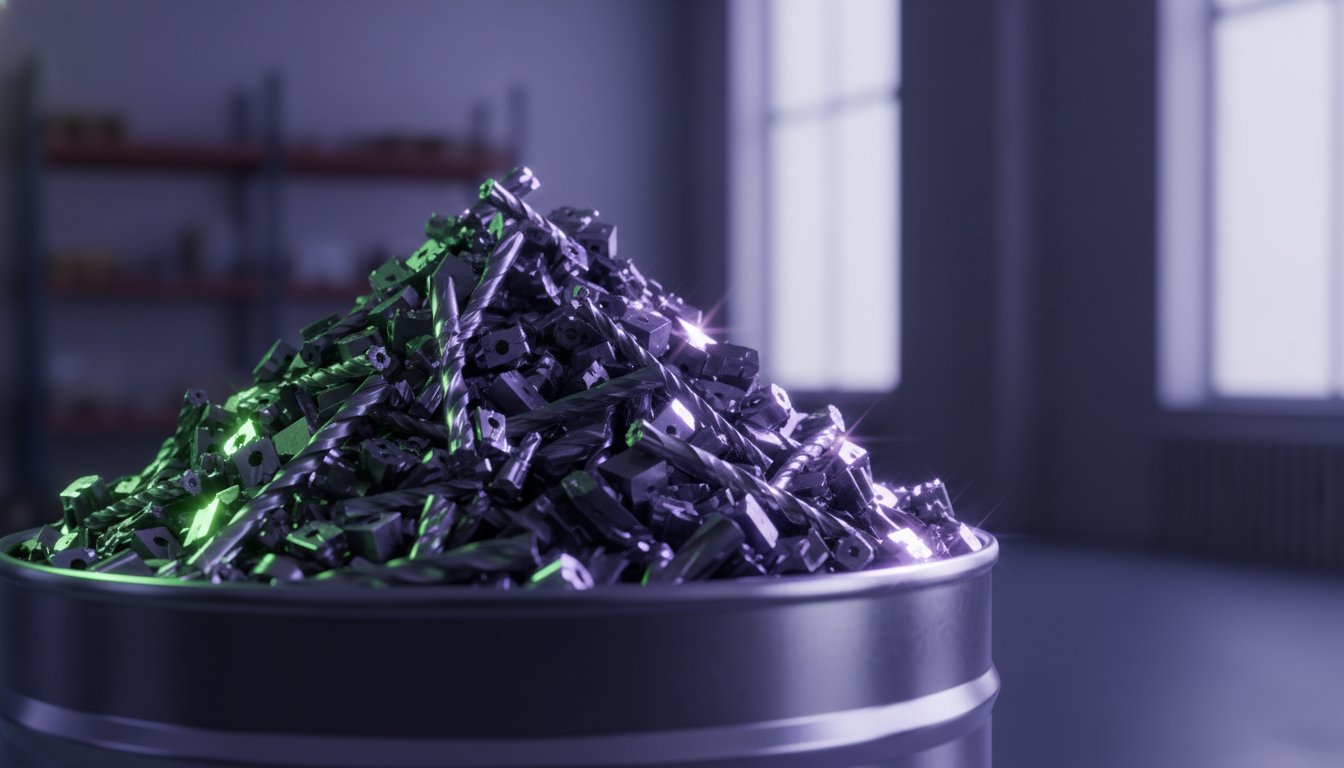
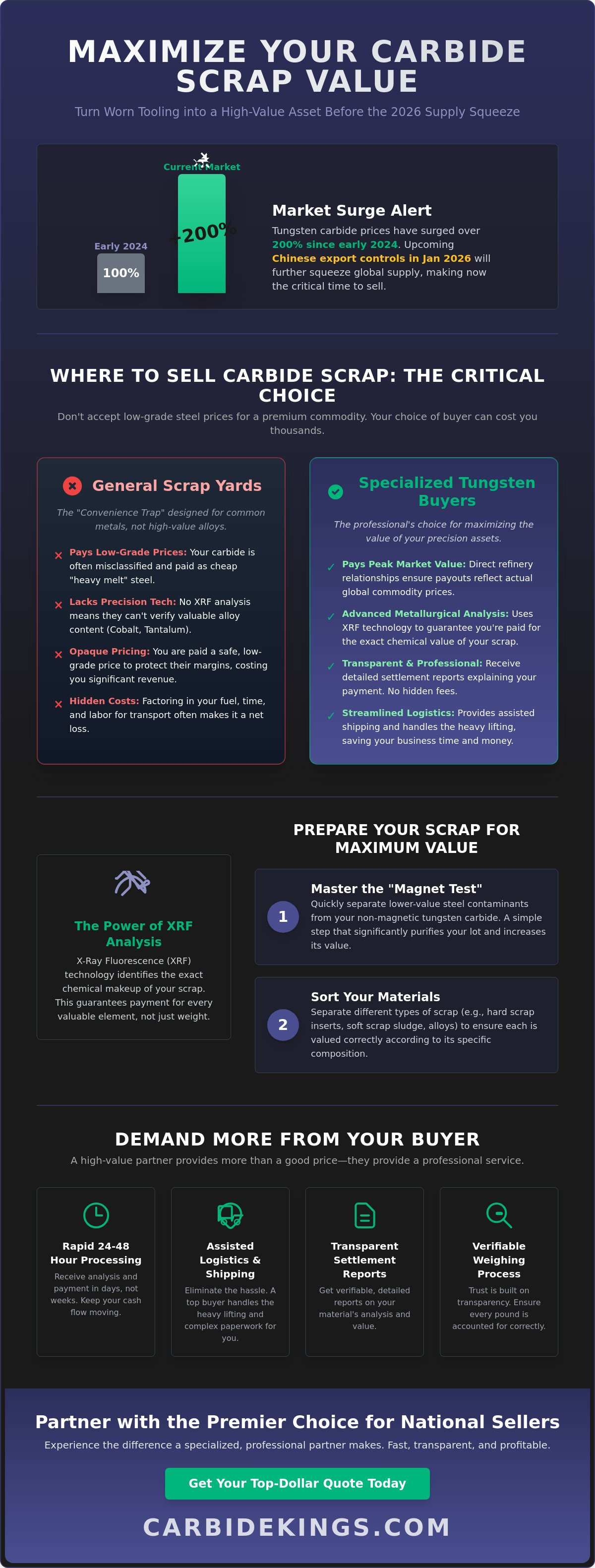
Tungsten carbide scrap prices have surged over 200% since early 2024, turning your worn tooling into a high-value industrial asset. With China activating strict export controls in January 2026, the global supply squeeze makes it critical to know exactly where to sell carbide scrap to capture peak market value. Don't let a general scrap yard pay you low-grade steel prices for what is now a premium commodity.
You've likely dealt with the frustration of opaque pricing and the logistical headache of shipping heavy metal. It's exhausting to wait weeks for a payment that doesn't reflect the current market reality. This guide shows you how to maximize your return on tungsten hard scrap, soft scrap, and alloys while eliminating unnecessary paperwork. We'll highlight the top national buyers for 2026 that provide rapid 24-48 hour turnarounds and simple, assisted logistics to ensure your transaction is fast, transparent, and professional.
Key Takeaways
- Learn why specialized tungsten buyers offer significantly higher returns than general scrap yards by utilizing advanced metallurgical analysis.
- Master the "Magnet Test" and sorting techniques to prepare your material before deciding where to sell carbide scrap for the highest return.
- Understand how XRF technology identifies exact alloy content to ensure you receive transparent, top-dollar payments for tungsten hard and soft scrap.
- Identify the critical logistics features to look for in a national buyer, including assisted shipping and rapid 24-hour processing.
- Discover how to eliminate administrative hurdles and streamline your workflow by partnering with an expert who handles the heavy lifting.
Understanding the Landscape of Carbide Scrap Buyers
The industrial scrap market is divided into two distinct worlds. On one side, you have high-volume recyclers handling common metals like steel and aluminum. On the other, you have specialized firms focusing on refractory metals. Understanding this distinction is the first step in maximizing your return. Tungsten carbide is not a standard scrap commodity; it's a complex metallurgical product that requires precise handling and analysis. When you decide where to sell carbide scrap, you're choosing between a generalist who views your material as "heavy metal" and a specialist who understands its chemical value.
Industrial refineries sit at the top of the recycling ecosystem. These facilities are built to chemically break down tungsten hard scrap and soft scrap to recover pure tungsten and cobalt. However, refineries rarely work directly with individual machine shops or small manufacturers due to high minimum volume requirements. Specialized procurement firms bridge this gap. They aggregate material, perform the necessary metallurgical verification, and manage the complex logistics of moving high-density scrap to the refinery level. This streamlined path ensures that the value of the raw material flows back to you rather than being lost in a chain of middlemen.
General Scrap Yards: The Convenience Trap
Local scrap yards are designed for convenience, not precision. They excel at processing structural steel or copper piping, but they often lack the technology to identify high-value alloys. It's a common mistake to drop off a bucket of inserts at a neighborhood yard only to have them misclassified as "heavy melt" steel. This happens because most residential recycling centers don't invest in XRF (X-ray fluorescence) analysis equipment. Without this tool, they can't verify the specific cobalt or tantalum content in your scrap. To protect their own margins, they pay a safe, low-grade price. This discrepancy can cost your business thousands of dollars over a single fiscal year.
Specialized Tungsten Procurement Firms
Specialists focus exclusively on high-value materials like tungsten alloys and carbide sludge. They treat your scrap as a precision asset. Because these firms maintain direct relationships with refineries, they offer payouts that reflect the actual global market price for tungsten and cobalt. They use advanced analysis to ensure every pound is accounted for correctly. Beyond pricing, specialists provide professional logistics support. They understand that shipping high-density metals requires specific packaging and freight handling. By removing these administrative and physical burdens, a specialized partner allows you to focus on your core production while they handle the heavy lifting of the recycling process.
Comparing the Top Options for Selling Carbide Scrap
Selecting the right partner for your recycling program requires looking beyond the initial price per pound. You need a partner who balances high payouts with logistical ease and absolute transparency. When evaluating where to sell carbide scrap, prioritize buyers who offer verifiable weighing processes and rapid payment cycles. Many shops lose significant revenue through hidden costs like fuel for local transport, employee downtime, or administrative delays in corporate credit programs. A professional transaction should feel like a streamlined extension of your shop workflow, not a logistical burden.
The Recycled Materials Association emphasizes that standardized grading and clear communication are the foundations of a healthy recycling ecosystem. Specialized buyers adhere to these industrial standards by using precision technology to analyze every lot. This ensures you aren't just getting a good price, but the exact market value for your tungsten hard scrap and alloys. If a buyer cannot explain their valuation process or provide a detailed settlement report, they aren't the right choice for your business.
Local vs. National Buyers: A Side-by-Side Comparison
The choice between a local yard and a national specialist often comes down to the volume of material and the desired return. While a local drive offers immediate gratification, the financial trade-off is usually steep. National specialists provide a more lucrative model by cutting out the middleman and shipping directly to the refinery level. For many industrial sellers, working with specialized hard scrap carbide buyers yields a net profit that far exceeds the cost of shipping.
| Feature | Local Scrap Yard | National Specialist |
|---|---|---|
| Typical Payout | Low (Mixed Metal Rates) | High (Refinery-Direct) |
| Logistics | Self-Transport Required | Assisted/Prepaid Freight |
| Analysis Method | Visual/Magnet Test | XRF Spectrometry |
| Payment Speed | Immediate Cash | 24-48 Hour Processing |
Manufacturer Buy-Back Programs
Manufacturer buy-back programs often present a restrictive path for growing shops. While they offer convenience, most pay in store credit rather than cash. This limits your ability to reinvest capital into different areas of your operation. These programs also frequently refuse to accept mixed-brand scrap. This requires your team to spend valuable hours sorting inserts by the original manufacturer. Choosing an independent specialist like Carbide Kings eliminates these barriers by accepting all brands and providing liquid cash payments. This flexibility ensures your recycling program supports your business growth instead of creating new administrative hurdles.
Critical Features of a High-Value Carbide Buyer
High-value recycling isn't just about the price on a screen. It's about the technology and operational integrity behind the transaction. When you're deciding where to sell carbide scrap, look for buyers who utilize X-ray fluorescence (XRF) spectrometry. This advanced material analysis identifies the exact percentage of tungsten and cobalt in your lot. Without it, a buyer is just guessing. Precision analysis ensures you receive full value for your tungsten hard scrap and tungsten alloys. Transparency starts with a verified weight and ends with a detailed settlement report that breaks down your material by grade.
The Minor Metals Trade Association notes that the global trade of refractory metals relies on standardized quality and clear valuation. Top-tier buyers mirror these global standards by providing a fast, methodical workflow. They don't hide behind vague estimates. Instead, they provide a firm quote based on current market data and verify it upon arrival. This level of professionalism separates the industry leaders from the local scrap collectors. Efficiency is the baseline. Don't settle for less.
Logistics and Shipping Support
Shipping high-density metal is a unique challenge. Carbide is incredibly heavy for its size. A small bucket can easily weigh 50 or 60 pounds. Professional buyers remove this hurdle by providing prepaid shipping labels and detailed freight assistance. They understand the weight-to-volume ratio and guide you on the best packaging to prevent box failure during transit. Your shipment should always be protected by insurance and real-time tracking. This ensures your high-value assets are secure from the moment they leave your dock until they arrive at the processing facility. A proactive partner handles the logistics so you can stay focused on your production schedule.
Financial Transparency and Speed
Speed is a hallmark of professional efficiency. You shouldn't have to wait weeks for your funds to clear. The industry standard for high-value buyers is 24-hour processing. Once your material is verified, payment should follow immediately. Avoid the "net-30" or "net-60" traps often found in large industrial contracts. These delays disrupt your cash flow and keep your capital locked in someone else's bank account. When considering where to sell carbide scrap, look for flexible payment options like wire transfers, digital payments, or overnight checks. Rapid liquidity allows you to reinvest in new tooling and keep your production lines moving without interruption.
How to Prepare Your Carbide for Maximum Value
Preparation is the final hurdle between your scrap pile and a premium payout. Buyers prioritize material that arrives clean, sorted, and ready for processing. When you're determining where to sell carbide scrap, remember that professional organization reflects the quality of your material. A disorganized bin of mixed metals forces the buyer to spend time sorting, which often results in lower offers to cover labor costs. Take control of your margins by implementing a simple, effective prep routine before your shipment leaves the dock.
Start with the magnet test. This is the fastest way to verify your material in the shop. Pure tungsten carbide is generally non-magnetic or only slightly magnetic because of the cobalt binder. In contrast, high-speed steel (HSS) is strongly magnetic. If a tool sticks firmly to a standard magnet, it's likely HSS or another steel alloy. Keep these materials separate. Mixing HSS into a carbide shipment is a common mistake that leads to significant weight deductions and valuation disputes. A clean lot ensures a smooth, fast transaction.
Step-by-Step Sorting Guide
- Isolate Solids: Group solid carbide end mills, drills, and reamers together. These represent some of the highest value per pound in the recycling market.
- Separate Inserts: Remove all screws, shims, or plastic packaging from your indexable inserts.
- Identify Soft Scrap: Collect grinding sludge or powder in sealed, leak-proof containers. This "soft scrap" requires different refining processes and must be kept separate from solids.
- Strip Attachments: Use a press or torch to remove steel shanks from carbide-tipped tools. Buyers pay for the carbide, not the weight of the steel carrier.
Packaging for High-Density Shipping
Carbide is incredibly dense. A standard cardboard box that holds 50 pounds of aluminum will likely burst under the weight of 50 pounds of carbide. Use heavy-duty, double-walled boxes or reinforced plastic pails for your shipments. If you're using boxes, double-tape all seams with industrial-grade packing tape. Fill any empty space with dunnage to prevent the metal from shifting and punching through the side of the container. Professional buyers often provide specific packaging guidelines to ensure your high-value assets arrive safely and securely.
National carriers have strict weight limits for standard parcels. Always verify the weight of each container before applying your shipping labels. If you have a large volume of tungsten alloys or hard scrap, consider palletizing the load for freight transport. Secure your containers to the pallet with steel banding or heavy-duty shrink wrap to prevent movement. Once your material is prepped and packed, contact Carbide Kings to schedule your pickup and finalize your high-value transaction.
Why Carbide Kings is the Premier Choice for National Sellers
Efficiency isn't just a goal; it's our standard operating procedure. When you're searching for where to sell carbide scrap, you need a partner who values your time as much as your material. We've built a national infrastructure that combines the reach of a major corporation with the specialized expertise of a boutique procurement firm. We focus exclusively on high-value metals like tungsten hard scrap, tungsten soft scrap, and various tungsten alloys. This specialization allows us to provide more accurate valuations and smoother logistics than general recyclers ever could.
Our team provides direct access to metallurgy experts who understand the nuances of industrial tooling. We don't guess at alloy content. We use precise market data to ensure your return reflects the current global demand for tungsten. By removing the guesswork, we eliminate the friction that usually plagues industrial recycling. You get a clear, honest transaction every time. It's about moving your material out and getting your payment in with zero unnecessary steps.
Our Process: From Quote to Payment
We've stripped away the administrative hurdles that slow down your business. Our digital quote system is designed for speed. You provide the details, and we provide a competitive offer based on real-time market conditions. Once you accept, our national shipping assistance program takes over. We handle the logistical heavy lifting by providing the necessary documentation and freight support to move your high-density scrap safely. After your material arrives and is verified, our 24-hour processing guarantee kicks in. You won't wait weeks for a check. We issue payments via wire transfer or check immediately, ensuring your capital is back in your hands where it belongs.
The Carbide Kings Commitment to Transparency
We take a "no-fluff" approach to every transaction. Our goal is to build long-term partnerships with machine shops and manufacturers who demand reliability. We believe that transparency is the only way to sustain a professional relationship in the industrial sector. Every settlement report we provide is detailed and easy to understand. You'll see exactly how your tungsten alloys were graded and valued. There are no hidden fees or surprise deductions. It's a straightforward process designed for professionals who value clarity. Get an instant quote for your carbide scrap today and experience a more efficient way to manage your industrial waste.
Capture Peak Market Value for Your Tooling
Success in the 2026 recycling market depends on your ability to distinguish high-value tungsten from common shop waste. As this guide has shown, the intersection of advanced technology and streamlined logistics is where you'll find the highest returns. Utilizing specialized XRF material analysis ensures that every pound of your tungsten alloys is graded with absolute precision. Proper preparation and the removal of non-carbide attachments are simple steps that pay significant dividends when your material reaches the refinery level.
The decision of where to sell carbide scrap shouldn't be a source of administrative stress. You need a partner who provides a 24-hour processing guarantee and national shipping assistance to keep your cash flow consistent. We've refined our process to remove every traditional hurdle, from opaque pricing to slow payment cycles. It's time to turn your worn inserts and end mills into a liquid asset that fuels your next production cycle.
Sell your carbide scrap to Carbide Kings for top dollar today and join a community of industrial professionals who value transparency and efficiency. We're here to make your recycling program the easiest part of your workday.
Frequently Asked Questions
How much is tungsten carbide scrap worth per pound in 2026?
The value of tungsten carbide scrap remains at historic highs due to strict export controls implemented by China in January 2026. While prices fluctuate based on global demand and the specific cobalt content of your material, the market has seen a surge of over 200% since early 2024. You should always request a quote based on current market data to ensure you're capturing the full value of your solids or alloys.
Where can I sell small amounts of carbide scrap?
You can sell small quantities of material to national procurement specialists who offer streamlined mail-in programs. When you're deciding where to sell carbide scrap in lower volumes, look for a buyer that provides prepaid shipping labels to offset the cost of transport. Even ten or twenty pounds of high-density tungsten carbide can yield a significant return when processed by a specialist rather than a local yard.
Does carbide scrap stick to a magnet?
Pure tungsten carbide is generally non-magnetic or only weakly magnetic depending on the binder material used. Most industrial carbide uses a cobalt binder, which may cause a very slight pull. If your scrap sticks firmly to a magnet, it's likely high-speed steel or a different ferrous alloy. Use this test to sort your material and avoid weight deductions at the time of sale.
Can I sell carbide inserts with steel shanks still attached?
You can sell inserts with shanks attached, but it's not the most profitable method. Buyers must deduct the weight of the steel to calculate the actual tungsten value, which often results in a lower overall payout. To maximize your return, use a torch or press to remove the steel carriers. This ensures you're paid for the premium carbide weight rather than the lower-value steel.
What is the difference between hard scrap and soft scrap carbide?
Hard scrap consists of solid pieces like worn drills, end mills, and indexable inserts. Soft scrap refers to the byproducts of the manufacturing process, such as grinding sludge, dust, and powders. Both forms are valuable for tungsten recovery, but they require different chemical refining methods. Keep these materials in separate containers to ensure accurate analysis and faster processing times.
How do I ship 100+ pounds of carbide scrap safely?
Ship heavy loads using reinforced plastic pails or double-walled industrial boxes designed for high-density materials. Standard cardboard boxes often fail under the concentrated weight of tungsten. If your shipment exceeds 150 pounds, palletizing the containers is the safest option. Secure the pails to the pallet with steel banding or heavy-duty shrink wrap to prevent shifting during national freight transit.
How long does it take to get paid for carbide scrap?
Professional buyers typically issue payment within 24 to 48 hours after your material is verified. This rapid turnaround is the industry standard for high-value procurement firms. Avoid buyers who insist on net-30 or net-60 terms, as these delays keep your capital tied up. Look for flexible payment options like wire transfers or digital payments to maintain your shop's cash flow.
Do you buy carbide grinding sludge or dust?
We buy tungsten soft scrap, which includes grinding sludge, dust, and floor sweeps. These materials must be stored in leak-proof, sealed containers to prevent environmental contamination and loss of material during shipping. Because sludge contains moisture and oils, it undergoes a different analysis process than solids to determine the exact tungsten content and final payout value.


