
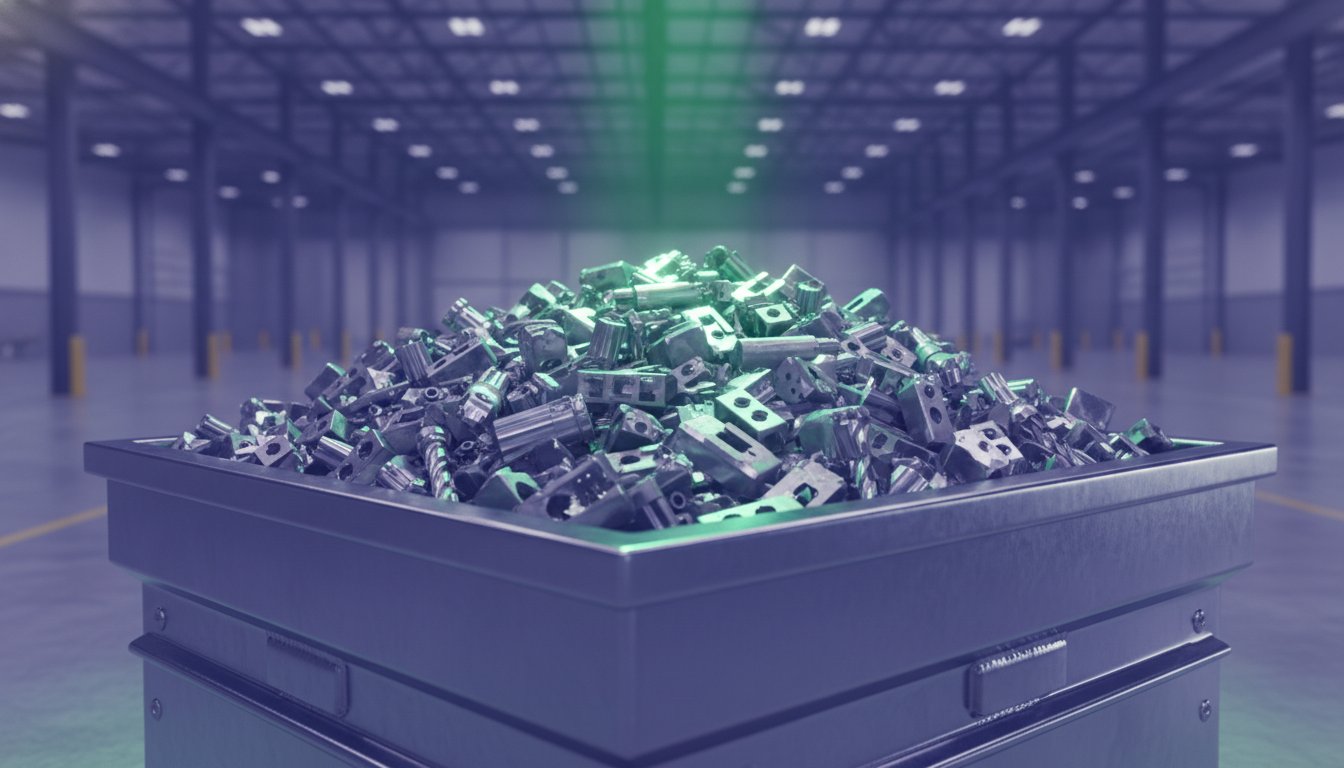
Since early 2024, tungsten carbide scrap prices have surged by more than 200%, turning forgotten piles of worn inserts into a high-stakes financial asset. You've likely watched these market shifts with a mix of excitement and hesitation, wondering exactly when to sell tungsten scrap for the best return. It's frustrating to see valuable floor space occupied by heavy bins while you wait for the perfect market window. Shipping costs also create a constant pressure, often eating into the profits of smaller batches if you don't time your liquidation correctly.
Deciding when to pull the trigger doesn't have to be a guessing game. You'll learn the specific global market indicators, such as China's 2026 export controls, and the internal shop triggers that signal the most profitable time to sell your tungsten hard and soft scrap. This guide breaks down how to maximize your price per pound and secure fast, reliable payment via wire transfer. We provide the clarity you need to move your inventory with confidence and turn industrial waste into immediate capital.
Key Takeaways
- Monitor global indexes like the Wolfram market and ferrotungsten trade values to identify peak pricing windows before they shift.
- Evaluate your shop's floor space and immediate cash flow needs to determine exactly when to sell tungsten scrap for the highest operational ROI.
- Calculate volume thresholds to leverage national LTL shipping, ensuring that high-value rates from specialized buyers aren't lost to logistics costs.
- Maximize your price per pound by strictly separating high-value hard scrap, like carbide inserts, from soft scrap and contaminants.
- Utilize a streamlined procurement process to turn unorganized inventory into liquid capital quickly and with minimal administrative burden.
Monitoring Global Market Trends and Tungsten Price Drivers
Tungsten isn't just another commodity; it's a critical industrial metal. Its value is tied directly to global supply chain stability and high-tech manufacturing demand. Because of the unique properties of tungsten, including its extreme hardness and heat resistance, it remains irreplaceable in aerospace, defense, and automotive applications. When these industries thrive, the demand for recycled carbide spikes. Understanding these macro shifts is the first step in determining when to sell tungsten scrap for the highest possible ROI.
Professional sellers don't guess at prices. They monitor the Wolfram market index and ferrotungsten trade values for clear signals. These indices act as the pulse of the industry, reflecting the balance between virgin mining output and industrial consumption. While copper and aluminum prices often swing based on daily speculation, tungsten is different. It's generally less volatile than base metals but far more sensitive to trade policy and international export restrictions. A single change in a trade agreement can send scrap values climbing overnight.
The Role of Global Supply Chains in 2026
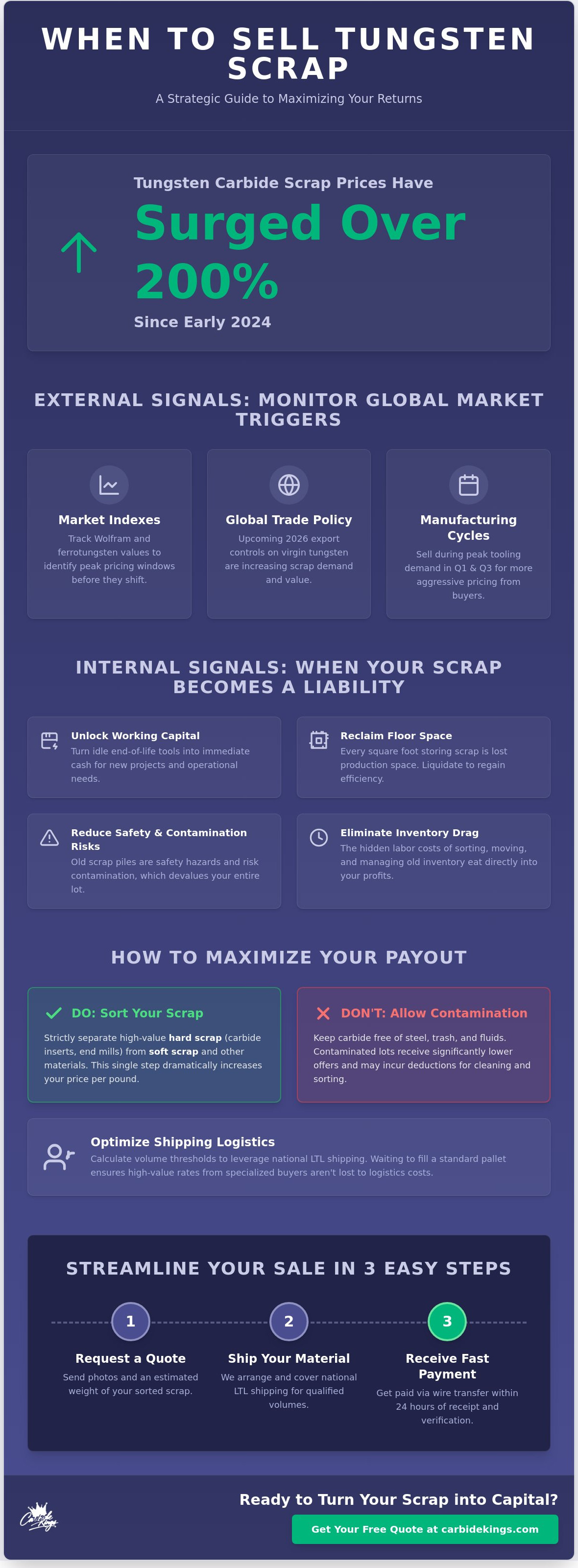
International trade agreements are currently the primary driver of recycled tungsten value. In early 2026, strict export controls on dual-use items significantly restricted the global flow of virgin tungsten. This has created a "sweet spot" for sellers. Refineries are currently low on feedstock and are paying premiums to secure secondary materials. Geopolitical stability in 2026 directly correlates to scrap demand because any disruption in primary mining regions forces manufacturers to rely almost exclusively on the domestic scrap supply.
Tungsten vs. Common Scrap Metal Cycles
You cannot use steel or aluminum price trends to predict carbide value. Common metals follow broad construction and consumer spending cycles. Tungsten follows a precision manufacturing cycle. When mining output for new ore slows down or becomes too expensive, the demand for secondary (recycled) tungsten increases. Watch for natural windows of opportunity during peak manufacturing quarters, typically Q1 and Q3, when tooling orders are at their highest. During these periods, buyers are often more aggressive with their pricing to keep their own production lines moving. Knowing when to sell tungsten scrap requires looking past the local scrapyard's board and focusing on these specialized industrial indicators.
Identifying Internal Shop Signals: When Your Inventory Becomes a Liability
Market prices are only half of the ROI equation. While you monitor global indices, you must also look at your own shop floor. Holding onto scrap for too long often turns a potential asset into an operational liability. Large accumulations of heavy, sharp carbide present real safety hazards for your team. Beyond safety, there is the constant risk of contamination. The longer scrap sits in a corner, the higher the chance it gets mixed with low-value steel or shop trash. This cross-contamination significantly devalues your lot when it's finally time to weigh in.
Space is money in any precision environment. Every square foot occupied by a dusty scrap bin is space that isn't being used for a new machine or an assembly station. Evaluating the square footage cost of your storage area is a critical step in deciding when to sell tungsten scrap. If the cost of storage outweighs the potential for a minor price increase, you're better off liquidating immediately to regain your operational efficiency. You can Global Market Trends to see how your internal needs align with the broader market.
The Hidden Cost of Storage and Organization
Inventory drag is a silent profit killer. Unorganized scrap bins require labor to sort, move, and eventually prepare for shipment. This labor cost eats into your final payout. We recommend setting a "sell trigger" based on weight or volume. For many shops, this trigger is reached when you have enough material to fill a standard LTL pallet. Organized bins are faster to quote and ensure you receive the highest possible payout without deductions for sorting or contamination. If you find your bins are overflowing, it's a clear signal to clear the floor—and if that clutter includes old shop trucks or fleet vehicles, Windward Auto Removal Service can help you liquidate those assets for cash as well.
Managing Cash Flow Through Strategic Liquidation
Turning end-of-life tools into active working capital is a smart move for 2026 projects. Instead of letting capital sit idle in a bin, liquidating scrap provides a predictable quarterly budget boost. This cash flow can be reinvested into new high-performance tooling or equipment upgrades. Understanding the tungsten scrap payment terms available to you is vital for planning these reinvestments. Fast payment via wire transfer means you can put your money back to work within days rather than waiting weeks for a check to clear. If your shop is planning a major equipment purchase, a strategic scrap sale can provide the necessary down payment. You can request a quote today to see how much capital is currently sitting on your shop floor.
Calculating Volume Thresholds for National Shipping Logistics
Local scrap yards rarely offer the specialized rates required for high-purity carbide. They often treat tungsten like general heavy melt steel, which leaves a significant amount of money on the table. National specialists pay higher rates because they move material directly into the industrial refining stream. The primary challenge for most shops is the cost of freight. You need to calculate the exact moment your volume justifies the transport cost to maximize your return. For most industrial operations, 500 lbs is the recognized tipping point for maximum national ROI. At this weight, the cost per pound for LTL (Less Than Truckload) shipping drops significantly, allowing the premium national price to fully offset the logistics expense.
Density is your best friend when preparing a shipment. Tungsten is incredibly heavy for its size, so compact packaging reduces the physical footprint of your shipment without sacrificing weight. This allows you to fit more value into a smaller, cheaper freight class. According to the U.S. Geological Survey Tungsten Market Report, the reliance on recycled materials is a critical part of the domestic supply chain. This high demand from refineries means that once you hit that 500 lb threshold, national buyers are eager to compete for your lot. Knowing when to sell tungsten scrap involves balancing these logistics costs against the current market premium.
Small Batch vs. Bulk Shipment Strategies
You don't always have to wait for a full pallet to see a profit. For high-value tungsten hard scrap, such as clean carbide inserts, USPS flat-rate boxes are an efficient tool for batches under 100 lbs. They provide a fixed cost that is easy to calculate into your margins. However, once your inventory grows, palletizing becomes the standard. Pallets allow for the safe transport of larger loads of hard scrap and alloys while keeping the material secure. Comparing the net profit of a local sale against a shipment to a tungsten carbide scrap price specialist usually shows that the national route wins once you cross the small-batch threshold.
Minimizing Shipping Friction for National Sellers
Logistics shouldn't be a hurdle that keeps you from getting paid. Carbide Kings assists with the heavy lifting by helping you coordinate freight and ensuring your material weight is documented accurately. We emphasize secure packaging, such as double-bagging and using reinforced crates, to prevent any loss during transit. Our dedicated logistics support turns a national sale into a simple, three-step process that focuses on speed and transparency. When you are ready to move your material, we handle the complex coordination so you can stay focused on your production schedule. This streamlined approach ensures you get the highest possible price without the traditional headaches of industrial shipping.
Maximizing Value Before the Sale: Sorting and Quality Control
Separation is profit. Mixing high-value carbide with high-speed steel (HSS) or carbon steel is the fastest way to devalue your lot. While timing determines when to sell tungsten scrap, your sorting process determines the actual price per pound. Use a magnet as your primary quality control tool. If the material sticks, it's a ferrous alloy and should be removed from your carbide bin. Clean, unmixed loads are easier to weigh and command the highest premiums from industrial buyers. Don't let a few pieces of low-value steel contaminate a high-value shipment.
Separating Hard Scrap from Low-Value Alloys
Hard scrap includes worn inserts, end mills, and drills. These items are the "gold standard" of recycling because of their high tungsten concentration. Working with specialized hard scrap carbide buyers allows you to capture the full value of these items. Don't just dump everything together. Separating inserts by type or coating can lead to even more precise valuations. While the global market dictates when to sell tungsten scrap, your organization on the shop floor dictates how much of that market value you actually keep. High-purity lots always move faster and pay better.
Contamination Management
Soft scrap requires a different approach. Sludge, swarf, and grindings are valuable but prone to contamination. Moisture and heavy oils add dead weight that doesn't pay. Refineries will deduct for excessive fluids, so keep your bins covered and use a centrifuge if possible to reclaim oils before shipping. If you produce a high volume of grindings, connecting with experienced tungsten soft scrap buyers is essential for moving this material efficiently. Watch out for brazed tools as well. Removing the steel shanks from carbide-tipped tools takes effort, but it's often the difference between a "mixed" rate and a "clean" rate. A little prep work goes a long way in protecting your ROI.
Clean scrap is easier to weigh and faster to process. This transparency builds trust with your procurement partner and ensures your wire transfer matches your expectations. If your bins are sorted and clean, you're ready to maximize your return. Get a direct quote for your sorted scrap here and see the difference that professional quality control makes for your bottom line.
Streamlining Your Sale with Carbide Kings’ 24-Hour Process
Once you have identified the ideal market conditions and sorted your inventory, the final step is execution. You don't want your capital tied up in a slow administrative cycle. While local yards might take weeks to process a specialized lot, we operate on an industrial timeline. Carbide Kings provides a streamlined national procurement process built for speed and professional efficiency. We understand that in a high-precision shop, time is your most valuable resource. Our goal is to move your scrap from the floor to the bank as quickly as possible.
Efficiency defines every step of our interaction. You can expect a competitive quote within hours of your initial inquiry. Once your material arrives at our facility, it's processed and weighed within 24 hours. We don't believe in long waiting periods or complex paperwork. By choosing a partner who understands the specific needs of machine shops and tool manufacturers, you ensure that the decision of when to sell tungsten scrap leads to immediate, tangible results for your business.
From Quote to Wire Transfer: The Workflow
Our workflow is designed to be transparent and direct. To start, simply submit your material details, including estimated weight and scrap type, for a rapid quote. We provide clear instructions for shipping to ensure your lot is protected during transit. Once received, our team utilizes precision weighing equipment to ensure you get paid for every ounce of carbide. This transparent process eliminates the guesswork often found at general scrap dealers. Our fast-track payment system is the preferred choice for industrial pros because it offers:
- Immediate Liquidity: Choose between wire transfers or checks to suit your accounting needs.
- Accurate Valuations: Specialized analysis of tungsten alloys ensures you receive the full market rate.
- Minimized Downtime: Fast processing means you can clear your floor and get back to production.
National Logistics Support
We handle the heavy lifting of logistics for our national clients so you don't have to. Whether you are shipping a few flat-rate boxes of inserts or several pallets of alloys, we provide the guidance needed to move your material safely. Working with a where to recycle tungsten carbide specialist offers a level of expertise that generalist yards simply cannot match. We understand the density of the material and the specific freight classes required for cost-effective transport. This specialized knowledge protects your ROI by keeping shipping costs low and payout rates high. When you decide when to sell tungsten scrap, you deserve a partner who values your time as much as your material. Ready to liquidate? Get your competitive carbide quote from Carbide Kings today.
Turn Your Industrial Waste into Immediate Capital
Maximizing your return on industrial waste requires a balance between global market awareness and internal operational efficiency. By monitoring key indicators like China's 2026 export controls and tracking your shop's inventory volume, you can accurately determine when to sell tungsten scrap for the highest possible price. Proper sorting and contamination control ensure you don't leave money on the table; meanwhile, strategic shipping logistics protect your profit margins from being eroded by unnecessary freight costs.
Don't let valuable floor space go to waste while you wait for a perfect market window. Carbide Kings removes the logistical burden with national support and a streamlined workflow. Your materials are processed within a 24-hour window, followed by secure wire transfer payments to get your capital back into production immediately. It's time to stop holding onto unorganized bins and start reinvesting in your shop's growth. Get a Fast Quote for Your Tungsten Scrap today and experience a faster, more reliable way to liquidate your carbide assets.
Frequently Asked Questions
How do I know if it is the right time to sell my tungsten scrap?
Monitor global market indices and your shop's floor space to find the ideal window. If indices show a supply crunch or prices have plateaued after a recent surge, it's often the right time to move your inventory. Additionally, if your storage bins are full and creating a safety hazard, the operational benefits of liquidating outweigh the potential for minor future price gains.
Does the volume of scrap I have affect the price per pound?
Yes, higher volumes typically command better rates because they allow for more efficient logistics. National buyers often have a sweet spot at 500 lbs where freight costs per pound drop significantly. Smaller batches are still valuable, but consolidating your material into larger shipments ensures you maximize your return by reducing the impact of shipping fees on your net profit.
How often should a machine shop liquidate its carbide scrap?
Most shops find success with a quarterly liquidation schedule to prevent inventory drag. This cycle ensures a steady stream of working capital for new tooling or equipment. Determining when to sell tungsten scrap should depend on your specific production volume; if you generate several hundred pounds a month, monthly sales might be more beneficial for maintaining a healthy cash flow.
What is the fastest way to get paid for tungsten carbide scrap?
Selling to a specialized national buyer with a 24-hour processing cycle is the quickest route to payment. Once your material is received and verified at the facility, wire transfers provide immediate liquidity. Avoid general scrap yards that have long assay wait times or pay by mail-in checks; these traditional methods can delay your funds by several weeks.
Is it better to sell locally or ship to a national tungsten buyer?
National buyers almost always offer higher premiums because they specialize in the tungsten market. Local yards often lack the refining connections to pay full value for carbide, frequently treating it like general heavy melt steel. Shipping to a specialist ensures your material is valued correctly, which usually more than offsets the transport costs for industrial-sized loads.
What happens if my tungsten scrap is mixed with other metals?
Mixed loads are devalued because they require additional labor to sort and process. If high-value carbide is contaminated with steel or HSS, you will likely receive a mixed rate that is significantly lower than the clean carbide price. Use a magnet to remove ferrous materials before shipping. This simple shop practice protects your ROI and ensures a faster payout.
Can I sell tungsten sludge or only hard scrap?
You can sell both, but they must be handled as separate categories. Tungsten soft scrap, including sludge and grindings, is highly valuable but requires moisture management to ensure accurate weighing. Hard scrap, such as inserts and end mills, is the most straightforward to recycle. Keep these materials in separate bins to ensure you receive the correct market rate for each type.
How does Carbide Kings handle the shipping process for large loads?
We provide comprehensive logistics support to simplify the transport of large pallets for our national clients. Our team helps you coordinate freight carriers and provides the necessary documentation to move your material securely. This proactive approach ensures your large loads are handled with professional efficiency and arrive at our facility for rapid 24-hour processing and weighing.


