

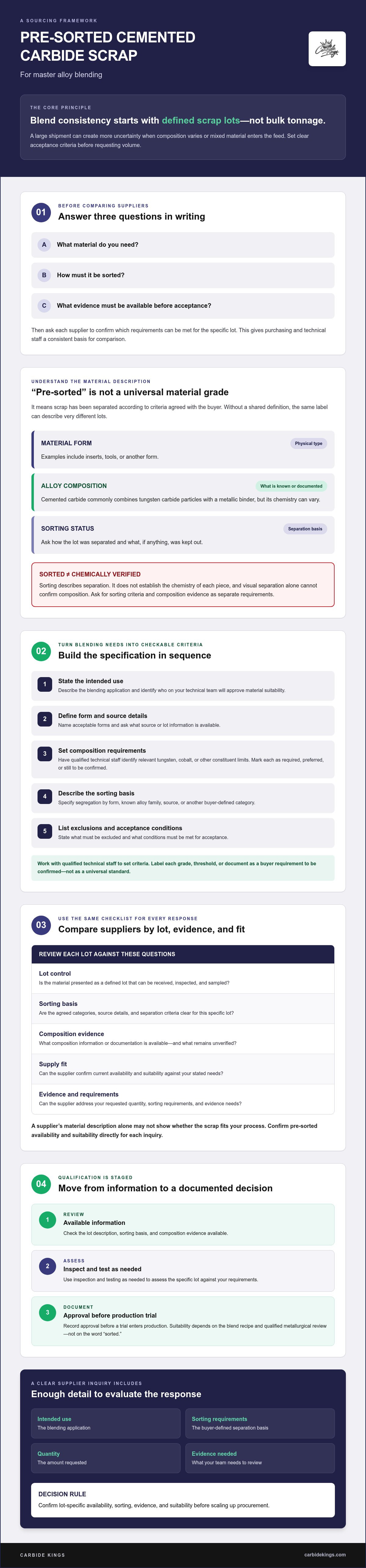
Blend consistency starts with defined scrap lots, not bulk tonnage. If composition varies or mixed material enters the feed, a large shipment can create more uncertainty, not less. Sourcing pre sorted cemented carbide scrap for master alloy blending starts with clear acceptance criteria, not simply a request for volume.
Before comparing suppliers, determine what a lot must contain, how it should be separated, and what evidence your team needs to review. A supplier’s material description alone may not show whether the scrap fits your process.
This guide explains how to turn blending requirements into practical purchasing criteria, request lot-specific details, and compare supplier responses. It also outlines a staged qualification process, from reviewing available information to inspecting and testing a lot as needed. Confirm pre-sorted availability and suitability for each inquiry, and resolve those questions before scaling up procurement.
Key Takeaways
- Set lot-specific acceptance criteria before requesting material, including composition, form, sorting basis, and contaminants to exclude.
- Use the same checklist to compare supplier lot control, composition evidence, and potential supply fit.
- For sourcing pre sorted cemented carbide scrap for master alloy blending, confirm current availability and suitability directly with each supplier.
- Qualify a lot in stages: review available evidence, inspect and test as needed, then document approval before a trial enters production.
- Make supplier inquiries easier to evaluate by stating intended use, sorting requirements, quantity, and the evidence your team needs.
Sourcing pre sorted cemented carbide scrap for master alloy blending
Start by separating three questions: What material do you need? How must it be sorted? What evidence must be available before your team accepts it? Put the answers in writing, then ask suppliers to confirm which requirements they can meet for the specific lot. This gives purchasing and technical staff a consistent basis for comparing responses.
Why Pre-Sorted Cemented Carbide Scrap Matters for Master Alloy Blending
“Pre-sorted” is a purchasing description, not a universal material grade. It means the supplier has separated scrap according to criteria agreed with the buyer. Those criteria might group material by physical form, known alloy family, source, or another buyer-defined category. Without a shared definition, the same label can describe very different lots.
For blending, a clearly identified lot gives buyers a defined unit to receive, inspect, and sample. It can also help the team connect incoming material to its stated sorting basis and available evidence. By contrast, an uncharacterized mixed lot may require additional review before the buyer can decide what evidence is needed or whether the material is acceptable.
What Does Pre-Sorted Cemented Carbide Scrap Mean?
Cemented carbide commonly combines tungsten carbide particles with a metallic binder, but its chemistry can vary. Sorting describes how scrap has been separated. It does not establish the chemistry of each piece, and visual separation alone cannot confirm composition. Before requesting a quote, define “pre-sorted” with the supplier and specify which categories, source details, or separation criteria matter to your process.
Keep these three procurement details distinct:
- Material form: The physical type of scrap, such as inserts, tools, or another form.
- Alloy composition: What is known or documented about the material’s constituents.
- Sorting status: How the lot was separated and what, if anything, was kept out.
These details answer different questions. A lot can be uniform in form but mixed in composition, or sorted into a stated category without chemical verification. Ask about each detail explicitly rather than relying on a broad material label.
Why Does Sorting Matter Before Master Alloy Blending?
Lot segregation gives the buyer a defined unit to receive, inspect, and sample. It can also make production planning clearer by connecting incoming material to its stated sorting basis and available evidence. If the lot’s identity or sorting criteria are unclear, quality-control decisions may require additional review before the material can be considered for use.
Sorted material is separated by agreed criteria; chemically verified material has composition evidence. One does not automatically mean the other. Treat them as separate requirements in supplier discussions.
Ultimately, suitability depends on the buyer’s blend recipe and qualified metallurgical review, not on the word “sorted.” Specify the intended use, required material categories, and evidence needed for acceptance. Then confirm that each lot meets those requirements before deciding whether it fits the process.
How to Specify Scrap Composition, Sorting, and Acceptance Requirements
A useful specification turns blending needs into checkable purchasing criteria. Work with qualified technical staff to set those criteria before requesting material. Label each grade, threshold, or document as a buyer requirement that must be confirmed, so a supplier’s description is not mistaken for your acceptance standard.
Which Material Details Should a Buyer Specify?
Build the request in sequence, keeping physical form, source information, composition, sorting, and exclusions distinct. For sourcing pre sorted cemented carbide scrap for master alloy blending, connect each requested detail to the intended use without assuming a particular grade or universal chemistry.
- State the intended use. Describe the blending application and identify who on your technical team will approve material suitability.
- Define the material form and source details. Name acceptable forms and ask what source or lot information is available.
- Set composition requirements. Have qualified technical staff identify relevant tungsten, cobalt, or other constituent limits. Mark each limit as required, preferred, or still to be confirmed.
- Describe the sorting basis. Specify how material should be segregated, such as by form, known alloy family, source, or another buyer-defined category.
- List exclusions and acceptance conditions. State whether attachments, steel, oils, or unknown mixed materials are prohibited, and explain how exceptions will be handled.
- Request written confirmation. Ask the supplier to confirm which criteria can be met for the specific lot and identify any unavailable information.
What Evidence Can Support Lot Qualification?
Say what evidence your team needs before approving a lot. Ask whether records can identify the lot, describe how samples were taken, or include analytical results. Do not assume a particular document or test is available. Ask whether a certificate of analysis or X-ray fluorescence results can be provided for the lot, and confirm the method and scope directly.
Test-method suitability depends on the material, sampling approach, and acceptance requirements. Have qualified technical staff decide what testing is appropriate and whether results represent the lot. Set documentation expectations before purchase and confirm them in writing with the supplier. If requirements change, update the specification before relying on earlier evidence.
Carbide Kings supplies carbide scrap and other tungsten materials for industrial buyers. You can ask Carbide Kings about carbide scrap, then confirm whether current availability, lot details, and requested evidence fit your specification.
Compare Scrap Suppliers by Lot Control, Verification, and Supply Fit
A supplier comparison should show what is confirmed, what is documented, and what still needs an answer. Do not rank suppliers by confident wording alone. Assess each response against the same lot-control and verification questions, then compare the evidence with your purchasing requirements.
| Comparison area | What to ask or review | What remains to verify |
|---|---|---|
| Sorting definition | How is the material separated? Is sorting based on form, source, known alloy family, or buyer-defined criteria? | Whether the specific lot meets your sorting rules and how exceptions are handled. |
| Lot identity | Can the supplier identify the lot and explain how material is segregated and protected from mixing? | Whether identification and segregation apply consistently through storage and shipment. |
| Composition evidence | Are composition data, representative samples, or third-party testing available for the lot? | What the evidence covers, how samples were selected, and whether the method suits your acceptance criteria. |
| Supply continuity | What is currently available, and what can the supplier confirm about future availability? | Whether later lots will have the same source, sorting basis, and supporting evidence. |
Questions to Ask Before Approving a Supplier
Ask the supplier to describe the material’s path from sorting to dispatch. Clarify how items are segregated, identified, and protected from mixing. Then ask whether lot-specific composition information, representative samples, or third-party test results can be provided. Confirm how the supplier will notify you if the source or lot status changes. A clear response helps identify gaps, but it does not replace your own qualification process.
Use supplier answers and records to distinguish confirmed capabilities from open questions. A supplier may confirm that it supplies carbide scrap while pre-sorted availability, lot size, composition evidence, and blending suitability still need confirmation. Compare the clarity and completeness of each response rather than assuming a quality ranking. For more context on material handling, see the industrial carbide scrap recycling process.
How to Assess Repeatability Without Assuming It
Ask what is currently available and what, if anything, can be confirmed about future supply. Review lot records and stated controls against your internal purchasing requirements. If a future lot differs in source, sorting basis, or evidence, treat it as a fresh qualification decision rather than assuming it matches a prior shipment.
Verify repeatability lot by lot. Do not infer it from a supplier’s general material description.
Qualify a Scrap Lot Before Blending or Scaling Procurement
Move each lot through a buyer-controlled qualification process before it reaches production. Keep it on hold until the required evidence and technical reviews are complete. This gives your team a clear decision path and prevents a trial shipment from becoming assumed approval for later material.
- Define criteria: Set composition, sorting, form, and exclusion requirements for the intended blend.
- Review evidence: Check lot records, available composition information, and sampling details against the purchase specification.
- Inspect the shipment: Compare labels and documents, then record visible differences or unexplained mixed material.
- Test as required: Have qualified metallurgical personnel determine the sampling and testing approach.
- Approve or hold: Document technical sign-off, open questions, deviations, and the lot’s disposition before release.
A Practical Incoming-Lot Review
Match received labels and lot documents to the purchase specification. Note packaging condition, visible differences in material form, and any mixed items that do not match the agreed sorting basis. A visual check is not proof of composition. Follow buyer-approved sampling and testing procedures, with qualified metallurgical staff deciding whether the available evidence is adequate for the intended use.
Set written hold points before the trial lot arrives. Identify who may authorize sampling, who reviews test results, and who can release the material. Keep the lot segregated while a required document is missing or a result is under review. If the lot differs from the specification, record the deviation and agree on the next step before blending.
When Should a Trial Lot Be Approved?
Approve a trial lot only after technical sign-off against the buyer’s defined acceptance criteria. Record any deviation, retest decision, and final disposition, including whether the material is accepted, held, or rejected under your internal process. Approval applies to the qualified lot and evidence reviewed. It does not establish that future lots will match or that ongoing supply is assured.
Commercial valuation is separate from technical acceptance. For background on factors that can affect scrap valuation, review the tungsten carbide scrap price guide, but do not treat valuation as evidence of blend suitability.
For sourcing pre sorted cemented carbide scrap for master alloy blending, share your requirements with a potential supplier and confirm current availability and lot-specific details directly. Review carbide scrap options from Carbide Kings; pre-sorted availability and suitability must be confirmed for each inquiry.
Source Cemented Carbide Scrap Through a Clear Supplier Inquiry
A focused inquiry makes it easier for a supplier to assess your requirements and identify what can be confirmed. State the intended application first, then describe your buyer-defined sorting, evidence, and quantity needs. Do not assume “sorted” means the same thing to every supplier.
What to Include in a Supplier Request
Use a short template that purchasing and technical teams can complete together. Keep requirements specific, and mark composition limits or acceptance thresholds as buyer-defined and subject to technical approval.
- Intended use: Master alloy blending, with any relevant handling or process considerations.
- Desired material: The cemented carbide form you are seeking and any known source or alloy-family requirements.
- Sorting rules: How material should be segregated, including categories or items that must be excluded.
- Quantity: Your requested quantity or range, and whether you are asking about a trial lot or larger procurement.
- Evidence for review: Ask what lot identification, composition information, sampling details, analytical results, or other records may be available. State what your team needs before acceptance.
- Logistics questions: Request confirmation of packaging, shipment arrangements, and other relevant delivery details.
Close by asking the supplier to identify which requirements can be confirmed, which remain open, and what information is needed to evaluate the request. This creates a practical record for comparing responses without treating an initial discussion as lot approval.
Confirm Carbide Kings Fit Before Proceeding
Carbide Kings supplies carbide scrap, tungsten hard scrap, tungsten soft scrap, and tungsten alloys for industrial buyers. It may be a potential contact for an inquiry, but the availability of cemented carbide in a particular pre-sorted condition must be confirmed. Ask about current availability, material form, lot-specific composition information, documentation, quantity, and shipping details relevant to your request.
If your qualification process requires samples or third-party test results, ask whether they can be provided. Have your technical staff assess available information against your acceptance criteria before making a commitment. For related sourcing context on a different material category, see the tungsten hard scrap buying guide.
To discuss a potential inquiry, contact Carbide Kings about industrial material requirements and confirm whether the requested material and lot details can be supported.
Make Your Next Scrap Inquiry Clear and Qualified
Reliable blending starts with a defined lot and acceptance criteria your technical team can review. Separate sorting status from verified composition, compare suppliers using lot-specific evidence, and keep trial material on hold until inspection, testing, and technical sign-off are complete.
A clear specification also makes sourcing pre sorted cemented carbide scrap for master alloy blending more practical. State your intended use, required material form and sorting basis, quantity, exclusions, and evidence needs. Confirm availability, lot details, documentation, and shipping arrangements directly before placing an order.
Carbide Kings supplies tungsten hard scrap, tungsten soft scrap, carbide scrap, and tungsten alloys for industrial buyers. If you are evaluating a potential source, discuss your industrial material requirements and confirm whether the material and lot information you need are available. Start with clear criteria and qualify each lot before proceeding.
Frequently Asked Questions
What is pre-sorted cemented carbide scrap?
Pre-sorted cemented carbide scrap is material separated according to criteria agreed between the buyer and supplier, not a universal grade. Sorting may group material by physical form, source, known alloy family, or another specified category. It does not establish chemical composition by itself. Define the sorting basis in writing before requesting a quote, including what must be kept separate or excluded, so both parties understand the description.
Can cemented carbide scrap be used for master alloy blending?
It may be suitable, but suitability depends on the buyer’s blend recipe and qualified metallurgical review. The material’s composition, physical form, and consistency with the process need to meet buyer-defined requirements. Do not approve scrap based on its category or sorting label alone. Confirm lot-specific information and complete your qualification steps before introducing material into production.
How do buyers verify the composition of a carbide scrap lot?
Buyers verify composition by reviewing available lot-specific evidence and following a sampling and testing plan approved by qualified technical staff. Ask what analytical results, sample details, or other records are available, then determine whether they represent the lot and meet your acceptance requirements. Test-method suitability depends on the material and intended use. Visual inspection or a supplier’s general description is not chemical verification.
What information should I include when sourcing carbide scrap?
State the intended use, desired material form, sorting criteria, requested quantity or range, and categories you need excluded. Identify composition limits or other acceptance thresholds set by your technical team, and specify what lot information or evidence must be available before approval. Ask the supplier to confirm current availability, material details, and shipping arrangements. Mark any requirement that still needs technical review rather than presenting it as settled.
Does sorted scrap always have a certificate of analysis?
No. “Sorted” describes how material has been separated; it does not guarantee a certificate of analysis or any other composition document. Records may vary by supplier and lot. Ask whether a certificate of analysis, sampling details, analytical results, or other requested evidence is available for the material under consideration. Confirm what each record covers, and have your technical team decide whether it supports acceptance.
How can I reduce contamination risk when receiving carbide scrap?
Set contamination exclusions before purchase, then compare received labels and lot documents with the agreed specification. Inspect packaging and material condition, and record visible differences or unexplained mixed items. Keep the lot segregated while concerns are reviewed. Use buyer-approved sampling and testing procedures, with qualified metallurgical personnel guiding acceptance decisions. If the shipment does not match the criteria, document the deviation and hold the material until its disposition is agreed.
Can Carbide Kings supply pre-sorted cemented carbide scrap?
Carbide Kings supplies carbide scrap, tungsten hard scrap, tungsten soft scrap, and tungsten alloys, but pre-sorted cemented carbide availability must be confirmed for each inquiry. Contact the company with your required sorting basis, material form, quantity, intended use, and evidence needs. Before placing an order, confirm whether suitable material is currently available and ask about lot-specific composition information, documentation, and shipping details. Suitability remains subject to your own qualification process.


