

A scrap label is not a shielding specification. High purity tungsten hard scrap sourcing for radiation shielding components starts with the component’s actual requirements, not an assumption about what a material name guarantees. Hard scrap, carbide scrap, and metallic tungsten feedstock are not interchangeable, and differences in composition or lot consistency can affect downstream processing.
If you’re unsure what to request, how to check a lot, or whether supplier documentation answers your questions, start by translating the component requirements into a written material specification. This guide covers how to define that specification, plan suitable sampling and material checks, and assess whether a supplier can offer a lot for your project.
Before committing to feedstock, clarify its material form, composition, lot identification, available records, and any processing assumptions. Carbide Kings supplies tungsten hard scrap, soft scrap, carbide scrap, and tungsten alloys. Confirm current inventory, available lot information, and material suitability directly. The goal is to make a sourcing decision based on evidence and component requirements, not a label alone.
Key Takeaways
- Translate the shielding component design into a procurement specification before evaluating scrap.
- Compare metallic tungsten scrap, tungsten heavy alloys, and carbide scrap by verified composition, processing needs, and fit with your requirements.
- For high purity tungsten hard scrap sourcing for radiation shielding components, check each lot against the buyer’s specification instead of relying on a material label.
- Use a clear qualification sequence: define requirements, request lot details, plan sampling, review test results, and approve the material.
- When contacting Carbide Kings, share your required composition, form, and quantity, then confirm current inventory and available lot information.
What High-Purity Tungsten Hard Scrap Means for Shielding Components
Hard scrap describes a category of tungsten-bearing material. It does not verify purity, chemistry, or readiness for a shielding component. Establish those qualities against the buyer’s written specification. Depending on its condition and composition, scrap may need sorting, testing, or further processing before it can enter a qualified manufacturing route.
Tungsten hard scrap and tungsten carbide scrap are different feedstocks. Metallic tungsten material and tungsten carbide have different compositions and may require different processing. Treat a scrap label, appearance, or general supplier description as a starting point, not proof that a lot meets your design requirements.
Tungsten’s physical properties, including its high density, help explain its use in shielding applications. The Tungsten overview provides general background, but information about the element cannot establish whether a particular scrap lot suits a specific component.
What does high purity mean in a sourcing specification?
Make “high purity” measurable before requesting material. State the required composition, allowable impurities, and measurement basis in the procurement specification. Identify the test method and any required detection limits based on the elements and acceptance criteria relevant to the project. A purity percentage without these details can be interpreted in different ways.
There is no universal threshold to assume. Numeric purity limits must come from the project’s design and manufacturing requirements. For high purity tungsten hard scrap sourcing for radiation shielding components, ask whether lot-specific composition evidence is available and agree on what sampling and verification are needed before approval.
Why shielding design must guide feedstock selection
Begin with requirements defined by the engineering team, not with a material label. Radiation type, component geometry, operating conditions, and design criteria can all affect feedstock selection and the manufacturing route. Material identity alone cannot establish shielding performance or show that a finished component meets its intended design.
Have qualified design and compliance teams set acceptance criteria and approve the proposed material and manufacturing route. Use those criteria to assess candidate lots. This connects procurement decisions to the component’s needs and makes clear what evidence must be reviewed before the material is accepted.
Tungsten Hard Scrap, Tungsten Alloys, or Carbide: Which Feedstock Fits?
Choose feedstock by matching its verified composition and form to the component specification and planned processing route. “Hard scrap,” “tungsten alloy,” and “carbide” describe material categories. None guarantees a particular downstream product, shielding performance, or suitability for your design.
Use the comparison below to identify what to verify, not to rank one category above another. Composition, processing needs, and available documentation depend on the specific lot and supplier.
| Feedstock category | Composition certainty | Likely processing considerations | Documentation and specification fit |
|---|---|---|---|
| Metallic tungsten scrap | Confirm tungsten content and any alloying or contaminant elements. | Assess sorting, cleaning, and further processing against the manufacturing route. | Request lot-specific composition evidence and compare it with the design specification. |
| Tungsten heavy alloy | Verify the alloy elements and their proportions for each lot. | Confirm that the existing alloy form and properties suit the planned manufacturing steps. | Check documented composition against the component’s material requirements. |
| Tungsten carbide scrap | Determine carbide composition and whether binder constituents or other materials are present. | Ask the buyer’s processor to confirm whether the material can enter the intended route. | Accept only if the verified material and processing plan meet the project specification. |
“Hard scrap” should not be treated as a synonym for pure metallic tungsten. Depending on the material stream, it may include carbide and binder constituents. Verify the contents of the lot instead of inferring chemistry from its category or appearance. For broader background on processing considerations, see this tungsten hard scrap recycling guide.
The International Tungsten Industry Association offers industry context, but general references do not replace lot-specific verification or project acceptance criteria. For high purity tungsten hard scrap sourcing for radiation shielding components, compare verified material with the buyer’s defined requirements.
When should buyers assess tungsten carbide hard scrap?
Consider carbide scrap as a potential raw-material stream only after confirming that its processing route fits the project. Ask whether binder constituents, mixed materials, or contamination are acceptable under the intended process specification. The buyer’s qualified processing and design teams should answer that question, not the scrap label alone.
When might tungsten alloy feedstock be a better fit?
An alloy may be worth assessing when its verified composition and form align with the component design and manufacturing requirements. Specify the required alloy elements, then check each lot against those criteria. Do not assume every tungsten alloy is suitable or available for shielding use. To compare material categories, you can also review tungsten scrap and alloy offerings and confirm current inventory and lot details directly.
How to Verify Tungsten Scrap Composition and Supplier Claims
A supplier description alone does not establish a scrap lot’s chemistry. Treat descriptions as a starting point, then check the offered material against your written requirements. A simple qualification sequence helps connect the evidence to the specific lot under consideration.
- Define the specification. Identify required elements, allowable impurities, measurement basis, test methods, detection limits, and acceptance criteria. Set these with the design and processing teams.
- Request lot details. Ask for available lot identification, material description, composition data, sampling basis, and test-method information. Confirm whether results apply to the offered lot or describe only a broader material category.
- Plan sampling. Agree in advance how a representative sample will be selected, identified, handled, and transferred for analysis. Set chain-of-custody expectations if your quality process requires them.
- Review the results. Check whether the analytical method can measure the elements of interest at the required detection limits. Resolve gaps or inconsistencies before treating a result as evidence that the specification is met.
- Approve the material. Record the accepted lot, supporting evidence, and any conditions for processing. Hold approval if the documentation or results do not answer the specification’s key questions.
This sequence is useful for high purity tungsten hard scrap sourcing for radiation shielding components because it separates a supplier’s material description from the evidence needed to make a project decision. The appropriate analysis depends on the requirements in the specification.
Which composition evidence should a buyer request?
Ask for available lot identification, composition results, the sampling basis, and the test method used. Check whether the information relates to the actual lot being offered. If documentation is missing, unclear, or covers only a general material category, treat that as an open question to resolve before purchase approval, not as confirmation of composition.
How should buyers approach sampling and analysis?
Agree on representative sampling and chain of custody before testing so the results can be linked to the material under review. X-ray fluorescence (XRF) may help screen material, but its limits must suit the elements and detection levels in question. Do not automatically treat it as definitive analysis. Ask a qualified laboratory whether a method such as ICP-OES, including the necessary sample preparation, is suitable for the required measurements.
Method selection belongs with the buyer’s technical team and laboratory. Before relying on results to accept a lot, confirm that the method, sample, and reporting format match the specification.
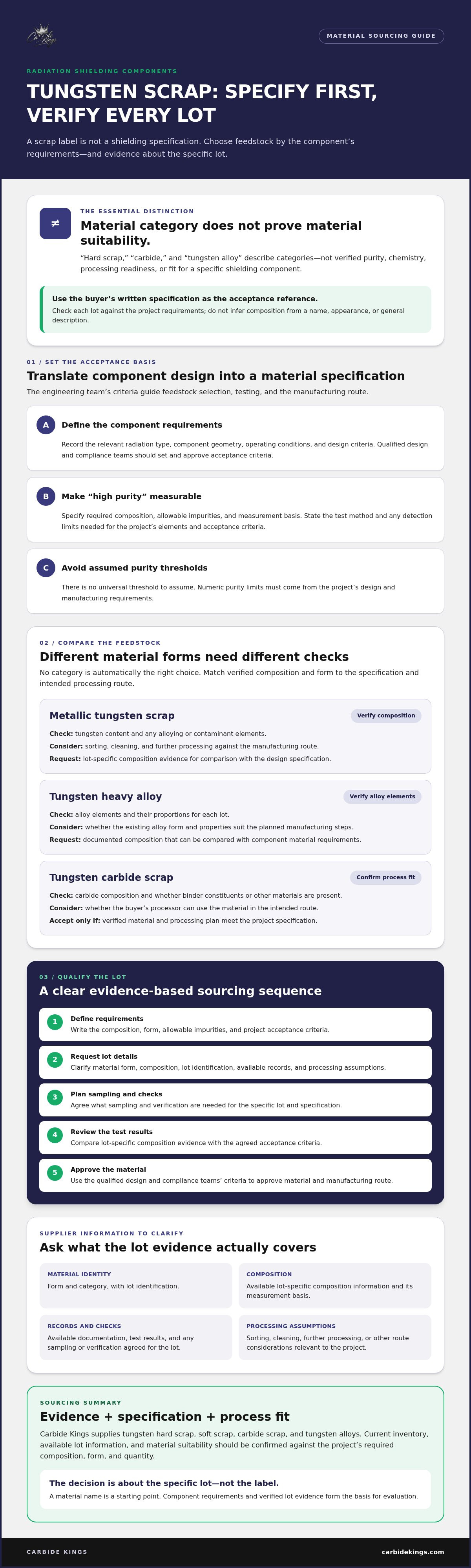
A Practical Sourcing Workflow for Radiation Shielding Feedstock
Start with the design team’s requirements and turn them into a material specification that a supplier can answer clearly. Define the intended feedstock category, composition limits, acceptable form, quantity range, required evidence, and any processing assumptions. Use that information to prepare an RFQ, rather than requesting material using a broad description such as “high-purity tungsten.”
Keep two decisions separate. Procurement can check whether a lot meets the material acceptance criteria. Qualified design and compliance teams must separately approve the material and manufacturing route for the component and validate the shielding design and performance. Acceptance of a scrap lot does not establish that a finished component will meet design requirements.
What information belongs in a tungsten scrap RFQ?
Make the request specific enough for suppliers to confirm what they can offer. Include the intended feedstock category, required composition and allowable limits, material form, and quantity range. State test documentation and sampling expectations, including whether lots must remain segregated. Ask the supplier to confirm current availability, lot identity, and transaction and shipping logistics. Confirm these details directly rather than making assumptions.
For broader context on material handling and processing, review the industrial carbide scrap recycling process. Use it as background, then specify the requirements for your own material stream and manufacturing route.
How should procurement teams reduce sourcing risk?
Set written acceptance criteria before comparing offers. Assign responsibility for approving the material specification, reviewing test results, and authorizing the purchase. Ask how the offered lot is identified and whether it can remain distinct through the transaction. Check that the quoted quantity, form, and documentation all refer to the same lot.
These controls give buyers a practical basis for high purity tungsten hard scrap sourcing for radiation shielding components without treating a supplier description as proof of suitability. For additional seller-side considerations, see the 2026 tungsten hard scrap buying guide.
Carbide Kings supplies tungsten hard scrap, soft scrap, carbide scrap, and tungsten alloys. Contact Carbide Kings about your tungsten feedstock requirements, then confirm current inventory, lot information, and suitability directly before proceeding.
Contact Carbide Kings About Tungsten Hard Scrap Requirements
Carbide Kings supplies tungsten hard scrap, tungsten soft scrap, carbide scrap, and tungsten alloys to industrial buyers. The company is a potential feedstock supplier to contact about project requirements, not a certified shielding-material supplier or radiation-shielding component manufacturer. Do not assume a material category meets a particular purity or design requirement without confirmation.
For high purity tungsten hard scrap sourcing for radiation shielding components, make the inquiry specific. Share the material criteria established by your engineering and procurement teams, then confirm directly whether a current lot matches them and what information is available for review.
What should buyers prepare before contacting Carbide Kings?
Prepare a concise specification rather than relying on a general request for “high-purity tungsten.” Include the material category, required composition limits, intended processing route, and target quantity. Identify the analytical methods, test documentation, sampling conditions, and acceptance criteria your team requires. This gives the supplier a clear basis for discussing a potential match without implying that a particular grade or lot is available.
Identify the engineering or quality contacts who will evaluate the proposed material. Their input can clarify which evidence is essential and help prevent a lot from being considered suitable on the basis of incomplete information.
What should buyers confirm before committing to a lot?
Confirm the specific material being offered and whether current inventory matches the requested category, form, and quantity. Review available lot identification and composition evidence. Check that reported results apply to the lot under consideration, and resolve any differences between the requested limits and reported composition before moving forward.
Keep material acceptance separate from component approval. Procurement and quality teams can assess the lot against the material specification, while qualified engineering and compliance teams determine whether the feedstock and manufacturing route are acceptable for the shielding design. A supplier description or category name is not proof of component suitability.
Clear requirements make the inquiry more useful for both sides. Contact Carbide Kings about tungsten materials with your specifications, then confirm current availability, lot composition, documentation, and transaction details directly before proceeding.
Turn Your Shielding Requirements Into a Clear Sourcing Plan
Successful high purity tungsten hard scrap sourcing for radiation shielding components starts with the component specification, not a scrap label. Define the required composition and evidence, then compare metallic tungsten scrap, tungsten alloys, and carbide with the intended processing route. Verify the offered lot and its documentation before approving the material.
Keep material acceptance separate from design approval. Qualified engineering and compliance teams must review whether verified feedstock suits the shielding component. This distinction helps prevent assumptions from becoming sourcing decisions.
Carbide Kings supplies industrial tungsten and carbide scrap materials nationally in the United States, including tungsten hard scrap, soft scrap, carbide scrap, and tungsten alloys. Share your project requirements and confirm current inventory, lot composition, and available documentation directly. Contact Carbide Kings about your tungsten material requirements to discuss your needs. With clear criteria and careful verification, you can make a more informed sourcing decision.
Frequently Asked Questions
Can tungsten hard scrap be used for radiation shielding components?
Yes, tungsten hard scrap may be considered as a feedstock candidate, but its category label does not establish suitability. For high purity tungsten hard scrap sourcing for radiation shielding components, define the composition and impurity limits, material form, and processing route required by the component specification. Request evidence tied to the offered lot. Qualified design personnel should then assess the shielding application and approve the manufacturing route before purchase.
What does high-purity tungsten mean when sourcing scrap?
High purity is a project-defined requirement, not a complete material specification by itself. State the composition limit, allowable impurities, measurement basis, and test method needed for your application. The appropriate limits depend on the component and its manufacturing route. Ask what evidence is available for the specific lot, then have your materials or quality team determine whether the results address the requirements before approving the material.
Is tungsten carbide scrap the same as pure tungsten?
No. Tungsten carbide scrap is not the same material as metallic tungsten. Carbide scrap may contain carbide and binder constituents, while metallic tungsten and tungsten alloys have different compositions. Do not assume one category can replace another in a particular process. Specify the required feedstock and intended manufacturing route, then verify the offered lot’s composition using suitable documentation or analysis.
How can I verify the composition of a tungsten scrap lot?
Start by identifying the offered lot and agreeing on representative sampling before analysis. Specify which elements matter and the detection limits your requirements call for. Request available results and confirm the method used and whether it applies to that lot. X-ray fluorescence can serve as a screening tool, but it may not answer every composition question. Consult a qualified laboratory or materials specialist to confirm the right analysis for your specification.
What should a tungsten scrap RFQ include for shielding components?
Include the required feedstock category, composition limits, material form, and quantity range. State sampling expectations, required test documentation, and relevant acceptance criteria. Describe the intended manufacturing process so the supplier can respond to clear project needs. Keep procurement approval separate from shielding design approval. Before proceeding, ask the supplier to confirm the specific material and lot information offered, along with current availability and transaction details.
Does tungsten scrap automatically meet radiation shielding requirements?
No. A scrap description or composition claim does not demonstrate that a finished component will meet its shielding requirements. Suitability depends on the design, verified material, component geometry, manufacturing process, and application-specific criteria. Have qualified engineering and compliance personnel review the design and applicable requirements. Separately verify feedstock evidence against the material specification before accepting a lot for the intended manufacturing route.
Can Carbide Kings supply high-purity tungsten for shielding components?
Carbide Kings supplies tungsten hard scrap, tungsten soft scrap, carbide scrap, and tungsten alloys, but a particular purity grade, lot assay, certification, or shielding suitability is not specified. Contact the company with your material specification and ask what lots and documentation are currently available. Review any evidence against your requirements, and obtain engineering approval before treating feedstock as suitable for a shielding component.


