
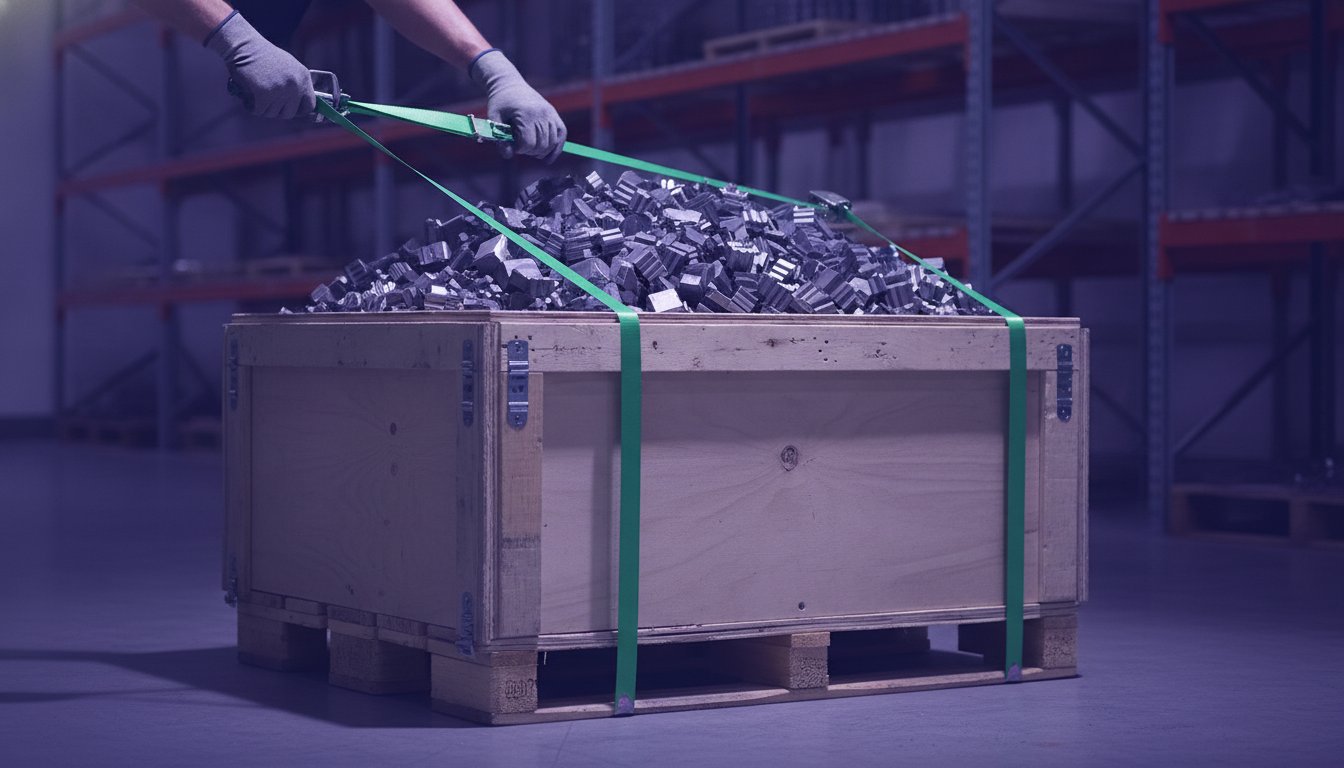
A single 50-pound box of tungsten carbide scrap can be worth over $500, yet many shipments never reach their destination because of a simple cardboard blowout. You've likely felt the frustration of a box bursting open under the weight of material that is 2.5 times denser than steel. Learning exactly how to ship tungsten carbide scrap isn't just about moving weight; it's about managing extreme density to protect your bottom line. High shipping costs and damaged containers shouldn't eat into your hard-earned industrial profits.
We're here to help you master the logistics of shipping high-density carbide scrap safely and efficiently to secure the fastest national payouts. This professional guide provides a clear, results-oriented framework for 2026 to ensure your high-value assets arrive without a scratch. You'll learn the critical 50-pound rule, the best ways to pack "dirty" sludge versus clean inserts, and how to use reinforced packaging to guarantee zero transit damage. Let's streamline your shipping process so you can focus on your core operations while we handle the heavy lifting. Your successful delivery starts with the right packing strategy.
Key Takeaways
- Learn how to maximize your payout by separating hard and soft scrap while stripping away non-carbide attachments to reduce dead weight.
- Master the logistics of how to ship tungsten carbide scrap using USPS Flat Rate boxes to bypass high density-based shipping surcharges.
- Discover why heavy-duty plastic or steel buckets are the superior choice over cardboard for large-scale palletized LTL shipments.
- Protect your investment with professional weight verification and documentation techniques that prevent loss during transit.
- Streamline your national procurement process with expert guidance that simplifies carrier selection and packaging requirements across all 50 states.
Preparing Your Tungsten Carbide Scrap for Shipment
Success in industrial recycling starts at the sorting bench. If you want to know how to ship tungsten carbide scrap like a professional, you must first understand that not all scrap is created equal. Tungsten Carbide is a high-value material, but its worth fluctuates based on purity and form. Mixing different types of scrap doesn't just complicate the process; it actively drains your profit. Buyers often apply the "lowest common denominator" rule. If you mix high-value inserts with lower-value grinding sludge, you'll likely receive a payout based on the cheaper material. Accurate sorting ensures you receive the highest possible tungsten carbide scrap price.
Sorting Hard vs. Soft Scrap
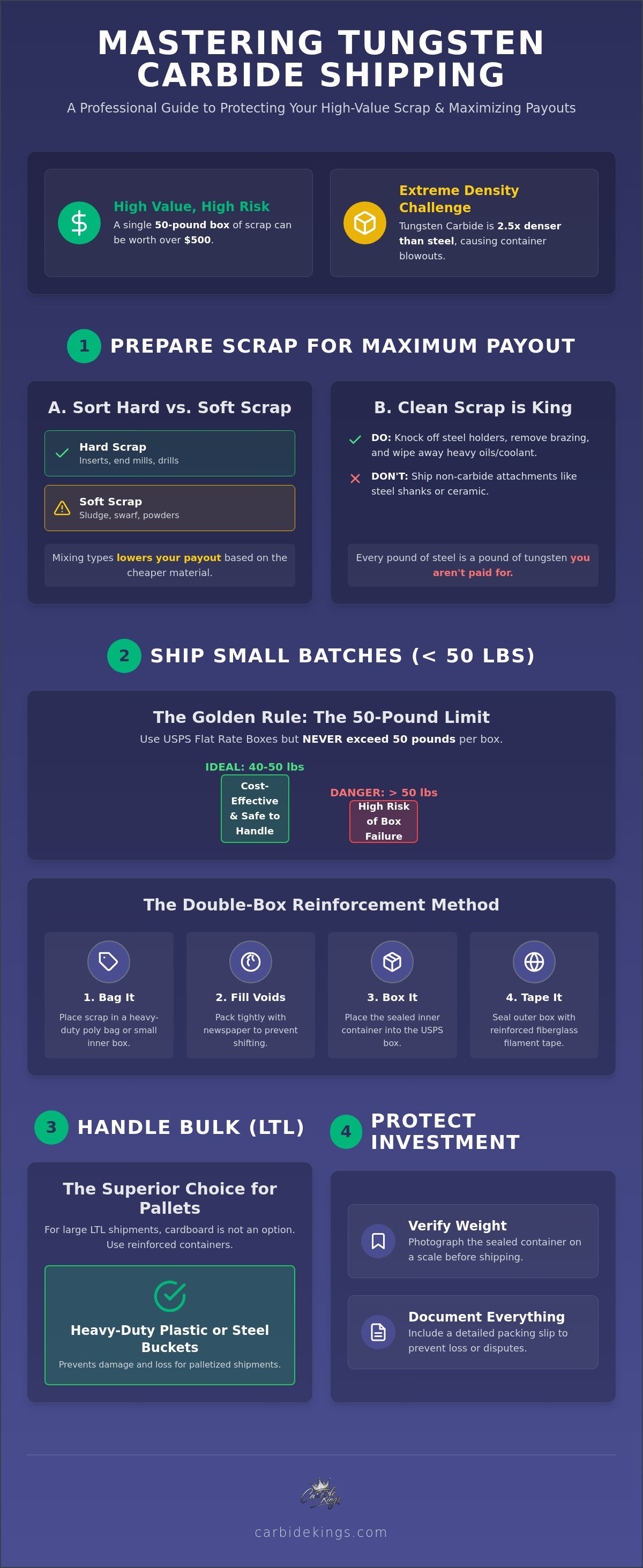
Always keep your solid carbide tools separate from your grinding sludge. Hard scrap includes items like indexable inserts, end mills, and drills. Soft scrap consists of sludge, swarf, and powders. Mixing these categories creates contamination issues that are expensive to resolve at the refinery. You don't want your high-purity solids to be downgraded because they're covered in low-grade swarf. For more detailed instructions on handling sludge, consult our guide to tungsten soft scrap. Proper separation ensures you capture the full value of each material stream. It's a small step that protects your margins.
Maximizing Payout Through Cleanliness
Precision pays. Buyers offer premium rates for material that is ready for the furnace. Take a hammer and knock off any steel tool holders from your carbide tips. This simple step removes non-valuable weight and upgrades your shipment to "clean" status. In this industry, clean carbide is defined as material that is entirely free of brazing, steel, ceramic attachments, or heavy debris. Every pound of steel you ship is a pound of tungsten you aren't getting paid for. It's that simple.
Remove every ounce of dead weight. Steel shanks, plastic packaging, and heavy oil are your enemies. Buyers pay for the weight of the carbide, not the steel holders it's attached to. Wiping down oily parts is also critical. Excess coolant or oil can soften cardboard boxes during transit, leading to the dreaded container failure. A clean shipment is a secure shipment. Use a basic degreaser or shop rags to remove the bulk of the fluids before packing. This prevents the shipping container from softening or leaking, ensuring your material actually reaches the buyer. When you learn how to ship tungsten carbide scrap, you begin at the sorting table.
Shipping Small Batches via USPS Flat Rate
For most industrial shops, the USPS Medium Flat Rate box is the gold standard for moving material. When you are figuring out how to ship tungsten carbide scrap in quantities under 50 pounds, this method is unbeatable. Standard shipping rates often apply a "density penalty" because tungsten carbide is exceptionally heavy for its size. Carrier algorithms usually charge a premium for small, heavy packages that require manual handling. Flat rate shipping bypasses these costs entirely. You pay one price regardless of the weight, provided you stay within the carrier's limits.
While the official USPS limit is 70 pounds, you shouldn't push it that far. Industrial experience shows that cardboard integrity begins to fail rapidly once you cross the 50-pound threshold. Aim for a target weight of 40 to 50 pounds per box. This weight range is heavy enough to be cost-effective but light enough for postal workers to handle without dropping the package. If you have 100 pounds of inserts, split them into two Medium Flat Rate boxes rather than one overstuffed Large box. It's a simple way to ensure your shipment arrives in one piece. If you're unsure about your total weight, you can always consult with a professional buyer to determine the most efficient shipping configuration for your specific volume.
The Double-Box Reinforcement Method
Density is your biggest challenge during transit. To prevent a blowout, you must use the double-box method. Place your carbide scrap into a heavy-duty poly bag or a smaller, sturdy internal box first. This creates a secondary barrier. Fill every inch of internal void with crumpled newspaper or scrap cardboard. If the metal can shift, it acts like a slide hammer, eventually punching through the outer walls. Seal the inner container and place it inside the USPS box. Finally, wrap the outer box with reinforced fiberglass filament tape. Standard clear packing tape will snap under the pressure of 50 pounds of shifting metal. Think of this as your own version of FMCSA Cargo Securement Rules applied to a small parcel; if the load isn't tight, it isn't safe.
Labeling and Documentation
Security is just as important as structural integrity. Always place a detailed packing slip inside the box before sealing it. This slip should include your contact information, the estimated weight, and a basic inventory of the contents. Scuffed or torn outer labels are a common reality in high-volume sorting facilities. By placing a duplicate address label inside the box, you guarantee the shipment can still be identified if the exterior becomes unreadable. Verify the shipping address with your buyer one last time before you apply the filament tape. Taking these extra seconds prevents costly delays and ensures your payout is processed without friction. Once the box is sealed, you've successfully mastered how to ship tungsten carbide scrap for small-batch recycling.
Bulk Logistics: Palletizing and LTL Shipments
When your accumulation exceeds 300 pounds, individual boxes become a logistical nightmare. This is where Less Than Truckload (LTL) freight becomes the most cost-effective solution. Learning how to ship tungsten carbide scrap at this scale requires a shift from cardboard to industrial-grade containers. Cardboard boxes, even double-walled ones, are prone to crushing when stacked on a pallet with high-density materials. You need a solution that maintains its integrity under extreme pressure.
Use heavy-duty plastic or steel 5-gallon buckets for bulk hard scrap. These containers provide the structural integrity needed to withstand the vibrations and shifting of a long-haul truck. Once filled, secure these buckets to a standard 48x40 wooden pallet. Don't use flimsy or damaged pallets because the weight of tungsten demands a solid foundation. Use high-tensile steel or heavy-duty plastic strapping to lock the buckets in place. This ensures the load remains a single, cohesive unit throughout the journey.
Bucket Packing for Industrial Loads
Limit each 5-gallon bucket to approximately 50 to 70 pounds. While a bucket can technically hold more, keeping them within this range allows for safe manual handling by your team and the carrier. Seal the lids tightly with a mallet to prevent any contents from spilling if the pallet is jolted. Wrap the entire bucket in several layers of stretch film before placing it on the pallet. This adds a layer of security and keeps the lids from popping during transit. Ensure the weight is perfectly centered on the pallet. An off-center load can cause the pallet to tip during forklift operation, leading to a dangerous and expensive mess for everyone involved.
Scheduling Your Freight Pickup
The final step in the process is the paperwork. Obtain a Bill of Lading (BOL) from your buyer or the freight carrier before the truck arrives at your facility. This document is the legal contract for the shipment and must be accurate. Confirm whether your facility requires a liftgate or if you have a standard loading dock. Many freight carriers charge extra for liftgate services if they aren't scheduled in advance. For a better understanding of how these bulk shipments fit into the larger picture, review the carbide scrap recycling process. This ensures your timelines align with refinery schedules for faster payouts.
Carbide Kings provides comprehensive national logistics support to manage these larger industrial shipments. We handle the heavy lifting of coordinating carriers and providing the necessary documentation. This proactive approach removes the administrative burden from your shop, allowing you to focus on production. Mastering how to ship tungsten carbide scrap in bulk is straightforward when you have the right partner and the right equipment. Your material is valuable; treat it with the professional logistics it deserves.
Preventing Loss: Security and Weight Verification
High value invites risk. When you're determining how to ship tungsten carbide scrap, security is just as vital as the structural integrity of the box. A single shipment can represent thousands of dollars in industrial assets. Protecting that value requires a methodical approach to documentation and theft prevention before the material ever leaves your loading dock.
Start by weighing your shipment on a calibrated scale. This isn't a suggestion; it's a requirement for professional logistics. Take clear photos of the open box or bucket to show the contents, then take another photo of the final sealed container. These images serve as your primary evidence if a carrier disputes a claim or if the package arrives tampered with. Use tracking numbers for every parcel and always require a signature for high-value deliveries.
Discretion is your best defense against theft. Avoid writing "Tungsten," "Carbide," or "Scrap Metal" anywhere on the exterior of the package. This type of labeling attracts unwanted attention from "porch pirates" or dishonest handlers in the shipping chain. Instead, use generic descriptions like "Machine Parts" or "Industrial Tooling" on the shipping label. This keeps the high value of the cargo hidden in plain sight while it moves through the national sorting network.
Weight Documentation Best Practices
A 1% weight discrepancy is common due to scale calibration, but larger gaps indicate transit loss. Always compare your facility's recorded weight with the carrier's "origin weight" found on your drop-off receipt. If the numbers don't align from the start, address it with the carrier immediately. Maintain a digital log of all outbound weights paired with their specific carrier tracking numbers. This log creates a clear chain of custody that simplifies the accounting process for both you and the buyer. It's the most effective way to ensure you get paid for every pound you ship.
Insurance and Liability
Standard carrier liability is often limited and may not cover the full market value of your scrap. You must determine when the total value of your tungsten justifies purchasing additional high-value transit coverage or third-party shipping insurance. This is especially important for bulk LTL loads where the financial stakes are significantly higher. Carbide Kings handles material verification upon arrival at our facility with a transparent, professional inspection process. We cross-reference your facility's documentation with our receiving weights to ensure every ounce is accounted for during the payout process.
If you want to ensure your high-value materials are handled with the highest level of security and professional oversight, contact Carbide Kings to coordinate your next shipment. Our team is ready to help you navigate the complexities of high-value industrial logistics with total transparency.
The Carbide Kings Advantage: National Shipping Made Simple
Shipping across the country shouldn't be a source of stress for your business. Carbide Kings offers a streamlined national procurement process that covers all 50 states. We've refined the logistics of how to ship tungsten carbide scrap to make it as simple as a standard retail transaction. Whether you're a small machine shop in rural Montana or a large industrial plant in a major city, our system works for you. We remove the traditional barriers that make scrap recycling feel like a chore. You focus on your production; we handle the heavy lifting of the recycling chain.
Our team provides direct logistics assistance to help you choose the right carrier and packaging for your specific volume. You don't have to guess which box to use or which freight line is the most reliable. We provide those details up front. Once your material arrives, our rapid 24-hour processing kicks in. You won't be left waiting weeks for your material to be weighed and analyzed. We value your time as much as your material. This commitment to speed ensures that your facility remains clean and your cash flow stays consistent.
Requesting Your Shipping Quote
The process begins with a few simple details. Provide an estimated weight and the specific material type to receive an accurate preliminary quote. We recommend uploading photos of your sorted scrap. Visual verification helps us speed up the approval process and ensures there are no surprises during receiving. Once we have your information, we'll provide a customized shipping plan based on your volume and location. This plan outlines exactly how to ship tungsten carbide scrap from your facility to ours with maximum efficiency. It's a tailored solution designed for industrial professionals who demand clarity.
From Receipt to Payout
Efficiency doesn't stop once the shipment is in transit. Materials are weighed and analyzed immediately upon arrival at our facility. We use precision-calibrated equipment to ensure every pound is accounted for with total accuracy. Payments are issued within one business day of final weight verification. We offer flexible payment options, including wire transfers or checks, to provide your business with immediate liquidity. There are no hidden fees or unnecessary administrative hurdles to slow down your transaction. It's a clean, fast, and professional exchange that rewards your commitment to efficient scrap management.
Ready to turn your industrial waste into liquid capital? Get your national carbide shipping quote from Carbide Kings today. Our team is standing by to simplify your logistics and maximize your returns.
Secure Your Industrial Payout Today
Successful recycling doesn't end at the sorting bin. It ends with a secure arrival and a fast payout. By implementing the double-box method for small parcels or utilizing reinforced buckets for bulk LTL loads, you eliminate the risk of container failure and protect your margins. Remember to keep your labeling discreet and your scales calibrated to ensure total transparency throughout the process. Mastering how to ship tungsten carbide scrap is the final step in a lucrative industrial recycling workflow that turns waste into a high-value asset.
Carbide Kings is ready to act as your proactive partner in this process. We provide comprehensive national shipping assistance for bulk loads and maintain highly competitive rates for both hard and soft scrap. Our streamlined system guarantees rapid 24-hour payment processing after receipt, meaning your capital is back in your hands without unnecessary administrative delays. We've refined the logistics so you can stay focused on your core shop operations while we manage the transit details.
Turn your tool scrap into cash-Get a shipping quote from Carbide Kings now.
Start your next shipment today and experience the relief of a straightforward, professional transaction. Your material is valuable, and it's time you were paid for it with the speed and integrity you deserve.
Frequently Asked Questions
How much tungsten carbide can I fit in a USPS Flat Rate box?
Limit your shipment to 50 pounds per box for maximum safety. While USPS technically allows up to 70 pounds, the extreme density of tungsten carbide puts immense pressure on cardboard seams. Keeping the weight at 50 pounds ensures the box remains manageable for handlers and significantly reduces the risk of a blowout during the automated sorting process.
Do I need to clean the grinding sludge before shipping?
Yes, you must drain as much excess fluid as possible before packing. This process, known as dewatering, ensures you aren't paying to ship useless coolant or oil weight. It also prevents leaks that could lead to your shipment being flagged or rejected by the carrier. Clean, dry sludge leads to a more accurate weight verification and a faster final payout.
What is the most cost-effective way to ship 500 pounds of carbide?
Less Than Truckload (LTL) freight is the superior choice for any shipment exceeding 300 pounds. Palletizing your material in 5-gallon buckets and using a freight carrier is much cheaper than sending dozens of individual boxes. This method also provides better security and stability for large industrial volumes moving through the national supply chain.
Should I use a specific type of tape for heavy metal shipments?
Always use reinforced fiberglass filament tape for your containers. Standard clear packing tape lacks the tensile strength required to hold under the weight of shifting metal and will often snap. Wrap the filament tape in a "H" pattern across all seams and around the entire circumference of the box to provide the necessary structural reinforcement.
How do I prevent my shipping boxes from breaking in transit?
Use the double-box method and eliminate every inch of internal void. Place your scrap in a smaller inner container or heavy poly bag before placing it into the main shipping box. Pack the empty spaces with scrap cardboard or newspaper so the material cannot shift. If the load moves, it acts like a slide hammer and will eventually punch through the outer walls.
Is insurance required when shipping tungsten carbide scrap?
Insurance isn't mandatory, but it's a critical safeguard for your investment. Standard carrier liability rarely covers the full market value of industrial tungsten. Purchasing additional transit insurance protects you against loss or damage during the shipping process, ensuring you don't lose the significant value of your scrap due to a carrier error.
How long does it take to get paid after I ship my carbide?
You'll receive payment within 24 hours of the final weight verification at our facility. We prioritize rapid processing to ensure your business maintains its liquidity. Once the material is analyzed and the final weight is confirmed, we issue funds via your preferred payment method, such as a wire transfer or check, without delay.
Can I ship carbide inserts that are still in their plastic cases?
You can ship them in cases, but removing them is the better strategy. Plastic packaging counts as "dead weight" that doesn't contribute to your final payout. Removing the inserts before you learn how to ship tungsten carbide scrap ensures your total weight consists only of valuable material, maximizing your return and reducing unnecessary shipping costs.


