

The largest lot isn't automatically the best feedstock for APT production. Start with process fit and lot consistency. Bulk tungsten soft scrap sourcing for ammonium paratungstate production requires looking beyond a supplier’s material label: powder, swarf, and sludge can differ in tungsten content, moisture, and contaminants, so broad descriptions make offers difficult to compare.
For industrial buyers, a shipment supports a reliable production plan only when its composition, condition, packaging, and logistics can be assessed against plant requirements. Carbide Kings supplies tungsten soft scrap to industrial buyers across the United States and maintains a consistent inventory.
This guide explains how to identify soft-scrap streams worth evaluating, specify lot details for supplier comparisons, and build a repeatable procurement workflow. It also covers sampling, process review, documentation, handling, and transportation so you can align purchasing with APT production needs.
Key Takeaways
- Soft scrap is a broad category. Material form and condition matter when assessing possible APT feedstock.
- Use consistent lot details to compare supplier offers, and distinguish documented facts from estimates or items awaiting technical review.
- Build a repeatable qualification workflow, with technical acceptance decisions handled by your qualified process and quality teams.
- Make bulk tungsten soft scrap sourcing for ammonium paratungstate production more actionable by specifying process needs, lot expectations, and delivery requirements.
- Carbide Kings supplies industrial tungsten soft scrap to buyers across the United States.
What APT producers should know before sourcing bulk tungsten soft scrap
Before comparing bulk lots, define what your plant needs the material to do. Ammonium paratungstate (APT) is a refined tungsten compound used as an intermediate in the tungsten-material supply chain. It can be processed further into products such as tungsten oxides and tungsten metal. The Ammonium paratungstate (APT) reference outlines its chemical and structural characteristics. Plant-specific processing routes and feedstock limits require qualified technical review.
Soft scrap is a broad description, not a grade. It may include distinct secondary material streams such as powder, swarf, or sludge. These forms can differ in composition, physical condition, and handling needs. A supplier’s description identifies the material being offered, but does not establish that a lot meets your process requirements.
How does tungsten soft scrap relate to APT production?
Tungsten-bearing secondary material may provide a source of recovered tungsten for further processing, including routes that produce APT. Suitability depends on the material’s composition and condition, as well as the buyer’s process. A label such as “tungsten swarf” or “tungsten-bearing sludge” is a starting point for evaluation, not proof of compatibility.
Keep technical acceptance with your qualified process and quality teams. They can assess the chemistry, sampling approach, and recovery implications relevant to your operation. Don’t assume different soft-scrap forms are interchangeable or that a general supplier description substitutes for a plant-specific acceptance decision.
Which purchasing questions should come before a quote?
Define the intended use first. Then document the required material form, established acceptance criteria, and any details still awaiting internal review. This separates firm requirements from assumptions and gives suppliers a clear basis for describing a lot. Specify which lot information your team needs and which handling or delivery conditions matter.
- Known requirements: intended process use, preferred material form, and established internal criteria.
- Pending review: technical limits, sampling or testing decisions, and unresolved handling requirements.
- Supplier information: material description, lot identity, condition, available documentation, and logistics details.
Organizing these points early makes bulk tungsten soft scrap sourcing for ammonium paratungstate production easier to compare and qualify. For more background on common secondary material categories, see this guide to tungsten soft scrap buyers.
Which bulk tungsten soft scrap streams may fit your process?
Separate material streams instead of grouping them under a single “soft scrap” label. Sludge, swarf, and fines are useful purchasing categories, but they describe form, not verified chemistry or process performance. Document and review each stream separately. A category that suits one recovery route may not suit another.
For each lot, record observable details that help your receiving team plan: whether the material appears dry or damp, loose or compacted, fine or coarse, and whether visible foreign material or packaging is present. Note the container or packaging type and any available storage-condition information. These observations support handling and review, but they are not assay results or proof of process suitability.
How do sludge, swarf, and fines differ as purchasing categories?
Sludge generally describes a wet or settled material form, while swarf commonly refers to machining or grinding fragments. Fines describes smaller particles, but the term alone doesn’t establish how they were generated or what they contain. Suppliers may use these labels differently, so capture the exact wording and request a more specific description when needed. Base technical conclusions on actual lot details and qualified process review.
Moisture can affect net material handling and storage. Particle form can influence containment, transfer, and loading. Foreign material may complicate preparation or receiving checks, while storage conditions can affect the material’s condition on arrival. The International Tungsten Industry Association provides broader tungsten-industry context. Your process and quality teams should determine applicable feedstock criteria.
What can cause lot-to-lot variation?
Variation can start at the source. Different production operations may generate different material forms, and collection practices may keep streams separate or combine them. Mixed materials, container residues, storage exposure, and changes in handling can also affect a lot’s condition on receipt. These are review factors, not automatic reasons to accept or reject a shipment.
Keep records distinct by source stream and lot. Don’t combine sludge, swarf, or fines descriptions just to make a quote look comparable. Record known details separately from assumptions and questions for the receiving process team. That gives purchasing and technical staff a shared basis for reviewing condition, documentation, and logistics.
For wider examples of soft-scrap streams and recovery context, read the tungsten soft scrap and sludge recovery guide. Carbide Kings supplies bulk tungsten soft scrap to industrial buyers across the United States. A stream-by-stream description makes purchasing discussions clearer.
How to compare bulk soft-scrap lots and supplier offers
Start comparisons with consistent fields. Use one record per lot, keeping confirmed details separate from estimates, assumptions, and questions awaiting technical review. This lets purchasing compare offers without treating a broad material label or market reference as proof of process fit.
What information should a buyer capture for every lot?
Build a lot-by-lot template. Record the supplier’s description as provided, then add your own observations and review status. Request available lot documentation through normal procurement communication, but don’t assume a particular assay or test result is included.
- Material description: stream category, supplier wording, and any available source-process description.
- Lot identity and scale: lot or reference identifier and approximate quantity, marked as confirmed or estimated.
- Condition: visible moisture, particle form, foreign material, packaging, and known storage or handling details.
- Documentation: documents received, documents requested, and information still unavailable.
- Logistics: shipment arrangement, delivery destination, packaging or handling needs, and open planning items.
- Review status: buyer acceptance requirements, technical questions, and decisions pending internal review.
State acceptance criteria in your own technical and purchasing terms. For example, label a requirement “essential for process review” rather than leaving it buried in a supplier description. Mark each entry as confirmed, estimated, assumed, or pending review. This helps prevent preliminary information from becoming an unintended commitment.
How should buyers weigh process fit against commercial terms?
Compare the full offer side by side. Separate essential acceptance requirements from preferences, then consider material consistency, handling demands, delivery arrangements, and commercial terms. An offer that looks attractive on one term may require more internal evaluation or create handling steps that affect its overall fit.
- Essential: requirements the buyer’s qualified process and quality teams must accept.
- Preferred: useful features that improve purchasing or handling but aren’t automatic acceptance conditions.
- Unresolved: details awaiting documentation, sampling, or technical review.
Include internal sampling and evaluation steps in the workflow, but don’t assign costs or turnaround times until your organization establishes them. Market benchmarks can provide context on broader market drivers, but they can’t establish the composition, condition, or delivered value of a specific lot. The tungsten carbide scrap price guide offers background on market influences without replacing lot-level assessment.
For bulk tungsten soft scrap sourcing for ammonium paratungstate production, a consistent template turns supplier conversations into comparable records. Keep evidence, assumptions, and technical decisions visible so your team can move each offer through review with fewer gaps.
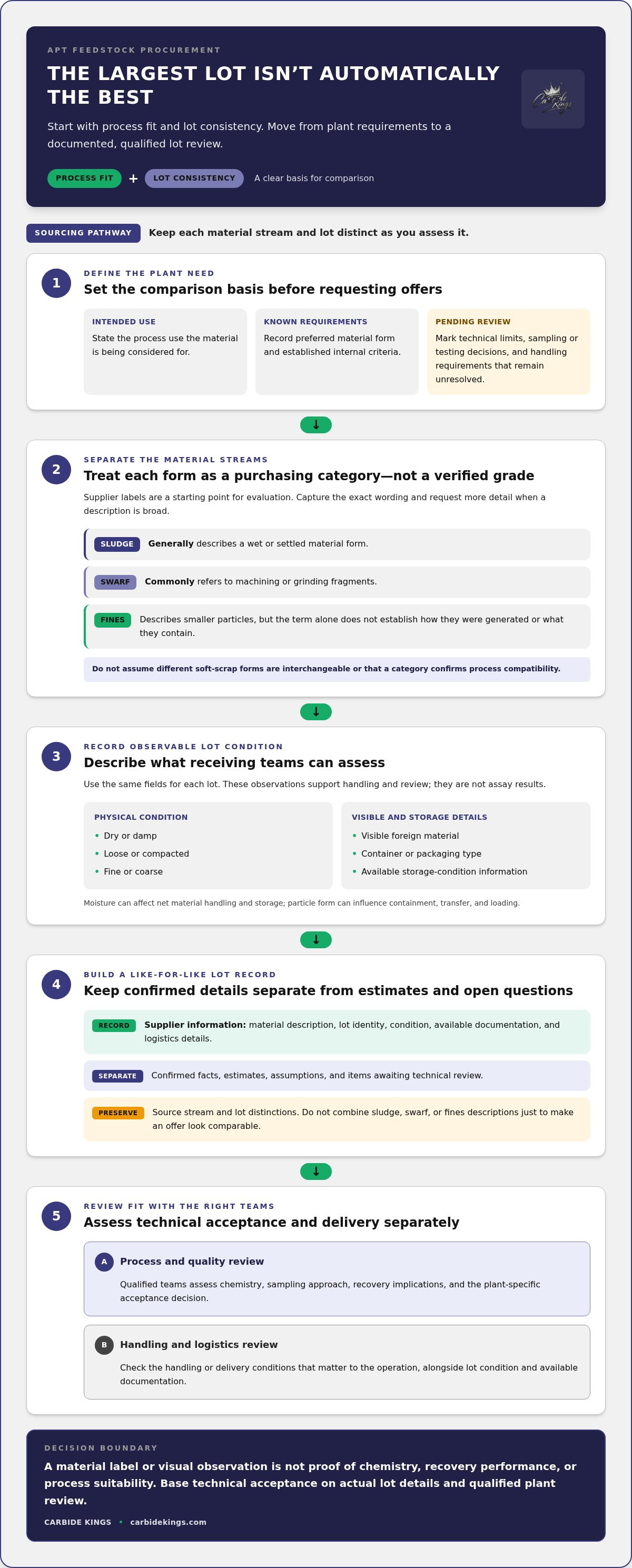
A practical qualification workflow for bulk APT feedstock procurement
A repeatable workflow keeps technical review, purchasing, and shipment planning aligned. It also creates a record for comparing repeat purchases and spotting changes between lots. Use these steps to move from initial requirements to receiving without treating a supplier description as a technical acceptance decision.
- Define the intended application. Document the planned use, preferred material form, internal acceptance criteria, and delivery requirements. Mark each item as essential, preferred, or still under review.
- Align material descriptions. Compare the supplier’s wording with your internal material categories. Resolve terminology differences before comparing offers, and keep unlike streams separate in purchasing records.
- Complete lot review. Gather available lot details and documentation through normal procurement communication. Route chemistry, recovery, and process-compatibility questions to your qualified process and quality teams, who make the technical acceptance decision.
- Plan shipment and receiving. Agree on delivery arrangements, packaging expectations, and receiving responsibilities. Give the receiving team the purchase and lot records to use when the material arrives.
- Record the outcome. Match the received material to its purchase record and supplier description. Log relevant condition details and deviations under your established quality procedures, then retain the review outcome for future comparisons.
What should happen before a bulk order is placed?
Before committing, document the intended application, material preferences, and delivery plan. Make clear which details are established requirements and which still need technical review. A terminology mismatch can make two offers look comparable even when they describe different material forms, so resolve those descriptions early.
Keep process decisions with the people responsible for them. Procurement can organize information and coordinate the sequence, while qualified technical staff assess whether a lot fits the operation. The industrial carbide scrap recycling process guide offers broader process context, but your own team must determine requirements for its feedstock route.
How can receiving teams preserve lot traceability?
At receipt, connect each shipment to its purchase record and the supplier’s lot description. Keep unlike streams and lots identifiable during storage and internal evaluation. If the delivered condition or documentation differs from the record, note the deviation through your established quality process. Follow your organization’s sampling procedures rather than assuming one universal method.
Consistent records make later purchases easier to assess. Compare each new lot with previous descriptions, receiving notes, and technical outcomes. Flag changes for review instead of assuming they are acceptable. This makes bulk tungsten soft scrap sourcing for ammonium paratungstate production a repeatable procurement process rather than a series of disconnected transactions. Explore bulk tungsten soft scrap sourcing with Carbide Kings.
Source bulk tungsten soft scrap through a clear procurement conversation
A focused sourcing discussion starts with the buyer’s needs, not a broad request for “tungsten scrap.” Before reaching out, bring together the intended use, preferred material stream, approximate purchasing scale, and delivery requirements. These details help align the conversation and make it easier to compare the material description with your procurement and technical review needs.
What information helps start a productive sourcing discussion?
Prepare a concise request with the information your team can share. Include your preferred form, such as sludge, swarf, or fines, and describe any receiving or handling constraints that matter. Share established acceptance criteria where appropriate. Keep sensitive process details within your organization unless they’re needed and approved for the discussion.
Separate firm requirements from open questions. Identify whether a material form is essential or preferred, and note which chemistry or recovery questions still need your technical team’s input. State the approximate lot scale you’re considering and the destination or delivery arrangements your procurement team needs to plan around. This gives the discussion a practical basis for bulk tungsten soft scrap sourcing for ammonium paratungstate production without assuming a particular assay, lot, shipping term, or timeline.
How does a sourcing partner support repeat purchasing?
Repeat purchasing works best when material descriptions and lot records stay consistent. Use the same categories and comparison fields from one purchase to the next, then record what your team learned during review and receiving. This creates a clearer history of the material streams considered and makes differences between lots easier to flag for evaluation.
Carbide Kings supplies industrial tungsten soft scrap to buyers across the United States, along with tungsten hard scrap, carbide scrap, and tungsten alloys. Carbide Kings maintains a consistent inventory. Clear communication about material descriptions and logistics helps keep procurement organized, while technical acceptance remains with your qualified process and quality teams.
Bring your material needs, lot expectations, and delivery requirements into one concise request. Then start a sourcing conversation with Carbide Kings about bulk tungsten soft scrap.
Build a More Confident Feedstock Procurement Plan
Strong APT feedstock procurement starts with clear lot descriptions and a disciplined review. Treat sludge, swarf, and fines as distinct material streams, then compare each lot’s condition, documentation, and logistics against your requirements. Keep technical acceptance decisions with your qualified process and quality teams.
A repeatable workflow makes offers easier to compare and helps your team track changes across purchases. That’s the practical foundation for bulk tungsten soft scrap sourcing for ammonium paratungstate production: clear requirements, organized lot records, and a defined path from sourcing discussion to receiving.
Carbide Kings is a U.S.-based supplier serving industrial buyers nationally, with tungsten soft scrap as a core offering and a consistent inventory. Bring your intended use, preferred material form, approximate purchasing scale, and delivery needs to the conversation. Discuss bulk tungsten soft-scrap sourcing with Carbide Kings and take the next step toward a clearer procurement process.
Frequently Asked Questions
Is tungsten soft scrap suitable for ammonium paratungstate production?
It can be a feedstock candidate, but suitability depends on the specific material stream, its composition and condition, and the buyer’s recovery process. “Soft scrap” describes a broad category, not one uniform specification. For bulk tungsten soft scrap sourcing for ammonium paratungstate production, compare available lot details with your plant’s acceptance criteria and have qualified process staff assess compatibility before making a purchasing decision.
What types of tungsten soft scrap can APT producers source in bulk?
Industrial soft scrap may be described as sludge, swarf, or fines. These are material-form labels, not guarantees of chemistry or process performance. Source, handling, and possible mixed content can vary by lot, even when labels sound similar. Keep each stream separately identified, capture the supplier’s description, and evaluate the details against your requirements rather than assuming all soft scrap is interchangeable.
How can I evaluate a bulk tungsten soft-scrap lot?
Record the material description, source information, lot identity, packaging, observed condition, and available documentation. Compare these details with your receiving plant’s acceptance criteria, and label estimates or assumptions clearly rather than treating them as confirmed facts. Refer composition and recovery questions to qualified technical staff. A consistent evaluation template helps procurement compare lots on the same basis and preserves useful records for future purchasing decisions.
What documentation should a tungsten soft scrap supplier provide?
Set documentation expectations around your procurement, receiving, traceability, and technical-review needs. Useful records may include a clear material description, lot identification, packaging details, and available supporting documents. Requirements can vary by operation and transaction, so don’t assume every lot includes an assay or other specific test result. Define what your team needs before comparing offers or arranging shipment, and track any requested information that remains pending.
Can tungsten grinding sludge be used as APT feedstock?
Grinding sludge may be considered as a feedstock candidate, but its suitability depends on its actual composition and condition, along with the producer’s recovery route. Moisture, oils, abrasives, or mixed material may affect handling or processing. The name “grinding sludge” alone doesn’t establish what a lot contains. Review its description and available documentation against your plant’s technical and acceptance requirements before deciding whether it fits.
How should buyers compare bulk tungsten soft-scrap offers?
Compare material descriptions, lot details, condition, available documentation, handling needs, delivery arrangements, and commercial terms together. Check each offer against your internal acceptance criteria, and separate documented facts from estimates or assumptions. Market information can help explain broader trends, but it can’t determine whether a particular lot suits your operation. Use one template for each supplier so your team can make consistent comparisons and keep decisions traceable.
What should a buyer prepare before sourcing tungsten soft scrap?
Define the intended application, preferred material forms, internal acceptance criteria, approximate purchasing scale, and receiving constraints. Identify what information your technical team needs to assess a lot, and note which requirements are established versus still under review. Then prepare a consistent set of questions for supplier discussions and record responses by lot. This gives procurement a practical basis for comparing material details and logistics side by side.


