
A small amount of hidden moisture can turn a tungsten soft-scrap charge into a molten-metal ejection hazard. Water contacting molten metal can expand to about 1,600 times its liquid volume as it becomes steam. Preventing catastrophic moisture steam explosions when charging tungsten soft scrap starts with keeping wet, washed, or coolant-contaminated chips out of the furnace until they’re dry.
Drying matters because liquid trapped between chips or carried in coolant can flash into steam under intense heat, forcing molten material outward. A surface glance may not reveal moisture inside a scrap load.
This article explains how moisture creates the danger, why washed and coolant-contaminated chips need drying, and which moisture controls matter before charging. It also covers covered storage, dry charging areas, and clear stop-work decisions. The goal is to make dryness a deliberate part of handling tungsten soft scrap.
Key Takeaways
- Even a small amount of trapped water can rapidly become steam on contact with molten metal, creating a serious ejection hazard.
- Washed or coolant-contaminated tungsten chips need thorough drying; a surface check alone may miss moisture held within the material.
- Keep scrap, furnace pits, floors, and tools dry, and treat suspected moisture as a reason to stop charging until the hazard is addressed.
- Build moisture controls into storage and charging practices, including rejecting sealed scrap that could trap liquid or pressure.
- Learn how drying, preheating, and inspection fit together to reduce moisture risks before scrap enters a furnace.
Moisture-related molten metal ejections and worker safety
Water in a scrap charge can flash into steam on contact with molten metal and eject the melt. Understanding how that expansion happens helps workers recognize moisture as a charging hazard.
Steam Explosions from Moisture Contact
A steam explosion can occur when water trapped in material contacts molten metal, vaporizes rapidly, and forces liquid metal outward. Water can expand to about 1,600 times its liquid volume as steam. In an unconstrained phase change, 1 gram of water, or 1 milliliter, produces approximately 1,671 milliliters of steam. In a furnace, that rapid expansion can drive a dangerous splash.
Steam Expansion and Worker Safety
Steam expansion can eject hot material beyond the furnace opening, exposing nearby workers to splashes and severe burns. Personal protective equipment is the last line of defense, not the primary moisture control. If moisture is suspected near molten metal, stop work and keep workers clear until the hazard is addressed under site procedures.
Water used to cool molten-material equipment can remain a hazard after the cooling task ends. In a fatal steel-plant accident, approximately 10 tons of molten steel entered an emergency ladle with water still at its bottom. The ladle held 40 tons and had been cooled with water two days earlier. The example shows why equipment history alone cannot establish that a surface or container is dry.
Molten-metal hazards can also arise in equipment that appears empty. Water inside sealed drums or containers can cause an explosion when the container enters an empty but hot furnace. The danger comes from trapped liquid heating rapidly, not just from visible water on scrap. Keep sealed containers out of furnaces and preheaters, and treat enclosed spaces as potential moisture traps.
Past events show the severity of an uncontrolled ejection. A steam explosion at the Carbide Industries electric arc furnace in Louisville, Kentucky, occurred in March 2011 and killed two employees. The molten calcium carbide was above 2,100°C. That event underscores why charging decisions must account for moisture, equipment condition, and worker exposure before material enters a hot furnace.
Use layered controls rather than relying on protective clothing alone. Before charging or pouring, inspect scrap, equipment, floors, and pits for possible liquid. Keep work areas dry, address leaks, and stop work if moisture is suspected near molten material. Never use water-based suppression on a molten-metal fire or spill, since water can increase the hazard.
Drying washed or coolant-contaminated chips
Washed tungsten chips can retain rinse water between curled pieces and inside compacted bundles. Coolant creates another challenge because it can cling to chip surfaces or collect in low spots. Drain the material first, then use a controlled drying process suited to the scrap and equipment. A dry-looking exterior does not show whether liquid remains inside the load.
Trace the material’s route before drying. Record whether it came from washing, machining with coolant, outdoor storage, or a process using water-based cooling. Each source can leave a different moisture pattern. Washed chips may retain rinse water, while coolant-contaminated chips may hold fluid in folds and pockets. Identifying these streams helps workers choose an appropriate drying process instead of treating every load alike.
Where the handling process allows, separate loose chips from clumps. Compact masses can restrict airflow and slow moisture removal, while a thin, evenly distributed layer gives drying equipment better access. Follow the dryer’s operating instructions and monitor temperature, airflow, feed rate, and the scrap’s moisture condition. The aim is to vaporize moisture without beginning to melt the metal.
Drying does not solve every liquid-contamination problem. Liquid inside sealed containers, cans, or closed tubing may remain inaccessible to heat and airflow. Drying and preheating systems cannot remove trapped oil in cans, so such materials must be shredded before use. Sealed material presents a separate hazard and should never enter a furnace or preheater. Keep it out of the scrap charge rather than assuming heat will make it safe.
Consider how water could reach a load after washing. Rain entering uncovered storage, wet floors, leaking equipment, and condensation on cooler scrap can reintroduce moisture after drying. For example, moving warm chips into a cool, damp area can cause condensation on the metal. Covered storage and drainage help protect dried material from these sources before charging.
Use a clear acceptance process for every batch. Inspect the load after drying, compare its condition with the facility’s moisture-content specification, and return material that fails to the drying system. Keep washed chips separate from dry scrap until they meet the required condition. If records show a new wash, coolant exposure, or wet storage, reassess the batch.
For tungsten soft scrap streams, keep the material identified through washing, drying, and storage. This makes it easier to distinguish clean chips from coolant-contaminated or re-wetted loads. Explore tungsten soft scrap as part of planning how your scrap stream is handled.
Why is Drying Wet Scrap Metal Necessary?
Drying removes moisture before scrap enters a hot furnace, while controlled preheating prepares material for charging. Both steps matter because moisture can remain beneath the surface even when scrap appears dry.
Preheating and Drying Methods
Preheating raises scrap’s core temperature, while drying drives off moisture before furnace charging. Guidance recommends preheating scrap and ingots until their core reaches 120°C or higher. Drying systems must control heat so moisture vaporizes without initiating metal melting. Monitor temperature, airflow, material feed rate, and moisture content during production.
Airflow carries vapor away from the material, while mechanical movement can expose surfaces that would otherwise remain shielded. For example, turning or agitating a load helps circulating air reach covered chip surfaces. Choose a method suited to the material’s size and form, since tightly packed scrap can restrict airflow and slow drying.
Drying Equipment for Scrap
Drying equipment uses heat and airflow to remove moisture before charging, and the choice of system depends on scrap form. A fluid bed dryer can move small, uniform pieces through heated air for even exposure across a loose load. A gas-fired drying tunnel can carry sheet metal through a heated zone, where controlled airflow reaches its broad surfaces.
Whatever the equipment, track the material’s condition rather than relying only on a fixed cycle. A rotary dryer can process up to 300 tons of scrap metal per hour, but throughput alone does not show whether a particular load meets its moisture specification. Scrap that fails the required moisture-content specification after drying goes through the system again.
Drying Pits and Ladles
Dry ladles, slag pits, and furnace pits before molten material enters or approaches them. Keep pits clean and dry, with no water or hydraulic fluid allowed to accumulate. Check low points and surfaces where liquid can collect, including areas near refractory linings and equipment cooling systems.
Water cooling can leave residual moisture even after a ladle or pit seems ready for production. Inspect the interior and surrounding floor before use, and address leaks before charging or pouring. Follow manufacturers’ instructions for preheating tools. Condensation on a cool tool can create splash hazards when it enters a ferrous melt.
Make drying part of the charging decision, not a separate production task. Record drying conditions and inspection results, then hold material that fails the specified moisture check. This connects preparation to the actual furnace charge and helps operators act before wet scrap reaches molten metal.
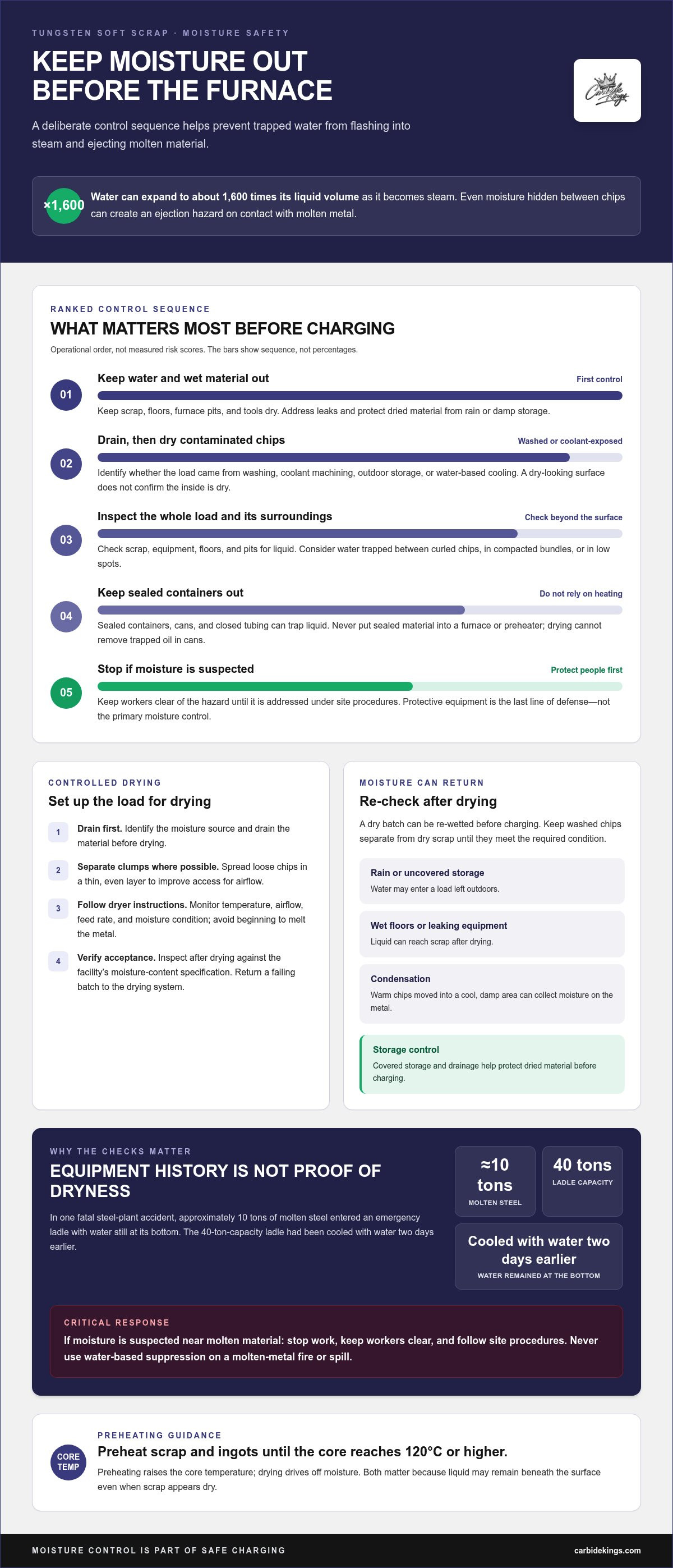
Steam explosion hazards when wet scrap enters a melting furnace
Wet scrap creates a dangerous expansion hazard when trapped liquid meets molten material. Furnace type changes charging conditions, but moisture control remains essential across melting operations.
Furnace Start-Up and Moisture Condensation
Condensation can collect on scrap and equipment during downtime, then become a hazard when furnace operations restart. Moisture can accumulate between melts, making the start of a workday or workweek, and periods after shutdown, important times for inspection. Check storage and charging areas before restarting, especially after temperature changes or exposure to damp conditions.
Controlled Furnace Charging
Controlled charging means introducing prepared material through a process that limits worker exposure and prevents suspect loads from entering the furnace. Use scrap-drying or preheating systems where suitable, and consider remote charging controls to separate workers from the furnace opening. Inspect the charge before feeding it. If moisture is suspected, stop work and keep the material out until the hazard is addressed.
Prevention Across Furnace Types
Induction, electric arc, and other furnaces differ in how they heat and receive scrap, but moisture exclusion applies to all of them. For U.S. operations, practical safeguards include eliminating moisture sources, rejecting sealed material, and stopping work when moisture is suspected, in line with applicable site OSHA and NFPA procedures. Do not assume one charging method suits every furnace or scrap form.
Induction furnaces present an additional bridging concern. If a melt takes longer than calculated and operators suspect a bridge, they should switch off power rather than increase it. Evacuate the melt deck and surrounding areas until the molten metal has had time to solidify. This response addresses the suspected bridge without adding energy to the furnace.
Wet Scrap Detection and Safeguards
No single visual check reliably identifies every moisture source. Combine inspection with covered storage, drainage, separation of wet and dry loads, and documented moisture-control procedures. Reject sealed scrap, including closed containers that could hold liquid. Drying or preheating equipment helps prepare suitable scrap, while controlled or remote charging can reduce worker exposure during furnace loading.
Build monitoring into the handoff from storage to charging. Record wet-material discoveries and stop-work events, then use the records to identify recurring sources such as leaks, condensation, or uncovered scrap. Inspect furnace floors and pits before pouring. If moisture is suspected near molten metal, stop the operation and keep workers clear while the hazard is resolved.
Moisture in scrap charges
Use the furnace operation’s defined moisture-content specification for tungsten scrap before charging. The research available here gives no universal numeric moisture limit; scrap that fails its specified moisture check after drying must go through the drying system again.
That rule matters because a load’s average condition can hide a wet pocket. Coolant may sit between curled machining chips, while wash water can remain in tightly packed material. A dry outer layer does not prove the center is dry. Assess the batch and its handling history rather than relying on one exposed piece. This is a practical starting point for preventing catastrophic moisture steam explosions when charging tungsten soft scrap.
Trace how each scrap charge was collected. Washing, coolant use, rain exposure, floor contact, and equipment leaks can introduce moisture at different stages. For example, a container stored outdoors may collect rain, while chips transferred from a wet machine can carry coolant into dry storage. Keep wet or suspect material separate from prepared scrap to prevent one batch from contaminating another.
Pay particular attention to trapped liquid. Hollow pieces, sealed containers, and closed tubing can hold water beyond the reach of visual inspection. Temperature changes can also cause condensation on scrap or storage surfaces. Reject sealed material from furnace and preheater charges. Heating does not remove the risk inside an enclosed space.
Keep a practical record for each batch: its source, washing or coolant exposure, storage conditions, drying outcome, and inspection result. If a load becomes wet again after drying, return it to preparation. These records help operators identify where moisture enters the process and what action followed. They also prevent a previous dryer pass from being treated as proof that the material is currently dry.
Storage controls protect the charge between preparation and melting. Use covered storage, provide drainage, separate wet material, and rotate stock first-in-first-out. These steps reduce opportunities for rain, standing water, or condensation to affect prepared scrap. Keep floors and charging areas clear of liquid, and address leaks before moving scrap through the area. Consistent controls support preventing catastrophic moisture steam explosions when charging tungsten soft scrap.
Aluminum foundries also dry washed chips before melting, illustrating that washing creates a preparation step, not a charge-ready condition. Tungsten scrap requires the same deliberate separation between cleaning and charging: identify exposure, dry the material, and confirm it meets the facility’s specification. The limit works only when workers apply it consistently to the whole charge.
For scrap planning, source tungsten soft scrap while keeping your moisture-control requirements clear for receiving and handling.
Use the furnace operation’s own moisture specification; there is no universal numeric threshold. Scrap that fails the moisture check must be dried again before charging.
Carbide Kings: Tungsten Hard Scrap
Carbide Kings supplies tungsten and carbide scrap materials for operations reviewing moisture controls. Its products include Tungsten Hard Scrap, Tungsten Soft Scrap, Carbide scrap, and Tungsten Alloys for industrial use.
If you’re sourcing tungsten soft scrap, align the material’s handling and drying requirements with your furnace preparation process. Clear scrap identification helps your team plan storage, inspection, and charging procedures around the material received. For hard scrap or other listed materials, choose the category that fits your production needs.
To discuss your scrap material needs, contact Carbide Kings.
Build Moisture Controls Into Your Next Scrap Decision
Make moisture control part of how your team plans each scrap stream, not just a response at the furnace. Assign clear responsibility for receiving, storage, preparation, and charge release. When a process or material source changes, review the impact on handling procedures. This keeps decisions consistent across shifts and helps workers act promptly when a load’s condition is uncertain.
A disciplined approach to preventing catastrophic moisture steam explosions when charging tungsten soft scrap also depends on choosing material that fits your production needs. Carbide Kings supplies Tungsten Hard Scrap, Tungsten Soft Scrap, and Carbide scrap. Use these categories to frame your sourcing needs alongside your facility’s preparation and moisture-control requirements.
Take the next step by aligning your scrap requirements with your operating process. Contact Carbide Kings about scrap to discuss the material categories your operation needs. A clear plan helps your team move forward with confidence.
Frequently Asked Questions
How does moisture in tungsten soft scrap cause steam explosions during furnace charging?
Moisture trapped in chips can vaporize rapidly when scrap reaches molten metal, creating expanding steam that can eject hot material. The risk depends on where liquid is held, how quickly it heats, and whether it has room to escape. A compact bundle or curled chip can conceal moisture that a surface glance misses, so both the charge’s condition and its handling history matter.
How should tungsten soft scrap be dried and verified moisture-free before furnace charging?
Drain washed or coolant-contaminated chips, then dry them using a controlled process suited to their form. Monitor drying conditions and assess moisture against the facility’s charge specification. If the batch fails that specification, send it through the drying system again. Keep it separate from wet material afterward. Visual inspection can support the check, but should not be the only basis for accepting a batch.
What furnace charging procedures reduce steam explosion risk from tungsten scrap?
Before charging, confirm the material has passed the facility’s preparation checks and has not been exposed to water during staging. Keep sealed or hollow containers out of the charge, and use controlled or remote charging where the system supports it. For an induction furnace, suspected bridging calls for switching off power, not increasing it. Clear the melt deck and nearby areas until the molten material solidifies.
What are the warning signs of moisture-contaminated tungsten scrap and what should operators do?
Visible droplets, damp surfaces, coolant residue, recent washing, rain exposure, or storage beside a leak can signal possible moisture. None proves the inside of a load is dry. If operators find wet material or suspect trapped liquid, they should stop charging, isolate the affected batch, and follow site procedures before resuming. Record the discovery so the source can be addressed.
How should tungsten soft scrap be stored and handled to prevent rain, condensation, or liquid contamination?
Store prepared scrap under cover, allow drainage, and keep it separate from wet or coolant-bearing material. For example, do not put washed chips in the same bin as dry, charge-ready scrap. Use first-in-first-out handling, and protect loads from rain while moving them between storage and preparation. After temperature changes or downtime, reassess exposed material because condensation can form on scrap and storage surfaces.
What incident reports describe steam explosions involving wet tungsten or other metal scrap?
Documented examples include incidents involving other molten metals, illustrating the broader hazard. In an aluminum-casting accident, rainwater inside an ingot case contacted molten aluminum at approximately 750°C. About 50 kg of aluminum scattered, and the worker suffered burns over more than 90% of their body. The example shows how water inside a container can remain hidden until charging or pouring brings it into contact with molten metal.


