
A swarf burn-off oven removes oils, coolants, lubricants, and other organic contaminants by heating swarf in a controlled environment and thermally oxidizing the residues. When handling volatile organic contamination on incoming tungsten grinding swarf, first understand how the contamination affects the material, then choose a suitable cleaning approach. Cleaner swarf may be easier to handle and can perform better during briquetting and remelting.
Oil and coolant residue can do more than make a load messy. It can complicate storage and transport, affect scrap value, and carry unwanted material into later processing. This article explains what burn-off ovens do, how controlled heating compares with other cleaning methods, and why contamination matters for tungsten swarf. It also covers how cleanliness can influence handling, briquette quality, remelting, and material recovery value.
Key Takeaways
- Identify oils, coolants, lubricants, and machining residues on incoming swarf before deciding how to manage it.
- Separate tungsten material from aluminum and steel to help protect scrap purity and recyclability.
- Understand how centrifugation removes liquid and how controlled heating can address organic residues.
- Cleaner swarf can be easier to handle and may improve briquetting and remelting performance.
- Keep material type and condition clear when assessing tungsten scrap for recovery or sale.
Why is Metal Swarf Cleaning Important?
Cleaning separates recoverable metal from process fluids and organic residues that complicate handling. For tungsten grinding swarf, the right approach depends on the residue, the material’s condition, and its intended recycling route.
Organic Machining Residues on Swarf
Swarf is the fine particles or chips produced by machining, grinding, sawing, and cutting metal. Cutting oils, coolants, lubricants, and other machining residues can coat or mix with those particles, affecting storage, transport, and recycling. Grinding creates especially fine, dust-like material, so keep each metal stream separate and identify the fluids used in the process.
In the United States, the U.S. Environmental Protection Agency says classification under the Resource Conservation and Recovery Act (RCRA) helps determine whether material is hazardous waste or a recyclable resource. Assess the swarf’s contents and applicable waste requirements before assigning its status; state rules can also matter.
Thermal and Solvent Cleaning Methods
A swarf burn-off oven heats material in a controlled environment, thermally oxidizing oils, coolants, lubricants, and other organic compounds on metal surfaces. This can suit heavily contaminated material, but the right cleaning method depends on the residue and the metal’s recycling process. Vacuum solvent cleaning machines can also remove oils, coolants, and lubricants from swarf.
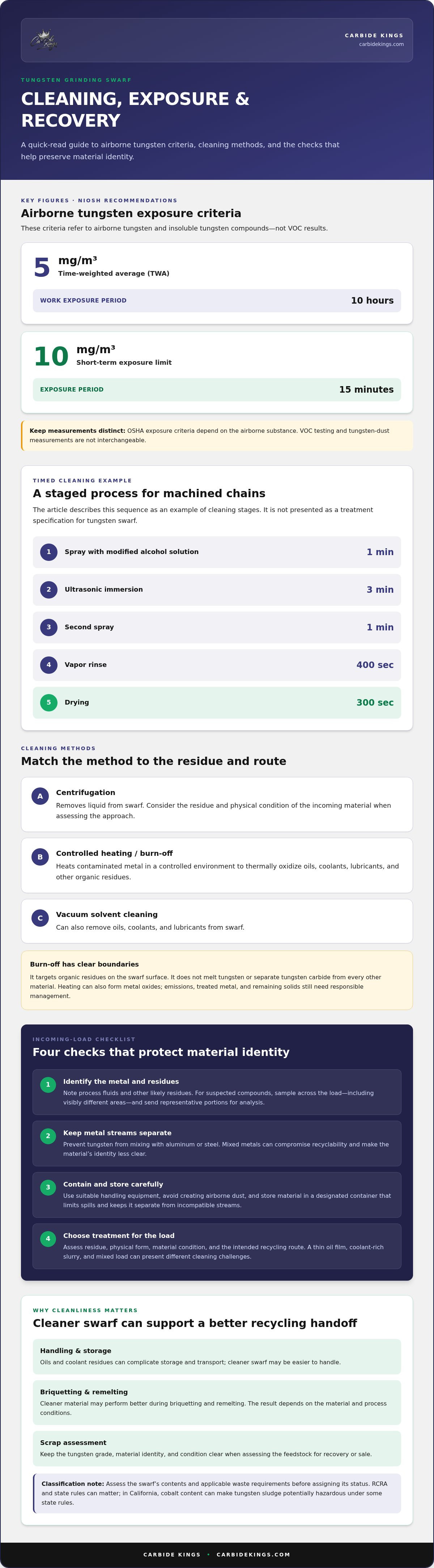
Machined chains illustrate how cleaning stages remove oil and debris: one described process uses a one-minute spray with modified alcohol solution, three minutes of ultrasonic immersion, a second one-minute spray, a 400-second vapor rinse, and 300 seconds of drying. For tungsten swarf, select treatment around the material and contamination, then route recovered metal for appropriate recycling.
Identifying and Testing VOC Contamination
Incoming swarf may carry organic residues from cutting fluids, lubricants, or machining. Swarf from coated metals or composites may also contain paint, primers, or galvanizing-agent residues. Sample across the load, including visibly different areas, and send representative portions for analysis of suspected compounds. Record the process and fluid information alongside the results.
OSHA exposure criteria depend on the airborne substance, so distinguish VOC results from tungsten-dust measurements. NIOSH recommends that airborne tungsten and insoluble tungsten compounds not exceed a 5 mg/m3 time-weighted average over a 10-hour work exposure, or a 10 mg/m3 short-term exposure limit over 15 minutes.
Safe Receipt and Storage
When the load arrives, keep it contained, identify the metal and known process residues, and prevent mixing with aluminum or steel. Use suitable handling equipment and avoid creating airborne dust while unloading. Store the material in a designated container that limits spills and keeps it separate from incompatible process streams.
In California, cobalt content can make tungsten sludge potentially hazardous under some state rules, including rules covering material that is not hazardous under RCRA. VOC vapors and oily residues also call for controls against ignition and exposure. Keep contaminated swarf away from ignition sources and incompatible materials, and follow the facility’s waste-handling procedures.
Controlled heating and thermal oxidation
A swarf burn-off oven heats contaminated metal in a controlled environment to thermally oxidize oils and other organic compounds. This can reduce residue on the metal before recycling, but it does not remove the need to manage emissions and remaining material responsibly.
During burn-off, heat acts on organic films left by cutting fluids, lubricants, and machining oils. The process targets residues on the swarf surface; it does not melt tungsten or separate tungsten carbide from every other material. This distinction matters when selecting treatment for tungsten grinding fines. The intended recycling route and the incoming load’s composition both help determine whether thermal cleaning is suitable.
Thermal treatment can be useful for heavily contaminated swarf, difficult-to-clean alloys, or material where residual oil could interfere with recycling. A practical evaluation starts by identifying the metal and contamination, then assessing whether the planned heating process can remove organic residue without compromising material recovery. Keep swarf from different metals segregated. Tungsten mixed with steel or aluminum can compromise recyclability, so preserve the material’s identity before treatment.
Heating also changes the material’s chemistry. Metal swarf can oxidize and form metal oxides, which may be hazardous. Treat burn-off as more than a simple drying step: account for the residue being oxidized, the treated metal, and any remaining solids. The oven’s controlled environment is central to the method, while appropriate exhaust and residue controls support responsible environmental management. Keep treatment records tied to each material stream so the cleaned output retains its identity during handling.
Burn-off is not automatically the best option for every incoming load. A thin oil film, a coolant-rich slurry, and a mixed load each present different cleaning challenges. Compare the contamination and physical form with the intended recycling process before choosing thermal treatment. If residual organics are likely to affect later melting or briquetting, cleaning may improve feedstock consistency, though the result depends on the material and process conditions.
After treatment, keep the output separate from untreated swarf and identify any remaining residues before storage or disposal. This final separation helps prevent cleaned material from being contaminated again and supports clearer recycling decisions. For a tungsten stream intended for reuse as scrap, keeping its grade and material identity clear also helps buyers assess the feedstock; see tungsten hard scrap options.
Centrifugation and thermal de-oiling
Centrifugation uses rotational force to separate denser swarf particles from liquid. In tungsten grinding slurry, it can collect metal-rich solids while separating oil, coolant, or other process liquids. It is a physical separation step, not a complete cleaning process: liquid can remain with the solids, and contaminants may still coat fine particles. This distinction helps facilities choose the next treatment based on the recovered material’s condition.
One tungsten sludge reclamation process begins with centrifugation and thermal de-oiling to remove liquids. The sequence matters because separating free liquid first leaves less for the later heating stage to address. The centrifuge concentrates solids; thermal de-oiling then targets remaining liquid and organic residues. This combination can prepare material for further recovery, but it does not establish the composition or purity of the resulting tungsten-bearing solids.
Assess the incoming slurry before processing. Record its source, the machining fluids used, and visible differences between batches. A coolant-rich load and sludge with mostly adhered oil may behave differently in a centrifuge. Keep tungsten streams separate from steel and aluminum, since mixing these materials can compromise recyclability. Clear identification also helps connect process observations to the right material and recovery route.
Centrifuge performance depends on the feed’s liquid content, particle size, and density. Fine grinding particles may separate differently from coarse swarf, while oil and solids can travel together in a slurry. Capture and review the separated liquid and solid fractions rather than assuming the centrifuge output is uniformly clean. This gives operators a practical basis for deciding whether additional de-oiling or another cleaning stage is needed.
Thermal de-oiling uses heat to remove liquid and organic residue from separated solids. Control the process for the metal stream and contaminants; assumptions about temperature or treatment time can risk oxidation or affect recovery. Metal swarf can oxidize and form metal oxides, so handle the treated material and resulting residues appropriately. Heating is a process choice, not a substitute for identifying the load or managing its waste status.
Material trials can assess burn-off performance, oil removal, recovery potential, throughput expectations, equipment suitability, and process configuration. These factors matter across aerospace, automotive, precision engineering, and metal recycling, where swarf composition and production methods vary. Compare trial results for the actual tungsten-bearing feed, then use them to guide process selection. If cleaning solvent is used, evaporated solvent can be condensed and reused, reducing waste and environmental impact.
Effects of contaminated swarf on scrap value and handling
Contamination affects how tungsten swarf moves from the production floor to recovery or disposal. Its practical impact depends on the residue, the amount of recoverable metal, and the next processing step.
Contamination and Scrap Value
Contaminated swarf can reduce scrap value because the load includes unwanted fluids alongside recoverable metal. A drum containing oil, coolant, and tungsten particles may need extra handling or treatment before recycling. Those residues also add material that cannot be recovered as metal, making the load’s usable content harder to assess.
Residue can affect downstream processing, too. Cleaner swarf generally produces briquettes with improved density and reduced contamination. During remelting, oils and other unwanted material can contaminate the melt. Foundries and metal processors often prefer cleaner feedstock because it reduces contamination during melting. The value decision therefore depends on material condition and the recovery route, not just tungsten content.
When handling volatile organic contamination on incoming tungsten grinding swarf, keep batch identity and contamination observations together. Record the source process, visible fluid residue, and any separation or cleaning already completed. These details help distinguish a consistent tungsten stream from a mixed or poorly documented load. They also help determine whether additional preparation is likely to support recovery.
Handling Contaminated Swarf
Oil-coated swarf can complicate storage and movement before processing. Leaking liquid can soil containers and work areas, while wet material may transfer less cleanly between equipment. Swarf can be sharp and may contain hazardous substances, so control contact and prevent particles from spreading during handling.
Keep tungsten carbide swarf separate from aluminum and steel. Mixing these materials can compromise recyclability, while clear separation preserves each stream’s identity during storage and transport. Use designated containers, contain loose particles, and keep drained liquid apart from solids. When handling volatile organic contamination on incoming tungsten grinding swarf, this separation also helps prevent unknown residues from spreading to cleaner material.
Assess the load before selecting its next route. Note visible oil, coolant, and foreign material, then compare the contents with the recorded metal type and source. Drum density can offer a practical clue because denser drums typically indicate higher metal content, but density alone does not establish purity. Check for mixed metals and residues as well.
Connect preparation to the next process. If oil interferes with briquetting, cleaning may help produce more consistent feed. If residue threatens remelting quality, cleaner feedstock can reduce contamination during melting. Keep recovered liquid, solids, and material intended for disposal distinct, with records attached to the corresponding load. This makes the material easier to evaluate and grounds the recovery decision in its actual condition.
What volatile organic compounds are commonly found on incoming tungsten grinding swarf?
Incoming tungsten grinding swarf can carry organic residues from machining fluids, including petroleum-based oils, lubricants, and coolants. Some metalworking fluids may also contain chlorinated paraffins or biocides. The exact residue depends on the process and products used. These substances are not all volatile organic compounds, so treating every oily deposit as a VOC can lead to inaccurate handling decisions.
Review the swarf’s production history to identify likely contamination. For example, grinding with an oil-based fluid creates a different residue profile from grinding with a water-based coolant. Swarf from coated metals or composites may also carry paint, primer, or galvanizing-agent residues. These coatings add possible contaminants beyond the grinding fluid, so keep production streams and process-fluid records tied to each incoming load.
Odor and appearance can flag a concern, but they do not identify a compound. A solvent-like smell, visible oil film, or damp clumping may prompt further assessment, but none proves which chemical is present. Separate suspected material from clean tungsten swarf, record its source and machining fluid, and use representative laboratory testing to identify relevant compounds. Select tests based on the suspected residue and the decision the results need to support.
Distinguish VOC testing from assessment of total oil or coolant contamination. Testing for specific volatile compounds answers a different question from measuring residual oil on particles. For example, a load may show oily residue without identifying a particular VOC, or testing may detect a compound that is not visible. Pair analytical results with process information before choosing cleaning, storage, or recycling steps.
Review the safety data sheets for fluids used in the grinding operation, then compare their listed ingredients with test findings. Track changes when the facility switches coolant, lubricant, or coating process. This gives receiving teams a practical basis for recognizing unexpected residues and directing questionable batches for further evaluation. Keep tungsten swarf separate from aluminum and steel, since mixed metals can compromise recyclability.
Clear identification helps keep the material stream useful. If you’re assessing tungsten-bearing scrap for recovery, explore tungsten scrap options alongside the contamination and material records.
Interpret residue findings alongside the limits of available tungsten health benchmarks. The EPA had not established a federal drinking water standard for tungsten or derived a chronic inhalation reference concentration or chronic oral reference dose for tungsten or its compounds. That absence does not identify whether a swarf residue is volatile or replace compound-specific testing. A broad tungsten result does not show whether an organic contaminant is present.
Swarf burn-off technology is used in aerospace manufacturing, automotive production, defence engineering, nuclear manufacturing, medical engineering, precision engineering, metal recycling facilities, foundries and smelters, and superalloy processing operations. Confirm the material and residue profile before selecting a process for an incoming load. Ammonium paratungstate (APT) is a tungsten commodity produced by converting sodium tungstate. Identifying it describes a tungsten product, not whether a particular swarf load carries a VOC. Assess volatile residues based on the actual process fluids and analytical findings, not assumptions about the tungsten commodity or recovery technology.
Carbide Kings: Tungsten Hard Scrap
Carbide Kings is a natural next step when you’re ready to source tungsten scrap for industrial use. Once incoming material is identified and separated from contaminated process residues, match the material type to your purchasing needs. Carbide Kings offers Tungsten Hard Scrap, Tungsten Soft Scrap, Carbide scrap, and Tungsten Alloys.
For a production requirement involving solid tungsten material, explore Tungsten Hard Scrap. For other tungsten-bearing feedstock needs, consider the relevant scrap or alloy category. Clear material identification helps align your selection with your manufacturing or metallurgical application.
Contact Carbide Kings to discuss tungsten scrap for your operation.
Put Your Tungsten Scrap Stream to Work
Make the next step a clear material decision. Keep batch identity, process history, and intended use together so your team can distinguish a recoverable tungsten stream from fluids or residues that need separate management. Consistent records also help purchasing and production teams discuss material requirements using the same terms.
Carbide Kings offers Tungsten Hard Scrap, Tungsten Soft Scrap, and Carbide scrap. If your operation is reviewing its tungsten material needs alongside its approach to handling volatile organic contamination on incoming tungsten grinding swarf, match the scrap category to the application and material you need.
Move forward with a focused conversation about your tungsten scrap requirements. Contact Carbide Kings about tungsten scrap and take the next step with confidence.
Frequently Asked Questions
What is a Burn Off Oven?
A burn-off oven heats contaminated metal swarf in a controlled environment to oxidize oils and other organic residues. Unlike a standard drying oven, its goal is to break down organic contamination, not simply evaporate moisture. For tungsten-bearing material, identify the feed and plan for the treated solids and any resulting residues before selecting this process.
How do disposal and recycling options compare for VOC-contaminated tungsten grinding swarf?
Recycling recovers tungsten-bearing material when the stream can enter a legitimate recovery process; disposal manages material that cannot be recycled appropriately. According to the U.S. Environmental Protection Agency, the Resource Conservation and Recovery Act (RCRA) helps determine whether material is hazardous waste or recyclable. Legitimate recycling requires real recovery, proper containment and documentation, and avoiding indefinite stockpiling. The material’s composition and applicable waste classification guide the route.
What OSHA and EPA rules apply to VOC-contaminated tungsten grinding swarf in the United States?
Assess the swarf’s contents and RCRA classification to determine whether it is hazardous waste or a recyclable resource; applicable state rules can also matter. Keep VOC-contaminated material contained and follow facility waste-handling procedures.
What worker exposure limits and monitoring requirements apply to VOCs in metalworking swarf?
Sample across the load, including visibly different areas, and analyze representative portions for suspected compounds. OSHA exposure criteria depend on the airborne substance, so distinguish VOC results from tungsten-dust measurements; the article gives tungsten limits, not VOC-specific limits.
What state and local requirements apply to storing and disposing of VOC-contaminated tungsten swarf?
RCRA classification helps determine whether the material is hazardous waste or recyclable, and state rules may also apply. In California, cobalt content can make tungsten sludge potentially hazardous under some rules. Store it in a designated container, prevent spills and mixing, keep it away from ignition sources, and follow facility waste-handling procedures.


