

A tungsten-bearing lot isn’t qualified revert just because it’s labeled scrap. For secondary tungsten metal revert procurement for vacuum arc remelting, the key question is whether each lot fits your melt route, chemistry limits, and contamination controls. A mismatch can delay a lot before it reaches the process.
Buyers need to distinguish potential feedstock from material that has passed process-specific qualification. Tungsten hard scrap, soft scrap, carbide scrap, and tungsten alloys are different sourcing categories, not interchangeable guarantees of VAR suitability. Before requesting material, define your acceptance criteria and the evidence your team needs to review.
This guide explains how to assess feedstock form, lot-to-lot variability, supplier documentation, and procurement risks before committing to a purchase. Use the framework to compare material consistently, align qualification with melt requirements, and make lot reviews easier to manage, whether you’re evaluating a new source or planning your next tungsten-bearing material purchase.
Key Takeaways
- Define melt requirements and acceptance criteria before requesting material, so candidates are assessed against the intended process.
- Compare metallic tungsten, alloys, hard scrap, soft scrap, and carbide scrap by form, condition, composition, processing needs, and available records.
- Use a consistent lot-review checklist to assess material identity, declared chemistry, traceability, and qualification evidence.
- Keep technical approval separate from commercial negotiation. Price alone cannot establish whether a lot is suitable.
- Apply a process-specific framework to secondary tungsten metal revert procurement for vacuum arc remelting, treating scrap categories as potential feedstocks rather than automatically qualified revert.
What Secondary Tungsten Revert Procurement Means for a VAR Melt
Secondary tungsten revert is reclaimed tungsten-bearing material intended for reuse in production after the required processing and qualification. The word intended matters: scrap may be a possible feedstock, but it becomes acceptable revert only when it meets the requirements for a defined production route and application. For secondary tungsten metal revert procurement for vacuum arc remelting, this distinction prevents a material label from being mistaken for technical approval.
Material identity alone does not establish melt suitability. Review a lot’s form, condition, composition, processing history, and fit with the buyer’s acceptance criteria. Sampling, testing, and documentation requirements can vary by buyer and end use.
How revert differs from scrap feedstock
Scrap describes a material’s source or form. Revert describes its intended return to a production route. Tungsten hard scrap, soft scrap, carbide scrap, and tungsten alloys may all be considered as potential secondary feedstocks, but they are not interchangeable. For example, carbide scrap is different from metallic tungsten, and the processing route for preparing each material for reuse may differ.
Before treating a candidate lot as revert, define the evidence required for acceptance. Depending on the application, that may include material identification, a chemistry declaration or test data, and details about condition or processing. A supplier’s description can help identify a candidate, but it does not replace the buyer’s qualification requirements.
Where vacuum arc remelting fits in procurement
Vacuum arc remelting is a controlled remelting process in which an electric arc melts a consumable electrode under vacuum, producing a solidified ingot. The Vacuum Arc Remelting (VAR) process overview provides general context on the route and its applications. It does not establish approval of any specific tungsten-bearing lot.
Start by confirming tungsten’s role in the intended electrode and final product. Is it a required constituent, part of an alloy input, or outside the approved feed plan? The answer depends on the process design and product requirements. A material category alone cannot resolve that question.
Keep the decisions separate. First determine whether the feedstock can be processed and qualified for the planned melt, then assess the commercial terms. This makes procurement more consistent and prevents a candidate lot from being treated as approved before the technical review is complete.
Match Tungsten Feedstock to VAR Process and Product Requirements
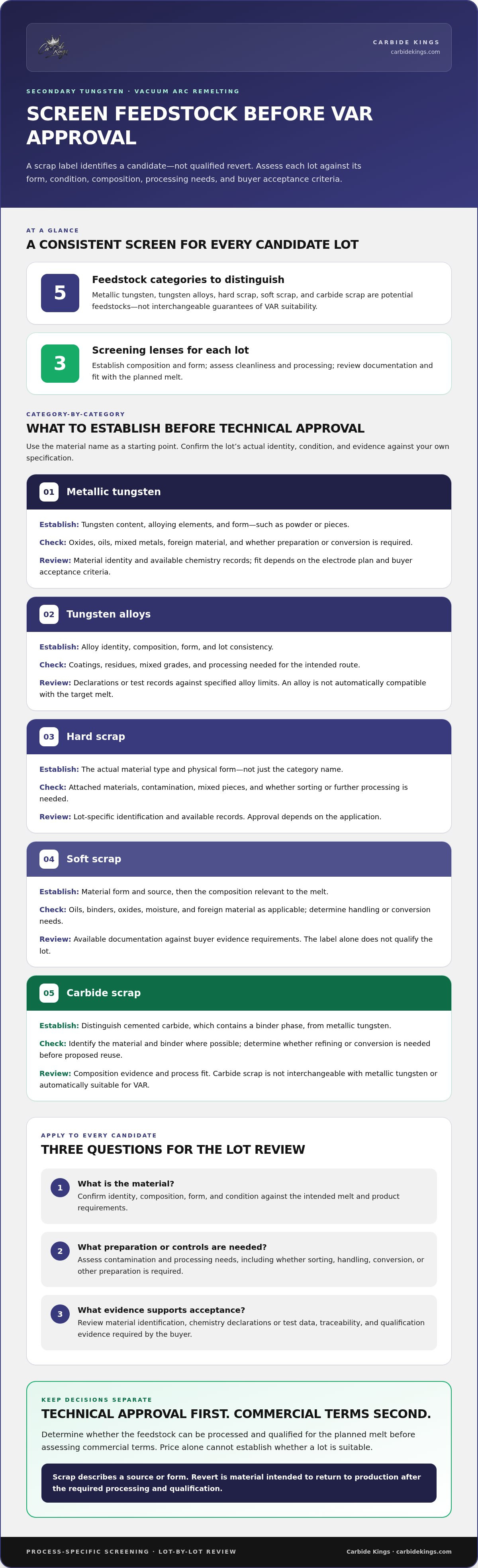
Compare candidate feedstocks against the melt plan, not just the material name. The table is a screening tool: it shows what to establish before technical approval, not which category is automatically ready for a VAR electrode. The USGS information on tungsten recycling and supply offers broader context. Your purchase specification must define the requirements for a particular lot.
| Feedstock category | Composition and form to establish | Cleanliness and processing questions | Documentation and VAR fit |
|---|---|---|---|
| Metallic tungsten | Confirm tungsten content, any alloying elements, and whether the material is powder, pieces, or another defined form. | Check for oxides, oils, mixed metals, and foreign material. Determine whether preparation or conversion is required. | Review material identity and available chemistry records. Suitability depends on the electrode plan and buyer acceptance criteria. |
| Tungsten alloys | Identify the alloy and establish its composition, form, and lot consistency. | Assess coatings, residues, mixed grades, and any processing needed for the intended route. | Compare available declarations or test records with the specified alloy limits. Don’t assume an alloy is compatible with the target melt. |
| Hard scrap | Define the actual material type and physical form rather than relying on the category name alone. | Inspect for attached materials, contamination, and mixed pieces. Establish whether sorting or further processing is needed. | Request lot-specific identification and records where available. Approval depends on the application. |
| Soft scrap | Describe the material’s form and source, then establish the composition relevant to the melt. | Evaluate oils, binders, oxides, moisture, and foreign material as applicable. Determine handling or conversion needs. | Match available documentation to the buyer’s evidence requirements. The label alone does not qualify the lot. |
| Carbide scrap | Distinguish cemented carbide, which contains a binder phase, from metallic tungsten. | Identify the material and binder where possible. Determine whether refining or conversion is needed before any proposed reuse. | Review composition evidence and process fit. Carbide scrap is not interchangeable with metallic tungsten or automatically suitable for VAR. |
Evaluate composition, form, and contamination risk
Set alloy chemistry and contamination limits in the buyer’s specification. State the required tungsten content and permitted alloying elements in the purchase criteria. Define how the lot’s form and condition will be checked, including whether the process requires a particular particle, piece, or consolidated form. Avoid adding limits based on assumptions.
Confirm the material’s role in the melt route
Before advancing a candidate, establish whether it is intended for direct electrode preparation or further refining and conversion. Specify the required form when the process requirements define it. Flag unresolved assumptions for the melt-process and materials teams. This keeps secondary tungsten metal revert procurement for vacuum arc remelting tied to a documented technical decision.
Industrial buyers evaluating potential tungsten-bearing feedstocks can explore tungsten scrap and alloy sourcing as part of a specification-led procurement plan.
Compare Lots Using Chemistry, Traceability, and Qualification Evidence
Secondary material is not inherently unsuitable for a controlled melt route. The decision depends on whether a specific lot meets the application’s requirements and whether the evidence supports that decision. For secondary tungsten metal revert procurement for vacuum arc remelting, a consistent lot-review record helps distinguish a promising feedstock from material that has passed acceptance.
What to request with a procurement inquiry
Request details that identify the candidate lot and show what is known about it. Records vary by material and supplier, so state what your review requires rather than assuming every lot comes with the same documentation.
- Material identity: category, described source, and any known material or alloy designation.
- Lot boundaries: what material is included, how the lot is separated, and how containers or packages are identified.
- Form and condition: physical form, visible condition, and known handling or processing details relevant to your process.
- Available chemistry records: declared composition, analysis documentation, or other records supplied for that lot, with the scope and sample identification stated where available.
- Packaging and handling: identification, segregation, and handling needs that help preserve lot identity through receipt and review.
Clear lot boundaries matter. If separate materials are combined or identification is lost during handling, it becomes harder to establish that a document or test result represents the material under review.
Understand what the records establish
A supplier declaration states information provided by the supplier, such as a material description or declared chemistry. A test report records results for a tested sample. Read it in context by checking the sample identity, reported method or scope, and connection to the lot. Neither automatically constitutes buyer-required acceptance evidence. The buyer defines which records, sampling, and results are sufficient for the intended application.
Set acceptance criteria before approving a lot
Work with engineering and the melt-process team to define chemistry limits, prohibited contaminants, sampling approach, required documentation, and how to handle results outside expectations. Don’t prescribe a generic testing standard if the purchase specification or application has not established one. Decide before purchase how the team will manage conditional acceptance, request additional evaluation, or reject a lot.
Close the loop with traceable records. Link the lot identification to the documents reviewed, inspection or test results, disposition decision, and eventual melt status. That history makes future comparisons more consistent and keeps technical approval distinct from commercial negotiation.
Build a Practical Procurement and Qualification Workflow
A written sequence keeps technical review, purchasing, and receiving aligned. For secondary tungsten metal revert procurement for vacuum arc remelting, move each candidate through the same decision points before authorizing a lot for production.
From specification to supplier inquiry
Prepare one inquiry that summarizes the intended application, required chemistry, preferred form, and acceptance evidence. Request lot-specific information and distinguish supplier declarations from test results. Compare each potential material category against the same requirements to keep the review consistent.
Use a defined sequence
- Define the melt need. Document tungsten’s intended role, applicable chemistry limits, material form, and the evidence engineering requires.
- Issue a consistent inquiry. Share those requirements and request the candidate lot’s identity, form, condition, available records, and lot boundaries.
- Complete technical review. Have the appropriate materials and melt-process personnel assess process fit, information gaps, and any further sampling or testing needed.
- Negotiate commercial terms separately. Evaluate price and other purchasing terms only after the material has a clear technical disposition. A lower price cannot replace qualification or override an unmet requirement.
- Plan shipment and receiving. Specify packaging, transportation handling, lot labels, and segregation needs in the purchase documentation. At receipt, compare identification and packaging condition with the records, then follow the buyer’s established inspection and testing steps.
- Record the decision before production. Document whether the lot is accepted, conditionally accepted with defined next steps, or rejected. Keep it segregated until its disposition is complete.
Receiving, segregation, and disposition
Make traceability part of the workflow, not an afterthought. Link the purchase and lot identifiers to the records reviewed, receiving inspection, sampling or test results, approval decision, and final melt disposition. This creates a clear record of what entered the process and why it was accepted.
Close the loop after processing. Track yield, rejected material, preparation or conversion requirements, and melt outcomes. Over time, this information helps buyers compare sourcing options using operational experience as well as paperwork, while keeping future decisions tied to the relevant specifications.
For industrial sourcing discussions, review tungsten scrap and alloy options alongside your qualification requirements.
Source Tungsten Scrap for a Qualified Secondary-Material Program
A sound sourcing decision starts with two separate questions: which material category fits your process, and what evidence is needed to approve the specific lot? Carbide Kings supplies industrial buyers with tungsten hard scrap, tungsten soft scrap, carbide scrap, and tungsten alloys. These are potential secondary feedstocks, not a blanket claim of certified or finished VAR revert. Suitability depends on your written specification and qualification workflow.
Choose a source category that matches the qualification plan
Keep the categories distinct during review. Hard scrap, soft scrap, carbide scrap, and tungsten alloys can differ in composition, physical condition, contamination risks, and downstream processing needs. Material within the same category can also vary by lot. Use your specification to guide the inquiry, then assess the available information against the intended application.
For broader context on recovery pathways, consult the published guide to the tungsten carbide recycling process. That background can help frame material recovery, but it does not replace technical review of a particular feedstock lot or establish its suitability for a melt route.
Move from material inquiry to a documented decision
Before reaching out, organize the information that will make sourcing more efficient:
- Intended use and the material’s proposed role in the process.
- Required chemistry, preferred form, and any relevant condition requirements.
- Lot-specific documentation needed for review, such as material identification or available chemistry records.
- Sampling, testing, receiving, and acceptance steps in your qualification workflow.
Keep technical fit separate from market valuation. A price discussion can support a purchasing decision, but it cannot establish chemistry, process compatibility, or acceptance. Use the published tungsten carbide scrap price guide for market-valuation context, then make the technical decision against your own requirements.
For secondary tungsten metal revert procurement for vacuum arc remelting, clear criteria help focus the conversation on the right material category and the information needed to review it. Qualified industrial buyers can discuss tungsten material sourcing with Carbide Kings and include their specifications in the inquiry.
Make Your Next Tungsten Sourcing Decision With Confidence
Strong procurement starts before a lot is purchased. Define the melt requirements, compare feedstock categories against the same criteria, and set acceptance evidence with your technical team. Then link supplier documentation, receiving checks, and final disposition to the lot record.
This process makes secondary tungsten metal revert procurement for vacuum arc remelting more consistent while preserving an important distinction: tungsten hard scrap, soft scrap, carbide scrap, and tungsten alloys are potential feedstocks, not automatically qualified VAR revert. Each lot must meet application-specific requirements.
Carbide Kings supplies industrial buyers nationally with tungsten hard scrap, soft scrap, carbide scrap, and tungsten alloys. Bring your material needs and qualification criteria into the sourcing conversation. Discuss your industrial tungsten material sourcing needs and take the next step toward a clearer, more controlled procurement process.
Frequently Asked Questions
What is secondary tungsten metal revert?
Secondary tungsten metal revert is reclaimed tungsten-bearing material intended for reuse in production after any required processing and qualification. “Scrap” describes a source or material form, while “revert” describes its planned return to a production route. A scrap lot is only a candidate feedstock until the buyer evaluates its identity, condition, composition, and supporting records against the requirements for a specific application.
Can secondary tungsten be used for vacuum arc remelting?
It may be considered, but suitability depends on the melt process, electrode plan, final product requirements, and buyer acceptance criteria. For secondary tungsten metal revert procurement for vacuum arc remelting, first establish tungsten’s role in the intended route, then compare candidate material with the required chemistry, form, cleanliness, and qualification evidence. No category or material label alone establishes that a lot is ready for a VAR melt.
What documentation should a buyer request for tungsten revert?
Request lot identification, a clear material description, physical form and condition, source information where available, and any chemistry declarations or test reports available for that lot. Check whether each record is a supplier statement or reports results from a tested sample, and whether the sample is traceable to the offered lot. Define the required evidence before purchase, since records can vary by material and supplier.
Is tungsten carbide scrap interchangeable with metallic tungsten revert?
No. Tungsten carbide scrap and metallic tungsten are different material categories. Cemented carbide contains tungsten carbide and a binder phase, so its composition and potential processing route differ from metallic tungsten. Don’t treat one as a direct substitute for the other based on tungsten content alone. Identify the actual material and assess its chemistry, condition, and required preparation against the intended process specification.
How do buyers compare secondary tungsten lots?
Use the same written review criteria for each candidate. Compare material identity, declared chemistry, physical form, visible condition, lot boundaries, contamination concerns, and available documentation. Record evidence gaps and decide whether they require more information, testing, conditional acceptance, or rejection. Keep technical approval separate from commercial terms, then connect the lot record to receiving inspection and its eventual production disposition.
Does tungsten scrap need processing before vacuum arc remelting?
Processing needs depend on the material category, lot condition, and intended melt route. A buyer may need to evaluate whether sorting, cleaning, refining, conversion, or another preparation step is required, but no single requirement applies to every lot. Confirm the necessary form and preparation with the melt-process and materials teams. Don’t assume that a scrap category is directly suitable for electrode preparation.
What information should I include in a tungsten material procurement inquiry?
Summarize the intended application, required chemistry, preferred material form, and acceptance evidence your team needs. Include relevant condition or contamination limits, requested lot identification, and packaging or segregation requirements. Ask for lot-specific information and distinguish declarations from test results. A clear inquiry helps your team compare material categories consistently before advancing a candidate to technical and commercial review.
How can Carbide Kings support secondary tungsten procurement?
Carbide Kings supplies industrial buyers nationally with tungsten hard scrap, tungsten soft scrap, carbide scrap, and tungsten alloys. These categories can be considered as potential secondary feedstocks, but their suitability for a particular VAR application depends on the buyer’s specifications and qualification process. Industrial buyers can bring their material requirements to Carbide Kings to discuss sourcing and evaluate the relevant material category.


