

What if the biggest sorting problem in your machine shop isn’t identifying carbide, but keeping it from getting mixed in the first place? Machine shop carbide scrap sorting gets harder when inserts, solid pieces, fines, and sludge land in the same container as steel or other shop scrap. Once streams are mixed, they’re harder to identify and describe clearly.
That’s a familiar challenge on a busy shop floor. Staff need steps they can repeat, and container labels need to make sense when someone reviews a lot or contacts a prospective buyer. Clear separation helps keep each material stream identifiable without adding unnecessary complexity.
This guide covers a practical process for sorting common shop-generated carbide materials, preventing avoidable mixing, and preparing an accurate buyer inquiry. You’ll learn how to keep solid scrap separate from fines or sludge, set up clear labels and records, and note details that help a prospective buyer understand what you’ve collected.
Key Takeaways
- Make machine shop carbide scrap sorting repeatable with a simple identify, separate, contain, label, review, and record workflow.
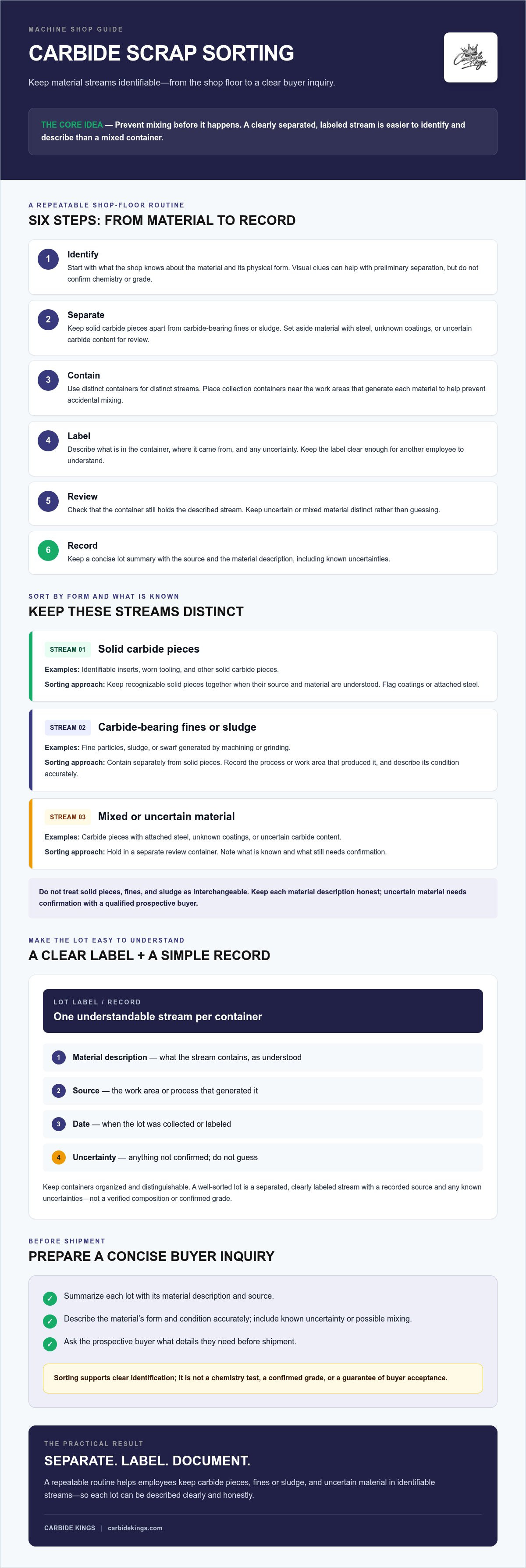
- Keep solid carbide pieces, carbide-bearing fines or sludge, and mixed material in distinct streams so each lot is easier to describe.
- Place collection containers near the work areas that generate each material stream to help prevent accidental mixing.
- Label each lot with its material description, source, date, and any uncertainty, then keep containers organized and distinguishable.
- Prepare a concise lot summary and ask a prospective buyer what details they need before shipment.
Why machine shop carbide scrap sorting starts with keeping material streams separate
Sorting means separating shop-generated material into identifiable streams and managing each consistently from collection to buyer inquiry. For a machine shop, that can mean keeping carbide tooling apart from steel holders, general metal scrap, and carbide-bearing fines or sludge. The goal is a clear, honest description of each container, not a claim that its exact composition or grade is known.
Mixing makes that description less certain. A container of carbide pieces with steel fragments or unrelated scrap may need more explanation than one containing a single understood stream. Separation also preserves useful context, such as which work area generated the material. Tungsten is part of broader discussions about supply-chain due diligence and responsible sourcing regulations, but that background does not make visual sorting a chemistry test or establish a shop-floor sorting standard.
Keep the routine focused on carbide-bearing scrap. You don’t need to reorganize every metal waste stream in the facility. Start with the materials and work areas relevant to the carbide scrap you plan to describe to a prospective buyer.
Which shop-floor problems does a sorting routine prevent?
Without a shared routine, one employee may put a carbide insert in a carbide container while another tosses it with a steel holder or general scrap. Fines and sludge can also end up in a container intended for solid pieces. These habits leave staff with a poorly described mix later, especially when no one remembers which work area contributed each item.
Machine shop carbide scrap sorting replaces individual guesswork with a repeatable approach. Visual clues can support preliminary separation, but they don’t confirm chemistry or grade. Treat sorting as a way to improve consistency and lot identification, not as a promise of higher returns or buyer acceptance.
What does a well-sorted carbide lot look like?
A well-sorted lot contains one understood material stream, sits in an identifiable container, and has a label or record showing its source. For example, a shop might keep solid carbide pieces separate from carbide-bearing fines, while setting aside material with steel or other unknown components for review. Staff should note uncertainty rather than guess.
A well-sorted carbide lot is a separated, clearly labeled stream with a recorded source and any known uncertainties. This is a preliminary shop description, not verified composition, a confirmed grade, or a buyer’s acceptance decision. Confirm material identification questions and buyer-specific requirements directly with a qualified prospective buyer.
How to distinguish solid carbide, soft scrap, and mixed machine-shop material
Sort first by physical form and what the shop knows about the material. Solid pieces, process-generated fines, and mixed items need different descriptions and should not be treated as interchangeable. The table offers a practical first pass, not a material test or a promise that a buyer will accept a particular lot.
| Stream | Typical shop-floor examples | Sorting approach |
|---|---|---|
| Solid carbide pieces | Identifiable inserts, worn tooling, or other solid carbide pieces | Keep dry, recognizable solid pieces together when their source and material are understood. Flag coatings or attached steel. |
| Carbide-bearing fines or sludge | Fine particles, sludge, or swarf generated by machining or grinding | Contain separately from solid pieces. Record the process or work area that produced it, and describe its condition accurately. |
| Mixed or uncertain material | Carbide pieces with attached steel, unknown coatings, or uncertain carbide content | Hold in a separate review container. Note what is known and what still needs confirmation. |
Form and contamination matter when you describe a lot to a prospective buyer. A container of identifiable solid pieces is not the same stream as one of fines, and attached steel or an unknown coating can make material harder to characterize. Don’t use color, shape, weight, or a magnet as proof of composition. Visual clues may help employees make a preliminary separation, but uncertain material needs verification with a qualified buyer.
How should shops separate hard scrap from soft scrap?
As a practical starting point, use hard scrap for identifiable solid pieces and soft scrap for fine or process-generated material, then confirm the distinction with a qualified buyer. Keep sludge, swarf, and fines contained apart from dry solid pieces. Form and condition may affect how a buyer wants the lot described. For more guidance on categorizing fine material, consult a tungsten soft scrap sorting guide and verify uncertain items before combining streams.
Set up the separation routine with employee safety in mind. Review OSHA's guide to metal scrap recycling hazards when considering handling and dust exposure, and follow current applicable safety guidance for your materials and processes.
What belongs in a separate mixed-material or review container?
Set aside pieces with attached steel, unknown coatings, or uncertain carbide content. Keep unrelated metals out of carbide containers rather than guessing what they are. On the review label or record, state why the item was held and identify the person or role responsible for seeking verification. This helps prevent a later guess from becoming an inaccurate lot description.
Consistent machine shop carbide scrap sorting gives employees a clear way to handle borderline material without forcing a decision. Once streams are separated and uncertainties recorded, you can prepare a more useful inquiry about Carbide Kings carbide scrap.
A machine shop carbide scrap sorting workflow employees can repeat
A reliable routine works best where scrap is generated. Place clearly marked containers near the machines or work areas that produce each distinct stream, so employees don’t have to carry material across the shop or decide later where it belongs. Train operators on the shop’s material descriptions, and give them a clear next step for anything they can’t confidently identify.
Use the same sequence each time:
- 1. Identify. Check the material’s form and source against the shop’s sorting instructions. Treat visual clues as preliminary, not confirmation of composition.
- 2. Separate. Direct recognizable solid carbide to its designated stream. Keep fines and process residues apart from solid pieces.
- 3. Contain. Place each stream in its designated container. Use suitable, closed containers for fines or residues, following applicable safety and storage guidance.
- 4. Label. Mark the container with the shop’s material description and source. Flag anything uncertain rather than labeling it as confirmed carbide.
- 5. Review. Have an assigned employee or supervisor check questionable material and decide whether it belongs in a known stream or a separate review container.
- 6. Record. Note the source, date, material description, and unresolved questions so the lot’s history doesn’t depend on someone’s memory.
Source-to-container traceability means keeping a record that connects a scrap lot to the work area that generated it and the container where it was collected. That record gives staff a reliable starting point when they describe the lot to a prospective buyer.
How can a shop sort scrap at the point of generation?
Make the choice easy for operators. Put the solid-carbide container where recognizable solid pieces can be dropped directly into it, and keep a separate, suitable closed container for fines and process residues. If an item has an unclear identity, attached material, or possible contamination, pause and set it aside for review. Don’t ask employees to guess just to keep production moving.
How should supervisors check sorting quality?
Use a short shift check or another scheduled inspection that fits the shop’s workflow. Look for mixed streams, missing or unclear labels, and items left outside their designated containers. Assign a specific role to resolve uncertain material. When the same mix-up recurs, address its cause with clearer instructions, better container placement, or refresher training, then track whether it happens again.
A repeatable machine shop carbide scrap sorting process depends on clear ownership as much as clear containers. Decide who checks labels, who reviews held material, and where unresolved questions are recorded. That makes the routine easier to follow across shifts and each lot easier to describe in a buyer conversation.
How to label, store, and document carbide scrap lots
A clear label protects the work already done during sorting. Use plain language to describe the material as your shop understands it. Don’t add an alloy, grade, or composition unless it has been verified. Include the generating process or department when known, the collection date, and any uncertainty that could help someone review the lot later.
Keep containers organized and visibly distinct so labels stay connected to the correct stream. Choose containers and storage conditions suited to the material’s form, especially for fines or residues. Requirements can depend on the material and workplace, so confirm applicable safety, storage, and handling guidance rather than assuming one setup fits every lot.
What information belongs on a carbide scrap label?
Make labels readable and specific enough to distinguish nearby containers. Useful fields include a shop description, source area or process, date collected, and a note about known coatings, attached steel, or other uncertainty. For example, “solid carbide pieces, grinding department, collected [date], coating status unknown” is more transparent than an unverified grade claim. Use “mixed” or “unverified” when that’s what the shop knows.
Which lot records make a buyer inquiry clearer?
Keep a simple record that matches the container. Note the number of containers, material form, source, known contamination, and approximate quantity or weight only if the shop can measure it reliably. If the quantity is an estimate, label it as one. Add photographs and brief notes when they help explain the lot, and make sure they show the actual separated material and current labels.
Consistent records also help staff answer follow-up questions without relying on memory. Before making an inquiry, check that the photos, labels, and written description all refer to the same lot. For context on what may influence a buyer’s evaluation, review tungsten carbide scrap price factors, but don’t treat a general guide as a quote or promise of a specific outcome.
Good documentation completes the machine shop carbide scrap sorting process: it connects the material’s description to its source and keeps uncertainties visible. If your shop has a separated, documented carbide scrap lot, you can contact Carbide Kings about carbide scrap and share the details you’ve recorded.
Prepare sorted carbide scrap for buyer review and choose the next step
Once each stream is separated and documented, turn the information into a concise lot summary. This helps a prospective buyer understand what the shop has collected and identify what else they need to evaluate it. Sorting supports a clearer handoff, but it doesn’t confirm composition, guarantee acceptance, or determine a price.
What should a shop include in its first buyer inquiry?
Describe the material in plain language. Distinguish solid pieces from fines or sludge, and summarize each stream separately rather than presenting several containers as one uniform lot. Include information your shop can support:
- Material stream and form: for example, solid carbide pieces or carbide-bearing fines.
- Source: the machine, process, or department that generated the material, if known.
- Quantity: an approximate weight or amount only if measured or estimated reliably, and label it accurately as an estimate.
- Condition and uncertainty: note attached steel, mixed material, coatings, or unverified composition.
- Photos: provide clear images that match the actual separated lot and its containers.
Be direct about what you don’t know. An honest note that composition hasn’t been verified is more useful than an unsupported grade or alloy claim. Ask the buyer what additional details they need and confirm any identification or acceptance criteria before arranging shipment. Shops handling other tungsten material can also consult a selling tungsten hard scrap guide for information relevant to that separate stream.
How can Carbide Kings fit into the next step?
Carbide Kings supplies industrial tungsten and carbide materials, including carbide scrap, tungsten hard scrap, tungsten soft scrap, and tungsten alloys. After completing your machine shop carbide scrap sorting, share the actual material description, form, quantity estimate, source, and known uncertainties when discussing your material needs. Those details help make the conversation more specific.
Keep each stream identifiable through the inquiry. Don’t assume visual identification settles composition, or that a well-sorted lot is automatically accepted. Contact Carbide Kings to discuss industrial carbide and tungsten scrap and the details your shop has recorded.
Put a Clear Scrap-Sorting Process to Work
Effective machine shop carbide scrap sorting comes down to consistent separation, clear identification, and honest records. Keep solid pieces apart from fines and sludge, set uncertain or mixed material aside, and make sure each lot’s label and notes reflect what the shop actually knows. These habits won’t confirm composition or guarantee a particular buyer outcome, but they make the material easier to describe and discuss.
With a clear lot summary in hand, you can have a more useful conversation about your material needs. Carbide Kings supplies industrial tungsten and carbide scrap, including hard scrap, soft scrap, carbide scrap, and tungsten alloys, to customers nationally across the United States. Share your material requirements and any details relevant to the products you’re seeking.
Discuss your industrial tungsten or carbide scrap needs with Carbide Kings. A repeatable process gives your team a stronger starting point for every lot. Keep the streams clear, document what you know, and take the next step with a clear description.
Frequently Asked Questions
Is carbide scrap sorting worth doing in a small machine shop?
Yes. Even a small shop can use machine shop carbide scrap sorting to keep recognizable carbide-bearing material apart from general metal scrap. Start with designated containers, plain-language labels, and a brief staff instruction on what belongs in each stream. The aim is consistent identification and an honest lot description, not an elaborate processing system or a promise of increased value. Keep the routine simple enough for employees to repeat.
How do you sort carbide scrap from steel in a machine shop?
Start with what employees know about the material and the process that generated it. Separate recognizable carbide-bearing pieces from steel holders and general steel scrap, but don’t rely on appearance alone to confirm composition. Set aside items with attached steel, coatings, or uncertain material identity and mark them as unverified. If identification matters to a sale, ask a qualified buyer what details or verification they need.
What is the difference between carbide hard scrap and soft scrap?
Hard scrap generally refers to identifiable solid carbide pieces. Soft scrap commonly describes fine material, such as carbide-bearing sludge, swarf, or fines. Keep these forms in separate containers because they differ in handling and lot description. The category name alone doesn’t establish the material’s exact composition or whether a buyer will accept it. Describe what’s known, flag uncertainties, and confirm buyer-specific requirements before proceeding.
Can carbide scrap be mixed with steel before selling?
Avoid mixing carbide scrap with steel when you can keep the streams separate. Steel, attached tool holders, and other contaminants can make a lot harder to describe and evaluate. If material is already mixed, don’t label the whole container as clean carbide. Record what’s known, separate identifiable pieces where practical, and ask a prospective buyer how to describe the remaining mixed material. Be clear about uncertainty in the inquiry.
How should a machine shop label carbide scrap containers?
Use a plain-language description of the material stream, the source or department, the collection date, and any known uncertainty or contamination. Add a quantity estimate only when it’s measured or reasonably supported. Keep labels consistent across shifts and check that the contents match the description. Don’t assign a grade or alloy based only on appearance. Mark uncertain material as unverified so staff can review it before describing the lot to a buyer.
What happens if carbide scrap contains grinding sludge or fines?
Keep grinding sludge or fines separate from solid carbide pieces, and identify the material form on the container. Don’t assume the residue is pure carbide, since it may include process fluids or other material. Ask qualified personnel to confirm suitable containment and applicable handling requirements for your shop. Before arranging a lot review or shipment, describe the residue accurately and ask the prospective buyer what additional information they need.
How do I prepare a sorted carbide scrap lot for a buyer?
Give the buyer a plain-language description of each separated stream, its form, approximate quantity, source, and any known attachments or contamination. Share clear photographs when available, and make sure they show the actual lot. Photos don’t verify composition, so state when material is uncertain. Ask what further details are needed, and check that your description matches the material being offered before discussing next steps.


