

A supplier’s certificate can match the purchase order and still conceal specification drift. Incoming lot assay reconciliation protocols between supplier and melt shop help close that gap: compare supplier records with a representative incoming sample against the agreed material specification, then resolve any variance before acceptance. The goal is a shared, traceable basis for deciding whether the lot meets requirements.
A certificate of analysis should support verification, not replace it. A clear process connects lot identity, sampling, test results, and disposition, so the supplier and melt shop can review the same evidence when results differ.
Learn how to verify incoming material, plan sampling, reconcile supplier records, and identify recurring quality changes. The sections ahead explain how each step works and how documented comparisons can distinguish a one-off discrepancy from specification drift.
Key Takeaways
- Match each incoming lot to its supplier records and agreed material specification before it enters production.
- Set sampling intensity around material risk, supplier performance, and the consequences of a quality miss.
- Use traceable assay results and transaction records to investigate discrepancies and spot recurring specification drift.
- Understand which certificate details support a sound comparison, and where Tungsten Hard Scrap may fit your material needs.
Material verification and laboratory testing
Verify each lot’s identity, condition, documentation, and assay before acceptance. A defined sampling and hold process keeps unreviewed material out of the melt charge.
Identity Testing and Assay Checks
Identity testing confirms the declared material; assay checks measure its composition against specifications. Match lot markings to supplier documents, then test a representative sample using the agreed method. Record the result and disposition against the lot identifier. For drug components, the U.S. Food and Drug Administration applies cGMP controls: 21 CFR 210/211 requires sampling, testing, approval or rejection before use, and identity testing at minimum for each lot.
Certificates and Assay Variance
A certificate of analysis (CoA) should connect lot identity with tested characteristics, methods, units, and results. Compare those details with the purchase specification and receiving analysis. There is no universal assay variance limit or measurement uncertainty for every alloy; both depend on the element, method, sample preparation, and agreed specification. Define the decision rule and retest trigger in advance. Incoming lot assay reconciliation protocols between supplier and melt shop help keep comparison rules consistent.
Rapid Testing and Hold Management
Rapid screening can flag a potential composition issue, but the agreed method and acceptance criteria determine disposition. Identify and segregate pending material; do not blend or charge it before review. Reconcile incoming results with melt-charge calculations using the measured composition and planned lot contribution. Then compare finished-batch chemistry with the target and expected result. Trace any gap through sample, weight, and addition records before deciding what to do next.
External and Dispute Assays
An independent laboratory can provide analysis when supplier and melt shop results conflict. The contract should define retest triggers, retained-sample handling, umpire laboratory selection, and dispute-cost allocation. Use sealed, traceable split samples so each analysis represents the same lot. Compare methods and uncertainty, then document the resolution and its basis. Well-defined incoming lot assay reconciliation protocols between supplier and melt shop make disputed results easier to review objectively.
Sampling frequency and sample-size planning
A useful sampling program connects material risk, supplier performance, and the consequences of accepting defects. Define the plan before a lot arrives so pending material follows clear acceptance rules.
Sampling Plans and Acceptance Criteria
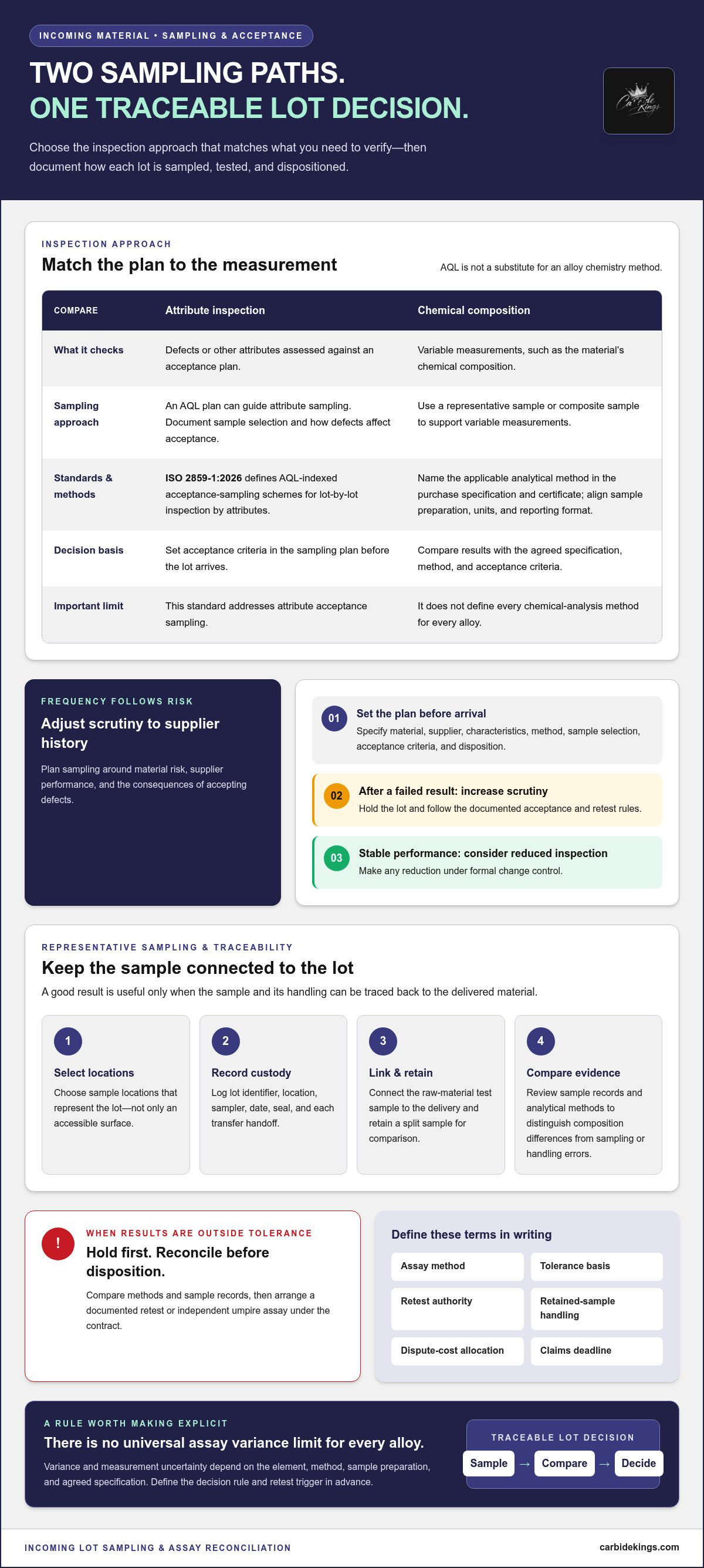
A sampling plan specifies the material, supplier, characteristics, method, sample selection, acceptance criteria, and disposition. It matters because the same inspection level may not suit every supplier or lot. Acceptance Quality Limit (AQL) plans can guide attribute sampling, while representative or composite samples support variable measurements such as chemical composition.
ISO 2859-1:2026 defines AQL-indexed acceptance-sampling schemes for lot-by-lot inspection by attributes. Use its framework to document how samples are selected and how defects affect acceptance. Set frequency according to risk and supplier history: increase scrutiny after a failed result, then consider reduced inspection for stable performance under formal change control.
Sampling Standards and Analysis Methods
Standards and methods make results comparable; they matter when supplier and melt shop results must be reconciled. ISO 2859-1:2026 addresses attribute acceptance sampling, not every chemical-analysis method for every alloy. Name the applicable analytical method in the purchase specification and certificate, and align sample preparation, units, and reporting format.
For incoming metals, select sample locations that represent the lot, rather than sampling only an accessible surface. Record the lot identifier, location, sampler, date, seal, and transfer at each custody handoff. Link the raw material test sample to the delivery and retain a split sample for comparison. These details help distinguish a genuine composition difference from a sampling or handling error.
If results fall outside agreed tolerances, hold the lot, compare methods and sample records, then arrange a documented retest or independent umpire assay under the contract. Specify assay method, tolerance basis, retest authority, retained-sample handling, dispute-cost allocation, and claims deadline in writing. For manufacturing teams planning alloy receipts, align scrap sourcing requirements with the sampling plan and acceptance criteria.
Gathering supplier statements and transaction records
Link each received lot to its commercial paperwork and inspection record. This creates a traceable account of what arrived, what was checked, and why the material was accepted or held.
Receiving Statements and Records
Supplier statement reconciliation compares a supplier’s statement with transaction records, such as invoices, over a defined period. Monthly reconciliation is common, though companies may also reconcile quarterly or annually. Match the statement to purchase orders and delivery notes, then investigate differences using order confirmations and supplier communications.
At receiving, reconcile delivered quantity with the purchase order before production. Document lot identity, packaging condition, quantity, and any shortage or damage. If the delivery note and received weight differ, for example, record both values and the reason for the variance. Keep the certificate and inspection result linked to the same lot record.
Reconciliation Recordkeeping
A reconciliation record preserves the evidence behind each decision. Include the lot or batch number, sample size, inspection criteria, actual measurements, test results, defect classification, inspector, inspection date, equipment identification, photographs, and disposition. These fields let the receiving team explain why a lot was accepted, rejected, or held.
Archive supplier statements, invoices, delivery notes, certificates, and communications alongside the inspection record. Use a consistent format and maintain a clear link between each document and its lot. Record discrepancies, their resolution, and the communication date. A searchable trail helps teams identify recurring issues without relying on memory or scattered email threads.
For covered facilities handling food, FSMA Rule 204 calls for Critical Tracking Event data and Key Data Elements at each point an ingredient changes hands or form. This rule is specific to covered food-traceability activities, not a general scrap-metal requirement. For metal receiving, inspection KPIs can track quantity variances, out-of-specification results, rejected lots, and repeat supplier discrepancies. Review those checks by supplier and period to identify where records or receiving controls need attention.
At incoming inspection, confirm received quantities against the purchase order and preserve supporting evidence in a traceable audit trail before materials enter production. Regular supplier statement reconciliation helps maintain accurate ledgers and strengthen supplier relationships. Investigate discrepancies using order confirmations, delivery notes, and communication records, documenting each issue, its resolution, and supplier communications.
What information should an incoming lot certificate of analysis include for metal alloys?
A useful certificate of analysis (CoA) ties reported chemistry to an identifiable metal-alloy lot. It gives receiving and melt-shop teams a consistent record to compare with the purchase specification and their own assay. The certificate should clearly identify the tested material, results, and method.
- Material and lot identification: State the material description, grade or agreed designation, supplier, and lot number. Link these details to the shipment and purchase record.
- Tested characteristics: List the elements or properties analyzed, with each result and its unit. Include only characteristics relevant to the agreed specification.
- Method and sample details: Identify the analytical method and clarify which lot the sample represents. Note relevant sample preparation details when they affect interpretation.
- Specification comparison: Show the applicable limits or reference specification alongside results, where agreed. Mark whether each reported characteristic meets the stated criteria.
- Report traceability: Include the testing laboratory, analysis date, report identifier, and authorized approval. These details help connect later questions to the original analysis.
Review the CoA against the receiving record field by field. Confirm that the lot identifier matches, the element names and units align, and the cited specification governs acceptance. A result without a method or clear unit can be difficult to compare with an independent assay. Flag missing or mismatched information before using the certificate to decide a lot’s disposition.
If the certificate reports an element in a different unit from the purchase specification, for example, convert or clarify the basis before comparing values. Keep the original report with any clarification, revised certificate, or retest result. This preserves the document trail and shows which information supported the final decision.
Use a consistent CoA format across suppliers, then track recurring omissions or specification mismatches by lot. Clear records make assay reconciliation more direct. Align alloy scrap sourcing with assay requirements by defining the material designation and certificate details your receiving process needs.
Carbide Kings: Tungsten Hard Scrap
Carbide Kings supplies Tungsten Hard Scrap for industrial buyers sourcing material for manufacturing and metallurgical processes. Once your receiving criteria and certificate requirements are defined, match your material needs with the appropriate scrap category.
Choose Carbide Kings when Tungsten Hard Scrap fits your planned use and purchasing requirements. The company also offers Tungsten Soft Scrap, Carbide scrap, and Tungsten Alloys. Keep your material designation, lot documentation, and acceptance criteria aligned across procurement and receiving so incoming shipments can be assessed consistently.
If your operation needs tungsten or carbide scrap, contact Carbide Kings to discuss your material requirements.
Make Your Next Material Decision with Confidence
Make reconciliation a working part of procurement, not a record reviewed only after a discrepancy. As specifications or melt requirements change, revisit how incoming lot assay reconciliation protocols between supplier and melt shop support purchasing decisions. Clear material definitions help purchasing and production stay aligned as requirements evolve.
For scrap sourcing, Carbide Kings offers Tungsten Hard Scrap, Tungsten Soft Scrap, and Carbide scrap. Match the material category to your operation’s requirements, then connect that choice to the standards your receiving team uses. A consistent approach gives teams a practical starting point for supplier discussions without adding unnecessary steps.
Ready to discuss material needs? Contact Carbide Kings to discuss your needs. Take the next step with a clear view of the material your operation is seeking.
Frequently Asked Questions
How should a melt shop sample and independently assay incoming metal lots?
Choose sample locations across the load, not just on the most accessible surface, and keep material from separate lots distinct. For example, do not combine samples from differently identified bundles before testing. Divide the collected sample into traceable portions: one for the melt shop’s analysis, one retained for comparison, and one for independent testing if a dispute arises. Use the agreed method for each comparison.
How should lot identity, sample custody, and assay records be documented?
Give the lot and each sample linked identifiers, then preserve those links through every handoff. Label sample containers with the lot code and seal status; record who collected, transferred, received, and opened each sample. Keep the original assay report alongside any corrected or repeat report. This lets reviewers distinguish a genuine result difference from a mix-up, damaged seal, or document revision.
What procedures apply to quarantining, accepting, blending, or rejecting a disputed lot?
Keep a disputed lot physically segregated and clearly marked so it cannot enter a charge by mistake. Compare the supplier’s result with the melt shop’s test, sample history, and agreed specification; use the contract’s retest and dispute process if results still differ. Release, reject, or blend the lot only after recording an authorized disposition, its rationale, and any limits on use.


