

A direct mill route isn’t automatically the better procurement model. Direct secondary scrap mill supply connects a seller with a mill, while scrap broker procurement models use an intermediary to connect sellers and buyers and may coordinate pricing, transport, and delivery. The right fit depends on the material, volume, buyer access, and coordination the transaction requires.
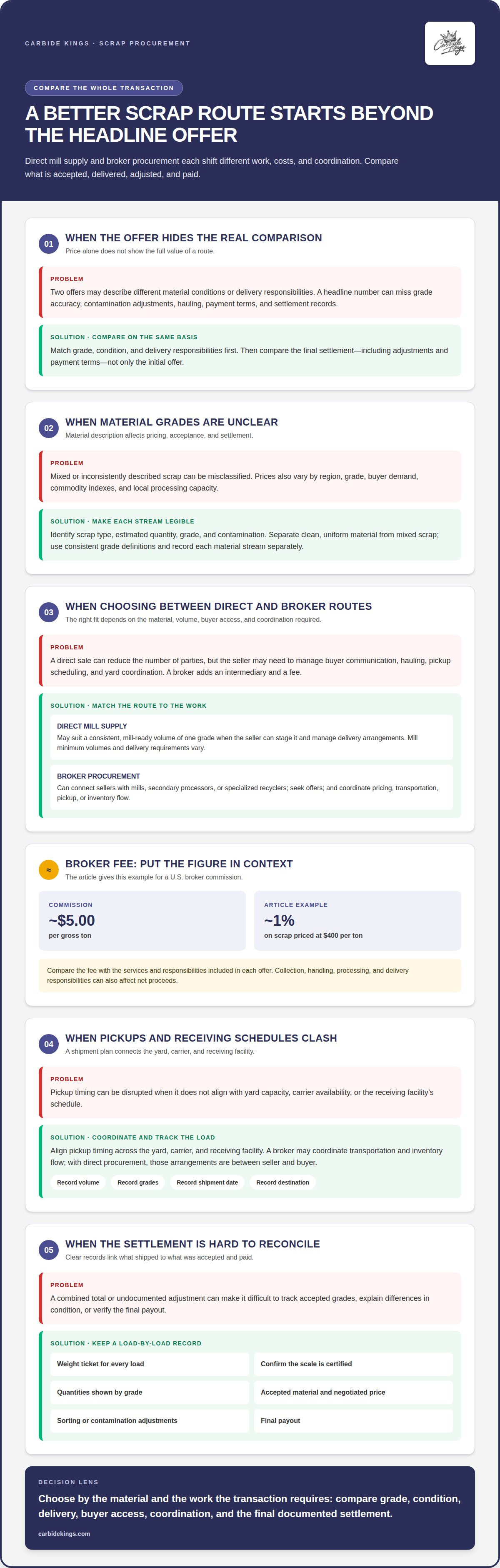
Price matters, but an offer alone doesn’t show the full value of a route. Grade accuracy, contamination adjustments, hauling, payment terms, and settlement records all affect the result. A broker can provide market access and logistics support. A direct sale can reduce the number of parties involved when the material and delivery plan suit a mill.
This comparison explains how the models differ in performance, transparency, logistics, payment, and documentation. You’ll see what each route can simplify, where costs and coordination arise, and how the material being sold shapes the decision. The goal is to compare the full transaction, not just one headline number.
Key Takeaways
- Compare the full transaction, not just the headline offer: grade, condition, delivery, and payment terms all affect the outcome.
- A broker can connect sellers with buyers and coordinate pricing, transportation, and pickup logistics.
- Clear settlement records make loads easier to track. Look for grade-by-grade amounts, weight tickets, and documented adjustments.
- Direct mill sourcing may suit a consistent, mill-ready load; broker procurement can help when buyer access or coordination is the bigger challenge.
Direct material sourcing performance metrics
Compare sourcing routes by material quality, realized revenue, supply consistency, and preparation work. A useful performance measure tracks the accepted grade and final settlement, not only the initial offer. When comparing direct secondary scrap mill supply vs scrap broker procurement models, include the time and coordination each route requires.
Material Evaluation and Pricing
Material evaluation identifies the scrap type, estimated quantity, grade, and contamination before pricing decisions are made. Prices can fluctuate daily and vary by region, grade, and buyer demand. Commodity indexes and local processing capacity can also influence offers.
Separating clean, uniform material from mixed scrap can improve pricing accuracy and reduce misclassification losses. Use consistent grade definitions and record each material stream separately. This helps you compare bids against the material actually shipped and assess the final transaction. A direct secondary scrap mill supply vs scrap broker procurement models comparison is most useful when both offers reflect the same grade, condition, and delivery responsibilities.
Broker Fees and Mill Purchasing Terms
A broker fee compensates an intermediary for connecting sellers with buyers and supporting a transaction. In the United States, a broker commission is roughly $5.00 per gross ton today. On scrap priced at $400 per ton, that commission amounts to about 1%.
Mill purchasing terms are established between the commercial parties and may cover accepted grades, quality requirements, delivery, pricing, and payment. Compare these terms with any brokerage fee to ensure each offer reflects the same material condition and responsibilities.
Direct Supply Agreements and Broker Support
A direct supply agreement sets out the material, grade, quality criteria, expected flow, delivery plan, pricing method, and settlement process. Start by classifying and sorting material, documenting available quantities, and giving the mill a consistent description. Then align on acceptance criteria and logistics before finalizing commercial terms.
Brokers can broaden market access by matching material with buyers and seeking offers. They may also share market signals and coordinate transportation when supply varies. The right procurement model depends on the material stream and the support needed to keep shipments moving.
According to the U.S. Environmental Protection Agency, the United States construction and demolition debris stream totaled about 600 million tons in 2018. Demolition accounts for roughly 90 percent of that stream, according to the U.S. Environmental Protection Agency. For demolition sellers, sorting recoverable metal and reporting grades clearly helps buyers assess loads and plan processing.
Broker transparency, compliance, and buyer relationships
Transparency starts with a clear record of who buys each load, how its grade is described, and which adjustments affect settlement. A broker can connect industrial sellers with mills, secondary processors, or specialized recyclers, then coordinate terms between both sides. A settlement, for example, should identify the accepted material, negotiated price, sorting or contamination adjustments, and final payout. These details help preserve buyer relationships when a load’s condition differs from its initial description.
With direct procurement, sellers may handle buyer communication, transportation, and inventory timing themselves. A broker can reduce that coordination burden, but sellers should understand the broker’s role and how terms reach the buyer. Risks in either model include inconsistent reporting, a rejected load, disrupted pickup, or unclear responsibility for adjustments. Accurate grade descriptions and traceable transaction records help limit these problems.
Direct mill delivery suits a consistent, mill-ready volume of one grade when the seller has space to stage it. Minimum volumes and delivery requirements vary by mill. Accepted grades, receiving capacity, pickup timing, and material condition shape the arrangement. For a bulk shipment, coordinate the pickup schedule with yard capacity and the receiving facility’s timeline. Brokers can arrange carriers, optimize routes, and coordinate inventory flow when sellers manage several material streams.
Cost comparisons should include more than the material offer. Direct sales may avoid a broker’s commission, while the seller takes responsibility for arranging hauling, pickup scheduling, and yard coordination. A broker’s fee may be offset by broader buyer access or coordinated transportation, but collection, handling, and processing costs still affect net proceeds. Compare the final settlement after grade adjustments and delivery responsibilities, not just the quoted price.
For a material-specific procurement comparison, review carbide scrap supply alongside your grade and delivery needs.
Logistics coordination, payment, and documentation
For each shipment, align pickup timing with yard capacity, carrier availability, and the receiving facility’s schedule. A broker may coordinate transportation and inventory flow; with direct procurement, those arrangements are between seller and buyer. For example, a construction site storing sorted metal needs a pickup plan that keeps active work areas clear. Record volume, grades, shipment date, and destination to track the load from dispatch through receipt.
Settlement records connect the delivered load with the payment received. Keep a weight ticket for every load and confirm that the scale is certified. The settlement should show quantities by grade, not just a combined total. It should also identify accepted material, negotiated price, sorting or contamination adjustments, and final payout. These details help reconcile differences between the shipping record and the receiving facility’s results.
In the United States, scrap-related requirements can involve environmental standards, transportation, and reporting. The documents needed depend on the material and transaction. A practical record set can include bills of lading, weight tickets, and relevant compliance records. Organize them by shipment, with a traceable record from the seller’s yard through the carrier to the buyer.
For a mixed load, record each sorted grade separately before pickup. This creates a clearer link between the material description, shipping paperwork, and final settlement. Keep payment terms and any quality adjustments with the transaction file so you can reconcile the amount paid against accepted grades and documented weights.
For larger volumes, coordinate each handoff: pickup window, carrier, receiving location, and grade breakdown. A broker may manage scheduling and help resolve disputes; with direct arrangements, the parties need to assign those responsibilities. Consistent records support accurate reporting and make it easier to trace a load if questions arise during receiving or payment.
Brokerage compared with traditional recycling centers
A traditional recycling center handles the material: it receives scrap at its yard, pays according to internal rates, then processes and resells it. A broker handles market access by connecting sellers with buyers, such as mills, manufacturers, and specialized recyclers—a sourcing dynamic seen across secondary materials, including circular plastic processors like healix.eco that take in agricultural and marine fibers. The distinction matters: one model centers on physical handling, while the other focuses on finding a buyer and arranging a transaction.
Consider a seller with separate copper and ferrous loads. A recycling center may accept the scrap at its yard and price each grade under its own purchasing approach. A broker may seek offers from different buyers for those materials. The best route depends on grade, cleanliness, volume, demand, and the logistics required to move each load. Accurate sorting helps both models assess the material clearly.
Buyer access can shape timing and potential revenue. Brokers monitor regional trends, supply, demand, and commodity prices to guide pricing recommendations. They may match material with local mills, secondary processors, export buyers, or specialized recyclers. Over the last two decades, steel mills have increasingly purchased their scrap requirements directly from scrap dealers instead of using scrap brokers. This shift shows why sellers should consider existing buyer relationships alongside intermediary support.
Compare the complete transaction, not just the initial offer. A recycling center may simplify delivery when its yard accepts the load, while a broker may coordinate transportation between seller and buyer. Either route can involve handling, sorting, and hauling responsibilities that affect the final settlement. For example, a mixed load may need additional sorting before a buyer accepts its grades. Clear terms help sellers understand who manages each step and how adjustments affect payment.
The practical takeaway: use a recycling center when yard acceptance and direct handling fit your operations; consider brokerage when buyer access or market coordination is the priority. Explore scrap sourcing options to continue evaluating a suitable route.
Carbide Kings
Carbide Kings is a sourcing option for businesses that need tungsten or carbide scrap. Comparing direct and broker routes helps clarify how buyer access, material grading, transportation, and settlement affect a transaction. If your needs include these materials, consider which categories fit your supply requirements.
Carbide Kings offers Tungsten Hard Scrap, Tungsten Soft Scrap, Carbide scrap, and Tungsten Alloys. These offerings connect the procurement discussion to the material types the business supplies, without treating brokerage or mill coordination as its service. Use the comparison above to frame your sourcing decision, then get in touch with Carbide Kings to discuss its scrap materials.
Make Your Next Sourcing Decision With Clarity
Use the direct secondary scrap mill supply versus scrap broker procurement models comparison to shape a sourcing plan around your material, buyer access, and internal capacity. Define what matters most for the transaction: a direct buyer relationship, support connecting with buyers, or a practical fit for the scrap you handle. Clear priorities make it easier to choose a route that supports your operations without adding unnecessary coordination.
For businesses sourcing tungsten and carbide materials, Carbide Kings offers Tungsten Hard Scrap, Tungsten Soft Scrap, and carbide scrap. Match the material you need with your purchasing requirements, then contact Carbide Kings to discuss sourcing.
Contact Carbide Kings to start a conversation about your material needs and move forward with a clearer procurement plan.
Frequently Asked Questions
What Is Scrap Metal Brokerage?
Scrap metal brokerage brings a seller’s material to potential buyers through an intermediary. A broker can identify buyers whose needs fit a specific grade or shipment, which is useful when a seller has no established mill relationship. For example, separate lots of clean and mixed scrap may suit different buyers and require distinct offers.
What is direct secondary scrap mill supply?
Direct secondary scrap mill supply is an arrangement in which a seller supplies recovered material to a mill without a broker managing the sale. Comparing direct secondary scrap mill supply vs scrap broker procurement models can clarify who handles buyer communication and delivery terms. Direct sourcing is most practical when the seller can consistently describe the material and meet the mill’s acceptance requirements.
How does scrap broker procurement work?
A broker procurement process begins with details about the material, including its type, condition, and estimated volume. The broker uses that description to approach potential buyers, gather offers, and coordinate transaction terms. For instance, a seller with multiple grades can present each lot separately, helping buyers evaluate what fits their processing needs rather than pricing everything as one mixed shipment.
How do scrap quality, grading, and contamination requirements differ by mill and broker?
Mills set acceptance requirements for the material they purchase, while brokers assess and describe scrap to help match it with buyers. A broker’s assessment doesn’t replace the receiving mill’s decision. If a load contains coated pieces mixed with clean material, sorting and clearly describing those categories can help avoid confusion over grading, acceptance, or settlement adjustments.
How do U.S. scrap prices and regional market conditions affect direct and brokered procurement?
Scrap prices in the United States can change daily with region, grade, and buyer demand. Under direct secondary scrap mill supply vs scrap broker procurement models, the same load may receive different offers because buyers weigh local demand and delivery costs differently. Compare proposals using identical material descriptions and delivery terms, then consider the net settlement rather than the quoted price alone.
What legal, environmental, and documentation rules apply to scrap suppliers and brokers in the United States?
In the United States, scrap-related requirements can involve environmental standards, transportation, and reporting, and the documents needed depend on the material and transaction. Keep bills of lading, weight tickets, and relevant compliance records organized by shipment, with traceability from the seller’s yard through the carrier to the buyer.


