

Scrap feedstock and chemical digestion are not competing choices: one describes the material entering reclamation, while the other describes a method for separating its contents. When comparing the zinc reclamation process for scrap feedstock with chemical digestion of soft scrap, focus on the material’s form, composition, and contaminants. Clean, identifiable scrap may follow a different recovery route from fine residues or mixed materials.
It’s natural to look for one best method, but zinc scrap ranges from sheets and die-cast parts to ash, dross, and other residues. Mixing zinc with other metals or nonmetal debris can complicate recovery, so identify and sort the feedstock from the outset.
This article explains how scrap and residue feedstocks differ, what chemical digestion does, and how refiners separate zinc from other metals. Sorting material by type and condition helps determine which recovery approach suits the job.
Key Takeaways
- Separate zinc by form and condition to make material easier to assess for recovery.
- Distinguish recyclable scrap from ash, dross, and fine residues, which can require specialized refining.
- Understand how a feedstock’s composition influences the recovery route and the separation of zinc from other metals.
- If your operation also handles tungsten soft scrap, Carbide Kings offers it as an industrial scrap material.
Separating zinc from other metals
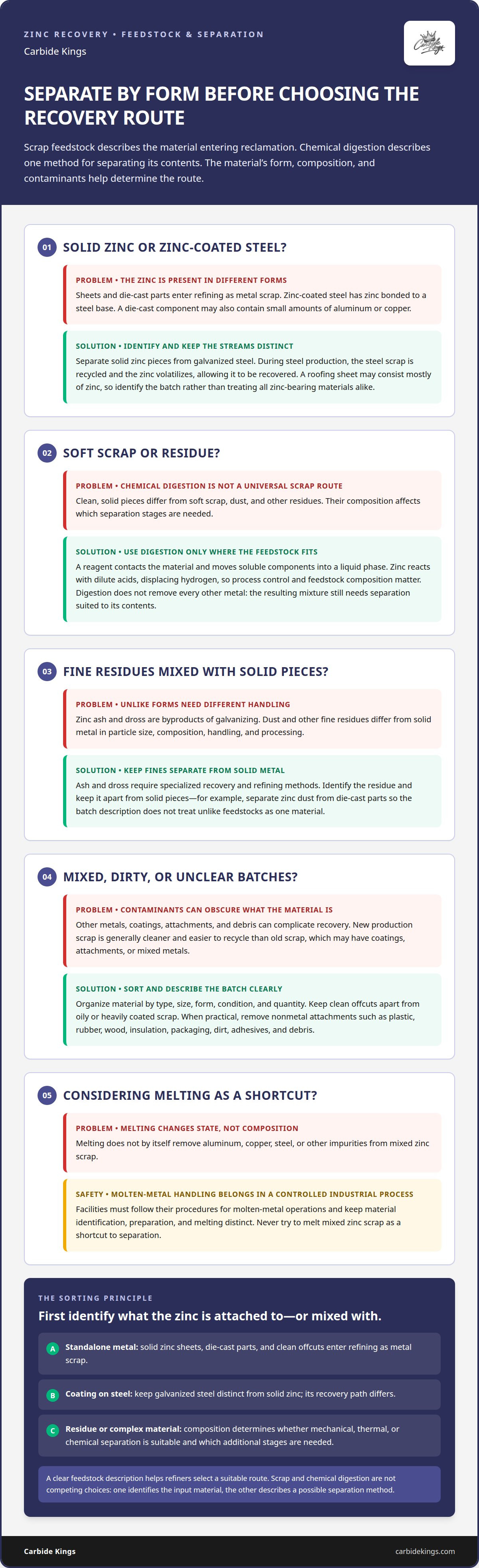
Separation starts with identifying what the zinc is attached to or mixed with. A zinc die-cast component may contain small amounts of aluminum or copper, while a roofing sheet may consist mostly of zinc. These materials present different refining challenges. The more clearly a batch is identified, the easier it is to select a suitable route and separate zinc from other metals.
Zinc metal and zinc coatings also follow different recovery paths. Solid zinc pieces, such as sheets or die-cast parts, enter refining as metal scrap. Zinc-coated steel, by contrast, has zinc bonded to a steel base. During steel production, the steel scrap is recycled and the zinc volatilizes, allowing it to be recovered. Mixing coated steel with solid zinc can obscure the feedstock’s composition and the processing route it needs.
Chemical digestion may be relevant when zinc is present in soft scrap or residue rather than a clean, solid piece. In this chemical route, a reagent contacts the material, moving soluble components into a liquid phase. Zinc reacts with dilute acids, displacing hydrogen, so process control and feedstock composition matter. Digestion does not remove every other metal: the resulting mixture still needs separation steps suited to its contents.
Powder and fine residues need a different approach from solid metal. Zinc ash and dross are generated during galvanizing and require specialized recovery and refining methods. Keep fine material separate from solid pieces because particle size and residue composition affect handling and processing. For example, separating zinc dust from die-cast parts prevents a batch description from treating unlike feedstocks as one material.
Molten-metal handling belongs in a controlled industrial process, not manual sorting. Melting changes the material’s state but does not by itself remove aluminum, copper, steel, or other impurities. Facilities must follow their procedures for molten-metal operations and keep material identification, preparation, and melting distinct. Never try to melt mixed zinc scrap as a shortcut to separation.
For recycling, first distinguish solid zinc from galvanized steel, separate fine residues from solid pieces, and identify mixed die-cast material. Keep clean offcuts apart from oily or heavily coated scrap. These distinctions give refiners a clearer picture of the feedstock before they choose mechanical, thermal, or chemical separation. The suitable route depends on whether zinc is a standalone metal, a coating, or part of a complex residue.
Zinc scrap and residue feedstocks
The recovery route starts with the feedstock, not the equipment. Zinc scrap includes old galvanized steel, zinc sheets, die-cast products, and manufacturing offcuts. These materials differ in how zinc is present and what else travels with it. A clean production offcut is not equivalent to a coated steel part or a fine process residue.
New scrap from die-casting or galvanized-steel production is generally cleaner and easier to recycle than old scrap. Its origin and condition help distinguish it from post-consumer material, which may have coatings, attachments, or mixed metals. Clean zinc sheet offcuts, for example, provide a clearer feedstock than assorted roofing pieces with fasteners and debris.
Residues need separate consideration. Zinc ash and dross form as byproducts of galvanizing and require specialized recovery and refining methods. Dust and other fine residues also differ from solid pieces in form and handling. Depending on their composition and the recovery process, some soft scrap or residues may suit chemical digestion. It is not a universal substitute for processing solid scrap: the feedstock mix determines which separation stages are needed.
Common zinc-bearing material streams include:
- Fabrication scrap: manufacturing offcuts, production rejects, and clean zinc sheet remnants.
- Building materials: roofing, gutters, flashing, and other zinc sheet products.
- Cast and mechanical parts: die-cast components, hardware, fasteners, and machine or automotive parts.
- Process residues: accepted zinc dust, ash, dross, and other fine residues.
Preparation makes a material description more useful. Organize batches by material type, size, form, condition, and quantity. When practical, remove nonmetal attachments such as plastic, rubber, wood, insulation, packaging, dirt, adhesives, and debris. For example, keep production offcuts separate from oily scrap rather than combining them under a general zinc label. This keeps the feedstock’s condition clear and reduces confusion during evaluation.
Residues from industrial zinc production can also contain materials beyond reclaimable metal. U.S. zinc facilities generate spent cloths, bags, and filters, as well as wastewater-treatment sludge and surface-impoundment solids. These streams are not interchangeable with zinc scrap: each has a different composition and management path. Identify the material accurately before processing begins.
If your operation also handles tungsten soft scrap, keeping it distinct from zinc-bearing streams helps preserve clear material categories. Carbide Kings offers Tungsten Soft Scrap for industrial use.
Keeping materials distinct from other zinc-bearing feedstocks can also be useful when a material description includes less commonly listed items. Potentially recyclable zinc-containing material includes zinc anodes, zinc-containing batteries, and mixed industrial equipment. Quantities for separate industrial streams add context: U.S. zinc facilities generate approximately 200 metric tons of spent cloths, bags, and filters annually. The four operating U.S. primary zinc plants generate approximately 45,000 metric tons of wastewater treatment plant sludge and approximately 1,000 metric tons of surface-impoundment solids annually. These remain distinct material streams rather than interchangeable scrap categories.
Zinc recycling
Zinc recycling returns recovered metal to manufacturing through a sequence of collection, sorting, refining, and casting. More than 80% of zinc available for recycling is reclaimed. Recycled or secondary zinc accounts for approximately 30% of zinc production. Those figures describe different stages: reclamation concerns available recyclable material, while secondary production describes zinc made from recovered sources.
Processors first route each feedstock according to its form and composition. Clean zinc scrap can be melted, while coated steel and fine residues require different recovery steps. During steel production, zinc on galvanized steel volatilizes and is recovered. This route keeps the steel in the steel stream while the zinc enters a separate recovery path.
For scrap that is melted, the zinc’s condition and remaining impurities affect refining. One described recycling process melts zinc scrap at approximately 420°C. That figure describes the process cited, not a universal operating temperature for every facility or feedstock. Melting changes zinc into liquid metal; refining must still address impurities and other metals before the material is ready for reuse.
Recovered zinc can then be cast into ingots or sheets. Manufacturers use these forms to make galvanized steel, die-cast products, and other alloys. The destination depends on the refined material’s composition and condition. Recycled zinc can serve the same applications as primary zinc, returning discarded products to industrial production.
The recovery route varies by material:
- Solid zinc scrap: sorting and refining prepare the metal for melting and casting.
- Galvanized steel: steel production separates the zinc coating through volatilization and recovery.
- Zinc ash and dross: specialized recovery is needed because these residues differ from clean metal scrap.
- Leach solutions: recovered zinc can be separated from liquid streams through process-specific chemical steps.
Residue treatment can recover more than zinc alone. For example, a solvent-extraction process developed for electrowinning waste streams recovered approximately 95% of the zinc and sulfuric acid in the bleed stream. That result applies to the described stream and process, not every zinc residue. Feedstock composition, physical form, and contaminants determine which recovery stages are relevant.
The recycling loop closes when refined zinc becomes usable manufacturing feedstock again. Ingots may be made into die-cast parts, while zinc can also return as a protective coating on steel. These distinct output routes show why “zinc recycling” describes several processes, not one universal method.
The page states that 90% of collected products containing zinc can be recycled through the zinc reclamation process, while recycled zinc makes up 40% of worldwide usable zinc. Zinc recycling containers may be used for die-cast scrap, manufacturing offcuts, roofing remnants, hardware, production rejects, and maintenance scrap. These collection options help direct varied materials into recovery routes suited to their condition and composition.
Depending on its composition and condition, zinc scrap may be recycled into protective coatings, metal alloys, die-cast parts, construction products, automotive components, and industrial materials. Zinc oxide can be used to produce zinc again, and the recycling cycle can be repeated numerous times. The supply of zinc-coated steel scrap is expected to double over the next five years, adding to the material available for recovery and reuse.
Carbide Kings: Tungsten Soft Scrap
Carbide Kings is a resource for industrial operations handling tungsten soft scrap alongside other production materials. Zinc reclamation depends on identifying zinc-bearing feedstocks correctly; tungsten scrap belongs in its own material stream and requires a separate buyer.
For manufacturing and metallurgical operations, Carbide Kings supplies tungsten soft scrap, tungsten hard scrap, carbide scrap, and tungsten alloys. Keep these materials distinct from zinc scrap to maintain clear inventory records and support appropriate handling for each category.
If your operation has tungsten soft scrap or related materials, contact Carbide Kings to discuss your material needs.
Make the Next Material Decision Clear
When planning a zinc reclamation process, compare scrap feedstock with chemical digestion of soft scrap by considering the material’s form, composition, and intended output. Tie process decisions to the actual stream, and avoid treating every metal residue as interchangeable.
Keep procurement decisions separate from zinc recovery planning. If your operation also sources tungsten materials, Carbide Kings supplies tungsten hard scrap, tungsten soft scrap, and carbide scrap. Contact the team about these materials when they fit your production needs.
Contact Carbide Kings to discuss your tungsten scrap requirements. A clear material category is a practical starting point for the next step.
Frequently Asked Questions
What types of zinc scrap are suitable for feedstock reclamation versus chemical digestion?
Clean, discrete zinc pieces generally suit conventional scrap-feedstock reclamation, while soft scrap or fine residues may be considered for chemical digestion. The zinc reclamation process scrap feedstock vs chemical digestion soft scrap comparison comes down to zinc content, physical form, and contaminants. Mixed-metal residues, for example, may need extra separation. The right route depends on the material itself: ash and dross require specialized recovery rather than processing like clean scrap.
What chemicals and operating conditions are used to digest soft zinc scrap?
Chemical digestion brings soft scrap or residue into contact with a reagent, moving soluble components into a liquid phase. Zinc reacts with dilute acids, displacing hydrogen, so process control and feedstock composition matter.
What emissions, waste streams, and safety risks arise from zinc scrap reclamation and chemical digestion?
During steel production, zinc from galvanized steel volatilizes; the collected zinc gas can be treated into solid zinc dust and then zinc oxide. Ash, dross, dust, and other fine residues need specialized recovery. Acid digestion displaces hydrogen, and molten-metal handling belongs in a controlled industrial process. Do not melt mixed scrap as a shortcut to separation.


